

P0019 on 2015-2019 Ford Fusion Energi: Causes for a Code That Shouldn't Exist
P0019 should not appear on a Fusion Energi's 4-cylinder engine, as it's for 'Bank 2'. This likely means your scan tool misread the real code, P0017. The actual problem is almost always a sticking exhaust VCT solenoid due to oil debris, a known Ford issue. Check your oil, then inspect the exhaust VCT solenoid (Part No. CM5Z-6M280-D or its successor).
- P0019 is the wrong code for your engine; the real fault is for Bank 1 (likely code P0017). Do not waste time looking for 'Bank 2' components.
- Before buying parts, check your engine oil. Low or dirty oil is a primary cause of this issue.
- The most likely failed part is the exhaust VCT solenoid, which gets stuck from oil debris. This is a known issue acknowledged by Ford.
- Replacing the VCT solenoid is a relatively simple and inexpensive DIY job that often resolves the code.
What's Unique About the 2015-2019 Ford FUSION ENERGI
The key issue for the Fusion Energi is the code itself. The 2.0L inline-4 engine architecture makes a 'Bank 2' code like P0019 technically impossible. This often leads to confusion, with owners and mechanics searching for a non-existent part on a non-existent cylinder bank. The problem is almost always a fault on Bank 1 (the only bank) that is being misreported by the scan tool. Ford has issued a Technical Service Bulletin (TSB #SSM 50067) acknowledging that debris in the oil can cause the Variable Camshaft Timing (VCT) solenoids to stick, triggering a wide range of correlation codes, including the erroneously reported P0019.
Diagnostic Flowchart
Tap your situation to follow the diagnostic path that matches what you're seeing on this vehicle.
Symptoms You May Notice
- Check Engine Light is on
- Rough or erratic idle
- Engine hesitation, especially during acceleration
- Reduced engine power
- Worse-than-usual fuel economy
- Engine stalling, particularly when coming to a stop
- Rattling noise from the engine, especially on startup
- Replacing the crankshaft position sensor. This sensor is part of the code's description, but it is rarely the cause of a correlation issue.
- Searching for parts on 'Bank 2'. This wastes time and can lead to confusion, as this engine does not have a Bank 2.
- Immediately replacing the VCT solenoid without first performing an oil change and using a scan tool to cycle the solenoid, as recommended by Ford's TSB.
Most Likely Causes
- Scan Tool Error / Incorrect Code 🔴 High Probability The vehicle has an inline-4 engine, which cannot have a 'Bank 2'. Many generic diagnostic tools incorrectly report a P0017 (Bank 1) fault as P0019.
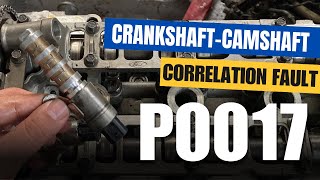
How to confirm: Scan the vehicle with a different, high-quality OBD-II scanner (such as FORScan for Fords). If the code appears as P0017, the original tool was in error. 🎬 Watch: How to test and fix the P0017 correlation code. The diagnosis should then proceed based on a P0017 fault.
Typical fix: No fix needed for the tool itself, but this confirms the true fault lies with the Bank 1 exhaust camshaft timing.
Est. part cost: $0 - Sticking or Failed Exhaust VCT Solenoid 🔴 High Probability Ford TSB #SSM 50067 directly states that small debris in the engine oil can cause VCT solenoids to stick, triggering this family of codes. The VCT system is highly sensitive to oil pressure and cleanliness.
How to confirm: First, check engine oil level and condition. If oil is low or dirty, an oil change may resolve the issue. A mechanic can use a scan tool to command the exhaust VCT solenoid on and off to see if it responds; TSB SSM 50067 specifically advises cycling it 10 times to clear debris. 🎬 Watch: A mechanic explains how VCT solenoids stick and fail. Resistance should be between 7 and 14 ohms.
Typical fix: Replace the exhaust camshaft VCT solenoid (also called an oil control valve). Performing an engine flush before the oil change is also recommended to clear debris.
Est. part cost: $30-$80 - Low or Dirty Engine Oil 🟡 Medium Probability The VCT system is entirely hydraulic and relies on clean oil at the correct pressure to function. Contaminants or low levels can easily cause solenoids to stick or phasers to respond slowly.
How to confirm: Check the oil dipstick. If the level is low or the oil appears dark, gritty, or sludgy, this is a likely contributor. This should be the very first check.
Typical fix: Perform an engine oil and filter change using the manufacturer-specified grade of oil (e.g., Motorcraft SAE 5W-20 Synthetic Blend). Clear codes and re-test.
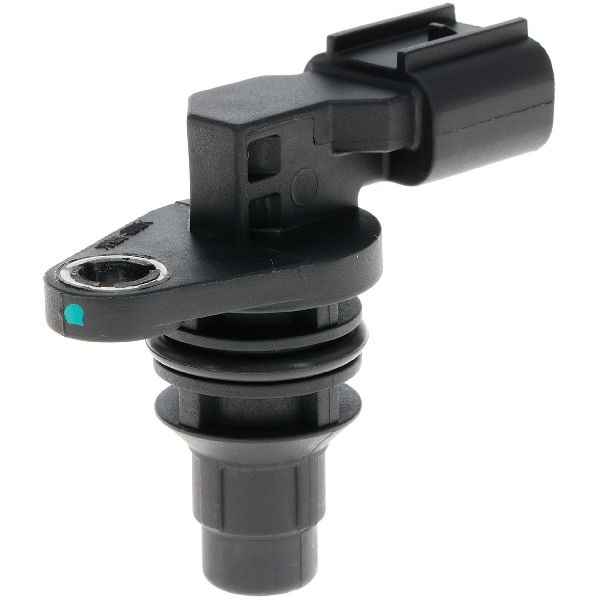
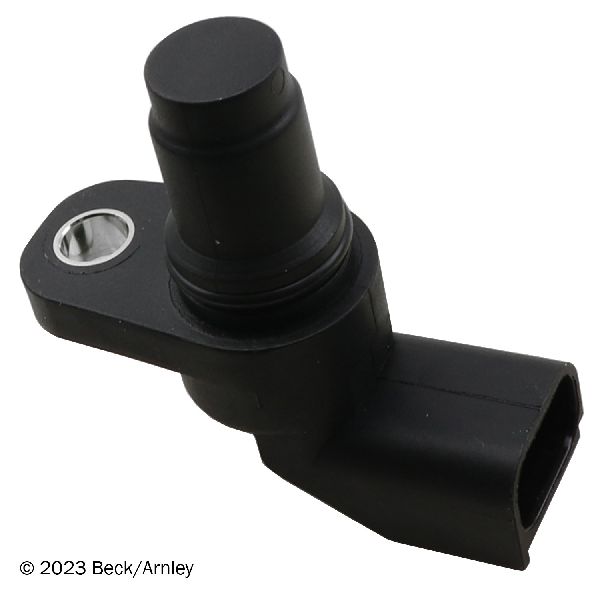
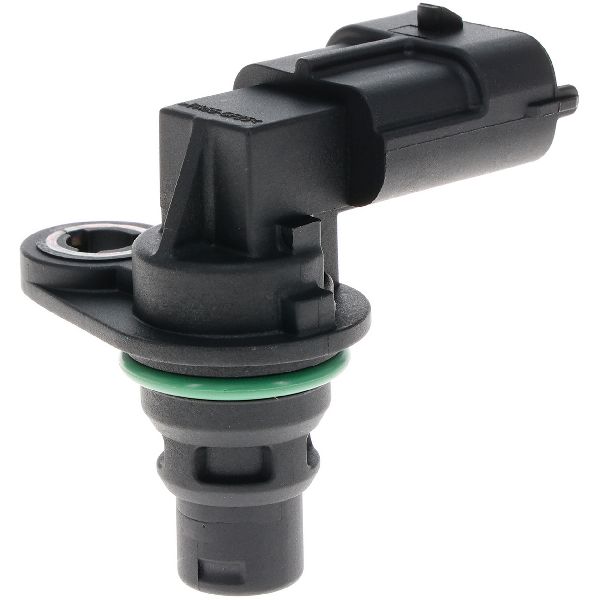
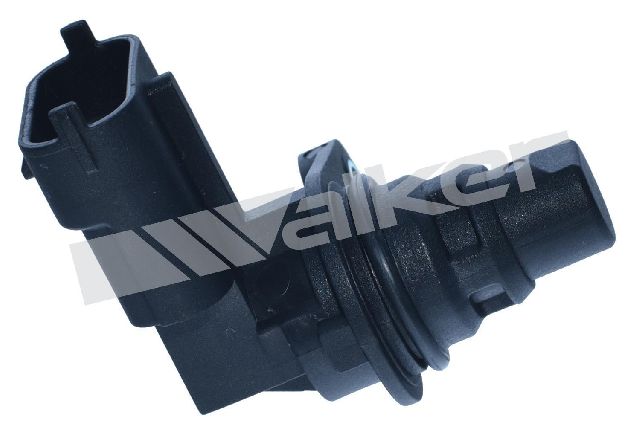
Est. part cost: $40-$70 - Faulty Exhaust Camshaft Position Sensor ⚪ Low Probability → Shop Engine Camshaft Position Sensor While less common than a VCT solenoid failure, the sensor that reads the camshaft's position can fail, sending incorrect data to the PCM.
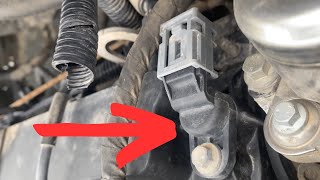
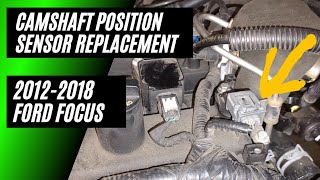
How to confirm: The sensor's signal can be checked with an oscilloscope for a clean square wave pattern. A visual inspection for oil contamination or physical damage is also recommended. A simpler, though less definitive, test is to swap the exhaust sensor with the identical intake sensor and see if 🎬 See this walkthrough for locating and replacing the exhaust sensors. the code changes to P0016.
Typical fix: Replace the exhaust camshaft position sensor.
Est. part cost: $25-$60
Rare But Worth Checking
- Stretched Timing Chain or Failed Tensioner: → Shop Engine Timing Chain This is a more serious mechanical issue. It becomes a higher probability on vehicles with over 80,000-100,000 miles. Symptoms may include a rattling noise from the engine, especially on startup.
- Damaged Camshaft Phaser: → Shop Engine Camshaft The phaser is the gear on the end of the camshaft that actually adjusts the timing. It can get stuck or fail internally, but this is less common than a solenoid failure.
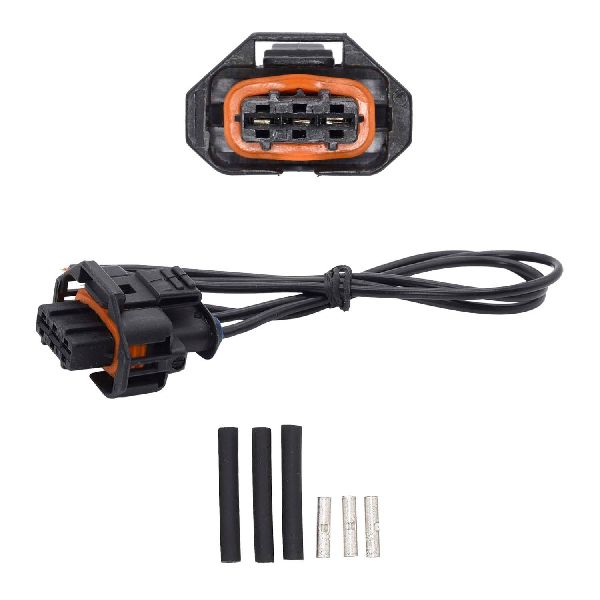
- Wiring Harness Damage: Check the wiring going to the VCT solenoid and camshaft position sensor for any signs of fraying, corrosion, or damage, particularly near the connectors.
Diagnosis Steps
- Confirm the code with a second, high-quality scan tool to verify if it is truly P0019 or the more likely P0017.
- Check the engine oil level and condition. If low or dirty, perform an oil and filter change with the correct viscosity oil, clear the code, and see if it returns.
- Inspect the wiring and connectors for the exhaust VCT solenoid and the exhaust camshaft position sensor for any visible damage or oil saturation.
- Using a capable scan tool, follow the procedure in TSB SSM 50067: command the exhaust VCT solenoid on and off (cycle it 10 times) to attempt to clear any internal debris.
- If the code persists, remove the exhaust VCT solenoid. Inspect the mesh screens for sludge or metallic debris. Test its internal resistance with a multimeter (expect 7-14 ohms). You can also apply 12V to the solenoid's pins to verify it 'clicks' open and closed.
- If the solenoid tests good, consider swapping the exhaust and intake camshaft position sensors. Clear codes and drive the vehicle. If the code changes to P0016 (Bank 1, Sensor A), the sensor you moved is faulty.
- If all sensors and solenoids are functioning correctly, the issue may be mechanical, such as a stretched timing chain or failed phaser. This requires a more in-depth inspection, often involving removal of the valve cover.
Parts You'll Likely Need
- Variable Camshaft Timing (VCT) Solenoid / Oil Control Valve (Exhaust)
(OEM #CM5Z-6M280-D (superseded by CM5Z-6M280-G))— This is the most common failure point for this code on Ford engines, often due to sticking from oil debris, as confirmed by Ford TSB #SSM 50067.
Trusted brands: Motorcraft, Dorman (p/n 917-196), Hitachi
OEM price range: $50-$90
Aftermarket price range: $30-$60 - Camshaft Position Sensor (Exhaust)
(OEM #AG9Z-6C315-A)— If the VCT solenoid is working correctly, the sensor that reports the camshaft's position to the computer may be faulty.
Trusted brands: Motorcraft, Bosch, NGK/NTK
OEM price range: $40-$70
Aftermarket price range: $25-$50
Related Codes That Often Appear With This One
- P0017 — This is the code that *should* be present for this fault on an inline-4 engine. Seeing P0019 is likely a scanner error for P0017.
- P0015 — This code ('B' Camshaft Position - Timing Over-Retarded Bank 1) points to a fault with the same exhaust camshaft and can be caused by the same failing VCT solenoid.
Technical Service Bulletins (TSBs) & Recalls
- SSM 50067: MIL on with various VCT DTCs, possibly due to debris causing VCT solenoid to stick. Advises cycling the solenoid before replacement.
Platform-Specific Known Issues
- TSB SSM 50067: Ford issued this Technical Service Bulletin for a wide range of 2015-2021 vehicles, stating that codes P0011 through P0025 (including P0019) may be caused by small debris making the VCT solenoid stick. The bulletin advises against immediate component replacement, instead suggesting diagnostic steps first, specifically to cycle the affected VCT solenoid 10 times with a scan tool to dislodge debris.
- Valve Cover Location: On the 2.0L Atkinson-Cycle engine in the Fusion Energi, the VCT solenoids are located under the valve cover, making replacement more involved than on other Ford engines where they are externally accessible.
Mechanic-Grade Diagnostic Values
- VCT Solenoid Internal Resistance — expected: 7 to 14 Ohms. A common reading on a good solenoid is ~7.8 Ohms.. Failure: A reading of 0 Ohms indicates a shorted coil. A reading of OL (Open Loop/infinite) indicates a broken coil. Readings outside the 7-14 Ohm range suggest a failing solenoid.
- VCT Solenoid Connector Voltage — expected: ~12V (Battery Voltage) at Pin 1 of the connector with Key On, Engine Off (KOEO).. Failure: 0V or significantly low voltage indicates a wiring issue, blown fuse, or problem in the power supply circuit from the PCM.
- Scan Tool PID: VCT Error (VCT_EXH_ERR or similar) — expected: Close to 0 degrees at idle and under steady load.. Failure: A persistent non-zero value (e.g., a dealership noted a reading of -6 degrees) indicates the camshaft is not at its commanded position, confirming a correlation error.
Scan Tool Commands That Help
- FORScan / Ford IDS: VCT Solenoid On/Off State Control or Output State Control (OSC) — This is the bidirectional command referenced in TSB SSM 50067. It cycles the solenoid 10 times to dislodge small debris that may be causing it to stick. This can sometimes fix the issue without replacing parts and also confirms the PCM and wiring can control the solenoid.
- FORScan / Ford IDS: Key On, Engine Running (KOER) On-Demand Self-Test — This test commands the PCM to cycle various actuators, including the VCT solenoids. A technician can use this to verify the PCM is sending a command signal, helping to differentiate between a wiring/PCM issue and a mechanical solenoid failure.
Wiring & Ground Locations
- G101 / G102 / G111 / G112 — Located on the left front side of the engine compartment, near the battery junction box and frame rail.. These are primary chassis ground points for the engine wiring harness. A corroded or loose ground at these locations can cause erratic sensor readings and intermittent faults for the entire engine management system, including the camshaft and crankshaft position sensors.
- PCM Power and Sensor Grounds — Within the main wiring harness connecting to the Powertrain Control Module (PCM), which is typically located in the engine compartment near the firewall or fender.. The CMP sensor, CKP sensor, and VCT solenoids are all controlled and monitored by the PCM. A fault in the specific ground wires within the harness can cause correlation codes even if the components themselves are good.
Real Owner Repair Stories
- Commonly reported pattern on Ford Fusion forums (2015-2020 Ford Fusion, typically with 2.0L engine, often over 80,000 miles.) — Check Engine Light with code P0017. May have a slight engine rattle on cold starts, but can also have no other noticeable symptoms.
❌ Tried (didn't work) Performing an oil change., Replacing the Bank 1 exhaust camshaft position sensor., Replacing the Bank 1 exhaust VCT solenoid.
✅ What actually fixed it After the common, less expensive fixes failed to resolve the code, the definitive repair was replacing the timing chain, tensioner, and guides due to chain stretch.
"I Checked Everything" — The Actual Cause
- A smoke test is not applicable for this code. However, a common diagnostic dead-end occurs when both the VCT solenoid and camshaft position sensor are replaced without fixing the issue. In these cases, the root cause is often a mechanical timing problem (stretched chain), which the sensors were correctly reporting all along.
OEM Part Supersession History
CM5Z-6M280-D→CM5Z-6M280-F, which was then superseded by CM5Z-6M280-G— Typically for improvements in material, design, or manufacturing process to increase reliability and prevent sticking.
Heads up: The newest part number (CM5Z-6M280-G) is the recommended replacement and is fully compatible.
Helpful Videos
We Have This Part in Stock


The information in this article is provided for general reference and educational purposes only. Vehicle specifications, procedures, and part compatibility can vary by production date, trim level, and region. Always consult your vehicle's factory service manual and verify part numbers before purchasing or performing repairs. Safety-critical components such as airbags, seat belts, and braking systems should be installed by a qualified professional.
- Ford FUSION ENERGI:
- 🧭 Diagnostic Flowchart
- 🎬 Helpful Videos
- 🛍️ Shop This Part
- What's Unique About the 2015-2019 Ford FUSION ENERGI
- Symptoms You May Notice
- Most Likely Causes
- Rare But Worth Checking
- Diagnosis Steps
- Parts You'll Likely Need
- Related Codes That Often Appear With This One
- Technical Service Bulletins (TSBs) & Recalls
- Platform-Specific Known Issues
- Mechanic-Grade Diagnostic Values
- Scan Tool Commands That Help
- Wiring & Ground Locations
- Real Owner Repair Stories
- "I Checked Everything" — The Actual Cause
- OEM Part Supersession History
- 🎟️ Get 5% Off