

P0019 on 2019-2021 Ford Ranger: Crankshaft Camshaft Correlation Causes and Fixes
On a 2019-2021 Ford Ranger, code P0019 is most often caused by low or dirty engine oil leading to a sticking Variable Camshaft Timing (VCT) solenoid. An oil and filter change using the correct specification oil, followed by replacement of the exhaust VCT solenoid (part #P2GZ-6M280-A, around $50-$85) is the most common and effective fix.
- P0019 on a Ranger means the exhaust camshaft timing is out of sync with the crankshaft.
- Always check your engine oil level and condition first; low or dirty oil is a very common cause.
- The most likely faulty part is the exhaust VCT solenoid, which is relatively inexpensive and easy to replace.
- Ford has issued service bulletins (TSBs) acknowledging that sticking VCT solenoids are a known issue for this code.
- Do not assume a major mechanical failure like a timing chain without first ruling out oil issues, the VCT solenoid, and the camshaft position sensor.
What's Unique About the 2019-2021 Ford Ranger
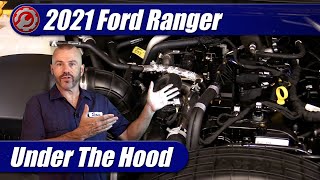
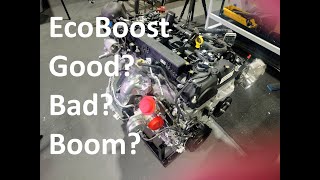
🎬 Watch: A detailed breakdown of the 2.3L EcoBoost engineThe 2.3L EcoBoost engine, like many modern Ford engines, is sensitive to oil quality and level. Ford has issued Technical Service Bulletins (TSBs) for a wide range of its vehicles, including the Ranger, that specifically mention codes like P0019. These bulletins, such as SSM 50067, highlight that small debris in the engine oil can cause the VCT solenoids to stick, leading to timing correlation faults. This makes checking the oil and considering the VCT solenoids a primary diagnostic step on this platform, often before suspecting more severe mechanical issues. The diagnostic procedure in TSB SSM 50067 even recommends using a scan tool to cycle the affected VCT solenoid 10 times to attempt to clear debris before replacement.
Diagnostic Flowchart
Tap your situation to follow the diagnostic path that matches what you're seeing on this vehicle.
Symptoms You May Notice
- Check Engine Light is on
- Rough or erratic idle, especially when the engine is warm.
- Engine hesitation or stumbling on acceleration.
- Reduced engine power
- Decreased fuel economy.
- Engine may be hard to start or may not start.
- Engine knocking or tapping noises.
- Replacing the crankshaft position sensor when the code specifically points to a correlation issue with the camshaft.
- Immediately replacing the timing chain before properly diagnosing the VCT solenoids and camshaft sensors, which are more common and far less expensive fixes.
- Replacing only the sensor when the underlying cause is a sticking VCT solenoid or dirty oil.
Most Likely Causes
- Low or Dirty Engine Oil 🔴 High Probability The VCT system is hydraulically operated by engine oil. TSBs confirm that oil contamination is a primary cause of VCT solenoid issues. Forum users frequently report that low or dirty oil is the first thing to check.
How to confirm: Check the oil level on the dipstick and inspect its condition. If it is low, black, or gritty, it needs to be changed. Even if the oil level is correct, an overdue oil change can still be the cause.
Typical fix: Perform an engine oil and filter change using the correct viscosity oil specified by Ford (Motorcraft SAE 5W-30 Synthetic Blend or equivalent).
Est. part cost: $40-$80 - Sticking or Failed VCT Solenoid (Oil Control Valve) 🔴 High Probability Ford TSB SSM 50067 directly states that small debris can cause the VCT solenoid to stick, triggering this code. This is the most cited repair in owner forums for resolving P0019 and related timing codes.
How to confirm: Use a scan tool to command the exhaust VCT solenoid on and off to see if the timing angle changes, as suggested by TSB SSM 50067. A common DIY method is to swap the exhaust VCT solenoid with the intake solenoid; if the code changes to P0018 (intake side), the solenoid is faulty. The solenoid's internal resistance can be tested with a multimeter and should be between 5 and 14 ohms.
Typical fix: Replace the exhaust camshaft VCT solenoid. It is often recommended to replace both the intake and exhaust solenoids at the same time.
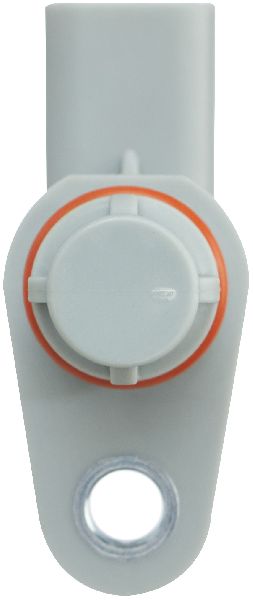
Est. part cost: $50-$100 - Failed Camshaft Position Sensor 🟡 Medium Probability → Shop Engine Camshaft Position Sensor The sensor provides the critical data for the PCM. While reliable, it can fail electronically or become fouled, sending incorrect signals.
How to confirm: Test the sensor's output with a multimeter or oscilloscope to check for a correct waveform; voltage should typically be between 0.5-4.5V when the engine is running. A practical DIY test is to swap it with the intake sensor (if they are identical parts) and see if the code changes to P0016 (intake cam correlation).
Typical fix: Replace the exhaust camshaft position sensor ('B' sensor).
Est. part cost: $30-$60 - Wiring or Connector Issue ⚪ Low Probability
How to confirm: Visually inspect the wiring harness and connectors for the camshaft position sensor and VCT solenoid for any signs of damage, corrosion, or loose connections. A wiggle test on the harness while the engine is running may reveal a fault.
Typical fix: Repair the damaged wiring or clean/replace the connector.
Est. part cost: $5-$50
Rare But Worth Checking
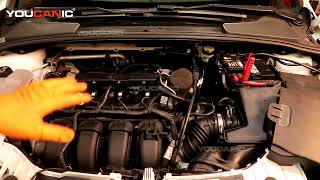
- Stretched Timing Chain or Failed Tensioner: → Shop Engine Timing Chain While less common on a newer vehicle, significant mileage or severe lack of oil maintenance can lead to timing chain stretch or tensioner failure, causing a persistent P0019 code. This is a more significant repair and usually presents with other symptoms like a startup rattle. 🎬 Watch: How to check cam alignment on the 2.3L engine
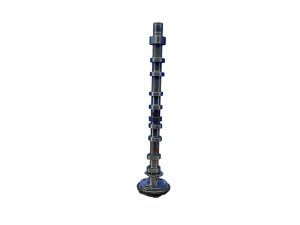
- Failed Camshaft Phaser: → Shop Engine Camshaft The phaser is the mechanical gear that actually adjusts the cam timing. It can fail mechanically, getting stuck in one position, which will trigger a correlation code. In one documented case on a similar Ford engine, a user had to have phasers replaced after incorrectly installing them during a timing job, which caused a persistent P0019.
- Faulty Powertrain Control Module (PCM): → Shop Engine Control Module (ECM) This is extremely rare and should only be considered after all other possibilities have been exhaustively ruled out. A PCM issue could also manifest as other, unrelated codes.
Diagnosis Steps
- Check the engine oil level and condition. Top up or perform an oil and filter change if necessary, using Ford-specified oil.
- Use an OBD-II scanner to check for any other related trouble codes and to view live data.
- Visually inspect the wiring and connectors for the exhaust camshaft position sensor and the exhaust VCT solenoid for any damage, oil saturation, or looseness.
- Using a scan tool with live data, monitor the desired vs. actual camshaft position for the exhaust cam (Cam B). A significant deviation indicates a problem.
- As per TSB SSM 50067, use the scan tool's bidirectional controls to command the exhaust VCT solenoid on and off (cycle it 10 times) to check for a response and potentially clear debris.
- A practical DIY test is to swap the exhaust VCT solenoid with the intake VCT solenoid. Clear the codes and run the engine. If the code returns as P0018 (for the intake cam), the solenoid you moved is faulty.
- If the solenoid seems to work, test the camshaft position sensor. You can swap it with the intake sensor (if they are the same part number) and see if the code changes to P0016.
- If sensors and solenoids are confirmed good, the issue may be mechanical. Listen for a startup rattle which could indicate a timing chain or phaser issue. Further diagnosis of the timing system is an advanced step and may require a professional.
Parts You'll Likely Need
- Engine Variable Valve Timing (VCT) Solenoid
(OEM #P2GZ-6M280-A)— This part is frequently the cause of the P0019 code due to sticking from oil debris, as noted in Ford TSBs. It is the causal part listed in TSB SSM 50067.
Trusted brands: Motorcraft, Dorman
OEM price range: $53-$85
Aftermarket price range: $40-$70 - Camshaft Position Sensor
(OEM #P2GZ-6B288-C)— A faulty sensor can send incorrect data to the PCM, causing a correlation error. It's a common point of failure in timing systems and a logical next step if a VCT solenoid replacement doesn't solve the issue.
Trusted brands: Motorcraft, Bosch, Delphi, Standard Motor Products
OEM price range: $40-$60
Aftermarket price range: $25-$50
Related Codes That Often Appear With This One
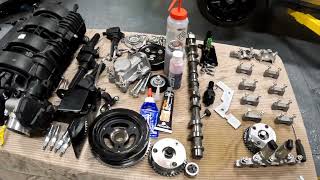
- P0017 — This code is for 'Crankshaft Position - Camshaft Position Correlation Bank 1, Sensor B'. On an inline engine like the Ranger's, P0017 is the technically correct code for this fault. 🎬 See this quick 5-minute fix for the P0017 correlation code Some scan tools may incorrectly display P0019, which is typically for Bank 2.
- P0015 — This code ('B' Camshaft Position - Timing Over-Retarded Bank 1) indicates a specific timing problem with the same exhaust camshaft and can be caused by a faulty VCT solenoid or phaser.
- P0345 or P0349 — These codes point to a circuit malfunction or intermittent signal from the exhaust camshaft position sensor itself, which could be the root cause of the P0019 correlation error.
Technical Service Bulletins (TSBs) & Recalls
- SSM 50067: VCT solenoid may stick due to debris, causing various timing codes including P0019.
- SSM 54366: General TSB for a range of VCT codes
Platform-Specific Known Issues
- TSB SSM 50067: For 2015-2021 Ford vehicles, this bulletin notes that codes P0011, P0012, P0014, P0015, P0016, P0017, P0018, P0019, P0021, P0022, P0024 and/or P0025 may be caused by small debris causing the VCT solenoid to stick. It recommends attempting to clear the debris by cycling the solenoid with a scan tool 10 times before component replacement.
- TSB SSM 54366: This bulletin also lists P0019 among a series of camshaft timing DTCs for 2015-2021 Ford vehicles and refers technicians to specific diagnostic tests in the workshop manual.
- Incorrect Code Reporting: Because the 2.3L is an inline engine with only one bank, a P0019 (Bank 2) code is technically incorrect. The proper code should be P0017 (Bank 1). The appearance of P0019 is often due to how the generic OBD-II code is interpreted by specific scan tool software.
Mechanic-Grade Diagnostic Values
- VCT Solenoid Resistance — expected: 5 to 14 Ohms (Ω). Failure: A reading outside this range, or OL (Open Loop/infinite resistance), indicates a faulty solenoid coil.
- VCT Solenoid Connector Voltage — expected: Battery Voltage (approx. 12V) with Key On, Engine Off. Failure: No voltage or low voltage points to a wiring issue, blown fuse, or problem in the power supply circuit.
- Scan Tool PID: VCT_ADV_ERR (VCT Advance Error) — expected: Should hover close to 0 degrees at idle and during steady-state driving.. Failure: A large, persistent positive or negative value (e.g., more than +/- 5 degrees) indicates the camshaft is not reaching its commanded position.
- Camshaft Position Sensor Signal Voltage — expected: 0.5V to 4.5V (fluctuating) with engine running. Failure: No voltage, or a static voltage that doesn't change with engine speed, indicates a failed sensor or wiring issue.
Hidden / Shadow Codes Worth Checking
- Mode 6, Test ID $81: This Mode 6 test monitors VCT timing error statistics. It tracks how often the camshaft angle has deviated from its target position beyond a calibrated threshold. It can show an emerging problem before a full DTC like P0019 is triggered. (see via A professional OBD-II scanner or software (like FORScan) that can display Mode 6 test results. Component IDs $11-$14 may correspond to the different camshafts.)
Scan Tool Commands That Help
- Ford IDS, FORScan, or equivalent professional scanner: VCT Solenoid Bidirectional Control / Output State Control — This command, referenced in Ford's Pinpoint Test HK, manually cycles the VCT solenoid on and off. It is used to verify the solenoid's mechanical and electrical function and, as per TSB SSM 50067, can dislodge small debris causing it to stick, potentially fixing the issue without part replacement.
- Ford IDS, FORScan, or equivalent professional scanner: Datalogger with VCT PIDs (VCT_ADV_ERR, VCT_INT_CMD, VCT_INT_ACT) — Used during a road test or while revving the engine to graph the desired vs. actual camshaft angle in real-time. This helps confirm if the timing error occurs under specific conditions (load, RPM) and verifies if the VCT system is attempting to make corrections.
Wiring & Ground Locations
- Main Engine/Chassis Grounds — General locations include: a strap from the engine block to the firewall (for PCM and dash grounds), a strap from the engine block to the frame, the main battery negative cable to the chassis, and smaller grounds from the wiring harness to the radiator support or inner fenders (for lighting and accessories).. A poor ground connection for the PCM or engine sensors can introduce electrical noise or incorrect voltage readings, potentially causing the PCM to misinterpret sensor data and set false correlation codes like P0019. While specific ground point maps for the 2019+ Ranger are not readily available, ensuring these primary ground points are clean and tight is a critical electrical diagnostic step.
Real Owner Repair Stories
- Ford F150 Forum (2013 Ford F-150 3.5L EcoBoost (similar VCT system design)) — Check Engine Light with P0014 & P0024 (related VCT codes).
❌ Tried (didn't work) Initial diagnosis pointed towards VCT solenoids or phasers.
✅ What actually fixed it The root cause was determined to be oil sludging clogging the VCT phaser oil screens. A Ford technician performed an engine flush using ATF instead of regular oil, ran the engine to temperature, then drained it and performed a standard oil change. The codes were resolved. The owner now performs oil changes every 4,000 miles. - Go-Parts.com article citing forum user (2012 Ford F-150 3.5L EcoBoost) — P0019, delayed acceleration, overheating.
❌ Tried (didn't work) Replacing the Bank 2 exhaust Camshaft Position Sensor (CPS)., Replacing the Bank 2 exhaust VCT solenoid.
✅ What actually fixed it The issue occurred after a DIY timing chain replacement. The actual cause was that the exhaust camshaft for Bank 2 was installed incorrectly, off by one tooth. Correcting the mechanical timing of the camshaft resolved the code.
"I Checked Everything" — The Actual Cause
- In the context of P0019, the equivalent of a 'smoke test clean' scenario is when replacing the common electrical components (cam sensor, VCT solenoid) does not fix the code. In these cases, the root cause is almost always a deeper mechanical timing issue. One real-world example involved a timing chain that had jumped two teeth due to a low oil level, which also broke a dowel pin on the exhaust camshaft. The fix required a full timing job, including chain, tensioners, phasers, and a new camshaft.
When the Usual Fixes Don't Work
- While the most common fixes are oil changes and VCT solenoid replacement, there are documented cases where these do not resolve the issue. In one instance involving a similar engine design, a persistent P0017 (the correct code for an I4 engine) remained even after replacing the timing chain, tensioners, phasers, and camshaft. This points to the possibility of very rare underlying issues like oil pressure problems originating from the oil pump, or difficult-to-diagnose blockages in cylinder head oil galleys that are not resolved by common repairs.
OEM Part Supersession History
Not specified→P2GZ-6M280-A— This is the current OEM VCT solenoid for the 2.3L EcoBoost in this vehicle.
Heads up: This part is used across many 1.5L, 2.0L, and 2.3L Ford engines but is NOT interchangeable with solenoids for some other engine families, such as the 1.6L which may use part number HX7Z-6M280-A. Always verify fitment with the vehicle's VIN.
Helpful Videos

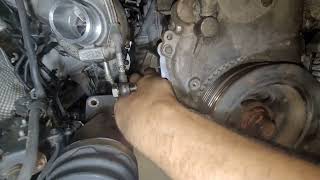
Used OEM Parts in Stock
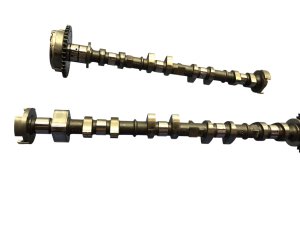
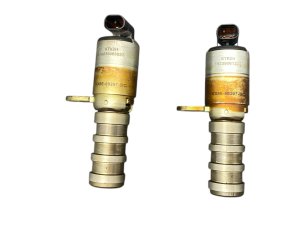
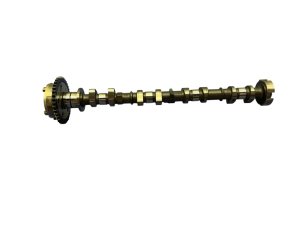
New Aftermarket Parts Available


The information in this article is provided for general reference and educational purposes only. Vehicle specifications, procedures, and part compatibility can vary by production date, trim level, and region. Always consult your vehicle's factory service manual and verify part numbers before purchasing or performing repairs. Safety-critical components such as airbags, seat belts, and braking systems should be installed by a qualified professional.
- Ford RANGER:
- 🧭 Diagnostic Flowchart
- 🎬 Helpful Videos
- 🛍️ Shop This Part
- What's Unique About the 2019-2021 Ford Ranger
- Symptoms You May Notice
- Most Likely Causes
- Rare But Worth Checking
- Diagnosis Steps
- Parts You'll Likely Need
- Related Codes That Often Appear With This One
- Technical Service Bulletins (TSBs) & Recalls
- Platform-Specific Known Issues
- Mechanic-Grade Diagnostic Values
- Hidden / Shadow Codes Worth Checking
- Scan Tool Commands That Help
- Wiring & Ground Locations
- Real Owner Repair Stories
- "I Checked Everything" — The Actual Cause
- When the Usual Fixes Don't Work
- OEM Part Supersession History
- 🎟️ Get 5% Off