

P0019 on 2013-2019 Ford Taurus 3.5L: Crank/Cam Correlation Causes and Fixes
On a 2013-2019 Ford Taurus with the 3.5L V6, P0019 is most often caused by low or dirty engine oil, or a sticking Variable Camshaft Timing (VCT) solenoid on the front (Bank 2) of the engine. An oil change and a new Motorcraft VCT solenoid (approx. $40-$90) is the most common fix. Swapping the solenoid with the one next to it is a key diagnostic step.
- Always check your engine oil level and condition first. A simple oil change with 5W-20 synthetic blend oil can often fix this code.
- The most likely failed part is the Bank 2 (front/radiator side) exhaust VCT solenoid. It's relatively inexpensive and accessible.
- This code can be an early warning for a failing internal water pump leaking coolant into the oil. Check for 'milky' oil on the dipstick, as this indicates a severe problem requiring immediate attention.
- Do not immediately assume you need an expensive timing chain replacement. Properly diagnose the oil and VCT solenoid first.
What's Unique About the 2013-2019 Ford Taurus
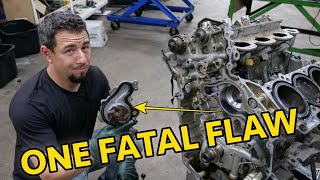
The 3.5L 'Cyclone' V6 engine family uses an oil-operated Variable Camshaft Timing (VCT) system that is highly sensitive to oil quality and pressure. Ford has issued multiple Technical Service Bulletins (TSBs) acknowledging that the VCT solenoids are prone to sticking from small debris in the oil, making this a very common cause for P0019. More critically, these engines feature an internal, timing-chain-driven water pump. The pump has a design flaw where the weep hole for a failing seal can allow coolant to leak directly into the engine oil pan. This contamination destroys the oil's lubricating properties, which can quickly cause catastrophic damage to the timing components and trigger this code.
Symptoms You May Notice
- Check Engine Light is on
- Rough or fluctuating idle.
- Hesitation or stumbling during acceleration.
- Reduced engine power
- Decreased fuel economy.
- Engine may stall in some cases
- Rattling noise from the front of the engine on startup, especially when cold, indicating timing chain wear.
- Replacing the camshaft position sensor first. The sensor is usually just accurately reporting the timing error caused by a VCT solenoid or mechanical issue.
- Assuming a stretched timing chain without first checking the oil and testing the much cheaper and more common VCT solenoid.
- Replacing the timing chain without also replacing the internal water pump. The pump is a common root cause of the chain failure and not replacing it can lead to a repeat failure within a short period.
Most Likely Causes
- Low or Dirty Engine Oil 🔴 High Probability The VCT system is hydraulic and highly sensitive to oil pressure and cleanliness. Neglected oil changes lead to sludge and debris that can clog VCT solenoid passages.
How to confirm: Check the oil dipstick. If the level is low or the oil appears very dark, sludgy, or has a 'milky'/'chocolate milk' appearance (indicating coolant contamination), this is the likely starting point. 🎬 See what this 'milky' coolant and oil contamination looks like.
Typical fix: Perform an engine oil and filter change using the OEM-specified 5W-20 synthetic blend oil and a quality filter (e.g., Motorcraft FL-500S).
Est. part cost: $40-$80 - Sticking or Failed VCT Solenoid (Bank 2 Exhaust) 🔴 High Probability This is a well-documented failure point. Ford TSBs (like SSM 50067) state that debris in the oil commonly causes these solenoids to stick, leading to timing correlation codes. They are located accessibly on the front valve cover.
How to confirm: After an oil change, if the code persists, swap the Bank 2 exhaust VCT solenoid with the Bank 2 intake solenoid (they are identical and located next to each other on the front valve cover, each held by one bolt). Clear the codes and drive. If the code changes to P0018 (Bank 2 Intake), the solenoid is confirmed bad.
Typical fix: Replace the Bank 2 exhaust VCT solenoid with a new Motorcraft part.
Est. part cost: $40-$90 - Stretched Timing Chain 🟡 Medium Probability → Shop Engine Timing Chain On higher mileage engines (typically over 100,000 miles), the timing chain can stretch, causing a persistent timing error. This is often accelerated by poor oil quality or coolant contamination from a failing internal water pump.
How to confirm: This is usually diagnosed after ruling out oil and VCT solenoid issues. A distinct rattling noise on startup is a key symptom. A mechanic can confirm by measuring timing deviation with a scan tool or by physical inspection, which is labor-intensive.
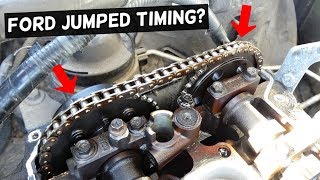
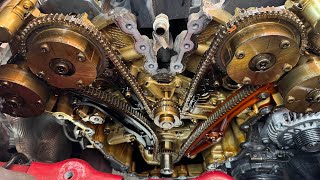
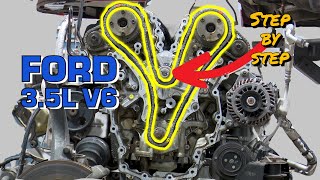
Typical fix: Replace the timing chain, guides, and tensioners. The internal water pump and VCT phasers should always be replaced at the same time for this major repair. 🎬 Watch: Full DIY guide for timing chain and water pump replacement.
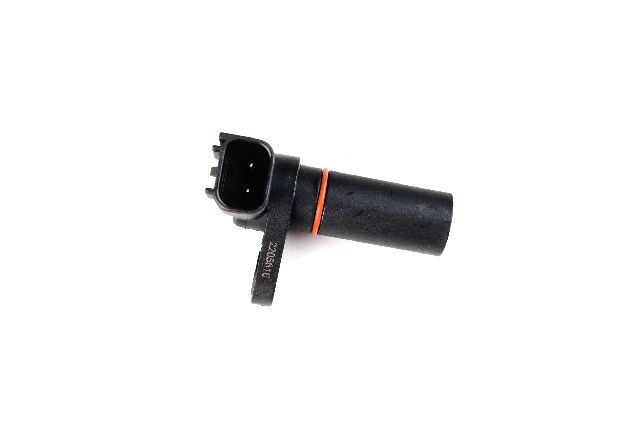
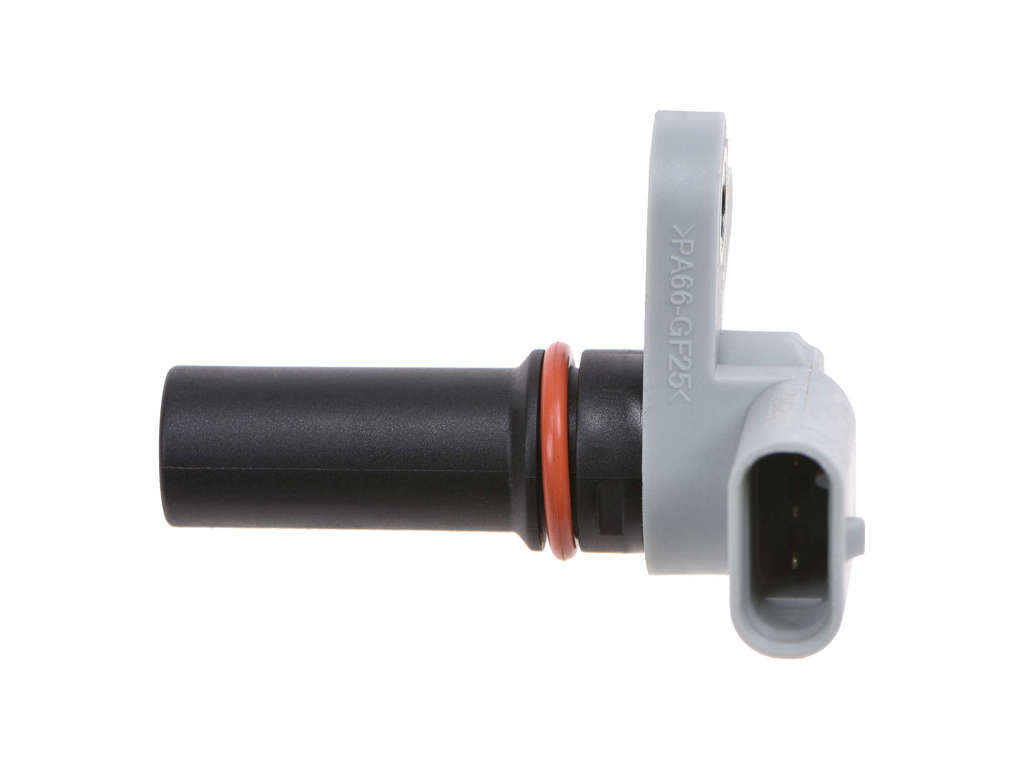
Est. part cost: $400-$800 - Failed Camshaft Position Sensor (Bank 2 Exhaust) ⚪ Low Probability → Shop Engine Camshaft Position Sensor
How to confirm: The sensor's signal can be tested with an oscilloscope. However, this is rarely the cause. Swapping the sensor with another one (e.g., from the intake side) is a simple way to check if the fault follows the sensor.
Typical fix: Replace the camshaft position sensor.
Est. part cost: $25-$60
Rare But Worth Checking
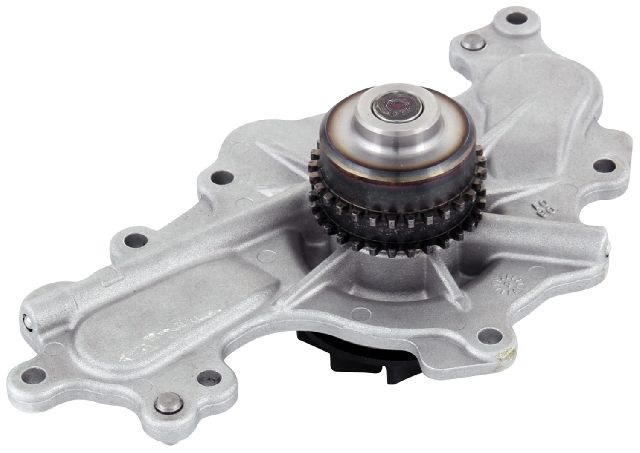
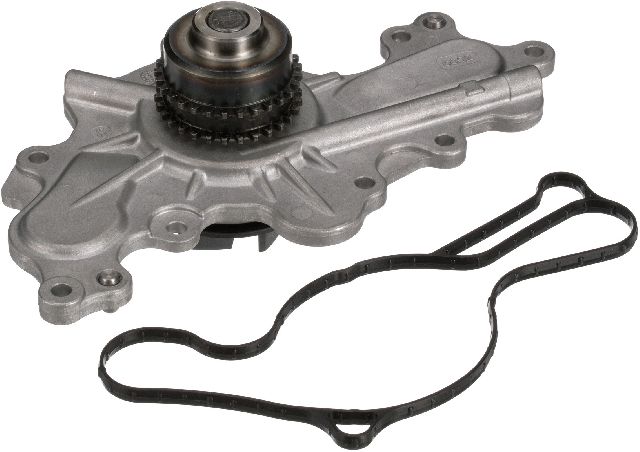
- Internal Water Pump Failure: → Shop Engine Water Pump This is a critical design flaw of the transverse 3.5L V6. A failed seal leaks coolant into the oil via an internal weep hole, contaminating it. This contamination quickly leads to VCT solenoid failure and timing chain stretch. If your oil looks milky, this is the root cause and requires immediate, extensive repair (timing chain and water pump replacement) to avoid catastrophic engine failure.
- Failed Camshaft Phaser: → Shop Engine Camshaft The phaser is the gear on the end of the camshaft that actually adjusts the timing. It can get stuck or fail, but this is less common than a solenoid failure. TSB SSM 50067 specifically advises against replacing phasers for this code unless other phaser-specific codes are present. It is typically replaced during a full timing chain job.
Diagnosis Steps
- Check the engine oil level and condition. If low, dirty, or milky, perform an oil and filter change with the correct 5W-20 oil, clear the code, and re-test.
- Visually inspect the wiring and connector for the Bank 2 exhaust VCT solenoid and camshaft position sensor (on the front valve cover). Look for any signs of damage, corrosion, or oil saturation.
- If the code returns, swap the Bank 2 exhaust VCT solenoid with the Bank 2 intake VCT solenoid. They are identical, located next to each other, and held by a single bolt. This is a 10-minute diagnostic job. 🎬 Watch: A step-by-step diagnosis and repair for the P0019 code.
- If the code changes to P0018 (Intake Cam Correlation), the VCT solenoid you moved is faulty and must be replaced.
- If the P0019 code returns, the issue is likely not the solenoid. Use a scan tool to command the VCT solenoid on and off to verify its operation; Ford TSB SSM 50067 suggests cycling it 10 times to clear debris.
- If sensors and solenoids are good, the problem is likely mechanical. Listen for a startup rattle. At this point, professional diagnosis is recommended to check for a stretched timing chain, failed phaser, or low oil pressure from a failing water pump.
Parts You'll Likely Need
- Engine Variable Camshaft Timing (VCT) Solenoid
(OEM #7T4Z-6M280-C)— This is the most common component to fail, often due to sticking from oil debris, as documented in Ford TSBs. It is easily accessible on the front valve cover.
Trusted brands: Motorcraft, Dorman, Standard Motor Products (SMP)
OEM price range: $50-$90
Aftermarket price range: $30-$60 - Engine Oil and Filter
(OEM #Motorcraft FL-500S)— Clean, correct-viscosity oil is critical for VCT system function. An oil change is the first and most important diagnostic step.
Trusted brands: Motorcraft, Mobil 1, Castrol
OEM price range: $40-$80
Aftermarket price range: $30-$60 - Timing Chain Kit
(OEM #AT4Z-6D256-A (kit example, verify for specific VIN))— Required for a stretched timing chain. A complete kit including chains, guides, and tensioners is necessary. This is a major repair and should include the water pump.
Trusted brands: Ford OEM, Cloyes
OEM price range: $300-$500
Aftermarket price range: $200-$400 - Internal Water Pump
(OEM #Motorcraft PW-500 (or PW-568, verify))— The root cause of many timing chain failures due to coolant contamination. It is considered essential to replace this part during any timing chain service.
Trusted brands: Motorcraft, Gates, GMB
OEM price range: $100-$180
Aftermarket price range: $60-$120 - Camshaft Position Sensor
(OEM #BL3Z-6B288-C)— Rarely the cause, but may be replaced during troubleshooting.
Related Codes That Often Appear With This One
- P0018 — This is the same correlation error but for the intake camshaft ('Sensor A') on the same bank. If you swap a bad exhaust VCT solenoid to the intake side for diagnosis, P0019 will become P0018. If both appear together, it may indicate a larger issue with the bank's timing components.
- P0016 — This is a correlation code for Bank 1 (firewall side). Seeing codes for both banks (P0019 and P0016) strongly suggests a problem affecting the entire engine, such as a stretched primary timing chain, low oil pressure, or severe oil contamination.
- P0025 — This code means the Bank 2 exhaust camshaft is 'over-retarded'. It's caused by the same VCT system faults and often points directly to a stuck VCT solenoid.
Technical Service Bulletins (TSBs) & Recalls
- SSM 50067: General VCT code diagnostic aid, advises cycling solenoids to clear debris before replacement.
- TSB 16-0093: Notes that P0019 and other VCT codes can appear on very low-mileage (under 2,000 miles) 2016 models, recommending solenoid replacement.
- TSB 16-0038: Predecessor to 16-0093, also addressing VCT codes on low-mileage 3.5L engines.
Platform-Specific Known Issues
- Real-World Repair Story: The VCT Solenoid Swap: A common story found on forums like taurusclub.com involves an owner getting P0019, performing an oil change which doesn't solve the issue, then swapping the two easily accessible VCT solenoids on the front valve cover. After clearing the codes and driving, the check engine light returns with code P0018. This confirms the original exhaust solenoid was faulty, and replacing it with a new Motorcraft part permanently resolves the P0019 code. This diagnostic step saves hundreds of dollars by avoiding unnecessary sensor or timing component replacement.
Mechanic-Grade Diagnostic Values
- VCT Solenoid Internal Resistance — expected: 5 - 14 Ohms. Failure: A reading outside this range, or infinite resistance (OL), indicates a failed solenoid coil.
- Camshaft Position Sensor (3-wire Hall-effect) Voltage Check — expected: Approximately 5V on the reference wire and 5V on the signal wire with Key On, Engine Off. The signal wire should switch between ~5V and 0V when cranking.. Failure: Voltage that is stuck high, stuck low, or does not switch during cranking indicates a failed sensor or wiring issue.
- Scan Tool PID: VCT_EXH_ERR2 (Bank 2 Exhaust Camshaft Position Error) — expected: Should be close to 0 degrees at idle.. Failure: A consistent error value greater than +/- 5 degrees for an extended period indicates a timing deviation that will trigger the P0019 code.
Scan Tool Commands That Help
- Ford IDS (Integrated Diagnostic System): VCT Solenoid On/Off Command / Cycle Test — As per Ford TSBs, this bidirectional control is used to cycle the VCT solenoid rapidly (e.g., 10 times) to dislodge small pieces of debris that may be causing it to stick. If cycling the solenoid restores normal operation, it can confirm a sticking issue and potentially avoid an immediate replacement.
Wiring & Ground Locations
- G103 — Rear of engine.. This is a primary engine ground. A poor connection here can cause erratic behavior and incorrect readings from various engine sensors, including the camshaft and crankshaft position sensors.
- G105 — Rear of engine compartment.. This ground serves the Powertrain Control Module (PCM). A compromised ground at this location can lead to incorrect PCM calculations and false diagnostic trouble codes.
- G101 — Left front of engine compartment.. This is another key ground point for components in the engine bay. Ensuring it is clean and tight is a fundamental step in diagnosing any electronic fault.
Real Owner Repair Stories
- Ford Truck Enthusiasts Forums (2012 Ford F-150 3.5L EcoBoost (same engine family)) — After a DIY timing chain replacement, the truck had a delay in acceleration, was overheating, and threw code P0019.
❌ Tried (didn't work) Replacing the Bank 2 exhaust Camshaft Position Sensor (CPS)., Replacing the Bank 2 exhaust VCT solenoid after testing and finding it faulty (the new part did not resolve the code)., Tearing down the engine a second time to re-time it, believing the phaser was installed incorrectly. The code still returned.
✅ What actually fixed it The user's final post indicates they were still stumped, but the critical takeaway for others is that even after replacing the correct sensor and solenoid, the P0019 code persisted, pointing towards a mistake made during the complex timing chain installation procedure itself. Another user with a 2014 F-150 reported getting P0016 and P0019 after a timing job because the crank had jumped two teeth while torquing the harmonic balancer.
OEM Part Supersession History
7T4Z-6M280-A, 7T4Z-6M280-AA, 7T4Z-6M280-B→7T4Z-6M280-C— Likely internal improvements for durability and resistance to sticking from oil debris.
Heads up: While all VCT solenoids on the 3.5L Cyclone engine look similar, some TSBs for related engines call out different part numbers for intake vs. exhaust positions. Always verify the correct part number by VIN for the specific location you are replacing.
Model Year Variations Within This Range
- 2013-2019: The base 3.5L Cyclone V6 received a power bump from 263 hp to 288 hp starting in the 2013 model year, coinciding with the vehicle's facelift. However, the fundamental design of the Ti-VCT system and the internal water pump remained the same, meaning the causes and fixes for P0019 are consistent across this entire range.
Diagnostic Flowchart
Other Known Issues on This Vehicle
Issues unrelated to this code that are worth knowing about as an owner of this generation:
- Internal Water Pump Failure 🔴 High → Shop Engine Water Pump — Common failure, often between 60,000 and 150,000 miles. Failure can be premature.
- AWD Power Transfer Unit (PTU) Failure 🔴 High — Very common on AWD models. The 'lifetime' fluid overheats and breaks down, leading to PTU failure, often before 100,000 miles.
- Electronic Throttle Body (ETB) Failure 🟠 Medium — Can fail at various mileages, causing sudden limp mode, stalling, or erratic acceleration. (Ref: SSM 46085)
Used vs. New Parts: Buying Guide for This Vehicle
When a used part is the smart pick: Given the low cost and high failure rate from internal wear and contamination, used electronic parts like VCT solenoids or camshaft position sensors are generally not recommended. A used part may have the same issue or a limited remaining lifespan. It is not a smart choice for these particular components.
Donor-vehicle mileage cap: roughly under 80000 miles for the part to have meaningful remaining life.
What to inspect on the donor part:
- For major mechanical parts (e.g., complete cylinder head), seek a donor vehicle with documented, regular oil changes.
- Check the oil fill cap and dipstick on the donor engine for any signs of 'milky' residue, which indicates a failed internal water pump and contaminated engine.
- Avoid parts from engines that show significant external oil leaks or heavy varnish/sludge visible through the oil cap.
OEM-only on this vehicle (don't cheap out):
- Timing Chain Kit: The timing system is critical and labor-intensive to access. Using high-quality OEM (Motorcraft) or top-tier OEM-supplier (like Cloyes) parts is essential to prevent premature failure.
- Internal Water Pump: Due to its critical location and the catastrophic consequences of failure, only an OEM (Motorcraft) or a top-tier aftermarket brand like Gates should be used. This is not a part to save money on.
- VCT Solenoids: While cheaper aftermarket options exist, many forum users and technicians report higher satisfaction and fewer repeat issues with OEM Motorcraft solenoids. Given the relative ease of replacement on Bank 2, it's a worthwhile investment.
Aftermarket brands forum-validated for this vehicle:
- Cloyes (Timing Components)
- Gates (Water Pumps)
Brands owners have reported issues with on this vehicle:
- Unbranded/white-box VCT solenoids and sensors from online marketplaces have a high rate of being dead-on-arrival or failing shortly after installation. Some owners report issues with Dorman VVT solenoids having different resistance values than OEM, potentially causing issues.
Real Owner Stories
Aggregated from forums and TSBs cited above. Mileages and costs reflect what owners reported in those sources.
2013-2019 Ford Taurus 3.5L V6
Symptoms: Check engine light for P0019; owner performed an oil change but the issue persisted.
What fixed it: Swapped the two VCT solenoids on the front valve cover. The code changed to P0018, confirming the exhaust solenoid was bad. Replaced it with a new Motorcraft part.
Source hint: taurusclub.com forum story described in 'Real-World Repair Story: The VCT Solenoid Swap'
2018 Ford Taurus 3.5L V6
Symptoms: P0018 code appeared immediately after a major repair involving the water pump and timing chains.
What fixed it: Not specified, but highlighted the extreme sensitivity of the timing system following major mechanical work.
Source hint: Reddit r/AskMechanics (2018)
2023 Ford Taurus 3.5L V6
Symptoms: Persistent P0016-P0019 codes even after replacing the water pump, timing set, VVT solenoids, and cam sensors.
What fixed it: The root cause was identified as a base oil pressure issue.
Source hint: Reddit r/FordTaurus (2023)
2016 Ford Taurus 3.5L V6 — ~1500 miles
Symptoms: VCT correlation codes appearing on a very low-mileage vehicle.
What fixed it: Solenoid replacement as per manufacturer recommendations for low-mileage failures.
Source hint: TSB 16-0093
Related OBD-II Codes
Frequently Asked Questions
I have a 2016 Ford Taurus with very low mileage and a P0019 code. Is this a known issue?
Can I use any oil for my 3.5L Cyclone V6 to prevent timing issues?
My Taurus has a rattling noise on cold starts along with the P0019 code. What does this mean?
Is there a way to clear debris from the VCT solenoid without replacing it immediately?
Could my Taurus's internal water pump failure be related to the P0019 code?
How can I tell if the VCT solenoid or the camshaft sensor is the problem?
Helpful Videos
We Have This Part in Stock


The information in this article is provided for general reference and educational purposes only. Vehicle specifications, procedures, and part compatibility can vary by production date, trim level, and region. Always consult your vehicle's factory service manual and verify part numbers before purchasing or performing repairs. Safety-critical components such as airbags, seat belts, and braking systems should be installed by a qualified professional.
- Ford Taurus:
- 🧭 Diagnostic Flowchart
- 🎬 Helpful Videos
- 🛍️ Shop This Part
- What's Unique About the 2013-2019 Ford Taurus
- Symptoms You May Notice
- Most Likely Causes
- Rare But Worth Checking
- Diagnosis Steps
- Parts You'll Likely Need
- Related Codes That Often Appear With This One
- Technical Service Bulletins (TSBs) & Recalls
- Platform-Specific Known Issues
- Mechanic-Grade Diagnostic Values
- Scan Tool Commands That Help
- Wiring & Ground Locations
- Real Owner Repair Stories
- OEM Part Supersession History
- Model Year Variations Within This Range
- Other Known Issues on This Vehicle
- Used vs. New Parts: Buying Guide for This Vehicle
- Real Owner Stories
- 2013-2019 Ford Taurus 3.5L V6
- 2018 Ford Taurus 3.5L V6
- 2023 Ford Taurus 3.5L V6
- 2016 Ford Taurus 3.5L V6 — ~1500 miles
- Related OBD-II Codes
- Frequently Asked Questions
- 🎟️ Get 5% Off