

P0019 on 2015-2019 Ford Taurus: Crankshaft/Camshaft Correlation Causes and Fixes
On a 2015-2019 Ford Taurus, P0019 is most often caused by a sticking Variable Camshaft Timing (VCT) solenoid on Bank 2, frequently due to dirty or low engine oil. However, it is also a strong indicator of a more serious stretched timing chain, sometimes caused by a failing internal water pump leaking coolant into the oil. Diagnosis should start with oil, then solenoids, before moving to the more complex timing chain.
- P0019 on a 2015-2019 Taurus points to a timing mismatch between the crankshaft and the Bank 2 exhaust camshaft.
- The most likely cause is a sticking VCT solenoid, often due to dirty or low engine oil. Start your diagnosis by checking the oil.
- Replacing the Bank 2 exhaust VCT solenoid is a common and relatively easy DIY fix.
- If the oil and solenoid are good, the issue could be a more serious stretched timing chain, which is a much more expensive and labor-intensive repair.
- Always use the correct viscosity engine oil and follow recommended change intervals to prevent this issue.
What's Unique About the 2015-2019 Ford TAURUS
For this generation of Ford Taurus with the 3.5L V6 engine (both naturally aspirated and EcoBoost), the timing system has two key vulnerabilities. First, the Variable Camshaft Timing (VCT) system is highly sensitive to oil quality, and Ford TSBs confirm that debris can cause VCT solenoids to stick, triggering P0019. Second, and more critically, the internal water pump is driven by the timing chain. When the pump's seals fail, it leaks coolant directly into the engine oil. This contaminated oil quickly degrades timing chain guides and causes the chain to stretch, leading to correlation codes like P0019 and potentially catastrophic engine failure.
Diagnostic Flowchart
Tap your situation to follow the diagnostic path that matches what you're seeing on this vehicle.
Symptoms You May Notice
- Check Engine Light is on
- Rough or fluctuating idle, sometimes described as 'jumping'
- Engine hesitation or stumbling during acceleration
- Reduced engine power
- Decreased fuel economy
- Engine stalling at low speeds or when coming to a stop
- Rattling noise from the front of the engine on a cold start, indicating a potential timing chain issue
- Replacing the camshaft position sensor when the actual problem is a sticking VCT solenoid or stretched timing chain.
- Replacing only the VCT solenoid when the root cause is a stretched timing chain or oil contaminated with coolant. The code will likely return quickly. 🎬 Watch: Why misdiagnosing a P0019 code leads to repeat failures.
- Replacing the crankshaft position sensor, which rarely fails in a way that causes a single-bank correlation code.
Most Likely Causes
- Dirty or Low Engine Oil 🔴 High Probability The VCT system uses oil pressure to adjust cam timing. Ford TSBs SSM 47170, SSM 50067, and SSM 48423 all state that debris in the oil can cause VCT solenoids to stick. Coolant contamination from a failing water pump also falls into this category and is a major concern on this engine.
How to confirm: Check the oil level and condition on the dipstick. If the oil is low, dark, or gritty, it needs to be changed. Look for a milky or 'milkshake' consistency, which indicates coolant contamination from a likely water pump failure.
Typical fix: Change the engine oil and filter using the manufacturer-specified grade (typically 5W-20 or 5W-30). If coolant is present, the water pump and timing components must be inspected and likely replaced.
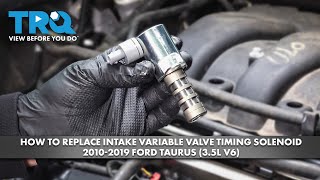
Est. part cost: $40-$80 - Failed Variable Camshaft Timing (VCT) Solenoid 🔴 High Probability → Shop Engine Camshaft As noted in multiple Ford TSBs, these solenoids are a common failure point, often getting stuck due to oil debris. TSB-16-0093 even notes this can happen on very low-mileage vehicles and advises replacing the affected solenoid. 🎬 Watch: Step-by-step guide to replacing the VVT solenoid.
How to confirm: A mechanic can use a scan tool to command the solenoid and monitor PIDs for desired vs. actual camshaft position. You can also test the solenoid's resistance with a multimeter (typically 6-12 ohms) or apply 12V to see if it actuates. On this engine, the solenoids are under the valve cover, requiring significant labor to access.
Typical fix: Replace the VCT solenoid for Bank 2 Exhaust. It is highly recommended to replace all four solenoids (Intake/Exhaust for both banks) at the same time due to the labor involved in removing the valve covers.
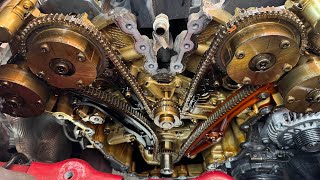
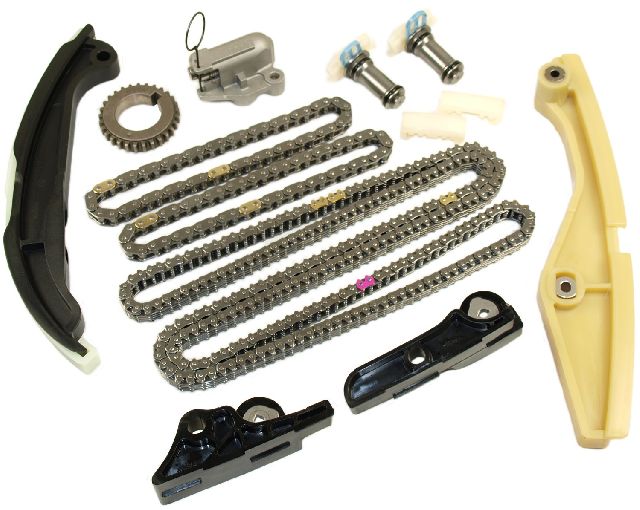
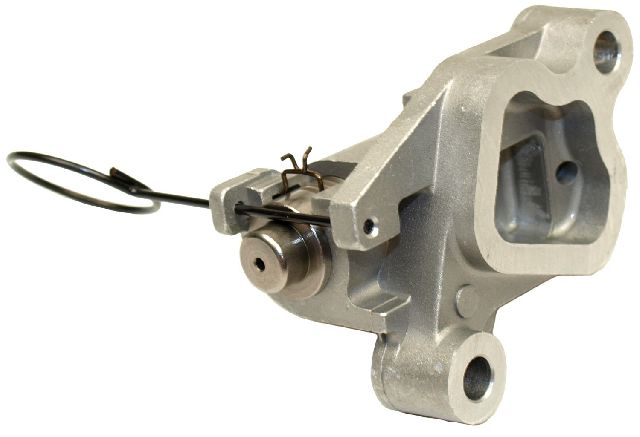
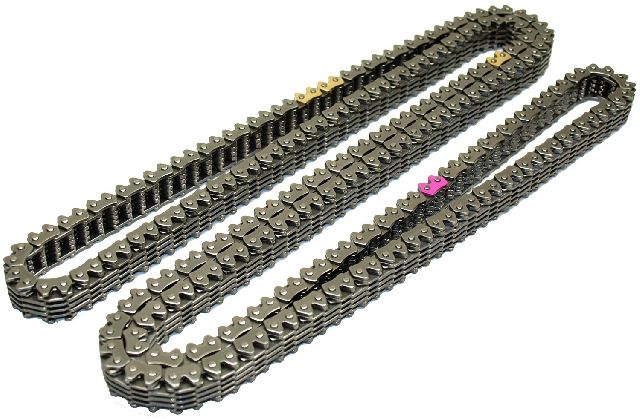
Est. part cost: $30-$70 per solenoid - Stretched Timing Chain / Failed Water Pump 🔴 High Probability → Shop Engine Timing Chain The 3.5L engines are known for timing chain stretch, especially over 100,000 miles. The issue is often caused or accelerated by the failure of the internal, timing-chain-driven water pump, which leaks coolant into the oil, destroying the chain, guides, and tensioners.
How to confirm: A rattling noise on cold startup is a classic symptom. Diagnosis starts after ruling out oil/solenoid issues. A scan tool showing a persistent large deviation in the VCT_EXH_ERR_B2 PID can indicate a mechanical timing issue. Confirmation requires removing the valve cover and/or timing cover to inspect the chain for slack and check timing marks.
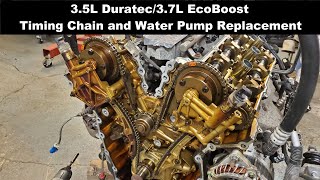
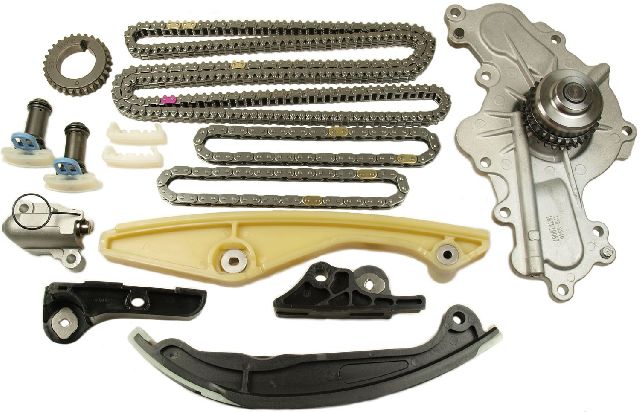
Typical fix: Replace the timing chain, tensioners, guides, and phasers. If this repair is done, the water pump should always be replaced at the same time. This is a very labor-intensive job, often costing over $2,000. 🎬 See this full DIY guide for timing chain and water pump replacement.
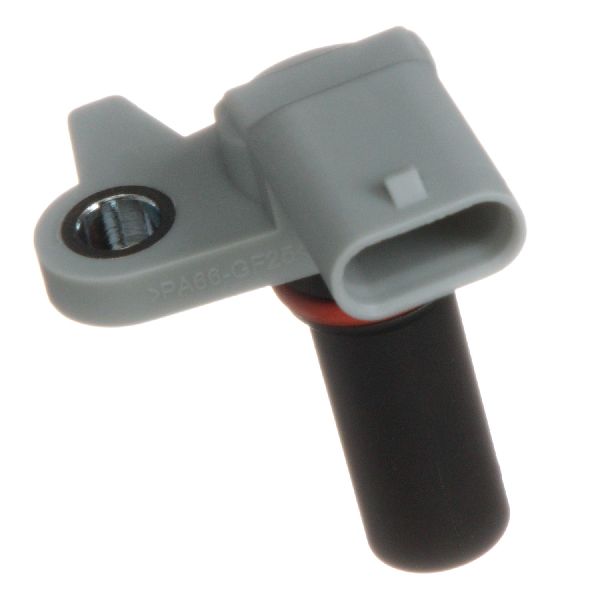
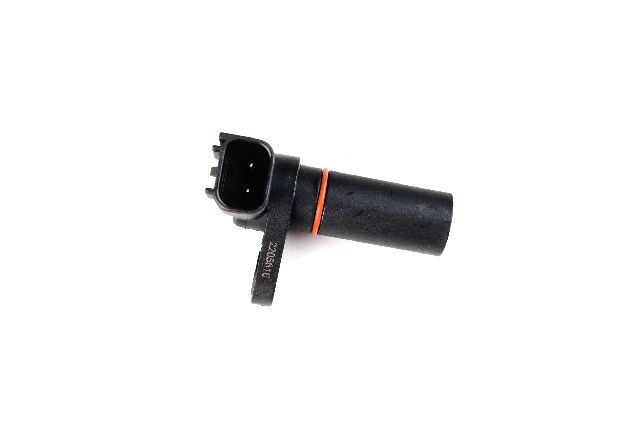
Est. part cost: $400-$800 for a full kit - Failed Camshaft Position Sensor ⚪ Low Probability → Shop Engine Camshaft Position Sensor
How to confirm: Test the sensor's output with a multimeter or oscilloscope. A failing sensor is less likely to cause a correlation code than a circuit code (like P0349) or no signal at all.
Typical fix: Replace the Bank 2 Exhaust camshaft position sensor.
Est. part cost: $25-$60
Rare But Worth Checking
- Failed Camshaft Phaser: → Shop Engine Camshaft The phaser is the gear at the end of the camshaft that the VCT solenoid controls. It can fail mechanically by getting stuck or having a pin shear, but this is less common than a solenoid or chain failure. It is typically replaced during a full timing chain job.
- Damaged Wiring or Connectors: Check the wiring harness for the Bank 2 cam sensor and VCT solenoid for any signs of fraying, melting, or corrosion. Since the solenoids are under the valve cover, the internal harness connector can also be a point of failure.
- Faulty Powertrain Control Module (PCM): → Shop Engine Control Module (ECM) This is extremely rare. The PCM should only be considered after all other possibilities have been exhaustively tested and ruled out.
Diagnosis Steps
- Check the engine oil level and condition. Look closely for a milky appearance, which indicates coolant contamination from a failing water pump. If oil is low, dirty, or contaminated, address that first (oil change or larger repair) before proceeding.
- Use an OBD-II scanner to check for any other pending or stored codes that could provide more clues.
- Using a capable scan tool, monitor the live data PIDs for desired vs. actual camshaft position for Bank 2 Exhaust (VCT_EXH_CMD_B2 vs VCT_EXH_ACT_B2) and the error PID (VCT_EXH_ERR_B2). A large, persistent error value at idle points towards a mechanical fault.
- Command the Bank 2 exhaust VCT solenoid on and off with the scan tool. If the timing angle does not change or responds slowly, the solenoid is likely stuck or failing.
- Inspect the wiring and connectors for the Bank 2 camshaft position sensor (front of the engine). Look for any damage or corrosion.
- If solenoids are suspected, the valve cover must be removed for access. At this point, it's wise to inspect the timing chain for obvious slack or broken guides. If replacing solenoids, it's recommended to replace all four due to the labor involved.
- If all electronics and solenoids test good, a mechanical timing issue is highly likely. This requires a full teardown to replace the timing chain, guides, tensioners, and water pump. This is best left to a professional.
Parts You'll Likely Need
- Variable Camshaft Timing (VCT) Solenoid Kit
(OEM #AT4Z-6M280-A, AT4Z-6M280-B, AT4Z-6M280-C (per TSB-16-0093))— This is a very common failure point for P0019, often getting stuck due to oil debris. Since they are under the valve cover, it is highly recommended to replace all four at once.
Trusted brands: Motorcraft, Dorman
OEM price range: $40-$80 per solenoid
Aftermarket price range: $30-$50 per solenoid - Timing Chain & Water Pump Kit — A stretched timing chain is the other high-probability cause, often induced by a failing internal water pump that contaminates the oil. The water pump should always be replaced as part of a timing chain service on this engine.
Trusted brands: Motorcraft, Cloyes
OEM price range: $500-$900
Aftermarket price range: $400-$800
Related Codes That Often Appear With This One
- P0017 — Crankshaft Position - Camshaft Position Correlation (Bank 1 Sensor B). Seeing P0019 and P0017 together strongly suggests a systemic issue affecting both exhaust cams, such as low oil pressure, contaminated oil, or a stretched timing chain.
- P0018 — Crankshaft Position - Camshaft Position Correlation (Bank 2 Sensor A). This points to the intake camshaft on the same bank (radiator side). Seeing P0018 and P0019 together points to a problem with Bank 2 specifically, such as a failed phaser, guide, or solenoid on that bank.
- P0300, P0304, P0305, P0306 — Random or specific misfire codes for Bank 2 (cylinders 4, 5, 6). Incorrect exhaust cam timing on Bank 2 can disrupt the combustion process enough to cause misfires on that bank.
Technical Service Bulletins (TSBs) & Recalls
- SSM 54366: Mentions P0019 in a list of VCT-related DTCs and refers to specific diagnostic tests.
- SSM 47170: States that P0019 may be due to small debris causing the VCT solenoid to stick.
- SSM 50067: Repeats the warning from SSM 47170 about debris causing sticking VCT solenoids.
- SSM 48423: Also notes that debris can cause the VCT solenoids to stick, leading to correlation codes.
- TSB-16-0093: Specifically addresses VCT codes including P0019 on low-mileage 2016 models and recommends solenoid replacement.
Platform-Specific Known Issues
- Internal Water Pump Failure: The most significant issue for the 3.5L V6 is the internal, timing-chain-driven water pump. A failure of its seal leaks coolant directly into the oil, compromising lubrication and leading to rapid failure of the timing chain and related components, which directly causes correlation codes like P0019.
- Multiple Ford Technical Service Bulletins (TSBs), including SSM 47170, SSM 50067, and SSM 48423, explicitly state that P0019 (among other VCT codes) can be caused by 'small debris causing the VCT solenoid to stick.' This officially confirms the high probability of a solenoid or oil quality issue.
- TSB-16-0093 addresses these codes appearing on very low-mileage (under 2000 miles) 2016 vehicles, indicating that the VCT solenoid issue can occur even on new engines, and directs technicians to replace the affected solenoid.
Mechanic-Grade Diagnostic Values
- VCT Solenoid Resistance — expected: 5 to 15 Ohms, with a more precise range often cited as 8-12 Ohms.. Failure: A reading of infinite resistance (open circuit) or a value significantly outside the 8-12 Ohm range.
- Camshaft Position Sensor (3-wire Hall Effect) - Power Wire Voltage — expected: Approximately 5 volts with the key on, engine off.. Failure: No voltage or significantly low voltage indicates a wiring or PCM issue.
- Camshaft Position Sensor (3-wire Hall Effect) - Signal Wire Voltage (Static) — expected: Approximately 4 to 5 volts with the key on, engine off.. Failure: No voltage or significantly low voltage.
- Camshaft Position Sensor (3-wire Hall Effect) - Signal Wire Voltage (Dynamic) — expected: Voltage should drop to near zero when a metal object is passed in front of the sensor tip.. Failure: Voltage does not change, indicating a faulty sensor.
- Scan Tool PID: VCT_EXH_ERR_B2 (Camshaft Timing Error Bank 2 Exhaust) — expected: Close to 0 degrees at warm idle.. Failure: A persistent large value (e.g., more than +/- 5 degrees) at idle that doesn't correct itself points to a mechanical timing issue (stretched chain) or a stuck phaser/solenoid.
Scan Tool Commands That Help
- Ford IDS (Integrated Diagnostic System): VCT Solenoid On/Off Command — This bidirectional control allows a technician to manually activate and deactivate a specific VCT solenoid while monitoring cam angle PIDs. If the PCM commands the solenoid on but the cam angle doesn't change, it confirms a stuck solenoid, clogged oil passage, or failed phaser. This is a crucial step to isolate a solenoid failure without disassembly.
- Ford IDS (or high-level scanner like FORScan): Datalogger for VCT PIDs — Used to monitor desired vs. actual cam positions (e.g., VCT_EXH_CMD_B2 vs. VCT_EXH_ACT_B2) and the resulting error (VCT_EXH_ERR_B2) in real-time during a test drive. This helps differentiate between an intermittent fault and a hard mechanical failure.
Wiring & Ground Locations
- G105 — Right center rear of the engine compartment.. This is a powertrain ground location. A loose or corroded G105 ground can cause erratic behavior and incorrect readings from various engine sensors, including the camshaft and crankshaft position sensors, potentially leading to false correlation codes.
- VCT Solenoid Connector — On top of the valve cover for Bank 2 (radiator side), connecting to the solenoid which is located underneath the cover.. This is the primary point for electrical testing of the VCT solenoid. The connector or wiring can become damaged from heat and vibration, leading to an open or shorted circuit that mimics a failed solenoid.
- Camshaft Position Sensor Connector (Bank 2) — On the front of the engine, near the Bank 2 (radiator side) cylinder head.. This connector is where voltage and signal tests for the CMP sensor are performed. Damage, corrosion, or oil contamination in this connector can cause a P0019 code or related circuit codes like P0390.
Real Owner Repair Stories
- Ford F150 Forum user (2012 Ford F-150 3.5L EcoBoost) — Check Engine Light with P0019, delayed acceleration, overheating.
❌ Tried (didn't work) Replaced the Bank 2 exhaust Camshaft Position Sensor (CPS)., Replaced the VVT (VCT) solenoid after testing the old one and finding it was bad (it wasn't clicking when 12V was applied). The code returned immediately., Tore the engine down a second time to re-do the entire timing job, believing the phaser was installed incorrectly. The code still returned.
✅ What actually fixed it The user's final resolution was not posted in the thread, but another user in the same thread with similar symptoms reported a fix: applying 12V directly to the new solenoid connector multiple times to 'unstick' it. After cycling it, the misfire and code were resolved after a short drive, suggesting that even new solenoids can be sticky or that debris was cleared by the repeated actuation. - YouTube channel 'Rain City Wrench' (2014 Ford Explorer 3.5L) — Running horribly with a check engine light on for P0019.
❌ Tried (didn't work) Initial diagnosis pointed towards a timing issue.
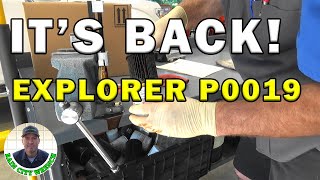
✅ What actually fixed it Using the Ford IDS scan tool, the technician commanded the Bank 2 exhaust VCT solenoid. The live data showed the cam timing was stuck. By repeatedly cycling the solenoid with the scan tool, the technician was able to get it to 'pop back closed' and function correctly, immediately resolving the rough running. This confirmed the VCT solenoid was sticking and needed replacement, but avoided a misdiagnosis of a more severe timing chain issue.
OEM Part Supersession History
AT4Z-6M280-A→AT4Z-6M280-B, AT4Z-6M280-C— Part revisions are common to improve reliability, change materials, or update the internal valve design to be more resistant to sticking from oil debris. TSB-16-0093 specifically calls out these part numbers for addressing VCT-related DTCs.
Heads up: While the base part number is 6M280, the prefix and suffix (e.g., AT4Z, -A, -B) are critical. Using an older revision may lead to premature failure. Always verify the latest part number with a dealer using the vehicle's VIN.
Model Year Variations Within This Range
- 2015-2019: The 3.5L V6 engine used in the transverse-mounted Taurus (and Explorer, Flex) has a different timing cover and internal water pump setup compared to the longitudinal version used in the F-150. While they share the same core architecture and VCT issues, repair procedures for the timing chain and water pump are not identical.
Helpful Videos
We Have This Part in Stock

The information in this article is provided for general reference and educational purposes only. Vehicle specifications, procedures, and part compatibility can vary by production date, trim level, and region. Always consult your vehicle's factory service manual and verify part numbers before purchasing or performing repairs. Safety-critical components such as airbags, seat belts, and braking systems should be installed by a qualified professional.
- Ford TAURUS:
- 🧭 Diagnostic Flowchart
- 🎬 Helpful Videos
- 🛍️ Shop This Part
- What's Unique About the 2015-2019 Ford TAURUS
- Symptoms You May Notice
- Most Likely Causes
- Rare But Worth Checking
- Diagnosis Steps
- Parts You'll Likely Need
- Related Codes That Often Appear With This One
- Technical Service Bulletins (TSBs) & Recalls
- Platform-Specific Known Issues
- Mechanic-Grade Diagnostic Values
- Scan Tool Commands That Help
- Wiring & Ground Locations
- Real Owner Repair Stories
- OEM Part Supersession History
- Model Year Variations Within This Range
- 🎟️ Get 5% Off