

P0019 on 2020-2021 Ford Transit: Crank-Cam Correlation Causes and Fixes
P0019 on a 2020-2021 Ford Transit usually points to a problem with the Bank 2 (driver's side) exhaust camshaft timing. The most common fix is replacing the Bank 2 exhaust VCT solenoid due to sticking, often caused by old or dirty oil. An oil change and a new solenoid can often resolve the issue for under $100 in parts. In higher mileage engines, a stretched timing chain is also a strong possibility.
- Always check your engine oil level and condition first; an oil change is the cheapest and easiest first step.
- P0019 on this Transit most often points to a faulty Bank 2 (driver's side) exhaust VCT solenoid, a known issue confirmed by Ford.
- Before performing expensive mechanical repairs like a timing chain replacement, ensure the PCM has the latest software, as a simple update may fix the problem.
- If both P0019 and P0025 are present, it is highly likely that the Bank 2 exhaust VCT solenoid has failed.
What's Unique About the 2020-2021 Ford TRANSIT
For this generation of Ford Transit with the 3.5L V6 engines, the Variable Camshaft Timing (VCT) system is a known weak point. Ford has issued multiple Technical Service Bulletins (TSBs) acknowledging that codes like P0019 can be triggered by small debris in the engine oil, causing the VCT solenoids to stick. [TSB 50067] TSB SSM 50067 specifically advises technicians to use a scan tool to cycle the affected VCT solenoid 10 times to try and clear debris before replacing the part. This makes the engine particularly sensitive to oil quality and maintenance intervals. Another TSB suggests that the issue can sometimes be resolved with a PCM software update, indicating that not all P0019 codes on this platform are caused by a mechanical part failure. [TSB 21-2224]
Diagnostic Flowchart
Tap your situation to follow the diagnostic path that matches what you're seeing on this vehicle.
Symptoms You May Notice
- Check Engine Light is on
- Rough or unstable idle
- Hesitation or stumbling during acceleration
- Reduced engine power
- Decreased fuel economy
- Engine may stall at low speeds or when coming to a stop
- Rattling noise from the front of the engine on a cold start, lasting 2-5 seconds (strong indicator of timing chain/phaser issues) 🎬 Watch: Hear what the cold start rattle sounds like.
- Replacing the camshaft position sensor when the actual problem is a sticking VCT solenoid or dirty oil.
- Replacing the crankshaft position sensor. While possible, it's much less likely to be the cause than the camshaft-related components for this specific code.
- Immediately assuming a stretched timing chain without first diagnosing the cheaper and more common VCT solenoid and oil-related issues.
Most Likely Causes
- Low, Dirty, or Incorrect Engine Oil 🔴 High Probability The VCT system uses oil pressure to adjust cam timing. Ford TSB SSM 50067 specifically notes that small debris in the oil can cause VCT solenoids to stick, triggering this code. The entire VCT system is dependent on clean oil at the correct pressure.
How to confirm: Check the engine oil level on the dipstick and inspect its color and consistency. If the oil is below the minimum mark, black, or sludgy, it's a likely contributor. This is always the first diagnostic step.
Typical fix: Perform an engine oil and filter change using the correct OEM-specified viscosity oil (e.g., Motorcraft 5W-30 Synthetic Blend, check your owner's manual). Clear codes and test drive.
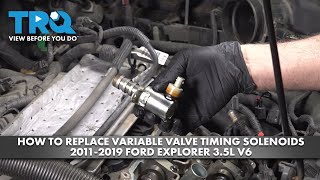
Est. part cost: $40-$80 - Failing Bank 2 Exhaust VCT Solenoid 🔴 High Probability This is the most common failed part for this code. TSBs SSM 50067 and TSB 16-0038 directly point to faulty VCT solenoids as the cause for P0019, sometimes even on very low-mileage vehicles. Debris in the oil physically prevents the solenoid from moving correctly.
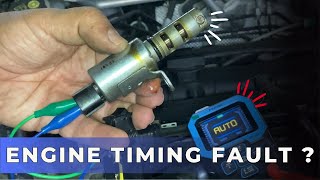
How to confirm: After an oil change, if the code persists, this is the next logical step. A diagnostic scan tool can be used to command the solenoid on and off to see if it's stuck; you should hear a click and see a change in engine performance. TSB SSM 50067 recommends cycling the solenoid 10 times with a scan tool to attempt to clear it before replacement. 🎬 Watch: A mechanic explains how to diagnose VCT solenoid issues.
Typical fix: Replace the Bank 2 (driver's side) exhaust VCT solenoid. It is located on the front of the driver's side valve cover.
Est. part cost: $30-$70 - Powertrain Control Module (PCM) Software Issue 🟡 Medium Probability → Shop Engine Control Module (ECM) Ford TSB 21-2224 explicitly states that this code (among others) may be due to the software in the PCM having overly sensitive parameters. [TSB 21-2224]
How to confirm: A Ford dealership or a qualified shop with access to Ford's diagnostic tools (like IDS) can check the current PCM software calibration version against available updates for your vehicle's VIN.
Typical fix: Reprogram the PCM with the latest software calibration. This is a dealer or specialty shop-only repair.
Est. part cost: $0 (if under warranty) - $150 - Stretched Timing Chain or Worn Timing Components ⚪ Low Probability → Shop Engine Timing Chain The Ford 3.5L engines, particularly the EcoBoost variant, are known to have timing chain stretching issues, especially over 100,000 miles. This creates slack and directly causes cam/crank correlation codes.
How to confirm: A persistent rattling noise from the front of the engine on cold starts is a classic symptom. A mechanic can use a scan tool to view cam/crank deviation data (e.g., VCT_EXH_ERR_B2 PID). Physical inspection for chain slack requires removing the valve cover and possibly the front engine cover, which is a labor-intensive diagnosis.
Typical fix: Replace the timing chain, tensioners, and guides. This is a labor-intensive job often costing over $2,000.
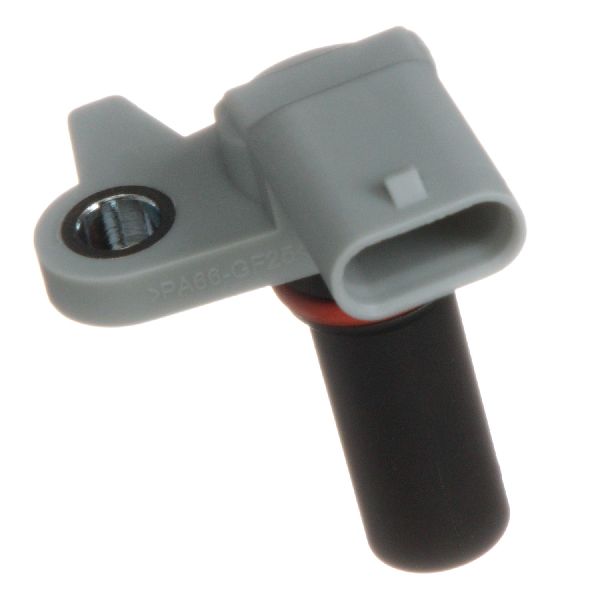
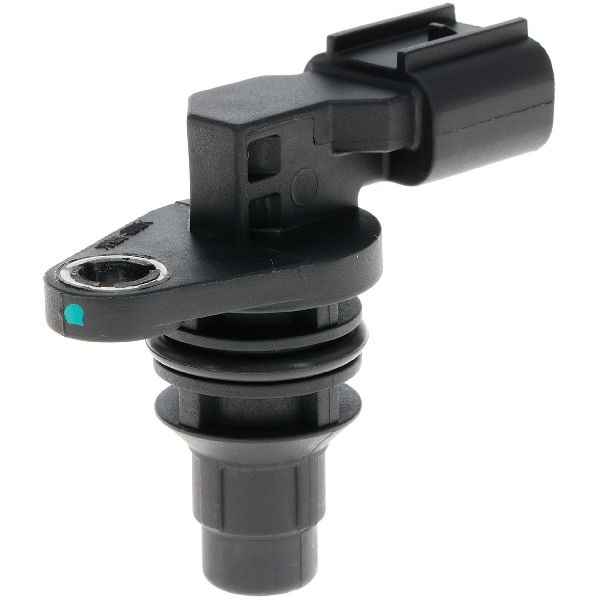
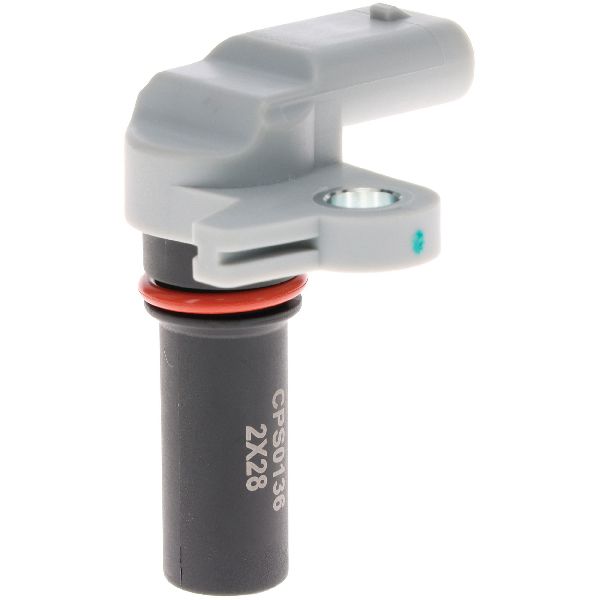
Est. part cost: $400-$800 - Faulty Bank 2 Exhaust Camshaft Position Sensor (CMP) ⚪ Low Probability → Shop Engine Camshaft Position Sensor
How to confirm: Inspect the sensor and its connector for damage. A multimeter can be used to test the sensor's resistance. Swapping it with the intake sensor on the same bank (if they are identical parts) can see if the code changes to P0018. The sensor is located on the rear of the driver's side cylinder head.
Typical fix: Replace the Bank 2 exhaust camshaft position sensor.
Est. part cost: $25-$60
Rare But Worth Checking
- Failed Camshaft Phaser: → Shop Engine Camshaft The phaser (or VVT actuator) is the gear on the end of the camshaft that actually does the rotating. It can get stuck or fail internally due to oil contamination or mechanical wear, even if the VCT solenoid is working. This is usually diagnosed after all other causes are ruled out and is often replaced during a timing chain job.
- Blocked Oil Passages: In cases of severe engine sludge or after a major component failure, small oil passages leading to the VCT solenoids and cam phasers can become blocked. One owner on a forum reported having to tear down the engine a second time after a timing job because of blocked passages, even after replacing the solenoid.
Diagnosis Steps
- Check Engine Oil: Verify the oil level is correct and the oil is clean. If in doubt, perform an oil and filter change with the correct grade oil. Clear the code and test drive. This is the first and most critical step.
- Scan for Other Codes: Check for any other related DTCs, especially P0025, which can help pinpoint the VCT solenoid.
- Check for TSBs/PCM Updates: Ask a dealer or qualified shop to check if TSB 21-2224 (PCM update) or SSM 50067 (VCT solenoid cleaning procedure) applies to your vehicle's VIN.
- Listen for Noises: On a cold start, listen for a 2-5 second rattle from the front of the engine. If present, a stretched timing chain is highly likely.
- Test VCT Solenoid: Use a scan tool to perform an actuator test on the Bank 2 exhaust VCT solenoid. Command it on/off and listen for a click and watch for a change in engine idle. Per TSB SSM 50067, cycle it 10 times to attempt to clear debris. If it fails the test or the code returns, replace it.
- Inspect Wiring: Visually inspect the wiring harness and connector for the Bank 2 exhaust VCT solenoid and camshaft position sensor. Look for any signs of damage, corrosion, or loose connections.
- Test/Replace Camshaft Position Sensor: If a new solenoid does not fix the issue, test and/or replace the Bank 2 exhaust camshaft position sensor.
- Advanced Mechanical Diagnosis: If all else fails, the issue is likely mechanical (timing chain or phaser). The vehicle should be taken to a professional to inspect the timing chain for stretch and check the camshaft phasers for proper operation. This is an advanced and labor-intensive diagnosis.
Parts You'll Likely Need
- Engine Variable Camshaft Timing (VCT) Solenoid (Bank 2 Exhaust)
(OEM #AT4Z-6M280-A)— This is the most common failure point for P0019 on this engine, as confirmed by multiple Ford TSBs. It gets stuck from oil debris. Note: This part number often fits the driver's side exhaust OR the passenger side intake.
Trusted brands: Motorcraft, Dorman, Standard Motor Products
OEM price range: $40-$60 - Engine Oil and Filter — Dirty, low, or incorrect viscosity oil is the root cause of many VCT system failures and should be changed as the first step in diagnosis.
Trusted brands: Motorcraft, Mobil 1, Castrol
OEM price range: $40-$80 - Camshaft Position Sensor (Bank 2 Exhaust)
(OEM #BL3Z-6B288-C)— While less common than a solenoid failure, a faulty sensor can send incorrect data to the PCM, triggering the code. It's often replaced unnecessarily when the issue is mechanical or oil-related.
Trusted brands: Motorcraft, Bosch, NGK/NTK
OEM price range: $30-$50
Related Codes That Often Appear With This One
- P0025 — P0025 ('B' Camshaft Position - Timing Over-Retarded Bank 2) is the companion code for the same camshaft. TSB 16-0038 notes that P0019 and P0025 appearing together strongly point to a faulty Bank 2 exhaust VCT solenoid.
- P0017 — This code is for 'Crankshaft Position - Camshaft Position Correlation (Bank 1 Sensor B)'. If you see P0019 and P0017 together, it suggests a problem affecting the exhaust camshafts on both banks, possibly related to overall low oil pressure, severe oil contamination, or a stretched timing chain affecting both sides.
- P0349 — This code is for 'Camshaft Position Sensor 'A' Circuit Intermittent (Bank 2)'. Seeing this with P0019 could point more strongly toward a wiring or sensor issue on Bank 2, rather than a purely mechanical or oil-related problem.
Technical Service Bulletins (TSBs) & Recalls
- SSM 54366: General TSB for multiple VCT codes, including P0019, on 2020-2021 Ford vehicles.
- SSM 50067: Highlights sticking VCT solenoids due to debris as a cause for P0019.
- TSB 21-2224: Points to PCM software as a potential cause for P0019.
- TSB 16-0038: Advises replacing the Bank 2 exhaust VCT solenoid if P0019 and P0025 are present on low-mileage 3.5L GTDI engines.
Platform-Specific Known Issues
- Cold Start Rattle: A prominent issue on the 3.5L engine family is a distinct rattling or grinding noise from the front of the engine that lasts for 2-5 seconds immediately after a cold start. This noise is a hallmark symptom of worn camshaft phasers and/or a stretched timing chain. If a P0019 code is accompanied by this noise, the diagnosis shifts strongly toward a major mechanical timing job being required, rather than just a simple solenoid replacement.
Mechanic-Grade Diagnostic Values
- VCT Solenoid Resistance — expected: 5-15 Ohms. Some sources cite a more specific range of 6.9-7.9 Ohms.. Failure: A reading of 0 Ohms (short), infinite resistance (open circuit), or a value significantly outside the expected range.
- Camshaft Position Sensor (3-wire Hall-effect) Voltage Test — expected: With the ignition on and sensor connected, the power wire and signal wire should both read approximately 5V DC relative to a good ground. The ground wire should show battery voltage (approx. 12V) when tested against the positive battery terminal.. Failure: Voltages that are significantly lower, higher, or absent indicate a problem with the wiring harness or the PCM, not necessarily the sensor itself.
- Ford IDS PID: VCT_EXH_DIF2 (ANGL) — expected: This value, representing the difference between desired and actual cam angle for Bank 2 Exhaust, should remain close to 0 degrees during operation.. Failure: A sustained deviation from zero, especially during throttle changes, indicates the phaser is not responding correctly to PCM commands.
- Hot Idle Oil Pressure (Mechanical Gauge) — expected: A minimum of 15-25 PSI at hot idle is generally considered healthy for the VCT system to operate.. Failure: Pressure below 15 PSI at hot idle can cause the VCT system to malfunction and set correlation codes.
Scan Tool Commands That Help
- Ford IDS (Integrated Diagnostic System): VCT Solenoid Actuator Test / Bidirectional Control — This command allows a technician to manually cycle the Bank 2 exhaust VCT solenoid with the engine running. A corresponding change in idle (stumble or roughness) confirms the solenoid is mechanically moving and oil passages are likely clear. No change in idle points to a stuck solenoid or blocked passage.
- Ford IDS (or high-end equivalent): Monitor PIDs: VCT_EXH_ACT2 and VCT_EXH_DIF2 — These live data PIDs are specific to Bank 2 Exhaust. VCT_EXH_ACT2 shows the actual cam angle, while VCT_EXH_DIF2 shows the error from the commanded position. Monitoring these while driving provides definitive proof of a correlation issue and can help distinguish between a slow-to-respond phaser and a complete failure.
- Ford IDS: Data Logger with Histogram Mode — For intermittent faults, a technician can record the VCT error PIDs over a drive cycle. The histogram visually displays how often and how severe the timing error is, helping to differentiate a minor, occasional stick from a major mechanical fault.
Wiring & Ground Locations
- Bank 2 Camshaft Position Sensor Connector — On the rear of the driver's side cylinder head.. This is the primary connection point for the sensor that reports the exhaust camshaft's position. Damage, corrosion, or oil contamination in this 3-pin connector can cause a loss of signal or incorrect readings, directly triggering P0019.
- Bank 2 VCT Solenoid Connector — On the front of the driver's side valve cover, connecting to the solenoid located underneath.. This 2-pin connector provides power and control signals from the PCM to the solenoid. A poor connection here will prevent the solenoid from actuating, leading to a timing correlation fault.
- Main Engine or Body Ground Straps — Various locations, including from the engine block to the chassis and from the cab body to the frame, often under the vehicle near the passenger side.. Corroded or loose main ground straps can introduce electrical noise and voltage drops throughout the powertrain control system, potentially causing erratic sensor readings and incorrect operation of actuators like the VCT solenoids. While not a direct cause, it can create difficult-to-diagnose electrical gremlins that mimic component failure.
Real Owner Repair Stories
- Ford Truck Enthusiasts Forum (2012 Ford F-150 3.5L EcoBoost) — P0019 code, nasty delay in acceleration, and overheating immediately after a timing chain replacement.
❌ Tried (didn't work) Replacing the Bank 2 exhaust Camshaft Position Sensor (CPS)., Replacing the Bank 2 exhaust VCT solenoid (the old one failed a 12V bench test but the new one didn't fix the code).
✅ What actually fixed it The owner tore the engine down a second time and found the Bank 2 exhaust camshaft phaser had been installed incorrectly on its locating pin. Even after correcting this, the code returned, and the final resolution was not posted, indicating a complex underlying issue possibly related to blocked oil passages from the initial job. - Ford F150 Forum (2011 Ford F-150 3.5L EcoBoost with 208k miles) — P0018 and P0019 codes appeared immediately after performing a second timing chain job.
❌ Tried (didn't work) The user was 100% confident the mechanical timing was correct due to using the proper cam holding tools.
✅ What actually fixed it The user suspected the VCT solenoids on Bank 2 got dried out and stuck during the reinstallation process. The thread confirms another user had the same issue after a timing job and suspected the VCT solenoids were contaminated or stuck during the procedure, highlighting a common pitfall of this repair. The final fix was not explicitly stated, but the strong implication was that addressing the VCT solenoids post-timing job was the necessary step.
OEM Part Supersession History
BL3Z-6M280-B / AT4Z-6M280-B→AT4Z-6M280-A— Part consolidation and potential internal revisions for durability. Ford often uses different part numbers for different cam positions (e.g., intake vs. exhaust, left vs. right bank) that are physically identical but later get consolidated into a single part number that serves multiple positions.
Heads up: For the 3.5L V6, TSB 16-0038 specifies different solenoids for intake and exhaust. AT4Z-6M280-A is often cited for Bank 2 Exhaust, but it's critical to verify by VIN as it may also be used for Bank 1 Intake. Using the wrong solenoid, even if it fits, can cause performance issues.
Helpful Videos
We Have This Part in Stock


The information in this article is provided for general reference and educational purposes only. Vehicle specifications, procedures, and part compatibility can vary by production date, trim level, and region. Always consult your vehicle's factory service manual and verify part numbers before purchasing or performing repairs. Safety-critical components such as airbags, seat belts, and braking systems should be installed by a qualified professional.
- Ford TRANSIT:
- 🧭 Diagnostic Flowchart
- 🎬 Helpful Videos
- 🛍️ Shop This Part
- What's Unique About the 2020-2021 Ford TRANSIT
- Symptoms You May Notice
- Most Likely Causes
- Rare But Worth Checking
- Diagnosis Steps
- Parts You'll Likely Need
- Related Codes That Often Appear With This One
- Technical Service Bulletins (TSBs) & Recalls
- Platform-Specific Known Issues
- Mechanic-Grade Diagnostic Values
- Scan Tool Commands That Help
- Wiring & Ground Locations
- Real Owner Repair Stories
- OEM Part Supersession History
- 🎟️ Get 5% Off