

P0019 on 2010-2012 GMC Terrain 3.0L V6: Stretched Timing Chain Causes and Fixes
On a 2010-2012 GMC Terrain with the 3.0L V6, code P0019 almost always means the timing chains have stretched. This is a serious, well-known issue requiring a complex repair costing $1,800-$3,500. Do not drive the vehicle, as a chain failure can destroy the engine. The only permanent fix is replacing the chains, guides, and tensioners with updated parts.
- P0019 on a 2010-2012 Terrain V6 almost certainly means you need a timing chain replacement.
- Do not drive the vehicle. A chain failure can cause catastrophic engine damage.
- Do not waste money replacing camshaft or crankshaft sensors first; they are rarely the cause.
- The repair is expensive ($1,800-$3,500) and is not a DIY-friendly job.
- Using high-quality, dexos-approved 5W-30 oil and adhering to shorter oil change intervals (5,000 miles) can help prolong the life of the timing components.
What's Unique About the 2010-2012 GMC Terrain
The GM 3.0L LF1 "High Feature" V6 engine is notorious for premature timing chain stretch. This is not a random part failure but a widely recognized pattern, acknowledged by GM via multiple Technical Service Bulletins (TSBs). The issue is often linked to the original timing chain design and an overly optimistic Oil Life Monitor (OLM) system that encouraged excessively long oil change intervals, leading to oil degradation. As a result, P0019 on this specific platform is almost a direct diagnosis of a stretched timing chain, whereas on other vehicles it might point to a simpler sensor or solenoid failure.
Symptoms You May Notice
- Check Engine Light is on
- Engine running rough or unstable idle
- Hesitation or stumbling during acceleration
- Noticeable loss of engine power
- Decreased fuel economy
- Rattling or chain-slap noise from the front of the engine, especially on a cold start
- Engine may stall, especially at low speeds or when returning to idle after acceleration.
- "Service Stabilitrak" message may appear on the dash along with the Check Engine Light.
- Replacing the camshaft position sensor
- Replacing the crankshaft position sensor
- Replacing only the VVT solenoids without checking mechanical timing
Most Likely Causes
- Stretched Timing Chains and Worn Guides/Tensioners 🔴 High Probability → Shop Engine Timing Chain This is a well-documented systemic issue with the GM 3.0L/3.6L V6 engine family due to chain design and sensitivity to oil quality. Extended oil change intervals recommended by the factory Oil Life Monitor exacerbate the wear. GM acknowledged the problem in TSB #12-06-01-009F.
How to confirm: A mechanic can use a scan tool to monitor camshaft correlation data; a deviation over 4-5 degrees is a strong indicator. A visual inspection for a fully extended tensioner requires removing the valve cover. A rattling noise on cold start is a strong audible indicator.
Typical fix: Replacement of all timing chains (one primary, two secondary), tensioners, and guides with an updated kit. TSB #12-06-01-009F notes that it is often unnecessary to replace sprockets or phasers. It is also recommended to replace the water pump during this service.
Est. part cost: $250-$600 for a complete kit - Low Engine Oil Level or Degraded Oil 🟡 Medium Probability The variable valve timing (VVT) system, which includes the camshaft phasers and hydraulic tensioners, is operated by engine oil. Low or dirty oil can cause the phasers to respond slowly or get stuck and starves the tensioners, leading to chain slack and a correlation error. This is also the primary contributor to timing chain wear.
How to confirm: Check the oil level on the dipstick and inspect its condition. If it is very low, black, or smells of fuel, this is a likely contributor. Many owners of these engines report excessive oil consumption.
Typical fix: Perform an oil and filter change using the correct specification oil (dexos-approved 5W-30). Clear codes and see if the problem returns. Note: this is often a temporary fix or a contributing factor, not the root cause, if the chains are already stretched.
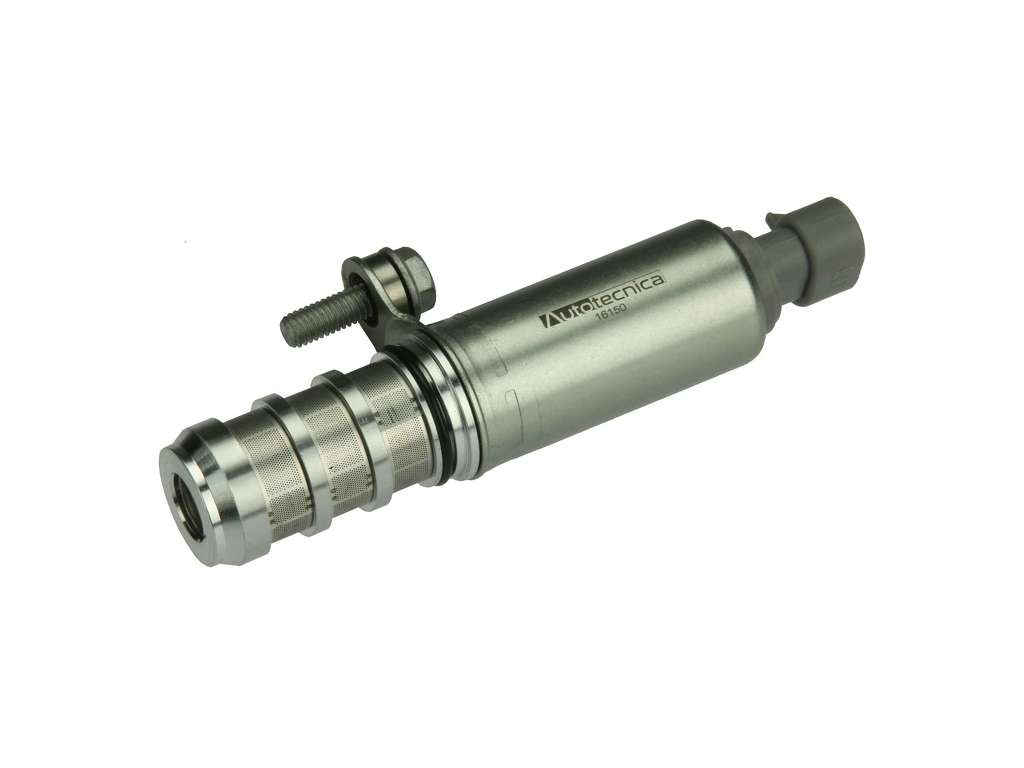
Est. part cost: $40-$80 - Failed Camshaft Position Actuator Solenoid (VVT Solenoid) ⚪ Low Probability → Shop Engine Camshaft These solenoids control oil flow to the cam phasers. They can become clogged with sludge (especially with poor oil maintenance) or fail electrically. While a possible cause, it's far less common than chain stretch for this specific code and engine.
How to confirm: Swap the Bank 2 exhaust solenoid with another one (e.g., the intake solenoid on the same bank) and see if the code changes (e.g., to P0018). If it does, the solenoid is bad. The expected resistance is between 6.9 and 13 Ohms.
Typical fix: Replace the faulty solenoid. They are relatively accessible on the top of the engine. 🎬 See how to test and clean VVT solenoids before starting repairs.
Est. part cost: $30-$70
Rare But Worth Checking
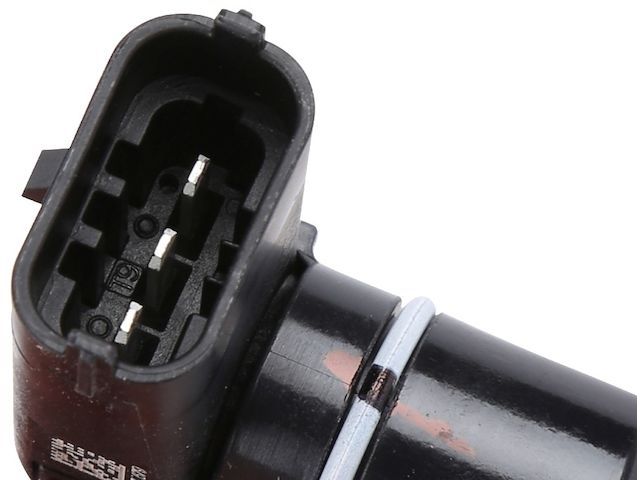
- Failed Camshaft Position Sensor: → Shop Engine Camshaft Position Sensor While possible, this is rarely the cause of a correlation code on this engine. The sensors are robust; the mechanical timing components are the weak link. Do not replace sensors without confirming they are faulty via testing.
- Failed Camshaft Phaser (Actuator): → Shop Engine Camshaft The gear on the end of the camshaft that actually adjusts the timing can fail or get stuck. This is less common than chain stretch but is a possible mechanical failure. TSB #12-06-01-009F explicitly states that phasers are not typically worn and do not need replacement for a stretched chain issue. Replacement is labor-intensive, often done during a timing chain job.
Diagnosis Steps
- Check engine oil level and condition. If low or dirty, perform an oil change with manufacturer-specified oil (5W-30 dexos), clear the code, and re-test.
- Scan for all stored OBD-II codes. Note if P0008, P0018, or other correlation codes are present, as this strongly indicates a timing chain issue.
- Listen for a chain rattle from the front (passenger side) of the engine during a cold start.
- Using a scan tool, observe live data for camshaft position deviation. A significant and persistent deviation (more than 4-5 degrees) confirms a timing error.
- As a diagnostic step, you can swap the Bank 2 exhaust VVT solenoid with the intake solenoid. If the code changes to P0018, the solenoid is faulty.
- If the above steps do not resolve the issue, assume a mechanical timing problem. 🎬 Watch: 4 DIY methods to troubleshoot P0019 before visiting a shop. The next step is engine disassembly to inspect the timing chains, guides, and tensioners. A fully extended tensioner is definitive proof of a stretched chain.
Parts You'll Likely Need
- Timing Chain Kit
(OEM #12651450 (superseded by 12693218))— This is the most probable cause of code P0019 on this engine. A complete kit should include all three chains, three tensioners, and all guides. Using the updated GM kit or a quality aftermarket equivalent is critical for a lasting repair.
Trusted brands: ACDelco (GM OE), Cloyes (p/n 9-0753S)
OEM price range: $400-$600
Aftermarket price range: $250-$450 - Camshaft Position Actuator Solenoid (VVT Solenoid)
(OEM #12655421 (Exhaust), 12655420 (Intake) - Verify by VIN. May be superseded by 12679100.)— A much cheaper and easier part to replace than the timing chains, it can become clogged or fail, causing timing correlation issues. Often replaced as a preliminary step or during the timing chain job.
Trusted brands: ACDelco, Delphi, Dorman
OEM price range: $40-$70
Aftermarket price range: $25-$50
Related Codes That Often Appear With This One
- P0008 — A general engine position system performance error for Bank 1. Its presence with P0019 points to a stretched primary timing chain affecting both banks.
- P0018 — This is the correlation code for the intake camshaft on the same bank (Bank 2). Seeing P0018 and P0019 together strongly suggests a problem with the secondary timing chain for Bank 2.
- P0016 / P0017 — These are the equivalent correlation codes for Bank 1 (firewall side). Seeing all four codes (P0016, P0017, P0018, P0019) indicates a major, systemic timing failure affecting the primary and both secondary chains.
Technical Service Bulletins (TSBs) & Recalls
- PIP3423P: Advises technicians to inspect for loose timing chains when DTCs like P0019 are set.
- 12-06-01-009F: The main TSB addressing this issue. It announces updated timing chain kits, provides a list of affected vehicles including the 2010-2012 Terrain (LF1), and clarifies that sprockets and phasers usually don't need replacement for this specific issue.
- 11340C: A Special Coverage Adjustment (now expired) that extended the warranty for timing chain replacement to 10 years or 120,000 miles. It also included an ECM reprogram to adjust the Oil Life Monitor.
Platform-Specific Known Issues
- The 3.0L LF1 V6 engine has a well-documented history of premature timing chain stretch, acknowledged by GM through multiple TSBs.
- The original Oil Life Monitor (OLM) calibration often recommended oil change intervals that were too long, leading to oil degradation that accelerated chain wear. Experts now recommend 5,000-mile intervals with full synthetic dexos-spec oil.
- Some owners on forums have reported success in getting dealerships to cover a portion of the repair cost under 'goodwill' programs, even when just outside the warranty period, but this is not guaranteed.
Mechanic-Grade Diagnostic Values
- Camshaft Position Actuator Solenoid (VVT Solenoid) Resistance — expected: 6.9 to 13 Ohms. Failure: A reading of 0 Ohms (short), infinite/OL (open), or a reading outside the expected range indicates a failed solenoid.
- Scan Tool Live Data: Camshaft Position Variance/Correlation Deviation — expected: Less than 4-5 degrees at a steady idle.. Failure: A consistent deviation greater than 4-5 degrees indicates a mechanical timing issue (stretched chain). The ECM will typically set code P0019 when the deviation exceeds 9-10 degrees.
- Camshaft Position Sensor (3-wire Hall-effect) Signal Voltage — expected: Approximately 5 volts on the signal wire with Key On, Engine Off (KOEO).. Failure: When a metal object (like a wrench socket) is passed in front of the sensor tip, the voltage should drop to near 0 volts. If the voltage does not change, the sensor is likely faulty.
Scan Tool Commands That Help
- GDS2 (GM Global Diagnostic System 2): Camshaft Position Actuator Solenoid Test — This bidirectional control commands the VVT solenoids on and off while the engine is running. The technician can monitor the camshaft angle PIDs to see if the phaser is responding. A non-responsive phaser points to a bad solenoid, clogged oil passage, or a stuck phaser.
- GDS2 or equivalent professional scan tool: Crankshaft Position System Variation Learn — This procedure is required after replacing the Engine Control Module (ECM). Failure to perform the relearn will result in a persistent P0315 code (Crankshaft Position System Variation Not Learned) and can cause improper engine operation.
Wiring & Ground Locations
- Under-hood Fuse Block — In the engine bay, on the driver's side, next to the brake fluid reservoir.. The power supply for the camshaft position sensors runs through this fuse block. Specifically, check fuses F20, F21, F37, F38, F41, F42, F46, F52, F53 and relay R66, as they are related to the ECM and sensor circuits.
- B23C — Component locator for the Bank 2 Exhaust Camshaft Position Sensor on the 3.0L LFW V6 engine.. This is the specific sensor monitored for code P0019. Knowing its designator helps locate it on a wiring diagram for pinout testing (power, ground, signal).
- G109 / G112 — On the related 3.6L LFX engine, G109 is on the right front of the engine and G112 is on the left rear. Locations are likely similar for the 3.0L LF1.. These are primary engine-to-chassis ground points. A poor ground here can cause erratic behavior from sensors and the ECM, potentially leading to incorrect correlation codes. Always check that these grounds are clean and tight.
Real Owner Repair Stories
- equinoxforum.net user 'servocam' (2010 Chevrolet Equinox LTZ 3.0L with 178k miles) — Limp mode, low oil pressure light, Service Stabilitrak message, engine stalls when warm. Initial codes included P0016, P0017, P0019.
❌ Tried (didn't work) A full timing chain and oil pump replacement was performed, which solved the primary chain issue and low oil pressure. However, some codes and stalling issues remained.
✅ What actually fixed it The user noticed on a scan tool that the exhaust timing values were not changing. Replacing both the Bank 1 and Bank 2 exhaust camshaft actuator (VVT) solenoids finally cleared the remaining P0017 and P0019 codes and restored proper VVT function.
OEM Part Supersession History
12651450→12693218 (current kit)— The original timing chains were prone to premature stretching. The design was updated for improved durability. The newest kit number (12693218) is a more complete kit that also includes necessary gaskets like the camshaft cover gaskets, which earlier kits may not have.
Heads up: An intermediate part number, 12700436, also exists in the supersession chain. It is critical to use the latest available revision (12693218 or newer) to ensure you have the most durable chains and a complete set of required components for the job.
Model Year Variations Within This Range
- 2010-2012: The 3.0L LF1 V6 was only used in the 2010-2012 Terrain. For 2013, it was replaced by the 3.6L LFX V6, which featured redesigned, more durable timing chains to address the stretching issue. While some component locations and ground points may vary slightly between the LF1 and LFX engines, the overall diagnostic approach for timing correlation codes is very similar.
Diagnostic Flowchart
Other Known Issues on This Vehicle
Issues unrelated to this code that are worth knowing about as an owner of this generation:
- Excessive Oil Consumption 🔴 High — Very common, often starting around 80,000-100,000 miles. Can be as bad as 1 quart per 1,000 miles. While more prominent on the 2.4L I4, 3.0L V6 owners also report this issue. (Ref: Special Coverage Adjustment #16118 was issued for the 2.4L engine, not the 3.0L V6, but the problem is linked to piston ring design across the engine family.)
- Harsh Shifting / Transmission Failure 🟠 Medium — Commonly reported issue where the 6-speed automatic transmission jerks or shifts hard, particularly in early model years.
- Cracked Transfer Case (AWD Models) 🟠 Medium — Some owners have reported cracked transfer cases at around 85,000 miles, a costly repair.
- Power Seat Height Adjuster Bolt Failure 🔴 High — Subject to a safety recall; the bolt securing the power seat can fall out, causing the seat to drop suddenly. (Ref: GM Recall #14271)
- Center Stack Control Failure 🟡 Low — A recall was issued for 2010 models where the software could cause HVAC, defrost, and radio controls to become inoperative. (Ref: GM Recall mentioned in Edmunds review for 2010 models.)
Used vs. New Parts: Buying Guide for This Vehicle
When a used part is the smart pick: For repairing a P0019 code on this vehicle, using used parts is strongly discouraged for the core components. It may be acceptable for external parts like a sensor connector pigtail if the original is damaged.
Donor-vehicle mileage cap: roughly under 50000 miles for the part to have meaningful remaining life.
What to inspect on the donor part:
- For any used part, check for signs of heavy oil sludge or varnish, which indicates poor maintenance.
- Ensure connectors and wiring are free of corrosion, brittleness, or previous repair splices.
OEM-only on this vehicle (don't cheap out):
- Timing Chain Kit: This is the highest-risk part. The failure is due to a design flaw in the original parts. Only a new, updated OEM (ACDelco) or top-tier aftermarket kit should be used to ensure a permanent fix.
Aftermarket brands forum-validated for this vehicle:
- Cloyes: Frequently recommended on forums and by mechanics as a high-quality, reliable alternative to OEM for timing chain kits (e.g., part number 9-0753S).
Brands owners have reported issues with on this vehicle:
- Avoid unbranded, 'white-box' timing chain kits from online marketplaces. The labor cost for this job is extremely high, and using a low-quality kit that fails prematurely will be a catastrophic financial and mechanical mistake.
Real Owner Stories
Aggregated from forums and TSBs cited above. Mileages and costs reflect what owners reported in those sources.
2010 Cadillac SRX 3.0L LF1 V6
Symptoms: Reduced power indication and Check Engine Light with codes P0019, P0089, and P228D.
What fixed it: The owner attempted to replace the oil and VVT solenoids without success; the expert diagnosis determined the timing chains required inspection for wear/stretch.
Source hint: 2carpros.com - '2010 Cadillac Srx Reduce Power Indication Check Engine Codes P0019/P0089/P228D'
2010 Chevrolet Equinox LTZ 3.0L LF1 V6
Symptoms: Engine stalls once it becomes warm; codes P0016, P0017, and P0019 appeared together.
What fixed it: Timing chain replacement, though the owner noted that issues can persist if all related codes and diagnostic steps are not fully addressed.
Source hint: chevyequinoxforum.com - '2010 Equinox LTZ 3.0L - Stalls once engine warm. Thoughts?'
2010 GMC Terrain 3.0L LF1 V6
Symptoms: P0019 code and timing chain failure.
What fixed it: Installation of a Cloyes 9-0753S timing chain kit; the owner noted the job can be done in-vehicle but is a very tight fit.
Source hint: autozone.com Reviews for Cloyes 9-0753S
Related OBD-II Codes
Frequently Asked Questions
Does TSB #12-06-01-009F apply to my 2011 GMC Terrain with the 3.0L V6?
Is there a warranty extension for the timing chain on my 2010 Terrain?
Can I just replace the VVT solenoids to fix P0019 on this engine?
Why does my dash say 'Service Stabilitrak' when the P0019 code is set?
What oil should I use to prevent timing chain wear in my 3.0L LF1?
Do I need to replace the sprockets and phasers when fixing the timing chain?
Helpful Videos
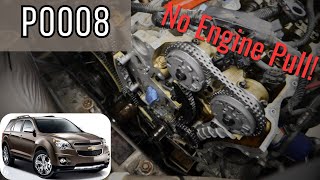



![How to Fix P0019 Engine Code in 6 Minutes [4 DIY Methods / Only $6.85]](https://img.youtube.com/vi/RxW2-XX97dY/mqdefault.jpg)
We Have This Part in Stock


The information in this article is provided for general reference and educational purposes only. Vehicle specifications, procedures, and part compatibility can vary by production date, trim level, and region. Always consult your vehicle's factory service manual and verify part numbers before purchasing or performing repairs. Safety-critical components such as airbags, seat belts, and braking systems should be installed by a qualified professional.
- GMC Terrain:
- 🧭 Diagnostic Flowchart
- 🎬 Helpful Videos
- 🛍️ Shop This Part
- What's Unique About the 2010-2012 GMC Terrain
- Symptoms You May Notice
- Most Likely Causes
- Rare But Worth Checking
- Diagnosis Steps
- Parts You'll Likely Need
- Related Codes That Often Appear With This One
- Technical Service Bulletins (TSBs) & Recalls
- Platform-Specific Known Issues
- Mechanic-Grade Diagnostic Values
- Scan Tool Commands That Help
- Wiring & Ground Locations
- Real Owner Repair Stories
- OEM Part Supersession History
- Model Year Variations Within This Range
- Other Known Issues on This Vehicle
- Used vs. New Parts: Buying Guide for This Vehicle
- Real Owner Stories
- 2010 Cadillac SRX 3.0L LF1 V6
- 2010 Chevrolet Equinox LTZ 3.0L LF1 V6
- 2010 GMC Terrain 3.0L LF1 V6
- Related OBD-II Codes
- Frequently Asked Questions
- 🎟️ Get 5% Off