

P0019 on 2006-2010 Hyundai Sonata 3.3L V6: Cam/Crank Correlation Causes and Fixes
For a P0019 on a 2006-2010 Sonata 3.3L, the most likely cause is a faulty Bank 2 exhaust Oil Control Valve (OCV), a $50-$100 part. Always check for low or dirty engine oil first, as this is a common trigger. If the oil and OCV are good, it could be a more serious stretched timing chain, which is a known issue on this engine.
- Always check your engine oil level and condition first. Low or dirty oil is the #1 cause of CVVT system problems.
- The most likely failed part is the Bank 2 (front/radiator side) exhaust Oil Control Valve (OCV). It's a relatively cheap part and a good DIY starting point.
- A rattling noise from the engine when you start it is a bad sign, strongly suggesting a stretched timing chain, which is a major and expensive repair.
- If you replace the OCV, use a small amount of clean engine oil to lubricate the new O-ring before installation.
- This code is serious. Do not ignore it, as it can lead to poor performance, stalling, and potentially more severe engine damage if the underlying cause is mechanical timing.
What's Unique About the 2006-2010 Hyundai Sonata
On the 3.3L Lambda V6 engine (engine code G6DB), P0019 is frequently a tale of two extremes. It is very often caused by a simple, inexpensive failure like a sludged-up Oil Control Valve (OCV) due to extended oil change intervals. However, this engine is also known to suffer from timing chain stretch and tensioner failure at higher mileage (over 100,000 miles). Therefore, while the code can be a simple fix, it can also be the first warning sign of a much more serious and expensive timing system overhaul that requires engine removal to service.
Symptoms You May Notice
- Check Engine Light is on
- Rough or uneven idle
- Engine may hesitate or stumble on acceleration
- Reduced engine power, possibly 'limp mode'
- Decreased fuel economy
- Engine may be hard to start or cranks but won't start
- Rattling noise from the engine on cold startup (if timing chain is the cause)
- Engine stalling, especially at low speeds
- Replacing the crankshaft position sensor. While it provides a reference signal, it is a very reliable part and rarely the cause of a correlation code for a single bank.
- Replacing the camshaft position sensor before testing the OCV. The OCV is a more common failure point and should be investigated first via the swap test.
Most Likely Causes
- Low, Dirty, or Incorrect Viscosity Engine Oil 🔴 High Probability The CVVT system is hydraulic and highly sensitive to oil pressure and cleanliness. Sludge from infrequent oil changes can easily clog the small passages in the Oil Control Valves (OCVs), causing them to malfunction.
How to confirm: Check the oil dipstick for level and clarity. If the oil is low, black, or sludgy, this is very likely a contributing factor. The correct oil viscosity for this engine is typically 5W-20 or 5W-30.
Typical fix: Perform an engine oil and filter change using a high-quality, full-synthetic oil of the correct viscosity (check owner's manual). Clear codes and test drive.
Est. part cost: $30-$70 - Faulty Bank 2 Exhaust Oil Control Valve (OCV) 🔴 High Probability The OCVs are a known failure point on the Lambda V6 engine family, often getting stuck from sludge or failing electrically. Bank 2 is the front bank, making it more exposed to heat from the radiator.
How to confirm: Swap the Bank 2 exhaust OCV with the Bank 2 intake OCV (they are identical parts). Clear codes and drive. If the code changes to P0018 (Bank 2 Intake), the OCV is confirmed bad. 🎬 See how to test and fix the Bank 2 correlation code. You can also test resistance with a multimeter (typically 6.9-7.9 ohms) or apply 12V to see if the solenoid clicks.
Typical fix: Replace the Bank 2 exhaust Oil Control Valve. Bank 2 is the bank near the radiator. The part is often accessible without removing the intake manifold.
Est. part cost: $50-$120 - Stretched Timing Chain or Failed Tensioner 🟡 Medium Probability → Shop Engine Timing Chain At higher mileage (typically 100,000+ miles), the timing chains on the 3.3L V6 are known to stretch, and the hydraulic tensioners can weaken or fail, causing slack in the chain and altering cam/crank correlation.
How to confirm: A persistent rattling noise on cold startups that lasts more than a few seconds is a strong indicator. A mechanic can use a scan tool to view live cam/crank deviation data. Physical inspection by removing the timing cover is the ultimate confirmation, but this is a labor-intensive job.
Typical fix: Replace the timing chains, guides, and tensioners. This is a very labor-intensive job, often requiring the engine to be removed from the vehicle.
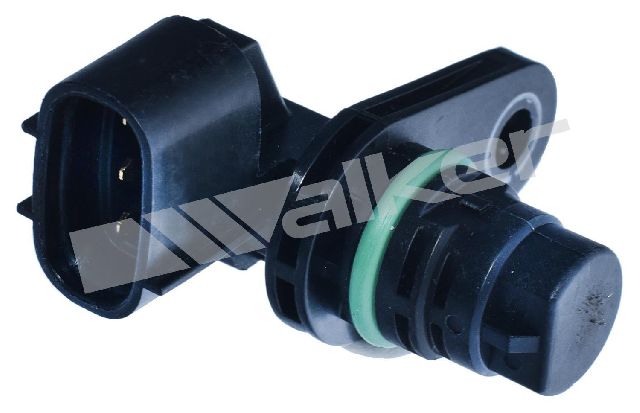
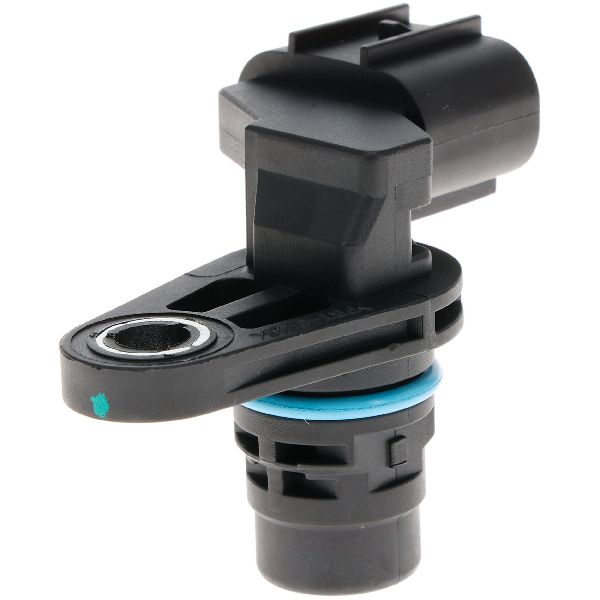
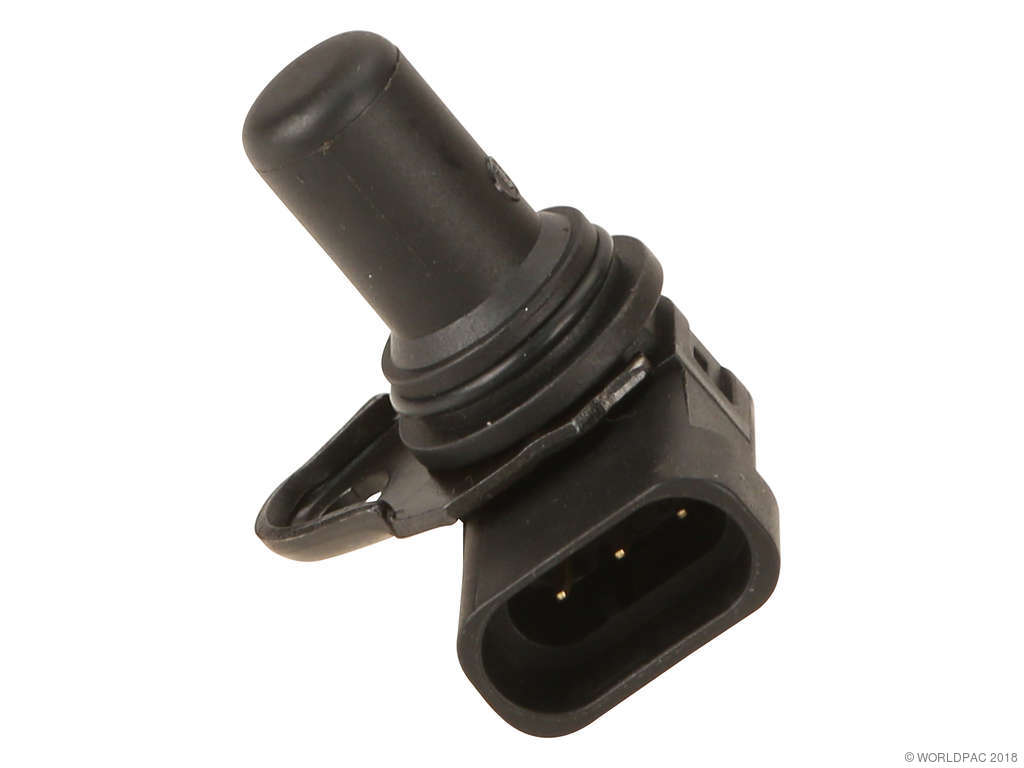
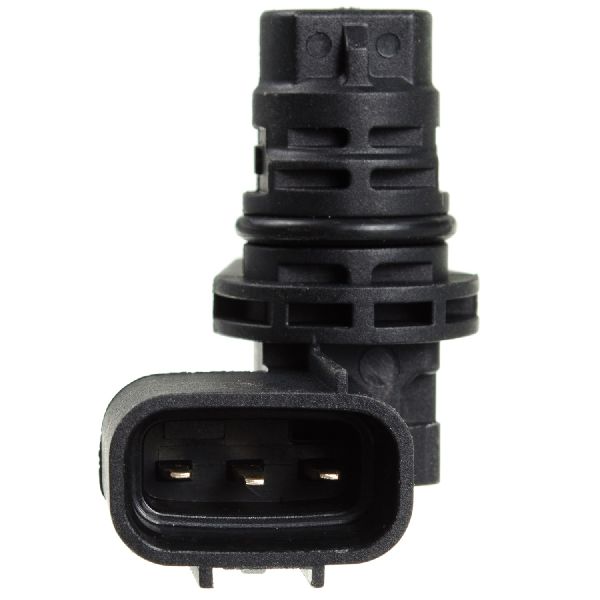
Est. part cost: $400-$800 - Faulty Bank 2 Exhaust Camshaft Position Sensor ⚪ Low Probability → Shop Engine Camshaft Position Sensor
How to confirm: Swap the sensor with a known good one (e.g., from the other bank if they are identical) and see if the code follows the sensor. An oscilloscope can also be used to check for a proper square wave signal.
Typical fix: Replace the Bank 2 exhaust camshaft position sensor.
Est. part cost: $40-$90
Rare But Worth Checking
- Damaged Camshaft Phaser (CVVT Actuator): → Shop Engine Camshaft The gear on the end of the camshaft can fail mechanically or become clogged with debris, but this is much less common than an OCV failure. It's usually diagnosed after all other possibilities have been exhausted.
- Clogged Oil Passages: In cases of severe engine sludge, the oil passages leading to the cam phaser or OCV can become blocked, preventing the system from operating correctly even with a new OCV. This may require significant engine cleaning or disassembly.
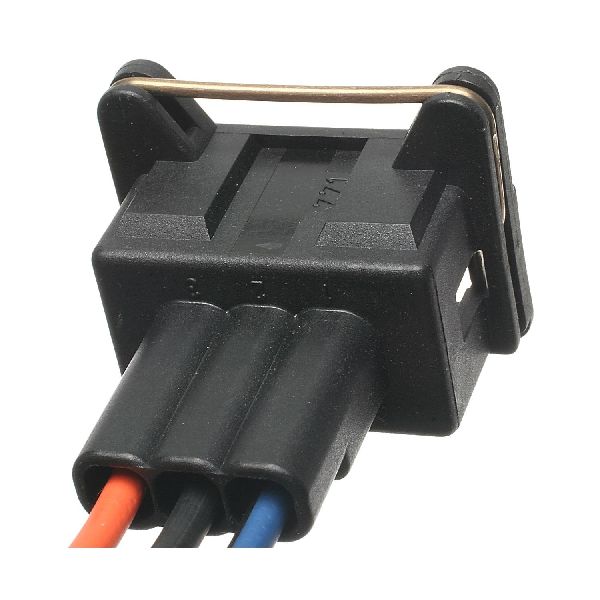
- Wiring or Connector Issues: Damage or corrosion on the wiring or connector for the OCV or camshaft sensor can cause an intermittent signal and trigger the code. Visually inspect the harness for any signs of wear, heat damage, or loose connections.
Diagnosis Steps
- Read the code with an OBD-II scanner and check for any other related codes.
- Check Engine Oil: Verify the oil level is full and the oil is clean and of the correct viscosity (5W-20 or 5W-30). If low or dirty, perform an oil and filter change, clear the code, and drive to see if it returns.
- Inspect Wiring: Visually inspect the wiring harness and connector for the Bank 2 (front/radiator side) exhaust camshaft sensor and Oil Control Valve (OCV) for any damage, corrosion, or loose connections.
- Test the Oil Control Valve (OCV): This is the most crucial diagnostic step. Swap the Bank 2 exhaust OCV with the Bank 2 intake OCV. They are identical and located next to each other on the front valve cover. Clear codes. If the fault changes to P0018, the OCV is bad and must be replaced.
- Test the Camshaft Position Sensor: If the OCV is confirmed good, test the camshaft position sensor. You can swap it with the intake sensor (if identical) or the equivalent sensor from Bank 1 to see if the code follows the sensor.
- Investigate Mechanical Timing: If all components above test good, the issue is likely mechanical. Listen for a startup rattle, which strongly points to a timing chain/tensioner issue. At this stage, professional diagnosis is recommended to confirm a stretched chain before beginning a costly repair.
Parts You'll Likely Need
- Oil Control Valve (OCV) / VVT Solenoid
(OEM #24355-3C200)— This is the most common component to fail and cause P0019. It gets clogged with sludge or fails electrically, preventing proper control of the camshaft timing.
Trusted brands: Hyundai (OEM), Delphi, Dorman, SKP
OEM price range: $80-$150
Aftermarket price range: $40-$90 - Camshaft Position Sensor
(OEM #39350-3C100)— A less common but possible cause. If the sensor's signal is weak or intermittent, it can cause a correlation fault.
Trusted brands: Hyundai (OEM), Bosch, NTK, Duralast
OEM price range: $70-$120
Aftermarket price range: $30-$70 - Timing Chain Kit — For high-mileage vehicles, a stretched timing chain is a significant possibility. This is the most severe common cause and a known issue on this engine.
Trusted brands: Hyundai (OEM), Cloyes
OEM price range: $500-$900
Aftermarket price range: $300-$600
Related Codes That Often Appear With This One
- P0018 — If you swap the intake and exhaust OCVs on Bank 2 for diagnosis and the OCV is bad, the code will change from P0019 (Exhaust) to P0018 (Intake).
- P0017 — If there are timing issues on Bank 1 as well, you may see P0017 (Bank 1 Exhaust) along with P0019, which could point more strongly toward a systemic issue like a stretched timing chain affecting both banks.
- P0300, P0304, P0305, P0306 — Random (P0300) or specific cylinder misfires on Bank 2 (P0304, P0305, P0306) can occur because incorrect camshaft timing disrupts the combustion process.
Technical Service Bulletins (TSBs) & Recalls
- Hyundai TSB 09-EM-002: Provides the official test procedure for Oil Control Valves (OCVs), including the resistance specification (6.7-7.9 ohms), which is a primary diagnostic step for this code.
Platform-Specific Known Issues
- The 3.3L Lambda V6 is known for timing chain stretch and tensioner failure after 100,000 miles, often preceded by a rattling noise on cold startups. P0019 can be an early indicator of this developing problem.
- Accessing the Oil Control Valves on Bank 2 (front, by radiator) is straightforward and they can be swapped for diagnosis.
- The front valve cover gasket on the 3.3L V6 is known to leak oil directly onto the alternator, causing it to fail. While not directly related to P0019, it's a critical issue to be aware of when working in this area.
Mechanic-Grade Diagnostic Values
- Oil Control Valve (OCV) Solenoid Resistance — expected: 6.7-7.9 Ohms (Ω) at 68°F (20°C). The range varies slightly between Delphi (6.7-7.7 Ω) and Denso (6.9-7.9 Ω) suppliers.. Failure: A reading of 0 Ω (short), infinite/open resistance, or a value significantly outside the specified range indicates a failed solenoid coil.
- Engine Oil Pressure (Mechanical Gauge) — expected: General spec is 25-65 PSI. A healthy engine should show approx. 25-30 PSI at warm idle and 50-70 PSI at 3,000 RPM.. Failure: Pressure below ~15-20 PSI at warm idle is a major concern and can trigger CVVT codes due to insufficient hydraulic pressure.
- Scan Tool: CVVT Desired vs. Actual Angle — expected: The 'Actual' angle should closely track the 'Desired' angle commanded by the PCM as engine RPM and load change.. Failure: A persistent deviation greater than 7-10 degrees between the desired and actual angle indicates a mechanical or hydraulic fault (stuck OCV, failing phaser, or timing chain slack).
- OCV Power Supply Voltage — expected: Approximately 12V (battery voltage) on one pin of the OCV connector with the Key On, Engine Off.. Failure: No voltage indicates a blown fuse or a wiring issue in the power supply circuit.
Scan Tool Commands That Help
- Hyundai GDS (or equivalent professional scanner): CVVT Actuation Test — This bidirectional test allows you to manually command the OCV solenoid to open and close. While monitoring engine RPM, a functioning OCV will cause a noticeable stumble or change in engine idle, confirming the solenoid is mechanically working.
- Hyundai GDS (or equivalent professional scanner): Resetting Adaptive Values / Resetting ECU — This function should be performed after replacing major timing components like the timing chain, tensioners, or CVVT phasers. It clears the PCM's learned compensation values, allowing it to adapt quickly to the new, correctly timed components.
Wiring & Ground Locations
- G109 — Top of the engine.. A primary ground point for various engine components. A loose or corroded connection here can introduce electrical noise and cause erratic sensor readings.
- GE01 / GE04 — Located on the left side and left rear of the engine compartment, respectively.. These are major chassis and engine compartment grounds. Poor contact at these points can affect the reference voltage for multiple sensors, including the Camshaft Position Sensor, potentially leading to a false correlation code.
- PCM Location — Left rear of the engine compartment.. Knowing the location is critical for inspecting the main PCM connectors for corrosion or damage if wiring issues are suspected.
- EM11 Connector — Main engine harness connector, often located near the firewall or main fuse box.. The signals for both the Camshaft Position Sensor and the OCV pass through this major connector. A pushed-back pin or corrosion within this single connector can interrupt both signals and trigger P0019.
Real Owner Repair Stories
- Hyundai-Forums user with a 3.3L V6 (2014 Hyundai Santa Fe 3.3L V6) — P0019 code was present, likely with rough running or check engine light.
❌ Tried (didn't work) Replaced the Bank 2 exhaust camshaft position sensor., Replaced the Bank 2 exhaust Oil Control Valve (OCV).
✅ What actually fixed it The root cause was a failed oil pump chain tensioner. The tensioner had disintegrated, sending metallic debris throughout the engine. This debris clogged the brand new OCV, causing the P0019 code to return shortly after replacement. The ultimate fix required addressing the oil pump tensioner and thoroughly cleaning the engine's oil passages. - Reddit user in r/MechanicAdvice (2017 Hyundai Sonata 2.4L (similar OCV system)) — Oil pressure light on at idle, which is often related to CVVT codes.
❌ Tried (didn't work) Adding oil to ensure the level was full.
✅ What actually fixed it The oil pressure sending unit (sensor) itself was leaking oil into its own electrical connector, causing faulty readings. Replacing the sensor and cleaning the oil out of the harness connector resolved the issue. This is a common failure pattern for Hyundai oil pressure and OCV connectors.
OEM Part Supersession History
24355-3C100→24355-3C200— Likely an internal revision to improve reliability or address a known failure mode like sticking or electrical failure.
Diagnostic Flowchart
Other Known Issues on This Vehicle
Issues unrelated to this code that are worth knowing about as an owner of this generation:
- Rear Subframe Corrosion 🔴 High — Common in 'Salt Belt' states, leading to a recall. (Ref: NHTSA Campaign Number: 13V-354 (Recall 113))
- Leaking Front Valve Cover Gasket Destroys Alternator 🔴 High → Shop Engine Valve Cover — Common on high-mileage 3.3L V6 engines. Oil drips from the front valve cover directly onto the alternator below, causing premature failure. (Ref: A service campaign (936) and TSB (15-01-031) were issued for the 2007-09 Santa Fe with the same engine for this exact issue.)
- Failing Accelerator Pedal Position Sensor 🟠 Medium — A known issue that can cause the vehicle to enter 'limp mode' with reduced power. (Ref: Often triggers code P2122.)
- Malfunctioning Stop Lamp Switch 🟠 Medium — Widespread issue leading to a recall. Can cause brake lights to fail or stay on, and prevent shifting out of Park. (Ref: Recall for MY 2006-2007 Sonata.)
- Failing Interior Fuse Box (Junction Block) 🟡 Low — Can cause an internal short that keeps the parking lights on, draining the battery. (Ref: No recall, requires replacement of the in-cabin fuse box.)
- Failing Sun Visors 🟡 Low — Very common; the internal mechanism breaks, causing the visor to droop and not stay in place. (Ref: null)
Used vs. New Parts: Buying Guide for This Vehicle
When a used part is the smart pick: For this specific repair, using used parts is generally not recommended. The primary failure items (OCV, sensors, timing components) are wear items or have known failure rates. The cost savings of a used OCV or sensor (typically under $100 new) is not worth the risk of premature failure and repeat labor.
Donor-vehicle mileage cap: roughly under 80000 miles for the part to have meaningful remaining life.
What to inspect on the donor part:
- If sourcing a non-electronic part like a valve cover, check for cracks or warping.
- For any used electronic part (sensor/solenoid), inspect the connector for corrosion, oil contamination, or bent pins.
- Ask for the donor vehicle's mileage; avoid high-mileage donors for any engine component.
OEM-only on this vehicle (don't cheap out):
- Camshaft Position Sensor
- Crankshaft Position Sensor
- Timing Chain Tensioners
Aftermarket brands forum-validated for this vehicle:
- Cloyes (for Timing Chain Kits)
- Delphi (often the OEM supplier for OCVs)
Brands owners have reported issues with on this vehicle:
- No-name, unbranded electronic sensors and solenoids from online marketplaces are a significant gamble and often fail quickly.
Real Owner Stories
Aggregated from forums and TSBs cited above. Mileages and costs reflect what owners reported in those sources.
2007 Hyundai Sonata 3.3L V6 — ~115000 miles
Symptoms: Rattling noise from the engine on cold startup and a persistent Check Engine Light.
What fixed it: Replacement of the timing chains, guides, and tensioners due to chain stretch.
Source hint: hyundai-forums.com threads regarding 3.3L V6 timing chain stretch and P0019
2008 Hyundai Sonata 3.3L V6 — ~95000 miles
Symptoms: Engine stalling at low speeds and rough idle.
What fixed it: Replaced the Bank 2 exhaust Oil Control Valve (OCV) after swapping it with the intake OCV confirmed the failure.
Source hint: hyundai-forums.com regarding OCV failure on Lambda V6 engines
Related OBD-II Codes
Frequently Asked Questions
Is there a specific test procedure for the Oil Control Valves on my 3.3L Sonata?
My Sonata has over 100,000 miles and makes a rattling noise when I first start it. Is this related to P0019?
Can I swap parts to diagnose P0019 without buying new sensors?
What is the correct oil viscosity I should use to prevent CVVT issues in my 3.3L V6?
I noticed oil leaking onto my alternator while checking the P0019 code. Is this common?
Could a problem with my accelerator pedal cause engine power issues alongside P0019?
Helpful Videos

We Have This Part in Stock

The information in this article is provided for general reference and educational purposes only. Vehicle specifications, procedures, and part compatibility can vary by production date, trim level, and region. Always consult your vehicle's factory service manual and verify part numbers before purchasing or performing repairs. Safety-critical components such as airbags, seat belts, and braking systems should be installed by a qualified professional.
- Hyundai Sonata:
- 🧭 Diagnostic Flowchart
- 🎬 Helpful Videos
- 🛍️ Shop This Part
- What's Unique About the 2006-2010 Hyundai Sonata
- Symptoms You May Notice
- Most Likely Causes
- Rare But Worth Checking
- Diagnosis Steps
- Parts You'll Likely Need
- Related Codes That Often Appear With This One
- Technical Service Bulletins (TSBs) & Recalls
- Platform-Specific Known Issues
- Mechanic-Grade Diagnostic Values
- Scan Tool Commands That Help
- Wiring & Ground Locations
- Real Owner Repair Stories
- OEM Part Supersession History
- Other Known Issues on This Vehicle
- Used vs. New Parts: Buying Guide for This Vehicle
- Real Owner Stories
- 2007 Hyundai Sonata 3.3L V6 — ~115000 miles
- 2008 Hyundai Sonata 3.3L V6 — ~95000 miles
- Related OBD-II Codes
- Frequently Asked Questions
- 🎟️ Get 5% Off