

P0019 on 2015-2021 Kia Sedona 3.3L V6: Crank-Cam Correlation Causes and Fixes
P0019 on a Kia Sedona 3.3L V6 means the exhaust camshaft on Bank 2 is out of sync with the crankshaft. The most common causes are low/dirty engine oil, often due to this engine's tendency to consume oil, or a failed Oil Control Valve (OCV). Always check the oil first; if the oil is clean and full, replacing the Bank 2 exhaust OCV is the next logical step and costs around $40-$100 for the part.
- P0019 specifically points to the exhaust camshaft on Bank 2 (the firewall side).
- Always start your diagnosis by checking the engine oil level and condition. This is the simplest and most common cause.
- The most likely failed part is the Oil Control Valve (OCV). Swapping it with the intake OCV on the same bank is a free and effective way to confirm the diagnosis.
- If you hear a rattling noise from the engine for a few seconds when you start it cold, suspect a problem with the timing chain tensioner, which is a more serious mechanical issue.
- Do not replace the crankshaft sensor; it is rarely the cause for this specific code.
What's Unique About the 2015-2021 Kia Sedona
The 3.3L Lambda II GDI engine in the Sedona is a direct-injection engine, which can be sensitive to oil quality and level. These engines are known for potential oil consumption issues, which can starve the CVVT system of the hydraulic pressure it needs to operate, directly leading to timing correlation codes like P0019. Owners often report that the first sign of trouble is a brief rattling noise from the timing chain area on a cold start, which points to a failing hydraulic tensioner or an oil pressure issue that precedes the P0019 code.
Symptoms You May Notice
- Check Engine Light is on
- Rough or uneven idle
- Poor acceleration or engine hesitation
- Reduced fuel economy
- Engine may stall at low speeds
- Rattling noise from the engine on startup
- Engine knocking or tapping noises
- Replacing the Crankshaft Position Sensor. While it's part of the timing system, a failure of this sensor typically causes a no-start condition or a specific crankshaft sensor code, not a single-bank correlation code like P0019.
Most Likely Causes
- Low or Dirty Engine Oil 🔴 High Probability The CVVT system is entirely dependent on hydraulic pressure. These GDI engines are known to consume oil, and owners may not realize the level is critically low, causing the OCVs and phasers to function improperly. Sludge from infrequent oil changes can also clog the small passages in the OCVs.
How to confirm: Check the engine oil level on the dipstick and inspect its condition. If the oil is below the 'Full' mark, top it off. If it's dark or gritty, it needs to be changed. Many owners report the rattling noise and code appear when the oil is low, and disappear after topping it off. In a severe case documented in NHTSA ODI #11575366, an owner reported the vehicle was missing 5 quarts of oil without a warning light, triggering P0019 along with multiple cylinder misfires.
Typical fix: Perform an oil and filter change using a high-quality full synthetic oil that meets Kia's specifications (typically 5W-20 or 5W-30). Begin checking oil level every 1,000 miles.
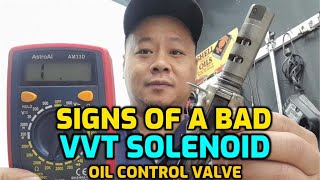
Est. part cost: $40-$80 - Faulty Oil Control Valve (OCV / VVT Solenoid) 🔴 High Probability The OCV is an electronic solenoid that can get clogged with sludge or fail electrically, preventing it from properly directing oil to the cam phaser. It's a very common failure point for this code after oil issues are ruled out.
How to confirm: Swap the Bank 2 exhaust OCV with the Bank 2 intake OCV (they are identical). Clear the codes and drive the vehicle. If the code changes to P0018 (Bank 2 Intake), the OCV is confirmed bad. You can also test its resistance with a multimeter (typically 6.9-7.9 ohms at 68°F).
Typical fix: Replace the Bank 2 exhaust Oil Control Valve. It is often recommended to replace both OCVs on the affected bank at the same time.
Est. part cost: $40-$100 - Faulty Camshaft Position Sensor (CMP) 🟡 Medium Probability → Shop Engine Camshaft Position Sensor The sensor that reads the camshaft's position can fail, sending incorrect data to the ECM. While less common than an OCV failure, it's a possible cause.
How to confirm: Swap the Bank 2 exhaust CMP sensor with the Bank 1 exhaust CMP sensor. Clear codes and drive. If the code changes to P0017 (Bank 1 Exhaust), the sensor is faulty.
Typical fix: Replace the Bank 2 exhaust Camshaft Position Sensor.
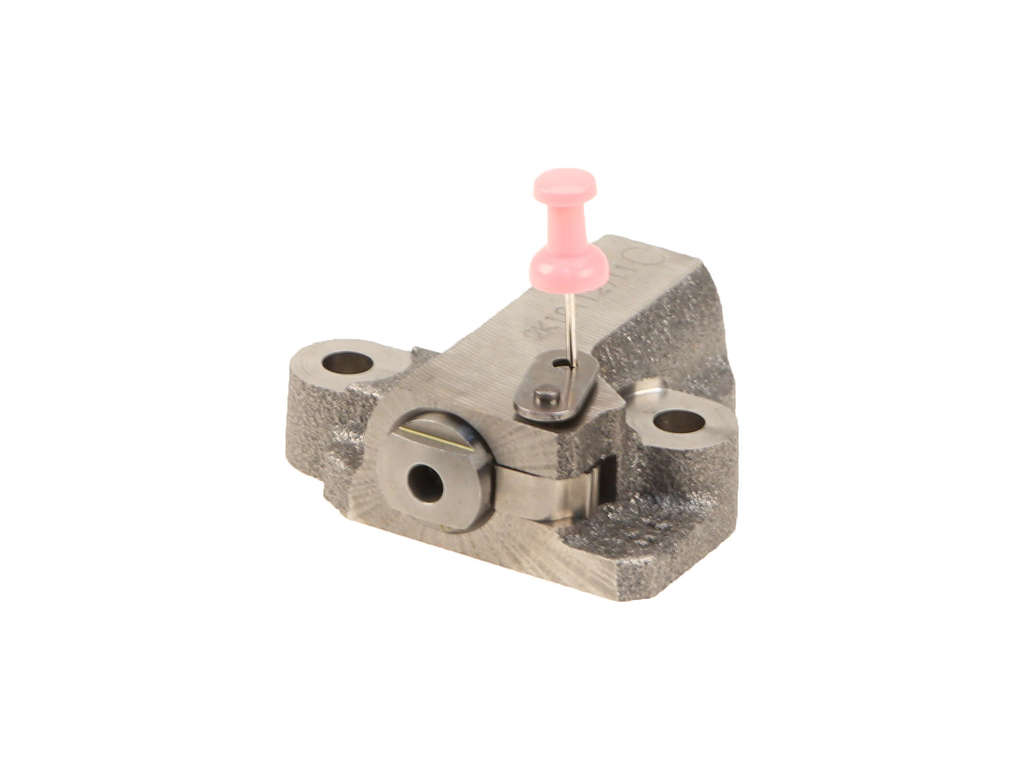
Est. part cost: $30-$70 - Stretched Timing Chain or Faulty Tensioner ⚪ Low Probability → Shop Engine Timing Chain Over time, especially with infrequent oil changes or frequent low-oil conditions, the timing chain can stretch or the hydraulic tensioner can weaken. This causes slack in the chain, leading to a correlation error. A rattling noise on startup that goes away after a few seconds is a key symptom of a failing tensioner bleeding down oil pressure.
How to confirm: This is a mechanical issue requiring significant disassembly. A mechanic will need to remove the timing cover to physically inspect the chain, guides, and tensioner for slack or damage. Advanced diagnosis can involve comparing cam/crank sensor waveforms on an oscilloscope.
Typical fix: Replace the timing chain, tensioners, and guides as a complete kit. This is a labor-intensive job.
Est. part cost: $250-$500
Rare But Worth Checking
- Damaged Cam Phaser (CVVT Actuator): The gear on the end of the camshaft can fail mechanically, get clogged with debris, or the pin that locks it can shear off. This is usually a last resort after all sensors, solenoids, and the timing chain have been checked.
- Wiring or Connector Issue: The wiring harness or connector for the OCV or CMP sensor could be damaged, corroded, or have a loose connection, causing an intermittent signal. Inspect the harness for any signs of rodent damage, as soy-based wire coatings can attract them.
Diagnosis Steps
- Check Engine Oil: This is the most critical first step for this engine. Verify the oil level is full and the oil is clean. If low or dirty, perform an oil and filter change, clear the code, and re-test. Many owners find the code is triggered simply by a low oil level.
- Scan for Other Codes: Check for any other related trouble codes that could provide more clues (e.g., P0018, P0017, P0016). NHTSA ODI #11653245 notes that P0019 can appear alongside misfire codes like P0300, P0302, P0304, and P0306, which may cause the vehicle to have difficulty maintaining speed.
- Inspect Wiring: Visually inspect the wiring and connectors for the Bank 2 exhaust Camshaft Position Sensor and Oil Control Valve. Look for any signs of damage, corrosion, or loose connections.
- Swap the Oil Control Valve (OCV): Locate the Bank 2 exhaust and intake OCVs on the valve cover of the rear cylinder bank. Swap their positions. Clear the codes and drive the vehicle. If the code changes to P0018, the OCV is the faulty part and needs to be replaced.
- Swap the Camshaft Position Sensor (CMP): If the OCV swap doesn't isolate the problem, perform a similar test with the Camshaft Position Sensor. Swap the Bank 2 exhaust sensor with the Bank 1 exhaust sensor (on the front bank). If the code moves to P0017, the CMP sensor is faulty.
- Mechanical Inspection: If sensors and solenoids are ruled out, the issue is likely mechanical. This requires a professional technician to inspect the timing chain, tensioners, and cam phasers for wear, stretching, or damage. This is a significant, labor-intensive job.
Parts You'll Likely Need
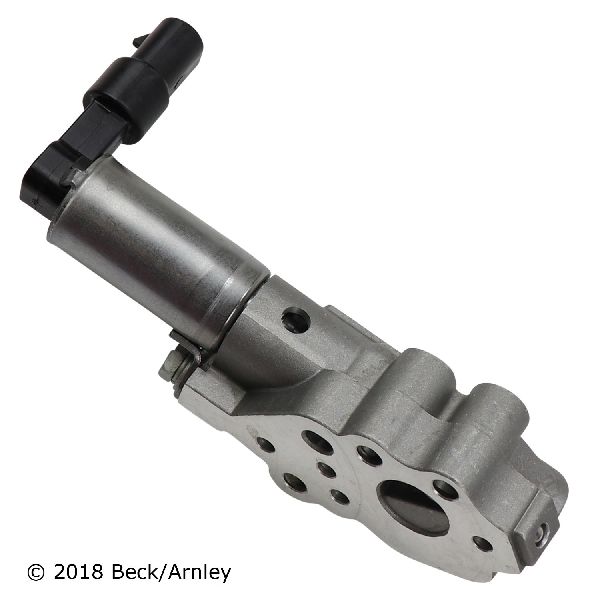
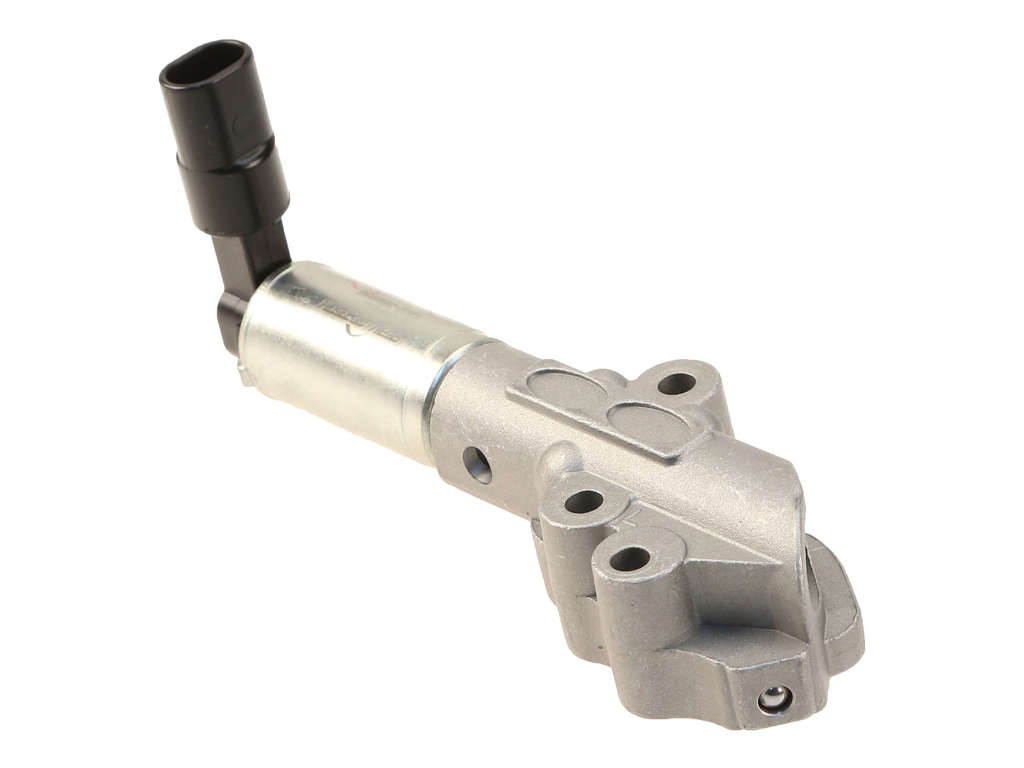
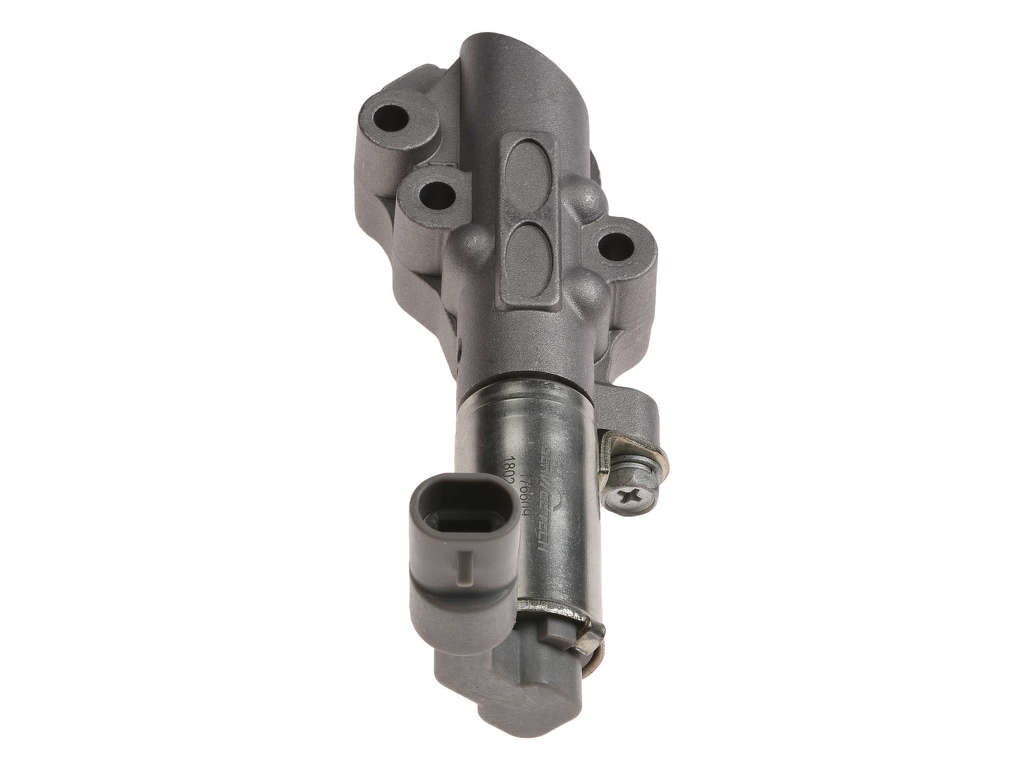
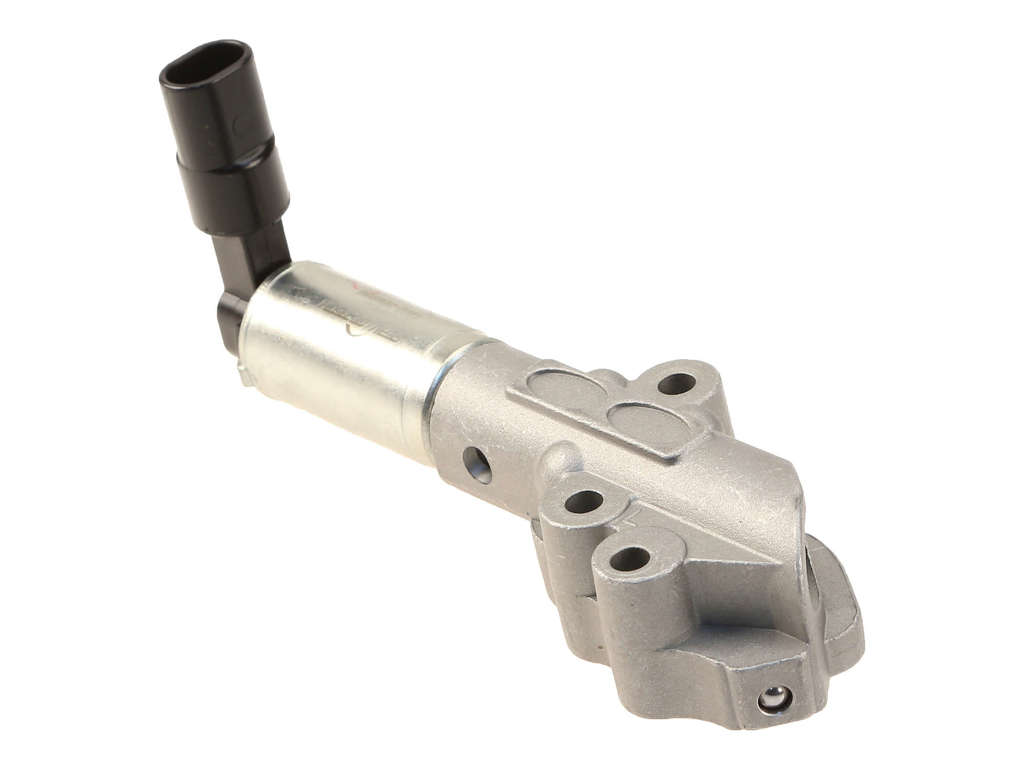
- Engine Oil Control Valve (VVT Solenoid)
(OEM #24360-3CGA1)— This solenoid is the most common part to fail for P0019 after low oil is ruled out. It gets clogged or fails electrically. Note: Some parts catalogs may show 24360-3CAB1 for earlier Lambda engines, ensure you get the correct part for the G6DH.
Trusted brands: Kia (OEM), Denso, Dorman
OEM price range: $70-$100
Aftermarket price range: $40-$80 - Camshaft Position Sensor
(OEM #39350-3C410)— The sensor provides the position data to the ECM. If it fails, it will send incorrect signals, triggering the code.
Trusted brands: Kia (OEM), Bosch, NTK, Delphi
OEM price range: $50-$80
Aftermarket price range: $30-$60 - Timing Chain Kit — If the chain has stretched or the tensioners/guides have failed, the entire system must be replaced to restore proper timing. This is a major repair.
Trusted brands: Kia (OEM), Cloyes
OEM price range: $400-$600
Aftermarket price range: $250-$450
Related Codes That Often Appear With This One
- P0018 — Crankshaft Position - Camshaft Position Correlation Bank 2 Sensor 'A' (Intake). This code may appear if you swap a faulty exhaust OCV with the intake OCV during diagnosis, or if the timing chain issue is severe enough to affect both cams on Bank 2.
- P0017 — Crankshaft Position - Camshaft Position Correlation Bank 1 Sensor 'B' (Exhaust). This code may appear if you swap a faulty Bank 2 camshaft sensor with the one on Bank 1 for diagnosis.
- P0016 — Crankshaft Position - Camshaft Position Correlation Bank 1 Sensor 'A' (Intake). If seen with P0019, it could indicate a widespread timing issue like a stretched primary chain or severe oil pressure loss affecting both banks.
Platform-Specific Known Issues
- Owner Experience: P0019 due to Low Oil: A 2016 Sedona owner on Reddit reported a check engine light and noise from the engine. Upon checking, the dipstick was dry. After topping off the oil, the noise from the valve timing solenoids stopped. This occurred at 130k miles and highlights the engine's tendency to consume oil, directly causing CVVT-related codes like P0019 if the level is not monitored closely.
Mechanic-Grade Diagnostic Values
- Oil Control Valve (OCV) Coil Resistance — expected: 6.8 - 8.0 Ω at 68°F (20°C). Failure: A resistance reading outside this range, or an open/short circuit (0 or infinite ohms), indicates a faulty solenoid coil.
- Camshaft Position Sensor (Hall-Effect Type) Signal Voltage Test — expected: With the sensor connected and ignition on, back-probing the signal wire should show a toggling voltage. When a metal object (like a wrench) is brought near the sensor tip, the voltage should drop to near 0V. When the object is removed, it should return to approximately 4.8V-5.0V.. Failure: If the voltage does not change or stays fixed at 0V or 5V, the sensor is faulty.
- Scan Tool Live Data: Desired vs. Actual Camshaft Position (Bank 2 Exhaust) — expected: At a steady idle or RPM, the 'Actual' position should closely mirror the 'Desired' position commanded by the ECM, with a variance of less than 5 degrees.. Failure: A large, consistent variance between the desired and actual values, or a value that is stuck, points to a mechanical issue (phaser) or a hydraulic problem (OCV, oil pressure).
Scan Tool Commands That Help
- Kia GDS (Global Diagnostic System): CVVT Test (Actuator Test) — This function allows a technician to command the Bank 2 exhaust OCV to operate while the engine is running, without having to drive the vehicle. The tool monitors if the camshaft position changes to the targeted value within a set time (e.g., two seconds). If the engine hesitates or stalls, the OCV is likely functioning. If there is no change in engine operation or the target is not met, it points to a faulty OCV, clogged oil passage, or a stuck cam phaser.
Wiring & Ground Locations
- Bank 2 Location — On the transverse-mounted 3.3L V6 in the Sedona, Bank 2 is the cylinder bank closer to the firewall (driver's side). Bank 1 is closer to the radiator.. P0019 specifically refers to Bank 2. Technicians must correctly identify this bank to avoid diagnosing or replacing parts on the wrong side of the engine.
- Bank 2 Exhaust OCV Connector — Located on the top of the valve cover for the rear cylinder bank (Bank 2), it is the solenoid towards the exhaust side of the head.. This connector and its wiring are the primary electrical interface for the component most likely to cause P0019. It should be inspected for oil saturation, corrosion, or damage. On V6 models, the intake and exhaust OCV connectors may be color-coded to prevent mix-ups.
- Bank 2 Exhaust Camshaft Position Sensor Connector — Located on the rear cylinder bank (Bank 2), typically on the side or top of the cylinder head, reading the position of the exhaust camshaft.. This is the sensor that provides the signal to the ECM, triggering the code. A poor connection here will cause intermittent or failed signals, leading directly to a P0019 or related sensor circuit code.
OEM Part Supersession History
24360-3CAB1→24360-3CGA1— Part update/revision by the manufacturer. The -3CAB1 part is associated with earlier Lambda engines.
Heads up: While the older part may physically fit, using the incorrect revision could lead to improper CVVT operation. Always verify the part number with the vehicle's VIN.
Diagnostic Flowchart
Other Known Issues on This Vehicle
Issues unrelated to this code that are worth knowing about as an owner of this generation:
- Excessive Oil Consumption 🔴 High — Widespread issue, can start around 100,000-130,000 miles. Owners report consuming 1 quart or more every 1,000-3,000 miles. (Ref: No specific recall for the Sedona, but this issue is part of broader class-action lawsuits concerning Hyundai/Kia GDI engines.)
- Power Sliding Door Motor/Latch Failure 🟠 Medium — Common failure where the power sliding doors fail to close or latch completely, requiring manual operation.
- Starter Motor Failure ('Click-No-Start') 🟠 Medium — A common issue where the starter solenoid fails, resulting in a single loud click but no engine crank. Often misdiagnosed as a bad battery. (Ref: No TSB or recall, considered a wear-and-tear item. The OEM part number is 36100-3C260.)
- Front Passenger ODS Harness Failure 🔴 High — Affects 2015-2018 models. The wiring harness under the manual passenger seat can break, disabling the passenger airbag. (Ref: Recall SC217)
- Warped Front Brake Rotors 🟡 Low — Owners frequently report premature warping of the front brake rotors, causing vibrations when braking.
- Head Gasket / Head Bolt Failure 🟡 Low — While not extremely common, the G6DH engine has documented cases of head bolts pulling out, leading to head gasket failure and engine replacement. An investigation was opened for the 2016-2017 Sorento with this engine for this issue. (Ref: NHTSA Preliminary Evaluation opened for Kia Sorento, but no formal recall for Sedona.)
Used vs. New Parts: Buying Guide for This Vehicle
When a used part is the smart pick: For this repair, sourcing a used Camshaft Position Sensor (CMP) from a low-mileage, reputable salvage yard can be a cost-effective diagnostic step or replacement. Since it's an electronic part without significant mechanical wear, a used OEM sensor is often more reliable than a cheap new aftermarket one.
Donor-vehicle mileage cap: roughly under 80000 miles for the part to have meaningful remaining life.
What to inspect on the donor part:
- Check for a clean donor vehicle without signs of engine sludge or poor maintenance.
- Inspect the sensor's plastic housing for cracks or brittleness.
- Ensure the electrical connector pins are clean, straight, and free of corrosion.
OEM-only on this vehicle (don't cheap out):
- Timing Chain Kit: This is a critical, high-labor repair. Using non-OEM timing components is a significant risk that can lead to premature failure and catastrophic engine damage. Always use the complete OEM kit.
- Cam Phasers (CVVT Actuators): Aftermarket phasers have a poor reputation for reliability and can fail shortly after installation. Stick to OEM for these components.
Aftermarket brands forum-validated for this vehicle:
- Oil Control Valve (OCV): Denso is a trusted OEM supplier and a reliable aftermarket choice.
- Camshaft Position Sensor (CMP): NTK, Bosch, and Delphi are reputable brands known for producing quality sensors.
Brands owners have reported issues with on this vehicle:
- Avoid unbranded, 'white-box' OCVs and Camshaft Position Sensors from online marketplaces. These often have high failure rates and may not perform to OEM specifications, causing the code to return quickly.
Real Owner Stories
Aggregated from forums and TSBs cited above. Mileages and costs reflect what owners reported in those sources.
2016 Kia Sedona 3.3L V6 — 130000 miles
Symptoms: Check engine light was on and there was a noticeable noise coming from the engine. The dipstick was found to be completely dry.
What fixed it: Topped off the engine oil, which stopped the noise from the valve timing solenoids and addressed the CVVT-related issues.
Source hint: Reddit r/kia - '16 Kia sedona oil consumption'
Owner Reported Experience — NHTSA ODI #11653245
Symptoms: An owner reported that the vehicle had difficulty maintaining speed. Diagnostic scans revealed P0019 alongside multiple misfire codes (P0300, P0302, P0304, P0306).
What fixed it: The vehicle was towed to a shop for professional repair as the condition rendered it undrivable.
Owner Reported Experience — NHTSA ODI #11575366
Symptoms: A driver reported the vehicle was missing 5 quarts of oil with no warning light. The engine threw codes P0019, P0024, P0300, P0302, P0304, and P0306.
What fixed it: The vehicle required inspection for timing and fuel issues resulting from the severe low-oil condition.
Related OBD-II Codes
Frequently Asked Questions
Is there a recall for the 3.3L Sedona regarding the airbag light or wiring?
My 2016 Sedona has a P0019 and a rattling noise on startup; could this just be low oil?
What specific oil should I use for my 2015-2021 Sedona to prevent CVVT issues?
Can I test the Oil Control Valve (OCV) myself to see if it's causing the P0019?
My Sedona makes a loud click but won't start; is this related to the P0019 code?
Is the timing chain failure common on the 3.3L Lambda II engine?
Helpful Videos
We Have This Part in Stock


The information in this article is provided for general reference and educational purposes only. Vehicle specifications, procedures, and part compatibility can vary by production date, trim level, and region. Always consult your vehicle's factory service manual and verify part numbers before purchasing or performing repairs. Safety-critical components such as airbags, seat belts, and braking systems should be installed by a qualified professional.
- Kia Sedona:
- 🧭 Diagnostic Flowchart
- 🎬 Helpful Videos
- 🛍️ Shop This Part
- What's Unique About the 2015-2021 Kia Sedona
- Symptoms You May Notice
- Most Likely Causes
- Rare But Worth Checking
- Diagnosis Steps
- Parts You'll Likely Need
- Related Codes That Often Appear With This One
- Platform-Specific Known Issues
- Mechanic-Grade Diagnostic Values
- Scan Tool Commands That Help
- Wiring & Ground Locations
- OEM Part Supersession History
- Other Known Issues on This Vehicle
- Used vs. New Parts: Buying Guide for This Vehicle
- Real Owner Stories
- 2016 Kia Sedona 3.3L V6 — 130000 miles
- Owner Reported Experience — NHTSA ODI #11653245
- Owner Reported Experience — NHTSA ODI #11575366
- Related OBD-II Codes
- Frequently Asked Questions
- 🎟️ Get 5% Off