

P0019 on 2016-2020 Kia Sorento 3.3L V6: Crank-Cam Correlation Causes and Fixes
P0019 on a 2016-2020 Sorento 3.3L V6 means the exhaust camshaft on the radiator-side of the engine (Bank 2) is out of sync with the crankshaft. The most common causes are low or dirty engine oil, or a faulty exhaust Oil Control Valve (OCV). Always check your oil level first; if it's fine, the OCV is the next likely part to replace, costing around $60-$120 for the part. Ignoring the code can lead to rough running, stalling, and eventually more severe engine damage.
- First, check your engine oil. Low or dirty oil is the #1 cause of P0019 on this engine.
- If the oil is fine, the next most likely cause is a bad Oil Control Valve (OCV) for the exhaust camshaft on the radiator-side cylinder bank.
- A cost-free diagnostic step is to swap the suspect OCV or Camshaft Position Sensor with an identical part from the other cylinder bank to see if the code follows the part.
- A rattling noise when starting the engine is a major red flag for a stretching timing chain, which is a more serious and expensive repair associated with this code at higher mileage.
What's Unique About the 2016-2020 Kia Sorento
The 3.3L Lambda II GDI engine (G6DH) in the Sorento is shared with other Hyundai and Kia models like the Santa Fe, Cadenza, and Sedona, which experience identical issues. This engine family is known for oil consumption, making low oil levels a primary trigger for CVVT-related codes like P0019. While the most common fixes are simple (oil or an Oil Control Valve), this code can also be an early warning for more serious, high-mileage issues like a stretched timing chain or a failing tensioner, often preceded by a rattling noise on startup. In some cases, the dowel pin holding the CVVT phaser to the camshaft can shear or migrate, causing a loss of timing that requires more intensive repair.
Symptoms You May Notice
- Check Engine Light is on
- Rough or erratic idle
- Engine hesitation or stumbling on acceleration
- Reduced engine power
- Decreased fuel economy
- Engine may be hard to start or may stall
- Loud rattling or vibrating noise from the engine on startup, lasting a few seconds
- Engine may enter 'limp mode', limiting acceleration
- Replacing the Camshaft Position Sensor when the actual problem is the Oil Control Valve (OCV) or low oil.
- Replacing the wrong OCV (e.g., replacing the intake OCV instead of the exhaust OCV, or replacing the one on the wrong bank).
- Assuming a sensor or OCV is bad when the root cause is a mechanical timing issue (stretched chain or failed phaser), leading to repeated failed repairs.
Most Likely Causes
- Low or Dirty Engine Oil 🔴 High Probability The Lambda II V6 engine is known to consume oil, and the CVVT system is extremely sensitive to oil level, pressure, and cleanliness. Sludge from infrequent oil changes can clog the small passages in the OCVs and phasers.
How to confirm: Check the engine oil level on the dipstick. Inspect the oil's color and consistency. If it is low, dark, or sludgy, this is the most likely cause. The low oil light may not illuminate until the level is critically low (e.g., 2.5 quarts low). NHTSA ODI #11575366 describes a case where a platform-mate threw code P0019 and was found to be missing 5 quarts of oil with no warning light illuminated.
Typical fix: Perform an engine oil and filter change using a quality full synthetic oil of the manufacturer-recommended viscosity (typically 5W-30). Using a genuine Kia/Hyundai oil filter is often recommended by technicians to avoid oil pressure issues.
Est. part cost: $40-$80 - Faulty Bank 2 Exhaust Oil Control Valve (OCV/VVT Solenoid) 🟡 Medium Probability The OCV is an electromechanical solenoid that frequently cycles and is a common failure point. It can become clogged with sludge from dirty oil or fail electrically, preventing it from properly regulating oil flow to the cam phaser.
How to confirm: Swap the Bank 2 exhaust OCV with the Bank 1 exhaust OCV (they are identical). Clear the codes and drive the vehicle. If the trouble code changes to P0017 (Crank/Cam Correlation Bank 1 Sensor B), the OCV is confirmed to be faulty. A scan tool can also be used to command the solenoid on and off to check for a change in engine idle.
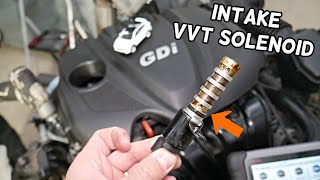
Typical fix: Replace the Bank 2 exhaust Oil Control Valve. It is located on the front-facing cylinder head (Bank 2). The OEM part number is 24360-3CAB2.
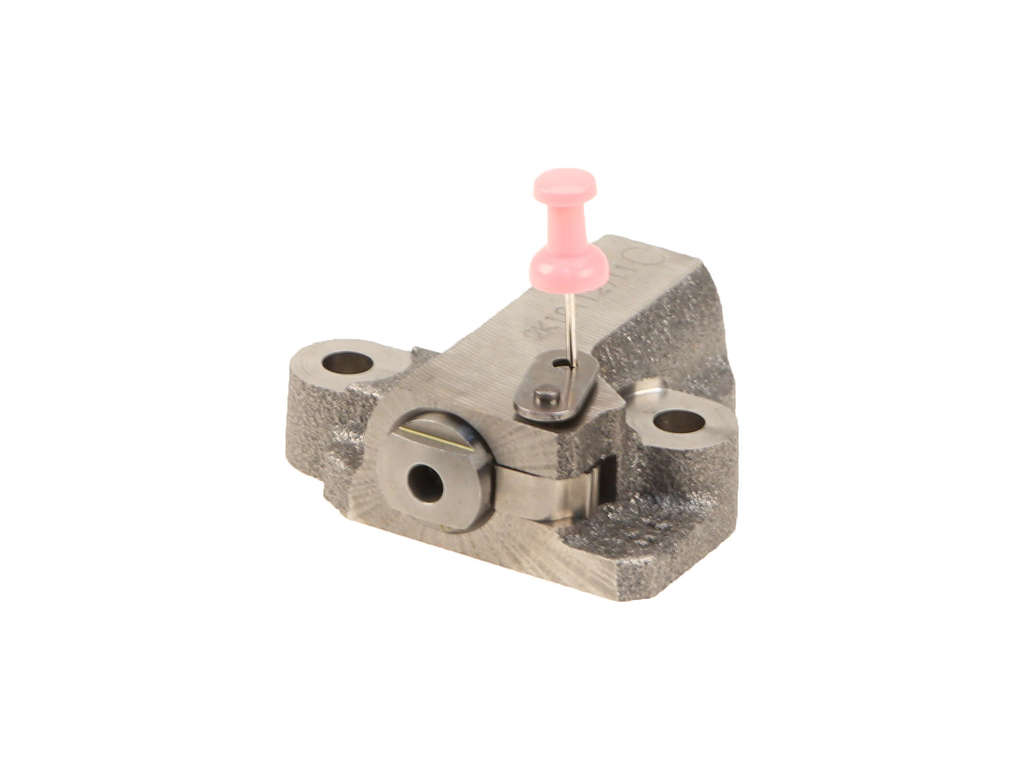
Est. part cost: $60-$120 - Stretched Timing Chain or Failed Tensioner ⚪ Low Probability → Shop Engine Timing Chain At higher mileage (typically over 100,000 miles), the timing chain can stretch or the hydraulic tensioner can lose its ability to maintain pressure, causing slack and altering the mechanical timing.
How to confirm: Listen for a distinct rattling noise from the engine for a few seconds on a cold startup. This is a very strong indicator of a failing tensioner or stretched chain. 🎬 Listen: What a failing timing chain rattle sounds like on startup. A professional diagnosis is required to measure chain slack, often by scoping the cam and crank signals to see the degree of deviation.
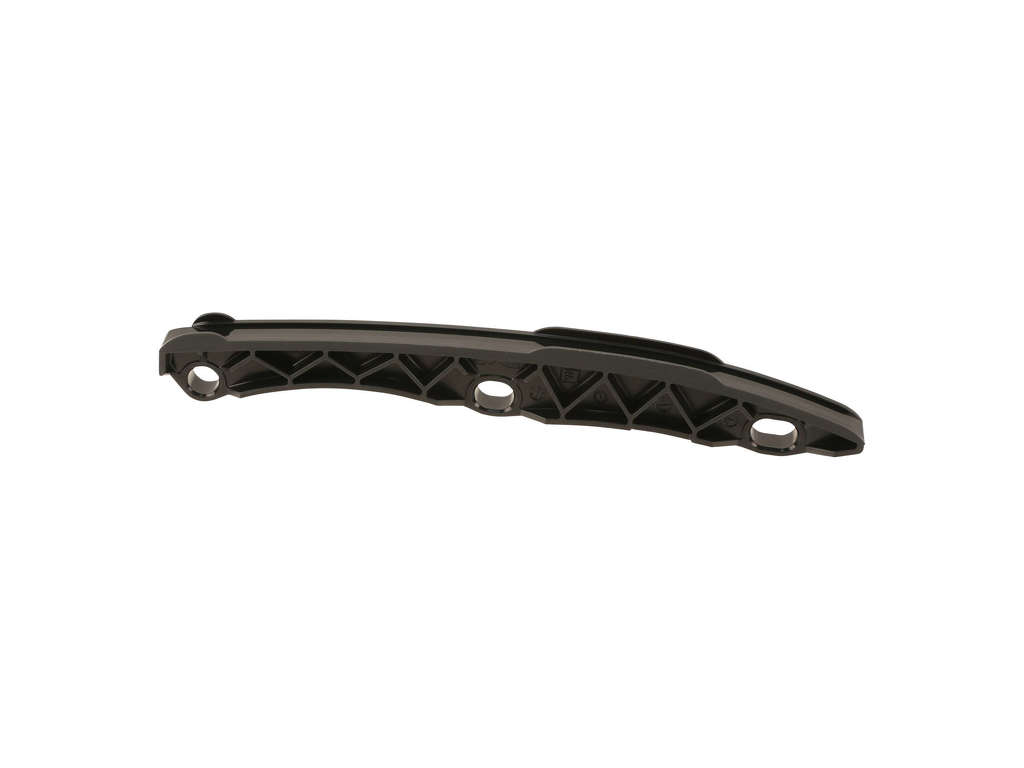
Typical fix: This is a major repair that involves replacing the timing chains, guides, and tensioners. It is labor-intensive, often requiring 9+ hours.
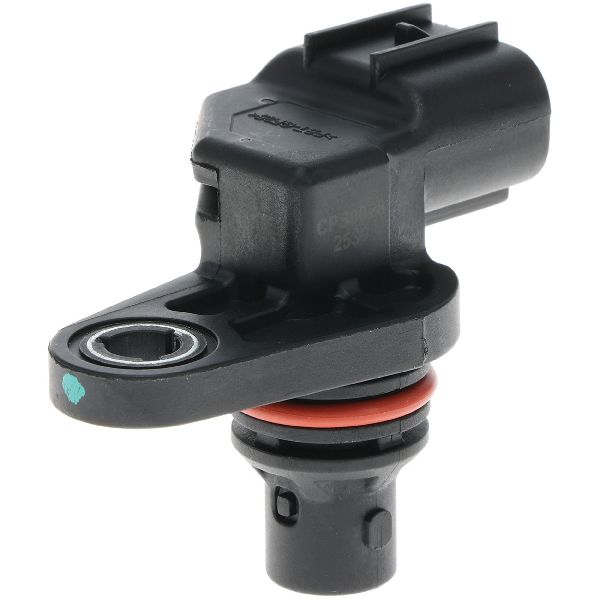
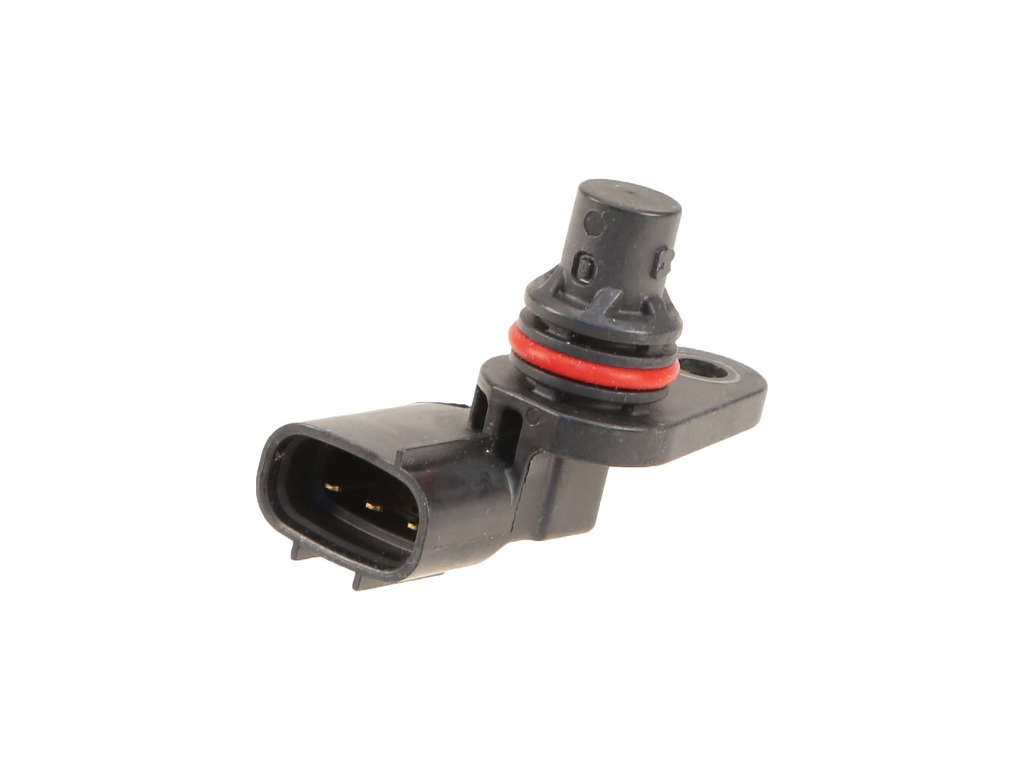
Est. part cost: $400-$800 - Faulty Bank 2 Exhaust Camshaft Position Sensor ⚪ Low Probability → Shop Engine Camshaft Position Sensor
How to confirm: Swap the Bank 2 exhaust camshaft position sensor with the identical sensor from Bank 1. If the code changes to P0017, the sensor is the problem. However, this is an uncommon cause, as the sensor is usually accurately reporting the timing error.
Typical fix: Replace the Bank 2 exhaust camshaft position sensor. The OEM part number is 39318-3L000.
Est. part cost: $30-$70
Rare But Worth Checking
- Failed CVVT Actuator (Cam Phaser): The gear on the end of the camshaft can fail internally or get stuck. In some cases, the dowel pin that aligns the phaser to the camshaft can shear or recede into the camshaft, allowing the phaser to spin freely and lose timing. This is a known, though uncommon, failure on this engine family.
- Wiring or Connector Issue: Check the wiring harness and connectors for the camshaft position sensor and the oil control valve for any signs of damage, corrosion, or loose connections. Rodents have been known to chew on the soy-based wire coatings used in these vehicles.
- Clogged Oil Passages: Severe oil sludging can block the small oil passages that feed the CVVT system in the cylinder head. In a severe case reported on a platform-mate, a failed oil pump chain tensioner sent metal debris through the engine, clogging the OCVs.
Diagnosis Steps
- Check the engine oil level and condition. This is the most common cause. If low, top it off, clear the code, and see if it returns. If the oil is old or dirty, perform an oil and filter change with 5W-30 full synthetic oil and an OEM filter.
- Scan for any other OBD-II codes that may provide more clues (e.g., P0018, misfire codes).
- Inspect the wiring and connectors for the Bank 2 exhaust camshaft position sensor and Oil Control Valve (OCV) for damage or corrosion.
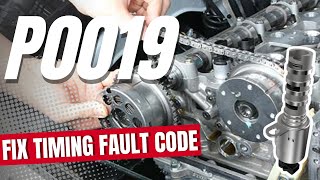
- To test the OCV, swap the Bank 2 exhaust OCV with the Bank 1 exhaust OCV. They are identical parts. Clear codes and drive. If the code changes to P0017, the OCV is faulty and needs replacement. 🎬 Watch: How to test and fix the P0019 correlation code.
- To test the camshaft position sensor, swap the Bank 2 exhaust sensor with the Bank 1 exhaust sensor. If the code changes to P0017, the sensor is faulty. This is less likely than a bad OCV.
- If the steps above do not identify the issue, the problem is likely mechanical. Listen for a startup rattle, which points to a timing chain/tensioner issue. Professional diagnosis with a scope to compare crank and cam signals is the next step to confirm a timing chain or phaser problem.
Parts You'll Likely Need
- Engine Oil Control Valve (Exhaust, Bank 2)
(OEM #24360-3CAB2)— This solenoid is a very common failure point. It gets clogged with oil sludge or fails electrically, causing the timing correlation fault.
Trusted brands: Genuine Kia/Hyundai, Spectra Premium, Dorman
OEM price range: $90-$150
Aftermarket price range: $50-$100 - Camshaft Position Sensor (Bank 2, Exhaust)
(OEM #39318-3L000)— While less common than the OCV, the sensor that reads the camshaft's position can fail, sending incorrect data to the ECM.
Trusted brands: Genuine Kia/Hyundai, Delphi, Spectra Premium
OEM price range: $50-$80
Aftermarket price range: $30-$70 - Timing Chain Kit — For high-mileage vehicles, especially those with a history of infrequent oil changes or a startup rattle, a stretched timing chain or failed tensioner is a likely mechanical cause.
Trusted brands: Genuine Kia/Hyundai
OEM price range: $400-$800
Aftermarket price range: $250-$500
Related Codes That Often Appear With This One
- P0018 — This is the correlation code for the intake camshaft on the same bank (Bank 2). If both P0018 and P0019 are present, it strongly points to a base timing issue on Bank 2, like a jumped secondary timing chain, or a systemic problem like low oil pressure or a stretched primary chain.
- P0300, P0302, P0304, P0306 — These are misfire codes for Bank 2 cylinders (2, 4, 6). Incorrect exhaust valve timing caused by the P0019 fault can disrupt the combustion cycle and cause misfires on the affected bank. As noted in NHTSA ODI #11653245, an owner reported these misfire codes appearing alongside P0019, resulting in a vehicle that was undrivable and had difficulty maintaining speed.
- P0017 — This is the correlation code for the exhaust camshaft on Bank 1. This code typically appears only after a technician has swapped a suspected faulty OCV or sensor from Bank 2 to Bank 1 as a diagnostic step. If it appears on its own with P0019, it could indicate a stretched primary timing chain affecting both banks.
Technical Service Bulletins (TSBs) & Recalls
- SA305: Service Action for E-CVVT Cover Inspection and Motor Plug Replacement on some 2016-2017 Sorento 3.3L models. While not directly for P0019, it relates to the CVVT system that causes the code.
- While no TSB is specifically for P0019, technicians often reference internal documents and TSBs for related models (like Hyundai Santa Fe TSB 16-01-013) to diagnose recurring CVVT issues.
Platform-Specific Known Issues
- The 3.3L GDI V6 engine is known for potential oil consumption, which can lead to low oil levels and trigger CVVT-related fault codes like P0019. Additionally, a known but uncommon failure is the shearing or migration of the dowel pin that aligns the CVVT phaser to the camshaft, causing a loss of mechanical timing.
Mechanic-Grade Diagnostic Values
- Oil Control Valve (OCV) Coil Resistance — expected: 6.9 - 7.9 Ohms (Denso type) or 6.7 - 7.7 Ohms (Delphi type) at 68°F (20°C).. Failure: A reading of infinity (open circuit) or near zero (short circuit) indicates a failed solenoid coil.
- Camshaft Position Sensor Signal Voltage (Key On, Engine Off) — expected: Approximately 4.8V between the signal wire and ground wire.. Failure: When a metal object is passed in front of the sensor, the voltage should drop to near zero. If the voltage does not change, the sensor is faulty.
Scan Tool Commands That Help
- Kia GDS (Global Diagnostic System): Actuation Test: "OIL CONTROL VALVE" — This bidirectional command allows a technician to manually activate the OCV solenoid to check for an audible click and a change in engine operation, confirming if the valve is mechanically stuck or electrically non-responsive.
- Kia GDS (Global Diagnostic System): Special Function: "Resetting adaptive values" — After replacing a component like an OCV or performing a timing chain repair, this function should be used to clear the ECM's learned values, forcing it to re-adapt to the new component's performance and preventing the code from returning erroneously.
Wiring & Ground Locations
- 91860-C6020 — This is the part number for the main engine ground wiring assembly for the 3.3L Lambda II engine.. A poor engine ground can cause erratic behavior and incorrect readings from various sensors, including the camshaft and crankshaft position sensors. Ensuring this ground connection is clean and tight is a crucial step in diagnosing electrical faults.
- GF02 — A main ground point located at the right kick panel area.. While not directly for the engine sensors, this ground is part of the vehicle's overall grounding scheme. Intermittent electrical issues can sometimes be traced back to body grounds like this one, affecting module communication.
Real Owner Repair Stories
- 2CarPros Forum (2014 Hyundai Genesis Coupe (Shares 3.3L Lambda engine family)) — Check engine light with codes P0018 and P0019 present simultaneously.
❌ Tried (didn't work) Replacing the Bank 2 camshaft actuator control valve (OCV).
✅ What actually fixed it The user did not post the final resolution, but the presence of both intake (P0018) and exhaust (P0019) codes on the same bank strongly pointed the diagnosing technician toward a base mechanical timing issue (e.g., stretched chain, jumped tooth on that bank's secondary chain) rather than a single sensor or OCV failure. - NHTSA ODI #11575366 (Platform-mate) — An owner reported that their vehicle threw codes P0019, P0024, and multiple misfire codes (P0300, P0302, P0304, P0306). Upon inspection, the engine was found to be missing 5 quarts of oil despite no warning light appearing on the dashboard.
OEM Part Supersession History
24360-3CAB1→24360-3CAB2— Internal design improvement for reliability and performance. The -3CAB2 is the current, updated part.
Heads up: While the older part may physically fit, it is highly recommended to use the latest revision (24360-3CAB2) for any replacement to benefit from the design updates.
Model Year Variations Within This Range
- 2019-2020: For the 2019 model year refresh, the 3.3L V6 engine was paired with a new 8-speed automatic transmission, replacing the previous 6-speed. While this does not directly affect the cause of a P0019 code, the ECM software and some related harness connectors may differ from the 2016-2018 models.
Diagnostic Flowchart
Other Known Issues on This Vehicle
Issues unrelated to this code that are worth knowing about as an owner of this generation:
- Excessive Oil Consumption 🔴 High — Widespread across the 3.3L V6 platform, can start as early as 60,000-80,000 miles. Many owners report needing to add 1+ quart every 1,000 miles. (Ref: No specific recall, but dealers perform oil consumption tests and Kia has faced class-action lawsuits regarding engine issues.)
- Head Gasket / Head Bolt Failure (2016-2017) 🔴 High — A notable number of failures reported between 50,000 and 140,000 miles, leading to coolant loss, overheating, and often requiring engine replacement. (Ref: NHTSA opened a preliminary evaluation (PE23022) in Nov 2023 to investigate this specific issue.)
- Crankshaft Failure (2017 models) 🔴 High → Shop Engine Crankshaft — Affects a specific production range of 2017 models. (Ref: Recall issued for some 2017 models due to improperly heat-treated crankshafts that were prone to fracture.)
- GDI Intake Valve Carbon Buildup 🟠 Medium — Common to all Gasoline Direct Injection (GDI) engines, including the Lambda II. Becomes noticeable at higher mileage (80,000+ miles), causing misfires, hesitation, and reduced performance.
- Sticking Electric Power Steering 🟠 Medium — Reported on 2016-2018 models, where the steering wheel can feel like it's sticking in the straight-ahead position, requiring extra force to initiate a turn. (Ref: No recall, but the fix typically involves replacing the electric steering gear/column.)
Used vs. New Parts: Buying Guide for This Vehicle
When a used part is the smart pick: A used part is a reasonable choice for the Camshaft Position Sensor, as it is a simple magnetic sensor that either works or doesn't. It is not a high-wear item.
Donor-vehicle mileage cap: roughly under 80000 miles for the part to have meaningful remaining life.
What to inspect on the donor part:
- For an OCV, inspect the mesh screens for any tears or metallic debris. Avoid any that are clogged with thick, black sludge.
- For a sensor, ensure the plastic housing is not cracked and the connector pins are straight and free of corrosion.
- Verify the donor vehicle was not in a severe front-end collision that could have damaged engine components.
OEM-only on this vehicle (don't cheap out):
- Timing Chain Kit: Given the critical nature of this component and the high labor cost to install, using a new, genuine OEM kit is the only recommended path to ensure longevity and proper performance.
- Oil Control Valve (OCV): While some aftermarket OCVs work, many technicians report higher failure rates or slightly different operational characteristics that can cause persistent issues. Using a genuine Kia/Hyundai part (24360-3CAB2) is strongly advised for a one-time fix.
Aftermarket brands forum-validated for this vehicle:
- Delphi (for Camshaft Position Sensor)
Brands owners have reported issues with on this vehicle:
- Unbranded, no-name OCVs and sensors from online marketplaces are frequently cited as being dead-on-arrival or failing shortly after installation.
Real Owner Stories
Aggregated from forums and TSBs cited above. Mileages and costs reflect what owners reported in those sources.
2013 Hyundai Santa Fe 3.3L V6
Symptoms: Loud startup vibration and a P0019 code.
What fixed it: The owner was advised by a mechanic that this is a precursor to engine failure on these V6 engines, often requiring major mechanical timing work.
Source hint: reddit.com/r/MechanicAdvice
2016-2020 Kia Sorento 3.3L V6 — ~100000 miles
Symptoms: P0018 and P0019 appearing together.
What fixed it: After ruling out sensors and OCVs, the issue was identified as a timing chain failure.
Source hint: kia-forums.com
2016-2020 Kia Sorento 3.3L V6
Symptoms: P0017 code (related bank) and timing correlation errors.
What fixed it: The CVVT sprocket dowel pin had sunk into the camshaft, allowing the sprocket to spin and lose mechanical timing.
Source hint: reddit.com/r/MechanicAdvice
2016-2020 Kia Sorento 3.3L V6 — ~70000 miles
Symptoms: Excessive oil consumption requiring 1+ quart every 1,000 miles, leading to CVVT-related fault codes.
What fixed it: Using different oil weights and additives to combat carbon buildup on piston rings.
Source hint: bobistheoilguy.com
2016 Kia Sedona (Platform-mate)
Symptoms: Vehicle had difficulty maintaining speed and was undrivable. Codes P0304, P0306, P0302, P0300, and P0019 were present.
What fixed it: The vehicle was towed to a shop for major engine diagnostics and repair.
Source hint: NHTSA ODI #11653245
Related OBD-II Codes
Frequently Asked Questions
Does Service Action SA305 apply to my 2016-2017 Kia Sorento 3.3L?
Is there a specific oil filter I should use to prevent P0019 on my Sorento V6?
My 2017 Sorento has a P0019 and a loud rattle; could this be related to the crankshaft recall?
What is the specific part number for the Bank 2 Exhaust OCV on the 3.3L engine?
Can I just swap sensors to see if the Camshaft Position Sensor is bad?
Why is my Sorento consuming so much oil, and is it causing my P0019 code?
Helpful Videos

We Have This Part in Stock


The information in this article is provided for general reference and educational purposes only. Vehicle specifications, procedures, and part compatibility can vary by production date, trim level, and region. Always consult your vehicle's factory service manual and verify part numbers before purchasing or performing repairs. Safety-critical components such as airbags, seat belts, and braking systems should be installed by a qualified professional.
- Kia Sorento:
- 🧭 Diagnostic Flowchart
- 🎬 Helpful Videos
- 🛍️ Shop This Part
- What's Unique About the 2016-2020 Kia Sorento
- Symptoms You May Notice
- Most Likely Causes
- Rare But Worth Checking
- Diagnosis Steps
- Parts You'll Likely Need
- Related Codes That Often Appear With This One
- Technical Service Bulletins (TSBs) & Recalls
- Platform-Specific Known Issues
- Mechanic-Grade Diagnostic Values
- Scan Tool Commands That Help
- Wiring & Ground Locations
- Real Owner Repair Stories
- OEM Part Supersession History
- Model Year Variations Within This Range
- Other Known Issues on This Vehicle
- Used vs. New Parts: Buying Guide for This Vehicle
- Real Owner Stories
- 2013 Hyundai Santa Fe 3.3L V6
- 2016-2020 Kia Sorento 3.3L V6 — ~100000 miles
- 2016-2020 Kia Sorento 3.3L V6
- 2016-2020 Kia Sorento 3.3L V6 — ~70000 miles
- 2016 Kia Sedona (Platform-mate)
- Related OBD-II Codes
- Frequently Asked Questions
- 🎟️ Get 5% Off