

P0019 on 2018-2023 Kia Stinger 3.3T: Crank/Cam Correlation Causes and Fixes
The P0019 code on a Kia Stinger 3.3T most often points to a faulty oil control valve (OCV/VVT solenoid) for the Bank 2 exhaust camshaft or low/dirty engine oil. Bank 2 is the passenger side of the engine. An OCV is relatively inexpensive and easy to replace, making it a common first step after checking the oil.
- P0019 on the Stinger 3.3T means the exhaust camshaft on the radiator-side of the engine is out of sync with the crankshaft.
- Before buying any parts, check the engine oil level and condition. Low or dirty oil is a very common cause.
- The most likely failed part is the Oil Control Valve (OCV/VVT Solenoid), which is relatively affordable and accessible.
- Swapping the suspect OCV or Camshaft Position Sensor with an identical one from a different position is a cost-free way to confirm if the part is faulty.
- Major mechanical issues like a stretched timing chain are not common on this engine and should be considered a last resort after ruling out simpler causes.
What's Unique About the 2018-2023 Kia Stinger
The Lambda II 3.3L T-GDi is a modern, twin-turbocharged, direct-injection engine that relies heavily on precise timing for its performance. The CVVT system uses oil pressure to adjust timing, making it sensitive to oil level and quality. While the engine is generally considered reliable, some owners have experienced issues with timing components or sensors that can trigger this code. Unlike some other platforms with widespread timing chain issues, the Stinger's 3.3T does not have a reputation for "typical" timing chain failures, suggesting that problems are more likely related to individual components like sensors or solenoids. The lack of a specific Technical Service Bulletin (TSB) for P0019 on this model further suggests that Kia does not consider it a widespread, endemic issue requiring a special campaign.
Symptoms You May Notice
- Check Engine Light is on
- Rough or fluctuating idle
- Engine hesitation or stumbling on acceleration
- Loss of engine power
- Reduced fuel economy
- In rare cases, the engine may stall at low speeds or when coming to a stop
- Replacing the Camshaft Position Sensor when the actual fault is a cheaper, easier-to-replace Oil Control Valve.
- Replacing the Crankshaft Position Sensor. While a CKP sensor failure can cause timing codes, it's less likely to isolate the fault to a single camshaft on a specific bank.
- Assuming a major timing chain failure before ruling out simple issues like low oil or a faulty OCV. The lack of widespread forum complaints about chain failure on the Stinger 3.3T supports this.
Most Likely Causes
- Low or Dirty Engine Oil 🔴 High Probability The CVVT system is entirely dependent on oil pressure to actuate the cam phasers. Dirty, sludged, or low oil can clog the very small passages in the Oil Control Valves (OCV) or prevent them from operating correctly.
How to confirm: Check the engine oil dipstick for proper level and inspect the oil's condition. If it is dark, gritty, or below the 'low' mark, this is a likely contributor. This should always be the first check.
Typical fix: Perform an oil and filter change using a high-quality synthetic oil of the manufacturer-recommended viscosity (typically 5W-30).
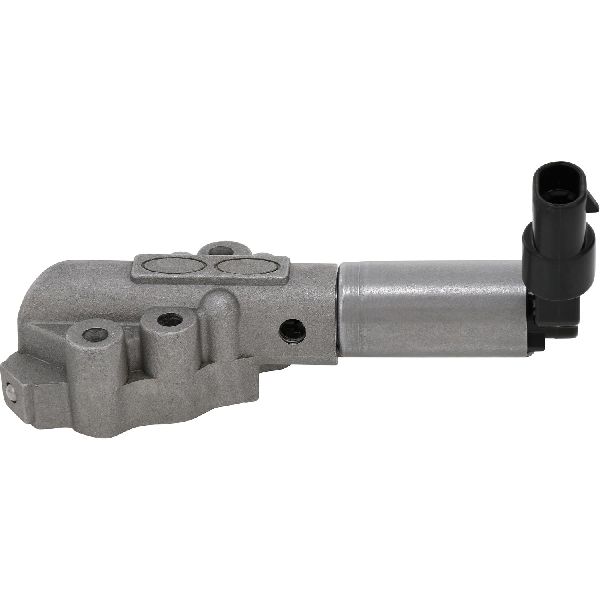
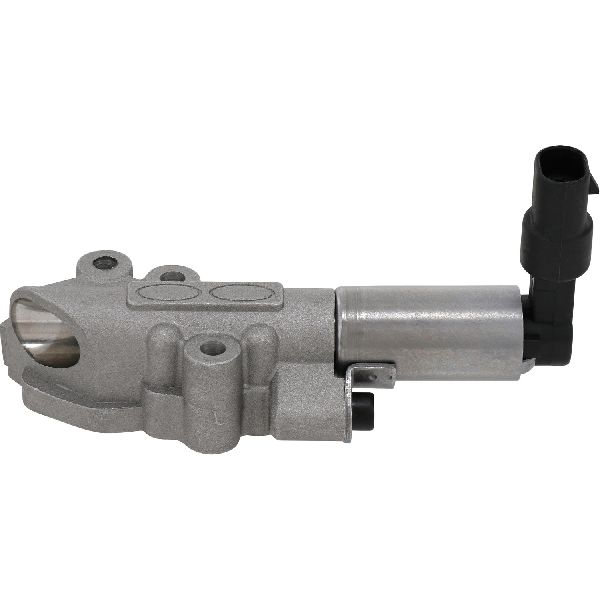
Est. part cost: $50-$100 - Faulty Oil Control Valve (OCV) / VVT Solenoid 🔴 High Probability The OCV is an electronic solenoid that can get stuck from oil debris or fail electrically over time. It's a common failure point for many VVT systems and is often the culprit for P0019 after oil issues are ruled out.
How to confirm: Swap the Bank 2 (passenger side) exhaust OCV with the Bank 2 intake OCV (if they are identical parts). If the code changes to P0018 (Bank 2 Intake), the OCV is faulty. You can also test the solenoid's resistance with a multimeter (typically 6.9-7.9 ohms) or apply 12V to see if it actuates.
Typical fix: Replace the Bank 2 exhaust Oil Control Valve. The confirmed OEM part number is 24360-3CAB2.
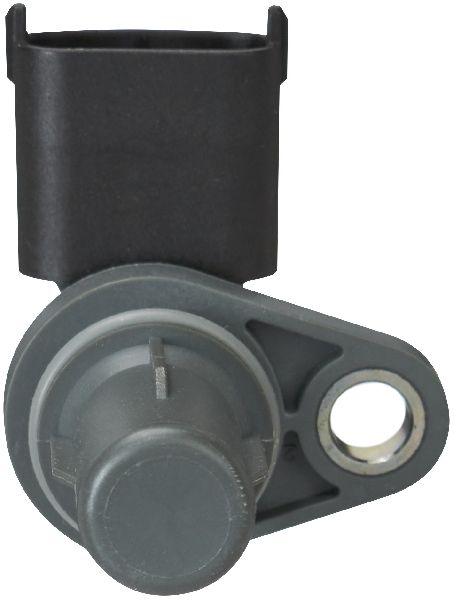
Est. part cost: $70-$150 - Faulty Camshaft Position Sensor (CPS) 🟡 Medium Probability → Shop Engine Camshaft Position Sensor Sensors can fail electronically over time due to heat cycles and vibration, sending an incorrect or no signal to the ECM.
How to confirm: Swap the Bank 2 exhaust CPS with another known-good sensor (e.g., from Bank 1). If the code follows the sensor (e.g., changes to P0017), the sensor is bad. An oscilloscope is the best tool to test the sensor's output signal waveform.
Typical fix: Replace the Bank 2 exhaust Camshaft Position Sensor.
Est. part cost: $60-$120 - Timing Chain Issues (Stretched Chain, Failed Tensioner) ⚪ Low Probability → Shop Engine Timing Chain While not rampant on this platform, high mileage or severe lack of maintenance (e.g., running with low/dirty oil) can lead to timing chain stretch or tensioner failure, causing the cam/crank correlation to be physically off.
How to confirm: This is a mechanical issue that requires significant disassembly to inspect timing marks, chain slack, and guide condition. This is typically diagnosed after all sensor and solenoid possibilities have been exhaustively ruled out.
Typical fix: Replace the timing chain, guides, and tensioners. This is a labor-intensive job best left to professionals.
Est. part cost: $500-$1200
Rare But Worth Checking
- Failed Camshaft Phaser (CVVT Gear): → Shop Engine Camshaft The gear itself, which is actuated by the OCV, can fail mechanically or become stuck due to debris or internal failure. This is less common than an OCV failure but is a possibility if other diagnostics don't resolve the code.
- Wiring Harness or Connector Issue: Damaged wires or a corroded connector for either the CPS or OCV can disrupt the signal to the ECM, mimicking a failed component. A thorough visual inspection of the harness on the passenger side of the engine is a crucial step.
- Faulty Powertrain Control Module (PCM): → Shop Engine Control Module (ECM) This is extremely rare. The PCM should only be considered a potential cause after every other possibility has been exhaustively tested and ruled out.
Diagnosis Steps
- Check Engine Oil: Verify the oil level is full and the oil is clean. If low or dirty, perform an oil change with high-quality 5W-30 synthetic oil and a new filter. Clear the code and drive to see if it returns. This fixes the issue a surprising amount of the time.
- Scan for Other Codes: Use an OBD-II scanner to check for any other pending or active codes that could provide more clues (e.g., P0018, P0349).
- Inspect Wiring: Visually inspect the wiring harnesses and connectors for the Bank 2 (passenger side) exhaust camshaft position sensor and oil control valve. Look for any signs of damage, corrosion, oil contamination, or loose connections.
- Test the Oil Control Valve (OCV): This is the most likely culprit after oil level. Locate the OCVs on the front of the passenger-side cylinder head. The exhaust OCV is typically the lower of the two. Swap it with the intake OCV on the same bank. Clear the codes and run the engine. If the code changes to P0018, you've confirmed the OCV is bad. Replace it with OEM part 24360-3CAB2.
- Test the Camshaft Position Sensor (CPS): If the OCV swap doesn't isolate the problem, perform a similar test by swapping the Bank 2 exhaust CPS with another one (e.g., Bank 1 exhaust CPS). If the code moves with the sensor (e.g., to P0017), the sensor is faulty.
- Advanced Mechanical Diagnosis: If all electrical components and sensors check out, the problem is likely mechanical. This involves inspecting the timing chain for stretch, checking the cam phaser for correct operation, and verifying timing marks. This step is best left to a professional mechanic.
Parts You'll Likely Need
- Oil Control Valve / VVT Solenoid (Bank 2, Exhaust)
(OEM #24360-3CAB2)— This solenoid is a frequent point of failure and is directly responsible for controlling the cam phaser based on commands from the ECM. It's often the culprit when oil level and quality are good. This part is for the passenger side.
Trusted brands: Kia/Hyundai (OEM), Dorman, Standard Motor Products (SMP)
OEM price range: $120-$180
Aftermarket price range: $70-$110 - Camshaft Position Sensor (Bank 2, Exhaust) — This sensor provides the primary signal to the ECM about the camshaft's position. A failed sensor will directly cause a correlation code, though it's less common than the OCV failing.
Trusted brands: Kia/Hyundai (OEM), Bosch, NTK/NGK
OEM price range: $90-$150
Aftermarket price range: $60-$100
Related Codes That Often Appear With This One
- P0018 — Crankshaft Position - Camshaft Position Correlation (Bank 2 Sensor A - Intake). If both P0018 and P0019 are present, it could point to a more significant timing issue on all of Bank 2, such as a slipped phaser or chain.
- P0348 or P0349 — These codes relate specifically to the Camshaft Position Sensor 'B' circuit for Bank 2 (High or Intermittent Input). Their presence strongly suggests the issue is with the sensor itself or its wiring, not a mechanical timing problem.
Technical Service Bulletins (TSBs) & Recalls
- SC300: Safety recall for the replacement of the left-hand turboc
Real Owner Stories
While specific to the same manufacturer and engine family, reports on other Kia models highlight how severe this code can be. NHTSA ODI #11653245 describes a vehicle that had difficulty maintaining speed and was rendered undrivable after throwing P0019 alongside multiple misfire codes. Another report, NHTSA ODI #11575366, illustrates the critical link between oil and this code; an owner reported their vehicle threw P0019 and timing codes after it was found to be missing 5 quarts of oil, despite no warning light appearing on the dashboard.
Platform-Specific Known Issues
- A recall was issued for the left turbocharger oil feed pipe on some 2018-2023 Stingers, which could deteriorate and leak oil. While not a direct cause of P0019, a significant oil leak could lead to low oil levels, which absolutely can cause this code.
- There are no specific Technical Service Bulletins (TSBs) from Kia for the P0019 code on the 3.3T Stinger. This indicates that the issue is not considered a widespread, repeatable defect by the manufacturer, and standard diagnostic procedures should be followed.
Mechanic-Grade Diagnostic Values
- Oil Control Valve (OCV) Coil Resistance — expected: Denso-type: 6.9 - 7.9 Ω; Siemens-type: 6.8 - 8.0 Ω (at 68°F / 20°C).. Failure: A resistance reading outside of these specific ranges, or an open/short circuit, indicates a faulty solenoid coil.
- Oil Control Valve (OCV) Mechanical Test — expected: When 12V is briefly applied to the terminals, the valve's internal spool should move with an audible click.. Failure: If the valve does not move or cycle, it is mechanically stuck due to debris or internal failure.
Scan Tool Commands That Help
- Kia GDS (Global Diagnostic System): Actuation Test for Oil Control Valve — After confirming oil level and quality are good, use this command to force the ECM to activate the Bank 2 exhaust OCV. The technician can observe live data to see if the camshaft angle changes as commanded, or listen for the solenoid to click, confirming if the solenoid is responding to electrical commands.
- Kia GDS (Global Diagnostic System): Data Analysis (Live Data Graphing) — Use this function to simultaneously graph the output waveforms of the Crankshaft Position Sensor (CKP) and the Bank 2 Exhaust Camshaft Position Sensor (CMP). This allows a technician to visually inspect the timing relationship between the two sensors in real-time to confirm if they are out of sync, as the code suggests.
Diagnostic Flowchart
Related OBD-II Codes
Frequently Asked Questions
Does the SC300 recall apply to my P0019 code on the 3.3T Stinger?
Are there any specific Kia Technical Service Bulletins (TSBs) for P0019 on the 2018-2023 Stinger?
Where is the Bank 2 exhaust Oil Control Valve (OCV) located on the Lambda II 3.3L engine?
What is the OEM part number for the Bank 2 exhaust Oil Control Valve on the Stinger 3.3T?
Can I swap sensors to test if the OCV is bad on my Stinger?
Is my Genesis G70 susceptible to the same P0019 issues as the Stinger?
We Have This Part in Stock

The information in this article is provided for general reference and educational purposes only. Vehicle specifications, procedures, and part compatibility can vary by production date, trim level, and region. Always consult your vehicle's factory service manual and verify part numbers before purchasing or performing repairs. Safety-critical components such as airbags, seat belts, and braking systems should be installed by a qualified professional.
- Kia Stinger:
- 🧭 Diagnostic Flowchart
- 🛍️ Shop This Part
- What's Unique About the 2018-2023 Kia Stinger
- Symptoms You May Notice
- Most Likely Causes
- Rare But Worth Checking
- Diagnosis Steps
- Parts You'll Likely Need
- Related Codes That Often Appear With This One
- Technical Service Bulletins (TSBs) & Recalls
- Real Owner Stories
- Platform-Specific Known Issues
- Mechanic-Grade Diagnostic Values
- Scan Tool Commands That Help
- Related OBD-II Codes
- Frequently Asked Questions
- 🎟️ Get 5% Off