

P0019 on 2017-2020 Lincoln Continental: Crankshaft Camshaft Correlation Causes and Fixes
P0019 on a 2017-2020 Lincoln Continental indicates a timing mismatch between the crankshaft and the exhaust camshaft on Bank 2 (the engine bank near the radiator). The most common causes are low/dirty engine oil or a sticking VCT solenoid, which is a known issue documented in multiple manufacturer TSBs. An oil change is the first step; replacing the solenoid is the next most likely fix. This is a common issue across many Ford and Lincoln vehicles with these engines.
- P0019 specifically points to the exhaust camshaft on Bank 2, which is the cylinder bank near the radiator on a Lincoln Continental.
- Always check the engine oil level and condition first. A simple oil change is the easiest and cheapest potential fix.
- The most likely failed part is the VCT solenoid, a known issue documented in multiple TSBs for this vehicle.
- Avoid jumping to conclusions about expensive timing chain repairs until the oil, VCT solenoid, and camshaft sensor have been ruled out.
What's Unique About the 2017-2020 Lincoln CONTINENTAL
For this generation of Lincoln Continental and its related Ford platforms, the Variable Camshaft Timing (VCT) system is known to be sensitive to oil quality and condition. Ford and Lincoln have issued multiple Technical Service Bulletins (TSBs) acknowledging that P0019 and a dozen other timing codes can be triggered by small debris in the engine oil causing the VCT solenoids to stick. The TSBs specifically recommend a diagnostic procedure (Pinpoint Test HK) where a technician uses a scan tool to cycle the affected solenoid 10 times to try and dislodge debris before replacing any parts. This makes a sticking solenoid a higher-probability cause on this vehicle compared to others and makes regular, high-quality oil changes a critical maintenance item.
Diagnostic Flowchart
Tap your situation to follow the diagnostic path that matches what you're seeing on this vehicle.
Symptoms You May Notice
- Check Engine Light is on
- Rough or unstable idle
- Hesitation or stumbling during acceleration
- Reduced engine power
- Poor fuel economy
- Engine may be difficult to start or stall at low speeds
- Rattling noise from the engine on a cold start that lasts for a few seconds
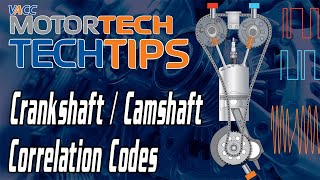
- Replacing the camshaft position sensor when the root cause is a sticking VCT solenoid or simply dirty engine oil. The sensor is often just accurately reporting the timing error. 🎬 Watch: Understanding how crankshaft and camshaft correlation codes work.
- Immediately assuming a stretched timing chain without first diagnosing the less expensive components of the VCT system, like the solenoids.
Most Likely Causes
- Low or Dirty Engine Oil 🔴 High Probability The VCT system is hydraulically operated and highly sensitive to oil pressure and cleanliness. Multiple manufacturer TSBs point to oil debris as a primary cause of VCT solenoid sticking, which triggers this code. Low or contaminated oil is the number one cause of P0019.
How to confirm: Check the engine oil level on the dipstick and inspect its color and consistency. If the oil is low or appears dark, gritty, or sludgy, it needs to be changed.
Typical fix: Perform an engine oil and filter change using the correct grade and type of oil specified by Lincoln (e.g., Motorcraft synthetic blend) and a new Motorcraft oil filter. Clear the codes and test drive to see if the code returns.
Est. part cost: $50-$100 - Sticking or Failed VCT Solenoid (Bank 2, Exhaust) 🔴 High Probability Multiple Technical Service Bulletins (SSM 50067, 48423, 47170) directly cite sticking VCT solenoids due to small debris as a common cause for P0019 on these vehicles.
How to confirm: A professional scan tool can command the solenoid to activate (Pinpoint Test HK); a change in engine idle indicates it's working. A common DIY method is to swap the Bank 2 exhaust solenoid with the Bank 2 intake solenoid. If the code changes to P0018, the solenoid is confirmed faulty.
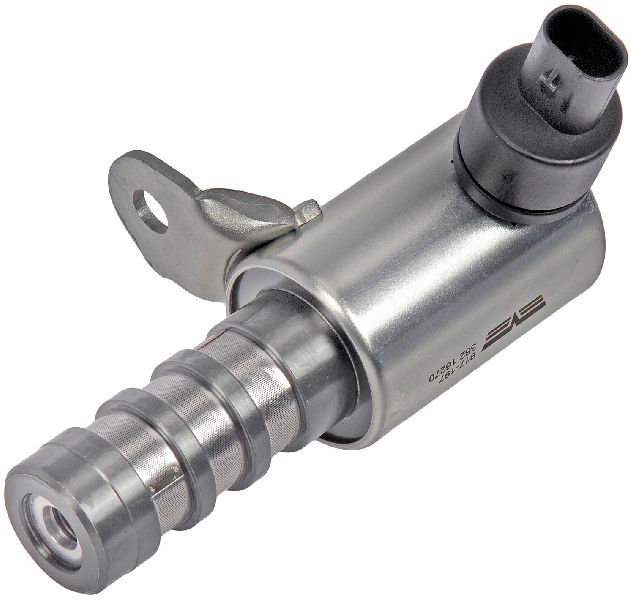
Typical fix: Replace the Bank 2 exhaust VCT solenoid. It is often recommended to replace them in pairs (intake and exhaust) or all four at once, and to perform an oil change at the same time.
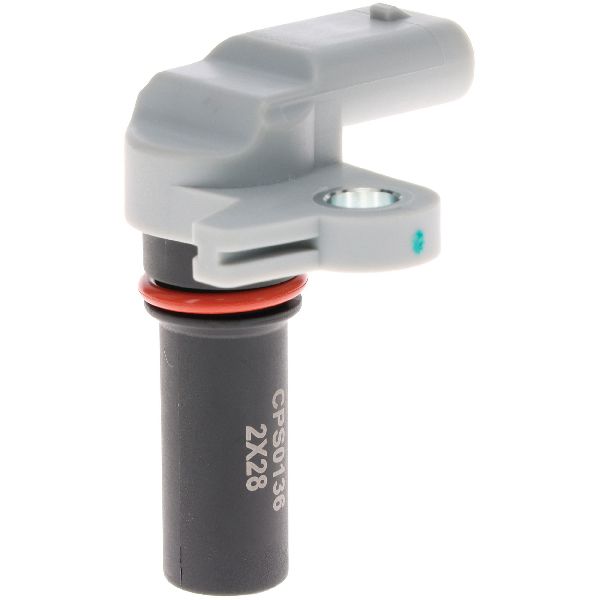
Est. part cost: $40-$150 - Failed Camshaft Position Sensor (Bank 2, Exhaust) 🟡 Medium Probability → Shop Engine Camshaft Position Sensor
How to confirm: Test the sensor's output with a multimeter or oscilloscope to ensure it's sending a correct signal to the PCM. Visual inspection for damage is also recommended. Swapping the sensor with a known good one is another diagnostic step.
Typical fix: Replace the Bank 2 exhaust camshaft position sensor.
Est. part cost: $30-$100 - Wiring or Connector Damage ⚪ Low Probability
How to confirm: Visually inspect the wiring harness and connectors leading to the camshaft position sensor and VCT solenoid on Bank 2 for any signs of fraying, corrosion, or loose pins. A forum member on a similar platform reported causing a P0019 by pinching a sensor pigtail during a valve cover re-installation.
Typical fix: Repair the damaged wiring or replace the connector pigtail.
Est. part cost: $15-$50
Rare But Worth Checking
- Stretched Timing Chain or Failed Cam Phaser: → Shop Engine Timing Chain This is a more severe mechanical issue, usually accompanied by a distinct rattling noise on cold starts that lasts 2-5 seconds. It's a known issue on the 3.5L EcoBoost, a related engine. This is a costly repair and should be considered only after ruling out oil, solenoid, and sensor issues.
- Failed Powertrain Control Module (PCM): → Shop Engine Control Module (ECM) This is extremely rare and should only be considered as a last resort after all other possibilities have been exhaustively diagnosed by a professional.
Diagnosis Steps
- Verify the code with a reliable OBD-II scanner.
- Check the engine oil level and condition. If low or dirty, perform an oil and filter change using Motorcraft parts, clear the code, and see if it returns. This is the cheapest and often most effective first step.
- Inspect the wiring and connectors for the Bank 2 (front/radiator side) exhaust camshaft position sensor and VCT solenoid for any visible damage or corrosion.
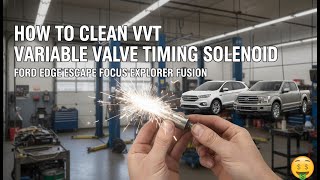
- Using a bidirectional scan tool, access the PCM functions and perform Pinpoint Test HK as recommended by TSB SSM 50067. Command the Bank 2 exhaust VCT solenoid on and off 10 times to attempt to clear debris. 🎬 See how to clean a sticking VVT solenoid yourself. Listen for a click and watch for a change in engine idle.
- If the code returns, swap the Bank 2 exhaust VCT solenoid with the Bank 2 intake solenoid. They are located on the front valve cover. Clear codes and drive. If the code changes to P0018, the solenoid is bad and must be replaced.
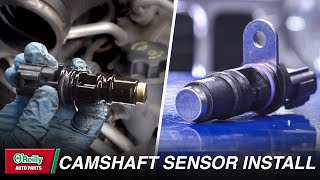
- If the solenoid and oil are good, test the camshaft position sensor's signal with a multimeter or oscilloscope. 🎬 Watch: A quick guide on replacing a camshaft position sensor.
- If all electronic components test good, the issue is likely mechanical. Listen for a timing chain rattle on cold starts. A professional should perform checks on the timing chain, tensioners, and cam phasers, which may require removing the valve cover for inspection.
Parts You'll Likely Need
- Engine Variable Valve Timing (VVT) Solenoid
(OEM #FT4Z-6M280-B (Common for 2.7L/3.0L EcoBoost))— This is the most common point of failure for code P0019 on this vehicle, as documented by multiple manufacturer TSBs citing issues with sticking due to oil debris.
Trusted brands: Motorcraft, Dorman, SKP
OEM price range: $70-$150
Aftermarket price range: $40-$90 - Camshaft Position Sensor
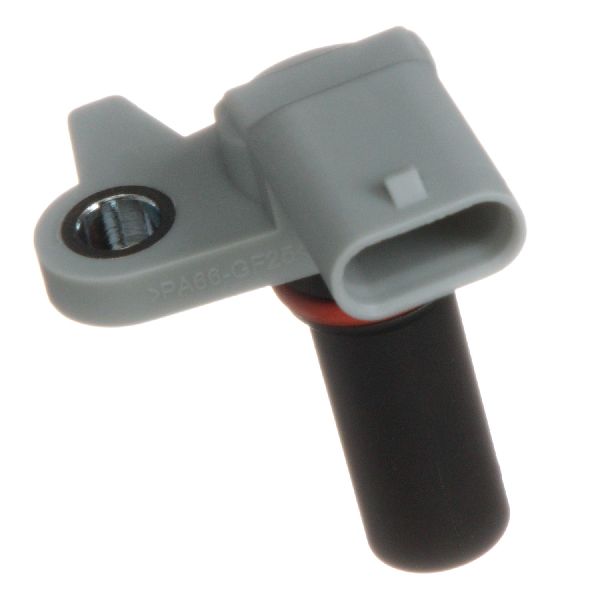
(OEM #BL3Z-6B288-C (Motorcraft DU-102))— If the solenoid and oil are not at fault, the sensor providing the timing data to the PCM is the next most likely component to have failed.
Trusted brands: Motorcraft, Bosch, Delphi
OEM price range: $60-$100
Aftermarket price range: $30-$70
Related Codes That Often Appear With This One
- P0017 — This is the same correlation error but for the exhaust camshaft on Bank 1. Seeing both codes together strongly suggests a systemic issue like low oil pressure or a stretched primary timing chain affecting both banks.
- P0018 — This is a correlation error for the intake camshaft on the same bank (Bank 2). If seen with P0019, it points to a problem affecting the entire bank, such as a cam phaser, a secondary timing chain issue, or oil supply to that cylinder head.
- P0021, P0022, P0024, P0025 — These are 'over-advanced' or 'over-retarded' timing codes. They are often caused by the same VCT system faults (solenoids, phasers, oil pressure) that trigger correlation codes and are mentioned together in the manufacturer TSBs.
Technical Service Bulletins (TSBs) & Recalls
- SSM 50067: Notes that DTCs including P0019 on 2015-2021 Ford and Lincoln vehicles may be due to debris causing the VCT solenoid to stick. Recommends using Pinpoint Test HK to cycle the solenoid 10 times before replacement.
- SSM 54366: Refers technicians to specific pinpoint tests (Pinpoint Test HK) in the service manual for a list of timing codes including P0019.
- SSM 48423: Similar to SSM 50067, identifies sticking VCT solenoids due to debris as a cause for P0019 on 2015-2020 models.
- SSM 47170: An earlier TSB, also noting that P0019 can be caused by a sticking VCT solenoid due to debris.
Platform-Specific Known Issues
- A series of Technical Service Bulletins (SSM 50067, SSM 54366, SSM 48423, SSM 47170) have been issued for 2017-2020 Lincoln Continentals regarding a group of diagnostic trouble codes that includes P0019. The bulletins state that this code may be caused by 'small debris causing the VCT solenoid to stick.' They recommend performing specific diagnostic tests (Pinpoint Test HK) to cycle the solenoid with a scan tool to clear it before authorizing a replacement.
- For the V6 engines in the Continental, the VCT solenoids are located on the valve covers, making replacement more labor-intensive than on some other Ford engines where they are externally accessible.
Mechanic-Grade Diagnostic Values
- VCT Solenoid Internal Resistance (2.7L/3.0L EcoBoost) — expected: 6.9 to 7.9 Ohms at 68°F (20°C). A broader acceptable range is often cited as 5-15 Ohms.. Failure: An open circuit (infinite resistance/OL) or a short (0 Ohms) indicates a failed solenoid coil.
- VCT Solenoid Connector Voltage (Key On, Engine Off) — expected: Greater than 10.5 Volts / Approximately 12V (Battery Voltage).. Failure: Significantly lower or no voltage points to a problem in the power supply (VPWR) circuit or PCM.
- Camshaft Position Sensor (CMP) Signal Voltage (3-wire Hall Effect) — expected: With key on, one wire should have ~5V reference, one should be ground, and the signal wire should toggle between ~0V and ~5V when the engine is cranked.. Failure: A signal wire that does not change voltage during cranking suggests a faulty sensor.
- Engine Oil Pressure (at idle, normal operating temp) — expected: Minimum of 15-20 PSI.. Failure: Pressure below the minimum threshold can cause VCT system malfunctions and trigger timing codes.
- FORScan/IDS Live Data PID: VCT_EXH_ERR (Bank 2 Exhaust Cam Error) — expected: Should be close to 0 degrees at a stable idle.. Failure: A large, persistent error value indicates the camshaft is not at its commanded position.
Scan Tool Commands That Help
- Ford IDS, FORScan, or equivalent high-end scanner: VCT Solenoid On/Off State Command / Actuator Test — This is the bidirectional test mentioned in TSBs (like SSM 50067) to diagnose a sticking VCT solenoid. The tool commands the solenoid to cycle on and off rapidly (e.g., 10 times) with the engine running. This can dislodge small debris, potentially fixing the code without replacing parts. If the engine idle becomes rough or stalls when commanded, it confirms the solenoid is mechanically functioning.
Wiring & Ground Locations
- VCT Solenoid Connector (Bank 2) — On the front valve cover (radiator side) of the V6 engine. One connector for the intake solenoid and one for the exhaust solenoid.. This connector provides power and the control signal from the PCM to the exhaust VCT solenoid. A damaged connector, corroded pins, or a frayed pigtail can interrupt the signal and cause P0019.
- Camshaft Position Sensor Connector (Bank 2, Exhaust) — On the front valve cover (radiator side), near the exhaust camshaft phaser.. This connector sends the camshaft's position data back to the PCM. Damage to this connector or its wiring can cause a loss of signal, leading the PCM to set a correlation code.
Real Owner Repair Stories
- Ford F150 Forum user (2013 Ford F-150 (similar VCT system)) — Sporadic loss of power, engine codes would come and go.
❌ Tried (didn't work) Clearing the code would make the truck run well temporarily before the code returned.
✅ What actually fixed it A full timing job was required, replacing the timing chain, guides, VCT solenoids, and tensioners. The user suggests the root cause was likely a stretched timing chain, a common issue on related EcoBoost engines. - Ford Truck Enthusiasts Forum user (2004 Ford F-150 5.4L 3v (different engine, but same VCT principle)) — Knocking noise on passenger side, rough running when warm, multiple VCT-related codes.
❌ Tried (didn't work) Replacing cam phasers, VCT solenoids, timing chains, guides, tensioners, and the oil pump.
✅ What actually fixed it The user discovered there was low or no voltage at the passenger side VCT solenoid connector, indicating a wiring issue was the true root cause, not the components themselves.
OEM Part Supersession History
FT4Z-6M280-A→FT4Z-6M280-B— This is a common revision update for a high-failure part. The new part number likely contains design or material improvements to increase longevity and resistance to sticking.
Model Year Variations Within This Range
- 2017 (2.7L EcoBoost): The first generation of the 2.7L EcoBoost (2015-2017) featured only direct injection. Starting with the second generation in 2017/2018, the engine was updated to include a dual-injection system (both direct and port injection). This change helps reduce carbon buildup on intake valves, which can be a contributing factor to engine performance issues over time, though not directly a cause of P0019.
- 2017-2020 (3.0L EcoBoost): The 3.0L EcoBoost used in the Continental is a larger displacement version of the 2.7L architecture but uses a cast aluminum block instead of the 2.7L's compacted-graphite iron block. Unlike the updated 2.7L, the 3.0L engine in this period uses only direct injection, making it more susceptible to carbon buildup on the intake valves over its lifespan.
Helpful Videos

We Have This Part in Stock


The information in this article is provided for general reference and educational purposes only. Vehicle specifications, procedures, and part compatibility can vary by production date, trim level, and region. Always consult your vehicle's factory service manual and verify part numbers before purchasing or performing repairs. Safety-critical components such as airbags, seat belts, and braking systems should be installed by a qualified professional.
- Lincoln CONTINENTAL:
- 🧭 Diagnostic Flowchart
- 🎬 Helpful Videos
- 🛍️ Shop This Part
- What's Unique About the 2017-2020 Lincoln CONTINENTAL
- Symptoms You May Notice
- Most Likely Causes
- Rare But Worth Checking
- Diagnosis Steps
- Parts You'll Likely Need
- Related Codes That Often Appear With This One
- Technical Service Bulletins (TSBs) & Recalls
- Platform-Specific Known Issues
- Mechanic-Grade Diagnostic Values
- Scan Tool Commands That Help
- Wiring & Ground Locations
- Real Owner Repair Stories
- OEM Part Supersession History
- Model Year Variations Within This Range
- 🎟️ Get 5% Off