

P0019 on 2015-2019 Lincoln MKC: Meaning, Causes, and Fixes
P0019 means a crankshaft-camshaft timing correlation error for 'Bank 2, Sensor B'. However, your Lincoln MKC has an inline-4 engine which only has one bank (Bank 1). The presence of this code is highly unusual and likely indicates a misdiagnosis by the scan tool or a deeper electrical issue. The equivalent and expected code for this fault on an MKC would be P0017 (Bank 1, Exhaust Cam).
- P0019 should not appear on a 2015-2019 Lincoln MKC. Its presence strongly suggests a problem with the scan tool.
- Verify the code with a different, better scanner. The true code is likely P0017 (Bank 1 Exhaust Cam Correlation).
- The most probable causes for the underlying timing fault are a sticking VCT solenoid (as noted in Ford TSBs) or low/dirty oil.
- Do not replace any parts based on a P0019 reading alone. Proper diagnosis starting with a reliable scanner is essential to avoid wasting money on unneeded parts or searching for a non-existent 'Bank 2'.
What's Unique About the 2015-2019 Lincoln MKC
The 2015-2019 Lincoln MKC exclusively uses inline-4-cylinder engines (2.0L and 2.3L EcoBoost), which do not have a 'Bank 2'. V-type engines (V6, V8) have two banks, but I4 engines have only one. The appearance of a P0019 code is therefore a significant anomaly. While Ford/Lincoln Technical Service Bulletins (TSBs) list P0019 for a wide range of models, this is because the TSBs are written to cover many vehicles, including those with V6/V8 engines where the code is valid. For an MKC, the equivalent fault on the exhaust camshaft would trigger a P0017 code (Bank 1, Sensor B). If you see P0019, the first step is to verify the code with a different, high-quality scan tool, as it's likely a misinterpretation of the actual P0017 code.
Diagnostic Flowchart
Tap your situation to follow the diagnostic path that matches what you're seeing on this vehicle.
Symptoms You May Notice
- Check Engine Light is on
- Rough or erratic idle
- Hesitation or stumbling on acceleration
- Reduced engine power
- Decreased fuel economy
- Engine may be hard to start or may not start at all
- Engine rattling or knocking noises, especially at idle
- Immediately replacing camshaft or crankshaft sensors without verifying the timing correlation or VCT system operation.
- Performing a full timing chain replacement without first checking for simpler causes like a faulty VCT solenoid or low oil level.
- Trusting the P0019 code and searching for 'Bank 2' components that do not exist on the vehicle, wasting diagnostic time.
Most Likely Causes
- Scan Tool or PCM Error 🔴 High Probability The vehicle's engine architecture (I4) makes a legitimate P0019 impossible. The code is likely a misinterpretation by the diagnostic tool or a fault within the PCM's software. This is the most probable first point of failure in the diagnostic process.
How to confirm: Scan the vehicle with a different, professional-grade OBD-II scanner. If the code changes to P0017 (Bank 1, Exhaust Cam Correlation), then the original scanner was incorrect. If P0019 persists across multiple high-quality scanners, a PCM diagnostic is necessary.
Typical fix: Use a reliable scanner for diagnosis. If the PCM is proven to be at fault, it may require reprogramming or replacement.
Est. part cost: $0-$150 for diagnosis, $500-$1500 for PCM replacement. - Faulty Variable Camshaft Timing (VCT) Solenoid 🟡 Medium Probability → Shop Engine Camshaft Ford TSBs SSM 50067 and SSM 48423 specifically mention that small debris can cause the VCT solenoid to stick on these engines, leading to a range of timing correlation codes. This is a very common failure point.
How to confirm: Check for low or dirty oil first. Per TSB SSM 50067, use a scan tool to cycle the affected VCT solenoid 10 times to attempt to clear debris before replacing it. A mechanic can also command the solenoid and monitor cam angle response. Swapping the intake and exhaust solenoids to see if the code follows (e.g., to P0014) is a definitive test.
Typical fix: Replace the VCT solenoid for the exhaust camshaft (Bank 1). An oil change is highly recommended at the same time. The part is relatively inexpensive and accessible.
Est. part cost: $30-$90 - Stretched Timing Chain 🟡 Medium Probability → Shop Engine Timing Chain Timing chains on the 2.0L and 2.3L EcoBoost engines can stretch over time, typically becoming a concern after 100,000 miles. This causes the camshaft and crankshaft positions to fall out of sync, which would set a P0017 code on this engine.
How to confirm: A mechanic can check camshaft deviation angles with a scan tool. A large, persistent deviation that doesn't respond to VCT solenoid commands points to the chain. Physical inspection is required for a definitive diagnosis, which is labor-intensive as it requires removing the timing cover.
Typical fix: Replacement of the timing chain, tensioners, and guides. This is a significant repair with high labor costs, estimated at over $1,500-$2,000.
Est. part cost: $400-$800 - Low or Dirty Engine Oil ⚪ Low Probability The VCT system is hydraulically operated by engine oil pressure. If the oil is low, dirty, or the wrong viscosity, it can't operate the cam phasers correctly, leading to timing errors. This is the number one cause of VCT system faults and should always be the first check.
How to confirm: Check the oil level on the dipstick and review service records for the last oil change. The oil should be at the correct level and not appear sludgy or excessively dark. Using the wrong oil viscosity can also cause this issue.
Typical fix: Perform an oil and filter change using the manufacturer-specified oil (e.g., Motorcraft SAE 5W-30 Synthetic Blend).
Est. part cost: $50-$100
Rare But Worth Checking
- Failed Camshaft Phaser: → Shop Engine Camshaft The cam phaser (actuator) itself can fail mechanically, getting stuck in one position. This is a more involved repair than the VCT solenoid and is often replaced during a timing chain job.
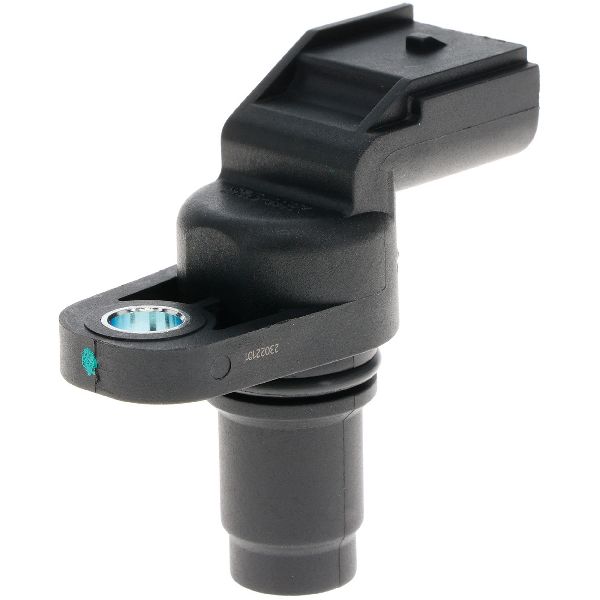
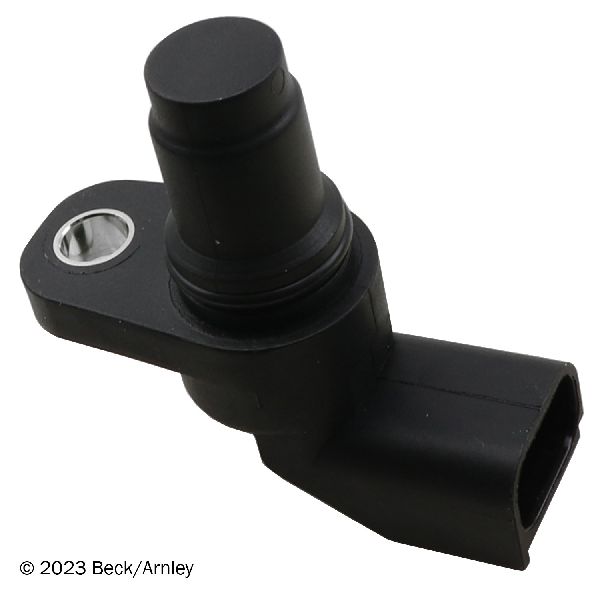
- Faulty Camshaft or Crankshaft Position Sensor: → Shop Engine Crankshaft While possible, a sensor failure is more likely to produce a specific sensor circuit code (e.g., P0345, P0335) rather than a correlation code. However, a sensor providing intermittent or inaccurate data can sometimes lead to a correlation fault.
- Slipped Timing Chain Reluctor Ring: → Shop Engine Timing Chain The tone or reluctor ring that the sensor reads can slip on the camshaft or crankshaft, causing the PCM to see an incorrect position. This is uncommon but can happen and is difficult to diagnose.
Diagnosis Steps
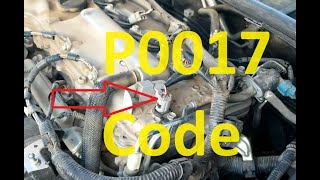
- Confirm the code with a second, high-quality OBD-II scanner. If it changes to P0017, proceed with diagnosing P0017. 🎬 Watch: A guide to diagnosing P0017 causes and fixes.
- If P0019 persists, treat it as a P0017 for diagnostic purposes, but be aware of a potential PCM or wiring issue.
- Check engine oil level and condition. Ensure it is full, clean, and of the correct viscosity. Correct as necessary. This is the most critical first step.
- Using a scan tool, monitor the desired vs. actual camshaft position angles for the Bank 1 exhaust camshaft. A large discrepancy indicates a problem.
- Per TSB SSM 50067, use the scan tool to command the Bank 1 exhaust VCT solenoid ON and OFF 10 times to dislodge any potential debris. Listen for a click and watch for changes in engine idle and cam position data.
- If the solenoid is suspect, swap the exhaust and intake VCT solenoids (they are identical) and see if the trouble code changes to P0014 (Intake Cam). If it does, the solenoid is bad.
- If solenoids are good, inspect the wiring and connectors for the cam sensors and VCT solenoids for any damage or corrosion.
- If all else fails, a deeper mechanical diagnosis is needed to check for a stretched timing chain, failed phaser, or slipped reluctor ring. This is best left to a professional.
Parts You'll Likely Need
- Variable Camshaft Timing (VCT) Solenoid
(OEM #CJ5Z-6M280-A)— Cited in Ford TSBs as a common failure point due to sticking from debris. It's the most likely and easiest part to replace for this type of fault. Both intake and exhaust solenoids are the same part.
Trusted brands: Motorcraft, Dorman
OEM price range: $40-$70
Aftermarket price range: $25-$50 - Timing Chain Kit
(OEM #BB5Z-6K261-C (Verify for specific engine))— If the chain has stretched, a full kit including the chain, tensioner, and guides is required to restore proper timing. This is a major repair.
Trusted brands: Motorcraft, Cloyes
OEM price range: $300-$500
Aftermarket price range: $150-$300
Related Codes That Often Appear With This One
- P0017 — This is the code that *should* appear for a crankshaft-exhaust camshaft correlation fault on this engine's Bank 1. Seeing P0019 may be a scanner error, and the real underlying code is P0017.
- P0015 — This code ('B' Camshaft Position - Timing Over-Retarded Bank 1) indicates a specific timing error on the same exhaust camshaft. It can be caused by the same faulty VCT solenoid or phaser.
Technical Service Bulletins (TSBs) & Recalls
- SSM 50067: Notes that various timing DTCs, including P0019, may be caused by small debris causing the VCT solenoid to stick.
- SSM 48423: Similar to SSM 50067, points to sticking VCT solenoids from debris as a cause for a range of timing codes.
- SSM 47170: An earlier TSB also identifying sticking VCT solenoids as a potential cause for these DTCs.
Platform-Specific Known Issues
- Owner Experience with P0017/P0019: A user on the Car Talk Community forums with a 2011 Lincoln MKX (V6 engine, where P0019 is valid) reported having P0019, P0017, and P0390 simultaneously, which ultimately led to a recommendation for an engine replacement, highlighting the severity of multiple timing correlation codes. This underscores the importance of addressing the underlying P0017 fault on an MKC before it potentially escalates.
- Known Coolant Intrusion Issue: For 2.0L EcoBoost engines from 2015-2019, a known design flaw can allow coolant to leak into the cylinders, causing misfires and coolant loss. Ford addressed this in TSB 19-2208. If symptoms include white exhaust smoke or coolant loss alongside the timing code, this more serious issue should be investigated, as it often requires engine replacement.
Mechanic-Grade Diagnostic Values
- VCT Solenoid Internal Resistance — expected: 7.0 - 8.0 ohms. One source quotes 7.6 ohms as a good reading.. Failure: A reading of 0 ohms indicates a short, while an infinite reading (OL) indicates an open circuit. Readings outside the specified range suggest a faulty coil.
- Camshaft Position Sensor (3-wire Hall effect) Voltage — expected: With ignition ON, engine OFF, and sensor connected: ~5V on the reference wire and ~5V on the signal wire (relative to battery ground). ~12.6V (battery voltage) between the ground pin and the positive battery terminal.. Failure: Voltages outside these ranges point to a wiring issue (open, short to ground, or short to voltage) or a faulty PCM, rather than a bad sensor.
- VCT Solenoid Manual Activation — expected: When applying fused power and ground directly to the solenoid with the engine running, the engine should hesitate, run rough, or stall.. Failure: If there is no change in engine operation, the solenoid is not actuating, or an oil passage is blocked.
- Live Data: VCT Solenoid Duty Cycle — expected: Using a scan tool like Ford's IDS, monitor the VCT solenoid duty cycle PIDs. The PCM will increase the duty cycle to compensate for a lagging or sticking phaser.. Failure: A significant and persistent disparity in duty cycle for one solenoid compared to others (on a V-engine) or compared to its baseline suggests the PCM is trying to correct a mechanical issue with that phaser or solenoid.
Scan Tool Commands That Help
- FORScan / Ford IDS: VCT Solenoid On/Off Test (Actuator Test) — This is a primary diagnostic step. Use this bidirectional command to cycle the VCT solenoid while the engine is running. A functional solenoid will produce an audible click and a noticeable change in engine idle quality (it should run rough or stumble). This helps confirm if the solenoid is electrically sound and mechanically capable of moving.
- FORScan / Ford IDS: Clear Transmission Adaptive Tables — While primarily for the transmission, performing a PCM Keep Alive Memory (KAM) reset or clearing adaptive tables is a common step after engine repairs to force the PCM to relearn fuel trims and other parameters. If a PCM software glitch is suspected of causing the erroneous P0019, this reset (followed by a specific drive cycle) can sometimes resolve it.
- FORScan / Ford IDS: PCM Module initialization/relearn vehicle data — This service function is required after replacing or reprogramming the PCM. It ensures the module is correctly configured for the specific vehicle's options and VIN. It is a critical step if the PCM is replaced as a fix for a persistent, erroneous P0019 code.
Wiring & Ground Locations
- VCT Solenoid Connector — On the top of the valve cover, one for the intake camshaft and one for the exhaust camshaft.. The two pins on the connector are for power and a PCM-controlled ground. One pin should have battery voltage with the key on, supplied from a fuse (e.g., F16 in the battery junction box on some models). The other pin is pulsed with a ground signal from the PCM to actuate the solenoid. Checking for power and signal at this connector is a key electrical test.
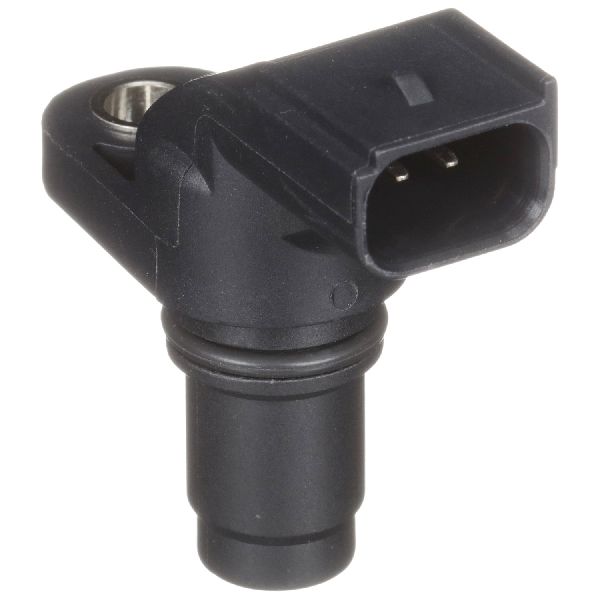
- Camshaft Position Sensor Connector — Located on the side or top of the cylinder head, near the end of the camshafts.. This 3-wire connector provides the sensor with a 5V reference, a ground, and a signal return to the PCM. Verifying these three signals is essential to rule out a wiring problem before condemning the sensor itself.
Real Owner Repair Stories
- Mustang6G.com forum user (2017 Mustang EcoBoost (shares 2.3L engine)) — P0017 code appeared after the owner installed aftermarket oil pump gears (OPG) and timing gear.
❌ Tried (didn't work) Clearing the code (it would return after a couple of restarts)., Checking electrical connectors.
✅ What actually fixed it The owner had to disassemble the front of the engine again. The timing was slightly off. He re-timed the engine, specifically re-checking the cam phaser timing and then the timing chains according to the Ford manual. The code did not return after the timing was correctly set. - Reddit user r/MechanicAdvice (Vehicle with a 2.0L/2.4L GDI engine (similar VVT system)) — Persistent P0017 code even after replacing timing chain, tensioners, CVVT sprockets, and exhaust camshaft.
❌ Tried (didn't work) Replacing timing chain, tensioners, guides., Replacing both CVVT sprockets (phasers)., Replacing the exhaust camshaft., Cleaning and testing the oil control valves (solenoids)., Replacing the crankshaft position sensor.
✅ What actually fixed it The user did not post a final fix, but the discussion highlighted the importance of using a scan tool to check the commanded vs. actual cam angles. The persistence of the code after replacing all mechanical timing components strongly suggests the timing was set incorrectly during reassembly, or there is a fault in the reluctor ring or PCM.
OEM Part Supersession History
CJ5Z-6M280-A→N/A - This remains the current part number.— N/A
Heads up: This part number (CJ5Z-6M280-A) is used for both the intake and exhaust VCT solenoids on the 2.0L and 2.3L EcoBoost engines, making them interchangeable.
Model Year Variations Within This Range
- 2015-2019 (2.0L EcoBoost): These engines were subject to a known issue of coolant intrusion into the cylinders due to the open-deck block design. Ford issued TSB 19-2208 to address this. While not directly a timing component, if a timing code is accompanied by symptoms like misfires, white smoke, or coolant loss, this underlying issue is a strong possibility and often requires long block replacement.
Helpful Videos
We Have This Part in Stock


The information in this article is provided for general reference and educational purposes only. Vehicle specifications, procedures, and part compatibility can vary by production date, trim level, and region. Always consult your vehicle's factory service manual and verify part numbers before purchasing or performing repairs. Safety-critical components such as airbags, seat belts, and braking systems should be installed by a qualified professional.
- Lincoln MKC:
- 🧭 Diagnostic Flowchart
- 🎬 Helpful Videos
- 🛍️ Shop This Part
- What's Unique About the 2015-2019 Lincoln MKC
- Symptoms You May Notice
- Most Likely Causes
- Rare But Worth Checking
- Diagnosis Steps
- Parts You'll Likely Need
- Related Codes That Often Appear With This One
- Technical Service Bulletins (TSBs) & Recalls
- Platform-Specific Known Issues
- Mechanic-Grade Diagnostic Values
- Scan Tool Commands That Help
- Wiring & Ground Locations
- Real Owner Repair Stories
- OEM Part Supersession History
- Model Year Variations Within This Range
- 🎟️ Get 5% Off