

P0019 on 2015-2019 Lincoln MKT: Causes and Fixes for Crank/Cam Correlation
On a 2015-2019 Lincoln MKT, code P0019 is most often caused by a sticking Variable Camshaft Timing (VCT) solenoid on the Bank 2 exhaust camshaft, frequently due to small debris in the oil. This is a known issue cited in multiple Ford/Lincoln Technical Service Bulletins. The fix is often replacing the VCT solenoid, which is a moderately priced part. Bank 2 is the cylinder bank closer to the radiator.
- P0019 on a 2015-2019 Lincoln MKT points to a timing mismatch between the crankshaft and the Bank 2 (front) exhaust camshaft.
- The most likely cause, backed by multiple Ford TSBs, is a sticking VCT solenoid due to oil debris. Always check your oil level and condition first.
- A simple diagnostic is to swap the exhaust and intake VCT solenoids on Bank 2 to see if the trouble code follows the part.
- While a stretched timing chain is possible, especially at higher mileage, the VCT solenoid and oil quality should be investigated first to avoid a costly misdiagnosis.
What's Unique About the 2015-2019 Lincoln MKT
The 3.5L and 3.7L V6 engines used across the Ford and Lincoln lineup in this era are well-known for VCT solenoid issues. Multiple Technical Service Bulletins (TSBs) confirm that small debris in the engine oil can cause these solenoids to stick, leading to a variety of timing correlation codes, including P0019. This makes a sticking solenoid a much higher probability cause on this specific vehicle than on many other makes. TSB SSM 50067 even suggests a diagnostic procedure to cycle the solenoid with a scan tool to try and dislodge debris before replacement.
Diagnostic Flowchart
Tap your situation to follow the diagnostic path that matches what you're seeing on this vehicle.
Symptoms You May Notice
- Check Engine Light is on
- Rough or unstable idle
- Hesitation or stumbling during acceleration
- Reduced engine power
- Decreased fuel economy
- Engine may be hard to start or stall
- Rattling or clattering noise from the engine, especially on startup
- Replacing the crankshaft position sensor when the code specifies a correlation issue with a specific camshaft.
- Replacing the timing chain when the actual problem is a much cheaper and easier to replace VCT solenoid. The diagnostic step of swapping solenoids should always be performed first.
Most Likely Causes
- Sticking/Failed VCT Solenoid (Bank 2 Exhaust) 🔴 High Probability As documented in TSBs #SSM 50067, #SSM 48423, and #SSM 47170, these engines are prone to debris in the oil causing VCT solenoids to stick. Bank 2 is the front bank, closer to the radiator.
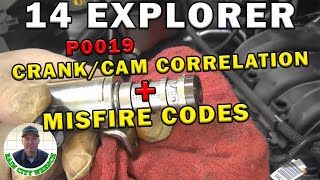
How to confirm: An easy diagnostic step is to swap the Bank 2 exhaust VCT solenoid with the intake solenoid on the same bank. If the code changes to P0018 (for the intake cam), the solenoid is faulty. Alternatively, per TSB SSM 50067, a Ford-specific scan tool can be used to command the solenoid on and off (Pinpoint Test HK12) to see if it frees up. 🎬 Watch: A full diagnostic and repair walkthrough for code P0019.
Typical fix: Replace the Bank 2 exhaust VCT solenoid and perform an engine oil and filter change.
Est. part cost: $40-$100 - Low or Dirty Engine Oil 🔴 High Probability The VCT system is hydraulically operated by engine oil. Low pressure or contaminated oil directly impairs its function, leading to timing errors. This is the root cause of the debris issue mentioned in the TSBs.
How to confirm: Check the oil level on the dipstick and inspect the oil's condition. If it is low, black, or sludgy, this is a likely contributor.
Typical fix: Perform an engine oil and filter change using the manufacturer-specified grade of oil. Consider an engine flush if sludge is suspected.
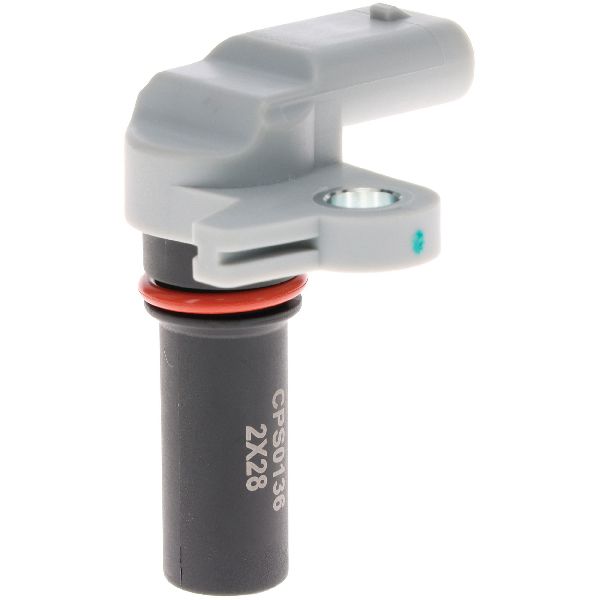
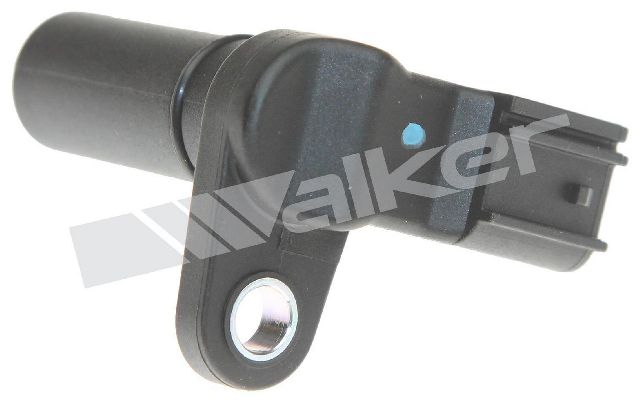
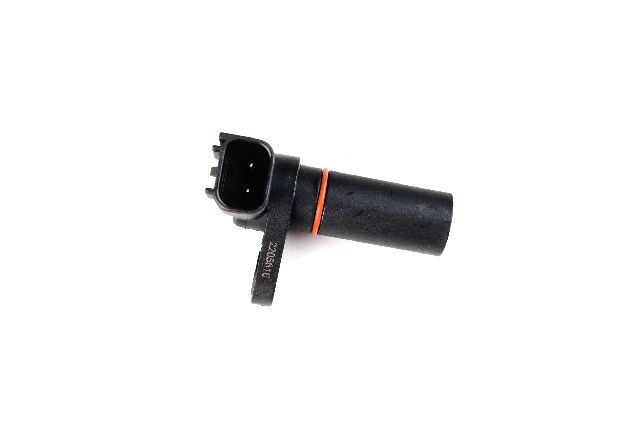
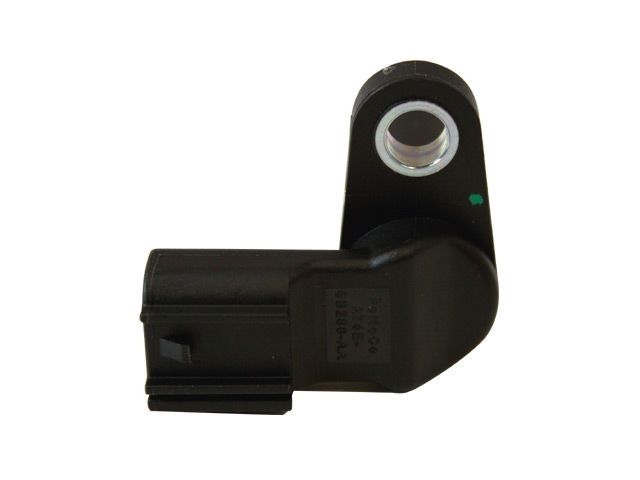
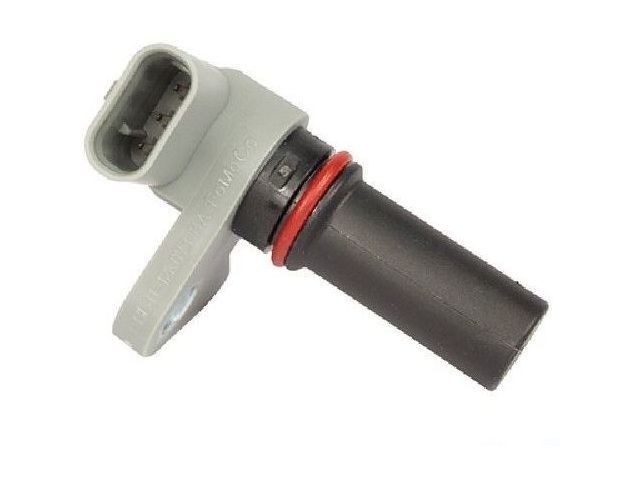
Est. part cost: $50-$100 - Failed Camshaft Position Sensor (Bank 2 Exhaust) 🟡 Medium Probability → Shop Engine Camshaft Position Sensor
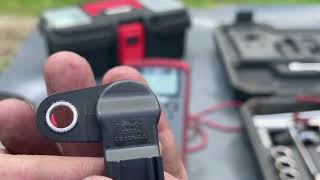
How to confirm: The sensor sends position data to the PCM. A multimeter can be used to test the sensor's resistance, or it can be swapped with the sensor from the intake camshaft to see if the code follows. A user on F150Forum.com noted that after a timing job, a persistent P0019 was caused by a damaged pigtail connector for this sensor.
Typical fix: Replace the camshaft position sensor on the Bank 2 exhaust cam.
Est. part cost: $30-$80 - Stretched Timing Chain or Worn Guides/Tensioner ⚪ Low Probability → Shop Engine Timing Chain While less common than solenoids, timing chain stretch can occur on higher mileage 3.5L EcoBoost and 3.7L engines, creating slack and altering the cam/crank correlation. This is often accelerated by extended oil change intervals. A rattling noise on startup is a key symptom.
How to confirm: This is an involved diagnosis. A key indicator is a rattling noise from the front of the engine on a cold start. A technician can also view the tensioner extension through the valve cover with a borescope. 🎬 Watch: How to diagnose a stretched timing chain on this engine. One F-150 owner confirmed a stretched chain by seeing 6 teeth showing on the tensioner. This is often diagnosed after all other possibilities are eliminated.
Typical fix: Replace the timing chain, guides, and tensioners. This is a labor-intensive job that often includes replacing the water pump on related engines.
Est. part cost: $400-$800
Rare But Worth Checking
- Failed Camshaft Phaser/Actuator: → Shop Engine Camshaft The phaser is the gear on the end of the camshaft that actually adjusts the timing. It can fail mechanically or get stuck due to oil sludge, but this is less common than a solenoid failure.
- Wiring or Connector Issue: Damaged wiring or a corroded connector for the VCT solenoid or camshaft sensor can interrupt the signal, causing the code. A forum member reported pinching the exhaust cam sensor pigtail during a valve cover re-installation, which caused a persistent P0019.
- Failing Powertrain Control Module (PCM): → Shop Engine Control Module (ECM) In very rare cases, the fault can be with the engine computer itself. This should only be considered after all other possibilities have been exhausted.
Diagnosis Steps
- Check the engine oil level and condition. Top up or change the oil if necessary. This is the simplest and most critical first step.
- Use an OBD-II scanner to check for any other pending or active trouble codes. Note any codes related to other camshafts (P0016, P0017, P0018).
- Visually inspect the wiring harnesses and connectors for the Bank 2 (front bank) camshaft sensor and VCT solenoid for any signs of damage or corrosion. Pay close attention to the harness near the back of the valve cover.
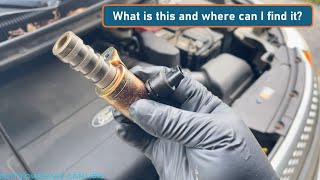
- Swap the Bank 2 exhaust VCT solenoid with the Bank 2 intake VCT solenoid. They are located on the front valve cover. Clear the codes and drive the vehicle. If the code changes to P0018, the solenoid is bad.
- If the code does not change, test the camshaft position sensor by swapping it with another known-good sensor or testing its output with a multimeter.
- If sensors and solenoids test good, listen carefully for a rattling noise from the engine on cold startup, which would indicate a timing chain issue.
- If a timing chain issue is suspected, the next step is to inspect the mechanical timing components. This involves removing the valve cover to check for a stretched timing chain or damaged phaser. This step is best left to experienced technicians.
Parts You'll Likely Need
- Variable Camshaft Timing (VCT) Solenoid
(OEM #AT4Z-6M280-A, 7T4Z-6M280-C)— This is the most common point of failure for code P0019 on this platform, as confirmed by multiple manufacturer TSBs.
Trusted brands: Motorcraft, Dorman
OEM price range: $60-$120
Aftermarket price range: $40-$80 - Camshaft Position Sensor
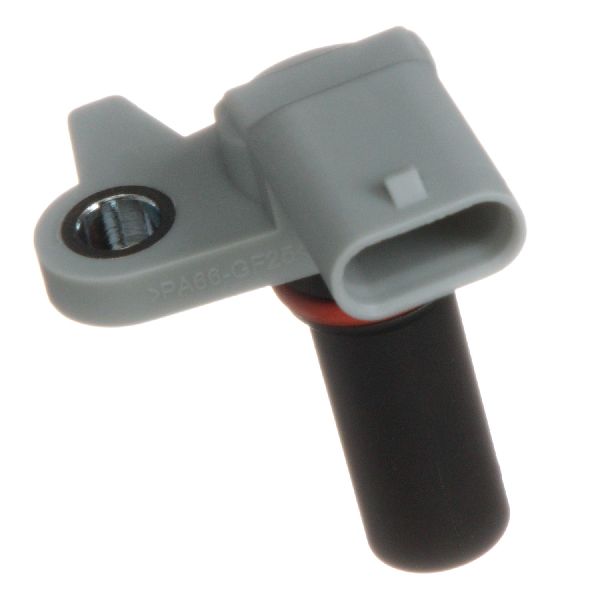
(OEM #DU-90, DU-102)— This sensor provides the data that the PCM uses to track the camshaft's position. A faulty sensor can send incorrect data, triggering the code. Part numbers can vary by specific application.
Trusted brands: Motorcraft, Bosch, NGK/NTK
OEM price range: $50-$90
Aftermarket price range: $30-$60 - Timing Chain Kit — If the chain has stretched or the guides/tensioners have failed, the entire timing system must be replaced to restore proper correlation. This is a more extensive and expensive repair.
Trusted brands: Motorcraft, Cloyes
OEM price range: $500-$900
Aftermarket price range: $300-$600
Related Codes That Often Appear With This One
- P0017 — This is the same correlation error but for the exhaust camshaft on Bank 1. If both appear, it could point to a systemic issue like low oil pressure or a stretched timing chain affecting both banks.
- P0018 — This is a correlation error for the intake camshaft on Bank 2. Seeing it with P0019 points to a problem affecting the entire bank, like a timing chain guide, a phaser issue, or a problem during a recent timing job.
- P0016 — This is a correlation error for the intake camshaft on Bank 1. A user on F150Forum.com reported getting P0016 and later P0019 after a timing chain replacement, indicating a potential installation error or multiple faulty components.
- P054D — This code for 'Cold Start Exhaust (B) Camshaft Position Timing Over-Retarded (Bank 2)' often appears with P0019. It strongly suggests the problem is with the Bank 2 exhaust cam timing, pointing towards a sticking VCT solenoid, a faulty phaser, or low oil pressure on startup.
Technical Service Bulletins (TSBs) & Recalls
- SSM 50067: Notes that DTCs including P0019 may be caused by small debris causing the VCT solenoid to stick on 2015-2021 Ford and Lincoln vehicles. Recommends attempting to clear debris by cycling the solenoid before replacement.
- SSM 48423: Similar to SSM 50067, this TSB identifies sticking VCT solenoids due to debris as a cause for P0019 and other timing codes on 2015-2020 Ford and Lincoln vehicles.
- SSM 47170: An earlier bulletin that also points to debris causing VCT solenoid issues for a range of timing codes including P0019.
- TSB 16-0038: Specifically for 3.5L turbocharged V6 engines, this TSB states that if P0019 and P0025 are present together, the Bank 2 exhaust VCT solenoid should be replaced.
Platform-Specific Known Issues
- Multiple Technical Service Bulletins (TSBs), including SSM 50067, SSM 48423, and SSM 47170, have been issued for 2015-2021 Ford and Lincoln vehicles regarding a group of VCT-related DTCs, including P0019. The bulletins state, 'This may be due to small debris causing the VCT solenoid to stick.'
- TSB SSM 50067 specifically advises technicians to use a scan tool to cycle the affected VCT solenoid 10 times (Pinpoint Test HK12) to attempt to clear debris before replacing the part.
Mechanic-Grade Diagnostic Values
- VCT Solenoid Resistance — expected: 6 to 12 ohms, with OEM parts typically measuring around 10-12 Ohms.. Failure: A reading outside the specified range, or an infinite reading (open circuit), indicates a faulty solenoid.
- Camshaft Position (CMP) Sensor Signal Voltage (3-wire Hall-effect) — expected: The signal wire should show approximately 5V (or 4.8V) with the key on, engine off.. Failure: When a metallic object (like a socket) is passed over the sensor tip, the voltage should drop to near zero. If the voltage does not switch, or is stuck at 0V or 5V, the sensor is likely bad.
- Camshaft Position (CMP) Sensor Resistance (2-wire inductive) — expected: Typically between 200 to 1000 ohms, though some sources cite up to 1250 ohms.. Failure: A reading of zero indicates a short circuit, while an infinite reading indicates an open circuit.
Scan Tool Commands That Help
- Ford IDS / FORScan: VCT Solenoid Actuator Test (On/Off Command) — This is a key diagnostic step mentioned in TSBs (as part of Pinpoint Test HK). Manually commanding the Bank 2 exhaust solenoid on and off while the engine is idling should cause a noticeable change in engine operation (stumble or stall). If there is no change, it confirms a problem with the solenoid, its oil passages, or the phaser itself. Cycling the solenoid multiple times may also dislodge debris.
- Ford IDS / FORScan: Monitor VCT PIDs (VCT_EXH2_DSD, VCT_EXH2_ACT, VCT_EXH_ERR2) — These live data PIDs (Parameter IDs) are crucial. 'DSD' is the desired camshaft angle, 'ACT' is the actual angle, and 'ERR' is the error between them. For P0019, you will likely see a large and persistent value for VCT_EXH_ERR2, indicating the Bank 2 exhaust cam is not reaching its commanded position.
Wiring & Ground Locations
- PCM Connector C175E — This is one of the main connectors at the Powertrain Control Module (PCM), typically located in the engine bay near the firewall.. The control circuits for the VCT solenoids and the signal circuits for the camshaft position sensors terminate at this connector. For example, on some 3.5L applications, the Bank 2 Exhaust VCT Solenoid control wire is at Pin 69 (VT-GY wire). Testing for continuity and shorts between this connector and the component can rule out wiring issues.
- Engine Block Ground Strap — There are multiple grounds, but a primary one often runs from the engine block (or cylinder head) to the chassis/firewall.. A poor engine ground can introduce electrical noise and cause erratic behavior in sensors like the CMP and CKP, potentially leading to false correlation codes. While not a primary cause, it should be checked for corrosion and tightness if other electrical issues are present.
Real Owner Repair Stories
- Ford Truck Enthusiasts Forum user 'Locorotc1' (2018 F-150 3.5L EcoBoost) — After a complete timing job (new chains, phasers, solenoids, guides), the engine had a rough idle and threw a persistent P0019 code.
❌ Tried (didn't work) Swapping camshaft position sensors., Verifying VCT solenoid resistance (measured 8.0 ohms)., Confirming solenoid activation via FORScan., Using aftermarket (Melling) timing components was initially questioned but was not the root cause.
✅ What actually fixed it The reluctor ring on the Bank 2 exhaust camshaft had slipped. It was found at the 12 o'clock position when it should have been at the 11 o'clock position. After removing the valve cover and repositioning the reluctor ring to its correct orientation, the P0019 code was resolved. - Ford F150 Forum user 'TCK' (2013 F-150 3.5L EcoBoost) — After a full timing chain and phaser replacement to fix a P0016 code, a new, persistent P0019 code appeared.
❌ Tried (didn't work) Initial reassembly resulted in the P0019 code.
✅ What actually fixed it The user suspected the cause was damage to the wiring harness for the Bank 2 exhaust camshaft sensor. During the first re-installation of the valve cover, the pigtail for that specific sensor was pinched behind the valve cover, which likely damaged the wiring and caused the new code.
OEM Part Supersession History
7T4Z-6M280-C→AT4Z-6M280-A— Part consolidation and potential minor internal improvements for durability and resistance to debris.
Heads up: While AT4Z-6M280-A is used for many positions, some applications use different solenoids for intake vs. exhaust. For example, some sources list AT4Z-6M280-B for the left side intake and AT4Z-6M280-C for the right side exhaust. Always verify the specific part number required for the exact position (Bank 2, Exhaust) for your vehicle.
Model Year Variations Within This Range
- 2015-2016: These model years exclusively use the 'Gen 1' 3.5L EcoBoost engine. This version is known for direct injection only, which can lead to carbon buildup on intake valves over time, though this is not a direct cause of P0019. It also uses a single, long primary timing chain.
- 2017-2019: While the MKT largely retained the Gen 1 EcoBoost, other Ford platforms like the F-150 transitioned to the 'Gen 2' 3.5L EcoBoost around 2017. The Gen 2 engine features significant changes including a dual-injection system (port and direct), redesigned turbochargers, and a different timing chain setup. It's important to verify which engine generation is in the specific vehicle, as some parts may differ, although the VCT solenoids often remained the same or were backward-compatible.
Helpful Videos

We Have This Part in Stock

The information in this article is provided for general reference and educational purposes only. Vehicle specifications, procedures, and part compatibility can vary by production date, trim level, and region. Always consult your vehicle's factory service manual and verify part numbers before purchasing or performing repairs. Safety-critical components such as airbags, seat belts, and braking systems should be installed by a qualified professional.
- Lincoln MKT:
- 🧭 Diagnostic Flowchart
- 🎬 Helpful Videos
- 🛍️ Shop This Part
- What's Unique About the 2015-2019 Lincoln MKT
- Symptoms You May Notice
- Most Likely Causes
- Rare But Worth Checking
- Diagnosis Steps
- Parts You'll Likely Need
- Related Codes That Often Appear With This One
- Technical Service Bulletins (TSBs) & Recalls
- Platform-Specific Known Issues
- Mechanic-Grade Diagnostic Values
- Scan Tool Commands That Help
- Wiring & Ground Locations
- Real Owner Repair Stories
- OEM Part Supersession History
- Model Year Variations Within This Range
- 🎟️ Get 5% Off