

P0019 on 2013-2016 Lincoln MKZ 3.7L: Crank-Cam Correlation Causes and Fixes
On a 2013-2016 Lincoln MKZ with the 3.7L V6, code P0019 is most often caused by low/dirty engine oil or a sticking VCT solenoid on the front (radiator side) cylinder bank. Start by checking your oil. If the oil looks milky, stop driving immediately as the internal water pump has likely failed, contaminating the oil with coolant.
- Always check the engine oil first. Low, dirty, or incorrect viscosity oil is the #1 cause of P0019.
- CRITICAL: Check the oil for a milky, frothy appearance. If seen, the internal water pump has likely failed and is leaking coolant into the engine. Do not drive the vehicle to prevent catastrophic engine failure.
- The most likely failed part is the Bank 2 (radiator side) exhaust VCT solenoid, which is known to stick.
- Replacing the VCT solenoid on the 3.7L V6 requires removing the valve cover, making it more involved than on some other engines.
- Do not immediately assume a major timing chain failure. The VCT solenoids and oil condition are far more common culprits and should be ruled out first.
What's Unique About the 2013-2016 Lincoln MKZ
The 3.7L Cyclone V6 in this MKZ has two key characteristics regarding this code. First, Ford has issued multiple Technical Service Bulletins (TSBs) confirming the Variable Camshaft Timing (VCT) solenoids are prone to sticking from small debris in the oil, making them a primary suspect. Second, and more critically, this engine features an internal, timing-chain-driven water pump. A common failure point is the pump's internal seal, which allows coolant to leak directly into the engine oil, causing rapid VCT system failure and risking catastrophic engine damage. P0019 is often one of the first codes to appear when this happens.
Symptoms You May Notice
- Check Engine Light is on
- Rough or unstable idle
- Hesitation or stumbling during acceleration
- Reduced engine power
- Poor fuel economy
- Engine may stall at low speeds
- Rattling noise from the engine on cold startups (can indicate timing chain issues)
- Replacing the camshaft position sensor when it is accurately reporting a mechanical or oil-related timing issue.
- Replacing the crankshaft position sensor, which is rarely the cause for a single-bank correlation code.
- Performing a full timing chain replacement without first replacing the much cheaper and more common VCT solenoid.
- Replacing timing components without also replacing the internal water pump, leading to a repeat failure if the pump was the root cause of oil contamination.
Most Likely Causes
- Low, Dirty, or Incorrect Viscosity Engine Oil 🔴 High Probability The Ti-VCT (Twin Independent Variable Camshaft Timing) system is hydraulic and extremely sensitive to oil pressure and cleanliness. Sludge from overdue oil changes is the #1 cause of VCT-related codes like P0019. Ford specifies 5W-20 oil for this engine.
How to confirm: Check the oil dipstick for a low level or oil that is dark, thick, or has a milky/frothy appearance (indicating coolant contamination from the internal water pump).
Typical fix: Perform an engine oil and filter change using the manufacturer-specified 5W-20 synthetic blend or full synthetic oil (Ford WSS-M2C945-A specification).
Est. part cost: $50-$100 - Sticking/Failed VCT Solenoid (Bank 2 Exhaust) 🔴 High Probability Ford has issued multiple TSBs (SSM 47170, 49821, 50067) acknowledging that these solenoids can stick due to small debris in the oil, causing timing correlation codes. The TSBs recommend cycling the solenoid with a scan tool 10 times to attempt to clear debris before replacement.
How to confirm: Swap the Bank 2 exhaust VCT solenoid with the Bank 2 intake solenoid. Clear the codes and drive. If the code changes to P0018 (Bank 2 Intake Correlation), the solenoid is faulty.
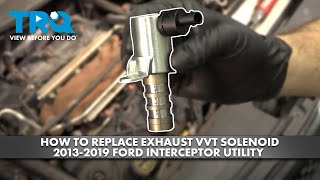
Typical fix: Replace the Bank 2 exhaust VCT solenoid. This requires removing the valve cover on the 3.7L engine. 🎬 See this walkthrough for replacing the exhaust VVT solenoid.
Est. part cost: $40-$90 - Stretched Timing Chain or Worn Timing Components 🟡 Medium Probability → Shop Engine Timing Chain While less common than a solenoid failure, chain stretch can occur at higher mileage (over 100,000 miles) or be accelerated by poor oil quality or a failing water pump leaking coolant into the oil.
How to confirm: This is a difficult diagnosis. It's usually suspected after ruling out oil and VCT solenoid issues. A rattling noise on startup is a strong indicator. Professional diagnosis is required, involving timing cover removal for visual inspection.
Typical fix: Replace the primary and secondary timing chains, guides, and tensioners. The internal water pump should always be replaced at the same time as a critical preventative measure. 🎬 Watch: A complete guide to replacing the timing chain and water pump.
Est. part cost: $400-$800
Rare But Worth Checking
- Failing Internal Water Pump: → Shop Engine Water Pump This is a critical failure specific to the transverse 3.7L Cyclone engine. The pump is driven by the timing chain, and a seal failure leaks coolant directly into the oil. This destroys the oil's lubricating properties, causing VCT system codes like P0019 as an early symptom before total engine failure. Check the oil for a 'chocolate milk' appearance and unexplained coolant loss.
- Failed Camshaft Position (CMP) Sensor: → Shop Engine Camshaft Position Sensor The sensor itself can fail, but it's more likely to be correctly reporting a mechanical issue. To test, you can swap it with the intake sensor on the same bank to see if the code follows. A damaged pigtail connector can also cause this.
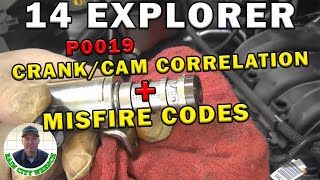
- Damaged Wiring or Connectors: Check the wiring harness and connectors for the VCT solenoid and CMP sensor on Bank 2. A user on a forum reported a persistent P0019 after pinching a sensor pigtail during a valve cover re-installation. 🎬 Watch: A real-world diagnosis and repair of the P0019 code. Another owner traced the issue to a ripped wire that was soldered back together.
Diagnosis Steps
- Check Engine Oil: Inspect the dipstick. Is the oil level low? Is the oil dark and sludgy? Most importantly, does it look milky or frothy like a chocolate milkshake? If it's milky, the internal water pump has likely failed; do not proceed and seek professional service immediately.
- Perform an Oil Change: If the oil is simply old or low, perform a complete oil and filter change using high-quality 5W-20 oil meeting Ford spec WSS-M2C945-A. Clear the code and drive to see if it returns.
- Scan Tool Diagnostics: Use a capable scan tool to monitor desired vs. actual camshaft angles for the Bank 2 exhaust cam. Per Ford TSBs (like SSM 50067), use the scan tool's bi-directional control to command the VCT solenoid on and off 10 times to attempt to dislodge any debris.
- Inspect Wiring: Check the connectors and wiring for the Bank 2 exhaust VCT solenoid and camshaft position sensor for any visible damage, corrosion, or looseness. Pay close attention to the pigtails near the valve cover.
- Test the VCT Solenoid: The most effective test is to swap the Bank 2 exhaust VCT solenoid with the Bank 2 intake solenoid. Since this requires removing the valve cover, it's a committed step. If the code changes from P0019 to P0018 after the swap, the solenoid is confirmed to be faulty.
- Suspect Mechanical Timing: If all the above steps fail to resolve the code, the issue is likely mechanical. This points towards a stretched timing chain, worn guides, or a failed cam phaser, which requires professional diagnosis and repair. This is also the point to assume the internal water pump is a likely culprit.
Parts You'll Likely Need
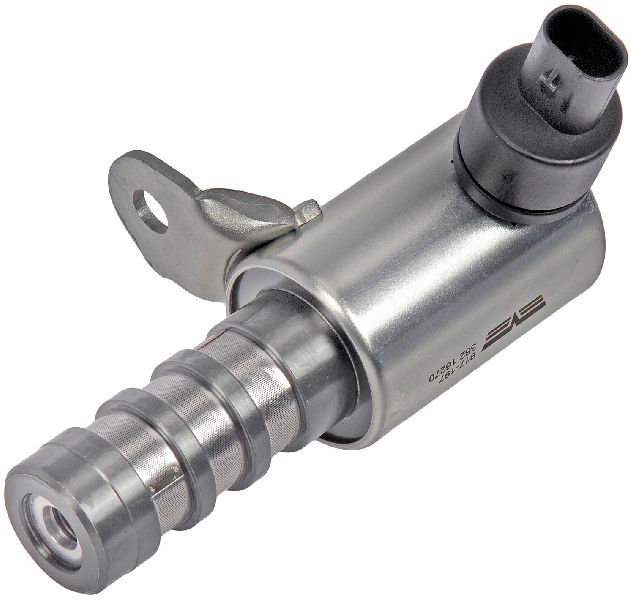
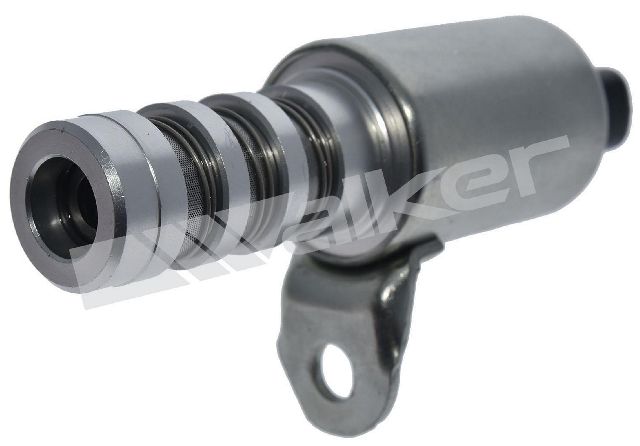
- Engine Variable Valve Timing (VVT) Solenoid
(OEM #AT4Z-6M280-B)— This is the most common component to fail for this code, as documented by multiple Ford TSBs. It gets stuck from debris in the engine oil. The causal part number listed in the TSBs is 6M280.
Trusted brands: Motorcraft, Dorman, Standard Motor Products (SMP), Gates
OEM price range: $70-$90
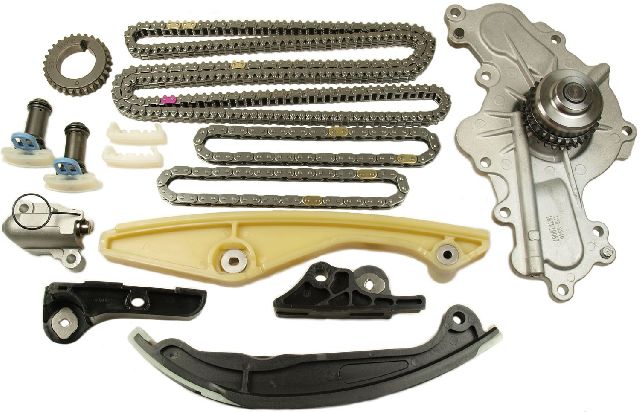
Aftermarket price range: $30-$60 - Engine Timing Chain Kit — If the VCT system is healthy, a stretched timing chain or broken guides are the next most likely cause, especially if the internal water pump has failed. This is a major repair.
Trusted brands: Motorcraft, Cloyes
OEM price range: $400-$600
Aftermarket price range: $250-$400 - Engine Water Pump
(OEM #BR3Z-8501-H)— A critical failure point on the 3.7L engine. If it fails and leaks coolant into the oil, it must be replaced. It is always replaced during a timing chain job as a preventative measure.
Trusted brands: Motorcraft, Gates
OEM price range: $150-$250
Aftermarket price range: $100-$180
Related Codes That Often Appear With This One
- P0025 — This code indicates 'Camshaft Position 'B' - Timing Over-Retarded (Bank 2)'. It often appears with P0019 and reinforces that the Bank 2 exhaust cam timing is incorrect, strongly pointing to a VCT solenoid or phaser issue.
- P0018 — This is the correlation code for the intake camshaft on the same bank (Bank 2). It will appear if you swap a faulty exhaust VCT solenoid to the intake position for diagnosis. If it appears with P0019 initially, it suggests a larger issue affecting the entire bank, like a timing chain problem or oil supply blockage.
- P0017 — This is the same exhaust camshaft correlation error, but for Bank 1 (firewall side). Seeing both P0017 and P0019 together strongly suggests a systemic problem like severe oil contamination/starvation or a stretched primary timing chain affecting both banks.
- P0430 — This code is 'Catalyst System Efficiency Below Threshold (Bank 2)'. A chronic mis-timed camshaft can lead to unburnt fuel entering the exhaust, damaging the catalytic converter over time. A known issue on the 3.7L engine is premature catalytic converter failure.
Technical Service Bulletins (TSBs) & Recalls
- SSM 50067: Supersedes previous TSBs. States that for many 2015-2021 Ford/Lincoln vehicles, DTCs like P0019 may be set by small debris causing a VCT solenoid to stick. Recommends using a scan tool to cycle the solenoid 10 times to clear it before replacement.
- SSM 49821: An earlier TSB for 2015-2021 vehicles with the same guidance as SSM 50067, pointing to sticking VCT solenoids as the cause for a range of timing codes.
- SSM 47170: An even earlier TSB that also identified oil debris causing VCT solenoids to stick as the primary cause for codes P0011 through P0025.
Platform-Specific Known Issues
- Internal Water Pump Failure: The 3.7L Cyclone V6 has a timing-chain-driven water pump located inside the engine. A common and severe failure is the internal seal leaking coolant directly into the oil pan. This contamination quickly ruins the oil's lubricating properties, causing VCT system faults (like P0019) and leading to catastrophic engine bearing failure if not addressed immediately.
- Sub-Valve Cover VCT Solenoids: Unlike many other engines, the VCT solenoids on the 3.7L V6 are located underneath the valve covers, making their replacement more labor-intensive as the valve cover must be removed for access.
Mechanic-Grade Diagnostic Values
- VCT Solenoid Internal Resistance — expected: 5.0 to 15.0 Ohms (general); 6.9 to 7.9 Ohms at 68°F/20°C (specific).. Failure: A reading of 0 Ohms (short) or infinite/OL (open circuit) indicates a failed solenoid.
- VCT Solenoid Connector Voltage — expected: Battery Voltage (~12V) on the power supply pin with Key On, Engine Off.. Failure: Voltage below 10.5V points to a wiring issue, blown fuse, or problem with the PCM power relay.
- Camshaft Position (CMP) Sensor Resistance (2-wire VR type) — expected: 586 - 2,033 Ohms.. Failure: Resistance outside this range indicates a faulty sensor.
- Engine Oil Pressure at Hot Idle — expected: Minimum 15 PSI, but the VCT system functions best with 25 PSI or higher.. Failure: Pressure consistently below 15-25 PSI can cause VCT correlation codes due to insufficient hydraulic pressure.
- Scan Tool PID: VCT Advance Error (VCT_ADV_ERR) — expected: Should be close to 0° (typically ±5° is acceptable) at idle and during steady-state driving.. Failure: A large, consistent deviation from 0° indicates the phaser is not reaching its commanded position.
Scan Tool Commands That Help
- Ford IDS (or equivalent like FORScan): Output State Control / VCT Solenoid On/Off Cycle Test — Per Ford TSBs (SSM 50067), this command should be used to cycle the suspect VCT solenoid 10 times. It attempts to dislodge small debris causing the solenoid to stick, which can sometimes resolve the code without part replacement and helps confirm if the solenoid is the issue.
Wiring & Ground Locations
- VCT Solenoids (Bank 2) — On the top front of the left (radiator side) cylinder head. They are designated VCT21 (intake) and VCT22 (exhaust).. This is the physical location of the Bank 2 exhaust solenoid, the primary suspect for P0019. The connector and wiring here are prone to oil saturation and heat damage.
- G101 / G102 — Left front of the engine compartment.. These are primary engine grounds. A poor ground connection at these points can cause erratic behavior in sensors and actuators, including the VCT and CMP systems.
- S146 / S147 — Harness splices located in the engine controls harness, near the breakout to the coils and injectors.. These splices are for shared power or ground circuits. Corrosion or a break in a splice can cause voltage drops or open circuits to multiple components, including the VCT solenoids.
- Crankshaft Position (CKP) Sensor — Lower left rear of the engine block.. This sensor provides the primary timing reference for the PCM. While less likely to be the cause than cam-related issues, its wiring integrity is crucial for any correlation code.
Real Owner Repair Stories
- Ford Truck Enthusiasts Forums (2004 Ford F-150 (different vehicle, but same VCT system design principles)) — Rough idle problem.
❌ Tried (didn't work) Initially running with a mix of a Dorman VCT solenoid on the driver's side and an original Ford VCT on the passenger's side.
✅ What actually fixed it The rough idle vanished after replacing both solenoids with brand new Ford Motorcraft VCTs, suggesting that mismatched or aftermarket solenoids can cause performance issues even if they are functional.
OEM Part Supersession History
AT4Z-6M280-A (or earlier)→AT4Z-6M280-B— Revision to improve reliability and resistance to sticking from oil debris.
Heads up: While earlier revisions may physically fit, the -B revision is considered the most reliable and should be used for replacement. Forum users noted the importance of using the latest revision.
Diagnostic Flowchart
Other Known Issues on This Vehicle
Issues unrelated to this code that are worth knowing about as an owner of this generation:
- Internal Water Pump Failure 🔴 High → Shop Engine Water Pump — Common on transverse 3.5L/3.7L engines, often occurring between 80,000-150,000 miles. Failure can be sudden. (Ref: No recall, but a known widespread issue leading to class-action lawsuits.)
- Harsh Transmission Shifting 🟠 Medium — Commonly reported on 2013-2017 models. Owners describe it as feeling like being rear-ended during 1-2 or 2-3 shifts. (Ref: Multiple TSBs exist for transmission noise and performance, such as TSB 17-0039 for grinding noises in 2013-2016 models.)
- AWD Power Transfer Unit (PTU) Failure 🔴 High — The sealed PTU can overheat, causing the fluid to break down and leading to gear/bearing failure, often before 100,000 miles. Requires proactive fluid changes not listed in the manual.
- Premature Catalytic Converter Failure (3.7L) 🟠 Medium — Often presents with P0420/P0430 codes. Ford issued a warranty extension (15N04) for some vehicles, covering replacement for 10 years/120,000 miles. (Ref: Customer Satisfaction Program 15N04)
- Failing Rear Shock Absorbers 🟡 Low — The electronically adjustable shocks can fail as early as 40,000-50,000 miles, leading to a harsh ride.
- Corroding Power Steering Gear Bolts 🔴 High — Affects vehicles in salt-belt states. Corrosion of the motor attachment bolts can lead to a loss of power steering. (Ref: Recall 19S26 / NHTSA 19V632000)
Used vs. New Parts: Buying Guide for This Vehicle
When a used part is the smart pick: For this specific repair, using used parts is not recommended. The primary failure components (VCT solenoids, timing components, water pump) are wear items where remaining life is uncertain and the labor for replacement is significant.
What to inspect on the donor part:
- Not applicable as new parts are strongly advised.
OEM-only on this vehicle (don't cheap out):
- Engine Variable Valve Timing (VVT) Solenoid: Forum consensus strongly advises using only OEM (Motorcraft) solenoids. Aftermarket units, even from known brands, have been reported to cause performance issues, rough idle, or fail prematurely.
- Internal Water Pump: Due to the catastrophic engine damage a failure can cause and the high labor cost, using a new OEM (Motorcraft) or top-tier aftermarket (e.g., Gates) pump is critical.
- Timing Chain and Tensioners: This is a high-labor, critical engine function. Using used timing components is never recommended.
Aftermarket brands forum-validated for this vehicle:
- Cloyes (for Timing Chain Kits)
- Gates (for Water Pump and Timing Components)
Brands owners have reported issues with on this vehicle:
- Dorman (for VCT Solenoids): Multiple forum users across the Ford platform have reported issues with Dorman VCT solenoids, ranging from immediate performance problems to premature failure.
Real Owner Stories
Aggregated from forums and TSBs cited above. Mileages and costs reflect what owners reported in those sources.
2013 Lincoln MKX 3.7L
Symptoms: The vehicle was throwing a P0019 code.
What fixed it: The issue was traced to a damaged camshaft sensor pigtail connector.
Source hint: scanshare.io diagnostic report E06P8wX2FEq_a5s2qs_hXw
2018 Ford F-150 3.7L
Symptoms: Owner encountered a P0019 code and was considering replacing the camshaft sensor.
What fixed it: Following a diagnostic process that advised against immediate sensor replacement in favor of checking the VCT system and oil quality.
Source hint: f150forum.com thread titled 'p0019-camshaft-sensor-location-399899'
2015 Ford Mustang 3.7L
Symptoms: Struggling with a P0019 code following an engine replacement.
What fixed it: Investigation into potential wiring damage or incorrect mechanical timing during the engine swap.
Source hint: Reddit r/AskMechanics thread '2015 mustang 37'
2022 Ford Truck 3.7L
Symptoms: P0019 error code appearing immediately after a timing job was performed.
What fixed it: Correction of incorrect mechanical timing alignment during the repair.
Source hint: ford-trucks.com thread 'timing-chain-replacement-p0019-error'
Related OBD-II Codes
Frequently Asked Questions
Does SSM 50067 apply to my 2015 Lincoln MKZ with the 3.7L engine?
I see milky residue on my dipstick along with the P0019 code; what does this mean for my MKZ?
Can I replace the VCT solenoids on my MKZ 3.7L without removing the valve covers?
What specific oil should I use for my 2013-2016 Lincoln MKZ to prevent P0019?
Is a rattling noise on a cold startup related to the P0019 code?
If I have to replace my timing chain due to P0019, should I do anything else?
Helpful Videos
We Have This Part in Stock


The information in this article is provided for general reference and educational purposes only. Vehicle specifications, procedures, and part compatibility can vary by production date, trim level, and region. Always consult your vehicle's factory service manual and verify part numbers before purchasing or performing repairs. Safety-critical components such as airbags, seat belts, and braking systems should be installed by a qualified professional.
- Lincoln MKZ:
- 🧭 Diagnostic Flowchart
- 🎬 Helpful Videos
- 🛍️ Shop This Part
- What's Unique About the 2013-2016 Lincoln MKZ
- Symptoms You May Notice
- Most Likely Causes
- Rare But Worth Checking
- Diagnosis Steps
- Parts You'll Likely Need
- Related Codes That Often Appear With This One
- Technical Service Bulletins (TSBs) & Recalls
- Platform-Specific Known Issues
- Mechanic-Grade Diagnostic Values
- Scan Tool Commands That Help
- Wiring & Ground Locations
- Real Owner Repair Stories
- OEM Part Supersession History
- Other Known Issues on This Vehicle
- Used vs. New Parts: Buying Guide for This Vehicle
- Real Owner Stories
- 2013 Lincoln MKX 3.7L
- 2018 Ford F-150 3.7L
- 2015 Ford Mustang 3.7L
- 2022 Ford Truck 3.7L
- Related OBD-II Codes
- Frequently Asked Questions
- 🎟️ Get 5% Off