

P0019 on 2006-2012 Mitsubishi Eclipse 3.8L V6: Crank-Cam Correlation Fixes
Code P0019 on your Eclipse 3.8L V6 means the exhaust camshaft on Bank 2 is out of sync with the crankshaft. The most common fixes are an oil change or replacing a faulty VVT solenoid. However, this could also indicate a serious timing belt issue, which is critical on this interference engine.
- Start with the simplest fix: check your oil. Low or dirty oil is a primary cause of P0019 on this engine.
- The most likely failed parts are the VVT solenoid (Oil Control Valve) and the camshaft position sensor for Bank 2.
- This code can signal a serious problem with the timing belt. Since the 3.8L V6 is an interference engine, do not ignore this code.
- If the timing belt service history is unknown, it is highly recommended to have it inspected or replaced to prevent catastrophic engine failure.
- Bank 2 is the cylinder bank closer to the front of the car (by the radiator).
What's Unique About the 2006-2012 Mitsubishi Eclipse
The 6G75 V6 is an interference engine that uses a timing belt, not a chain. This is the most critical factor for any timing-related code like P0019. While the cause could be a simple sensor or oil issue, it could also be a failing timing belt or a faulty hydraulic tensioner, which is sensitive to oil pressure. If the belt fails or jumps time, the pistons will hit the valves, causing catastrophic and expensive engine damage. Therefore, any diagnosis of P0019 must take the timing belt's condition and service history into serious consideration, as a timing correlation error can be the first warning sign of impending belt failure.
Symptoms You May Notice
- Check Engine Light illuminated
- Rough or unstable idle
- Hesitation or stumbling on acceleration
- Reduced engine power
- Decreased fuel mileage
- Engine may be hard to start or stall in some cases
- Audible rattling or ticking from the timing belt area, especially on startup
- Replacing the camshaft or crankshaft position sensors when the actual problem is low/dirty oil or a failing timing belt tensioner.
- Assuming the timing belt is fine without a visual inspection, only to have it fail shortly after addressing a sensor or solenoid.
Most Likely Causes
- Low or Dirty Engine Oil 🔴 High Probability The MIVEC (Mitsubishi's VVT system) uses oil pressure to adjust cam timing. Dirty, sludgy, or low oil can clog passages and prevent the VVT actuator and hydraulic tensioner from working correctly. This is the most common and easiest-to-fix cause.
How to confirm: Check the oil dipstick for level and examine the oil's condition. If it's low, dark, or sludgy, it needs to be changed. This should always be the first step.
Typical fix: Perform an oil and filter change using the manufacturer-recommended oil viscosity (typically 5W-20).
Est. part cost: $30-$70 - Faulty Oil Control Valve (VVT Solenoid) for Bank 2 Exhaust 🟡 Medium Probability These solenoids can get clogged with sludge or fail electrically over time, causing them to stick and fail to regulate oil flow to the phaser.
How to confirm: You can test the solenoid's resistance with a multimeter (check service manual for specs, often 6-12 ohms) or apply 12V to see if it actuates. A highly effective diagnostic step is to swap the Bank 2 exhaust solenoid with the Bank 2 intake solenoid. If the code changes to P0018 (Bank 2 Intake), you have confirmed the solenoid is bad.
Typical fix: Replace the VVT solenoid for Bank 2 Exhaust. The OEM part number is often cited as 1028A022, though this part may also fit other Mitsubishi engines and positions, so verification is key.
Est. part cost: $40-$120 - Worn, Stretched, or Slipped Timing Belt 🟡 Medium Probability → Shop Engine Timing Chain The 6G75 engine's timing belt has a recommended service interval (typically 60,000 miles). If the belt is old, it can stretch or slip a tooth. A failing hydraulic tensioner is also a very common failure point that can cause slack, leading to a correlation error.
How to confirm: This requires removing the upper timing covers for a physical inspection of the timing belt, its tension, and the alignment marks on the cam and crank gears. If the belt appears loose or the tensioner is leaking, this is the likely cause. This is a labor-intensive process.
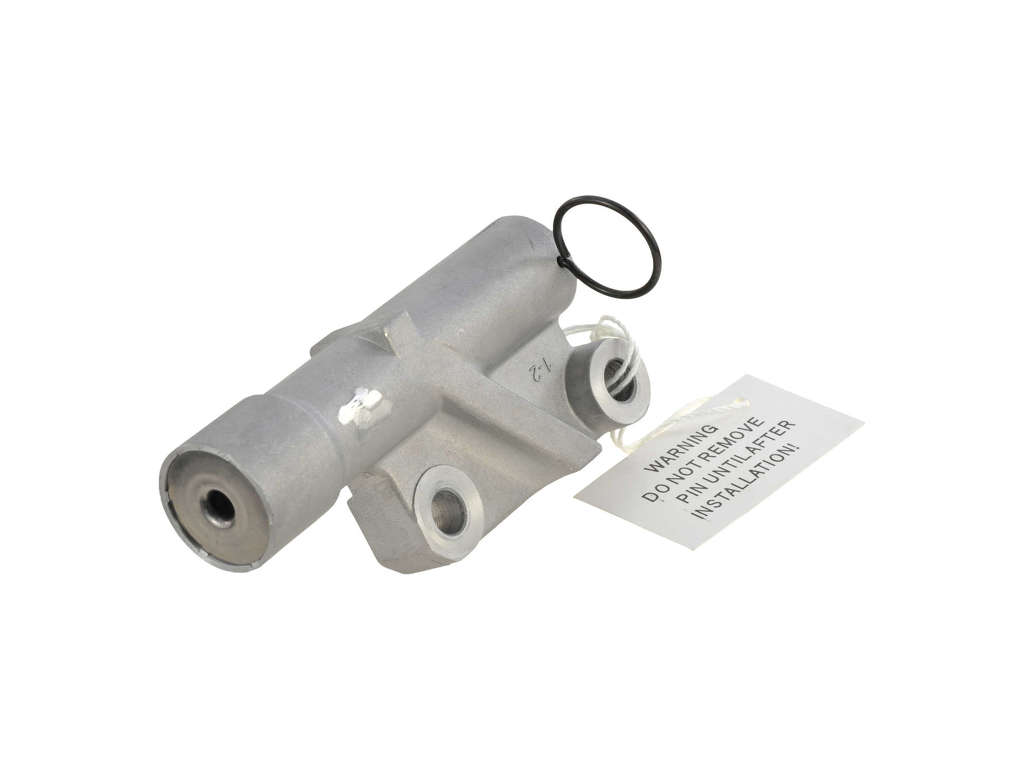
Typical fix: Replace the timing belt, hydraulic tensioner, idler pulley, and water pump as a complete kit. This is a critical maintenance item that should not be deferred.
Est. part cost: $150-$400 for a full kit - Faulty Camshaft Position Sensor (Bank 2 Exhaust) ⚪ Low Probability → Shop Engine Camshaft Position Sensor
How to confirm: Inspect the sensor and its wiring for damage. You can test the sensor's output with an oscilloscope for a clean waveform. Swapping with the Bank 1 sensor to see if the code follows (e.g., to P0017) is a common diagnostic trick if the sensors are the same part number.
Typical fix: Replace the camshaft position sensor. A commonly referenced OEM part number is MN158739, but always verify with VIN.
Est. part cost: $30-$90
Rare But Worth Checking
- Faulty Crankshaft Position Sensor: → Shop Engine Crankshaft While less common for this specific code (which points to a cam), a failing crankshaft sensor can provide an erratic signal that causes the PCM to misinterpret the timing correlation, sometimes triggering codes like P0335 alongside P0019.
- Damaged Wiring or Connectors: Check the wiring harness for the camshaft sensor and VVT solenoid on Bank 2. Look for frayed wires, corrosion, or loose connections, especially near the front of the engine where it's exposed to heat and elements.
- Failed VVT Actuator (Cam Phaser): The gear on the end of the camshaft itself can fail mechanically or become clogged with sludge, but this is much less common than a solenoid or sensor failure. This is a mechanically complex and expensive repair requiring timing belt removal.
- PCM Software Issue: In some cases, the PCM may have outdated software logic for interpreting sensor data. TSB-19-13-002 addresses a stalling issue via ECU reprogramming, indicating that software updates can resolve engine management problems.
Diagnosis Steps
- Check the engine oil level and condition. Top up or perform an oil and filter change if necessary. This is the #1 first step. Clear the code and see if it returns.
- Scan for any other stored trouble codes to see if they provide more context.
- Inspect the wiring and connectors for the Bank 2 exhaust camshaft position sensor and the corresponding VVT solenoid. Ensure they are clean, secure, and free of damage.
- Test the VVT solenoid. A definitive test is to swap it with the intake solenoid on the same bank (if part numbers are identical). Clear codes and run the engine. If the code changes to P0018, the solenoid is confirmed faulty.
- Test the camshaft position sensor. This can be done by checking its signal with an oscilloscope or swapping it with the sensor from Bank 1 to see if the code migrates to P0017.
- If the above steps do not resolve the issue, a timing belt inspection is mandatory. Remove the upper timing covers and carefully inspect the belt for damage, check for proper tension (it should be taut), and verify the alignment of the timing marks on the cam gears with the marks on the engine backplate.
- If the timing belt's age or condition is unknown, or if it has exceeded 60,000 miles, it is highly recommended to replace the entire timing belt kit (belt, tensioner, pulleys, water pump) regardless of its apparent condition.
- If all else fails, the issue may be with the VVT actuator (cam phaser) or the PCM, but these are the least likely failures.
Parts You'll Likely Need
- Oil Control Valve / VVT Solenoid
(OEM #1028A022 (Verify with VIN))— This solenoid controls oil flow to the cam phaser and is a frequent point of failure due to sludge or electrical issues.
Trusted brands: Mitsubishi (OEM), Denso, Dorman, Standard Motor Products (SMP)
OEM price range: $90-$150
Aftermarket price range: $40-$120 - Camshaft Position Sensor
(OEM #MN158739 (Verify with VIN))— A failed sensor can send incorrect data to the PCM, triggering the code. It's a common wear item.
Trusted brands: Mitsubishi (OEM), NGK, Bosch, Delphi
OEM price range: $70-$120
Aftermarket price range: $30-$90 - Timing Belt Kit — If the timing belt has slipped or the tensioner has failed, a full kit replacement is necessary. This is a critical failure point on the 6G75 engine.
Trusted brands: Aisin, Gates, Dayco, Continental
OEM price range: $250-$450
Aftermarket price range: $150-$300
Related Codes That Often Appear With This One
- P0017 — Crankshaft Position - Camshaft Position Correlation (Bank 1 Sensor B). If both appear, it could point to a common issue like a crankshaft sensor or a timing belt that has slipped multiple teeth affecting both banks.
- P0018 — Crankshaft Position - Camshaft Position Correlation (Bank 2 Sensor A). This code is for the intake camshaft on the same bank. Seeing both P0018 and P0019 strongly suggests a mechanical timing issue on Bank 2, like a slipped belt or a problem with the Bank 2 cam phasers.
- P0300 — Random/Multiple Cylinder Misfire Detected. Incorrect cam timing disrupts the air/fuel mixture and spark timing, leading to misfires across one or more cylinders.
- P0340 — Camshaft Position Sensor 'A' Circuit (Bank 1 or single sensor). This is a general sensor circuit code, and its presence with P0019 could point towards a wiring issue or a failing sensor.
Technical Service Bulletins (TSBs) & Recalls
- TSB-19-13-002: Addresses engine stalling in cold conditions due to incorrect fuel correction data, fixed by an ECU software update. While not directly for P0019, it shows that ECU software can be a factor in engine management issues on this platform.
Platform-Specific Known Issues
- The 6G75 is an interference engine. A timing belt failure will cause catastrophic piston-to-valve contact, destroying the engine. This makes any timing-related code, including P0019, extremely critical to diagnose correctly and promptly.
- The hydraulic timing belt tensioner is a known weak point. It can leak and lose pressure, causing the belt to lose tension and jump time. Many technicians recommend replacing it with an OEM part, as some aftermarket tensioners have a high failure rate.
- Bank 2 is the cylinder bank located towards the front of the vehicle (near the radiator), making access to its sensors and solenoids relatively easier than Bank 1, which is against the firewall.
Mechanic-Grade Diagnostic Values
- VVT / Oil Control Valve (OCV) Solenoid Resistance — expected: 6.9 - 7.9 Ohms at 68°F (20°C). Some general sources cite a wider range of 5-12 Ohms.. Failure: A reading of infinite resistance (OL) indicates an open coil. A very low reading (near zero) indicates a short. Any reading outside the specified range suggests the solenoid is faulty.
- Camshaft Position Sensor (CMP) Signal Voltage (3-wire Hall effect sensor) — expected: With the ignition on and engine off, the signal wire should read approximately 5V or switch between 0V and 5V when metal is passed by the sensor tip.. Failure: If the voltage does not switch or is stuck at 0V or a constant voltage, the sensor is likely bad. An oscilloscope is the best tool to verify a clean square wave pattern while the engine is running.
- Camshaft Position Sensor (CMP) Power Supply Voltage — expected: Approximately 5V between the power supply terminal and ground with the ignition on and the sensor connector disconnected.. Failure: No voltage or significantly lower voltage points to a wiring or PCM issue, not a faulty sensor.
Scan Tool Commands That Help
- Mitsubishi MUT-III (or advanced bidirectional scanner): VVT Solenoid Activation Test — This command allows the technician to directly command the Bank 2 exhaust VVT solenoid to actuate. While monitoring live data for camshaft timing angle, the technician can verify if the solenoid is responding to PCM commands and if the cam phaser is physically moving. This helps differentiate between an electrical failure (solenoid, wiring) and a mechanical failure (stuck phaser, oil pressure issue).
Wiring & Ground Locations
- Engine Bay Ground Points — Multiple key grounds exist: 1) On the firewall behind the ECU assembly. 2) On the strut towers on both the driver and passenger sides. 3) A ground strap from the engine mount to the chassis. 4) A heavy ground wire bolted to the side of the front valve cover (Bank 2).. Poor grounds can cause erratic voltage readings and intermittent sensor signals, leading the PCM to misinterpret data from the cam and crank sensors and trigger correlation codes. Cleaning these main ground points is a low-cost, high-impact preventative maintenance step.
- Bank 2 Exhaust VVT Solenoid Connector — On the front cylinder head (Bank 2), located on the driver's side of the head. It is relatively accessible from the top of the engine bay.. This is the primary connector to inspect for corrosion, damage, or loose connection when diagnosing P0019. It's also where resistance and voltage tests on the solenoid are performed.
- G12 / G14 Ground Points — Wiring diagrams indicate a key ground point, G12 or G14, is located at the left rear of the engine compartment, under or near the main relay box.. This ground is a common point for multiple engine control sensors. Corrosion or a loose connection here can affect the cam and crank sensor signals simultaneously, causing correlation faults.
Real Owner Repair Stories
- club4g.org forum user (2007 Mitsubishi Eclipse GT 3.8L V6) — Check Engine Light with codes P0017 and P0019.
❌ Tried (didn't work) The user first suspected sensors but proceeded to a timing belt job due to the vehicle's mileage and the presence of codes for both banks.
✅ What actually fixed it A complete timing belt service, including a new timing belt, hydraulic tensioner, and water pump. The user noted the old belt had likely stretched over time, causing the cam/crank correlation errors on both banks. After the replacement, the codes were cleared and did not return.
Diagnostic Flowchart
Other Known Issues on This Vehicle
Issues unrelated to this code that are worth knowing about as an owner of this generation:
- Cracked or Peeling Dashboard 🟠 Medium — Very common issue, especially in warmer climates. The dashboard material becomes brittle and can crack, or the top layer can lift and peel away from the underlying foam.
- Clear Coat / Paint Peeling 🟠 Medium — Widespread reports of the clear coat failing, leading to a peeling or hazy appearance, particularly on horizontal surfaces like the hood, roof, and spoiler. Certain colors like pearlescent orange and blue seem more affected.
- Short-Lived Hydraulic Lifters 🟡 Low — The hydraulic lash adjusters (lifters) can begin to make a ticking noise, sometimes as early as 100,000-150,000 km. This is often exacerbated by poor oil quality or infrequent changes.
- Oil and Coolant Leaks 🟡 Low — As the engine ages, leaks from valve cover gaskets, oil seals, and cooling system components become more common.
Used vs. New Parts: Buying Guide for This Vehicle
When a used part is the smart pick: For this repair, using a tested, used part from a reputable salvage yard is a reasonable option ONLY for electronic sensors like the Camshaft Position Sensor or Crankshaft Position Sensor. These parts are generally reliable and can offer significant savings.
Donor-vehicle mileage cap: roughly under 80000 miles for the part to have meaningful remaining life.
What to inspect on the donor part:
- Check for a vehicle that was in a rear-end collision, suggesting the engine was running well at the time of the accident.
- Ask for the VIN to verify the donor vehicle's mileage.
- Inspect the sensor's plastic housing for cracks, and the connector pins for corrosion or damage before purchasing.
OEM-only on this vehicle (don't cheap out):
- Hydraulic Timing Belt Tensioner: This is the most critical part where OEM (or an OEM supplier like NTN) is strongly recommended. Forum consensus indicates that many aftermarket tensioners are prone to premature failure, which can lead to catastrophic engine damage. The cost savings are not worth the immense risk.
Aftermarket brands forum-validated for this vehicle:
- Timing Belt Kits: Aisin and Gates are consistently cited as the top-tier aftermarket choices. Aisin kits are often considered equivalent to OEM as they are a major OEM supplier.
- Sensors/Solenoids: Denso, NGK/NTK, and Standard Motor Products (SMP) are reputable brands for electronic components like VVT solenoids and cam/crank sensors.
Brands owners have reported issues with on this vehicle:
- Avoid unbranded, 'white-box' timing belt kits and hydraulic tensioners from online marketplaces like eBay or Amazon. These parts often have questionable quality control and are frequently linked to premature failures in forum discussions.
Real Owner Stories
Aggregated from forums and TSBs cited above. Mileages and costs reflect what owners reported in those sources.
2006-2012 Mitsubishi Eclipse 3.8L V6
Symptoms: The user experienced P0019 along with P0018 simultaneously.
What fixed it: The community advised checking oil levels first and then swapping VVT solenoids between intake and exhaust to confirm if the code followed the part.
Source hint: club4g.org: P0019 Code Experience
2007 Mitsubishi Eclipse 3.8L V6
Symptoms: A no-start condition occurred after the timing belt slipped.
What fixed it: The slip on this interference engine likely caused bent valves and a lack of compression, requiring significant engine repair.
Source hint: Reddit r/MitsubishiEclipse: Timing Belt Slippage
2006-2012 Mitsubishi Eclipse 3.8L V6
Symptoms: The cam went 180 degrees out of time after the crank was turned with the tensioner removed.
What fixed it: The discussion highlighted the high risk of bent valves when timing is off, even when turning the engine by hand.
Source hint: Reddit r/MechanicAdvice: Timing Belt Oops
Related OBD-II Codes
Frequently Asked Questions
Does TSB-19-13-002 apply to my 3.8L V6 Eclipse if I have a P0019 code?
Which side of the engine is Bank 2 on the 6G75 V6?
Can I swap parts to diagnose if my Bank 2 exhaust solenoid is bad?
What is the recommended timing belt service interval to avoid correlation codes like P0019?
Is the 3.8L V6 in the 2006-2012 Eclipse an interference engine?
What specific oil viscosity should I use to ensure the MIVEC system works correctly?
Helpful Videos
We Have This Part in Stock


The information in this article is provided for general reference and educational purposes only. Vehicle specifications, procedures, and part compatibility can vary by production date, trim level, and region. Always consult your vehicle's factory service manual and verify part numbers before purchasing or performing repairs. Safety-critical components such as airbags, seat belts, and braking systems should be installed by a qualified professional.
- Mitsubishi Eclipse:
- 🧭 Diagnostic Flowchart
- 🎬 Helpful Videos
- 🛍️ Shop This Part
- What's Unique About the 2006-2012 Mitsubishi Eclipse
- Symptoms You May Notice
- Most Likely Causes
- Rare But Worth Checking
- Diagnosis Steps
- Parts You'll Likely Need
- Related Codes That Often Appear With This One
- Technical Service Bulletins (TSBs) & Recalls
- Platform-Specific Known Issues
- Mechanic-Grade Diagnostic Values
- Scan Tool Commands That Help
- Wiring & Ground Locations
- Real Owner Repair Stories
- Other Known Issues on This Vehicle
- Used vs. New Parts: Buying Guide for This Vehicle
- Real Owner Stories
- 2006-2012 Mitsubishi Eclipse 3.8L V6
- 2007 Mitsubishi Eclipse 3.8L V6
- 2006-2012 Mitsubishi Eclipse 3.8L V6
- Related OBD-II Codes
- Frequently Asked Questions
- 🎟️ Get 5% Off