

P0019 on 2007-2010 Pontiac G6: Crank/Cam Correlation Causes and Fixes
On a 2007-2010 Pontiac G6 with the 3.6L V6 engine, the P0019 code almost always indicates stretched timing chains. This is a well-documented issue with this engine, often exacerbated by extended oil change intervals. The fix requires a complete timing chain kit replacement, which is a significant and costly repair. In rare cases, a slipped crankshaft reluctor wheel can cause the same code.
- P0019 on a 2007-2010 Pontiac G6 with the 3.6L V6 is a serious code that almost always points to stretched timing chains.
- This is a known factory issue, and the only reliable fix is to replace the chains, guides, and tensioners with a complete, updated kit.
- Do not simply replace the camshaft or crankshaft sensors, as this is highly unlikely to fix the problem.
- Due to the complexity and risk of engine damage, this repair is not recommended for DIYers and should be handled by a professional mechanic.
- Continued driving is not recommended, as a potential chain failure could destroy the engine.
What's Unique About the 2007-2010 Pontiac G6
The Pontiac G6 in this year range, when equipped with the GM High Feature 3.6L V6 (RPO code LY7), is highly susceptible to premature timing chain wear. This is not a random failure but a widely recognized pattern for this specific engine family. 🎬 Watch: Why these GM 3.6L timing chains fail so often. GM's original oil life monitor calibration could allow for excessive mileage between oil changes, which is considered a primary contributor to the chains stretching. GM issued multiple Technical Service Bulletins (TSBs) acknowledging that the original timing chains could stretch, causing correlation codes like P0019. The problem became so common that GM eventually released updated timing chain kits with more durable components to provide a more permanent fix. GM also issued a customer satisfaction program to recalibrate the Engine Control Module to recommend more frequent oil changes.
Diagnostic Flowchart
Tap your situation to follow the diagnostic path that matches what you're seeing on this vehicle.
Symptoms You May Notice
- Check Engine Light is on
- Reduced engine power and hesitation on acceleration
- Rough or erratic idle
- Rattling or ticking noise from the front of the engine, especially on a cold start
- Decreased fuel economy
- Engine may be hard to start or stall
- Engine surging or fluctuating idle
- Replacing only the camshaft or crankshaft position sensors. While these sensors can fail, on this specific engine the P0019 code is overwhelmingly caused by the mechanical timing chain system. Replacing sensors without verifying timing chain slack will not fix the root cause and is a common first mistake.
Most Likely Causes
- Stretched Timing Chains 🔴 High Probability → Shop Engine Timing Chain The original timing chains on the 3.6L LY7 V6 engine were prone to premature wear and stretching. This is a well-documented issue acknowledged by GM through multiple TSBs. A major contributing factor was an oil life monitoring system that allowed for overly long oil change intervals, leading to oil breakdown and inadequate lubrication.
How to confirm: A technician will need to remove the camshaft cover to physically inspect the timing chains for excessive slack by checking the tensioner piston extension. A scan tool may also show a deviation in cam/crank correlation that is out of specification.
Typical fix: Replace all three timing chains, the tensioners, guides, and sprockets with a complete, updated timing chain kit. This is a major repair that often requires engine removal.
Est. part cost: $250-$500 - Failed Timing Chain Tensioner(s) 🔴 High Probability → Shop Engine Timing Chain The tensioners, which use oil pressure to keep the chains tight, can fail, weaken, or become stuck, allowing the chains to become loose. They are considered a wear item and are always replaced during a timing chain service.
How to confirm: Confirmed during physical inspection when checking for timing chain slack. A fully extended tensioner piston is a clear sign of a stretched chain.
Typical fix: Replace the tensioners. This is always done as part of a complete timing chain kit replacement.
Est. part cost: $50-$100 - Low or Dirty Engine Oil 🟡 Medium Probability The variable valve timing (VVT) system and chain tensioners are operated by oil pressure. Low or degraded oil starves these components, accelerating wear on the chains. GM's own TSBs and special coverage programs for this issue were linked to the original, overly optimistic oil change intervals.
How to confirm: Check the oil level on the dipstick and inspect its condition. If it's low, past its change interval, or appears sludgy, this is a likely contributing factor.
Typical fix: Perform an oil and filter change using the correct full synthetic 5W-30 oil. If the code returns, the chains have likely already stretched beyond the point where fresh oil can compensate.
Est. part cost: $40-$80 - Faulty Camshaft Position Actuator Solenoid (VVT Solenoid) ⚪ Low Probability → Shop Engine Camshaft These solenoids control oil flow to the cam phasers. They can get clogged with sludge from dirty oil or fail electronically, causing the camshaft to be in the wrong position.
How to confirm: Can be tested with a scan tool by commanding the solenoid on and off to see if engine timing changes. Can also be removed and inspected for sludge or tested for resistance.
Typical fix: Replace the faulty Bank 2 exhaust VVT solenoid. It's often recommended to replace them in pairs (intake and exhaust).
Est. part cost: $30-$70
Rare But Worth Checking
- Slipped Crankshaft Reluctor Wheel: → Shop Engine Crankshaft A critical but less common cause is the reluctor wheel (or tone ring) pressed onto the crankshaft moving from its original position. TSB #PIP3423P specifically calls this out. This will cause persistent timing codes even with new timing chains. Diagnosis can sometimes be done with a borescope through the crank sensor hole, but may require oil pan removal. The fix requires either crankshaft replacement or pinning the reluctor wheel in place.
- Faulty Camshaft Position Sensor: → Shop Engine Camshaft Position Sensor While possible, it's much less common than a mechanical timing issue for this specific code on this engine. A failing sensor will typically set other codes related to the sensor circuit itself (e.g., P0348, P0349) rather than a correlation code.
- Bad Ground Connection (G105): Some GM platforms, including the G6, can suffer from poor ground connections, particularly the G105 ground located on the transmission. A corroded or broken G105 ground can cause a host of bizarre electrical issues, including communication faults with the Transmission Control Module (TCM) and other modules, which could potentially contribute to erroneous codes.
Diagnosis Steps
- Verify the engine oil level and condition. Ensure it is full and clean. Use full synthetic 5W-30 oil. An oil change is a cheap first step.
- Use a professional scan tool to check for any other stored DTCs. Codes like P0008, P0016, P0017, and P0018 are highly relevant and point towards a systemic timing issue.
- Monitor live data from the crankshaft and camshaft position sensors to check for correlation deviation while the engine is running.
- Command the Bank 2 exhaust VVT solenoid on and off with the scan tool to ensure it is responding. If not, inspect the solenoid and its circuit. Consider swapping the exhaust and intake solenoids to see if the code changes to P0018, which would confirm a bad solenoid.
- If other steps don't reveal the issue, perform a physical inspection. This involves removing the Bank 2 (front) camshaft cover to directly check for slack in the timing chain. This is the most definitive diagnostic step for this problem.
- If the chain is loose, the entire timing chain system must be replaced using an updated kit.
- If the chains are tight and the code persists, investigate the rare possibility of a slipped crankshaft reluctor wheel, as per TSB PIP3423P.
Parts You'll Likely Need
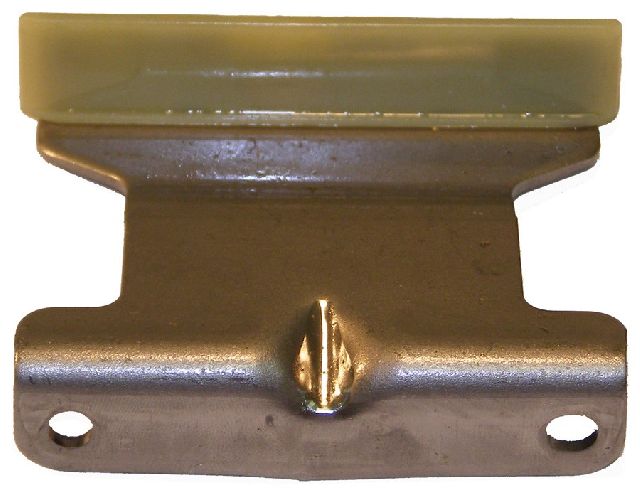
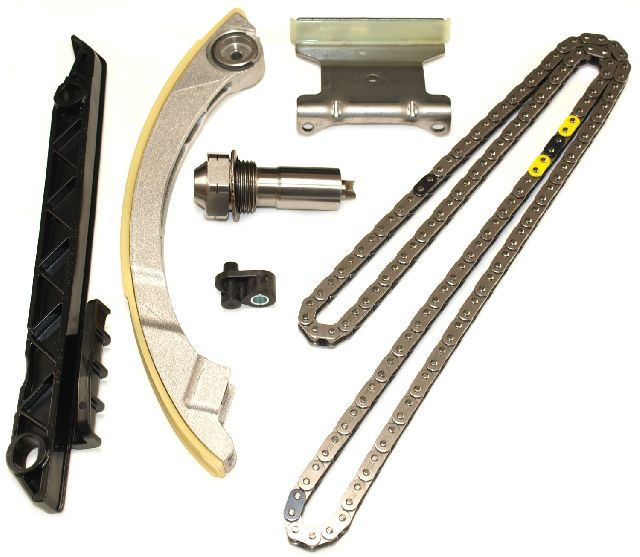
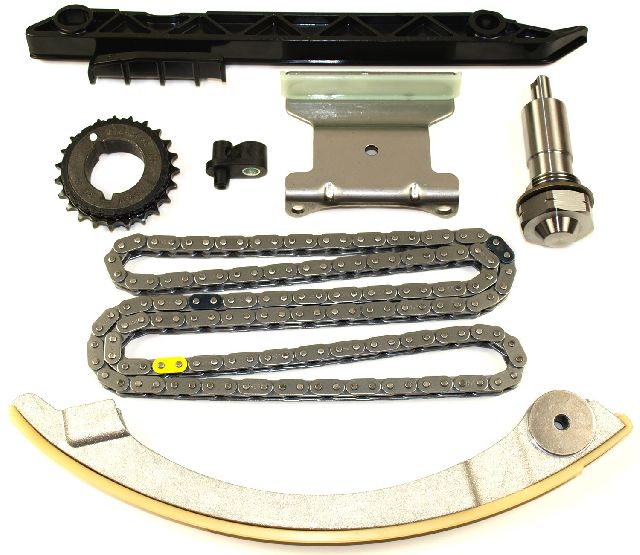
- Timing Chain Kit
(OEM #12651450 (This is one of the main GM kit numbers, verify by VIN))— This is the definitive fix for the common stretched timing chain issue. A complete kit ensures all related wear items (chains, guides, tensioners) are replaced with updated components. The kit should include three chains, three tensioners, and all necessary guides.
Trusted brands: ACDelco (GM Original Equipment), Cloyes
OEM price range: $350-$500
Aftermarket price range: $200-$350
Related Codes That Often Appear With This One
- P0008 — Indicates a general engine position system performance error for Bank 1. It's a precursor or companion code to more specific timing faults and is frequently cited alongside P0019 in TSBs.
- P0016 — Indicates a Crank/Cam correlation error for Bank 1, Intake Camshaft. Seeing multiple timing codes together strongly points to a stretched primary timing chain affecting all camshafts.
- P0017 — Indicates a Crank/Cam correlation error for Bank 1, Exhaust Camshaft. Often appears with other timing codes when the primary chain has stretched.
- P0018 — Indicates a Crank/Cam correlation error for Bank 2, Intake Camshaft. This is the partner code to P0019 on the same engine bank. Seeing both P0018 and P0019 is very common and confirms the timing deviation is on Bank 2.
Technical Service Bulletins (TSBs) & Recalls
- 12-06-01-009F: Mentions using V6 timing chain kits to repair stretched timing chains that cause codes P0008, P0009, P0016, P0017, P0018 and/or P0019. It lists the 2007-2010 Pontiac G6 as an affected vehicle.
- PIP3423P: Advises technicians to inspect for loose timing chains or tensioners when codes P0016, P0017, P0018, P0019, P0008 or P0009 are set. It also introduces the possibility of a slipped crankshaft reluctor wheel if chains are found to be tight.
Platform-Specific Known Issues
- Stretched Timing Chains: The most significant issue for this vehicle and code. TSB #12-06-01-009F directly calls for timing chain kit replacement to fix DTCs including P0019 due to stretched chains. The cause is linked to the original chain design and extended oil change intervals.
- Loose Timing Chains or Tensioners: TSB #PIP3423P instructs technicians to inspect for loose timing chains or tensioners when P0019 is present. This bulletin also points to the possibility of a slipped crankshaft reluctor wheel if the chains are found to be tight.
Mechanic-Grade Diagnostic Values
- Camshaft Position (CMP) Actuator Solenoid Resistance — expected: 8 to 12 ohms. Failure: A reading of 0 ohms (short) or infinite/OL (open). Also test for a short to ground by checking resistance from each pin to the solenoid body; it should be OL.
- Camshaft Position (CMP) Actuator Solenoid Voltage — expected: Should receive battery voltage at the connector with the key on, engine off.. Failure: No voltage indicates a wiring or ECM problem, not a solenoid failure.
- Scan Tool Camshaft Variance — expected: Near 0 degrees at idle when not commanded.. Failure: A variance that jumps significantly or does not match the desired (commanded) angle indicates a problem with the phaser, solenoid, or oil pressure.
Scan Tool Commands That Help
- GDS2 / Tech2: Crankshaft Position System Variation Learn — This procedure is required after replacing the crankshaft, crankshaft position sensor, or ECM. It compensates for minor variations in the reluctor wheel to ensure accurate timing readings. Failure to perform this can cause other timing-related codes to set.
- GDS2 / Tech2: Camshaft Position Actuator Solenoid Test — This bidirectional control allows a technician to command the VVT solenoid on and off while monitoring engine RPM and cam/crank data. A lack of change in engine operation points to a stuck solenoid, clogged oil passage, or failed phaser.
Wiring & Ground Locations
- G105 — On the left rear side of the engine compartment, on an engine/transmission stud, located below the upper coolant hose.. This ground is shared by the Engine Control Module (ECM) and the Transmission Control Module (TCM). A poor connection here can cause erratic behavior and false codes from multiple systems, including the engine timing sensors.
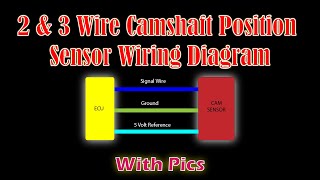
- Bank 2 Camshaft Position Sensor Connector — Bank 2 is the front bank of the engine (closest to the radiator). The exhaust camshaft is the one closer to the front of the vehicle. The connector is a 3-wire plug on the sensor located on the front of the timing cover.. This is the primary sensor for this code. The three wires are typically a 5V reference, a low reference (ground), and a signal wire back to the ECM. Testing for correct voltage and signal at this connector is a key diagnostic step.
- Crankshaft Position Sensor (CKP) — Located on the right side (passenger side) of the engine block, above the starter motor, reading the reluctor wheel on the crankshaft.. This sensor provides the baseline timing signal. While sensor failure is less common than chain stretch, its wiring and proper function are critical for the ECM to calculate cam/crank correlation.
Real Owner Repair Stories
- Reddit user in r/MechanicAdvice (2013 Jeep Grand Cherokee 3.6L (Pentastar, a related V6 with similar VVT design)) — Initial lifter tick, which led to a full timing job. After the job, code P0018 (Bank 2 Intake correlation) appeared, followed by a P0300 random misfire on Bank 2.
❌ Tried (didn't work) Replaced all cams, lifters, rockers, VVT phasers, actuators, solenoids, and timing components with aftermarket parts., Replaced the Bank 2 exhaust cam a second time and re-checked timing marks multiple times.
✅ What actually fixed it The initial P0018 code was caused by a combination of a misaligned reluctor wheel on the back of the new aftermarket camshaft and a leaking oil gallery plug. The subsequent misfire issue was ongoing, but the timing code itself was resolved by addressing the faulty new part.
Model Year Variations Within This Range
- 2007-2010: GM issued a customer satisfaction program (Special Coverage #10287) to reprogram the Engine Control Module (ECM) on these vehicles. The update changed the algorithm for the Oil Life Monitor (OLM) to recommend more frequent oil changes, in an effort to mitigate premature timing chain wear. Vehicles that did not receive this update may be more susceptible to the issue.
Helpful Videos






We Have This Part in Stock


The information in this article is provided for general reference and educational purposes only. Vehicle specifications, procedures, and part compatibility can vary by production date, trim level, and region. Always consult your vehicle's factory service manual and verify part numbers before purchasing or performing repairs. Safety-critical components such as airbags, seat belts, and braking systems should be installed by a qualified professional.
- Pontiac G6:
- 🧭 Diagnostic Flowchart
- 🎬 Helpful Videos
- 🛍️ Shop This Part
- What's Unique About the 2007-2010 Pontiac G6
- Symptoms You May Notice
- Most Likely Causes
- Rare But Worth Checking
- Diagnosis Steps
- Parts You'll Likely Need
- Related Codes That Often Appear With This One
- Technical Service Bulletins (TSBs) & Recalls
- Platform-Specific Known Issues
- Mechanic-Grade Diagnostic Values
- Scan Tool Commands That Help
- Wiring & Ground Locations
- Real Owner Repair Stories
- Model Year Variations Within This Range
- 🎟️ Get 5% Off