

P0019 on 2006-2011 Saab 9-3 2.8L V6: Timing Chain, Sensor, and Solenoid Fixes
P0019 on a Saab 9-3 2.8L V6 indicates a timing correlation error on the front (radiator side) exhaust camshaft. While a bad sensor or solenoid is possible, this code is very frequently a sign of stretched timing chains, a significant and expensive repair common to this engine. Ignoring the issue can lead to catastrophic engine failure.
- P0019 on this Saab refers to a timing issue with the exhaust cam on the FRONT (radiator side) cylinder bank.
- Always check the engine oil level and condition first; a simple oil change can sometimes fix VVT issues.
- Before assuming the worst, try swapping the easily accessible VVT solenoid and camshaft sensor on the front bank to rule them out.
- Be prepared for the high probability that this code indicates stretched timing chains, a major repair best left to a professional.
What's Unique About the 2006-2011 Saab 9-3
The Saab B284 engine is part of the GM High Feature V6 (HFV6) family, which is notorious for premature timing chain stretching, particularly in the earlier LY7 and LP9 variants. While other causes are possible, P0019 (along with related codes like P0008, P0009, P0016, P0017, P0018) is a classic indicator of this serious mechanical issue. The problem was so widespread that GM issued technical service bulletins (like #12-06-01-009F) with updated timing chain kits. Unlike simpler fixes on other vehicles, this code on a 2.8L Saab often points directly to a complex timing chain service requiring engine removal or significant disassembly.
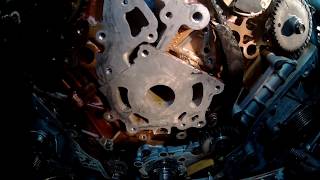
🎬 Watch: A complete walkthrough of the B284 timing chain replacement.Generation note: The 2006-2011 year range covers the second generation of the Saab 9-3. This includes the pre-facelift (2006-2007) and post-facelift (2008-2011) models. The 2.8L V6 engine and the underlying causes for P0019 are consistent across this entire period, though some aftermarket parts suppliers note different chain designs for early 2007 models based on engine serial number.
Symptoms You May Notice
- Check Engine Light is on
- Rough or unstable engine idle, sometimes fluctuating between 600-900 RPM
- Engine hesitation or stumbling during acceleration
- Reduced engine power and sluggish performance
- Decreased fuel economy, potentially by 10-25%
- A rattling or diesel-like clatter from the engine, especially on cold starts
- In severe cases, the engine may be hard to start, require extended cranking, or may stall
- Replacing only the camshaft or crankshaft position sensors without checking oil condition or VVT solenoid function first.
- Replacing a single VVT solenoid when the root cause is a stretched timing chain. This may temporarily fix the code, but it will return as the chain continues to stretch.
- Replacing just one chain or tensioner instead of the complete set of three chains, guides, and tensioners.
Most Likely Causes
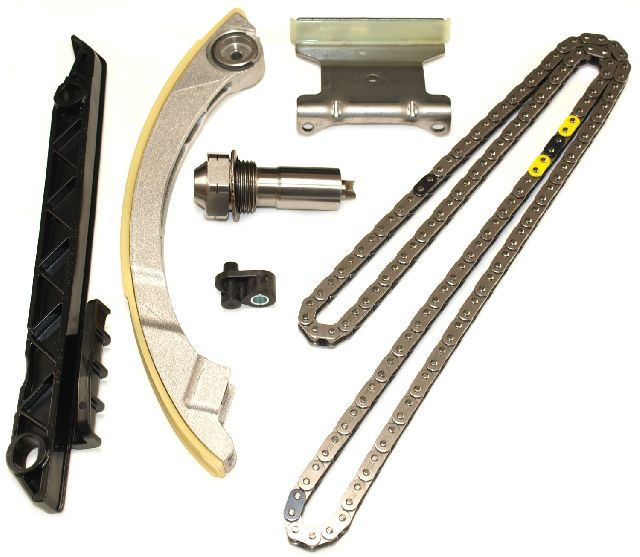
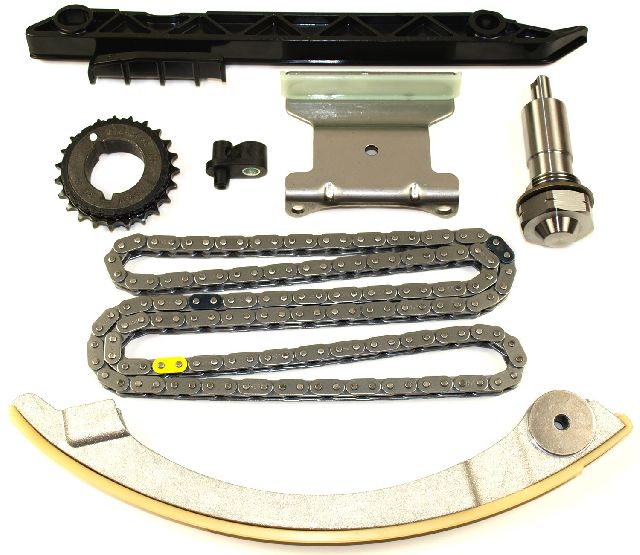
- Stretched Timing Chains 🔴 High Probability → Shop Engine Timing Chain The GM High Feature V6 engine family used in these Saabs has a well-documented history of premature timing chain wear and stretching. This is often attributed to a combination of factors including the original chain design, long oil change intervals degrading oil quality, and subsequent loss of hydraulic pressure to the chain tensioners. Failures are common even before 100,000 miles.
How to confirm: A mechanic can use a scan tool to observe camshaft deviation angles in live data; a persistent deviation that doesn't resolve with solenoid or sensor replacement points to the chains. Physical inspection by removing the cam covers to check for chain slack is a more definitive step. Ultimate confirmation requires significant labor.
Typical fix: Replace all three timing chains (primary and both secondary), all tensioners, and all guides. It is also highly recommended to replace the water pump (driven by a timing chain) and inspect/replace the camshaft phasers at the same time. Use of updated, strengthened aftermarket or OEM kits is crucial.
Est. part cost: $400-$800 for a complete, high-quality timing chain kit. - Low, Dirty, or Incorrect Engine Oil 🟡 Medium Probability The camshaft phasing (VVT) system is hydraulically operated by engine oil pressure. Low levels, sludge from infrequent oil changes, or using the wrong oil viscosity can cause the VVT actuators (phasers) and solenoids to respond slowly or get stuck. This is a major contributing factor to accelerated chain wear.
How to confirm: Check the oil level on the dipstick and inspect its condition. If it's low, black, or sludgy, this is a likely contributor. An oil pressure test can also be performed.
Typical fix: Perform an oil and filter change using a high-quality full synthetic oil that meets GM-LL-A-025 or Dexos1 specifications (typically 5W-30). This is the first and most important step before attempting other repairs.
Est. part cost: $50-$100 - Faulty VVT Solenoid (Camshaft Position Actuator Solenoid) 🟡 Medium Probability
How to confirm: Using a capable scan tool, command the Bank 2 exhaust solenoid on and off and watch for a change in camshaft angle and engine idle. You can also remove the solenoid (located on the front valve cover) and test it by applying 12V to see if the internal plunger actuates. Swapping it with the identical solenoid from another position (e.g., Bank 2 intake) and seeing if the code changes to P0018 is an effective diagnostic step.
Typical fix: Replace the Bank 2 (front bank) exhaust VVT solenoid. Be sure to clean the area before removal to prevent debris from entering the engine. 🎬 Watch: How to access the front bank and valve covers.
Est. part cost: $30-$90 - Faulty Camshaft Position (CMP) Sensor ⚪ Low Probability → Shop Engine Camshaft Position Sensor
How to confirm: Swap the Bank 2 exhaust camshaft sensor with the intake sensor on the same bank. Clear the codes and drive the vehicle. If the code changes to P0018 (Bank 2 Intake), the sensor is bad. A multimeter can also be used to check the sensor's voltage and resistance against specifications.
Typical fix: Replace the Bank 2 (front bank) exhaust camshaft position sensor.
Est. part cost: $25-$75
Rare But Worth Checking
- Failed Camshaft Phaser (Actuator Gear): → Shop Engine Camshaft The gear at the end of the camshaft can fail internally, getting stuck in one position or developing excessive play. This is usually replaced as part of a full timing chain service, but can fail independently.
- Clogged Oil Passages: Severe engine sludge can block the small oil passages leading to the VVT solenoids and phasers, starving them of the oil pressure needed to operate correctly. This often requires significant engine cleaning or disassembly.
- Slipped Crankshaft Reluctor Wheel: → Shop Engine Crankshaft In some GM HFV6 engines, the reluctor wheel pressed onto the crankshaft (which the crank sensor reads) can physically move, causing a persistent correlation code even with perfect timing chains. This requires crankshaft replacement.
Diagnosis Steps
- Check Engine Oil: Verify the oil level is correct and the oil is clean. If in doubt, perform an oil and filter change with the correct specification full synthetic oil (GM-LL-A-025/Dexos1 5W-30). This is the cheapest and most critical first step.
- Scan for Other Codes: Use a quality OBD-II scanner to check for any other related timing codes (P0008, P0009, P0016-P0018) or sensor circuit codes. The presence of multiple timing codes points towards a mechanical chain issue.
- Inspect Wiring: Visually inspect the wiring and connector for the Bank 2 (front bank) exhaust camshaft position sensor and VVT solenoid for any damage, corrosion, or loose connections.
- Test the VVT Solenoid: Swap the Bank 2 exhaust VVT solenoid with the Bank 2 intake solenoid. Clear codes and drive. If the code changes to P0018, the solenoid is faulty and needs replacement. A scan tool can also be used to command the solenoid and observe engine response.
- Test the Camshaft Position Sensor: If the solenoid swap has no effect, swap the Bank 2 exhaust CMP sensor with the Bank 2 intake CMP sensor. Clear codes and drive. If the code changes to P0018, the sensor is faulty.
- Professional Diagnosis: If the steps above do not resolve the issue, the cause is almost certainly mechanical (stretched timing chains). This requires professional diagnosis with a scan tool to monitor cam deviation angles (camshaft variance) and subsequent engine disassembly for confirmation and repair.
Parts You'll Likely Need
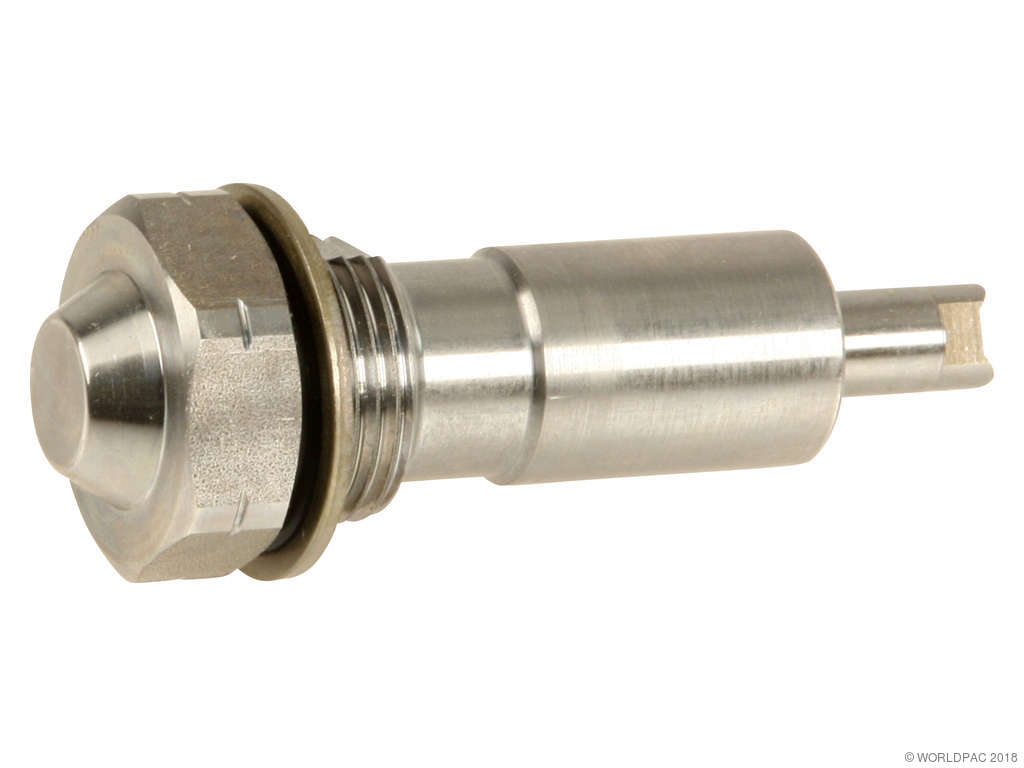
- Timing Chain Kit
(OEM #12650230 (Example GM Kit, verify application))— This is the most probable root cause of the P0019 code on this specific engine due to a known design weakness. A complete kit with chains, guides, and tensioners is required.
Related Codes That Often Appear With This One
- P0008 — Indicates a general engine position system performance error between the crank and both cams on Bank 1. Its presence strongly suggests a primary timing chain issue affecting the entire engine.
- P0018 — This is the same correlation error but for the intake camshaft ('Sensor A') on the same bank (Bank 2). Seeing P0018 and P0019 together is an almost certain indicator of a stretched secondary timing chain on Bank 2 or a problem affecting the entire bank.
- P0016 / P0017 — These are the equivalent correlation codes for Bank 1 (rear bank). If codes for both banks are present (e.g., P0017 and P0019), it almost certainly confirms a major timing system failure involving the primary chain that synchronizes both banks to the crankshaft.
Technical Service Bulletins (TSBs) & Recalls
- GM TSB #12-06-01-009F: 'Information on High Feature V6 Timing Chain Kits and Chain Guide Replacement' - This bulletin details the updated timing chain service kits released by GM to address premature wear and codes like P0008, P0016, P0017, P0018, and P0019.
- GM TSB (Superseded by PIP3423J): Discusses the possibility of a slipped crankshaft reluctor wheel as a cause for these codes.
Platform-Specific Known Issues
- The 2.8L V6 (LP9/B284) is known for premature timing chain stretch, often occurring before 100,000 miles. Early warning signs can include a brief rattle on cold startup.
- GM released multiple updated timing chain kits to address the stretching issue. It is critical to use one of these newer-design kits rather than old stock or parts from a pre-2012 engine.
- Due to the transverse engine layout, accessing the timing components is extremely labor-intensive, often requiring the engine and transmission to be dropped from the subframe. This is the primary driver of the high repair cost.
Mechanic-Grade Diagnostic Values
- VVT Solenoid (Camshaft Position Actuator Solenoid) Resistance — expected: 6.9 - 7.9 Ohms at 68°F (20°C). Failure: A reading outside this range indicates a faulty solenoid coil.
- Bank 2 Exhaust Camshaft Actual Position (Live Data) — expected: Approximately 127.0 degrees at idle. Failure: When the Bank 2 exhaust solenoid is disconnected with the engine idling, the camshaft phaser should return to its locked base position. If the scan tool does not show this value, it may indicate a stuck phaser or an oil flow problem.
- Camshaft vs. Crankshaft Timing Deviation (Live Data) — expected: Less than 5 degrees. Failure: A persistent deviation greater than 5-10 degrees that cannot be corrected by the VVT system is a strong indicator of a stretched timing chain or other mechanical timing fault.
Scan Tool Commands That Help
- Saab Tech 2: Camshaft Position Actuator Solenoid Control — This bidirectional command allows a technician to manually activate and deactivate the Bank 2 exhaust VVT solenoid while monitoring engine RPM and camshaft angle data. A lack of change in engine idle or cam angle when the solenoid is commanded indicates a faulty solenoid, clogged oil passage, or a seized camshaft phaser.
Wiring & Ground Locations
- G2 — On the side of the left-hand (driver's side in LHD cars) structural member in the engine bay, near the main connector bracket.. This is a primary chassis ground point. A poor connection here can cause a host of electrical issues, including erratic behavior from engine sensors and the ECM.
- G7 / G7S — Main engine ground, typically on the starter motor's lower retaining bolt or a support bracket under the intake manifold. The camshaft position sensor specifically uses ground G7S.. The camshaft position sensor requires a clean ground reference to send an accurate signal to the ECM. A faulty ground at this point can corrupt the sensor's signal, potentially triggering correlation codes like P0019 even if the mechanical timing is correct.
- V6 Inter-Bank Ground Cable — An extra ground cable that runs between the two cylinder banks on the B284 V6 engine.. This specific ground strap ensures both cylinder heads have equal ground potential. A loose or corroded connection here could cause voltage discrepancies between sensors on Bank 1 and Bank 2, leading to difficult-to-diagnose electrical faults.
OEM Part Supersession History
Varies (early 2007 kits)→GM Kit 12650230 (or equivalent)— Original timing chains were prone to premature stretching. Updated kits feature more robust chains.
Heads up: For model year 2007, there is a critical parts split. The updated timing chain kit (e.g., Cloyes 9-0753S) is only for engines with serial number 022736 and up. Pre-facelift (2006) and early 2007 engines require a different kit. Always verify with VIN or engine serial number.N/A (Not originally installed)→PN 12630941 (5-screw phaser) or 12632859 (4-screw phaser)— To improve stability and reduce wear between the camshaft and the VVT actuator (phaser).
Heads up: GM Service Bulletin 12-06-01-009F instructs technicians to install these camshaft thrust washers during a timing chain service if they are not already present. Using the wrong washer for the phaser bolt pattern will prevent correct assembly.
Model Year Variations Within This Range
- 2006-2007 vs 2008-2011: The timing chain design and camshaft phasers were changed for the 2008 model year. The engine code also changed from B284 to B284R. While the P0019 fault points to the same issue, parts are not always interchangeable across this refresh.
- 2007 only: A mid-year change occurred in the timing chain components. Parts must be selected based on the engine serial number, with the change point being engine ID 022736. Ordering a timing kit for a '2007' without verifying this number can result in receiving incorrect parts.
- 2006-2007 vs 2008+: The 2.8T V6 received a power increase from 250 hp in pre-facelift models to 255 hp (FWD) or 280 hp (XWD) in 2008+ models, which corresponds with engine and software updates.
Diagnostic Flowchart
Real Owner Stories
Aggregated from forums and TSBs cited above. Mileages and costs reflect what owners reported in those sources.
Saab 9-3 2.8T
Symptoms: Diagnosing a P0019 code.
What fixed it: Stretched timing chains requiring the major service.
Source hint: SaabCentral Forums - Extensive discussions on B284 timing chain issues
2007 Cadillac CTS 2.8L/3.6L
Symptoms: Timing codes present on a nearly new vehicle.
What fixed it: Dealer confirmed stretched chains requiring major engine repair.
Source hint: CaddyInfo Cadillac Forum - 'Major Engine Repair'
Saab 9-3 2.8L V6 (LP9/B284) — ~85000 miles
Symptoms: Brief rattle on cold startup and premature timing chain stretch.
What fixed it: Replaced timing chains using updated GM timing chain service kits.
Source hint: Vehicle Specific Issues / GM TSB #12-06-01-009F
Related OBD-II Codes
Frequently Asked Questions
Does GM TSB #12-06-01-009F apply to my 2006-2011 Saab 9-3 2.8L?
Why is the timing chain replacement so expensive on the Saab 9-3 B284?
Is it normal for my 2.8T to need new timing chains before 100,000 miles?
What oil should I use to help prevent VVT and timing chain issues on my LP9 engine?
If I swap the Bank 2 exhaust VVT solenoid with the intake one, what should I look for?
Could a slipped crankshaft reluctor wheel cause the P0019 code on my 9-3?
Helpful Videos
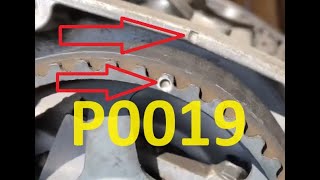

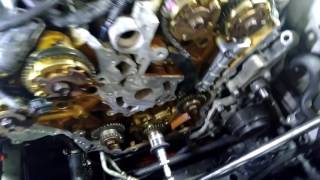
![How to Fix P0019 Engine Code in 6 Minutes [4 DIY Methods / Only $6.85]](https://img.youtube.com/vi/RxW2-XX97dY/mqdefault.jpg)

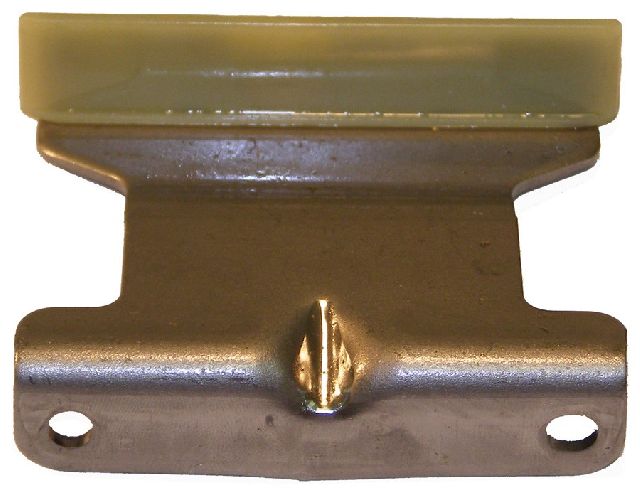
We Have This Part in Stock


The information in this article is provided for general reference and educational purposes only. Vehicle specifications, procedures, and part compatibility can vary by production date, trim level, and region. Always consult your vehicle's factory service manual and verify part numbers before purchasing or performing repairs. Safety-critical components such as airbags, seat belts, and braking systems should be installed by a qualified professional.
- Saab 9-3:
- 🧭 Diagnostic Flowchart
- 🎬 Helpful Videos
- 🛍️ Shop This Part
- What's Unique About the 2006-2011 Saab 9-3
- Symptoms You May Notice
- Most Likely Causes
- Rare But Worth Checking
- Diagnosis Steps
- Parts You'll Likely Need
- Related Codes That Often Appear With This One
- Technical Service Bulletins (TSBs) & Recalls
- Platform-Specific Known Issues
- Mechanic-Grade Diagnostic Values
- Scan Tool Commands That Help
- Wiring & Ground Locations
- OEM Part Supersession History
- Model Year Variations Within This Range
- Real Owner Stories
- Saab 9-3 2.8T
- 2007 Cadillac CTS 2.8L/3.6L
- Saab 9-3 2.8L V6 (LP9/B284) — ~85000 miles
- Related OBD-II Codes
- Frequently Asked Questions
- 🎟️ Get 5% Off