

P0021 on 2009-2016 Audi A4 2.0T: Explaining an Impossible Code and Solving the Real Issue (P0011)
A P0021 code is impossible on your 4-cylinder Audi A4 as it refers to 'Bank 2,' which your engine doesn't have. The actual code for this issue is P0011. The problem is almost always caused by low/dirty oil, a faulty N205 camshaft adjuster solenoid (Part No. 06H109257C, ~$50-$150), or a broken screen on the camshaft bridge (Part No. 06H103144J/K). On 2009-2012 models, this can also be a sign of a failing timing chain tensioner, a critical failure.
- The code P0021 is invalid for your 2.0T engine; the actual fault code is P0011. Any diagnosis should proceed based on P0011.
- Your first and cheapest diagnostic step is to check your oil. Low, old, or incorrect oil is a primary cause of this fault.
- The most common failed part is the N205 Camshaft Adjuster Magnet, which is relatively inexpensive and easy to access and replace.
- A rattling noise on cold starts is a critical warning sign of a failing timing chain tensioner. Do not ignore this symptom, as it can lead to catastrophic engine failure.
- When replacing the N205 valve, inspect it for debris. If found, the camshaft bridge screen has likely failed and also needs to be addressed to prevent a repeat failure.
What's Unique About the 2009-2016 Audi A4
The key issue for this platform is the conflict between the code's definition and the engine's physical design. Seeing P0021 on an inline-four engine is a red flag for a diagnostic tool error. The actual problem is an over-advanced intake cam, which on the EA888 engine is logged as code P0011. For the 2009-2016 (B8/B8.5) A4, this fault is frequently linked to specific EA888 engine issues: a failure-prone timing chain tensioner (especially in 2009-2012 models), a disintegrating screen on the camshaft bridge that clogs oil passages, and a high failure rate for the N205 VVT solenoid.
Generation note: This guide covers the Audi A4 B8 (2009-2012) and B8.5 (2013-2016) generations, both of which use the EA888 2.0T engine. While the causes are similar, the early B8 models (2009-2012) are significantly more susceptible to a critical timing chain tensioner failure, which makes a rattling noise on startup a major warning sign for this code.
Symptoms You May Notice
- Check Engine Light (CEL) and/or EPC light is on
- Rough, unstable idle
- Hesitation or stumbling during acceleration
- Reduced engine power or 'limp mode'
- Poor fuel economy
- Engine stalling at stops
- Rattling noise from the engine on cold starts (a critical symptom)
- Replacing the camshaft position sensor when the actual fault is the N205 solenoid or a mechanical timing issue.
- Replacing only the N205 solenoid without checking for debris from a failed camshaft bridge screen, leading to a repeat failure of the new solenoid.
- Ignoring the P0011 code after an oil change temporarily clears it, without addressing the underlying mechanical cause which will return.
Most Likely Causes
- Low, Degraded, or Incorrect Viscosity Engine Oil 🔴 High Probability The EA888's variable valve timing (VVT) system is hydraulic and highly sensitive to oil pressure and cleanliness. Extended oil change intervals (over 5,000 miles) or using oil that doesn't meet the VW 502 00 spec can lead to sludge that clogs the small passages of the VVT components.
How to confirm: Check the oil level on the dipstick (if equipped) or via the MMI system. Note the oil's color and consistency. If it's dark black, thick, or below the minimum level, this is your likely starting point.
Typical fix: Perform an engine oil and filter change using a high-quality full synthetic oil that meets Audi's VW 502 00 specification. Consider using an engine flush (like Liqui Moly) before changing the oil to help clear sludge.
Est. part cost: $60-$100 - Failing Camshaft Adjuster Magnet (N205 Solenoid) 🔴 High Probability → Shop Engine Camshaft This solenoid is a very common failure point. It either gets clogged with oil debris or the internal electromagnet fails, causing it to stick and send incorrect oil pressure to the cam phaser.
How to confirm: Remove the N205 valve (held by three T30 bolts on the upper timing cover). Inspect its internal screens for metal or plastic debris. A healthy valve's internal piston should rattle when shaken; a stuck one will not. You can also test its resistance with a multimeter; it should be between 5.0 and 8.0 ohms.
Typical fix: Replace the N205 valve. The OEM part number is 06H109257C or a later revision. It is a relatively simple replacement. If debris is found on the old valve's screen, it's a strong indicator that the camshaft bridge screen is also failing.
Est. part cost: $50-$150 - Disintegrated Camshaft Bridge Screen 🟡 Medium Probability → Shop Engine Camshaft The EA888 engine features a small plastic and mesh screen on the camshaft bridge (which supplies oil to the head) that is known to break apart. The debris travels through oil passages and clogs the N205 valve and cam phaser, starving them of oil.
How to confirm: This requires removing the camshaft bridge, which is located under the upper timing cover. Visual inspection will show a broken or completely missing screen. Debris found in the N205 valve is also a strong clue.
Typical fix: Replace the camshaft bridge with an updated OEM part (Part No. 06H103144J or 06H103144K). Many technicians simply remove the broken screen and leave it out to prevent a recurrence, a practice supported by some forum users and independent shops.
Est. part cost: $80-$300 - Stretched Timing Chain or Failed Tensioner 🟡 Medium Probability → Shop Engine Timing Chain Early EA888 engines (approx. 2009-2012) used a tensioner design that is prone to failure, allowing the timing chain to loosen. A stretched chain causes the camshaft timing to deviate from the crankshaft, triggering P0011, often with P0016.
How to confirm: A key symptom is a loud chain rattle for 1-3 seconds on a cold start. A mechanic can remove an inspection plug on the lower timing cover to visually check how far the tensioner has extended. Using VCDS, check Engine -> Adv. Measuring Values -> 'Phase position intake Bank 1'. A value greater than -5° (e.g., -6°, -7°) at warm idle is a strong indicator of a stretched chain requiring replacement.
Typical fix: This is a major repair that involves replacing the timing chain, tensioner, and all related guides. It is critical to perform this repair immediately to prevent catastrophic engine failure. Use the latest revision tensioner.
Est. part cost: $500-$1000
Rare But Worth Checking
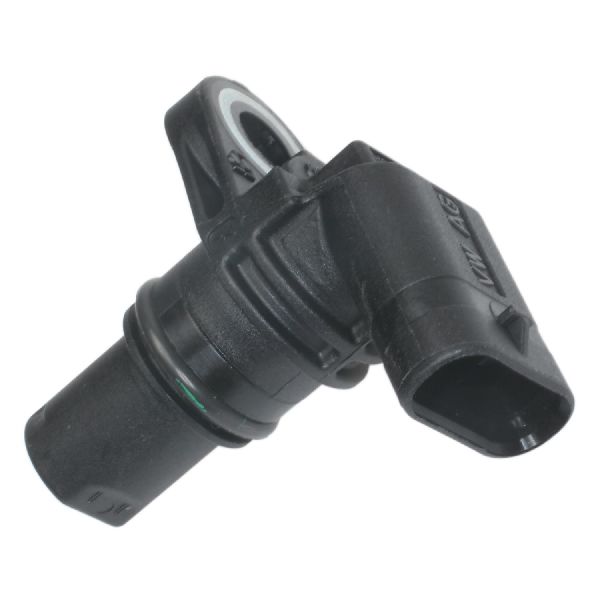
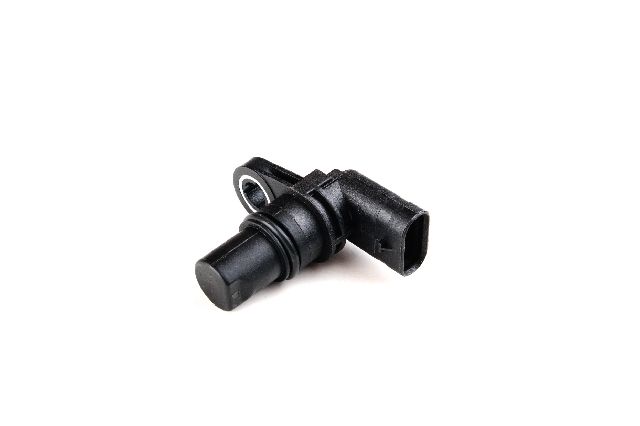
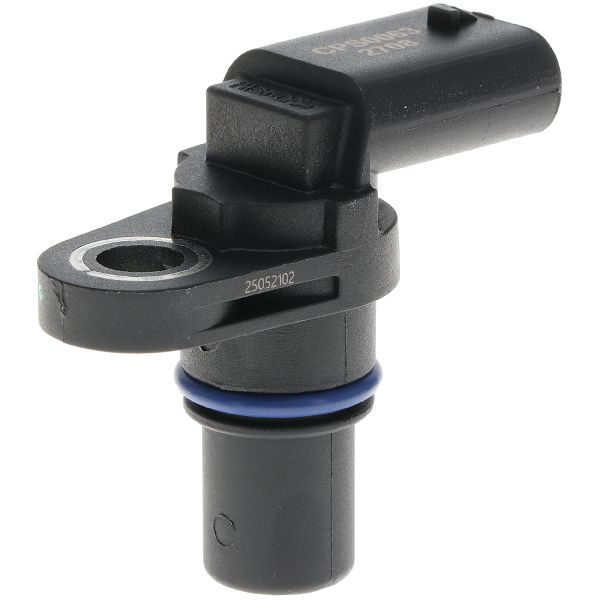
- Faulty Camshaft Position Sensor (G40): → Shop Engine Camshaft Position Sensor While less common than the N205 solenoid, the sensor that reads the camshaft's position can fail and send incorrect data to the ECM, causing it to misdiagnose the timing.
- Failed Camshaft Phaser / Adjuster Unit: → Shop Engine Camshaft The mechanical adjuster on the end of the camshaft can fail internally, getting stuck in an advanced position. This is usually diagnosed after all other more common causes have been ruled out.
Diagnosis Steps
- Confirm the code. If your tool shows P0021, understand it's an error and proceed with diagnosing for P0011.
- Check engine oil level and condition. If low, dirty, or overdue for a change, perform an oil change with VW 502 00 spec oil and clear the code. This resolves the issue in many cases.
- Listen for a brief (1-3 second) rattle from the right side of the engine on a cold start. A rattle is a strong indicator of a failing timing chain tensioner and requires immediate professional inspection.
- If the oil is good and there's no rattle, the next step is to inspect the N205 Camshaft Adjuster Magnet. Remove the three T30 bolts holding it to the upper timing cover.
- Inspect the N205 valve's screens for sludge or debris. If debris is present, the camshaft bridge screen has likely failed.
- Shake the N205 valve. A good valve's internal piston will rattle freely. If it's silent or sluggish, it is stuck and must be replaced.
- If using VCDS or a compatible scan tool, check the 'Phase position intake Bank 1' value. A reading beyond -5 degrees at warm idle points towards a stretched timing chain.
- If the N205 valve is clean and appears functional, and the timing chain is within spec, the next step is to have a mechanic inspect the camshaft bridge itself for a failed screen.
- If all mechanical and oil-related components are good, test the wiring to the N205 solenoid and the Camshaft Position Sensor.
Parts You'll Likely Need
- Camshaft Adjuster Magnet (N205 Valve)
(OEM #06H109257C)— This is the most common part to fail for this code. It gets clogged with oil sludge or fails electrically, preventing correct VVT operation.
Trusted brands: Genuine VW/Audi, Bosch, Pierburg
OEM price range: $120-$180
Aftermarket price range: $40-$90 - Engine Oil and Filter Kit — Low or dirty oil is a primary cause of all VVT system faults. An oil change is the first and most important step.
Trusted brands: Liqui Moly, Motul, Castrol EDGE, Mann-Filter
OEM price range: $80-$120
Aftermarket price range: $60-$90 - Timing Chain Kit — Required if diagnosis confirms a stretched chain or failed tensioner, a critical issue on 2009-2012 models.
Trusted brands: Iwis, FCP Euro Kit, INA
OEM price range: $500-$1000
Aftermarket price range: $300-$600
Related Codes That Often Appear With This One
- P0011 — This is the correct code for the described fault on this engine. If you see P0021, you should assume the problem is actually P0011.
- P0016 — Crankshaft Position - Camshaft Position Correlation (Bank 1 Sensor A). Seeing this with P0011 strongly suggests a mechanical timing issue like a stretched timing chain or jumped tooth, as the crank and cam are no longer synchronized.
- P000A — 'A' Camshaft Position Slow Response (Bank 1). This often appears with P0011 because the underlying cause (clogged solenoid, low oil pressure) prevents the camshaft from adjusting its timing as quickly as the ECM expects.
Technical Service Bulletins (TSBs) & Recalls
- TT 01-15-08 (Referenced in NHTSA documents) - Discusses issues with the intake camshaft, adjuster bridge, and spool valve on 2.0T engines, relevant to P0011.
Platform-Specific Known Issues
- Timing Chain Tensioner Failure: Models from 2009-2012 are equipped with a tensioner design that is known to fail without warning, causing the timing chain to jump. A cold-start rattle is the primary symptom. An updated tensioner is available and is a critical preventative maintenance item.
- Camshaft Bridge Screen Failure: The oil screen integrated into the camshaft bridge is known to break apart, sending plastic and metal debris into the VVT system and causing blockages that trigger P0011.
Mechanic-Grade Diagnostic Values
- Camshaft adaptation intake bank 1: phase position (VCDS) — expected: Between 0° and -5.0° at warm idle.. Failure: A value greater (more negative) than -5.0°, such as -6.0° or -7.0°, indicates significant timing chain stretch.
- N205 Camshaft Adjuster Solenoid Internal Resistance — expected: 5.0 to 8.0 Ohms at approx. 20°C (68°F). Some sources state a tighter range of 6.9 to 7.9 Ohms.. Failure: A reading outside this range, or an open circuit (infinite resistance), indicates a failed solenoid coil.
- N205 Solenoid Connector Voltage — expected: Battery voltage at terminal 1 of the harness connector with the ignition on.. Failure: No voltage indicates a wiring issue, a blown fuse (check fuse SB7), or a problem with the Motronic Engine Control Module Power Supply Relay (J271).
- N205 Solenoid Harness to ECM Resistance — expected: Maximum of 1.5 Ohms.. Failure: A higher resistance reading indicates a problem in the wiring harness between the N205 connector (terminal 2) and the ECM connector (T60, terminal 20).
Scan Tool Commands That Help
- VCDS (VAG-COM): Engine -> Output Tests — To sequentially activate various components, including the N205 Camshaft Adjustment Valve. You should hear an audible click from the valve when it's activated, confirming the electrical circuit and the solenoid's basic function.
- VCDS (VAG-COM): Engine -> Basic Settings -> Group 094 (Intake Cam) — To perform a functional test of the entire intake cam adjustment system. With the engine warm and idling, activate the test and press both the brake and throttle pedals. The engine RPM will rise, and field 3 should display 'Test ON' and then 'Syst. OK'. This confirms the mechanical phaser is responding to commands.
Wiring & Ground Locations
- N205 Connector — Front and center of the upper timing chain cover, just to the left of the oil filter housing.. This is the primary electrical connection for the component that controls intake cam timing. Pin 1 is power from the J271 relay, and Pin 2 is the control signal from the ECM (T60, pin 20).
- Engine Block Ground — Main ground strap from the engine block to the chassis, typically on the left (driver's side) of the engine compartment.. A poor engine ground can cause erratic behavior in all engine sensors and actuators, including the N205 solenoid and camshaft position sensor, leading to incorrect readings and fault codes.
- Fuse SB7 — In the E-box (fuse box) in the engine compartment plenum chamber.. This fuse provides power to the N205 valve. If it is blown, the valve will have no power and cannot function.
Real Owner Repair Stories
- AudiWorld Forums User (2011 Audi A4) — Rough idle, poor acceleration, rattling from engine, EPC light followed by CEL.
❌ Tried (didn't work) Replaced timing chain and tensioner., Replaced camshaft bridge due to a broken screen.
✅ What actually fixed it After the timing job did not resolve the codes (P0016, P0011, P000A), the final fix was replacing both the N205 VVT Solenoid and the Camshaft Position Sensor.
OEM Part Supersession History
06H-109-467 (and other early revisions)→06K-109-467-K (and later revisions)— The original timing chain tensioner design was prone to premature failure due to a weak retaining clip, allowing the piston to retract and the chain to lose tension. The new design is more robust.
Heads up: The old style tensioner (identifiable by a band-style clip) should always be replaced with the new style during any timing service.06H109257A / 06H109257B→06H109257C— Revisions to improve reliability and performance of the camshaft adjuster solenoid.
Heads up: 06H109257C is the standard, reliable replacement for the EA888 Gen 2 engine.06H103144J / 06H103144K→06L103144H (For Gen 3 EA888)— Design updates for the next generation of the EA888 engine.
Heads up: While J and K revisions are for the B8/B8.5, later part numbers like 06L103144F/H are for the Gen 3 EA888 engine and may not be backward compatible. Always verify with VIN.
Model Year Variations Within This Range
- 2009-2013: These model years were predominantly fitted with the original, failure-prone timing chain tensioner (P/N starting with 06H). A startup rattle on these cars is a critical symptom demanding immediate inspection of the tensioner through the lower timing cover inspection port.
- 2014-2016: These later B8.5 models were more likely to be fitted from the factory with the updated, more reliable timing chain tensioner (P/N starting with 06K). While chain stretch can still occur, catastrophic tensioner failure is less common than in earlier years.
Diagnostic Flowchart
Other Known Issues on This Vehicle
Issues unrelated to this code that are worth knowing about as an owner of this generation:
- Excessive Oil Consumption 🔴 High — Extremely common, especially on 2009-2011 models with CAEB engine code. Can start as early as 60,000 miles. Consumption rates of 1 quart per 1,000 miles are often seen. (Ref: A class-action lawsuit and subsequent settlement addressed this, but for many owners, the issue persists. The initial fix involved a new PCV valve and software update, followed by piston/ring replacement if consumption continued.)
- PCV Valve Failure 🟠 Medium — Common failure item. Can lead to whistling noises, rough idle, lean codes (P2187), and increased oil consumption. (Ref: Audi released updated PCV (oil separator) part numbers to address the issue. The latest revision is often recommended as a preventative measure.)
- Water Pump Failure 🔴 High — Very common across all B8/B8.5 model years. The plastic housing is prone to cracking and leaking coolant. Failure can occur with little warning. (Ref: No recall, but it's a widely acknowledged failure. Many owners preemptively replace it or upgrade to an aftermarket all-aluminum housing, though even those can fail if the underlying oil leaks causing gasket failure are not addressed.)
- Carbon Buildup on Intake Valves 🟠 Medium — As a direct-injection engine, all EA888s are susceptible. Symptoms like misfires and reduced performance typically appear after 60,000-80,000 miles.
- Ignition Coil Failure 🟡 Low — A common maintenance item that fails, causing misfires. Relatively inexpensive and easy to replace.
Used vs. New Parts: Buying Guide for This Vehicle
When a used part is the smart pick: Using a tested, used N205 solenoid from a low-mileage vehicle can be a cost-effective way to diagnose a problem. If swapping the used part resolves the code, you can then purchase a new part for the permanent repair. Most other parts in this repair are not recommended to be sourced used.
Donor-vehicle mileage cap: roughly under 60000 miles for the part to have meaningful remaining life.
What to inspect on the donor part:
- For an N205 solenoid, ensure the screens are perfectly clean and intact.
- Shake the solenoid; the internal piston should rattle freely and sharply. A sluggish or silent valve is bad.
- Visually inspect the donor vehicle's oil fill cap for signs of heavy sludge, which would indicate poor maintenance and potential contamination of all VVT parts.
OEM-only on this vehicle (don't cheap out):
- Timing Chain
- Timing Chain Tensioner
- Timing Chain Guides
Aftermarket brands forum-validated for this vehicle:
- INA (often the OEM supplier for timing components)
- Pierburg (for solenoids)
- Bosch (for solenoids and sensors)
- Iwis (for timing chains)
Brands owners have reported issues with on this vehicle:
- Unbranded, 'white-box' parts from online marketplaces for any timing system component. The labor cost for this job is too high to risk using parts with questionable quality control.
Real Owner Stories
Aggregated from forums and TSBs cited above. Mileages and costs reflect what owners reported in those sources.
2009 Audi A4 2.0T
Symptoms: P0011 code, rough idle, and stalling. Cam timing reported as over-advanced.
What fixed it: Diagnosis of cam timing over-advanced issues often involves checking the N205 valve and camshaft bridge screen.
Source hint: https://www.audizine.com/forum/showthread.php/585943-P0011-and-rough-idle-and-stalling-Cam-timing-over-advanced
2011 Audi A4 2.0T — ~60000 miles
Symptoms: Excessive oil consumption reaching rates of 1 quart per 1,000 miles.
What fixed it: This issue was addressed via a class-action lawsuit and settlement specifically for the CAEB engine code.
Source hint: vehicle_specific_issues
Audi S4 Owner Report
Symptoms: Multiple cylinder misfires and P0021 (Cam Timing Adjust Bank 2 Not Reached).
What fixed it: NHTSA ODI #10262201 describes a situation where an owner encountered misfires on cylinders 4, 5, 6, and 7 along with the P0021 code; while the codes were cleared for a test drive, the underlying timing adjustment failure remained a concern.
Source hint: NHTSA ODI #10262201
Related OBD-II Codes
Frequently Asked Questions
My scanner shows P0021 on my 2012 Audi A4, but the article mentions P0011. Which is it?
Is there a specific technical service bulletin for the intake camshaft and adjuster bridge issues?
What specific oil should I use to prevent VVT sludge in my 2014 A4?
How can I check if my timing chain is stretched without taking the engine apart?
I found plastic debris in my N205 solenoid. What does this mean for my camshaft bridge?
My 2010 A4 has a loud rattle for two seconds on cold starts. Is this related to P0021?
Helpful Videos
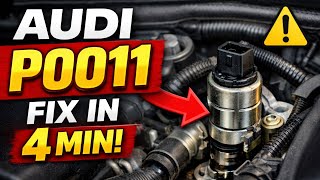
![How to Fix AUDI P0011 Engine Code in 4 Minutes [1 DIY Method / Only $19.45]](https://img.youtube.com/vi/Y4peZ3j8rog/mqdefault.jpg)
We Have This Part in Stock


The information in this article is provided for general reference and educational purposes only. Vehicle specifications, procedures, and part compatibility can vary by production date, trim level, and region. Always consult your vehicle's factory service manual and verify part numbers before purchasing or performing repairs. Safety-critical components such as airbags, seat belts, and braking systems should be installed by a qualified professional.
- Audi A4:
- 🧭 Diagnostic Flowchart
- 🎬 Helpful Videos
- 🛍️ Shop This Part
- What's Unique About the 2009-2016 Audi A4
- Symptoms You May Notice
- Most Likely Causes
- Rare But Worth Checking
- Diagnosis Steps
- Parts You'll Likely Need
- Related Codes That Often Appear With This One
- Technical Service Bulletins (TSBs) & Recalls
- Platform-Specific Known Issues
- Mechanic-Grade Diagnostic Values
- Scan Tool Commands That Help
- Wiring & Ground Locations
- Real Owner Repair Stories
- OEM Part Supersession History
- Model Year Variations Within This Range
- Other Known Issues on This Vehicle
- Used vs. New Parts: Buying Guide for This Vehicle
- Real Owner Stories
- 2009 Audi A4 2.0T
- 2011 Audi A4 2.0T — ~60000 miles
- Audi S4 Owner Report
- Related OBD-II Codes
- Frequently Asked Questions
- 🎟️ Get 5% Off