

P0021 on 2013-2018 Cadillac ATS 3.6L V6: Causes and Fixes for Over-Advanced Cam Timing
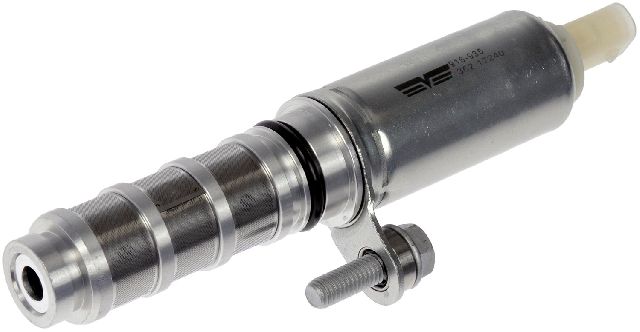
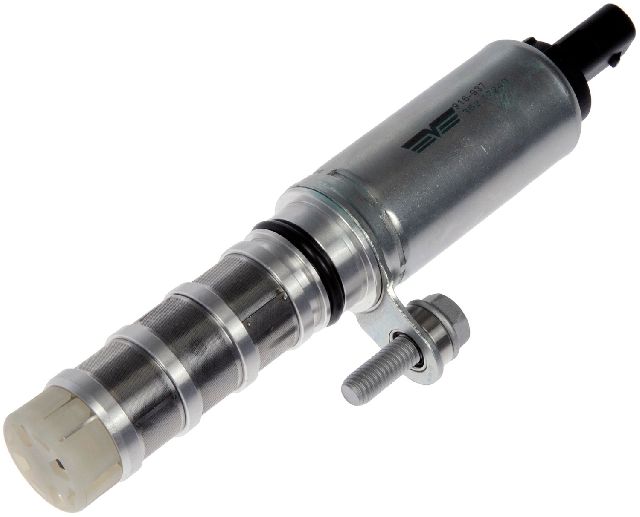
On the Cadillac ATS 3.6L V6, code P0021 is most often caused by a faulty Bank 2 (driver's side) intake camshaft actuator solenoid. Before replacing parts, always check that the engine oil is clean, full, and meets dexos specifications. A replacement ACDelco solenoid costs between $40 and $100 and is a simple DIY fix for many owners. For some 2018+ models with the LGX engine, an ECM software update may be required to fix the code, especially if it appears after an auto-stop/start event.
- P0021 on the ATS 3.6L V6 specifically points to the intake camshaft on the driver's side.
- Always check your engine oil level and condition first; low or dirty oil is a common cause of VVT problems.
- The most likely failed part is the camshaft actuator solenoid, which is a relatively inexpensive and easy part to replace.
- For 2013-2015 models, be aware of TSB PIP5096C, which may require a specific service part for the solenoid.
- While this engine is known for timing chain issues, P0021 by itself is not a strong indicator of that failure; look for it in combination with codes like P0008 or P0018.
What's Unique About the 2013-2018 Cadillac ATS
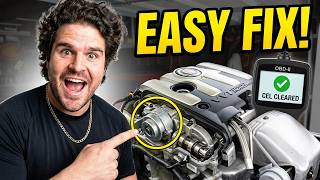
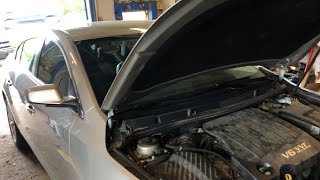
The GM 3.6L V6 engine family (LFX/LGX) has a well-documented history of issues related to its Variable Valve Timing (VVT) system. For the 2013-2015 LFX models specifically, GM issued a Technical Service Bulletin (PIP5096C) that advises technicians to check for a specific engine build sticker before replacing parts, as a special 'service' solenoid from a different supplier may be required to fix the code due to manufacturing tolerance differences. It's also common for this code to appear with other VVT codes (P0011, P0014, P0024), indicating a potential systemic sensitivity that GM has investigated under TSB PIP5568E. 🎬 Watch: A mechanic explains what these GM timing codes actually mean. For later LGX engines (2016+), some instances of P0021 are caused by a software anomaly related to auto stop/start events, requiring an ECM reprogram rather than a part replacement.
Diagnostic Flowchart
Tap your situation to follow the diagnostic path that matches what you're seeing on this vehicle.
Generation note: This range covers two versions of the 3.6L V6 engine: the LFX (2013-2015) and the updated LGX (2016-2018). While the root causes and diagnostic procedures for P0021 are nearly identical, the specific part numbers for the VVT solenoids may differ. TSB PIP5096C is specific to the LFX engine concerning a special service part. The LGX engine in 2018+ models may have software-related issues causing the code. Always verify parts with your vehicle's VIN.
Symptoms You May Notice
- Check Engine Light is on
- Rough, unstable idle
- Engine stalling, especially when coming to a stop or after an auto-stop event
- Hesitation or lack of power during acceleration
- Reduced fuel economy
- Hard starting
- Rattling, knocking, or ticking noises from the engine
- Replacing the camshaft position sensor. The sensor is usually reporting the timing problem correctly; it is rarely the cause of an over-advanced timing issue. The code indicates a performance problem with the timing system, not a circuit fault with the sensor itself.
- Immediately assuming a stretched timing chain. For an isolated P0021 code, the solenoid is a much more probable and cheaper fix to attempt first, especially on the LFX and LGX engines which are less prone to chain stretch than their LLT predecessor.
Most Likely Causes
- Faulty Bank 2 Intake Camshaft Position Actuator Solenoid 🔴 High Probability → Shop Engine Camshaft These solenoids operate using engine oil and can become clogged with sludge or fail electrically over time. TSB PIP5096C specifically addresses a known issue with these solenoids on 2013-2015 models requiring a revised part due to a clearance issue. The solenoids have fine mesh screens that can get blocked by debris from infrequent oil changes.
How to confirm: Swap the Bank 2 intake solenoid with the Bank 2 exhaust solenoid. If the code changes to P0024 (Exhaust Camshaft Position System Performance Bank 2), the solenoid is bad. You can also test the solenoid's resistance with a multimeter (should be 6-12 ohms) or by applying 12V to see if it actuates with an audible click. TSB PIP5096C explicitly warns *against* swapping solenoids for diagnosis on affected 2013-2015 engines, as the service part is different.
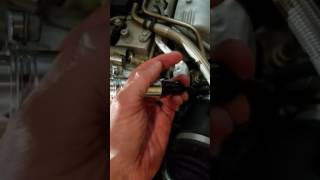
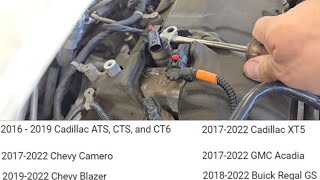
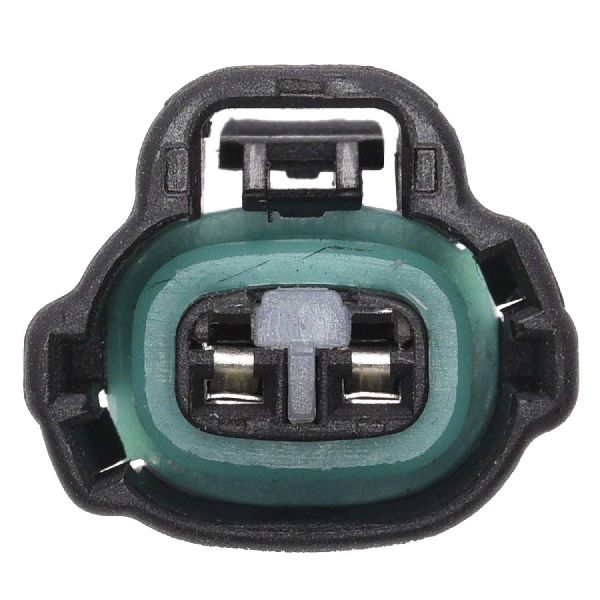
Typical fix: Replace the Bank 2 (driver's side) intake camshaft position actuator solenoid. The repair involves removing a single 10mm bolt and an electrical connector. Many owners choose to replace both the intake and exhaust solenoids on the affected bank simultaneously as a preventative measure.
Est. part cost: $40-$100 - Low or Dirty Engine Oil 🟡 Medium Probability The entire VVT system is hydraulic and highly dependent on oil pressure and cleanliness. Extended oil change intervals or using the wrong oil viscosity can cause solenoids to stick or respond slowly. A Reddit user with a 2017 Camaro (LGX engine) reported that codes P0011 and P0021 were resolved simply by getting an oil change because the old oil was 'dirty and sludgy'.
How to confirm: Check the engine oil dipstick. The oil should be at the full mark and have a clear, amber color. Dark, thick, or gritty oil is a problem.
Typical fix: Perform an engine oil and filter change using a full synthetic oil that meets GM's dexos specification (typically 5W-30). Clear the codes and see if the problem returns.
Est. part cost: $50-$100 - Outdated Engine Control Module (ECM) Software ⚪ Low Probability → Shop Engine Control Module (ECM) For 2018 and newer models with the LGX engine, GM has identified a software anomaly that can cause multiple VVT codes (including P0021) to set after an auto stop/start event, sometimes causing drivability issues. TSB PIP5568E details this investigation.
How to confirm: A GM dealership or a qualified shop with access to GM's TIS2Web programming tools can check if the vehicle's VIN is affected and if the ECM has the latest software version.
Typical fix: Reprogram the Engine Control Module (ECM) with the updated software. According to the related TSBs, no parts replacement is needed for this specific issue.
Est. part cost: $0-$200 (dealer labor)
Rare But Worth Checking
- Stretched Timing Chain: → Shop Engine Timing Chain While the earlier GM 3.6L LLT engine was notorious for timing chain issues, the LFX and LGX are improved but not immune, especially with poor oil maintenance. This problem usually triggers more severe correlation codes like P0008, P0009, or P0017/P0019 first. If P0021 appears alone, the chain is a less likely cause but should be considered if replacing the solenoid doesn't fix the issue, especially on higher-mileage vehicles or if a startup rattle is present.
- Failed Camshaft Phaser: → Shop Engine Camshaft The phaser is the mechanical gear that the solenoid controls. It can become mechanically stuck due to sludge or internal failure. This is less common than a solenoid failure and is a more complex and expensive repair.
Diagnosis Steps
- Check Engine Oil: Verify the oil level is full and the oil is clean. If low, dirty, or overdue for a change, perform an oil and filter change with the correct dexos-spec synthetic oil, clear the code, and retest.
- Scan for Other Codes: Note if other codes like P0011, P0014, or P0024 are present, as this is a known pattern per TSB PIP5568E and may point to a systemic issue.
- Inspect the Solenoid Connector: Locate the Bank 2 (driver's side) intake VVT solenoid on the front of the valve cover. Ensure its electrical connector is secure and the wiring is not damaged or contaminated with oil.
- (For 2013-2015 LFX models) Check EUN Sticker: Per TSB PIP5096C, if there are no other drivability concerns, locate the Engine Unit Number sticker on the driver's side of the block. If an 'A' is present before the sequence number, the TSB recommends replacing the solenoid with a specific 'service' part and warns against swapping solenoids for diagnosis.
- Test the Solenoid: A common DIY method (if TSB PIP5096C does not apply) is to swap the intake solenoid with the exhaust solenoid on the same bank. Clear the codes and drive the vehicle. If the code changes to P0024, the original intake solenoid is confirmed to be faulty.
- Replace the Solenoid: If the solenoid is confirmed to be faulty, replace it. This is a simple repair requiring only basic hand tools, typically a 10mm socket.
- Check for ECM Updates (LGX models): If the code persists, especially on a 2018+ model, consult a GM dealer to check for and apply any available ECM software updates related to VVT performance.
- Advanced Diagnosis: If a new solenoid, clean oil, and updated software do not resolve the code, the issue may be more complex, such as a failing camshaft phaser or a stretched timing chain, which requires professional diagnosis.
Parts You'll Likely Need
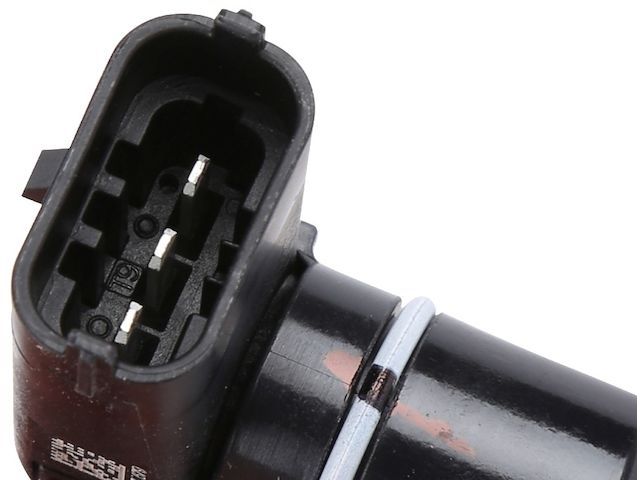
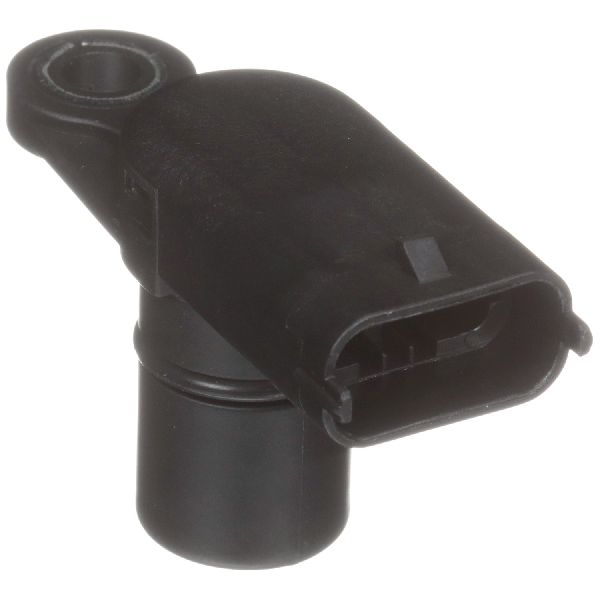
- Intake Camshaft Position Actuator Solenoid (VVT Solenoid)
(OEM #12655420 (Verify by VIN, may differ for LFX/LGX or by TSB))— This solenoid is the most common failure point for an isolated P0021 code. It gets clogged with oil debris or fails electrically, preventing correct camshaft timing adjustment.
Trusted brands: ACDelco, Delphi
OEM price range: $60-$100
Aftermarket price range: $30-$70
Related Codes That Often Appear With This One
- P0011 — Intake Camshaft Position Timing - Over-Advanced (Bank 1). Indicates a similar issue on the opposite engine bank. Seeing both together strongly suggests a systemic issue like low/dirty oil or an ECM software problem.
- P0014 — Exhaust Camshaft Position Timing - Over-Advanced (Bank 1). GM TSBs indicate these codes often set in groups, pointing to a systemic VVT issue.
- P0024 — Exhaust Camshaft Position Timing - Over-Advanced (Bank 2). This points to the exhaust cam on the same bank, suggesting a localized problem like oil flow to the Bank 2 cylinder head or a wiring issue.
Technical Service Bulletins (TSBs) & Recalls
- PIP5568E: Preliminary information on investigation into DTCs P0011, P0014, P0021, P0024 setting together.
- PIP5096C: Diagnostic advice for DTCs P0011, P0014, P0021, or P0024 with no drivability concerns on 2013-2015 models.
- PIP5568B: Earlier version of the preliminary investigation into grouped VVT codes.
Platform-Specific Known Issues
- TSB #PIP5096C: For 2013-2015 models with P0021 and no other symptoms, this bulletin advises checking the engine's EUN sticker. If an 'A' is present, a specific 'service' solenoid from a different supplier should be used for the
Mechanic-Grade Diagnostic Values
- Camshaft Position Actuator (VVT) Solenoid Resistance — expected: 6.9 to 7.9 Ohms at 68°F (20°C) per some sources, while others state a wider range of 6 to 12 Ohms is acceptable.. Failure: A reading of 0 Ohms (short circuit), infinite/O.L. (open circuit), or very high resistance (Megaohms) indicates a failed solenoid.
- Scan Tool - Desired vs. Actual Camshaft Position Angle — expected: The actual camshaft position angle should closely match the desired angle commanded by the ECM. The values will change dynamically with engine speed and load.. Failure: The ECM triggers P0021 when it detects the difference between the desired and actual camshaft position angle is greater than 5 degrees for more than 2.5 seconds.
- ECM Connector C1, Pin 12 - Bank 2 Intake Cam Actuator Solenoid Control Circuit — expected: This pin is where the ECM sends the control signal to the solenoid. Testing here can verify circuit integrity back to the ECM.. Failure: An open or short on this circuit will prevent the solenoid from functioning correctly.
Scan Tool Commands That Help
- GDS2 (GM Dealer Scan Tool): Camshaft Position Actuator Solenoid Control — A technician can use this bidirectional command to manually activate the Bank 2 intake solenoid and observe the engine's response and the change in actual cam position data. This directly tests the solenoid's mechanical and electrical function without removal.
Wiring & Ground Locations
- G104 / G109 (3.6L) — On the front of the right cylinder head (Bank 1 side, but part of the main engine ground scheme).. While on the opposite bank, engine grounds are critical for all sensors and actuators. A poor ground here can introduce electrical noise and cause erratic behavior in sensor readings and actuator commands across the engine.
- G110 (3.6L LFX) — On the left rear of the engine (Bank 2), above the exhaust manifold.. This is a primary ground for Bank 2. A loose or corroded G110 could directly impact the reference voltage or signal integrity for the Bank 2 camshaft sensor and VVT solenoid, leading to incorrect readings or performance.
- ECM Connector C1, Pin 12 — The Engine Control Module (ECM) is located on the right front of the engine compartment. Pin 12 of the C1 connector is the specific control circuit for the Bank 2 Intake Cam Actuator Solenoid.. This is the final destination for the solenoid's control wire. Testing for continuity and voltage at this pin can isolate a wiring fault between the ECM and the solenoid.
Real Owner Repair Stories
- Camaro6 Forums (2016+ Chevrolet Camaro 3.6L LGX (engine shared with ATS)) — Check Engine Light with code P0014 (Bank 1 Exhaust, a related VVT code). The light would appear intermittently.
❌ Tried (didn't work) Ignoring the code, as it would sometimes turn off on its own.
✅ What actually fixed it The owner replaced the corresponding Bank 1 exhaust VVT solenoid (GM Part #12687167). They confirmed they were on the correct bank by disconnecting the solenoid on the wrong side (Bank 2) and getting an 'open circuit' code, confirming Bank 1 was the passenger side.
OEM Part Supersession History
12655420→12679099— Standard part evolution for design improvements or supplier changes.
Heads up: While 12655420 is widely listed for the 3.6L V6, it is also listed for many 2.0L, 2.2L, and 2.4L 4-cylinder engines, indicating it's a common GM part. TSB PIP5096C for the LFX engine implies that a standard replacement may not fix certain vehicles, and a special, unspecified 'service' part number is required.12626012→12636175— Standard part evolution.
Heads up: Part number 12636175 is another VVT solenoid listed for the 2013-2019 ATS 3.6L, which also replaces older numbers like 12586722 and 12615613. This highlights the importance of verifying the correct part number by VIN, as multiple designs and supersessions exist.
Model Year Variations Within This Range
- 2013-2015 (LFX Engine): These models have cylinder heads with integrated exhaust manifolds and are subject to TSB PIP5096C, which may require a special 'service' solenoid to correct for manufacturing tolerances causing VVT codes.
- 2016-2018 (LGX Engine): The LGX is a significant redesign, sharing very little with the LFX. It features an all-new cylinder head design, improved VVT with an 'intermediate park' feature, Active Fuel Management, and a variable displacement oil pump. These changes mean that while the P0021 code's meaning is the same, the contributing factors (like software glitches related to auto-stop) can be different.
Helpful Videos
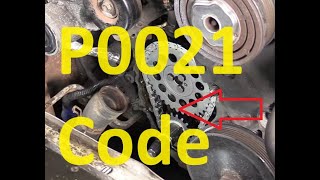

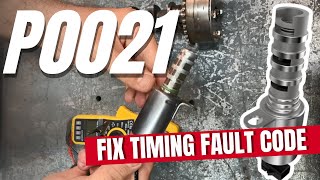

We Have This Part in Stock


The information in this article is provided for general reference and educational purposes only. Vehicle specifications, procedures, and part compatibility can vary by production date, trim level, and region. Always consult your vehicle's factory service manual and verify part numbers before purchasing or performing repairs. Safety-critical components such as airbags, seat belts, and braking systems should be installed by a qualified professional.
- Cadillac ATS:
- 🧭 Diagnostic Flowchart
- 🎬 Helpful Videos
- 🛍️ Shop This Part
- What's Unique About the 2013-2018 Cadillac ATS
- Symptoms You May Notice
- Most Likely Causes
- Rare But Worth Checking
- Diagnosis Steps
- Parts You'll Likely Need
- Related Codes That Often Appear With This One
- Technical Service Bulletins (TSBs) & Recalls
- Platform-Specific Known Issues
- Mechanic-Grade Diagnostic Values
- Scan Tool Commands That Help
- Wiring & Ground Locations
- Real Owner Repair Stories
- OEM Part Supersession History
- Model Year Variations Within This Range
- 🎟️ Get 5% Off