

P0021 on 2017-2024 Chrysler Pacifica 3.6L: Causes and Fixes for Over-Advanced Camshaft Timing
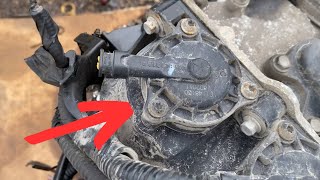
For a P0021 code on a 2017-2024 Chrysler Pacifica, the issue is most often caused by low or dirty engine oil. If an oil change with the correct 5W-20 synthetic oil doesn't fix it, the next most likely cause is a faulty Bank 2 (front) intake VVT solenoid, which is a relatively affordable part (~$30-$90) and accessible for DIY replacement. It is located on the front valve cover, held by three Torx bolts.
- Always check your engine oil first. An oil and filter change with the correct full synthetic 5W-20 oil is the most likely and cheapest fix.
- The Bank 2 VVT intake solenoid (front of the engine) is the most likely part to have failed. Use the 'solenoid swap' method to confirm before buying a new part.
- Do not replace the camshaft position sensor; it is almost never the cause of a P0021 code.
- If you hear a loud ticking or rattling from the engine, stop driving and have it inspected by a professional, as this could signal a more serious internal engine problem like a failing cam phaser or rocker arm.
What's Unique About the 2017-2024 Chrysler Pacifica
The 3.6L Pentastar V6 engine uses a dual overhead cam (DOHC) design with Variable Valve Timing (VVT) on all four camshafts. This system is hydraulically operated, making it extremely sensitive to engine oil pressure, level, and cleanliness. As a result, VVT-related codes like P0021 are very frequently traced back to basic oil maintenance issues. While generally reliable, the Pentastar engine family has known issues with valvetrain components like rocker arms ('Pentastar Tick') and the plastic oil filter housing assembly, both of which can cause oil pressure/contamination issues that directly lead to timing codes like P0021.
Symptoms You May Notice
- Check Engine Light is on
- Rough or unstable idle
- Engine hesitation or stalling, especially at low speeds or when stopping
- Reduced engine power and acceleration
- Rattling or knocking noise from the engine, especially on startup or under load
- Decreased fuel economy
- Hard starting
- Replacing the camshaft position sensor. The sensor is the messenger, not the cause. A P0021 code indicates the sensor is working correctly and has detected a mechanical timing issue.
Most Likely Causes
- Low, Dirty, or Incorrect Viscosity Engine Oil 🔴 High Probability The Pentastar's VVT system uses oil pressure to change cam timing. Low levels, contamination from extended change intervals, or using oil other than the specified SAE 5W-20 can clog the small passages in the VVT solenoids and cam phasers. Sludge is a primary enemy of this system.
How to confirm: Check the oil dipstick for level and examine the oil's color and consistency. If it is low, dark, or sludgy, it needs to be changed. This is the first and most important check.
Typical fix: Perform an engine oil and filter change using a quality full synthetic oil that meets the Mopar MS-6395 specification and the correct SAE 5W-20 viscosity. In cases of heavy sludge, an engine flush may be recommended before the oil change.
Est. part cost: $40-$80 - Failed VVT Solenoid (Oil Control Valve) 🟡 Medium Probability The solenoid is an electro-hydraulic valve that can fail electrically or, more commonly, get stuck due to debris or sludge from engine oil. Its small internal screens can become clogged, preventing proper oil flow. This is the most common component failure for this code.
How to confirm: The most effective DIY test is to swap the Bank 2 (front) intake VVT solenoid with the Bank 1 (rear) intake solenoid. Clear the codes and drive. If the code changes to P0011 (the equivalent code for Bank 1), the solenoid is confirmed to be faulty. You can also test the solenoid's resistance with a multimeter; a reading between 6.9 and 7.9 ohms is typical.
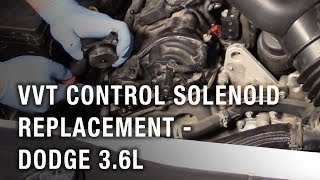
Typical fix: Replace the faulty VVT solenoid for Bank 2. It is located on the front of the valve cover and is held in by three Torx (T25) bolts. It is recommended to clean the port in the cylinder head before installing the new part.
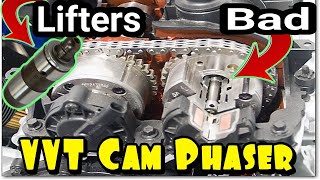
Est. part cost: $30-$90 - Failing Camshaft Phaser ⚪ Low Probability → Shop Engine Camshaft The cam phaser is a mechanical gear that can fail internally, often getting stuck due to sludge, wear, or failure of its internal locking pin. This is a more common issue on higher-mileage engines or those with a poor maintenance history, and may produce a rattling sound.
How to confirm: Diagnosis typically requires a professional. A mechanic will use a scan tool to monitor commanded vs. actual cam/crank correlation and may listen for specific rattling or knocking sounds from the top of the engine that indicate phaser failure.
Typical fix: Replacement of the Bank 2 intake camshaft phaser. This is a labor-intensive job that requires removing the timing cover and using special timing tools.
Est. part cost: $100-$250
Rare But Worth Checking
- Faulty Camshaft Position Sensor: → Shop Engine Camshaft Position Sensor This is rarely the cause. The sensor is usually accurately reporting the timing problem created by another component. Do not replace the sensor unless all other causes have been ruled out.
- Stretched Timing Chain or Failed Tensioner: → Shop Engine Timing Chain On very high-mileage engines, the timing chain can stretch, or the hydraulic tensioner can weaken, causing timing to be off. This is a major repair and is less common than phaser or solenoid issues.
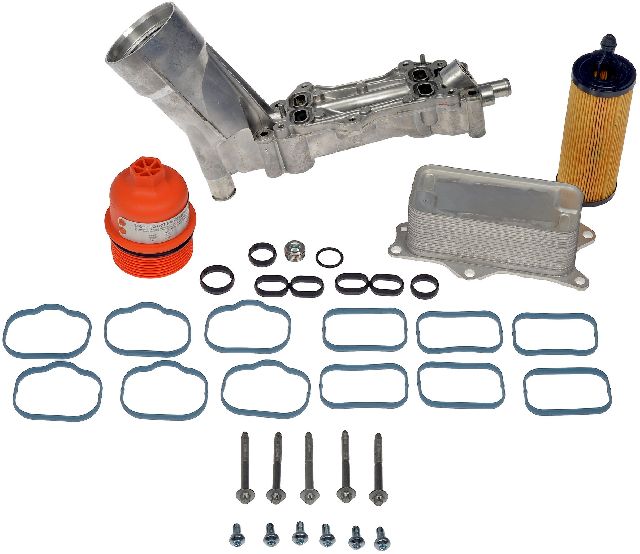
- Cracked Oil Filter Housing Assembly: → Shop Engine Oil Filter Adapter A significant oil leak from the known-to-fail plastic oil filter housing in the engine valley can cause a drop in overall oil pressure, starving the VVT system and triggering timing codes like P0021 and P0011.
Diagnosis Steps
- Check Engine Oil: Verify the oil level is correct and the oil is clean. If in doubt, perform an oil and filter change with SAE 5W-20 synthetic oil meeting Mopar MS-6395 specs. This is the most common fix.
- Scan for Other Codes: Use an OBD-II scanner to check for any other related codes (e.g., P0011, P0520) that might provide more diagnostic clues.
- Swap VVT Solenoids: Swap the Bank 2 (front) intake VVT solenoid with the Bank 1 (rear) intake solenoid. They are identical parts.
- Clear Codes and Test Drive: After swapping the solenoids, clear the codes and drive the vehicle. If the code returns as P0011, the solenoid you moved is faulty and must be replaced.
- Inspect Solenoid Wiring: If the code does not move, inspect the electrical connector and wiring for the Bank 2 intake solenoid for any damage, corrosion, or looseness.
- Listen for Engine Noise: Listen for a persistent, rhythmic ticking noise ('Pentastar Tick'). If present, this points towards a more serious internal valvetrain issue like failing rocker arms, which requires valve cover removal for inspection.
- Advanced Diagnosis: If the solenoid and wiring are good and there are no tell-tale noises, the problem is likely mechanical (cam phaser, timing chain) or a systemic oil pressure issue (e.g., leaking oil filter housing). This level of diagnosis should be performed by a professional.
Parts You'll Likely Need
- Intake/Exhaust VVT Solenoid (Oil Control Valve)
(OEM #05184150AF)— This is the most common part to fail for this code, either by getting stuck or failing electrically due to oil contamination.
Trusted brands: Mopar, Dorman, Standard Motor Products (SMP)
OEM price range: $50-$95
Aftermarket price range: $30-$60 - Engine Oil Filter and Oil — Correcting low, dirty, or incorrect viscosity oil is the first and most important step, and often resolves the code on its own.
Trusted brands: Mopar, Pennzoil, Mobil 1
OEM price range: $40-$80
Aftermarket price range: $40-$80
Related Codes That Often Appear With This One
- P0011 — This is the equivalent code for Bank 1. If both appear together, it points to a systemic issue like extremely low/dirty oil or low oil pressure from a failing oil pump or major leak affecting the entire engine.
- P000B — This code is for the exhaust camshaft on the same bank (Bank 2). If it appears with P0021, it may indicate a more significant oiling issue on that cylinder head or a problem with the timing chain affecting both cams.
- P0349 — This code indicates a problem with the Bank 2 camshaft position sensor circuit. If it appears with P0021, it could point to a wiring issue or a failing sensor, though the mechanical fault (P0021) should still be investigated first.
- P0520 — This is an Engine Oil Pressure Sensor code. Since the VVT system is entirely dependent on oil pressure, a fault in the oil pressure system (like a bad sensor or a major leak from the oil filter housing) can directly cause VVT codes like P0021.
Technical Service Bulletins (TSBs) & Recalls
- While no TSB is directly for P0021 on this model, related TSBs exist for the Pentastar platform. TSB 09-002-14 addre
Platform-Specific Known Issues
- The 3.6L Pentastar engine is known for a potential 'Pentastar tick' caused by failing rocker arm bearings. This can lead to camshaft damage and may present with VVT codes like P0021 as an early symptom. The failure can circulate metal debris in the oil, clogging VVT components. A class-action lawsuit has been filed over this issue.
- The plastic oil filter housing assembly, located in the valley of the engine, is a known weak point that can crack and leak oil. A significant leak can cause a drop in oil pressure, starving the VVT system and triggering timing codes. Owners on forums report this as a 'notorious' issue, sometimes costing over $1,000 to repair.
Mechanic-Grade Diagnostic Values
- VVT Solenoid (Oil Control Valve) internal resistance — expected: 6.9 to 7.9 Ohms at 68°F (20°C). Failure: A reading of OL (open circuit) or a value significantly outside this range indicates a failed solenoid coil.
- VVT Solenoid harness connector voltage (Key On, Engine Off) — expected: Approximately 12 volts (battery voltage) on one of the two pins.. Failure: No voltage suggests a blown fuse or a break in the power supply circuit.
- PCM diagnostic threshold for P0021 — expected: The PCM expects the camshaft position to be within a few degrees of the commanded position.. Failure: The code is set when the actual camshaft position is more than 10-20 degrees different from the desired position for several seconds.
Hidden / Shadow Codes Worth Checking
- Mode $06, TID $84: This refers to the onboard diagnostic test results for the Variable Valve Timing system. A failing value here can indicate an emerging problem with the VVT system on Bank 2 before the P0021 code becomes persistent. (see via A professional scan tool or an advanced OBD-II reader capable of displaying Mode $06 data.)
Scan Tool Commands That Help
- wiTECH (or equivalent professional scan tool): VVT Solenoid Actuator Test / VVT System Test — This bidirectional command allows a technician to manually activate the Bank 2 intake VVT solenoid while the engine is running. If activating the solenoid causes the engine to hesitate, run rough, or stall, it confirms the solenoid is mechanically capable of moving and that the oil passages are likely clear. If there is no change in engine operation, it points to a stuck solenoid, a clogged oil passage, or a wiring issue.
- wiTECH (or equivalent professional scan tool): View Cam/Crank Sync - Desired vs. Actual Position — This live data PID is crucial for diagnosis. It allows the technician to see the PCM's commanded camshaft angle in real-time versus the actual angle reported by the camshaft position sensor. For P0021, you would expect to see the 'Actual' value significantly higher (more advanced) than the 'Desired' value for the Bank 2 intake cam.
Wiring & Ground Locations
- Bank 2 VVT Solenoid Connector — On the front of the Bank 2 (front) valve cover, connecting to the intake VVT solenoid.. This is a 2-wire connector. Pin 1 is the control (driver) circuit from the PCM. Pin 2 is the power supply, typically receiving 12V from the ASD (Auto Shutdown) relay. Damage or corrosion here can cause an open or short, leading to P0020 (circuit code) or erratic solenoid behavior causing P0021.
- G305 / G306 (example) — While specific ground locations for the 2017+ Pacifica are hard to pinpoint from general searches, key engine grounds are typically located on the chassis behind the headlights or at the base of the B-pillar. A common ground point for many Chrysler vehicles is a multi-wire star connector behind the left front headlight assembly.. A corroded or loose main engine or body ground can cause a host of bizarre, seemingly unrelated electrical issues, including erratic sensor readings and module behavior. While not a direct cause of a mechanical timing fault, a bad ground can interfere with the PCM's ability to accurately control and monitor the VVT system, potentially leading to incorrect codes being set.
Real Owner Repair Stories
- Multiple forums and YouTube videos on 3.6L Pentastar engines (Various Chrysler/Dodge/Jeep vehicles with 3.6L Pentastar, typically over 80,000 miles.) — Persistent P0021 (or other bank equivalent) code, often accompanied by a rhythmic ticking noise ('Pentastar Tick').
❌ Tried (didn't work) Multiple oil changes., Replacing the VVT solenoid for Bank 2., Replacing the camshaft position sensor for Bank 2.
✅ What actually fixed it The root cause was found to be failed rocker arm bearings. The needle bearings from the failed rocker arm(s) circulated through the engine oil, repeatedly clogging the new VVT solenoid's filter screens. The final fix required removing the valve cover, identifying the failed rocker arms (by checking for play), and replacing all rocker arms and lifters on the affected bank. This is a significant mechanical repair.
OEM Part Supersession History
05184150AE (and earlier revisions)→05184150AF— Likely an internal design or material improvement to increase reliability and resistance to oil contamination and debris.
Heads up: While earlier revisions may fit, it is always recommended to use the latest part number (05184150AF) to ensure you have the most updated design.
Model Year Variations Within This Range
- 2017-2024: The 3.6L Pentastar engine in the Pacifica is the 'Upgraded' version (post-2016), which includes a two-stage Variable Valve Lift (VVL) system in addition to the existing Variable Valve Timing (VVT). This adds another layer of complexity, with four VVL solenoids located under the intake manifold. While P0021 is a VVT code, a failure in the related VVL system can cause similar symptoms and is another potential point of failure related to oil pressure and quality.
- 2021-2024: The 2021 model year brought a significant facelift and the introduction of available All-Wheel-Drive (AWD). While the core 3.6L engine and its VVT system remained the same, the AWD system adds complexity to the overall vehicle but does not directly change the diagnosis for a P0021 code.
Diagnostic Flowchart
Other Known Issues on This Vehicle
Issues unrelated to this code that are worth knowing about as an owner of this generation:
- Cracked Oil Filter Adapter / Cooler Housing Leak 🔴 High → Shop Engine Oil Filter Adapter — Very common, especially on models over 60,000 miles. The plastic housing can crack from heat cycles or over-tightening the filter cap.
- Rocker Arm / Lifter Failure ('Pentastar Tick') 🔴 High — Common across the Pentastar engine family. A rhythmic ticking noise is the primary symptom, caused by failed needle bearings in the rocker arms, which can lead to camshaft damage. (Ref: A class-action lawsuit was filed regarding this issue.)
- Engine Start-Stop (ESS) System Faults 🟠 Medium — Frequently reported by owners, often related to a failing auxiliary battery or sensor issues, causing the ESS system to become unavailable.
- Cylinder Head / Head Gasket Failure 🔴 High — Less common than oil leaks or rocker arms, but a known catastrophic failure. Often presents with misfire codes (like P0303) and unexplained coolant loss. Earlier Pentastars had a known cylinder head issue covered by TSB 09-002-14, though this specific TSB is less relevant to the 2017+ Pacifica.
- PCM Software Sensitivity 🟡 Low — The PCM can be overly sensitive and set false codes for minor issues. TSB #18-002-19 REV A was issued to update software to prevent false P0171/P0174 lean codes and P0369 cam sensor codes. (Ref: TSB #18-002-19 REV A)
Used vs. New Parts: Buying Guide for This Vehicle
When a used part is the smart pick: For this repair, using used parts is generally not recommended due to the nature of the common failures. The primary culprits (VVT solenoids, cam phasers, rocker arms) are all wear items that are highly sensitive to the previous owner's maintenance habits. A used part could fail quickly or bring contaminants into your engine.
Donor-vehicle mileage cap: roughly under 30000 miles for the part to have meaningful remaining life.
What to inspect on the donor part:
- If considering a used VVT solenoid, insist on seeing the donor vehicle's maintenance records to verify regular oil changes.
- Inspect the solenoid's filter screens meticulously. Any visible debris, sludge, or metallic particles is a major red flag.
- Never buy used internal engine components like cam phasers or rocker arms. The labor cost to replace them is too high to risk using a part with an unknown history.
OEM-only on this vehicle (don't cheap out):
- Camshaft Phasers: Aftermarket phasers have a high failure rate. The complexity and labor involved in this job make using an OEM Mopar part a strong recommendation to ensure longevity.
- Rocker Arms: Given the known issues with 'Pentastar Tick', using OEM Mopar rocker arms is critical to ensure the bearing quality is up to specification and to avoid a repeat failure.
Aftermarket brands forum-validated for this vehicle:
- Standard Motor Products (SMP)
- Dorman (for VVT Solenoids, though OEM is often preferred by professionals)
Brands owners have reported issues with on this vehicle:
- Unnamed, no-brand 'eBay special' or 'Amazon generic' VVT solenoids and cam phasers. These often have poor quality control and can fail out of the box or shortly after installation, leading to wasted time and money.
Real Owner Stories
Aggregated from forums and TSBs cited above. Mileages and costs reflect what owners reported in those sources.
2017 Chrysler Pacifica 3.6L Pentastar V6 — 72000 miles
Symptoms: Sudden, massive oil leak from the engine valley.
What fixed it: Replacement of the notorious oil filter housing/oil cooler assembly.
Cost: $1000-$1800
Source hint: reddit.com/r/ChryslerPacifica - Thread: 'Oil leak'
2017-2024 Chrysler Pacifica 3.6L Pentastar V6
Symptoms: Persistent, rhythmic ticking noise from the top of the engine (Pentastar Tick).
What fixed it: Tear down of the engine to replace destroyed rocker arms and camshafts.
Source hint: reddit.com/r/MechanicAdvice - Thread: '3.6L Pentastar rocker arm failure'
Related OBD-II Codes
Frequently Asked Questions
Can I use a different oil weight than 5W-20 in my 3.6L Pentastar to stop the P0021 code?
Is there a TSB for the P0021 code on the Chrysler Pacifica?
My Pacifica has a ticking noise and a P0021 code; are they related?
How can I tell if the VVT solenoid is the problem without buying a new part?
Could an oil leak cause this timing code on my 2017 Pacifica?
What is the resistance specification for testing the Pacifica's VVT solenoid?
Helpful Videos


We Have This Part in Stock


The information in this article is provided for general reference and educational purposes only. Vehicle specifications, procedures, and part compatibility can vary by production date, trim level, and region. Always consult your vehicle's factory service manual and verify part numbers before purchasing or performing repairs. Safety-critical components such as airbags, seat belts, and braking systems should be installed by a qualified professional.
- Chrysler Pacifica:
- 🧭 Diagnostic Flowchart
- 🎬 Helpful Videos
- 🛍️ Shop This Part
- What's Unique About the 2017-2024 Chrysler Pacifica
- Symptoms You May Notice
- Most Likely Causes
- Rare But Worth Checking
- Diagnosis Steps
- Parts You'll Likely Need
- Related Codes That Often Appear With This One
- Technical Service Bulletins (TSBs) & Recalls
- Platform-Specific Known Issues
- Mechanic-Grade Diagnostic Values
- Hidden / Shadow Codes Worth Checking
- Scan Tool Commands That Help
- Wiring & Ground Locations
- Real Owner Repair Stories
- OEM Part Supersession History
- Model Year Variations Within This Range
- Other Known Issues on This Vehicle
- Used vs. New Parts: Buying Guide for This Vehicle
- Real Owner Stories
- 2017 Chrysler Pacifica 3.6L Pentastar V6 — 72000 miles
- 2017-2024 Chrysler Pacifica 3.6L Pentastar V6
- Related OBD-II Codes
- Frequently Asked Questions
- 🎟️ Get 5% Off