

P0021 on 2005-2014 Ford Expedition: 5.4L 3v Camshaft Timing Causes & Fixes
On the 5.4L 3v Triton engine, P0021 is most often caused by low/dirty engine oil or a faulty driver's side VCT solenoid. Always check your oil first; if the level and quality are good, replacing the VCT solenoid is a common, relatively inexpensive fix (~$40-$90 for the part). If the problem persists, it likely indicates deeper engine issues like failing cam phasers or low oil pressure from bad timing chain tensioners, requiring a more involved repair.
- Always start by checking your engine oil. Low, old, or incorrect viscosity oil is the number one cause of P0021 on this engine.
- The most common part to fail is the driver's side VCT solenoid. It is relatively inexpensive and easy to replace.
- A rattling or diesel-like sound from the engine is a major symptom pointing towards failing cam phasers or timing chain components, which is a much more serious repair.
- Do not replace the camshaft position sensor; it is almost never the cause of this code.
- For any timing-related repairs on this engine, using genuine Motorcraft parts is strongly recommended for reliability.
What's Unique About the 2005-2014 Ford Expedition
The Ford 5.4L 3v Triton V8 is notorious for issues with its Variable Camshaft Timing (VCT) system. This engine is extremely sensitive to oil pressure and cleanliness. A common design weakness involves the seals on the plastic timing chain tensioners, which can blow out and cause a significant loss of oil pressure to the top of the engine. This oil starvation directly affects the cam phasers and VCT solenoids, leading to the classic 'diesel-like' ticking or rattling noise at idle and a host of timing-related trouble codes like P0021. Using aftermarket oil filters with inadequate anti-drainback valves has also been linked to VCT problems.
Generation note: This range covers the end of the second generation (2005-2006) and the majority of the third generation (2007-2014) Ford Expedition. Both generations in this timeframe used the same 5.4L 3v Triton V8 engine, so the causes, symptoms, and fixes for P0021 are identical across these model years.
Symptoms You May Notice
- Check Engine Light is on
- Rough or unstable idle, especially when warm
- Engine makes a ticking, knocking, or 'diesel-like' rattling noise, especially when warm at idle.
- Engine hesitation or stalling, particularly during acceleration or when coming to a stop.
- Reduced engine power and poor acceleration.
- Decreased fuel economy.
- Struggling to go uphill or jerking at higher RPMs
- Engine runs fine for a few minutes then begins to run rough and loses power.
- Replacing the Camshaft Position Sensor (CPS). The P0021 code indicates a mechanical timing issue, not an electrical sensor failure. While a CPS code (like P0345) may appear alongside P0021, the sensor is usually just accurately reporting the mechanical fault.
Most Likely Causes
- Low, Dirty, or Incorrect Viscosity Engine Oil 🔴 High Probability The VCT system is hydraulic and requires at least 15-25 PSI of oil pressure to function correctly. Sludge from delayed oil changes clogs the tiny screens on the VCT solenoids and the passages in the cam phasers, impeding oil flow.
How to confirm: Check the oil dipstick for level and examine the oil's condition. If it's low, excessively dark, or sludgy, this is the likely starting point. Ensure the correct 5W-20 viscosity oil is being used, as specified by Ford.
Typical fix: Perform an engine oil and filter change using the manufacturer-specified 5W-20 oil and a high-quality filter (Motorcraft FL-820S is strongly recommended). Some owners use an engine flush product before the oil change to help clear sludge.
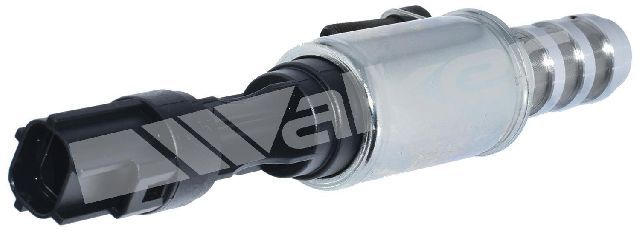
Est. part cost: $40-$80 - Faulty VCT (Variable Camshaft Timing) Solenoid 🔴 High Probability → Shop Engine Variable Valve Timing (VVT) Solenoid The solenoids get clogged with debris from dirty oil or fail electrically, causing them to stick in one position. The screens on the solenoid can also tear, allowing debris into the phaser. Manufacturer service bulletins such as SSM 50067 and SSM 47170 note that P0021 may be due to small debris causing the VCT solenoid to stick.
How to confirm: A common diagnostic step is to swap the Bank 1 (passenger side) and Bank 2 (driver side) VCT solenoids. Clear the codes and drive the vehicle. If the code changes to P0011 (Bank 1 Over-Advanced), the solenoid is confirmed as the faulty part. You can also test the solenoid's resistance, which should be between 5 and 15 Ohms. Unplugging both VCT solenoids can be a temporary diagnostic test; if the engine idles and runs better (though with less power), it points to a faulty solenoid or phaser.
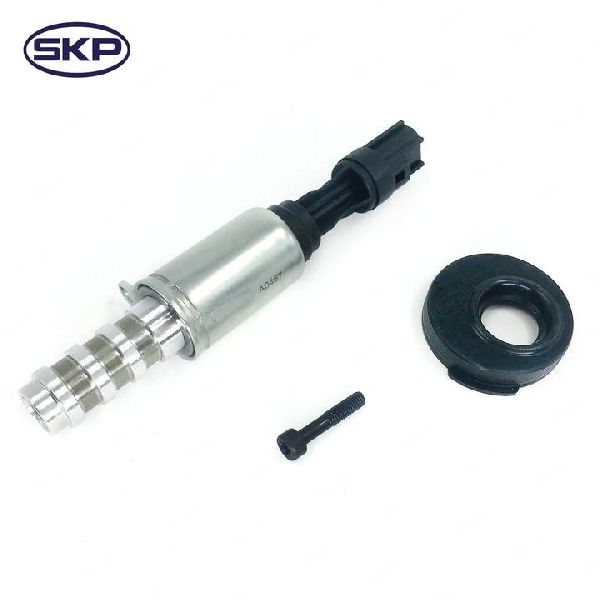
Typical fix: Replace the Bank 2 (driver's side) VCT solenoid and the valve cover seal. It is highly recommended to use genuine Motorcraft parts.
Est. part cost: $40-$90 - Failing Cam Phaser 🟡 Medium Probability → Shop Engine Timing Gear The internal locking pins or vanes of the phasers wear out due to oil pressure issues or high mileage, causing them to rattle and fail to hold the correct timing position. Aftermarket phasers are known to have a high failure rate.
How to confirm: A distinct rattling or knocking sound from the front of the valve cover at hot idle is a strong indicator. Diagnosis may require an oscilloscope to monitor cam/crank correlation or physical inspection by removing the valve cover. A damaged phaser may have a deformed trigger wheel or a sprung-out main spring.
Typical fix: Replacement of the cam phaser. This is an intensive repair that often includes replacing the timing chain, guides, and tensioners at the same time. Some owners opt for 'phaser lockouts,' which fix the phaser in one position but require a custom ECU tune.
Est. part cost: $100-$300 per phaser - Failed Timing Chain Tensioner and/or Guides 🟡 Medium Probability → Shop Engine Timing Chain The plastic timing chain tensioners have seals that are known to blow out, causing a major loss of oil pressure that starves the VCT system. The plastic guides can also break apart, sending debris into the oil pan and potentially clogging the oil pump pickup tube.
How to confirm: Requires measuring engine oil pressure with a mechanical gauge. Low oil pressure at hot idle (below 25 PSI, with Ford's absolute minimum being 15 PSI) is a strong indicator. Visual inspection requires removing the engine's front timing cover to check for blown tensioner seals or broken guides.
Typical fix: Complete timing job: replacement of timing chains, phasers, tensioners, guides, and often the oil pump. Many recommend upgrading to cast iron tensioners and a high-volume oil pump (like the Melling M340HV) for a more durable repair.
Est. part cost: $500-$1200 for a full kit
Rare But Worth Checking
- Clogged VCT Solenoid Body Oil Passages: → Shop Engine Variable Valve Timing (VVT) Solenoid Even after replacing a VCT solenoid, debris can remain in the oil passages in the cylinder head, causing the new solenoid to malfunction. It's important to clean the area and the VCT body thoroughly during replacement.
- Worn Camshaft Bearing Journals: → Shop Engine Camshaft In very high-mileage or poorly maintained engines, the camshaft journals can wear excessively, causing a loss of oil pressure directly at the cam, which prevents the VCT system from working correctly. This can lead to persistent codes even after a full timing job.
- Failed Roller Follower/Lash Adjuster: A seized roller follower bearing can create a loud ticking noise and, in severe cases, damage the camshaft lobe. This valvetrain resistance can potentially affect cam timing and contribute to timing codes.
Diagnosis Steps
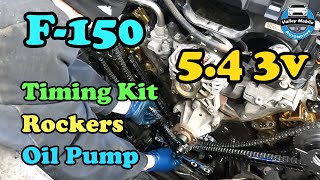
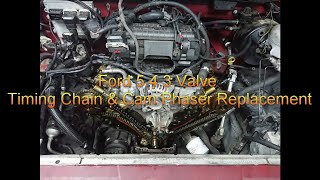
- Verify the code with a reliable OBD-II scanner. 🎬 Watch: Professional diagnostic steps for P0011 and P0021 timing errors.
- Check the engine oil level and condition. If low, dirty, or the wrong viscosity, perform an oil change with 5W-20 synthetic blend oil and a Motorcraft FL-820S filter. Clear codes and re-test.
- Listen for engine noises. A diesel-like rattle at hot idle points towards cam phasers or timing components. A constant ticking could be a failed roller follower.
- If the oil change does not fix the issue, swap the VCT solenoids from Bank 1 and Bank 2. They are located on the front of each valve cover. Clear the codes. If the fault moves to Bank 1 (P0011), the solenoid is bad.
- If the code remains P0021 after the swap, the problem is likely not the solenoid. The next step is to test engine oil pressure with a mechanical gauge. A reading below 25 PSI at hot idle indicates a significant internal problem, though Ford's revised minimum spec is 15 PSI.
- If oil pressure is good (above 25 PSI at hot idle), the issue is most likely a failing cam phaser on Bank 2.
- If oil pressure is low, suspect failing timing chain tensioner seals, guides, or a worn oil pump, which requires a full timing job.
Parts You'll Likely Need
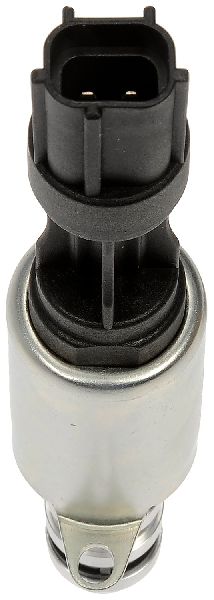
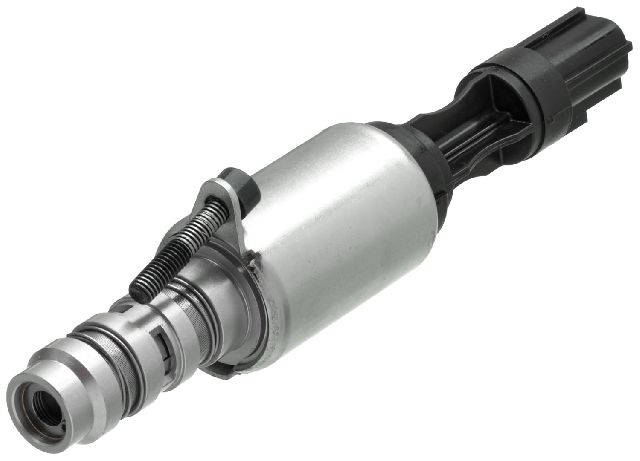
- VCT Solenoid (Bank 2 - Driver's Side)
(OEM #8L3Z-6M280-B)— This is the most common failure point after oil issues. The solenoid gets clogged or fails, and is a relatively simple and inexpensive part to replace.
Related Codes That Often Appear With This One
- P0011 — This is the same over-advanced code for Bank 1 (passenger side). Seeing both codes together often points to a systemic oil pressure problem, like failed tensioners, a failing oil pump, or sludge throughout the engine.
- P0022 — This is the 'over-retarded' code for the same bank. Seeing both P0021 and P0022 can indicate a VCT solenoid that is erratically sticking or a cam phaser that cannot hold its position.
- P0345 — This code indicates a fault in the Camshaft Position Sensor circuit for Bank 2. It often appears with P0021 because the sensor is detecting the erratic or incorrect timing caused by the mechanical VCT system failure.
- P0020 — This code indicates an open or shorted electrical circuit for the Bank 2 VCT solenoid. Seeing P0020 and P0021 together strongly suggests the VCT solenoid itself has failed electrically or there is a wiring/connector issue.
Technical Service Bulletins (TSBs) & Recalls
- TSB 14-0114: Supersedes TSB 12-7-10. Addresses intermittent rattle noise, rough idle, and DTCs P0021, P0022, P0340, and P0341 on 5.4L 3V engines.
- TSB 08-7-6: Details issues with the two-piece spark plug design (Motorcraft SP-515) used from 2005 to mid-2008, which are prone to breaking during removal.
- TSB 06-19-8: Provides diagnostic procedures to differentiate between normal injector noise and abnormal cam phaser rattle, a key symptom related to P0021.
- Bulletin #SSM 54366: Notes that vehicles may exhibit an illuminated MIL with DTC P0021 and directs technicians to Pinpoint test HK in the Powertrain Control and Emissions Diagnosis (PC/ED) manual.
- Bulletin #TSB-16-0093: States that certain vehicles may exhibit an illuminated Malfunction Indicator Lamp (MIL) with DTC P0021 stored in the Powertrain Control Module (PCM) memory.
Platform-Specific Known Issues
- TSB 06-19-8 addresses ticking, knocking, or startup rattle noises related to the VCT system, suggesting potential replacement of lash adjusters or cam phasers.
Mechanic-Grade Diagnostic Values
- Engine Oil Pressure (Hot Idle) — expected: Ideally >25 PSI. Ford's revised absolute minimum is 15 PSI.. Failure: Pressure consistently below 25 PSI suggests internal leaks (e.g., tensioner seals); below 15 PSI indicates a severe problem.
- Engine Oil Pressure (Hot, at 2,000+ RPM) — expected: 40-50 PSI minimum.. Failure: Pressure at 20 PSI while revving indicates a significant oil pump or internal leak issue.
- VCT Solenoid Coil Resistance — expected: 5.0 - 15.0 Ohms. A more precise spec is 6.9 - 7.9 Ohms at 68°F (20°C).. Failure: A reading of 0 Ohms (short), OL/infinity (open), or significantly outside the range indicates a failed solenoid coil.
- Scan Tool PID: VCT_ERR2 (VCT Error Bank 2) — expected: Should be close to 0 degrees at steady idle.. Failure: A persistent value greater than 5 degrees indicates the camshaft is not at the commanded position.
- Scan Tool PID: VCTDC2 (VCT Duty Cycle Bank 2) — expected: Should show a percentage value when the PCM is commanding a change.. Failure: If VCT_ERR2 is high while VCTDC2 is also high, it means the PCM is trying to correct the timing but a mechanical issue (phaser, oil pressure) is preventing it.
Scan Tool Commands That Help
- Ford IDS / FORScan: Output State Control / VCT Solenoid On/Off Command — Use this bidirectional command at idle to manually activate the Bank 2 VCT solenoid. A healthy solenoid will cause a noticeable change in idle quality or may even stall the engine. No change points to a bad solenoid, wiring issue, or lack of oil pressure.
- Ford IDS / FORScan: Pinpoint Test HK11: VCT Solenoid Cycle Test — Mentioned in Ford TSBs, this test rapidly cycles the solenoid multiple times. It's intended to dislodge small debris that may be causing the solenoid to stick, and can be attempted after an oil change before replacing the part.
Wiring & Ground Locations
- Bank 2 VCT Solenoid Connector — On the front of the driver's side valve cover.. This 2-pin connector provides power and ground control to the solenoid. Check for 12V (battery voltage) on the power pin with Key On Engine Off. The other pin is the ground control from the PCM. A NOID light can be used to verify the PCM is commanding the solenoid.
- G103 / G104 — On the right (passenger) side of the engine compartment, on the fender or frame rail. Some diagrams also show G104 at the rear of the right cylinder head.. These are primary ground points for the PCM and engine components. A loose or corroded ground here can cause erratic sensor readings and unpredictable behavior from PCM-controlled actuators like the VCT solenoids.
Real Owner Repair Stories
- Ford Truck Enthusiasts Forum (2005 Expedition 5.4L, 160k miles) — P0012, P0021, P0345, P0349, P0316. Lacked power and sounded like a diesel at idle.
❌ Tried (didn't work) Replaced both Cam Position Sensors., Replaced alternator and coil suppressors.
✅ What actually fixed it A full timing job was performed, replacing Dorman phasers with OEM Ford parts, a Cloyes timing kit, and new guides/tensioners. The initial repair with Dorman phasers did not solve the codes. The ultimate issue was likely the failed phasers or an incorrectly installed timing component from the first attempt. - Ford F150 Forum (2006 Expedition 5.4L 3v, 140k miles) — P0012, P0021, P0303. Dieseling noise.
❌ Tried (didn't work) A full timing job was performed using Dorman phasers, which did not resolve the issue.
✅ What actually fixed it The owner tore the engine down a second time and discovered the timing chain on Bank 1 was off by one link. Correcting the timing chain alignment resolved the codes. - Ford Truck Enthusiasts Forum (2005 Expedition 5.4L) — P0021, P0345, P0349 after a previous repair attempt.
❌ Tried (didn't work) A shop had previously replaced timing components.
✅ What actually fixed it The shop that did the initial repair noted a blown-out driver-side timing chain tensioner gasket was found and fixed. However, the codes returned. An oscilloscope test later confirmed that a timing component was installed incorrectly during that repair, causing the persistent codes. - NHTSA ODI #11564296 — An owner reported that despite replacing solenoids and components on both sides, diagnostic codes P0021 and P0022 continued to appear. The engine lacked power on the driver side and reportedly "throws the timing belt."
OEM Part Supersession History
3L3Z-6M280-EA, 8L3Z-6M280-A→8L3Z-6M280-B— Standard part revision and improvement by Ford.
Heads up: The newest part number, 8L3Z-6M280-B, is the correct service part for the entire 2005-2014 range.Various (e.g., 3L3Z-6256-DA/EA/FA)→3R2Z-6A257-DA— Ford consolidated early left/right specific phasers into a universal design and made internal revisions to improve durability.
Heads up: The latest revision (3R2Z-6A257-DA) is the recommended OEM replacement.
Model Year Variations Within This Range
- 2005-2006 (approx.): Some early 5.4L 3v engines have valve covers where the VCT solenoid cannot be replaced without removing the entire valve cover. Later models have a larger, updated seal that allows the solenoid to be accessed and replaced externally, making the job significantly easier.
Diagnostic Flowchart
Other Known Issues on This Vehicle
Issues unrelated to this code that are worth knowing about as an owner of this generation:
- Two-Piece Spark Plug Breakage 🔴 High — Extremely common on 2005 to mid-2008 models with original plugs. A carbon buildup seizes the plug's ground shield in the head, causing it to break during removal. (Ref: TSB 08-7-6)
- Fuel Pump Driver Module (FPDM) Failure 🔴 High — Very common, especially in regions with road salt. The aluminum module corrodes where it mounts directly to the steel frame, causing no-start, stalling, and hesitation.
- Integrated Wheel End (IWE) 4x4 Actuator Failure 🟠 Medium — Common issue where vacuum leaks in the lines or solenoid cause the 4WD hubs to partially engage while driving in 2WD, resulting in a grinding or clicking noise from the front wheels.
- Cracked Exhaust Manifold 🟠 Medium — The factory cast iron exhaust manifolds are prone to cracking, which causes a ticking noise that is most noticeable on a cold start and may quiet down as the engine warms and the metal expands.
- Failed Roller Followers 🟠 Medium — The bearings on the camshaft roller followers can fail, causing a loud, rhythmic ticking or tapping sound from the valve cover area. If ignored, it can lead to camshaft damage.
Used vs. New Parts: Buying Guide for This Vehicle
When a used part is the smart pick: For this specific repair, using used parts is generally not recommended due to the high failure rate of the core components. The only exception might be a major structural component like a valve cover or timing cover if the original is physically damaged, but never the internal mechanical or electronic parts.
Donor-vehicle mileage cap: roughly under 50000 miles for the part to have meaningful remaining life.
What to inspect on the donor part:
- For a structural part like a valve cover, ensure there are no cracks or stripped bolt holes.
- Avoid any parts from an engine that shows signs of heavy oil sludge or overheating (discoloration).
OEM-only on this vehicle (don't cheap out):
- Cam Phasers (Motorcraft)
- VCT Solenoids (Motorcraft)
- Timing Chain Tensioners (Motorcraft or Melling cast iron upgrade)
- Timing Chains (Motorcraft/Cloyes)
- Timing Chain Guides (Motorcraft)
Aftermarket brands forum-validated for this vehicle:
- Melling (for high-volume oil pumps like the M340HV or M360HV, and cast iron tensioners)
- Cloyes (for timing chains and iron tensioners)
- Livernois Motorsports (for cam phaser lockout kits, if choosing that repair path)
Brands owners have reported issues with on this vehicle:
- Dorman (specifically for cam phasers; many forum posts and mechanic videos report high rates of premature failure, sometimes immediately after installation)
Real Owner Stories
Aggregated from forums and TSBs cited above. Mileages and costs reflect what owners reported in those sources.
2005 Ford Expedition 5.4L 3v
Symptoms: The owner experienced codes P0021, P0345, and P0349. Shop notes confirmed a loss of oil pressure.
What fixed it: Repairing a blown timing chain tensioner seal which was causing the oil pressure loss.
Source hint: Ford-Trucks.com - ''05 Expedition Codes: P0021, P0345, P0349'
2004 Ford F-150 5.4L 3v
Symptoms: Vehicle was running rough and throwing P0021 shortly after a timing job was performed.
What fixed it: The owner had used aftermarket phasers which are known to have high failure rates; the recommendation was to use genuine OEM Motorcraft parts.
Source hint: F150forum.com - 'Need help with P0021 and running rough 2004 5,4 3V'
2005-2014 Ford Expedition 5.4L 3v
Symptoms: Rough idle, engine dies, and multiple timing-related codes.
What fixed it: Addressing mechanical faults in the timing system that link P0021 and P0022.
Source hint: FordExpeditionForum.com - '5.4 3v rough idle, dies, multiple codes'
2005-2010 Ford F-150 5.4L 3v
Symptoms: Combination of an electrical circuit code and a mechanical timing code.
What fixed it: Diagnosing the VCT solenoid circuit failure which triggered both P0020 and P0021.
Source hint: F150online.com - 'P0020/p0021'
Related OBD-II Codes
Frequently Asked Questions
Which TSB addresses the 'diesel-like' rattle and P0021 code on my 5.4L 3v Expedition?
Can I use any oil filter on my 5.4L Triton to prevent VCT issues?
Is there a way to test if my Bank 2 VCT solenoid is actually the cause of the P0021 code?
What is the minimum oil pressure my Expedition needs to avoid timing codes?
I've heard about 'phaser lockouts' for the 5.4L 3v; what are they?
Why does my Expedition run fine for a few minutes and then start running rough and losing power?
Helpful Videos

We Have This Part in Stock



The information in this article is provided for general reference and educational purposes only. Vehicle specifications, procedures, and part compatibility can vary by production date, trim level, and region. Always consult your vehicle's factory service manual and verify part numbers before purchasing or performing repairs. Safety-critical components such as airbags, seat belts, and braking systems should be installed by a qualified professional.
- Ford Expedition:
- 🧭 Diagnostic Flowchart
- 🎬 Helpful Videos
- 🛍️ Shop This Part
- What's Unique About the 2005-2014 Ford Expedition
- Symptoms You May Notice
- Most Likely Causes
- Rare But Worth Checking
- Diagnosis Steps
- Parts You'll Likely Need
- Related Codes That Often Appear With This One
- Technical Service Bulletins (TSBs) & Recalls
- Platform-Specific Known Issues
- Mechanic-Grade Diagnostic Values
- Scan Tool Commands That Help
- Wiring & Ground Locations
- Real Owner Repair Stories
- OEM Part Supersession History
- Model Year Variations Within This Range
- Other Known Issues on This Vehicle
- Used vs. New Parts: Buying Guide for This Vehicle
- Real Owner Stories
- 2005 Ford Expedition 5.4L 3v
- 2004 Ford F-150 5.4L 3v
- 2005-2014 Ford Expedition 5.4L 3v
- 2005-2010 Ford F-150 5.4L 3v
- Related OBD-II Codes
- Frequently Asked Questions
- 🎟️ Get 5% Off