

P0021 on 2020-2026 Ford Explorer 3.3L Hybrid: Causes and Fixes for Over-Advanced Cam Timing
On a 2020-2026 Explorer with the 3.3L Hybrid engine, P0021 is most often caused by low or dirty engine oil, or a sticking VCT solenoid. Always check your oil first. If an oil change doesn't solve it, the Bank 2 intake VCT solenoid is the likely culprit, but replacement is a labor-intensive job requiring valve cover removal.
- Start with the simplest fix: check your oil. Low, old, or dirty oil is the #1 cause of P0021.
- The most likely failed part is the Bank 2 (front/radiator side) intake VCT solenoid.
- Replacing the VCT solenoid is a complex job on this engine because it is located under the valve cover, making it difficult for novice DIYers.
- Do not immediately assume you have a major timing chain issue; follow the diagnostic steps from simplest to most complex.
- Using the correct Ford-specified engine oil and filter at regular intervals is the best way to prevent this code from occurring.
What's Unique About the 2020-2026 Ford Explorer
The 3.3L Duratec Hybrid V6 is part of Ford's 'Cyclone' engine family, which is known for being generally reliable but highly sensitive to oil quality and maintenance. Like its 3.5L and 3.7L predecessors, the VCT system's solenoids use fine mesh screens that are prone to clogging from oil sludge or small debris, a fact acknowledged in numerous Ford Technical Service Bulletins (TSBs). Ford SSM 49821 specifically lists P0021 as a potential code resulting from this condition across various 2015-2021 Ford and Lincoln vehicles. While the 3.3L engine itself is durable, this code almost always points back to the oil-dependent VCT system rather than a more serious internal engine problem, provided maintenance has been followed.
Symptoms You May Notice
- Check Engine Light is on
- Rough or unstable idle
- Engine hesitation or lack of power, especially during acceleration
- Stalling at low speeds or when coming to a stop
- Decreased fuel mileage
- Engine may make a rattling or knocking noise
- Hard starting
- Replacing the camshaft position sensor. While a sensor can fail, it is much less common than a VCT solenoid failure for this specific code. A faulty sensor would typically set a different code (e.g., P0345).
- Immediately replacing the cam phasers. This is an expensive and labor-intensive repair that should only be considered after ruling out oil issues and a faulty VCT solenoid. Phasers are more likely to be the cause if a distinct startup rattle is present.
Most Likely Causes
- Low, Dirty, or Incorrect Viscosity Engine Oil 🔴 High Probability The VCT system uses pressurized engine oil to actuate the cam phasers. If the oil is low, contaminated with debris, or the wrong viscosity, the solenoids and phasers cannot operate correctly. Ford has issued multiple TSBs citing oil debris as a primary cause of VCT-related codes like P0021.
How to confirm: Check the engine oil level on the dipstick and inspect its condition. If the oil is below the 'add' line, dark and sludgy, or past its recommended change interval, this is the most likely cause. An oil change is the first and most crucial diagnostic step.
Typical fix: Perform an engine oil and filter change using the manufacturer-specified full synthetic oil (e.g., Motorcraft 5W-30 meeting Ford spec WSS-M2C961-A1) and a high-quality filter like the Motorcraft FL-500S.
Est. part cost: $50-$100 - Failing Variable Camshaft Timing (VCT) Solenoid 🔴 High Probability → Shop Engine Camshaft The VCT solenoids have very fine mesh screens that can become clogged with oil sludge or debris, causing them to stick in the advanced position. This is a well-documented issue across many Ford engines. TSB SSM 50067 specifically notes that small debris can cause the solenoid to stick and advises diagnostics before replacement.
How to confirm: A diagnostic swap is the best DIY method: swap the Bank 2 intake solenoid with the Bank 1 intake solenoid. If the code changes to P0011 (the Bank 1 equivalent), the solenoid is confirmed to be faulty. A professional can use a scan tool to command the solenoid on and off to check for response, a procedure recommended by Ford in TSB SSM 50067.
Typical fix: Replace the Bank 2 intake VCT solenoid. This requires removing the upper intake manifold and the valve cover to access the solenoid. It is recommended to apply a light coat of clean engine oil to the new solenoid's O-rings before installation.
Est. part cost: $40-$90
Rare But Worth Checking
- Worn Timing Chain or Cam Phaser: → Shop Engine Timing Chain While less common on a well-maintained 3.3L engine, a stretched timing chain or a cam phaser stuck in the advanced position can cause this code. This is a more serious mechanical issue, often accompanied by a rattling noise on startup, a known issue on the related 3.5L EcoBoost engine addressed in TSBs like 22-2200 and 18-2305.
- Clogged Oil Passages: In cases of severe sludge or after a previous component failure, the small oil passages (galleys) in the cylinder head that feed the VCT system can become blocked. This will prevent even a new solenoid from functioning correctly and requires more extensive engine cleaning or repair.
Diagnosis Steps
- Check Engine Oil: Verify the oil level is full and the oil is clean. If low or dirty, perform an oil and filter change with the correct Ford-specified oil, clear the code, and drive to see if it returns. This is the most common fix.
- Scan for Other Codes: Check for any other accompanying codes that could point to a related issue.
- Inspect Wiring: Visually inspect the wiring and connector for the Bank 2 (front/radiator side) intake VCT solenoid for any signs of damage, corrosion, or oil contamination.
- Advanced Scan Tool Diagnosis: If you have a capable scan tool, try commanding the solenoid on and off. TSB SSM 50067 suggests cycling the solenoid 10 times to attempt to dislodge debris before replacement.
- Diagnostic Solenoid Swap: If accessible, swap the Bank 2 intake VCT solenoid with the Bank 1 (rear/firewall side) intake solenoid. Clear the codes and drive. If the code changes to P0011, the solenoid you moved is faulty and needs to be replaced.
- Professional Diagnosis: If the above steps do not resolve the issue, a professional diagnosis is recommended. A technician can use a scan tool to monitor cam advance, check oil pressure at the cylinder head, and check for deeper mechanical issues like timing chain stretch or phaser problems.
Parts You'll Likely Need
- Engine Variable Valve Timing (VCT) Solenoid
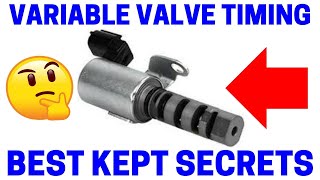
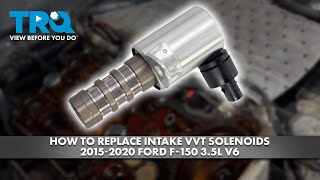
(OEM #AT4Z-6M280-B)— This solenoid controls oil flow to the cam phaser. It is the most common part to fail for this code, usually by sticking due to oil debris. Bank 2 is the front bank, by the radiator. This part number is confirmed to fit the 3.3L Hybrid engine.
Trusted brands: Motorcraft, Dorman, Standard Motor Products (SMP), NTK
OEM price range: $60-$90
Aftermarket price range: $30-$70 - Valve Cover Gasket Kit
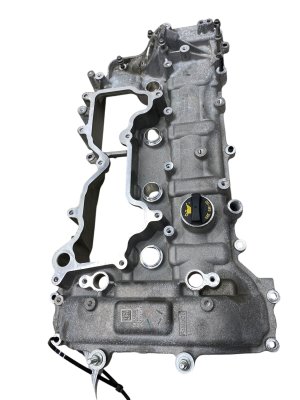
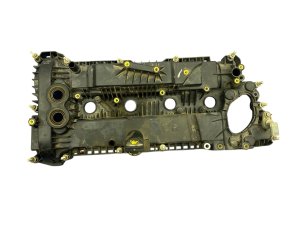
(OEM #BR3Z-6584-C)— The VCT solenoids on this engine are located under the valve covers. The valve cover must be removed for access, and the gasket is a one-time use part that must be replaced to prevent oil leaks. The related TSB 23-2143 for the 3.5L engine notes that VCT solenoid seals (BR3Z-6C535-A) and spark plug tube seals (BR3Z-6C535-B) may be reusable if undamaged.
Trusted brands: Motorcraft, Fel-Pro, Mahle
OEM price range: $25-$50
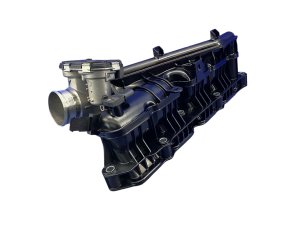
Aftermarket price range: $20-$40 - Upper Intake Manifold Gaskets — To access the valve cover, the upper intake manifold must be removed. Its gaskets should be replaced during reassembly to prevent vacuum leaks. A video for the similar 3.5L V6 shows this process and emphasizes checking that the gasket is perfectly seated to avoid a running condition.
Trusted brands: Motorcraft, Fel-Pro
OEM price range: $20-$40
Aftermarket price range: $15-$30
Related Codes That Often Appear With This One
- P0011 — This is the equivalent code for Bank 1. If both P0011 and P0021 are present, it strongly indicates a systemic issue like very low/dirty oil or low oil pressure affecting the entire engine.
- P0018 — This is a crankshaft/camshaft correlation code for Bank 2. Seeing P0018 and P0021 together can point to a faulty VCT solenoid or a more serious mechanical timing issue like a stretched chain. TSB 11-6-1 addressed this combination on older 3.5L/3.7L engines.
Technical Service Bulletins (TSBs) & Recalls
- SSM 49821: Confirms that DTCs like P0021 can be set on 2015-2021 Ford/Lincoln vehicles due to VCT issues.
- SSM 50067: Specifically for VCT codes, advises using a scan tool to cycle the suspect solenoid 10 times to attempt to clear debris before authorizing replacement.
- TSB 22-2200 / 23-2143: While for the 3.5L EcoBoost, these TSBs address VCT phaser rattle and replacement, showing the sensitivity of the VCT system in the broader engine family.
Mechanic-Grade Diagnostic Values
- VCT Solenoid Internal Resistance — expected: 5 - 14 Ohms. A more precise range of 6.9 - 7.9 Ohms at 68°F (20°C) is also cited for this engine family.. Failure: A reading of 0 Ohms (short), infinite/OL (open), or a value significantly outside the expected range indicates a faulty solenoid.
- VCT Solenoid Connector Voltage (Key On, Engine Off) — expected: Greater than 10.5 Volts on the power supply pin.. Failure: Low or no voltage points to a wiring issue, a blown fuse, or a problem with the PCM power relay.
- FORScan Live Data PID: VCT_ERR2 (Bank 2 Cam Error) — expected: Should be at or very close to 0 degrees at idle.. Failure: A consistent deviation from 0 degrees (e.g., > +/- 5 degrees) indicates the PCM cannot control the Bank 2 camshaft position as commanded, pointing to a stuck solenoid or phaser.
- Engine Oil Pressure (Mechanical Gauge at Hot Idle) — expected: 15-30 PSI.. Failure: Pressure below 15 PSI at a hot idle indicates a serious mechanical issue, such as a failing oil pump or worn engine bearings, that is starving the VCT system of necessary pressure.
Hidden / Shadow Codes Worth Checking
- Mode 6, Test ID $81-$84: On Ford CAN-bus systems (like the 2020+ Explorer), misfire data that has not yet set a code can be viewed under Mode 6. Test IDs $81 through $84 relate to misfire counts for specific cylinders. While P0021 is a timing code, an over-advanced cam can cause misfires, and checking this data can help confirm the severity of the running condition. (see via A scan tool capable of displaying OBD-II Mode 6 data.)
Scan Tool Commands That Help
- Ford IDS / FORScan: VCT Solenoid On/Off Test (Bidirectional Control) — This is a primary functional test. When idling, commanding the Bank 2 intake solenoid (VCMT2) should cause the engine to stumble or run rough. If there is no change in engine operation, it confirms a problem with the solenoid, oil passage, or phaser.
- Ford IDS / FORScan: Pinpoint Test HK11: VCT Solenoid Cycle Test — As recommended in TSBs SSM 50067 and 47170, this function should be used after an oil change but before replacing parts. It cycles the solenoid 10 times to attempt to dislodge small debris. If the code clears and does not immediately return, it may have fixed a temporarily stuck solenoid.
- Ford IDS / FORScan: Clear/Reset Keep Alive Memory (KAM) — This should be performed after replacing any VCT components. It clears the learned adaptive values from the PCM, forcing it to relearn the new component's operational characteristics.
Wiring & Ground Locations
- G104 / G105 — Common engine compartment ground points. G104 is typically on the right front of the engine compartment, and G105 is on the left side.. The PCM controls the VCT solenoid by switching its ground circuit. A poor or corroded engine ground can cause erratic behavior in the VCT system and other sensors, leading to incorrect readings and fault codes.
- VCT Solenoid Connector — On the front of the Bank 2 (radiator side) valve cover, plugged into the top of the VCT solenoid.. This 2-pin connector is the direct interface for the solenoid. It should be checked for secure connection, corrosion, and oil contamination. Pin 1 is typically the 12V+ supply from the power distribution box, and Pin 2 is the ground-side control wire from the PCM.
OEM Part Supersession History
AT4Z-6M280-A→AT4Z-6M280-B— Updated VCT solenoid for 3.3L, 3.5L, and 3.7L Cyclone engine applications. The revision likely improves reliability and resistance to sticking from oil debris.
Diagnostic Flowchart
Other Known Issues on This Vehicle
Issues unrelated to this code that are worth knowing about as an owner of this generation:
- Rear Axle Mounting Bolt Fracture 🔴 High — Common enough to trigger multiple recalls (NHTSA 22V-255, 23V-199, 23S55) affecting over 250,000 2020-2022 models, including the 3.3L Hybrid. (Ref: Recall 23S55. The initial software-only fix was deemed insufficient, and a full hardware replacement of the subframe bushing and bolt is now the remedy.)
- 10-Speed (10R80/10R60) Transmission Problems 🟠 Medium — Widespread complaints of harsh/jerky shifting, hesitation, clunking, and sometimes sudden loss of power across many Ford models with this transmission. Issues can sometimes be improved with software updates but may also stem from internal mechanical problems like the CDF drum or valve body. (Ref: Multiple TSBs issued, including TSB 21-2315 for harsh shifts and SSM 50748 for erratic shifting. Subject of class-action litigation.)
- Backup Camera / Electrical Gremlins 🟡 Low — Very common issue where the backup camera screen goes blue or black. This prompted multiple recalls. Other electrical issues like phantom warnings and malfunctioning displays are also reported. (Ref: Multiple recalls issued for the backup camera system (e.g., NHTSA 23V-675).)
- Low-Speed Hesitation or Jerking (Hybrid) 🟡 Low — Specifically noted on 2020-2021 3.3L Hybrid models, a buck/jerk or hesitation condition at low speeds without any DTCs being set. (Ref: TSB 21-2446)
Used vs. New Parts: Buying Guide for This Vehicle
When a used part is the smart pick: For this specific repair, using used parts is generally not recommended. The primary failure components are electronic solenoids and gaskets, which are inexpensive to buy new and have a finite lifespan.
Donor-vehicle mileage cap: roughly under 60000 miles for the part to have meaningful remaining life.
What to inspect on the donor part:
- If considering a used cam phaser (a high-cost part), it should only come from a documented low-mileage vehicle that was not in a severe front-end collision.
- Avoid any parts from an engine that shows signs of heavy oil sludge or a 'milky' oil/coolant mix, as this indicates severe neglect or internal failure.
OEM-only on this vehicle (don't cheap out):
- VCT Solenoid: While aftermarket options exist, forum consensus strongly favors using the OEM Motorcraft part (AT4Z-6M280-B) due to the VCT system's sensitivity. Aftermarket solenoids have a higher reported failure rate.
- Cam Phasers: If required, OEM phasers are strongly recommended. Aftermarket phasers for Ford V6 engines are a common source of repeat failures.
Aftermarket brands forum-validated for this vehicle:
- Fel-Pro: Widely trusted for valve cover and intake manifold gaskets.
- Standard Motor Products (SMP): Generally considered a reliable alternative for sensors and solenoids if OEM is unavailable, though OEM is still preferred for VCT components.
Brands owners have reported issues with on this vehicle:
- Dorman (for VCT Solenoids): Many forum users across Ford platforms report premature failure of Dorman VCT solenoids and advise against their use for this specific part, despite their availability.
Real Owner Stories
Aggregated from forums and TSBs cited above. Mileages and costs reflect what owners reported in those sources.
2018+ Ford F-150 3.3L V6
Symptoms: Owner reported engine performance issues and specific fault codes related to the VCT system.
What fixed it: The issue was identified as a cam phaser failure, a related component in the VCT system shared with the Explorer 3.3L.
Source hint: platform_mates section referencing F-150 owner reports of P0018 and P0021
2020 Ford Explorer 3.3L Hybrid
Symptoms: Harsh shifting, hesitation, and potential low oil pressure warnings.
What fixed it: Diagnostics for low oil pressure (P0521) which can lead to VCT-related codes like P0021 due to insufficient pressure for phaser actuation.
Source hint: ford-trucks.com - "2020 FORD EXPLORER Technical Service Bulletins (TSBs)"
Related OBD-II Codes
Frequently Asked Questions
Does SSM 50067 apply to my 2020 Ford Explorer 3.3L Hybrid if I have a P0021 code?
What specific oil and filter should I use for my 3.3L Duratec Hybrid to prevent VCT issues?
Could my P0021 code be related to the low-speed jerking mentioned in TSB 21-2446?
If I swap the solenoids to diagnose the issue, what code should I look for?
Is there a TSB for the rattling noise my engine makes along with the P0021 code?
Can a low oil pressure sensor issue cause VCT problems on the 3.3L engine?
Helpful Videos
We Have This Part in Stock

The information in this article is provided for general reference and educational purposes only. Vehicle specifications, procedures, and part compatibility can vary by production date, trim level, and region. Always consult your vehicle's factory service manual and verify part numbers before purchasing or performing repairs. Safety-critical components such as airbags, seat belts, and braking systems should be installed by a qualified professional.
- Ford Explorer:
- 🧭 Diagnostic Flowchart
- 🎬 Helpful Videos
- 🛍️ Shop This Part
- What's Unique About the 2020-2026 Ford Explorer
- Symptoms You May Notice
- Most Likely Causes
- Rare But Worth Checking
- Diagnosis Steps
- Parts You'll Likely Need
- Related Codes That Often Appear With This One
- Technical Service Bulletins (TSBs) & Recalls
- Mechanic-Grade Diagnostic Values
- Hidden / Shadow Codes Worth Checking
- Scan Tool Commands That Help
- Wiring & Ground Locations
- OEM Part Supersession History
- Other Known Issues on This Vehicle
- Used vs. New Parts: Buying Guide for This Vehicle
- Real Owner Stories
- 2018+ Ford F-150 3.3L V6
- 2020 Ford Explorer 3.3L Hybrid
- Related OBD-II Codes
- Frequently Asked Questions
- 🎟️ Get 5% Off