

P0021 on 2008-2009 Ford Taurus X 3.5L: Causes and Fixes for Over-Advanced Cam Timing
On a 2008-2009 Ford Taurus X, code P0021 is most often caused by low or dirty engine oil, or a faulty Variable Camshaft Timing (VCT) solenoid on Bank 2 (the cylinder bank near the radiator). Always check the oil first; an oil change is a common and inexpensive fix. If the oil is fine, the VCT solenoid is the next likely culprit. This code can also be an early warning for a failing internal water pump, a critical issue on this engine.
- Always check your engine oil first. A simple oil and filter change with 5W-20 oil fixes P0021 surprisingly often on the Taurus X.
- The most likely failed part is the Bank 2 (front/radiator side) intake VCT solenoid. It's relatively inexpensive and accessible.
- A simple way to confirm a bad solenoid is to swap it with the one on the other side of the engine (Bank 1) and see if the code follows it (changing to P0011).
- Do not immediately assume a catastrophic timing chain failure. While possible, oil and solenoid issues are far more common and should be ruled out first.
What's Unique About the 2008-2009 Ford Taurus X
The 3.5L Cyclone V6 engine family is well-known for its Variable Camshaft Timing (VCT) system being highly sensitive to oil quality and level. Ford has issued Technical Service Bulletins (TSBs) for similar models with this engine, acknowledging that sludge or small debris in the oil can cause the VCT solenoids to stick, directly leading to codes like P0021. This makes regular oil changes with the correct specification oil the most critical first step in both prevention and diagnosis for this specific platform. Furthermore, this engine features an internal, timing-chain-driven water pump. A failure of this pump's seals can contaminate the engine oil with coolant, which rapidly degrades timing components and is a common underlying cause for VCT-related codes.
Symptoms You May Notice
- Check Engine Light is on
- Rough or unstable idle
- Engine hesitation or stumbling on acceleration
- Stalling, especially when coming to a stop
- Reduced fuel economy
- Rattling noise from the engine, particularly on cold startup.
- Hard starting condition.
- Replacing the camshaft position sensor. While a sensor can fail, it's much less common than oil-related issues or a bad VCT solenoid for this specific code. The sensor is usually just accurately reporting the timing problem. 🎬 Watch: Understanding the common causes and fixes for code P0021.
Most Likely Causes
- Low, Dirty, or Incorrect Viscosity Engine Oil 🔴 High Probability The Ford 3.5L VCT system is hydraulic and extremely sensitive to oil pressure and cleanliness. TSBs for this engine family confirm that oil debris is a primary cause of VCT solenoid issues.
How to confirm: Check the oil level on the dipstick. Inspect the oil's color and consistency. If it's dark, thick, or below the 'add' line, it needs to be changed. Also check for a milky or frothy appearance, which indicates coolant contamination.
Typical fix: Perform a complete engine oil and filter change using the manufacturer-specified grade (typically 5W-20 for this engine).
Est. part cost: $40-$80 - Sticking or Failed VCT Solenoid (Bank 2 Intake) 🔴 High Probability → Shop Engine Variable Valve Timing (VVT) Solenoid This is a well-documented failure item on the 3.5L Cyclone V6. The solenoids get clogged with small debris from the oil, causing them to stick open or closed. Ford SSM 50067 specifically notes that debris can cause the solenoid to stick and advises attempting to cycle it with a scan tool before replacement.
How to confirm: After confirming the oil is clean and full, the easiest test is to swap the Bank 2 intake VCT solenoid with the Bank 1 (firewall side) intake solenoid. Clear the codes and drive. If the code changes to P0011 (Bank 1), the solenoid is confirmed faulty.
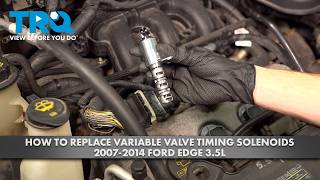
Typical fix: Replace the Bank 2 intake VCT solenoid. It is located on the front valve cover, making it relatively accessible. 🎬 Watch: Step-by-step guide to replacing the VCT solenoid.
Est. part cost: $30-$90
Rare But Worth Checking
- Worn Timing Chain or Cam Phaser: → Shop Engine Timing Chain While less common than oil or solenoid issues, a stretched timing chain or a failing cam phaser can cause timing deviation codes. This is usually accompanied by a distinct rattling noise on cold starts. TSB 11-6-1 was issued for 2008-2009 Taurus X models for VCT codes, including P0021, which could lead to phaser replacement if the installed phasers are not the updated part numbers. An owner reported in NHTSA ODI #11561836 that P0021 is likely due to an issue with the cam phasers, which is a known issue.
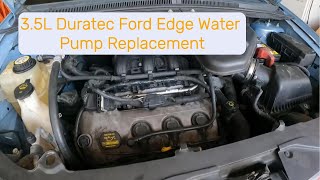
- Failing Internal Water Pump: The 3.5L Cyclone V6 has a timing-chain-driven water pump located inside the engine. If its seal fails, coolant can leak directly into the engine oil, contaminating it and causing VCT system malfunctions and codes like P0021. This is a well-documented, critical failure point for this engine family. Check for milky, frothy oil on the dipstick or oil cap, or for coolant residue at a small weep hole on the engine block behind the alternator. 🎬 See how the internal water pump and timing chain are replaced.
Diagnosis Steps
- Check Engine Oil: Verify the engine oil level is correct and the oil is clean. If low, top it off. If old or dirty, perform an oil and filter change with the correct 5W-20 synthetic blend or full synthetic oil. Crucially, check for a milky/frothy appearance indicating coolant contamination from a failed water pump.
- Scan for Other Codes: Check for any other pending or active trouble codes that could provide more clues. Manufacturer Bulletin #SSM 54366 notes that Ford vehicles may exhibit an illuminated MIL with P0021 and directs technicians to Pinpoint test HK in the PC/ED manual.
- Inspect VCT Solenoid Wiring: Visually inspect the wiring harness and connector for the Bank 2 (front) intake VCT solenoid for any damage, corrosion, or loose connections.
- Swap VCT Solenoids: A common and effective diagnostic step is to swap the Bank 2 intake VCT solenoid with the Bank 1 intake VCT solenoid. They are identical parts. Clear the codes and drive the vehicle. If the trouble code changes to P0011 (Bank 1), you have confirmed the solenoid is the problem.
- Test the Solenoid (Optional): If you have a capable scan tool, you can command the VCT solenoid on and off to check for a response. Ford TSBs suggest cycling the solenoid up to 10 times to try and clear debris before replacement.
- Inspect for Mechanical Issues: If a new solenoid and clean oil do not resolve the code, listen carefully for a rattling noise on cold starts. This could indicate a worn timing chain, tensioner, or cam phaser. TSB 11-6-1 for the 2008-2009 Taurus X specifically points to checking cam phaser part numbers for this issue.
Parts You'll Likely Need
- Variable Camshaft Timing (VCT) Solenoid
(OEM #AT4Z-6M280-B)— This is the most common part to fail for code P0021 on this engine. It gets stuck due to oil debris or internal failure, preventing correct camshaft timing adjustment. This part number is used across a wide range of Ford/Lincoln vehicles with the 3.5L/3.7L engines.
Trusted brands: Motorcraft, Dorman, Standard Motor Products
OEM price range: $50-$90
Aftermarket price range: $30-$60 - Engine Oil and Filter
(OEM #FL-500S (Filter))— Low, dirty, or incorrect viscosity oil is the number one trigger for VCT system faults and code P0021. An oil change is the first and most important step.
Trusted brands: Motorcraft, Mobil 1, Castrol
OEM price range: $50-$80
Aftermarket price range: $40-$60
Related Codes That Often Appear With This One
- P0011 — This is the equivalent code for Bank 1. If you swap VCT solenoids for diagnosis and P0021 disappears and P0011 appears, it confirms the solenoid is the faulty part. If both appear together, it points to a systemic issue like low oil level or severe contamination.
- P0018 — This is a camshaft/crankshaft correlation code for Bank 2. Seeing it with P0021 can point towards a more significant mechanical issue like a stretched timing chain. However, Ford TSB 16-0038 for a similar engine notes that this pair of codes on a low-mileage vehicle can still be caused by just a faulty VCT solenoid.
Technical Service Bulletins (TSBs) & Recalls
- TSB 11-6-1: Addresses rough running and VCT codes P0011, P0012, P0016, P0018, P0021, P0022 on 2008-2009 Taurus X built on or before 12/15/2008. It directs replacement of the cam phasers if they are not the updated part numbers.
- SSM 50067: While for later models, this TSB is relevant to the engine family. It notes that P0021 is often caused by small debris and advises using a scan tool to cycle the solenoid to clear it before replacement.
- TSB 16-0038: Relevant to the 3.5L engine family, it notes that when P0018 and P0021 appear together on low-mileage engines, the recommended fix is to replace the Bank 2 intake VCT solenoid, suggesting the solenoid is a more likely cause than a major mechanical fault in that scenario.
- Bulletin #SSM 54366: States that Ford and Lincoln vehicles may exhibit an illuminated MIL with diagnostic trouble codes including P0021 and P0022, and points to Pinpoint test HK in the Workshop Manual for resolution.
Platform-Specific Known Issues
- TSB 11-6-1 was issued for 2008-2009 Taurus X models experiencing various VCT codes, including P0021. It instructs technicians to check the part numbers on the camshaft phasers and replace them with updated versions if they are from the original, fault-prone batch.
- The internal water pump is a major point of failure. Owners report failures between 90,000 and 150,000 miles, leading to coolant contaminating the oil and causing timing system damage, which can trigger P0021.
Mechanic-Grade Diagnostic Values
- VCT Solenoid Internal Resistance — expected: 7-14 Ohms, with a more precise target of 6.9-7.9 Ohms at 68°F (20°C).. Failure: A reading of 0 Ohms (short), OL/infinite resistance (open circuit), or a value significantly outside the expected range.
- VCT Solenoid Connector Voltage (Key On, Engine Off) — expected: Battery voltage (~12.0V) on the power supply pin (Pin 1, often a Blue-Green wire).. Failure: Voltage below 10.5V suggests a problem in the power supply circuit, such as a bad fuse or wiring issue.
- Mode $06, Test ID (TID) $53 — expected: This test shows cylinder-specific misfire counts. While not a direct VCT test, it can reveal which cylinders are affected by the incorrect timing caused by P0021.. Failure: A high misfire count on the cylinders of Bank 2 (cylinders 1, 2, and 3 on the 3.5L) can be a symptom of the timing problem before a dedicated misfire code sets.
Scan Tool Commands That Help
- Ford IDS / FORScan: VCT Solenoid Cycle Test (Pinpoint Test HK11) — As recommended by Ford TSBs (like SSM 50067), this command should be used after an oil change but before replacing the solenoid. It rapidly cycles the VCT solenoid up to 10 times to dislodge small debris. If the code is resolved after running this test, it confirms the issue was a temporarily stuck solenoid.
- Ford IDS / FORScan: Monitor PIDs: VCT_ADV_ACT (Actual Cam Angle) vs. VCT_REQ (Requested Cam Angle) and VCT_ERR (Error) — While driving or at idle, monitor these PIDs for Bank 2. A large and persistent value in VCT_ERR, or an actual angle (VCT_ADV_ACT) that does not follow the requested angle (VCT_REQ), indicates the phaser is not moving as commanded, pointing to a solenoid, phaser, or oil flow problem.
Wiring & Ground Locations
- Bank 2 VCT Solenoid Connector — On the front valve cover (radiator side), connected to the intake VCT solenoid.. This is the primary electrical connection to test. Pin 1 is typically the 12V power supply from the PCM power relay (via a fuse in the Battery Junction Box), and Pin 2 is the control (ground) wire from the PCM. Damage or corrosion here will cause a loss of control over the solenoid.
- S116 (Splice) — Located in the dash panel to headlight junction harness, near the breakout to the battery junction box.. This splice is part of the power distribution circuit from the PCM power relay. Corrosion or a fault at this splice could potentially affect the power supply to multiple engine components, including the VCT solenoids.
- Powertrain Control Module (PCM) — Located at the rear of the engine compartment.. The PCM provides the ground signal to activate the VCT solenoid. A fault in the PCM driver or the wiring between the PCM and the solenoid can prevent proper operation, though this is a rare failure.
Real Owner Repair Stories
- YouTube Channel - Truck Lab (2019 Ford F-150 3.5L (similar VCT technology)) — P0018 and P0021 codes, occasional power loss, and a cold start rattle.
❌ Tried (didn't work) Initial diagnosis pointed towards a potential cam phaser failure, which is a very expensive repair.
✅ What actually fixed it A detailed inspection found that a piece of the VCT solenoid's internal control ring had broken off, jamming the spool valve. Replacing only the faulty VCT solenoid resolved all symptoms, including the rattle and both timing codes, avoiding a costly phaser replacement. - Ford F150 Forum User (2011 F-150 3.5L EcoBoost) — Engine runs underpowered with poor fuel economy, code for intake stuck fully advanced.
❌ Tried (didn't work) Initially replacing the entire timing system on previous vehicles.
✅ What actually fixed it The user found that 90% of the time, the issue was just the cam phasers, not the entire timing set. The root cause is often the limit pin inside the phaser shearing off, causing it to get stuck in an advanced position. He now diagnoses by watching timing advance on a scan tool; if it's stuck at a high value (e.g., 12 degrees) and doesn't change with RPM, he replaces only the phaser.
OEM Part Supersession History
AT4Z-6M280-A→AT4Z-6M280-B— Ford often updates parts to improve reliability and address known failure modes, such as resistance to debris and sticking.7T4Z-6M280-B→7T4Z-6M280-C— Supersession for improved durability and performance. This part number is also listed for the 2008-2009 Taurus X.
Heads up: While VCT solenoids may look similar, different part numbers can exist for intake vs. exhaust. It is critical to verify the correct part number by VIN for the specific position (Bank 2 Intake) before ordering.
Model Year Variations Within This Range
- 2008 models built on or before 12/15/2008: These early-build 2008 Taurus X models are specifically called out in TSB 11-6-1. If P0021 is present, they are more likely to have the original, fault-prone cam phasers. The TSB instructs technicians to check the phaser part numbers and replace them with updated versions if necessary, making a phaser failure a higher probability on these specific vehicles compared to later 2008 or 2009 models.
- 2008 vs 2009: The 2008 model year was the first for the Taurus X nameplate and the introduction of the 3.5L V6, replacing the previous Freestyle. The 2009 model was virtually unchanged. Therefore, the primary variation remains the early-build 2008 models being more susceptible to the phaser issue outlined in TSB 11-6-1.
Diagnostic Flowchart
Other Known Issues on This Vehicle
Issues unrelated to this code that are worth knowing about as an owner of this generation:
- Internal Water Pump Failure 🔴 High — Commonly occurs between 90,000 and 150,000 miles. A class-action lawsuit was filed regarding this issue.
- Electronic Throttle Body Failure 🟠 Medium — Widespread across many Ford models with 3.5L/3.7L engines, causing sudden 'limp mode'. Can occur at various mileages. (Ref: Ford TSB 16-0139 (for later models, but describes the same failure))
- Cracked Fuel Tank / Fuel Odor 🟠 Medium — Some owners report a fuel smell due to cracks developing in the fuel tank or fuel sending unit area.
- Transmission Shifting Problems 🟠 Medium — Complaints of harsh shifting, slamming into gear, or premature transmission failure have been noted by owners.
Used vs. New Parts: Buying Guide for This Vehicle
When a used part is the smart pick: For this repair, obtaining used parts is generally not recommended. The primary failure parts (VCT solenoid, cam phaser) are highly sensitive to oil quality, wear, and sludge. A used part from a junkyard carries a high risk of being clogged or worn, potentially failing soon after installation.
Donor-vehicle mileage cap: roughly under 60000 miles for the part to have meaningful remaining life.
What to inspect on the donor part:
- If considering a used part is unavoidable, insist on a donor vehicle with documented, regular oil change history.
- Visually inspect the part for any signs of sludge or debris in the oil passages or on the filter screens.
- For a VCT solenoid, test its resistance with a multimeter before purchase to ensure it's within the 7-14 Ohm spec.
OEM-only on this vehicle (don't cheap out):
- VCT Solenoid: Due to the sensitivity of the VCT system, OEM Motorcraft solenoids are strongly recommended. Many forum users report premature failure or out-of-box issues with cheaper aftermarket brands.
- Cam Phaser: This is a critical timing component. Given the high labor cost of replacement, using an OEM Motorcraft phaser is the safest choice to ensure longevity and proper function.
Aftermarket brands forum-validated for this vehicle:
- Cloyes: For timing chain kits, Cloyes is a well-regarded OE supplier and is often considered a reliable alternative to Motorcraft.
Brands owners have reported issues with on this vehicle:
- Dorman (for VCT Solenoids): While Dorman offers a wide range of parts, their VCT solenoids for this application have mixed reviews, with some owners reporting issues shortly after installation.
Documented NHTSA Reports
NHTSA ODI #11465814
Symptoms: An owner reported a loud rattle on startup and the engine running rough. Diagnostic codes P0021 and P0018 were stored in the vehicle's history.
What fixed it: Technicians discovered that the VCT phasers, VCT solenoids, timing chains, and tensioners had all failed, requiring replacement.
NHTSA ODI #11098402
Symptoms: The vehicle had to be towed from a gas station after experiencing multiple failures. A technician found a long list of codes, including P0021, P0011, P0016, and P0017.
What fixed it: A technician performed a power balance test as part of the diagnostic process to address the numerous timing and performance codes.
NHTSA ODI #11564296
Symptoms: An owner reported that the engine lacked power on the driver side and continued to throw timing codes including P0021 and P0022.
What fixed it: Despite replacing solenoids and other components on both sides, the timing issues persisted, with the engine reportedly throwing the timing belt.
Real Owner Stories
Aggregated from forums and TSBs cited above. Mileages and costs reflect what owners reported in those sources.
2008 Ford Edge 3.5L V6
Symptoms: Multiple VCT codes including P0018, P0021, and P0022. Discussion focused on whether the issue was the phasers on an early build engine.
What fixed it: The source discusses TSB 11-6-1, which requires replacing cam phasers with updated versions if they are from the original fault-prone batch.
Source hint: FordEdgeForum.com thread titled '2008 Edge DTCs P0018 P0021 P0022 for Valve Timing Issues'
2008 Ford Edge 3.5L V6
Symptoms: Rough idle and power loss accompanied by trouble codes P0018 and P0021.
What fixed it: Swapping the VCT solenoids between banks to identify the faulty part after checking oil levels.
Source hint: FordEdgeForum.com thread titled 'Rough Idle and trouble codes P0018 and P0021'
2008-2009 Ford Taurus X 3.5L V6 — ~120000 miles
Symptoms: Coolant contaminating the oil, leading to timing system damage and triggering P0021.
What fixed it: Addressing the internal water pump failure which typically occurs between 90,000 and 150,000 miles.
Source hint: vehicle_specific_issues
Related OBD-II Codes
Frequently Asked Questions
Does TSB 11-6-1 apply to my 2008 Ford Taurus X?
Can I just swap parts between banks to see if the VCT solenoid is bad on my 3.5L Cyclone engine?
Is there a specific oil I should use to prevent P0021 on my Taurus X?
I have a rattling noise on cold startup along with P0021; what does that mean?
Could a coolant leak cause my P0021 timing code?
What does Ford SSM 50067 suggest doing before replacing the VCT solenoid?
Helpful Videos
We Have This Part in Stock


The information in this article is provided for general reference and educational purposes only. Vehicle specifications, procedures, and part compatibility can vary by production date, trim level, and region. Always consult your vehicle's factory service manual and verify part numbers before purchasing or performing repairs. Safety-critical components such as airbags, seat belts, and braking systems should be installed by a qualified professional.
- Ford Taurus X:
- 🧭 Diagnostic Flowchart
- 🎬 Helpful Videos
- 🛍️ Shop This Part
- What's Unique About the 2008-2009 Ford Taurus X
- Symptoms You May Notice
- Most Likely Causes
- Rare But Worth Checking
- Diagnosis Steps
- Parts You'll Likely Need
- Related Codes That Often Appear With This One
- Technical Service Bulletins (TSBs) & Recalls
- Platform-Specific Known Issues
- Mechanic-Grade Diagnostic Values
- Scan Tool Commands That Help
- Wiring & Ground Locations
- Real Owner Repair Stories
- OEM Part Supersession History
- Model Year Variations Within This Range
- Other Known Issues on This Vehicle
- Used vs. New Parts: Buying Guide for This Vehicle
- Documented NHTSA Reports
- NHTSA ODI #11465814
- NHTSA ODI #11098402
- NHTSA ODI #11564296
- Real Owner Stories
- 2008 Ford Edge 3.5L V6
- 2008 Ford Edge 3.5L V6
- 2008-2009 Ford Taurus X 3.5L V6 — ~120000 miles
- Related OBD-II Codes
- Frequently Asked Questions
- 🎟️ Get 5% Off