

P0021 on 2015-2019 Ford Transit: Causes and Fixes for Over-Advanced Camshaft Timing
On a 2015-2019 Ford Transit with a V6 engine, code P0021 is most often caused by low or dirty engine oil, or a faulty Variable Camshaft Timing (VCT) solenoid on Bank 2 (driver's side). Replacing the VCT solenoid is a common DIY fix costing around $30-$70 for the part. Always check oil level and condition first, as this is the root cause of many VCT system problems.
- P0021 on a Ford Transit V6 means the driver's side intake camshaft timing is too far advanced.
- Always check your engine oil level and condition first; this is the simplest and a very common fix.
- The most likely faulty part is the Bank 2 (driver's side) intake VCT solenoid, which is relatively inexpensive and accessible to replace.
- Do not immediately assume a major mechanical failure; follow a logical diagnostic path from simple to complex.
- Referencing Ford's TSBs shows that sticking solenoids due to oil debris is a known pattern failure for this code.
What's Unique About the 2015-2019 Ford TRANSIT
The V6 engines in the Ford Transit, particularly the 3.5L EcoBoost, rely heavily on the Variable Camshaft Timing (VCT) system for both power and efficiency. This system operates using engine oil pressure to adjust the camshaft phasers. Ford has issued multiple Technical Service Bulletins (TSBs) acknowledging that these systems are highly sensitive to oil quality and maintenance schedules. Bulletins SSM 47170 and SSM 50067 specifically note that 'small debris causing the VCT solenoid to stick' can lead to codes like P0021. This makes checking oil condition and the VCT solenoids a primary diagnostic step, as dirty oil or low oil levels are a frequent and direct cause of the solenoid malfunctioning.
Diagnostic Flowchart
Tap your situation to follow the diagnostic path that matches what you're seeing on this vehicle.
Symptoms You May Notice
- Check Engine Light is on
- Rough or unstable idle, sometimes sounding like a diesel
- Engine may hesitate or stumble on acceleration
- Stalling, especially when coming to a stop or at low speeds
- Reduced fuel economy
- A rattling noise from the engine bay upon startup, which can sometimes be resolved by replacing a VCT solenoid but often points to phaser or timing chain issues
- Replacing the camshaft position sensor when the actual problem is a sticking VCT solenoid or dirty oil.
- Replacing the expensive camshaft phaser when the issue is just a simple and inexpensive VCT solenoid.
- Assuming a major timing chain issue before ruling out the much more common and cheaper VCT solenoids.
Most Likely Causes
- Low or Dirty Engine Oil 🔴 High Probability The VCT system is hydraulically operated by engine oil. The solenoids and phasers have very small oil passages that can easily become clogged by sludge or debris from old oil, preventing proper operation. Many owners on forums like BobIsTheOilGuy.com emphasize shorter oil change intervals (e.g., 5,000-6,500 miles) on the 3.5L EcoBoost to prevent timing system issues.
How to confirm: Check the engine oil level on the dipstick and inspect its color and consistency. If the level is low or the oil is dark, gritty, or past its recommended change interval, it is the most likely culprit.
Typical fix: Perform an oil and filter change using a high-quality oil that meets Ford's specifications (e.g., SAE 5W-30 for the 3.5L EcoBoost) and a quality filter like the Motorcraft FL-500S. Clear the codes and drive to see if the issue is resolved.
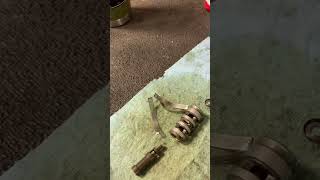
Est. part cost: $40-$90 - Faulty Bank 2 Intake VCT Solenoid 🔴 High Probability → Shop Engine Variable Valve Timing (VVT) Solenoid Ford TSBs SSM 47170 and SSM 50067 state that debris can cause the VCT solenoid to stick, a known issue on these engines. Forum users on F150Forum.com and Ford Truck Enthusiasts frequently report that replacing the Bank 2 (driver's side) intake solenoid resolves P0021. Sometimes, an internal part of the solenoid can break 🎬 Watch: See how these VCT solenoids fail internally on the 3.5L. and jam the spool valve.
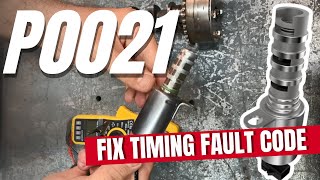
How to confirm: The solenoid can be tested by applying 12V to see if it actuates (clicks). A diagnostic scan tool can also command the solenoid to check for a response. 🎬 Watch: A step-by-step guide to testing and fixing the P0021 code. A common and effective diagnostic trick is to swap the Bank 2 intake solenoid with the Bank 1 intake solenoid (passenger side). If the code changes to P0011 (Bank 1 equivalent), the solenoid is confirmed to be faulty.
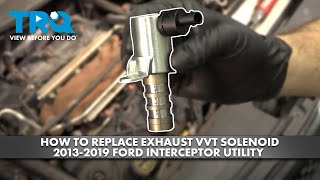
Typical fix: Replace the Bank 2 (driver's side) intake VCT solenoid. It is often recommended to replace all four VCT solenoids (intake and exhaust for both banks) at the same time to prevent future issues.
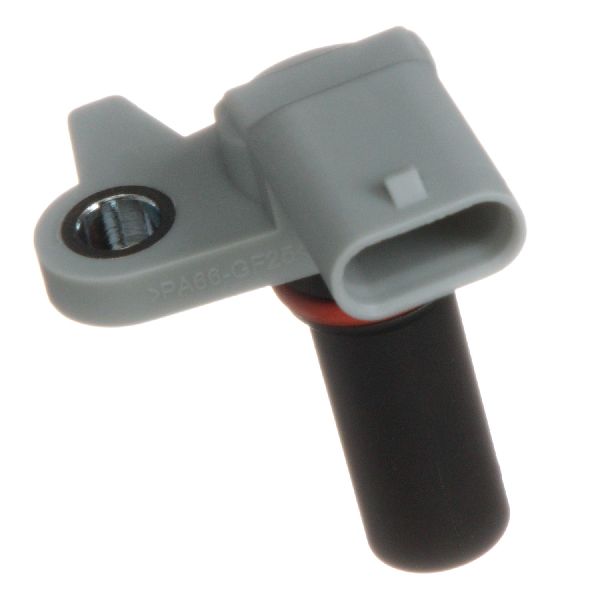
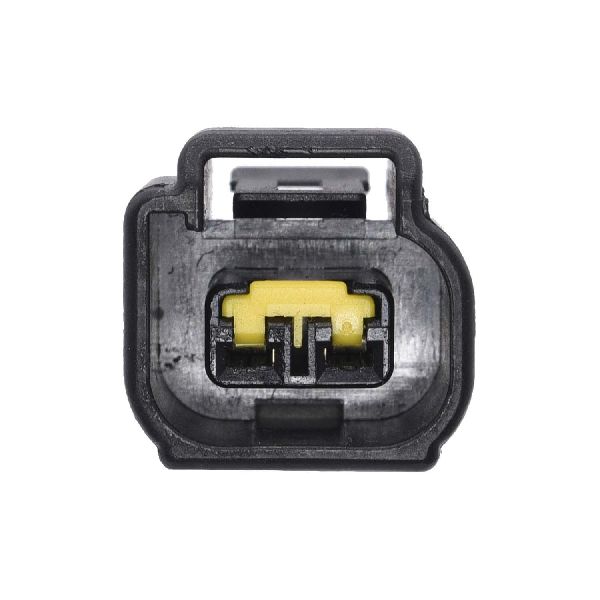
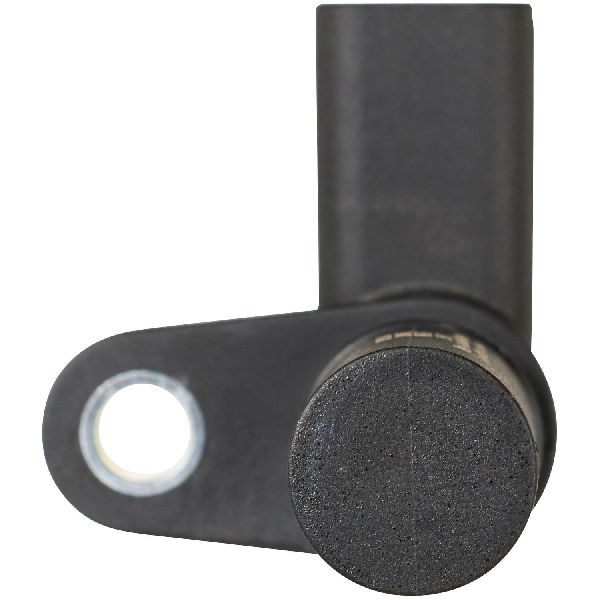
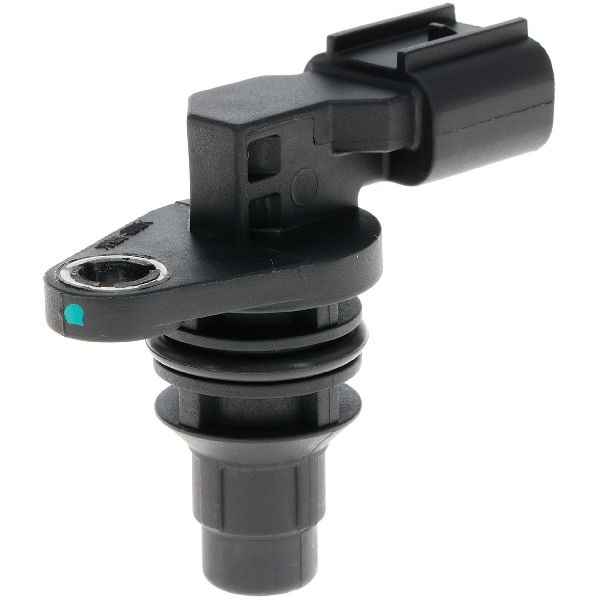
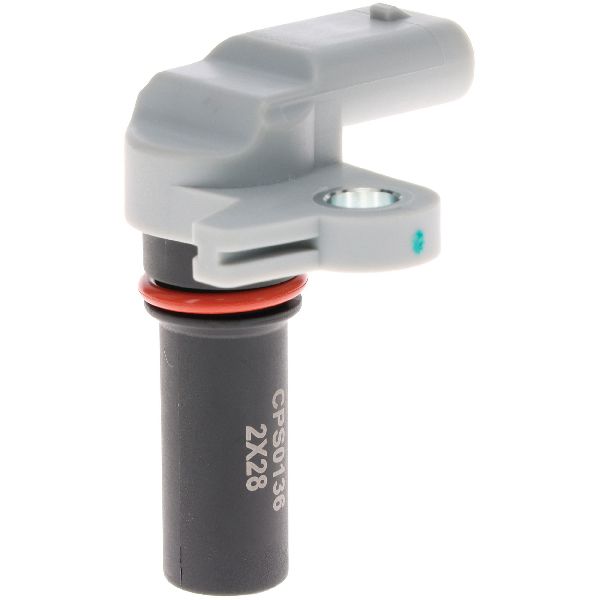
Est. part cost: $30-$70 - Faulty Bank 2 Camshaft Position Sensor ⚪ Low Probability → Shop Engine Camshaft Position Sensor While not as common as solenoid failure, a sensor can fail and send incorrect timing data to the PCM. However, this is often misdiagnosed when the real issue is the solenoid or oil.
How to confirm: Use a scan tool to monitor the live data from the sensor. An erratic or non-existent signal indicates failure. As with the solenoid, swapping the Bank 2 sensor with the Bank 1 sensor can help diagnose the issue. If the code follows the sensor to the other bank, the sensor is bad.
Typical fix: Replace the Bank 2 intake camshaft position sensor.
Est. part cost: $25-$60
Rare But Worth Checking
- Stretched Timing Chain: → Shop Engine Timing Chain This is a known, though less common, issue on higher-mileage 3.5L EcoBoost engines. A stretched chain can cause the timing correlation between the crank and cams to be off, triggering P0021 along with codes like P0018. A key symptom is a distinct 'cold start rattle' that lasts for a few seconds. This is a significant mechanical failure requiring professional repair.
- Failed Camshaft Phaser: → Shop Engine Camshaft The phaser (the gear on the end of the camshaft) can fail internally or become stuck due to oil sludge. This is a more involved and expensive repair than a solenoid replacement. Often, a bad phaser is the true cause of the startup rattle attributed to the timing chain. If solenoids and oil changes don't fix the code, the phaser is the next likely mechanical culprit.
Diagnosis Steps
- Check Engine Oil: Before anything else, verify the oil level is correct and the oil is clean and of the proper viscosity (SAE 5W-30 for 3.5L EcoBoost). If low, dirty, or overdue for a change, perform an oil and filter change. This simple step resolves the issue in many cases. 🎬 Watch: Two quick DIY methods to clear a P0021 engine code. Clear the code and see if it returns.
- Inspect Wiring: Check the wiring and connector for the Bank 2 (driver's side) intake VCT solenoid and camshaft position sensor for any damage, corrosion, or loose connections.
- Scan Tool Analysis: Use an OBD-II scanner to monitor live data. Compare the commanded vs. actual camshaft position for Bank 2. A large discrepancy confirms the fault. Also, check for accompanying codes like P0018.
- Test the VCT Solenoid (Solenoid Swap): The easiest and most definitive test is to swap the Bank 2 intake VCT solenoid with the Bank 1 intake solenoid (passenger side). They are typically identical parts. Clear the codes and drive the vehicle. If the code changes to P0011 (the code for Bank 1), the solenoid is faulty and needs to be replaced. This is a very common fix discussed in owner forums.
- Test the Camshaft Position Sensor: If the solenoid swap doesn't change the code, you can perform a similar swap with the camshaft position sensors to rule out a bad sensor, though this is a less likely cause.
- Advanced Mechanical Checks: If the above steps do not resolve the issue, the problem is likely mechanical. This could be a stretched timing chain or a faulty camshaft phaser. Listen for a startup rattle. These checks are complex and should be performed by a qualified technician.
Parts You'll Likely Need
- Variable Camshaft Timing (VCT) Solenoid
(OEM #AT4Z-6M280-B (Bank 2 Intake), AT4Z-6M280-A (Bank 1 Intake/Bank 2 Exhaust), AT4Z-6M280-C (Bank 1 Exhaust). Note: Part numbers may supersede. Verify with VIN.)— This part is the most common cause of P0021, often sticking due to oil debris as noted in Ford TSBs and confirmed by countless owner experiences.
Trusted brands: Motorcraft, Dorman, Standard Motor Products (SMP)
OEM price range: $40-$70
Aftermarket price range: $25-$50 - Engine Oil and Filter
(OEM #Motorcraft FL-500S (Filter))— Incorrect, low, or dirty oil is a primary cause of VCT system faults and code P0021.
Trusted brands: Motorcraft (Synthetic Blend), Mobil 1, Castrol
OEM price range: $50-$90
Aftermarket price range: $40-$80 - Camshaft Position Sensor
(OEM #7L1Z-6B288-A (Motorcraft))— Though less common, a faulty sensor can send incorrect data and trigger the code. It's often replaced unnecessarily.
Trusted brands: Motorcraft, Bosch, NGK/NTK
OEM price range: $40-$70
Aftermarket price range: $25-$50
Related Codes That Often Appear With This One
- P0018 — This code indicates a Crankshaft-Camshaft Correlation error for Bank 2. It frequently appears with P0021 because if the cam is over-advanced, its position will not correlate correctly with the crankshaft's position. Seeing both codes together strongly points to a problem on Bank 2.
- P0011 — This is the equivalent code for Bank 1. If both appear, it may point to a systemic issue like low oil pressure, severe oil contamination, or issues with both banks' timing components.
- P0300 — Random Misfire. An over-advanced camshaft can disrupt the air/fuel mixture and valve timing enough to cause misfires across multiple cylinders.
Technical Service Bulletins (TSBs) & Recalls
- SSM 54366: Lists P0021 as one of several VCT-related DTCs.
- SSM 50067: Notes that P0021 may be due to small debris causing the VCT solenoid to stick.
- SSM 47170: Also states that debris may cause the VCT solenoid to stick, triggering P0021.
- TSB-16-0093: Mentions P0021 being stored in the PCM memory on certain vehicles.
- 16-0038: Specifically calls out P0021 on 2016 Transit 3.5L GTDI engines with low mileage and advises solenoid replacement.
Platform-Specific Known Issues
- Ford has issued multiple Technical Service Bulletins regarding this and related codes. TSBs SSM 47170 and SSM 50067 specifically mention that P0021 can be caused by 'small debris causing the VCT solenoid to stick' and advise against immediate component replacement without proper diagnosis.
- TSB 16-0038 notes that some 2016 Transit vehicles with the 3.5L GTDI engine may exhibit this code at very low mileage (under 2,000 miles) and recommends replacing
Mechanic-Grade Diagnostic Values
- VCT Solenoid Internal Resistance — expected: 5-20 Ohms (check service manual for exact spec). Failure: A reading of infinite resistance (OL) indicates an open coil, while a very low reading (under 2 Ohms) indicates a short. Either requires replacement.
- Camshaft Position Sensor (3-wire Hall-effect) Voltage Test — expected: With key on, engine off: Power wire should have ~5V, Ground wire should show battery voltage (~12.6V) when tested against the positive battery terminal, and the Signal wire should also show ~5V.. Failure: If any of these readings are incorrect, there is a fault in the wiring or PCM, not necessarily the sensor itself. When cranking, the signal wire voltage should fluctuate or drop to 0V as the camshaft rotates.
- Scan Tool Live Data - VCT PIDs — expected: Monitor PIDs such as VCT_ADV2 (commanded advance for Bank 2) and VCT_DIF2 (difference between commanded and actual).. Failure: A large and persistent value for VCT_DIF2 indicates the camshaft is not reaching its commanded position. A large negative value (e.g., -45 degrees) can indicate an over-advanced condition.
- Engine Oil Pressure at Idle — expected: Should be above 20 PSI when warm.. Failure: Low oil pressure at idle can cause erratic camshaft position and trigger timing codes, even if the oil level is full and the quality is good.
Scan Tool Commands That Help
- Ford IDS (or equivalent high-level scanner like FORScan): VCT Solenoid On/Off State or Duty Cycle Command — This bidirectional control allows a technician to command the VCT solenoid on and off while the engine is running. A functional system will cause the engine to run rough or stall when the solenoid is commanded on at idle, confirming the solenoid and phaser are mechanically responding. If there is no change in engine operation, it points to a stuck solenoid, clogged oil passage, or failed phaser.
Wiring & Ground Locations
- Powertrain Control Module (PCM) and Engine Bay Fuses — The main fuse box is located in the engine bay. The PCM and its related fuses/relays are found here.. The VCT solenoids receive power (VPWR) from a circuit originating in this fuse box, often via the PCM power relay. An open in the VPWR circuit is a possible, though less common, cause for VCT-related codes.
- Customer Connection Point (Ground) — There is a primary customer connection point for grounding located at the right-side rear of the driver's seat pedestal.. While not a direct PCM ground, poor body or chassis grounds can introduce electrical noise and intermittent issues in various electronic systems, including sensor readings. Ensuring main grounding points are secure is a good practice during electrical diagnosis.
Real Owner Repair Stories
- Ford F150 Forum user report (same 3.5L EcoBoost engine) (2019 Ford F-150 Platinum 3.5L EcoBoost with 163k miles) — Check Engine Light with pending codes P0018 and P0021, hard shifts, and a subsequent P0302 misfire code after a hard acceleration event.
❌ Tried (didn't work) An oil change was performed, but the codes and symptoms persisted.
✅ What actually fixed it The user was still in the diagnostic phase, suspecting cam phasers or VCT solenoids. Another user in a similar video case with P0018 and P0021 on a 2019 F-150 found the issue was resolved by replacing the bad VCT solenoid, which also cured a cold start rattle that is typically blamed on phasers.
OEM Part Supersession History
AT4Z-6M280-A / AT4Z-6M280-C→AT4Z-6M280-B— Part consolidation and potential design updates. Multiple sources show AT4Z-6M280-B as the service part for the driver's side (Bank 2) intake position on 3.5L/3.7L engines.
Heads up: While Pass 2 listed different part numbers for intake/exhaust, many OEM parts dealers now list AT4Z-6M280-B as fitting multiple positions (Left, Right, Inner, Outer). It is critical to verify the correct part for the specific position using the vehicle's VIN with a Ford dealer, as the solenoids may have different colored connectors or internal calibrations despite looking similar.
Model Year Variations Within This Range
- 2015-2016: Early Gen1 3.5L EcoBoost engines had different timing chain components compared to later versions. Later model (2017+) Transit vans received updated timing components that are sometimes retrofitted to earlier engines during a timing job to improve durability.
- 2018+: Ford Transit models from 2018-2021 are noted by some sources as having higher dependability ratings, with improvements to the EcoBoost motors and electronic systems compared to the initial 2015-2017 models.
Helpful Videos
![How to Fix P0021 Engine Code in 4 Minutes [2 DIY Methods / Only $6.43]](https://img.youtube.com/vi/T8aepJyvnbg/mqdefault.jpg)
We Have This Part in Stock


The information in this article is provided for general reference and educational purposes only. Vehicle specifications, procedures, and part compatibility can vary by production date, trim level, and region. Always consult your vehicle's factory service manual and verify part numbers before purchasing or performing repairs. Safety-critical components such as airbags, seat belts, and braking systems should be installed by a qualified professional.
- Ford TRANSIT:
- 🧭 Diagnostic Flowchart
- 🎬 Helpful Videos
- 🛍️ Shop This Part
- What's Unique About the 2015-2019 Ford TRANSIT
- Symptoms You May Notice
- Most Likely Causes
- Rare But Worth Checking
- Diagnosis Steps
- Parts You'll Likely Need
- Related Codes That Often Appear With This One
- Technical Service Bulletins (TSBs) & Recalls
- Platform-Specific Known Issues
- Mechanic-Grade Diagnostic Values
- Scan Tool Commands That Help
- Wiring & Ground Locations
- Real Owner Repair Stories
- OEM Part Supersession History
- Model Year Variations Within This Range
- 🎟️ Get 5% Off