

P0021 on 2020-2021 Ford TRANSIT: Causes for Over-Advanced Camshaft Timing
For a 2020-2021 Ford Transit, code P0021 is most often caused by low or dirty engine oil, a faulty Variable Camshaft Timing (VCT) solenoid, or a powertrain software issue. Always check oil level and quality first, as it's the simplest fix. A VCT solenoid replacement is a common repair, costing around $30-$60 for the part. In some cases, a PCM reflash under TSB 21-2224 may be required.
- Before buying any parts for a P0021 code, check your engine oil level and quality. A simple oil change can sometimes resolve the issue.
- This code is specifically addressed by multiple Ford Technical Service Bulletins (TSBs), indicating known issues with software and VCT solenoids.
- The most common part to fail is the VCT solenoid for the Bank 2 intake camshaft, which is a relatively inexpensive and accessible part to replace.
- Ask a dealership to check if your vehicle's PCM software has been updated per TSB 21-2224 before proceeding with more expensive mechanical repairs.
- Do not immediately assume the camshaft position sensor is bad; it is more likely a symptom of the timing problem, not the cause.
What's Unique About the 2020-2021 Ford TRANSIT
On the 2020-2021 Ford Transit with the 3.5L engine, the VCT system is highly sensitive to oil quality and maintenance schedules. Ford has issued multiple technical service bulletins (TSBs) acknowledging that small debris from infrequent oil changes can cause VCT solenoids to stick (SSM 50067). Furthermore, a specific software glitch in the powertrain control module (PCM) has been identified as a cause, for which a reflash is the only solution (TSB 21-2224). These known issues make it crucial to check for software updates and maintain strict oil change intervals with the correct oil before replacing more expensive hardware like cam phasers.
Diagnostic Flowchart
Tap your situation to follow the diagnostic path that matches what you're seeing on this vehicle.
Symptoms You May Notice
- Check Engine Light is on
- Rough or poor idling
- Engine hesitation or stalling, especially during acceleration or at stops
- Reduced fuel economy
- Hard starting
- Rattling noise from the engine, especially on cold starts
- Replacing the camshaft position sensor. The code indicates a timing correlation problem (the cam is out of position), not necessarily a sensor failure. The sensor is usually reporting the fault correctly.
- Replacing timing components like phasers or chains without first ruling out a stuck VCT solenoid, a software issue, or oil quality problems, which are simpler and cheaper fixes.
Most Likely Causes
- Low, Dirty, or Incorrect Viscosity Engine Oil 🔴 High Probability The VCT system is hydraulically operated by engine oil, and its small passages are easily clogged. Ford TSB SSM 50067 specifically mentions that debris can cause the VCT solenoid to stick. Owners who extend oil change intervals are more likely to experience this issue.
How to confirm: Check the engine oil dipstick for level and examine the oil's color and consistency. If it's low, dark, sludgy, or past its change interval, it needs to be replaced.
Typical fix: Perform an oil and filter change using the manufacturer-recommended oil viscosity (e.g., SAE 5W-30 for the 3.5L EcoBoost) and a high-quality filter. Using aftermarket filters has been linked to internal breakdown, depositing material in oil passages.
Est. part cost: $40-$80 - Faulty Bank 2 Intake VCT Solenoid 🔴 High Probability → Shop Engine Variable Valve Timing (VVT) Solenoid Ford TSB SSM 50067 directly identifies sticking VCT solenoids due to debris as a potential cause for this code. This is the most common component failure for this code 🎬 Watch: See how a failed VCT solenoid behaves on the 3.5L across the 3.5L engine platform.
How to confirm: Use a scan tool to command the solenoid on and off while monitoring camshaft position data (PIDs VCT_INT_ACT2 and VCT_INT_DIF2). You can also swap the Bank 2 intake solenoid with the Bank 2 exhaust solenoid (if they are identical parts) and see if the trouble code changes to P0024 (Exhaust Camshaft Position Timing Over-Advanced).
Typical fix: Replace the Bank 2 (driver's side) intake VCT solenoid. This requires removing the valve cover. The solenoid is located on the front of the driver's side valve cover.
Est. part cost: $30-$85 - Powertrain Control Module (PCM) Software Issue 🟡 Medium Probability → Shop Engine Control Module (ECM) Ford issued TSB 21-2224 specifically for 2020-2021 models, stating that the PCM software may be the cause of P0021 and other related codes. This TSB applies to 2020 Transits with the 3.5L Duratec and all 2021 Transits built on or before July 1, 2021.
How to confirm: A Ford dealership or a qualified shop with access to Ford's diagnostic software (FDRS) can check the current PCM software calibration level and determine if the update from TSB 21-2224 is applicable and has not yet been performed.
Typical fix: Update or re-flash the PCM to the latest software version. This must be done by a dealer or a shop with the appropriate tools.
Est. part cost: $0 under warranty, otherwise $100-$250 - Worn Timing Components (Chain, Phaser, Guides) ⚪ Low Probability While less common on newer vehicles, the 3.5L EcoBoost engine family is known for cam phaser issues, which can cause a distinct startup rattle. A phaser stuck in the advanced position due to mechanical failure or oil pressure issues will trigger P0021.
How to confirm: Listen for a loud rattling noise from the front of the engine for 2-5 seconds on a cold start. Diagnosis requires removing the valve and timing covers to physically inspect the timing chain for slack and check the phaser for damage or being stuck. This is an extensive and labor-intensive job.
Typical fix: Replace the timing chain, tensioners, guides, and camshaft phasers. This is a significant repair, often costing several thousand dollars.
Est. part cost: $400-$1200+
Rare But Worth Checking
- Clogged Oil Passages:
Diagnosis Steps
- Verify the code with a reliable OBD-II scanner.
- Check the engine oil level and condition. Ensure it is full, clean, and of the correct viscosity (SAE 5W-30). Change if necessary, using a high-quality OEM-spec filter.
- Scan for any other DTCs that may be present to get a fuller picture of the issue. Note if codes like P0018 are also present.
- Check for Technical Service Bulletins (TSBs). Specifically, see if TSB 21-2224 (PCM reflash) applies to your vehicle's VIN and build date.
- Using a scan tool with live data capabilities, monitor the commanded vs. actual camshaft position for Bank 2 (PIDs: VCT_INT_CMD2, VCT_INT_ACT2) and the difference between them (PID: VCT_INT_DIF2). A large, persistent difference indicates a problem.
- Command the Bank 2 intake VCT solenoid on and off with the scan tool. A healthy solenoid should cause a noticeable change in engine idle and camshaft angle readings.
- If the solenoid does not respond correctly, inspect its wiring and connector for damage or corrosion.
- If wiring is good, perform a VCT solenoid swap test. Exchange the Bank 2 intake solenoid (P0021) with the Bank 2 exhaust solenoid (P0024). Clear codes and run the engine. If the code changes to P0024, the solenoid is confirmed faulty and should be replaced.
- If the code returns for the same position (P0021), the issue is likely not the solenoid itself. Investigate for clogged oil passages in the cylinder head or a mechanical timing issue (phaser, chain).
- Listen for a startup rattle. A distinct 2-5 second rattle on a cold start is a strong indicator of a failing cam phaser, which would require a full timing job.
Parts You'll Likely Need
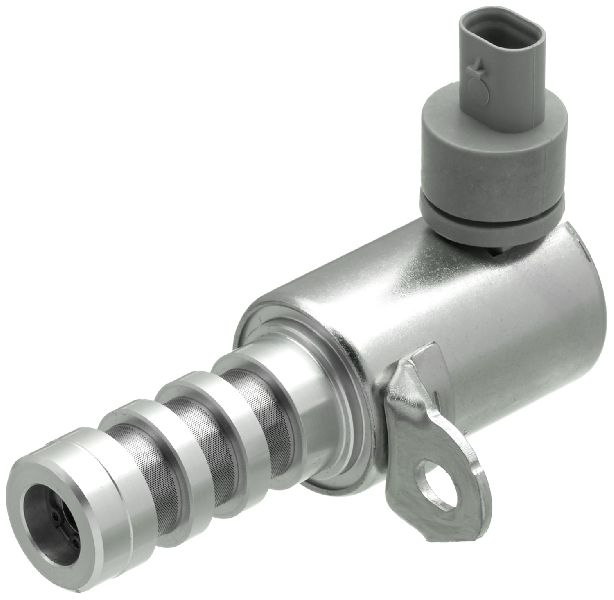
- Engine Variable Valve Timing (VVT) Solenoid
(OEM #HL3Z-6M280-A)— This part is frequently the cause of P0021, often due to sticking from oil debris, as noted in Ford TSB SSM 50067. It is the most common point of failure.
Trusted brands: Motorcraft, Gates, Dorman
OEM price range: $30-$50
Aftermarket price range: $25-$45 - Valve Cover Gasket Kit
(OEM #BL3Z-6584-A (Left/Driver Side))— The VCT solenoids are located under the valve cover on the 3.5L engines. The valve cover must be removed for access, and the gasket is a one-time use part that should be replaced to prevent leaks.
Trusted brands: Motorcraft, Fel-Pro
OEM price range: $30-$60
Aftermarket price range: $20-$40
Related Codes That Often Appear With This One
- P0011 — This is the equivalent code for Bank 1 (passenger side). Seeing both may indicate a systemic issue like old oil, low oil pressure, or a PCM software problem affecting both banks.
- P0018 — This code is for 'Crankshaft Position - Camshaft Position Correlation Bank 2'. It often appears with P0021 because an over-advanced cam will not correlate correctly with the crankshaft's position. Seeing them together strongly points to a timing issue on Bank 2, which could be the solenoid, phaser, or timing chain.
- P0022 — This code is for 'Camshaft Position 'A' - Timing Over-Retarded (Bank 2)'. Seeing it alongside P0021 could indicate an erratic VCT solenoid that is sticking in both directions or a more severe mechanical timing issue causing unpredictable cam movement.
- P0012, P0014, P0015, P0016, P0017, P0019, P0024, P0025 — These are all VCT-related codes mentioned in Ford's TSBs (SSM 54366, SSM 50067, TSB 21-2224). Their presence together strongly points towards a common cause like oil contamination or a software glitch affecting the entire VCT system.
Technical Service Bulletins (TSBs) & Recalls
- TSB 21-2224: Addresses P0021 being caused by a PCM software issue on 2020-2021 models.
- SSM 50067: Points to small debris causing the VCT solenoid to stick.
- SSM 54366: Lists P0021 as part of a group of common VCT-related trouble codes.
- TSB 16-0093: An older TSB for 2016 models that also identified faulty VCT solenoids as the cause for P0021 on low-mileage vehicles, showing a history of this issue.
Platform-Specific Known Issues
- TSB 21-2224: Some 2020-2021 vehicles may experience this code due to a software issue in the Powertrain Control Module (PCM). A software update from a Ford dealer is the prescribed fix for affected vehicles.
- SSM 50067: Ford notes that small debris in the engine oil can cause the VCT solenoid to stick, leading to this code. The bulletin advises against immediate component replacement without proper diagnosis, suggesting using a scan tool to cycle the solenoid to try and clear debris first.
- SSM 54366: This bulletin groups P0021 with a wide range of other VCT codes and points technicians to specific diagnostic procedures in the workshop manual, indicating a known pattern of VCT system faults across many Ford vehicles.
- Startup Rattle: The 3.5L EcoBoost engine family is known for issues with cam phasers that cause a loud rattle for a few seconds on a cold start. While P0021 is often just a solenoid, if it's accompanied by this rattle, it strongly suggests a more serious and expensive timing system overhaul is needed.
Mechanic-Grade Diagnostic Values
- VCT Solenoid Resistance — expected: 5-15 Ohms. A more precise OEM range is often cited as 6.9-7.9 Ohms.. Failure: A reading of OL (open circuit) or near zero (short circuit) indicates a failed solenoid.
- VCT Solenoid Connector Voltage (Key On, Engine Off) — expected: ~12V (Battery Voltage) on the power supply pin (VPWR circuit).. Failure: No voltage suggests a blown fuse, wiring issue, or PCM problem.
- Engine Oil Pressure (at hot idle) — expected: Minimum 15 PSI, measured with a mechanical gauge.. Failure: Pressure below 15 PSI can cause erratic camshaft position and trigger VCT codes.
- Scan Tool PID: VCT_INT_DIF2 (VCT Intake Differential Bank 2) — expected: Should be close to 0 degrees at a steady idle.. Failure: A large, persistent deviation from 0 (e.g., varying wildly from -45 to +26 degrees as seen in one failure) indicates the phaser is not achieving the commanded position.
Scan Tool Commands That Help
- FORScan or Ford IDS: Monitor PIDs: VCT_INT_ACT2 (Actual), VCT_INT_CMD2 (Commanded), and VCT_INT_DIF2 (Difference/Error). — Use during idle and while driving to see if the actual camshaft position is correctly following the PCM's command. The VCT_INT_DIF2 PID is the most direct way to see the performance error in real-time.
- Bidirectional Scan Tool or Power Probe: Command the VCT solenoid on/off (or apply 12V directly). — With the engine idling, activating the solenoid should cause a noticeable change in idle quality or even stall the engine. An audible click should also be heard from the solenoid. This directly tests the solenoid's mechanical function.
Wiring & Ground Locations
- VCT Solenoid Connector (Bank 2 Intake) — On top of the driver's side valve cover, connecting to the solenoid which is located underneath the cover.. This is the primary point for electrical testing. Check for battery voltage on the power pin (VPWR) with key-on-engine-off and check for continuity on the control wire back to the PCM. Corrosion or damage here will cause a failure.
- Engine Compartment Fuse Box — Located in the engine bay; specific fuse number may vary.. A single fuse may supply power to multiple VCT solenoids. If this fuse is blown, you will likely see VCT codes for both banks (e.g., P0011 and P0021), not just one.
Real Owner Repair Stories
- YouTube channel 'Truck Lab' (2019 Ford F-150 3.5L EcoBoost) — Check engine light with codes P0018 and P0021, occasional loss of power, and a cold start rattle.
❌ Tried (didn't work) The owner was running long oil change intervals (10,000 miles). While an oil change is a key first step, the damage was already done to the component.
✅ What actually fixed it Replacement of the faulty Bank 2 VCT solenoid resolved the trouble codes, the power loss, and, notably, the cold start rattle that is often misdiagnosed as requiring a full cam phaser replacement.
When the Usual Fixes Don't Work
- While a cold start rattle on a 3.5L EcoBoost engine is a very strong indicator of failing cam phasers, it is not a definitive diagnosis. A documented case on a 2019 F-150 with P0021 showed that a faulty VCT solenoid was the true cause of both the code and the startup rattle. Replacing only the solenoid resolved all symptoms, avoiding a multi-thousand dollar timing job. This highlights the importance of diagnosing the VCT solenoids thoroughly before condemning the phasers, even when a rattle is present.
OEM Part Supersession History
HL3Z-6M280-A→HL3Z-6M280-A— Part number appears to be stable.
Heads up: This is the correct and current OEM part number for the VCT solenoid on the 2020-2021 Transit 3.5L engine. No major supersession issues or incompatible revisions are noted in repair databases.
Model Year Variations Within This Range
- 2020-2021: The primary known variation is software-related. TSB 21-2224 addresses this code being caused by a PCM software glitch. It applies to 2020 models with the 3.5L PFDi (Duratec) engine and 2021 models built on or before July 1, 2021. No significant mechanical differences in the VCT system itself have been noted between these two model years.
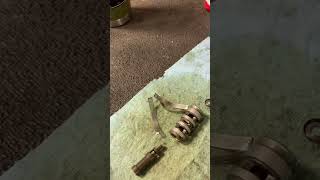
Helpful Videos
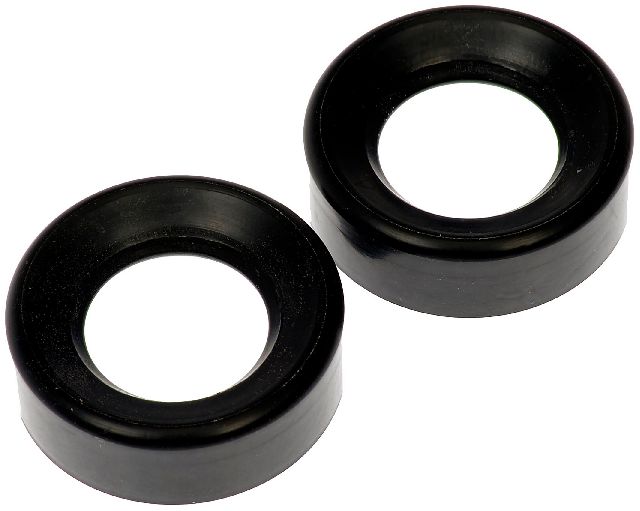
We Have This Part in Stock


The information in this article is provided for general reference and educational purposes only. Vehicle specifications, procedures, and part compatibility can vary by production date, trim level, and region. Always consult your vehicle's factory service manual and verify part numbers before purchasing or performing repairs. Safety-critical components such as airbags, seat belts, and braking systems should be installed by a qualified professional.
- Ford TRANSIT:
- 🧭 Diagnostic Flowchart
- 🎬 Helpful Videos
- 🛍️ Shop This Part
- What's Unique About the 2020-2021 Ford TRANSIT
- Symptoms You May Notice
- Most Likely Causes
- Rare But Worth Checking
- Diagnosis Steps
- Parts You'll Likely Need
- Related Codes That Often Appear With This One
- Technical Service Bulletins (TSBs) & Recalls
- Platform-Specific Known Issues
- Mechanic-Grade Diagnostic Values
- Scan Tool Commands That Help
- Wiring & Ground Locations
- Real Owner Repair Stories
- When the Usual Fixes Don't Work
- OEM Part Supersession History
- Model Year Variations Within This Range
- 🎟️ Get 5% Off