

P0021 on 2015-2022 GMC Canyon 3.6L V6: Causes and Fixes for Over-Advanced Camshaft Timing
On the 2015-2022 GMC Canyon 3.6L, code P0021 is most often caused by low/dirty engine oil or a faulty Bank 2 (driver's side) intake camshaft position actuator solenoid (OEM Part #12679100 or similar). An oil change with 5W-30 full synthetic Dexos-spec oil is the first step. If that doesn't work, the solenoid is a relatively inexpensive part (around $30-$60) and a common DIY fix.
- Always check your engine oil first. Low or dirty oil is a primary cause of P0021 and is the easiest and cheapest thing to fix.
- The most likely failed part is the Bank 2 (driver's side) intake camshaft actuator solenoid. It's a relatively inexpensive part and accessible for DIY replacement.
- A simple diagnostic test is to swap the suspected bad solenoid with a known good one (like the one from the other bank) and see if the trouble code follows the part.
- If you hear a rattling noise from the engine, especially on startup, stop driving and have the vehicle inspected for a stretched timing chain to avoid catastrophic engine failure.
- Use high-quality, full synthetic 5W-30 oil that meets GM's dexos1 specification and follow a regular oil change schedule to prevent future issues.
What's Unique About the 2015-2022 GMC Canyon
The GM 3.6L V6 engine family (LFX/LGZ) has a well-documented history of issues related to the variable valve timing (VVT) system, which is entirely dependent on clean engine oil at the proper pressure. While P0021 is often a simple fix like an oil change or a new solenoid, it can also be an early warning sign of a stretched timing chain, a more serious and expensive repair, particularly on the earlier LFX engine. GM issued TSB PIP5096C for this exact issue on many vehicles with this engine, acknowledging a problem with the original solenoids. Because of this sensitivity, owners on forums like coloradofans.com frequently stress the importance of 5,000-mile oil change intervals rather than following the oil life monitor.
Generation note: The 2015-2022 year range covers two versions of the 3.6L V6 engine in the second-generation Canyon. The 2015-2016 models use the LFX engine, while the 2017-2022 models use the updated LGZ engine. The LGZ features a more durable timing chain system and improved VVT components, making it less prone to the severe timing chain stretch issues seen in earlier GM 3.6L engines like the LLT. However, both engines can still suffer from P0021 due to oil issues or faulty solenoids.
Symptoms You May Notice
- Check Engine Light is on
- Rough or unstable idle
- Engine may hesitate or stumble during acceleration
- Stalling when coming to a stop
- Reduced engine power
- Decreased fuel economy
- Rattling, ticking, or chattering noise from the engine, especially on a cold start
- Replacing the camshaft position *sensor* instead of the camshaft position actuator *solenoid*. The solenoid (also called an oil control valve) is the part that controls oil flow and is the much more common failure point for this code.
Most Likely Causes
- Low, Dirty, or Incorrect Viscosity Engine Oil 🔴 High Probability The VVT system is hydraulic and extremely sensitive to oil pressure and cleanliness. Sludge or debris from infrequent oil changes can clog the small passages in the camshaft actuator solenoids, causing them to stick. The GM 3.6L engine family is known to be hard on oil, making regular 5,000-mile changes with full synthetic 5W-30 oil that meets GM's dexos1 specification critical for longevity.
How to confirm: Check the engine oil dipstick. The level should be full and the oil should be a clean amber/brown color, not black, sludgy, or low. Low oil pressure is a primary cause of VVT system failure.
Typical fix: Perform an engine oil and filter change using a full synthetic 5W-30 oil that meets GM's dexos1 specification. Clear the codes and drive to see if P0021 returns. Many owners report this alone solves the problem.
Est. part cost: $40-$80 - Faulty Bank 2 Intake Camshaft Position Actuator Solenoid 🔴 High Probability → Shop Engine Camshaft GM issued TSB #PIP5096C for this issue on related engines, noting that original solenoids could fail due to internal clearances. These solenoids get clogged with debris or fail electrically over time, and are a very common failure point discussed in owner forums.
How to confirm: After an oil change, if the code persists, swap the Bank 2 (driver's side) intake solenoid with the Bank 1 (passenger's side) intake solenoid. They are identical parts. Clear the codes and drive the vehicle. If the code changes to P0011 (the Bank 1 equivalent), the solenoid is confirmed to be faulty. TSB PIP5096C advises against this as a permanent fix, recommending replacement with a new service part.
Typical fix: Replace the Bank 2 intake camshaft position actuator solenoid. On the 3.6L V6, the Bank 2 solenoids are on the driver's side of the engine, under the engine cover.
Est. part cost: $30-$60 - Stretched Timing Chain ⚪ Low Probability → Shop Engine Timing Chain Earlier versions of the GM 3.6L V6 (pre-LFX) were notorious for premature timing chain wear. While the LFX (2015-16) was improved and the LGZ (2017+) was significantly redesigned to be more robust, the issue can still occur, especially if oil changes have been neglected. A stretched chain causes the camshaft and crankshaft correlation to be off, triggering timing codes.
How to confirm: This is often suspected when P0021 is accompanied by other timing correlation codes like P0008 or P0019, and a persistent rattling noise from the front of the engine. A technician can use a scan tool to monitor camshaft position variance (cam/crank correlation); excessive variance points to a chain issue. Physical inspection is the ultimate confirmation but requires significant labor.
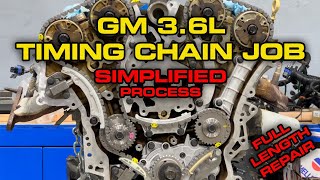
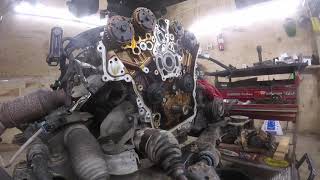
Typical fix: This is a major repair that involves replacing the timing chains, tensioners, and guides. It is an expensive job typically performed by a professional mechanic and may require engine removal in some vehicles. 🎬 Watch: Full timing chain removal and installation guide.
Est. part cost: $400-$700
Rare But Worth Checking
- Faulty Camshaft Phaser: → Shop Engine Camshaft The phaser is the mechanical gear at the end of the camshaft that is controlled by the solenoid. It can become stuck or fail internally due to debris or wear, but this is much less common than a solenoid failure.
- Wiring Harness Damage: GM issued TSB 18-NA-307 for some Canyon/Colorado models, indicating that the engine wiring harness could chafe on the sharp edge of the driver's side camshaft cover, causing various electrical issues and codes, including P0014, P0365, and P0366. While P0021 is not explicitly listed, a short in this area could affect related circuits.
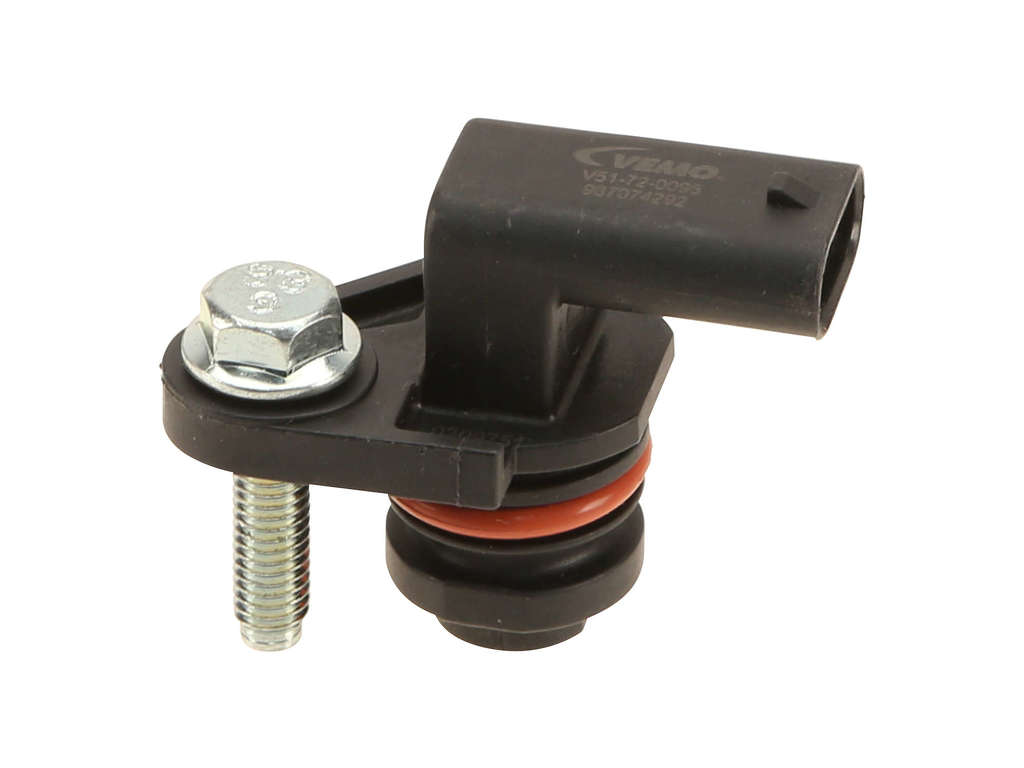
- Faulty Camshaft Position Sensor: → Shop Engine Camshaft Position Sensor While possible, it's much more common for the actuator solenoid to be the problem, not the sensor that reads the camshaft's position. Don't replace the sensor unless it has been specifically tested and found to be faulty.
- Low Oil Pressure from Failing Oil Pump: In some rare cases, particularly when multiple timing codes appear, the root cause can be a failing oil pump that cannot provide adequate pressure to operate the VVT system correctly.
Diagnosis Steps
- Check the engine oil level and condition. If it is low, dirty, or the wrong type, perform an oil and filter change with full synthetic 5W-30 oil meeting the GM dexos1 specification. This is the cheapest and easiest first step.
- Clear the code with a scanner and drive the vehicle to see if the light returns. If it does not, the issue was likely the oil.
- If the code returns, scan for any other pending codes. Codes like P0008 or P0019 point towards a more serious timing chain issue.
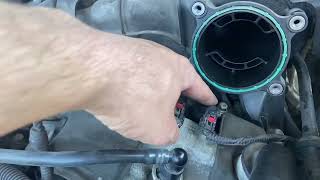
- Locate the Bank 2 (driver's side) intake and exhaust camshaft position actuator solenoids. They are on the front of the valve cover, held in by a single 10mm bolt each.
- As a diagnostic test, swap the Bank 2 intake solenoid with the Bank 1 (passenger's side) intake solenoid. They are identical and interchangeable for testing.
- Clear the codes and drive the vehicle. If the code changes to P0011 (Intake Camshaft Position Timing - Over-Advanced, Bank 1), the solenoid you moved is faulty and needs to be replaced.
- If the code P0021 returns, the problem is not the solenoid. Inspect the wiring and connector for the Bank 2 intake solenoid for damage, corrosion, or oil contamination per TSB 18-NA-307.
- If the wiring is good and you hear a persistent rattling noise from the engine, the next most likely cause is a stretched timing chain or failing phaser, which requires professional diagnosis.
Parts You'll Likely Need
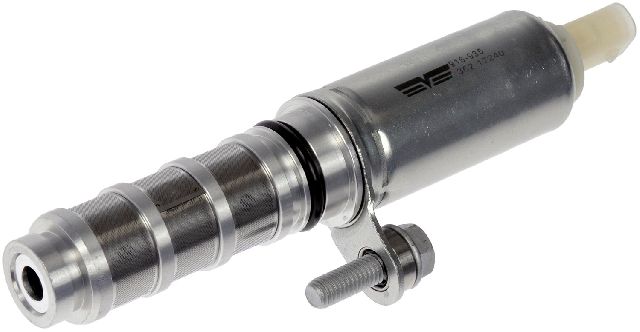
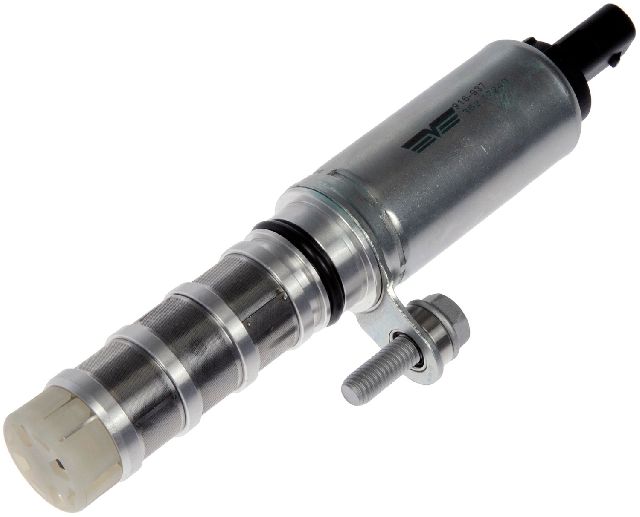
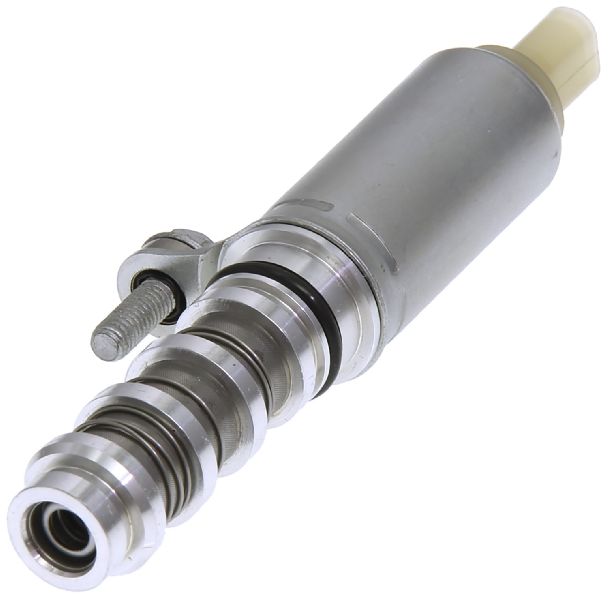
- Camshaft Position Actuator Solenoid (VVT Solenoid)
(OEM #12679100 (Supersedes: 12655421, 12628348, 12578518))— This is the most common part to fail and cause P0021 after ruling out oil issues. It gets clogged with debris or fails electrically. Both intake and exhaust solenoids are often the same part number. It is often sold as a kit with a new seal and bolt.
Trusted brands: ACDelco GM Genuine Parts, Delphi, Dorman
OEM price range: $45-$70
Aftermarket price range: $25-$50 - Timing Chain Kit
(OEM #12694126 (example kit, verify by VIN))— If the code is caused by a stretched timing chain, a full kit is required to replace the chains, guides, and tensioners. This is a known issue on the GM 3.6L engine family, though less common on the LGZ.
Trusted brands: ACDelco GM Genuine Parts, Cloyes
OEM price range: $400-$600
Aftermarket price range: $200-$300
Related Codes That Often Appear With This One
- P0011 — This is the same 'over-advanced' code but for Bank 1 (passenger side). If you swap a faulty solenoid from Bank 2 to Bank 1 for diagnosis, P0021 will go away and P0011 will appear, confirming the solenoid is the problem.
- P0008 / P0009 / P0017 / P0019 — These are all timing correlation codes that compare the crankshaft to the camshafts. If P0021 appears with any of these, it strongly suggests a more serious base timing issue, such as a stretched timing chain, rather than just a single faulty solenoid.
Technical Service Bulletins (TSBs) & Recalls
- PIP5096C: Addresses P0011, P0014, P0021, P0024 codes with no other drivability concerns. Recommends replacing the suspect camshaft actuator solenoid with an updated service part due to internal clearance issues in the original. A manufacturer service bulletin notes that technicians may find these codes on vehicles with a Service Engine Soon lamp on.
- 18-NA-307: Details a condition where the engine wiring harness can chafe on the edge of the driver's side camshaft cover or cylinder head, causing shorts and various DTCs, including those related to cam position sensors.
- 16-NA-175 / 18-NA-355: Part of a series of bulletins addressing torque converter shudder in the 8L45 8-speed automatic transmission. The ultimate fix involves a fluid exchange with an updated type of transmission fluid.
Platform-Specific Known Issues
- Premature Timing Chain Wear: Earlier versions of the 3.6L V6 were subject to Special Coverage Adjustment 11340C for premature timing chain wear, extending the warranty. While this has likely expired for most vehicles, it confirms the known weakness.
- Faulty Original Solenoids: TSB PIP5096C was issued because the original camshaft actuator solenoids had internal clearance issues that could trigger timing codes like P0021.
- Special Coverage N232430470: For 2020 models specifically, GM issued a special coverage for the Bank 2 *exhaust* camshaft actuator solenoid, indicating potential quality issues with these parts around that model year. While this TSB is for the exhaust solenoid (P0024), it points to general VVT component concerns.
Mechanic-Grade Diagnostic Values
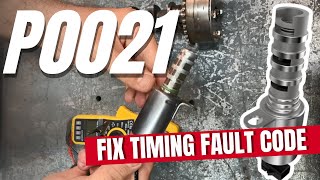
- Camshaft Position Actuator Solenoid Resistance — expected: 7-12 Ohms. Failure: A reading outside this range (e.g., open circuit 'OL' or shorted near 0 Ohms) indicates a failed solenoid coil.
- VVT Solenoid Connector - Ignition Circuit Voltage — expected: Battery Voltage (approx. 12.6V) with Key On, Engine Off. Failure: Voltage below B+ indicates a problem in the power supply circuit, such as a blown fuse or damaged wire.
- Scan Tool Live Data: 'Camshaft Position Variance' — expected: Less than 2 degrees from commanded position. Failure: Variance greater than 2 degrees while commanding the actuator with a scan tool suggests a mechanical problem with the camshaft phaser or a timing chain issue, not the solenoid.
Hidden / Shadow Codes Worth Checking
- Failure Record / Prerequisite DTCs: GM does not use distinct 'shadow codes' in the same way as some other manufacturers. However, the ECM requires numerous other DTCs related to sensor circuits (e.g., P0346, P0366) and solenoid circuits (e.g., P0020, P2090) to run and pass before it will set a performance code like P0021. A dealer-level GDS2 scanner can view the detailed 'failure record' for the code, which provides a snapshot of engine parameters when the fault occurred, offering more context than a standard code reader. (see via GM GDS2 / Tech2 or equivalent professional scan tool)
Scan Tool Commands That Help
- GDS2 (GM Diagnostic Software): Camshaft Position Actuator Control Function — This bidirectional control is used after verifying good oil and wiring. The technician commands the Bank 2 intake actuator from 0 degrees to 40 degrees and back while monitoring the 'Camshaft Position Variance' PID. If the camshaft angle changes as commanded and the variance stays below 2 degrees, the solenoid and phaser are likely working correctly. If it fails to move or is slow to respond, it confirms a fault in the actuator/phaser assembly.
Wiring & Ground Locations
- Harness Chafe Point (TSB 18-NA-307) — The engine wiring harness may rub against the sharp edge of the driver's side (Bank 2) camshaft cover, near the VVT solenoids.. This chafing can wear through the insulation on the wires for the VVT solenoids or camshaft position sensors, causing intermittent shorts or opens that can trigger P0021 and other related electrical codes.
- VVT Solenoid Connector — On the front of the Bank 2 (driver's side) valve cover.. This is the 2-pin connector for the solenoid. Pin 1 is the ignition voltage supply circuit, and Pin 2 is the control circuit that is pulse-width modulated by the ECM. Testing for power at Pin 1 is a primary electrical check.
- Main Engine/Chassis Grounds — Key grounds are typically located from the negative battery terminal to the chassis, from the chassis to the engine block, and on the firewall. On similar GM trucks, grounds are found on the frame behind the front wheels.. A poor engine ground can cause a host of electrical issues, including erratic sensor readings and incorrect actuator operation. While not a direct cause, verifying clean and tight main grounds is a crucial step in diagnosing any electrical fault.
Real Owner Repair Stories
- YouTube user 'Wild Frontier Garage' (2015-2022 Chevy Colorado / GMC Canyon 3.6L) — Check Engine Light with codes P0017 and P0019, poor gas mileage.
❌ Tried (didn't work) Initial diagnosis was unclear.
✅ What actually fixed it Replacing the Bank 1 and Bank 2 exhaust VVT solenoids resolved the codes and improved fuel economy by 1-2 MPG. - MyG37 forum user (Infiniti G37 (different vehicle, but same underlying VVT principle and codes)) — P0524 (Engine Oil Pressure Too Low) and P0021.
❌ Tried (didn't work) Initially suspected VVT solenoid or sensor.
✅ What actually fixed it A direct oil pressure test confirmed the root cause was a failed internal oil galley gasket. The pressure at idle was only 5.5 psi, far below the 14+ psi specification. This starved the VVT system of the pressure needed to operate. - NHTSA ODI #11712664 — An owner reported that their vehicle required service for the safety restraint system and error codes P0018 and P0021.
- NHTSA ODI #11394702 — On a related GM model, a technician retrieved failure codes P0018 and P0021, showing that the timing chain and camshaft actuator were no longer performing properly.
OEM Part Supersession History
12578518, 12628348, 12655421→12679100— Design updates for improved reliability and performance.
Heads up: The newest part number, 12679100, is the correct service replacement for the earlier numbers and is generally backward compatible for this application. On the 3.6L V6, all four solenoids (Bank 1/2, Intake/Exhaust) are often the same part number.
Model Year Variations Within This Range
- 2015-2016: These models use the LFX engine, which is known to be more susceptible to premature timing chain stretch. If P0021 appears with correlation codes (P0008, P0017, etc.) on these years, the probability of a timing chain issue is higher.
- 2017-2022: These models use the updated LGZ engine, which has a more robust timing chain design, making chain failure less common. An isolated P0021 code on an LGZ is more likely to be a simple solenoid failure. The LGZ also features a variable displacement oil pump, introducing a different component that can affect oil pressure.
Diagnostic Flowchart
Other Known Issues on This Vehicle
Issues unrelated to this code that are worth knowing about as an owner of this generation:
- 8-Speed (8L45) Transmission Shudder / Torque Converter Failure 🔴 High — Very common on 2017-2019 models. Can occur at low mileage (under 40,000 miles). Feels like driving over rumble strips between 25-80 mph. (Ref: Multiple TSBs issued, including 16-NA-175, 18-NA-355, and others. The fix evolved from replacing torque converters to performing a fluid flush with an updated Mobil 1 Synthetic LV ATF HP fluid.)
- Stalling or Hesitation While Driving 🟠 Medium — More prevalent on 2015-2016 models. Owners report the engine may stumble or shut off when changing speeds.
- Power Steering Loss 🔴 High — Primarily affects 2015 models. A recall was issued for a poor electrical connection in the steering gear wiring harness that could cause a sudden loss of power steering. (Ref: Recall 14V792000)
- Water Pump Failure 🟠 Medium — Can occur prematurely on 3.6L V6 engines, leading to coolant leaks and potential overheating.
- A/C Line Corrosion 🟡 Low — Affects 2017-2018 models. A white, powdery substance appears on A/C lines in the engine bay. GM states this is harmless flux residue from manufacturing and not a leak. (Ref: TSB 18-NA-127)
Used vs. New Parts: Buying Guide for This Vehicle
When a used part is the smart pick: For this specific repair, used parts are generally not recommended due to the low cost and high failure rate of the primary culprit (VVT solenoid). A used wiring harness from a low-mileage, non-wrecked vehicle could be a cost-effective option if the original is damaged beyond repair.
Donor-vehicle mileage cap: roughly under 60000 miles for the part to have meaningful remaining life.
What to inspect on the donor part:
- For a wiring harness, inspect for any signs of prior chafing, brittle conduit, or repaired wires.
- Ensure all connector locking tabs are intact and not broken.
- Verify the donor vehicle has a clean history with no flood or fire damage.
OEM-only on this vehicle (don't cheap out):
- Timing Chain Kit
- Camshaft Phasers
Aftermarket brands forum-validated for this vehicle:
- ACDelco (OEM)
- Delphi
- Cloyes (for timing components)
Brands owners have reported issues with on this vehicle:
- Unbranded, low-cost VVT solenoids from online marketplaces are frequently reported by users to be defective out of the box or fail within a short period.
Real Owner Stories
Aggregated from forums and TSBs cited above. Mileages and costs reflect what owners reported in those sources.
2018 GMC Canyon 3.6L LGZ V6
Symptoms: Transmission shudder and vibration issues.
What fixed it: A triple fluid flush with new Mobil 1 transmission fluid as per TSB 18-NA-355.
Source hint: gm-trucks.com
2017 GMC Canyon 3.6L LGZ V6
Symptoms: Cam phaser rattle on cold start when using Mobil 1 oil.
What fixed it: Switching oil brands to Castrol or Havoline resolved the rattle, demonstrating the VVT system's sensitivity to oil formulation.
Source hint: bobistheoilguy.com
2015 GMC Canyon 3.6L LFX V6
Symptoms: Check engine light with P0021 code; engine may hesitate or stumble during acceleration.
What fixed it: Swapping or replacing the camshaft position actuator solenoids or performing a high-quality oil change.
Source hint: coloradofans.com
Related OBD-II Codes
Frequently Asked Questions
Does TSB PIP5096C apply to my GMC Canyon if I have a P0021 code but no other drivability issues?
I have a 2020 GMC Canyon with a timing code; is there any special coverage for this?
Could a wiring problem cause P0021 on my driver's side engine bank?
What specific oil should I use in my 3.6L LGZ engine to prevent VVT codes?
Is the P0021 code related to the transmission shudder I'm feeling in my 2018 Canyon?
Helpful Videos
We Have This Part in Stock


The information in this article is provided for general reference and educational purposes only. Vehicle specifications, procedures, and part compatibility can vary by production date, trim level, and region. Always consult your vehicle's factory service manual and verify part numbers before purchasing or performing repairs. Safety-critical components such as airbags, seat belts, and braking systems should be installed by a qualified professional.
- GMC Canyon:
- 🧭 Diagnostic Flowchart
- 🎬 Helpful Videos
- 🛍️ Shop This Part
- What's Unique About the 2015-2022 GMC Canyon
- Symptoms You May Notice
- Most Likely Causes
- Rare But Worth Checking
- Diagnosis Steps
- Parts You'll Likely Need
- Related Codes That Often Appear With This One
- Technical Service Bulletins (TSBs) & Recalls
- Platform-Specific Known Issues
- Mechanic-Grade Diagnostic Values
- Hidden / Shadow Codes Worth Checking
- Scan Tool Commands That Help
- Wiring & Ground Locations
- Real Owner Repair Stories
- OEM Part Supersession History
- Model Year Variations Within This Range
- Other Known Issues on This Vehicle
- Used vs. New Parts: Buying Guide for This Vehicle
- Real Owner Stories
- 2018 GMC Canyon 3.6L LGZ V6
- 2017 GMC Canyon 3.6L LGZ V6
- 2015 GMC Canyon 3.6L LFX V6
- Related OBD-II Codes
- Frequently Asked Questions
- 🎟️ Get 5% Off