

P0021 on 2013-2018 Hyundai Santa Fe 3.3L V6: Causes and Fixes for Camshaft Timing
On the 3.3L V6 Santa Fe, P0021 is most often caused by low or dirty engine oil, or a failing Oil Control Valve (OCV) for the Bank 2 intake camshaft. First, check your oil level and condition. If the oil is fine, the OCV is the next likely culprit, costing around $50-$120 for the part.
- P0021 on a 2013-2018 Santa Fe 3.3L V6 means the driver's side intake camshaft timing is too advanced.
- Before buying any parts, check your engine oil. Low or dirty oil is the most common cause.
- If the oil is fine, the next most likely culprit is a faulty Bank 2 (driver's side) intake Oil Control Valve (OCV), which is a relatively inexpensive and accessible part to replace.
- A simple way to confirm a bad OCV is to swap it with the Bank 1 (passenger side) OCV and see if the code changes to P0011.
- Do not ignore this code, as continued driving with poor timing can lead to reduced performance, poor fuel economy, and potentially more severe engine damage.
What's Unique About the 2013-2018 Hyundai Santa Fe
The Lambda II 3.3L V6 engine in this generation of Santa Fe is generally robust, but like many modern engines, its variable valve timing system is highly sensitive to oil quality and level. Owners report that these engines can consume oil, and running the engine low on oil is a primary trigger for this code. While the issue is often a simple fix, it's important to address it because this specific engine has been the subject of class-action lawsuits and extended warranties for catastrophic failures related to internal oiling problems, making any oil-related code a serious warning.
Symptoms You May Notice
- Check Engine Light is on
- Rough idle
- Poor acceleration or engine hesitation
- Reduced fuel economy
- Engine rattling or knocking noises
- Difficulty starting the engine
- Engine stalling at low speeds or when stopping
- Replacing the camshaft position sensor without testing it. The sensor reports the problem; it's rarely the cause.
- Replacing the timing chain when the actual issue is a much simpler and cheaper Oil Control Valve (OCV).
- Assuming the issue is severe without first checking the engine oil level and condition, which is the most frequent cause.
Most Likely Causes
- Low or Dirty Engine Oil 🔴 High Probability The CVVT system relies on clean oil with the correct viscosity to function. The Lambda II 3.3L GDI engine is known for oil consumption issues, which can cause the level to drop unexpectedly between changes. Sludge or debris from internal wear can clog the small passages in the Oil Control Valve (OCV) or cam phaser.
How to confirm: Check the engine oil dipstick after the engine has been off for at least 10 minutes. Note the level and the color/condition of the oil. If it's low, black, or gritty, this is the most likely cause.
Typical fix: Top off or change the engine oil and filter. Use a high-quality full synthetic oil of the correct viscosity (typically 5W-30) specified by Hyundai. Given the engine's sensitivity, using an OEM oil filter is recommended.
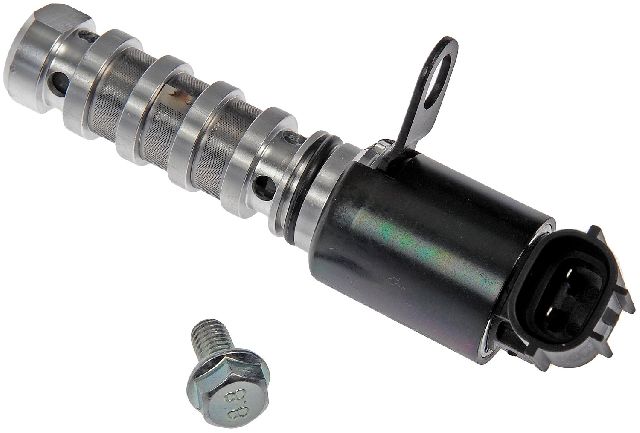
Est. part cost: $40-$80 - Faulty Oil Control Valve (OCV) 🟡 Medium Probability → Shop Engine Variable Valve Timing (VVT) Solenoid The OCV (also called a VVT solenoid) is an electronic solenoid that can fail electrically or become clogged with debris, causing it to stick in the advanced position. It's a common failure point for this code across many Hyundai models, with some forum users being told by technicians it's a common issue on the Lambda V6 family.
How to confirm: A good diagnostic step is to swap the Bank 2 intake OCV with the Bank 1 intake OCV. Clear the codes and drive the vehicle. If the code returns as P0011 (the equivalent code for Bank 1), the OCV is faulty. You can also test the solenoid's resistance with a multimeter (should be around 6.7-7.9 Ohms, though specs can vary by supplier).
Typical fix: Replace the Bank 2 (driver's side) intake Oil Control Valve.
Est. part cost: $50-$120
Rare But Worth Checking
- Stretched Timing Chain or Failed Tensioner: → Shop Engine Timing Chain While less common than oil issues or a bad OCV, a stretched timing chain can cause the camshaft timing to be physically out of sync with the crankshaft, triggering this code. This is a more serious issue that often presents with a rattling noise, especially on startup.
- Failing Camshaft Phaser (CVVT Actuator): → Shop Engine Camshaft The phaser is the mechanical gear on the end of the camshaft that adjusts the timing. It can get stuck in the advanced position due to internal wear, sludge, or oil pressure issues. This is a more complex and expensive repair, and sometimes diagnosed alongside a faulty OCV.
- Faulty Camshaft Position Sensor: → Shop Engine Camshaft Position Sensor It's possible for the sensor itself to send incorrect data, but this is less common for an over-advanced code and would likely be accompanied by other sensor-specific codes.
Diagnosis Steps
- Check the engine oil level and condition. Top off or change the oil if necessary. Use the manufacturer-recommended 5W-30 full synthetic oil. This is the most common and cheapest fix.
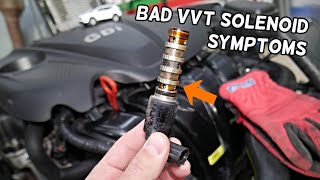
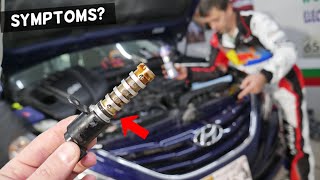
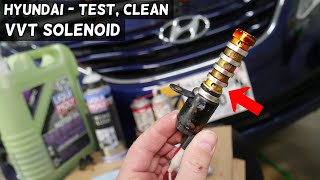
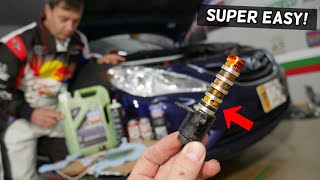
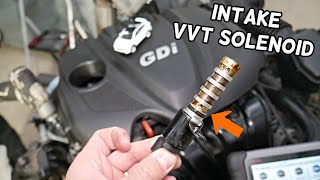
- If the oil is fine, inspect the wiring and connector for the Bank 2 intake Oil Control Valve (OCV) for any damage or corrosion. Bank 2 is on the driver's side, closer to the front of the vehicle. 🎬 Watch: How to locate and replace the intake VVT solenoid.
- The most effective DIY diagnostic is to swap the intake OCVs between Bank 1 (passenger side, near firewall) and Bank 2 (driver's side, near radiator). They are identical parts.
- Clear the codes using an OBD-II scanner and drive the vehicle.
- If the code returns as P0011 (for Bank 1), the OCV you moved is faulty and needs to be replaced.
- If the P0021 code returns, the problem is not the OCV. The issue may be a clogged oil passage, a faulty CVVT phaser, or a timing chain issue.
- At this point, further diagnosis may require a professional mechanic to check oil pressure and inspect the timing components, especially given the known engine issues with this model.
Parts You'll Likely Need
- Intake Oil Control Valve (VVT Solenoid)
(OEM #24355-3C200)— This solenoid is the most common part to fail or get clogged, leading to the P0021 code after ruling out oil issues. This part is used on both intake and exhaust for a variety of Hyundai/Kia V6 models.
Trusted brands: Hyundai (OEM), Denso, Delphi
OEM price range: $90-$140
Aftermarket price range: $50-$90 - Engine Oil and Filter — Low or dirty oil is the number one cause of this code. Always start with an oil and filter change using the correct grade of full synthetic oil.
Trusted brands: Pennzoil, Mobil 1, Castrol
OEM price range: $60-$100
Aftermarket price range: $40-$80
Related Codes That Often Appear With This One
- P0011 — This is the same timing over-advanced code but for Bank 1 (passenger side). If both P0011 and P0021 are present, it strongly suggests a systemic problem like low/dirty oil or low oil pressure affecting the entire engine.
- P0024 — This code is for the exhaust camshaft ('B' camshaft) on the same bank (Bank 2). Seeing it with P0021 could point to a more significant oil pressure or timing chain issue on that bank.
- P1326 — This is a knock sensor-related code specific to Hyundai/Kia, often triggered by a software update designed to detect premature rod bearing wear. If you see this with P0021 and hear knocking, it's a strong indicator of the severe engine failure this platform is known for, and you should seek warranty service immediately.
Technical Service Bulletins (TSBs) & Recalls
- Campaign 162 (TSB# 17-01-047-1): Pertains to 2.4L and 2.0T engines in the Santa Fe Sport, not the 3.3L V6, but is related to engine wear inspection.
- Knock Sensor Detection System Software Update (e.g., Service Campaign 966): Hyundai released a software update to monitor for early signs of engine bearing wear, which can be related to oiling problems. This applies to many models and can result in code P1326 if a fault is detected.
- TSB 09-EM-002: While for an older model year, this TSB for Lambda engines details the inspection procedure for OCVs, including resistance checks, confirming this is a known service item for Hyundai.
Platform-Specific Known Issues
- Owners of the 3.3L V6 engine report higher than average oil consumption, which can lead to low oil levels and trigger CVVT-related codes like P0021 if not checked regularly.
- A class-action lawsuit alleges the Lambda II 3.3L V6 is prone to catastrophic engine failure due to manufacturing defects causing internal debris to circulate in the oil. A P0021 code can be an early symptom of these oiling issues.
- Hyundai has extended the warranty on the engine for some 2013-2019 Santa Fe models due to issues with connecting rod bearing wear. Owners experiencing P0021 with engine knocking should immediately investigate warranty coverage with a dealer.
Mechanic-Grade Diagnostic Values
- Oil Control Valve (OCV) Coil Resistance — expected: 6.9–7.9 Ohms for Denso-supplied parts; 6.7–7.7 Ohms for Delphi-supplied parts (at 68°F/20°C).. Failure: A reading of infinity (open circuit) or near zero (short circuit) indicates a failed OCV.
- Scan Tool Live Data: Camshaft Position Error — expected: The difference between the desired and actual camshaft position should be minimal at idle and respond quickly during acceleration.. Failure: If the difference between the 'Cam Actual Position' and 'Desire Position' is higher than 20 degrees while driving, the ECM may determine a fault exists.
Hidden / Shadow Codes Worth Checking
- Mode $06, VVT Monitor: Mode $06 is not a trouble code but a diagnostic function that displays results from the ECU's internal self-tests. For the CVVT system, it shows the raw test value for cam position error, allowing a technician to see if the system is operating close to its failure threshold, even before a DTC like P0021 is set. (see via Requires an advanced OBD-II scanner with Mode $06 capability or the dealer-level Hyundai GDS (Global Diagnostic System).)
Scan Tool Commands That Help
- Hyundai GDS (Global Diagnostic System): Actuation Test for CVVT Solenoid — This bidirectional command allows a technician to manually force the OCV solenoid on and off while monitoring the camshaft angle PID. If the solenoid is commanded on but the cam angle does not change, it points to a stuck solenoid, a clogged oil passage, or a faulty mechanical phaser, providing a definitive functional test.
- Hyundai GDS (Global Diagnostic System): Reset Adaptive Values — After replacing a major timing component like a CVVT phaser, OCV, or the timing chain, it is best practice to use this function to clear the engine's learned values and force it to relearn the new component's behavior.
Wiring & Ground Locations
- GE04 — Located on the left rear of the engine compartment.. This is a primary engine ground point. A loose or corroded connection here can cause erratic voltage and unstable readings from engine sensors, including the camshaft position sensor, potentially causing the ECM to see a timing fault that isn't physically present.
- GE01 — Located on the left side of the engine compartment.. Another critical engine ground point that serves a similar function to GE04. Poor grounding can affect the stability of sensor readings and actuator commands.
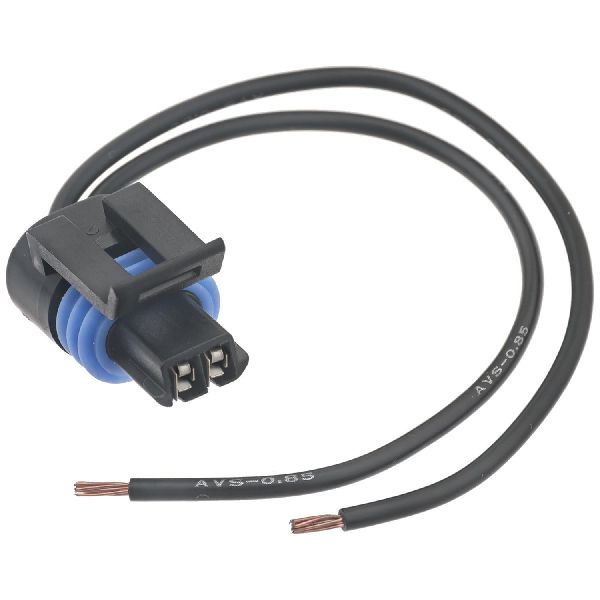
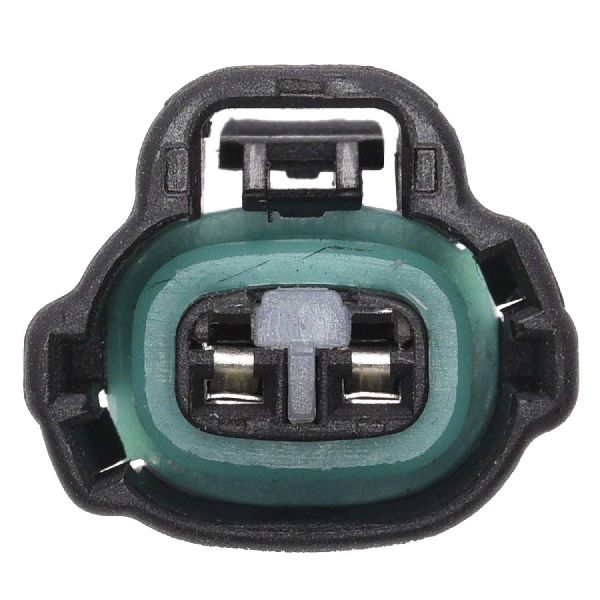
- OCV Connector — On the Oil Control Valve itself. Bank 2 intake is on the driver's side of the engine, near the radiator.. This 2-pin connector provides power and the control signal to the OCV. The terminals are very close together; care must be taken when testing to avoid shorting them. Applying 12V directly to the pins should cause the internal plunger to move, which can be heard as a click.
Real Owner Repair Stories
- Reddit user @jaybird2798 (2014 Hyundai Santa Fe Limited 3.3L V6 with 163,000 miles) — P0021 code appeared randomly during a drive. No noticeable drivability issues or hard starting. Owner was already aware the vehicle was consuming oil.
❌ Tried (didn't work) Keeping oil topped off.
✅ What actually fixed it The user did not post a final repair, but a Hyundai technician commented on the thread stating the most likely causes were a bad oil control valve or a failing intake CVVT phaser, noting these are common failures on the Lambda V6. - Reddit user with a 2007 Santa Fe 3.3L (2007 Hyundai Santa Fe 3.3L V6 (older generation, but same engine family and codes)) — P0011, P0021, and P0026 codes present simultaneously. Lacking power at low RPMs, but no engine rattle.
❌ Tried (didn't work) Changing the engine oil and filter. The owner noted the engine was severely overfilled with oil (drained 8 quarts from a 5.5 quart capacity system).
✅ What actually fixed it The final fix was not posted, but a commenter suggested the variable valve timing solenoid (OCV) may have been damaged from the excessive oil pressure caused by overfilling. - NHTSA ODI #11630004 — An owner reported that when the check engine light came on with code P0021, there was a loud clanking sound and low oil level. The dealership suggested a tune-up and advised the owner to continue monitoring the oil level.
- NHTSA ODI #11574809 — A report describes a check engine light accompanied by a bad tapping sound on the passenger side of the engine. Diagnostic codes P0346, P0021, and P0087 were present, leading to concerns about potential engine failure while driving.
When the Usual Fixes Don't Work
- While low/dirty oil and faulty OCVs are the most common causes, this code can be the first sign of a more serious timing chain or CVVT phaser failure. On a Reddit thread for a 2014 Santa Fe with P0021, a Hyundai technician noted that a failing CVVT gear (phaser) is also a common point of failure for this code on the Lambda V6. If an oil change and OCV replacement (or swap test) do not resolve the code, the next step is to investigate these more complex mechanical components.
OEM Part Supersession History
24355-3C100→24355-3C200— Standard part revision and update by the manufacturer. The new part is a direct replacement.
Diagnostic Flowchart
Other Known Issues on This Vehicle
Issues unrelated to this code that are worth knowing about as an owner of this generation:
- Catastrophic Engine Failure (Rod Bearing Failure) 🔴 High — Occurs at moderate mileage (e.g., under 100,000 miles), subject of class-action lawsuits. Allegedly caused by manufacturing debris contaminating oil passages. (Ref: Hyundai extended the engine warranty for some 2013-2019 Santa Fe models to 15 years/150,000 miles (TSB 24-EM-003H mentioned for a similar code) due to rod bearing wear issues.)
- High Oil Consumption 🟠 Medium — Frequently reported by owners, can lead to low oil levels that trigger CVVT codes like P0021 if not monitored closely between oil changes.
- Carbon Buildup on Intake Valves 🟠 Medium — A common issue for all Gasoline Direct Injection (GDI) engines, including the Lambda II 3.3L. Can cause misfires, rough idle, and performance loss over time, typically becoming noticeable after 60,000-80,000 miles.
- Transmission Hesitation or Rough Shifting 🟡 Low — Some owners report hesitation during gear changes or rough shifting, particularly in later model years of this generation.
- Crankshaft Position Sensor Malfunction 🟡 Low — Some reports indicate the crankshaft position sensor can fail when hot, causing the engine to stall while driving. The engine may restart after cooling down.
Used vs. New Parts: Buying Guide for This Vehicle
When a used part is the smart pick: For this repair, sourcing a used Oil Control Valve (OCV) from a reputable salvage yard can be a cost-effective diagnostic step, especially if you intend to swap it to confirm the fault. However, due to the part's relatively low cost new and its sensitivity to oil sludge, installing a new part for the final repair is recommended.
Donor-vehicle mileage cap: roughly under 80000 miles for the part to have meaningful remaining life.
What to inspect on the donor part:
- Ask for the VIN of the donor vehicle to verify it's from a low-mileage, accident-free car.
- Visually inspect the OCV's mesh screens. They should be perfectly clean, silver, and free of any dark sludge, grit, or metallic particles.
- Check the electrical connector for any signs of corrosion, oil contamination, or broken plastic locking tabs.
OEM-only on this vehicle (don't cheap out):
- Engine Oil Filter: Anecdotal evidence from forums suggests that some aftermarket oil filters may not meet the exact bypass pressure specifications, potentially contributing to oil pressure issues that trigger CVVT codes. Using an OEM Hyundai filter (Part #26320-3CAA0) is a cheap insurance policy.
Aftermarket brands forum-validated for this vehicle:
- OCV/VVT Solenoid: Delphi, Denso, Standard Motor Products (SMP), Dorman.
- Timing Chain Kit (if needed): Cloyes, Melling.
Brands owners have reported issues with on this vehicle:
- No-name, unbranded OCVs from online marketplaces should be avoided, as their internal calibration and durability are often questionable and can lead to repeat failures.
Real Owner Stories
Aggregated from forums and TSBs cited above. Mileages and costs reflect what owners reported in those sources.
2014 Hyundai Santa Fe V6
Symptoms: P0021 code appeared but the vehicle seemed to be running fine otherwise.
What fixed it: A technician identified that a bad oil control valve or a failing CVVT gear are the common failure points for this engine.
Source hint: Reddit r/Hyundai - 'New P0021 but everything seems fine? (2014 Santa Fe V6)'
2017 Hyundai Santa Fe V6
Symptoms: Code P0021 and the engine was burning oil quickly.
What fixed it: The owner discussed the issue as a common combination of rapid oil consumption and CVVT timing errors.
Source hint: Reddit r/MechanicAdvice - "2017 Santa Fe V6 code P0021 and burning oil quick"
2014 Hyundai Santa Fe Limited
Symptoms: The vehicle was burning oil, though not at an extremely rapid rate.
What fixed it: The owner monitored the oil consumption which is a known precursor to CVVT codes.
Source hint: r/Hyundai owner report
NHTSA ODI #11630004
Symptoms: The check engine light came on with code P0021, accompanied by a loud clanking sound and low oil levels.
What fixed it: The dealership suggested a tune-up and advised the owner to continue checking the oil level frequently.
Source hint: NHTSA ODI #11630004
NHTSA ODI #11574809
Symptoms: Check engine light with a bad tapping sound on the passenger side of the engine. Codes P0346, P0021, and P0087 were found.
What fixed it: The owner reported the issue to NHTSA due to concerns about engine failure while driving; the tapping sound persisted despite normal power levels.
Source hint: NHTSA ODI #11574809
Related OBD-II Codes
Frequently Asked Questions
Does Campaign 162 (TSB# 17-01-047-1) apply to my 3.3L V6 Santa Fe?
Is there a warranty extension for the 2013-2018 Santa Fe 3.3L V6 engine issues?
What type of oil should I use in my 3.3L Lambda II engine to prevent P0021?
I have a P0021 and hear a knocking noise; what should I do?
Can I test if the Oil Control Valve is the problem without buying a new part?
Is the P0021 code related to the Knock Sensor Detection System update?
Helpful Videos
We Have This Part in Stock


The information in this article is provided for general reference and educational purposes only. Vehicle specifications, procedures, and part compatibility can vary by production date, trim level, and region. Always consult your vehicle's factory service manual and verify part numbers before purchasing or performing repairs. Safety-critical components such as airbags, seat belts, and braking systems should be installed by a qualified professional.
- Hyundai Santa Fe:
- 🧭 Diagnostic Flowchart
- 🎬 Helpful Videos
- 🛍️ Shop This Part
- What's Unique About the 2013-2018 Hyundai Santa Fe
- Symptoms You May Notice
- Most Likely Causes
- Rare But Worth Checking
- Diagnosis Steps
- Parts You'll Likely Need
- Related Codes That Often Appear With This One
- Technical Service Bulletins (TSBs) & Recalls
- Platform-Specific Known Issues
- Mechanic-Grade Diagnostic Values
- Hidden / Shadow Codes Worth Checking
- Scan Tool Commands That Help
- Wiring & Ground Locations
- Real Owner Repair Stories
- When the Usual Fixes Don't Work
- OEM Part Supersession History
- Other Known Issues on This Vehicle
- Used vs. New Parts: Buying Guide for This Vehicle
- Real Owner Stories
- 2014 Hyundai Santa Fe V6
- 2017 Hyundai Santa Fe V6
- 2014 Hyundai Santa Fe Limited
- NHTSA ODI #11630004
- NHTSA ODI #11574809
- Related OBD-II Codes
- Frequently Asked Questions
- 🎟️ Get 5% Off