

P0021 on 2016-2020 Kia Sorento 3.3L V6: Causes and Fixes for Camshaft Timing
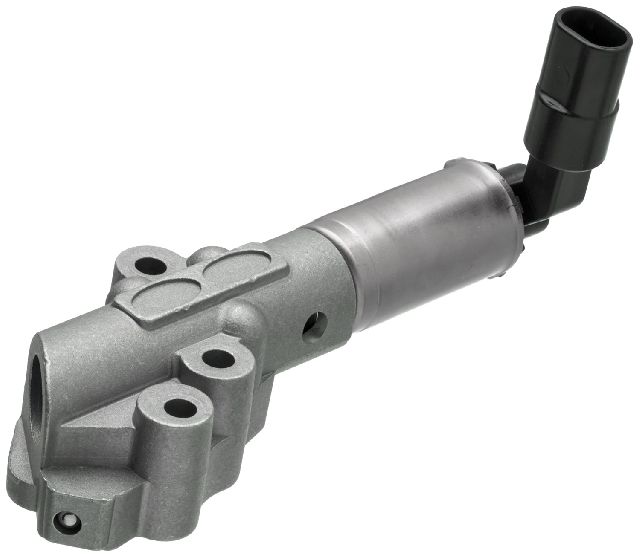
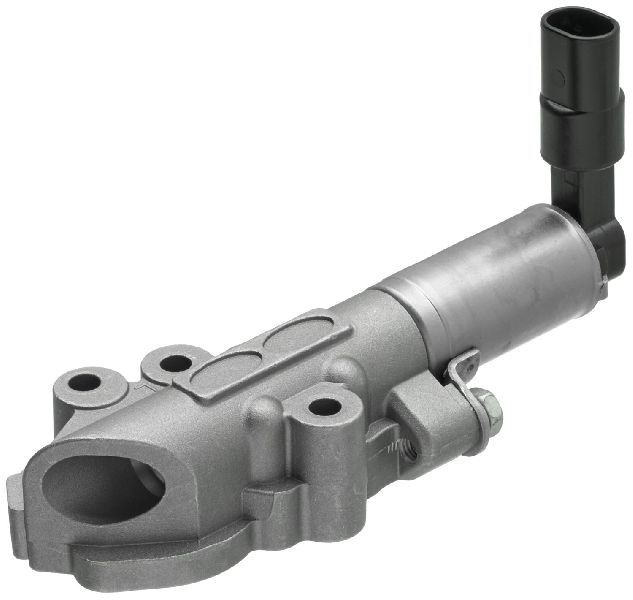
On a 2016-2020 Sorento 3.3L V6, P0021 is most often caused by low or dirty engine oil, a known issue with this engine. Before buying parts, check the oil level and quality. If the oil is fine, the next most likely cause is a faulty Bank 2 intake Oil Control Valve (OCV), which costs about $70-$150 for the part. The OEM part number is likely 24355-3L100, but confirm with a dealer.
- Always check your engine oil level and condition first; this is the most common and cheapest fix due to this engine's known oil consumption.
- P0021 refers to the intake camshaft on the front-facing cylinder bank (Bank 2), which is on the driver's side.
- If the oil is full and clean, the Oil Control Valve (OCV) is the next part to inspect and is a common failure item that can be diagnosed by swapping it with the Bank 1 valve.
- Ignoring this code, especially if caused by low oil, can lead to poor performance, bad fuel economy, and potentially severe engine damage.
What's Unique About the 2016-2020 Kia Sorento
The Lambda II 3.3L V6 engine in the Sorento is known for significant oil consumption, with some owners on forums reporting usage as high as one quart every 1,000 miles. This makes low engine oil a very common trigger for CVVT-related codes like P0021. The entire CVVT system is operated by oil pressure, so it is extremely sensitive to the oil's level and cleanliness. While the code can point to a sensor or solenoid, it often acts as an early warning that the engine is low on oil or that oil sludge is starting to clog critical passages. In some cases, owners have had to undergo official oil consumption tests with their dealer, which ultimately led to engine replacement under warranty.
Symptoms You May Notice
- Check Engine Light is on
- Rough engine idle
- Engine hesitates or loses power during acceleration
- Engine may stall when coming to a stop
- Decreased fuel efficiency
- Rattling noise from the engine, especially on startup
- Replacing the Camshaft Position Sensor when the actual problem is the Oil Control Valve (OCV) or low engine oil.
- Replacing the camshaft phaser before confirming the much cheaper and more common OCV is working correctly.
- Assuming a major timing job is needed before performing an oil change and OCV swap test.
Most Likely Causes
- Low or Dirty Engine Oil 🔴 High Probability The Lambda II 3.3L V6 engine is widely reported by owners to consume oil between changes, and the CVVT system is highly sensitive to oil level and pressure.
How to confirm: Check the engine oil dipstick when the engine is cold and on a level surface. The level should be between the 'F' and 'L' marks. Inspect the oil for a dark, sludgy consistency. Note that the low oil pressure light may not illuminate until the level is critically low.
Typical fix: Top off the oil to the correct level or perform a complete oil and filter change. Use a high-quality 5W-30 full synthetic oil and an OEM filter, as aftermarket filters have been linked to pressure issues.
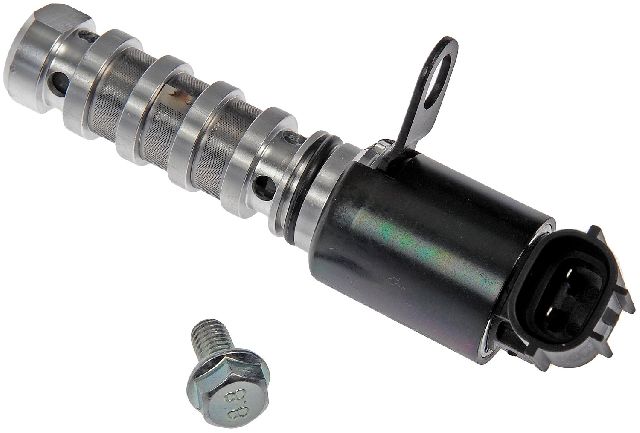
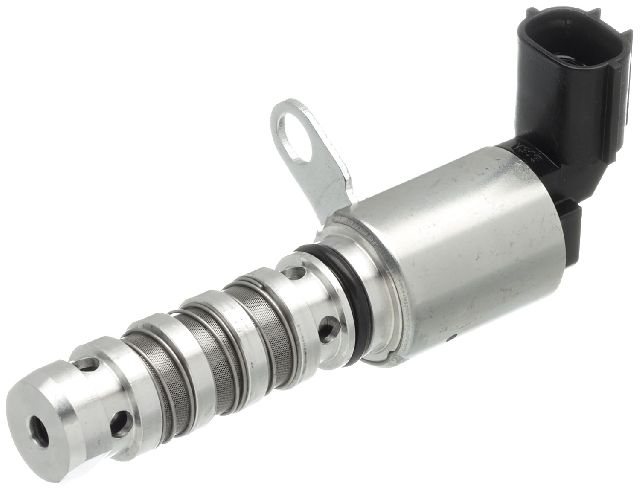
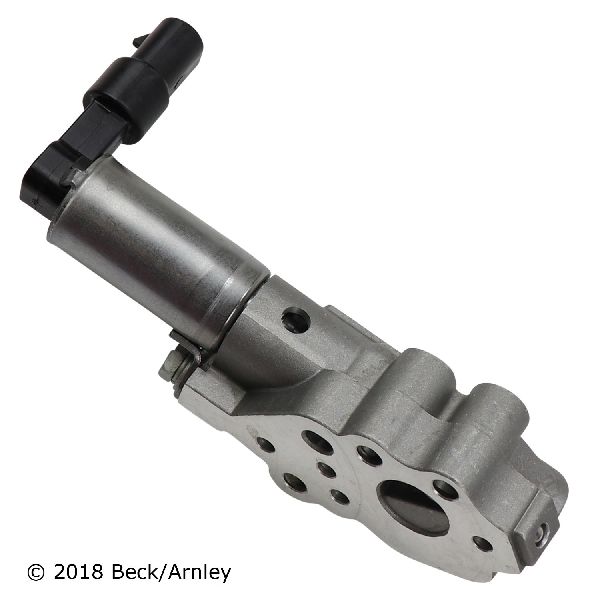
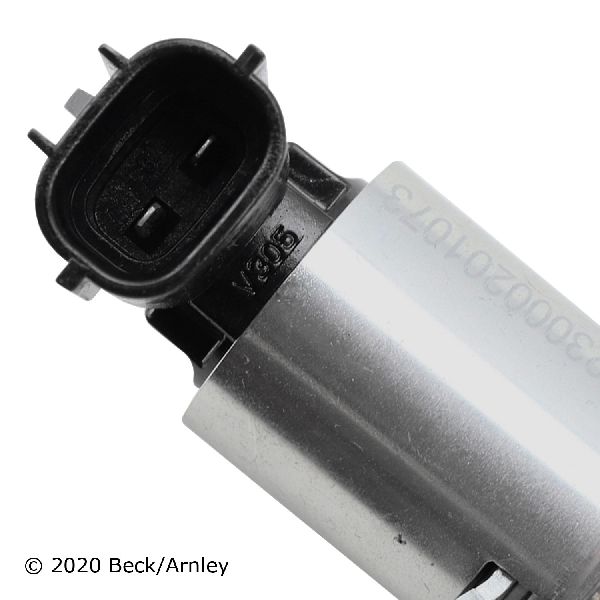
Est. part cost: $40-$80 - Faulty Intake Oil Control Valve (OCV) / VVT Solenoid for Bank 2 🟡 Medium Probability → Shop Engine Variable Valve Timing (VVT) Solenoid The OCV can become clogged with oil sludge or fail electrically, causing it to stick in one position. This is a common failure point on the Lambda engine family.
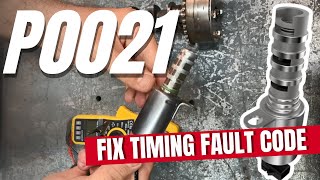
How to confirm: Swap the Bank 2 intake OCV with the Bank 1 intake OCV (located on the rear cylinder bank). If the code changes to P0011 (the Bank 1 equivalent), the OCV is faulty. You can also test the solenoid's resistance with a multimeter; it should be between 6.9 and 7.9 ohms. Applying 12V power should make the internal plunger move. 🎬 Watch: How to test and fix the Bank 2 solenoid
Typical fix: Replace the Bank 2 intake Oil Control Valve. The Bank 2 OCVs are on the front of the engine (radiator side).
Est. part cost: $70-$150 - Stretched Timing Chain or Failing Tensioner ⚪ Low Probability → Shop Engine Timing Chain This can occur on higher-mileage engines, especially those with a history of infrequent oil changes or running with low oil levels. A rattling noise on cold starts is a common symptom.
How to confirm: This is a complex diagnosis that requires partial engine disassembly to inspect the chain for slack and check the tensioner's operation. It's best confirmed by a professional after ruling out oil and OCV issues.
Typical fix: Replace the timing chain, guides, and tensioners. This is a labor-intensive job.
Est. part cost: $400-$800
Rare But Worth Checking
- Failing Camshaft Phaser (CVVT Actuator): → Shop Engine Camshaft The phaser is the mechanical gear on the camshaft. It can get stuck from sludge or internal wear, but this is less common than an OCV failure. This is typically diagnosed after all other common causes have been ruled out. A Hyundai technician noted this as a possible failure point for P0021 on the Lambda V6.
- Faulty Camshaft Position Sensor (Bank 2 Intake): → Shop Engine Camshaft Position Sensor While the sensor can fail, it's more common for the issue to be with the oil-driven mechanical parts (OCV, phaser) than the sensor itself. A failing sensor may also cause stalling or no-start conditions.
Diagnosis Steps
- Check the engine oil level and condition. Top up or change the oil and filter if necessary, using 5W-30 full synthetic oil and an OEM filter. Clear the code and see if it returns.
- If the oil is fine, inspect the wiring and connector for the Bank 2 intake Oil Control Valve (OCV) for damage or oil saturation. The Bank 2 OCVs are on the front of the engine, facing the radiator. 🎬 Watch: Step-by-step guide to removing the V6 valve covers
- For a definitive test, swap the Bank 2 intake OCV with the Bank 1 intake OCV. They are the same part. Clear the codes and drive the vehicle.
- If the code returns as P0011 (for Bank 1), the OCV you moved is faulty and needs to be replaced.
- If the P0021 code returns, the problem is not the OCV. The next steps involve testing the Camshaft Position Sensor and then investigating the timing chain and phaser, which may require professional help.
Parts You'll Likely Need
- Engine Oil and Filter — Low or dirty oil is the most common cause of this code on the 3.3L V6 engine due to its tendency to consume oil.
Trusted brands: Mobil 1, Castrol, Pennzoil, Kia Genuine
OEM price range: $50-$90
Aftermarket price range: $40-$80 - Intake Oil Control Valve (VVT Solenoid)
(OEM #24355-3L100 or 24355-3C100 (Verify with dealer))— This is the most frequently failed component after low oil has been ruled out. It gets clogged or fails electrically.
Trusted brands: Denso, Dorman, Standard Motor Products, Hyundai/Kia OE
OEM price range: $120-$180
Aftermarket price range: $70-$120
Related Codes That Often Appear With This One
- P0011 — This is the same 'over-advanced' timing code but for Bank 1. It would typically only appear after swapping a faulty Bank 2 OCV to Bank 1 for diagnostic purposes.
- P0024 — This code is for an over-advanced EXHAUST camshaft on Bank 2. Seeing P0021 and P0024 together strongly suggests a systemic problem on Bank 2, like a clogged oil passage or a timing chain issue affecting the entire bank.
- P0019 — This is a correlation error between the crankshaft and the Bank 2 exhaust camshaft. If it appears with P0021, it increases the likelihood of a mechanical timing problem like a stretched chain.
Technical Service Bulletins (TSBs) & Recalls
- WTY035 - Warranty Extension Campaign for 2016-2017 Sorento 3.3L vehicles for coolant leaks related to head bolt failure. This extends the warranty for this specific repair to 15 years / 180,000 miles.
- ENG222 - Technical Service Bulletin providing the official dealer procedure for diagnosing and confirming excessive engine oil consumption.
Platform-Specific Known Issues
- The Lambda II 3.3L GDI engine has a well-documented history of oil consumption, which is the primary trigger for code P0021. Owners on forums like Reddit report needing to add oil frequently between changes. 🎬 See why these Kia engines suffer from high oil consumption
- For 2016-2017 models specifically, a more severe issue involving head bolt failure has led to an NHTSA investigation (PE23-019) and a warranty extension from Kia (WTY035), as it can cause catastrophic engine failure. While not a direct cause of P0021, the engine's overall health and oil/coolant levels are critical.
Mechanic-Grade Diagnostic Values
- Oil Control Valve (OCV) Coil Resistance — expected: 6.9 - 7.9 Ohms at 68°F (20°C). Some sources cite a wider range of 6.0 to 12.0 ohms.. Failure: A reading of infinite resistance (open circuit) or zero resistance (short circuit) indicates a failed solenoid.
- Camshaft Position Sensor (CMP) Signal Voltage — expected: Approximately 4.8V between the signal and ground wires with Key On, Engine Off (KOEO).. Failure: No voltage or erratic voltage may indicate a sensor or wiring fault.
- OCV Power Supply Voltage — expected: Battery voltage should be present at the OCV connector power pin with the ignition on.. Failure: No voltage indicates a wiring or fuse issue upstream of the solenoid.
Scan Tool Commands That Help
- Kia GDS (Global Diagnostic System): Actuator Test for CVVT Solenoid — This bidirectional command allows a technician to manually activate the Bank 2 intake OCV while the engine is running. A functional OCV will cause the engine to hesitate or stall, confirming the solenoid is mechanically working. If there is no change in engine operation, the OCV is likely stuck or clogged.
- Kia GDS (Global Diagnostic System): Vehicle S/W Management — This function is used to check for and apply any available ECU software updates. Sometimes, logic for detecting CVVT faults is updated by the manufacturer to be less sensitive or to account for minor component wear, which can resolve the code without replacing parts.
Wiring & Ground Locations
- Engine Ground Strap — A primary ground strap connects the engine block or transmission case to the chassis near the battery tray.. A corroded or loose main engine ground can cause erratic voltage signals for all engine sensors, including the Camshaft and Crankshaft Position Sensors, potentially leading to incorrect timing correlation codes like P0021.
- Bank 2 Intake OCV Connector — On the front-facing valve cover (Bank 2, radiator side), connected to the top of the Oil Control Valve solenoid. It is a two-wire connector.. This connector and its wiring are common points of failure. Check for oil saturation from a leaking valve cover gasket, corrosion in the pins, or frayed wires, as this will interrupt the signal from the ECM to the solenoid.
Real Owner Repair Stories
- Reddit r/MechanicAdvice user (Vehicle year/model not specified, but had a similar engine design requiring a full timing job.) — Check engine light with code P0021 and traction control light on after a major timing service.
❌ Tried (didn't work) Replacing the VVT solenoid (OCV), Installing a new timing chain set, Replacing the intake CVVT actuator (phaser), Verifying all timing marks were aligned correctly
✅ What actually fixed it The crankshaft pulley had not been fully seated during reassembly, which damaged the keyway. The ultimate fix was to replace the crankshaft keyway and reinstall the timing components correctly, which resolved the code.
OEM Part Supersession History
24355-3C100→24355-3L100— Part has likely been updated for improved reliability or manufacturing efficiency. The 3L100 part is listed for later model years.
Heads up: While they may be physically interchangeable, it is always recommended to use the latest part number specified for the vehicle's VIN to ensure correct operation.
Model Year Variations Within This Range
- 2019-2020: For the 2019 model year refresh, the 3.3L V6 was paired with a new eight-speed automatic transmission, replacing the six-speed automatic used from 2016-2018. While this does not directly affect the P0021 code's cause, the vehicle's control software (ECM/TCM) is different and may have different diagnostic logic.
Diagnostic Flowchart
Other Known Issues on This Vehicle
Issues unrelated to this code that are worth knowing about as an owner of this generation:
- Excessive Engine Oil Consumption 🔴 High — Widespread issue reported by many owners, sometimes as high as 1 quart per 1,000 miles. Can begin at any mileage but often noted after 60,000 miles. (Ref: TSB ENG222 provides a procedure for dealers to conduct an oil consumption test.)
- Head Gasket / Head Bolt Failure 🔴 High — Primarily affects 2016-2017 models. Failure can occur between 50,000 and 150,000 miles, leading to coolant loss, overheating, and potential engine failure. (Ref: Warranty Extension WTY035 (extends warranty to 15 years/180,000 miles for this issue on 2016-2017 models). NHTSA Preliminary Evaluation PE23-019 was opened to investigate.)
- Timing Chain Tensioner Rattle 🟠 Medium → Shop Engine Timing Chain — A rattling noise from the engine on cold starts is a symptom of a failing tensioner, reported to occur between 30,000-60,000 miles. If ignored, it can lead to timing chain failure.
Used vs. New Parts: Buying Guide for This Vehicle
When a used part is the smart pick: Given the low cost of new aftermarket Oil Control Valves (OCVs), buying used is generally not recommended. A used part may be just as clogged or worn as the one being replaced. A used part only makes sense for major components like a complete cylinder head or timing cover if damaged, and only from a low-mileage, verified running donor vehicle.
Donor-vehicle mileage cap: roughly under 60000 miles for the part to have meaningful remaining life.
What to inspect on the donor part:
- For an OCV, check that the screen is perfectly clean and intact.
- For any engine part, look for signs of heavy oil sludge or varnish, which indicates poor maintenance.
- Verify the donor vehicle did not have a timing-related code or engine failure.
OEM-only on this vehicle (don't cheap out):
- Camshaft Position Sensor
- Crankshaft Position Sensor
- Engine Oil Filter
Aftermarket brands forum-validated for this vehicle:
- Denso (often the Original Equipment Manufacturer)
- Dorman (offers redesigned parts that sometimes improve on OEM flaws)
- Standard Motor Products (Intermotor)
- Melling
Brands owners have reported issues with on this vehicle:
- No-name, unbranded parts from online marketplaces should be avoided, as their internal tolerances and electrical specifications may not match OEM requirements, leading to persistent codes.
Real Owner Stories
Aggregated from forums and TSBs cited above. Mileages and costs reflect what owners reported in those sources.
2019 Kia Sorento 3.3L V6 — 75000 miles
Symptoms: Oil consumption of 1 quart per 1000 miles; the low oil light did not come on until the engine was 2.5 quarts low.
What fixed it: The owner had to frequently add oil between changes to maintain levels, as the CVVT system is highly sensitive to oil level.
Source hint: Reddit r/KiaSorento - Thread title: '2019 Kia Sorento v6 3.3L, 75k miles, oil consumption'
2019 Kia Sorento 3.3L V6
Symptoms: Long-term battle with the dealership over excessive oil consumption.
What fixed it: Kia replaced the engine under warranty after it failed multiple consumption tests.
Source hint: Reddit r/kia - Thread title: 'Oil Issues with 2019 Sorento'
Kia Owner Report — NHTSA ODI #11562317
Symptoms: An owner reported that their engine was burning oil and a technician found code P0021 stored in the system.
What fixed it: After further diagnosis, the service department informed the owner that the vehicle required a complete engine replacement.
Source hint: NHTSA ODI #11562317
Related OBD-II Codes
Frequently Asked Questions
My 2017 Sorento 3.3L is leaking coolant; is this related to the P0021 code?
Does Kia have an official test for the oil consumption issues causing my P0021 code?
Can I use an aftermarket oil filter on my 3.3L V6 Sorento?
I hear a rattling noise on startup along with the P0021 code. What does that mean?
Why didn't my low oil pressure light come on before the P0021 code appeared?
Which Oil Control Valve (OCV) should I replace for code P0021?
Helpful Videos

We Have This Part in Stock

The information in this article is provided for general reference and educational purposes only. Vehicle specifications, procedures, and part compatibility can vary by production date, trim level, and region. Always consult your vehicle's factory service manual and verify part numbers before purchasing or performing repairs. Safety-critical components such as airbags, seat belts, and braking systems should be installed by a qualified professional.
- Kia Sorento:
- 🧭 Diagnostic Flowchart
- 🎬 Helpful Videos
- 🛍️ Shop This Part
- What's Unique About the 2016-2020 Kia Sorento
- Symptoms You May Notice
- Most Likely Causes
- Rare But Worth Checking
- Diagnosis Steps
- Parts You'll Likely Need
- Related Codes That Often Appear With This One
- Technical Service Bulletins (TSBs) & Recalls
- Platform-Specific Known Issues
- Mechanic-Grade Diagnostic Values
- Scan Tool Commands That Help
- Wiring & Ground Locations
- Real Owner Repair Stories
- OEM Part Supersession History
- Model Year Variations Within This Range
- Other Known Issues on This Vehicle
- Used vs. New Parts: Buying Guide for This Vehicle
- Real Owner Stories
- 2019 Kia Sorento 3.3L V6 — 75000 miles
- 2019 Kia Sorento 3.3L V6
- Kia Owner Report — NHTSA ODI #11562317
- Related OBD-II Codes
- Frequently Asked Questions
- 🎟️ Get 5% Off