

P0021 on 2017-2020 Lincoln Continental: Causes and Fixes for Over-Advanced Camshaft Timing
On a 2017-2020 Lincoln Continental, code P0021 is most often caused by low or dirty engine oil, or a faulty Bank 2 intake VCT solenoid. An oil change with the correct full-synthetic oil is the first step. If that doesn't work, replacing the VCT solenoid is the next likely fix. On the 2.7L/3.0L engines, this is an accessible part on top of the engine, while on the 3.7L, it is under the valve cover, requiring more labor.
- P0021 on a 2017-2020 Lincoln Continental means the Bank 2 (radiator side) intake camshaft timing is over-advanced.
- Always check your engine oil level and condition first. An oil and filter change with the correct synthetic oil can often fix the problem.
- The most likely faulty part is the Bank 2 intake VCT solenoid, which is known to stick due to oil debris.
- Do not immediately replace the camshaft position sensor, as it is rarely the cause of this specific code.
- If you hear a rattling noise from the engine, the problem could be more severe (cam phaser or timing chain) and requires professional diagnosis.
What's Unique About the 2017-2020 Lincoln CONTINENTAL
The V6 engines in the Lincoln Continental (2.7L, 3.0L, 3.7L) are known to be sensitive to oil quality and level. As confirmed by multiple Ford/Lincoln Technical Service Bulletins (TSBs), the VCT solenoids on these platforms can stick due to small debris in the engine oil. TSB SSM 50067 specifically advises technicians to attempt to clear debris by cycling the affected solenoid with a scan tool before replacing it.
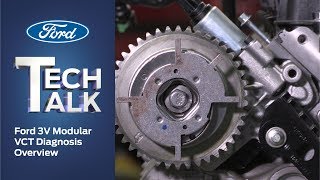
🎬 Watch: Ford technicians explain the VCT system and diagnosis steps.Diagnostic Flowchart
Tap your situation to follow the diagnostic path that matches what you're seeing on this vehicle.
Symptoms You May Notice
- Check Engine Light is on
- Rough or unstable idle
- Engine hesitation or stumbling during acceleration
- Reduced engine power
- Poor fuel economy
- Stalling at stops or when returning to idle
- Rattling, ticking, or knocking noise from the engine, especially on cold startup
- Replacing the Camshaft Position Sensor. The sensor is usually just doing its job by reporting the timing discrepancy. A faulty sensor would typically throw a different code, such as P0345 or P0349.
Most Likely Causes
- Low, Dirty, or Incorrect Viscosity Engine Oil 🔴 High Probability The VCT system is hydraulic and highly dependent on oil pressure and cleanliness. TSBs for Ford/Lincoln vehicles (SSM 50067, SSM 47170) confirm that debris in the oil can cause the VCT solenoids to stick. Many owner experiences across forums confirm an oil change is the first and sometimes only step needed.
How to confirm: Check the engine oil level on the dipstick and inspect its condition. If the oil is low, dark, gritty, or past its recommended change interval, it should be changed.
Typical fix: Perform an engine oil and filter change using the full synthetic oil that meets Ford's specifications for your specific engine (e.g., 5W-30 for EcoBoost engines). Clear the code and drive to see if it returns.
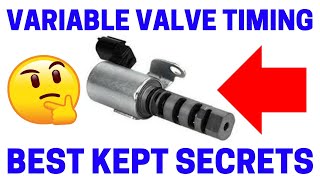
Est. part cost: $50-$100 - Failing VCT Solenoid (Bank 2 Intake) 🔴 High Probability → Shop Engine Variable Valve Timing (VVT) Solenoid This is the most common mechanical failure for this code on Ford/Lincoln V6 engines. The solenoids can become clogged with sludge or fail electrically, causing them to stick in the advanced position. TSBs specifically mention this part as the focus for diagnosis.
How to confirm: Use a scan tool to monitor commanded vs. actual cam angle for Bank 2. You can also swap the Bank 2 intake solenoid with the Bank 2 exhaust solenoid (or Bank 1 intake solenoid) to see if the code changes (e.g., to P0022 or P0011). A multimeter can be used to check resistance, which should be between 6.9 and 7.9 ohms.
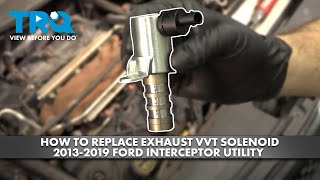
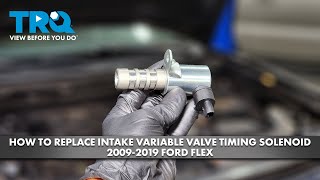
Typical fix: Replace the Bank 2 intake VCT solenoid. On the 2.7L and 3.0L engines, these are often accessible on top of the engine. On the 3.7L, they are under the valve cover, which is more labor-intensive and requires replacing the valve cover gasket. 🎬 Watch: 3.7L V6 VCT solenoid location and replacement walkthrough.
Est. part cost: $40-$120
Rare But Worth Checking
- Failing Camshaft Phaser: → Shop Engine Camshaft If a distinct rattling noise is heard on startup (cold start rattle), the issue may be a failing camshaft phaser. The phaser can get stuck in the advanced position due to internal wear of its locking pin or oil pressure problems. This is a more complex and expensive repair, common enough on Ford V6 engines to be a known issue.
- Stretched Timing Chain or Damaged Guides: → Shop Engine Timing Chain On higher mileage engines (typically over 100,000 miles), a stretched timing chain can cause correlation issues between the crankshaft and camshafts, triggering P0021, often along with correlation codes like P0018.
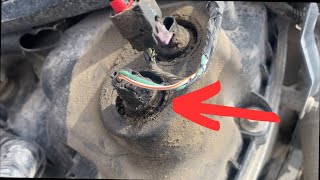
- Wiring or Connector Issue: Damage or corrosion to the wiring harness or connector for the Bank 2 VCT solenoid can cause a loss of control. A user on a Ford forum fixed P0021 after discovering the intake and exhaust solenoid connectors had been accidentally swapped. Another owner found a split wire casing on the connector.
Diagnosis Steps
- Check Engine Oil: Verify the oil level is correct and the oil is clean. If low or dirty, perform an oil and filter change with the correct specification oil. This resolves the issue in many cases.
- Scan for Codes: Use an OBD-II scanner to confirm P0021 and check for any other related codes (like P0011, P0018, etc.). Note the freeze frame data.
- Inspect VCT Solenoid Wiring: Check the connector and wiring going to the Bank 2 intake VCT solenoid for any visible damage, corrosion, or loose connections. Ensure the intake and exhaust connectors are not swapped.
- Test the Solenoid: With a capable scan tool, command the Bank 2 intake VCT solenoid on and off while monitoring the cam angle PID to see if it responds. TSB SSM 50067 suggests cycling it 10 times to clear debris. An alternative is to apply 12V directly to the solenoid to listen for a 'click'.
- Swap Solenoids: If accessible, swap the Bank 2 intake VCT solenoid with an identical one from another position (e.g., Bank 1 intake). Clear the codes and drive the vehicle. If the code changes to P0011, the solenoid is confirmed to be faulty.
- Check Mechanical Timing: If solenoids and oil are good, the next step is a more in-depth mechanical diagnosis. This involves checking for a stretched timing chain or a faulty camshaft phaser, which often requires significant engine disassembly and is best left to a professional.
Parts You'll Likely Need
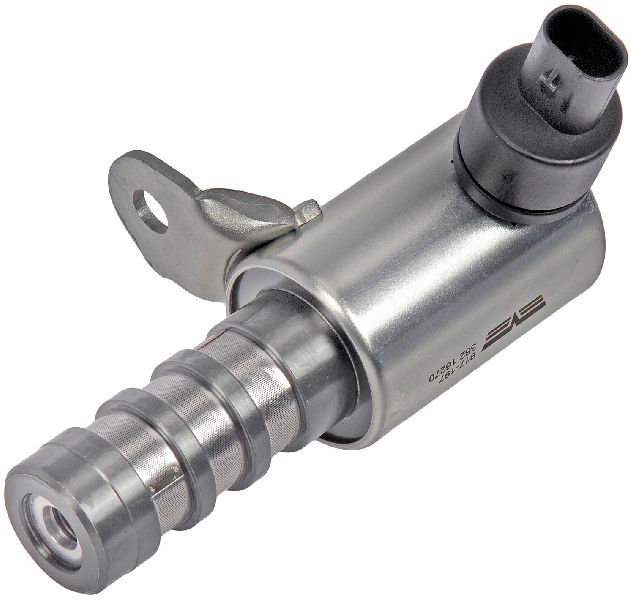
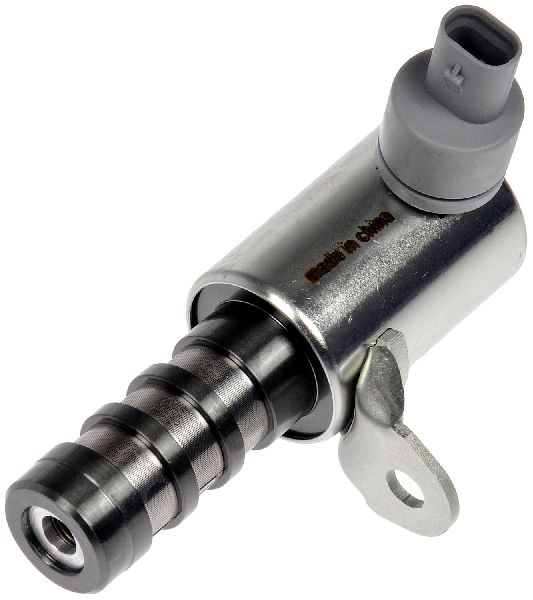
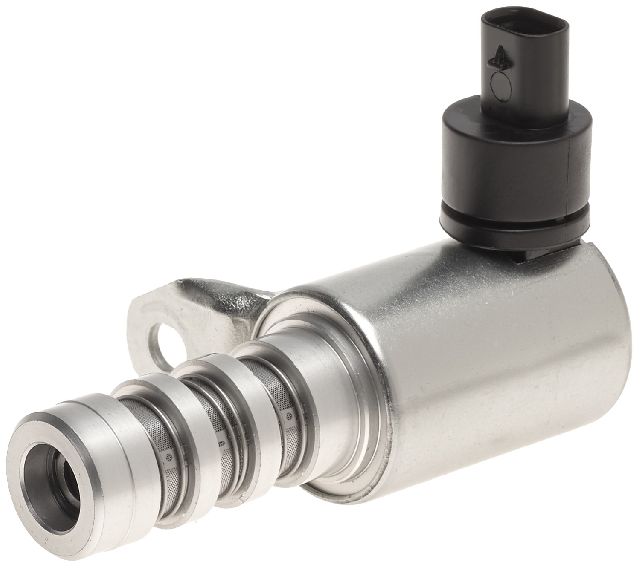
- Engine Variable Valve Timing (VCT) Solenoid
(OEM #FT4Z-6M280-B)— This is the most common part to fail for code P0021. It controls oil flow to the cam phaser and is prone to sticking from oil debris. This part number is applicable to the 2.7L and 3.0L engines and supersedes FT4Z-6M280-A.
Trusted brands: Motorcraft, Dorman, SKP
OEM price range: $60-$90
Aftermarket price range: $30-$70 - Engine Variable Valve Timing (VCT) Solenoid (3.7L)
(OEM #AT4Z-6M280-B)— For the 3.7L V6 engine, this is the corresponding VCT solenoid. It serves the same function but may have a different design.
Trusted brands: Motorcraft, Dorman, Autopart Premium
OEM price range: $80-$150
Aftermarket price range: $50-$100 - Engine Oil and Filter — Low, old, or incorrect viscosity oil is a primary cause of VCT system faults. An oil change is the first and most important diagnostic step.
Trusted brands: Motorcraft
OEM price range: $50-$100
Aftermarket price range: $40-$80
Related Codes That Often Appear With This One
- P0011 — This is the equivalent code for Bank 1. Seeing both P0011 and P0021 together strongly suggests a systemic problem like very low oil level/pressure or severe oil contamination affecting both sides of the engine.
- P0018 — This is a Crankshaft/Camshaft Position Correlation code for Bank 2. Its appearance with P0021 can indicate a more serious mechanical timing issue, like a stretched timing chain or a failed phaser, as the misalignment has exceeded a predefined threshold (often one tooth).
- P0022 — This is the 'over-retarded' code for the same camshaft (Bank 2 Intake). Seeing both P0021 and P0022 intermittently could point to a VCT solenoid that is sticking erratically or a wiring issue causing it to malfunction.
Technical Service Bulletins (TSBs) & Recalls
- SSM 50067: Notes that P0021 may be due to small debris causing the VCT solenoid to stick and advises diagnosis, including cycling the solenoid with a scan tool, before replacement.
- SSM 47170: An earlier TSB with similar guidance to SSM 50067, indicating a known history of this issue.
- SSM 54366: Recommends following specific pinpoint tests in the workshop manual for diagnosing P0021 and related codes.
Platform-Specific Known Issues
- The manufacturer has issued multiple Technical Service Bulletins (TSBs), including SSM 50067 and SSM 47170, acknowledging that DTCs like P0021 can be caused by small debris causing the VCT solenoid to stick. The bulletins advise diagnosis before immediate component replacement.
- TSB SSM 50067 explicitly recommends using a scan tool to cycle the affected VCT solenoid 10 times to attempt to clear debris before replacing the part.
- On the 3.7L V6 engine, the VCT solenoids are located under the valve cover, making replacement a significantly more labor-intensive job compared to the 2.7L and 3.0L EcoBoost engines where they are more accessible.
- A known issue on some 2.7L EcoBoost engines from 2016-2017 involves defective valve guides causing excessive oil consumption, which can exacerbate VCT system problems due to low oil levels and contamination.
Mechanic-Grade Diagnostic Values
- VCT Solenoid Internal Resistance — expected: 6.9 to 7.9 Ohms at 68°F (20°C).. Failure: A reading of 0 Ohms (short), infinite/OL (open), or significantly outside the expected range indicates a failed solenoid coil.
- VCT Solenoid Connector Voltage (KOEO) — expected: Approximately 12V (Battery Voltage) at one of the two pins.. Failure: No voltage suggests a wiring issue, blown fuse, or problem in the power supply circuit.
- Scan Tool PID: VCT_ADV_ERR (VCT Advance Error) — expected: Close to 0 degrees at hot idle and during steady-state driving.. Failure: A persistent value greater than +/- 5 degrees indicates a discrepancy between commanded and actual cam position, pointing to a hydraulic or mechanical fault.
- Engine Oil Pressure at Hot Idle — expected: At least 15-25 PSI.. Failure: Pressure below this range can starve the VCT system, causing erratic operation and timing codes.
Hidden / Shadow Codes Worth Checking
- Mode $06, Test ID (TID) for VCT: Mode $06 provides access to the raw results of the PCM's non-continuous self-tests. For the VCT system, it can show the camshaft position deviation value from the last test cycle. This allows a technician to see if the system is performing marginally or is close to the failure threshold, even before the Check Engine Light is triggered. (see via A scan tool that supports Mode $06 data, such as FORScan or professional-grade scanners.)
Scan Tool Commands That Help
- Ford IDS (or equivalent like FORScan): VCT Solenoid On/Off State or Cycle Test (Pinpoint Test HK12) — This bidirectional command is recommended by Ford TSBs (like SSM 50067) as a primary diagnostic step. It manually cycles the VCT solenoid 10 times to dislodge small debris that may be causing it to stick. If the code is caused by minor contamination, this test can sometimes resolve the issue without replacing parts.
Wiring & Ground Locations
- Bank 2 VCT Solenoid Connectors (Intake & Exhaust) — On top of the valve cover (2.7L/3.0L) or under the valve cover (3.7L) for the cylinder bank closer to the radiator.. The intake and exhaust VCT solenoid connectors on the same bank are often identical and located close to each other. After a repair like a valve cover gasket replacement, it is possible to accidentally swap them. This will cause the PCM to command the wrong solenoid, leading to immediate timing codes like P0021 and P0025.
Real Owner Repair Stories
- Ford F150 Forum (2017 Ford F-150 3.5L EcoBoost (shared engine family)) — Check Engine Light with codes P0021 and P0025 immediately after a full timing job (phasers, chains, etc.). Truck idled quietly and did not seem to run rough.
❌ Tried (didn't work) Swapping the new VCT solenoids with the original ones., Re-checking mechanical timing marks, which were confirmed to be correct.
✅ What actually fixed it The VCT solenoid electrical connectors for the intake and exhaust on Bank 2 had been accidentally reversed during reassembly. Swapping them back to their correct positions resolved both codes.
OEM Part Supersession History
FT4Z-6M280-A→FT4Z-6M280-B— Standard part revision, likely for improved durability or to address the sticking issue.
Heads up: The parts are interchangeable, but FT4Z-6M280-B is the latest recommended version for the 2.7L and 3.0L engines.
Helpful Videos
![How to Fix P0021 Engine Code in 4 Minutes [2 DIY Methods / Only $6.43]](https://img.youtube.com/vi/T8aepJyvnbg/mqdefault.jpg)
We Have This Part in Stock


The information in this article is provided for general reference and educational purposes only. Vehicle specifications, procedures, and part compatibility can vary by production date, trim level, and region. Always consult your vehicle's factory service manual and verify part numbers before purchasing or performing repairs. Safety-critical components such as airbags, seat belts, and braking systems should be installed by a qualified professional.
- Lincoln CONTINENTAL:
- 🧭 Diagnostic Flowchart
- 🎬 Helpful Videos
- 🛍️ Shop This Part
- What's Unique About the 2017-2020 Lincoln CONTINENTAL
- Symptoms You May Notice
- Most Likely Causes
- Rare But Worth Checking
- Diagnosis Steps
- Parts You'll Likely Need
- Related Codes That Often Appear With This One
- Technical Service Bulletins (TSBs) & Recalls
- Platform-Specific Known Issues
- Mechanic-Grade Diagnostic Values
- Hidden / Shadow Codes Worth Checking
- Scan Tool Commands That Help
- Wiring & Ground Locations
- Real Owner Repair Stories
- OEM Part Supersession History
- 🎟️ Get 5% Off