

P0021 on 2015-2016 Lincoln MKS: Camshaft Timing Over-Advanced Causes and Fixes
On a 2015-2016 Lincoln MKS, code P0021 is almost always caused by low/dirty engine oil or a faulty Bank 2 intake VCT solenoid. An oil change is the first step; if that fails, replacing the VCT solenoid on the radiator-side of the engine is the most common repair. This is a well-documented issue across many Ford/Lincoln vehicles with this engine family.
- P0021 means the intake camshaft on the front (radiator side) of the engine is timed too far advanced.
- Before buying any parts, check your engine oil. Low, old, or incorrect oil is the number one cause of this code on the Lincoln MKS.
- The most common failed part is the Bank 2 intake VCT solenoid, which is relatively easy to access on the front of the engine.
- A smart, no-cost diagnostic step is to swap the front and rear intake VCT solenoids to see if the code moves from P0021 to P0011.
- This is a very common and well-documented issue by Ford/Lincoln across many vehicles that use the 3.5L and 3.7L V6 engines.
What's Unique About the 2015-2016 Lincoln MKS
The 3.5L and 3.7L 'Cyclone' family V6 engines used in the Lincoln MKS are known for having a Variable Camshaft Timing (VCT) system that is particularly sensitive to oil quality and maintenance intervals. Ford and Lincoln have issued multiple Technical Service Bulletins (TSBs), including SSM 50067, which state that small debris in the engine oil can cause the VCT solenoids to stick, directly leading to codes like P0021. Another TSB, 16-0093, was issued for 2016 models that could exhibit this code at very low mileage (under 2,000 miles), suggesting a potential batch of faulty solenoids from the factory.
Diagnostic Flowchart
Tap your situation to follow the diagnostic path that matches what you're seeing on this vehicle.
Symptoms You May Notice
- Check Engine Light is on
- Rough or unstable engine idle
- Hesitation or stumbling on acceleration
- Engine may stall at low speeds or when coming to a stop
- Reduced fuel economy
- Rattling or knocking noise from the engine, especially on startup
- Replacing the camshaft position sensor. The sensor is usually doing its job by reporting the timing discrepancy. A sensor failure typically sets a different code related to the sensor circuit itself (e.g., P0345, P0349).
Most Likely Causes
- Low, Dirty, or Incorrect Viscosity Engine Oil 🔴 High Probability The VCT system is hydraulic and highly sensitive to oil pressure and cleanliness. TSBs SSM 50067 and SSM 54366 specifically mention that debris can cause the VCT solenoid to stick. Many owner experiences confirm that an oil and filter change alone can resolve the code.
How to confirm: Check the oil dipstick for proper level and inspect the oil for darkness, thickness, or a gritty feel. Note the date/mileage of the last oil change and ensure the correct viscosity (typically SAE 5W-20 or 5W-30, check owner's manual) is being used.
Typical fix: Perform an engine oil and filter change using the manufacturer-specified grade and a quality filter (e.g., Motorcraft FL-500S). Clear the codes and drive to see if the issue is resolved.
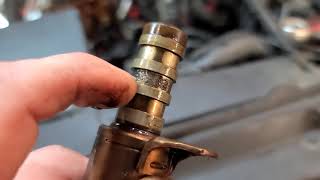
Est. part cost: $40-$80 - Faulty Bank 2 Intake VCT Solenoid 🔴 High Probability → Shop Engine Variable Valve Timing (VVT) Solenoid This is the most common component failure for this code, often getting stuck due to oil debris as noted in TSBs. TSB 16-0093 also points to potential factory defects in solenoids on 2016 models.
How to confirm: Swap the Bank 2 (radiator side) intake VCT solenoid with the Bank 1 (firewall side) intake VCT solenoid. Clear the codes and drive the vehicle. If the trouble code changes to P0011 (Bank 1 equivalent), the solenoid is faulty. This is a very common and effective DIY diagnostic step confirmed in many forums.
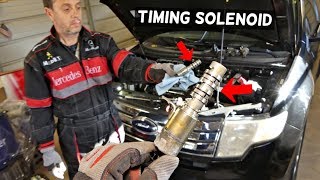
Typical fix: Replace the Bank 2 intake VCT solenoid. On the MKS, Bank 2 is the front bank, making this solenoid relatively easy to access after removing the valve cover. 🎬 See this walkthrough for locating and replacing the VCT solenoids.
Est. part cost: $40-$120 - Failed Camshaft Phaser ⚪ Low Probability → Shop Engine Camshaft While less common than a solenoid failure, the mechanical phaser can get stuck in the advanced position due to internal wear, a failed locking pin, or persistent oiling issues. This is a more serious mechanical failure.
How to confirm: This is difficult to confirm without ruling out the oil and solenoid first. A professional diagnosis is typically needed. A persistent rattling noise from the engine is a strong indicator of a phaser or timing chain issue.
Typical fix: Replace the Bank 2 intake camshaft phaser. This is a labor-intensive job that also requires replacing the timing chain, tensioners, and guides. Costs can be significant, with forum members reporting dealer quotes from $3,000 to over $5,000 for a full timing job.
Est. part cost: $150-$400
Rare But Worth Checking
- Stretched Timing Chain or Failed Tensioner: → Shop Engine Timing Chain This is a more serious mechanical failure, often seen on higher mileage vehicles. It is almost always accompanied by rattling noises, especially on startup. If you hear a rattle, this becomes a more likely cause and should be addressed immediately to avoid severe engine damage.
- Wiring Harness or Connector Issue: Damage to the wires or a corroded connector leading to the VCT solenoid can cause it to malfunction. Check for frayed wires or loose connections at the solenoid on the front valve cover.
Diagnosis Steps
- Verify the code with an OBD-II scanner.
- Check the engine oil level and condition. If low, dirty, or incorrect viscosity, perform an oil and filter change, clear the code, and see if it returns. This is the most important first step.
- Using a scan tool with live data, monitor the PIDs for the Bank 2 intake cam: VCT_INT_ACT2 (actual angle) and VCT_INT_DIF2 (difference from command). A large, persistent difference confirms the issue.
- Per TSB SSM 50067, a capable scan tool can be used to command the solenoid on and off (Pinpoint Test HK11) to see if it is responsive or stuck.
- Locate the intake VCT solenoid on Bank 2 (radiator side) and Bank 1 (firewall side).
- Swap the two intake solenoids. This requires removing both valve covers. Clear the codes and test drive the vehicle.
- If the code returns as P0011 (Bank 1), the solenoid you moved is faulty and must be replaced.
- If the code P0021 returns, the problem is not the solenoid. Inspect the wiring and connector for the Bank 2 solenoid for any damage or corrosion.
- If the wiring is good and the solenoid has been ruled out, the issue is likely mechanical, pointing to a faulty camshaft phaser or a timing chain problem, which requires professional diagnosis and repair.
Parts You'll Likely Need
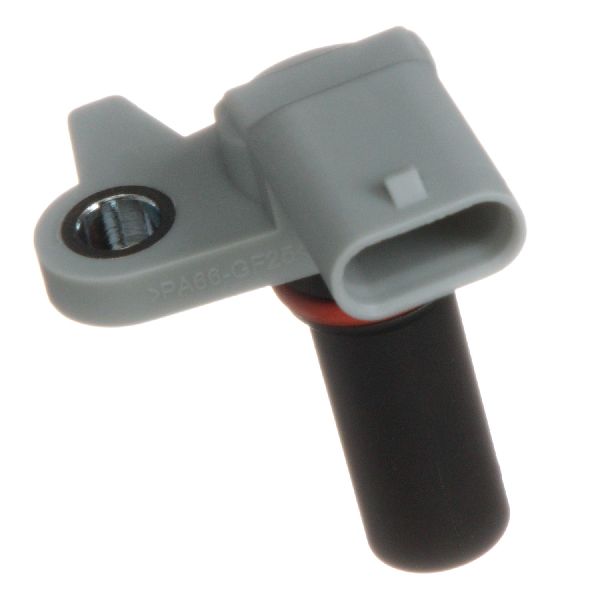
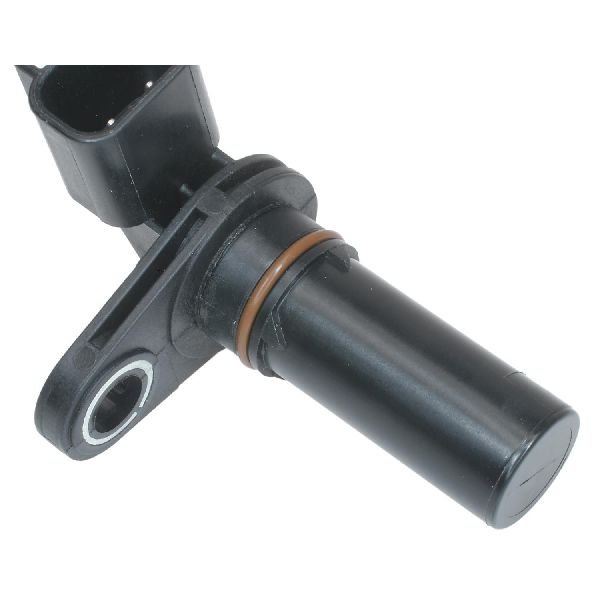
- Variable Camshaft Timing (VCT) Solenoid
(OEM #7T4Z-6M280-C)— This is the most common part to fail for this code, typically by sticking due to oil debris. The part number 7T4Z-6M280-C is an updated version that supersedes previous numbers like 7T4Z-6M280-A and 7T4Z-6M280-B.
Trusted brands: Motorcraft, Dorman
OEM price range: $60-$100
Aftermarket price range: $40-$80
Related Codes That Often Appear With This One
- P0011 — If both intake VCT solenoids are failing or the oil is very dirty, you may see the equivalent code for Bank 1 simultaneously. This points towards a systemic oil pressure or quality issue.
- P0016, P0017, P0018, P0019 — These are crankshaft/camshaft correlation codes. Their presence alongside P0021 points towards a more significant timing issue, such as a stretched timing chain or a problem with the phaser. These codes are also mentioned in TSBs SSM 54366 and 16-0093.
Technical Service Bulletins (TSBs) & Recalls
- SSM 50067: Mentions that P0021 can be caused by small debris causing the VCT solenoid to stick, and advises against immediate component replacement.
- SSM 54366: Lists P0021 as part of a group of common VCT-related diagnostic trouble codes and directs to specific diagnostic procedures.
- TSB 16-0093: For 2016 models with 3.5L engines under 2,000 miles, advises replacing the VCT solenoid for code P0021, suggesting a known early-life failure part.
Platform-Specific Known Issues
- TSB SSM 50067 notes that Ford and Lincoln vehicles with various engines, including those in the MKS, can exhibit P0021 due to small debris causing the VCT solenoid to stick. It advises against component replacement before checking for debris and even suggests cycling the solenoid with a scan tool to attempt to clear it.
- TSB SSM 54366 lists P0021 among a dozen other VCT-related codes and refers technicians to specific pinpoint tests in the workshop manual, indicating this is a well-documented area of concern for the manufacturer.
- TSB 16-0093 specifically addresses 2016 models with the 3.5L engine that show P0021 at very low mileage (<2000 miles), directing technicians to replace the affected solenoid, suggesting a known batch of faulty parts.
Mechanic-Grade Diagnostic Values
- VCT Solenoid Internal Resistance — expected: 6.9 to 7.9 Ohms at 68°F (20°C).. Failure: A reading of 0 ohms indicates a short, while an infinite reading (OL) indicates an open circuit. Readings outside the specified range warrant replacement.
- VCT Solenoid Connector Voltage (Key On, Engine Off) — expected: Approximately 12.6V (Battery Voltage) on the power supply pin.. Failure: Low or no voltage points to a wiring issue, a blown fuse (check fuse F16 in the Battery Junction Box), or a problem with the PCM power relay.
- Scan Tool PID: VCT_ADV_ERR (VCT Advance Error) — expected: Should be at or very close to 0° at idle when the system is in closed-loop.. Failure: A consistent, large degree reading at idle indicates the cam phaser is not returning to its base position as commanded, confirming a timing error.
Hidden / Shadow Codes Worth Checking
- Mode 6, Test ID $80-$84: On Ford CAN-bus systems, these Test IDs are used for monitoring misfire counts per cylinder, which are not standard DTCs. While not directly for P0021, they are an example of 'hidden' data. A technician may check these to see if the timing issue is causing misfires on Bank 2 cylinders before a P030x code is set. (see via A scan tool capable of reading Ford-specific Mode 6 data, such as an Actron CP9580 or higher-end professional scanners.)
Scan Tool Commands That Help
- Ford IDS (or FORScan): VCT Solenoid Actuator Test / On-Off Command — This bidirectional control is used at idle to manually cycle the VCT solenoid. A functional solenoid and phaser will cause the engine to stumble, run rough, or stall. If there is no change in idle quality, it confirms the solenoid is stuck, the phaser is seized, or an oil passage is blocked.
- Ford IDS: Pinpoint Test HK11 / HK12 — This is the specific diagnostic routine referenced in Ford TSBs. TSB SSM 50067 specifically advises using this test to cycle the solenoid 10 times to attempt to dislodge small debris before replacing the part.
- Ford IDS (or FORScan): On-Demand Self Test — This test commands the PCM to check all electrical circuits, including the VCT solenoid driver. When used with a NOID light connected to the VCT harness, it can quickly verify the integrity of the circuit from the PCM to the solenoid.
Wiring & Ground Locations
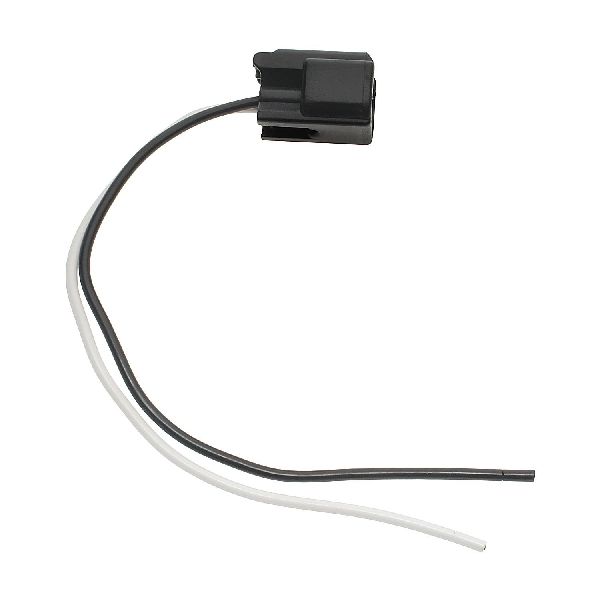
- VCT Solenoid Connector — Plugging into the top of the VCT solenoid, which is located under the Bank 2 (front/radiator side) valve cover.. This 2-pin connector provides power and the control signal. Pin 1 is typically the 12V+ supply from the PCM Power Relay (via a fuse), and Pin 2 is the ground-side PWM signal from the PCM. Oil contamination in this connector or damaged pins can cause an intermittent or failed signal.
- G104 / G105 — Common engine compartment grounds. G104 is often located on the right (passenger) fender apron behind the battery. G105 is often on the top front of the engine near the radiator support.. The PCM and its sensors rely on clean ground connections. A corroded or loose engine ground can introduce electrical noise, potentially causing the PCM to misinterpret sensor data and falsely trigger timing codes.
Real Owner Repair Stories
- f150forum.com user report (2019 Ford Expedition (3.5L EcoBoost V6)) — P0021 code with a loud startup rattle.
❌ Tried (didn't work) Initial diagnosis pointed towards common VCT solenoid or phaser failure.
✅ What actually fixed it The root cause was found to be failed timing chains, tensioners, VCT phasers, and VCT solenoids, requiring a complete timing job. Another user on the same forum found a broken plastic timing chain guide was the sole cause of their P0021 code. - ScannerDanner Forum user 'Peterpaul' (2018 Nissan Pathfinder 3.5L (148k miles)) — P0021 and a cylinder-specific A/F ratio code appeared two days after a timing chain replacement.
❌ Tried (didn't work) The user removed the Bank 2 VCT solenoid and confirmed it actuated correctly when power was applied on the bench.
✅ What actually fixed it The expert advice given was that bench testing is not conclusive, and the appearance of the code immediately after a timing job strongly suggests a mechanical timing error. The resolution path was to re-open the engine to verify and correct the camshaft timing.
"I Checked Everything" — The Actual Cause
- In cases where an oil change and VCT solenoid swap/replacement do not resolve P0021, the root cause is often a deeper mechanical issue that standard diagnostics miss. One documented cause on a related engine was a broken plastic timing chain guide, which created slack and allowed the cam timing to deviate, triggering the code. This would not be found without removing the timing cover.
OEM Part Supersession History
7T4Z-6M280-A, 7T4Z-6M280-AA, 7T4Z-6M280-B→7T4Z-6M280-C— Ford periodically updates parts to improve reliability or address known failure modes. The -C revision is the latest version for this application.
Heads up: No known incompatibilities. The -C part is a direct replacement for the earlier versions on 3.5L and 3.7L engines.
Model Year Variations Within This Range
- 2016: TSB 16-0093 was issued specifically for 2016 models with the 3.5L engine that exhibit P0021 (and other VCT codes) at very low mileage, typically under 2,000 miles. The TSB directs technicians to replace the VCT solenoid. This indicates a potential batch of defective solenoids was installed at the factory for this model year, making a faulty solenoid an even more probable cause for a 2016 MKS compared to a 2015.
Helpful Videos
![How to Fix P0021 Engine Code in 4 Minutes [2 DIY Methods / Only $6.43]](https://img.youtube.com/vi/T8aepJyvnbg/mqdefault.jpg)

We Have This Part in Stock


The information in this article is provided for general reference and educational purposes only. Vehicle specifications, procedures, and part compatibility can vary by production date, trim level, and region. Always consult your vehicle's factory service manual and verify part numbers before purchasing or performing repairs. Safety-critical components such as airbags, seat belts, and braking systems should be installed by a qualified professional.
- Lincoln MKS:
- 🧭 Diagnostic Flowchart
- 🎬 Helpful Videos
- 🛍️ Shop This Part
- What's Unique About the 2015-2016 Lincoln MKS
- Symptoms You May Notice
- Most Likely Causes
- Rare But Worth Checking
- Diagnosis Steps
- Parts You'll Likely Need
- Related Codes That Often Appear With This One
- Technical Service Bulletins (TSBs) & Recalls
- Platform-Specific Known Issues
- Mechanic-Grade Diagnostic Values
- Hidden / Shadow Codes Worth Checking
- Scan Tool Commands That Help
- Wiring & Ground Locations
- Real Owner Repair Stories
- "I Checked Everything" — The Actual Cause
- OEM Part Supersession History
- Model Year Variations Within This Range
- 🎟️ Get 5% Off