

P0021 on 2015-2019 Lincoln MKT: 'A' Camshaft Position Timing Over-Advanced (Bank 2) Causes and Fixes
This code usually means the Bank 2 intake VCT (Variable Camshaft Timing) solenoid is sticking due to dirty, low, or incorrect viscosity engine oil. An oil change using the correct SAE 5W-30 oil and a new Motorcraft VCT solenoid for Bank 2 is the most common fix. Expect to pay $50-$150 for the part itself, but labor is intensive as the valve cover must be removed.
- P0021 on a 2015-2019 Lincoln MKT points to the intake camshaft on Bank 2 (firewall side) being too far advanced.
- The most likely cause is a sticking VCT solenoid, which is often the result of old, dirty, or low engine oil.
- Start your diagnosis by checking the engine oil. An oil and filter change is the correct first step.
- If an oil change doesn't fix it, the Bank 2 intake VCT solenoid is the next most likely culprit.
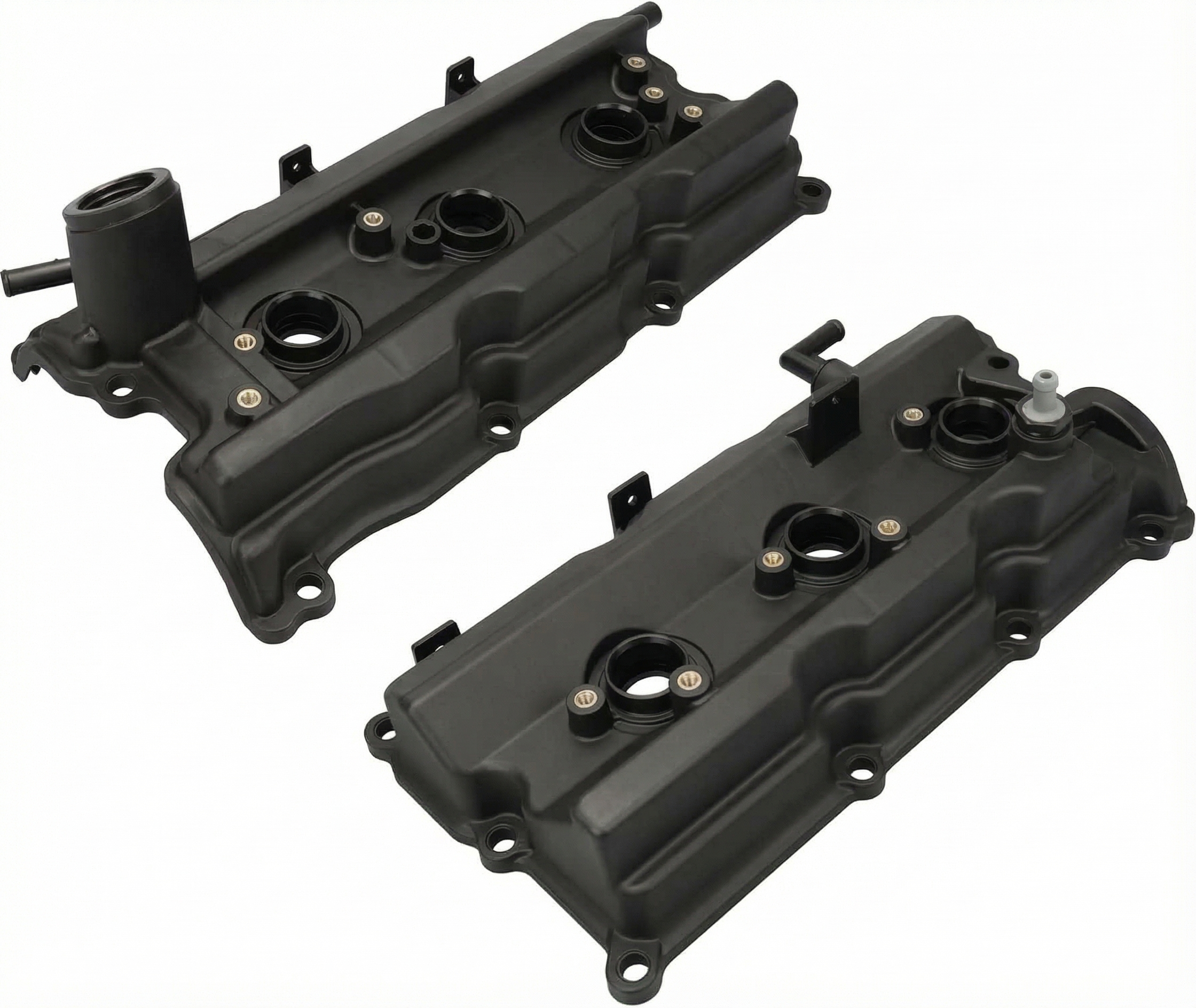
- When replacing the solenoid, you must also replace the valve cover gasket to prevent leaks.
What's Unique About the 2015-2019 Lincoln MKT
The Ford 3.5L and 3.7L V6 engines (part of the 'Cyclone' family) used in the Lincoln MKT are known for their sensitivity to oil quality and maintenance schedules. The Variable Camshaft Timing (VCT) system relies heavily on clean oil and proper pressure. As documented in multiple Ford and Lincoln Technical Service Bulletins (TSBs), small debris or sludge in the oil can easily cause the VCT solenoids to stick, leading directly to codes like P0021. [SSM 50067, SSM 47170] This is a primary reason why mechanics strongly advise against extending oil change intervals on these engines.
Diagnostic Flowchart
Tap your situation to follow the diagnostic path that matches what you're seeing on this vehicle.
Symptoms You May Notice
- Check Engine Light is on
- Rough, unstable idle
- Hesitation or stalling during acceleration, or when coming to a stop
- Noticeable loss of engine power
- Decreased fuel economy
- Engine may be hard to start
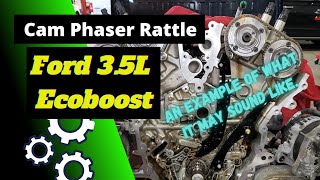
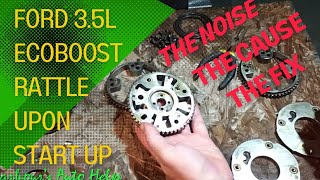
- Rattling or knocking noises from the engine, especially on startup with the 3.5L EcoBoost, which can be a symptom of either the VCT solenoid or a failing phaser
- Replacing the camshaft position sensor first. While it's a possibility, the issue is far more likely to be oil-related or a faulty VCT solenoid.
- Replacing the timing chain without first diagnosing the VCT solenoids or phasers. This is an expensive and often unnecessary first step.
- Assuming the cold start rattle is *only* the timing chain when it could be caused by a bad VCT solenoid or the phasers themselves.
Most Likely Causes
- Low, Dirty, or Incorrect Viscosity Engine Oil 🔴 High Probability The VCT system is operated by oil pressure. Infrequent oil changes (going beyond 5,000 miles is often cited as a risk) lead to sludge and debris that clog the fine mesh screens and small passages in the VCT solenoids and phasers.
How to confirm: Check the oil level on the dipstick and examine its color and consistency. If it's low, dark black, or sludgy, it needs to be changed. Confirm the correct oil viscosity is being used (SAE 5W-30 for most of these engines).
Typical fix: Perform an engine oil and filter change using the manufacturer-specified grade (e.g., SAE 5W-30 Synthetic Blend for the 3.5L EcoBoost). Clear the codes and see if the issue returns.
Est. part cost: $40-$80 - Sticking or Failed VCT Solenoid (Oil Control Valve) 🔴 High Probability → Shop Engine Variable Valve Timing (VVT) Solenoid This is a well-documented failure item. TSBs SSM 50067 and SSM 47170 directly state that P0021 can be caused by small debris causing the VCT solenoid to stick. The solenoid itself can also fail electronically.
How to confirm: After an oil change, if the code persists, the definitive test is to swap the Bank 2 intake solenoid with the Bank 1 intake solenoid. Clear the codes and drive. If the code changes to P0011 (the Bank 1 equivalent), the solenoid is confirmed faulty.
Typical fix: Replace the Bank 2 intake VCT solenoid. The OEM Motorcraft part is highly recommended due to the labor involved. It is mandatory to replace the valve cover gasket and solenoid seals at the same time to prevent oil leaks.
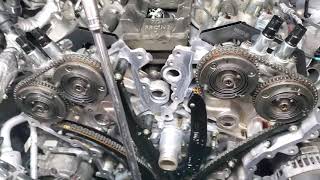
Est. part cost: $50-$150 - Failed Camshaft Phaser 🟡 Medium Probability → Shop Engine Camshaft On the 3.5L EcoBoost engine, cam phasers can wear out, causing a distinct 'cold start rattle' that lasts for a few seconds. The internal locking pins can fail, or the phaser can get stuck, causing it to be over-advanced.
How to confirm: Listen for a distinct rattling noise from the front of the engine for 2-5 seconds after a cold start. Diagnosis requires removing the valve cover to inspect the phaser for excessive play or damage. This is often diagnosed after a new solenoid fails to fix the code.
Typical fix: Replace the camshaft phaser(s), timing chain, and tensioners. This is a very labor-intensive and expensive job.
Est. part cost: $200-$500 - Worn Timing Chain or Tensioner ⚪ Low Probability → Shop Engine Timing Chain While less common than solenoids or phasers, timing chain stretch can occur at higher mileage (typically over 100k miles), causing timing correlation codes. Weakened hydraulic tensioners can also contribute.
How to confirm: This is difficult to confirm without significant disassembly (removing the engine front cover). It's usually diagnosed after all other more common causes have been ruled out. A mechanic might observe timing deviation via live scan tool data that points to a stretched chain.
Typical fix: Replace the timing chain, guides, and tensioners. This is often done at the same time as cam phaser replacement.
Est. part cost: $300-$600
Rare But Worth Checking
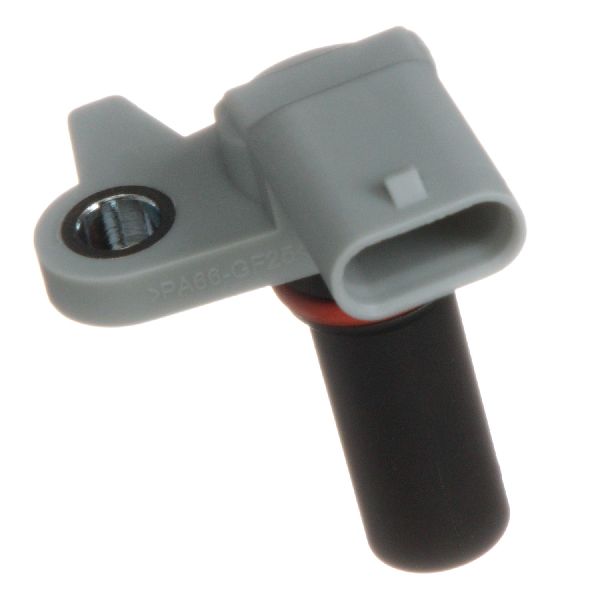
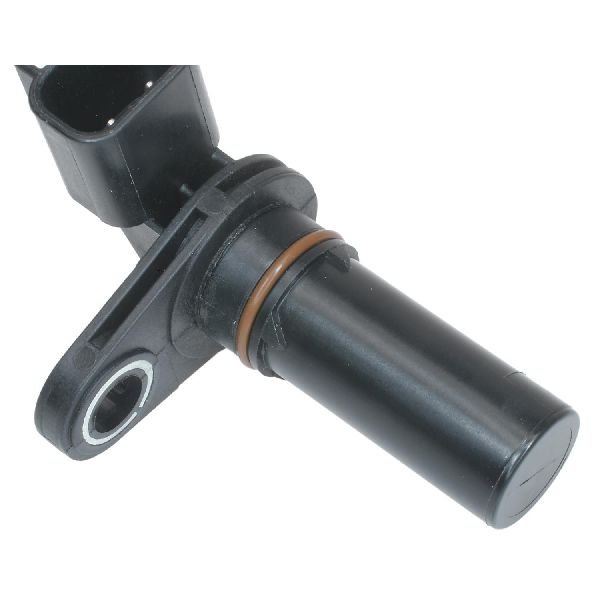
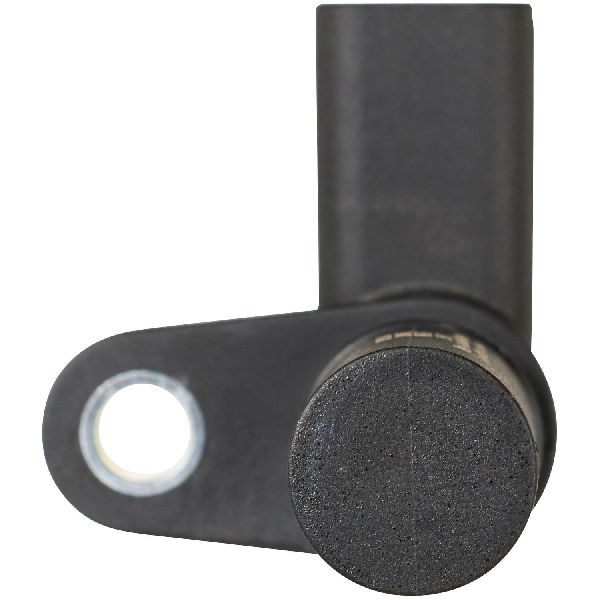
- Faulty Camshaft Position Sensor: → Shop Engine Camshaft Position Sensor While possible, a failing sensor will typically throw its own specific codes (related to sensor circuit faults) in addition to or instead of P0021.
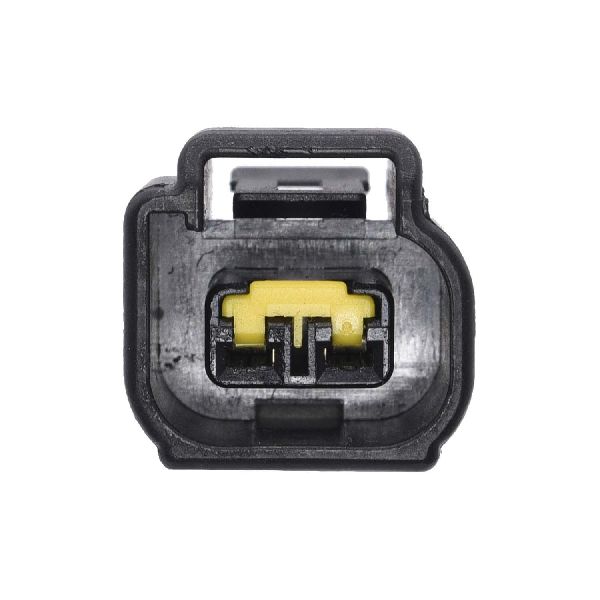
- Wiring Harness Damage: Damage to the wires leading to the VCT solenoid or camshaft position sensor can cause an intermittent signal and trigger the code. Check for frayed wires, oil contamination, or loose connectors, especially at the solenoid connector on the valve cover.
- PCM Malfunction: This is extremely rare. The Powertrain Control Module should only be considered after every other possibility has been exhaustively tested and ruled out.
Diagnosis Steps
- Verify the engine oil level and condition. If low, dirty, or the wrong viscosity, perform an oil and filter change with the correct full synthetic oil (SAE 5W-30) and clear the code.
- Use a diagnostic scan tool to read live data. Observe the desired vs. actual camshaft angle for the Bank 2 intake cam (CMPAS2). A large deviation or a lazy response indicates a problem.
- If the code returns after an oil change, the next step is to swap the Bank 2 intake VCT solenoid with the Bank 1 intake VCT solenoid. They are located under the valve covers.
- Clear the codes and drive the vehicle. If the code returns as P0011 (Bank 1 Over-Advanced), the solenoid you moved is faulty and must be replaced.
- If the code P0021 returns, the problem is not the solenoid. Inspect the wiring and connector for the Bank 2 VCT solenoid for damage, corrosion, or oil saturation.
- Test the solenoid's operation using a scan tool's actuator test function, if available. This allows you to command the solenoid on and off to check its response.
- If the solenoid and wiring are good, the issue likely lies with a faulty camshaft phaser or a stretched timing chain, requiring more in-depth mechanical inspection and probable replacement.
Parts You'll Likely Need
- Variable Camshaft Timing (VCT) Solenoid
(OEM #AT4Z-6M280-B (Bank 2 Intake), AT4Z-6M280-A (Bank 2 Exhaust))— This is the most frequent point of failure for code P0021 on this platform, often due to sticking from oil debris, as noted in manufacturer TSBs.
Trusted brands: Motorcraft, Dorman
OEM price range: $80-$150
Aftermarket price range: $50-$100 - Valve Cover Gasket Kit
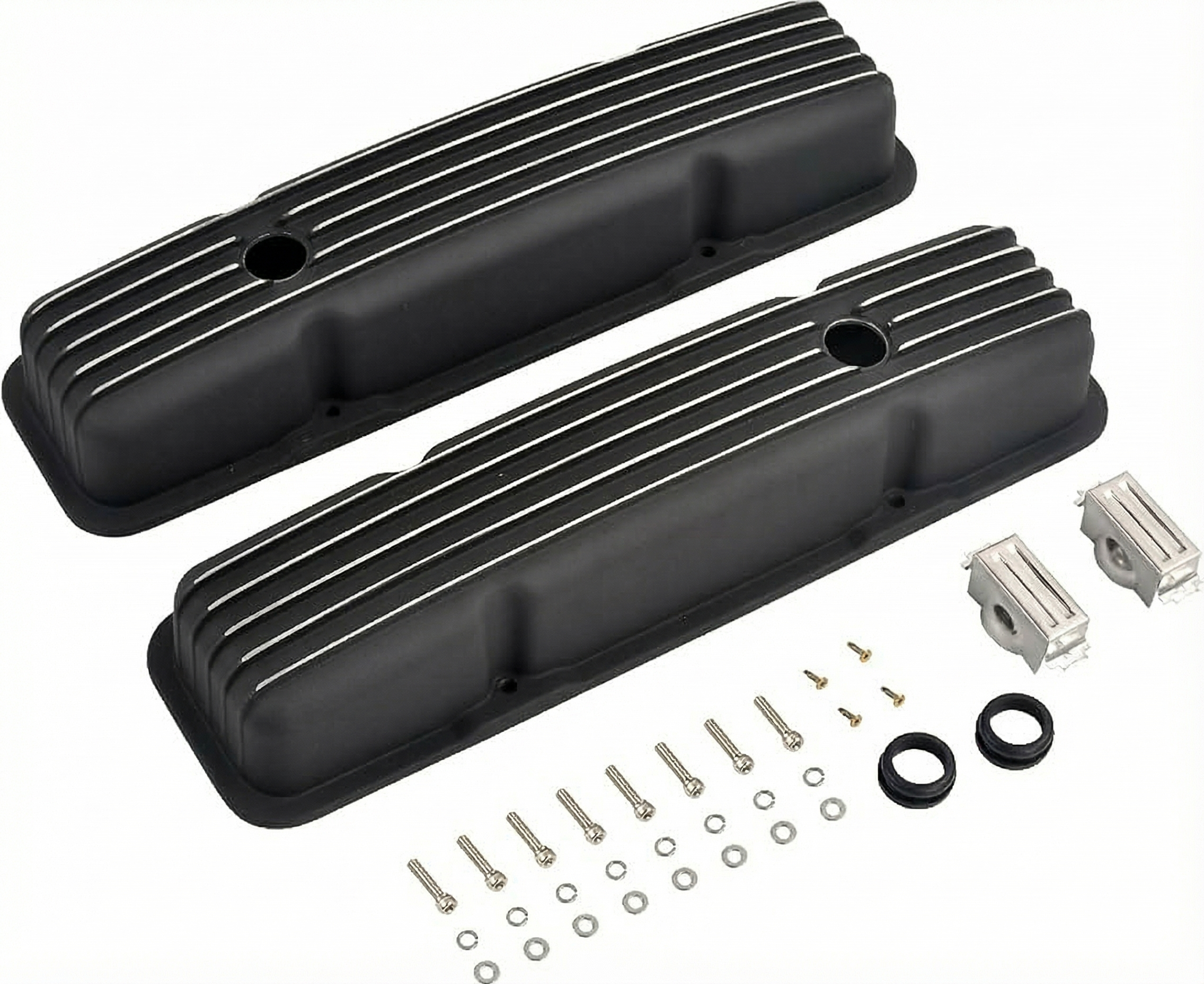
(OEM #BR3Z-6584-C (Bank 2/Left Side for 3.7L))— The valve cover must be removed to access the VCT solenoids. The gasket is a one-time use item and must be replaced to prevent oil leaks. The kit usually includes spark plug tube seals.
Trusted brands: Motorcraft, Fel-Pro
OEM price range: $60-$100
Aftermarket price range: $30-$60
Related Codes That Often Appear With This One
- P0011 — If you swap the Bank 2 solenoid with the Bank 1 solenoid for diagnosis, P0021 will be replaced by P0011, confirming the solenoid is the faulty part.
- P0016, P0017, P0018, P0019 — These are other camshaft/crankshaft position correlation codes. Their presence alongside P0021 can point towards a more serious timing chain or phaser issue, as the engine is detecting a misalignment between the crank and cam sensors.
- P0022 — This is the 'over-retarded' code for the same camshaft. Seeing both P0021 and P0022 intermittently could point to a sticking VCT solenoid or a wiring issue causing erratic control.
Technical Service Bulletins (TSBs) & Recalls
- SSM 50067: VCT codes may be caused by debris causing the solenoid to stick.
- SSM 47170: VCT codes may be caused by debris causing the solenoid to stick.
- SSM 54366: Points to specific diagnostic procedures in the workshop manual for VCT codes.
- TSB 16-0093: For certain 2016 models, advises direct replacement of the VCT solenoid for P0021 and other related codes on low-mileage engines.
Platform-Specific Known Issues
- TSB SSM 50067: Notes that various Ford and Lincoln vehicles may show P0021 due to small debris causing the VCT solenoid to stick. It advises against immediate component replacement without further diagnosis.
- TSB SSM 47170: An earlier bulletin with the same guidance as SSM 50067, indicating this has been a known issue for some time.
- TSB SSM 54366: Recommends using Pinpoint Test HK in the service manual for diagnosing a range of VCT codes including P0021.
Mechanic-Grade Diagnostic Values
- VCT Solenoid Internal Resistance — expected: 5 - 14 Ohms. Failure: A reading outside this range (open or shorted) indicates a failed solenoid coil.
- VCT Solenoid Power Supply Voltage — expected: Battery Voltage (approx. 12V). Failure: No voltage or low voltage indicates a wiring or PCM power supply issue.
- Live Data VCT Advance Error PID (VCTADVERR) — expected: Close to 0 degrees at idle and during steady-state driving.. Failure: Large, persistent deviation between desired and actual cam angle, or excessive variation during a drivability problem, points to a mechanical VCT system issue (solenoid, phaser, oil flow).
- Dynamic Solenoid Test (Engine Running) — expected: Engine should hesitate, run rough, or stall.. Failure: No change in engine operation suggests the solenoid is stuck, clogged, or there's an oil passage blockage.
Scan Tool Commands That Help
- Ford IDS (or equivalent high-end scanner): On-Demand Self-Test / Actuator Test — Used to command the VCT solenoid to cycle on and off. A technician can listen for an audible click from the solenoid or use a NOID light in the connector to confirm the PCM driver and wiring are functioning correctly.
- Ford IDS: Datalogger - Monitor VCT PIDs — Used to monitor PIDs like VCT_INT_ACT (actual) vs. VCT_INT_DSR (desired) and VCT_INT_DIF (error) while driving to see if the system is responding correctly to commands under various loads and RPMs.
- Ford IDS: Reset Adaptive Learning — After replacing VCT components like solenoids or phasers, this function should be used to clear the PCM's learned values and allow it to adapt to the new parts more quickly.
Wiring & Ground Locations
- Bank 2 VCT Solenoids — Under the Bank 2 (firewall side) valve cover. The intake solenoid is typically the upper or more accessible of the two once the cover is off.. This is the physical location of the most common failed part. Access requires significant labor, including removal of the intake manifold on transverse applications like the MKT.
- Bank 2 Camshaft Position Sensors — On the rear of the Bank 2 cylinder head, near the firewall.. These sensors provide the feedback to the PCM on the camshaft's position. A faulty sensor can provide incorrect data, leading to a P0021 code even if the mechanical parts are working.
- Valve Cover Ground Strap — Typically a small ground wire attached to a stud on the lower corner of each valve cover.. A poor ground connection can cause erratic behavior in the ignition or sensor systems, although it is less likely to be a direct cause of a VCT-specific code.
Real Owner Repair Stories
- YouTube user comment on '2015 F150 3.5 ecoboost VVT solenoid P0015 P0017' video (2015 Ford F-150 3.5L EcoBoost) — Check engine light with codes P0016 and others.
❌ Tried (didn't work) Took to Ford dealer who quoted $5900 for a complete timing chain overhaul.
✅ What actually fixed it The owner activated the Bank 1 solenoid and swapped all four camshaft position sensors. The problem was resolved for a total cost of $110 for the sensors. - YouTube channel 'Chris B Powerstroke' (2014 Ford F-150 3.5L EcoBoost) — Undergoing a full timing job, needed to know where replacement solenoids went.
❌ Tried (didn't work) Online forums and documentation lacked clear information for the specific aftermarket part.
✅ What actually fixed it The mechanic was using a Cloyes aftermarket timing kit which included a blue-colored VCT solenoid not present in the OEM set. After research, he determined it was for the Bank 1 (passenger side) exhaust position. After installing it there, the engine ran perfectly with no codes.
When the Usual Fixes Don't Work
- While the VCT solenoid is the most common cause for P0021, it is not the only cause. In one documented case involving a 2015 F-150 with the 3.5L EcoBoost, a dealer recommended a full timing system replacement costing thousands. The owner ultimately fixed the issue by replacing the camshaft position sensors for around $100. This highlights that even though the sensor is a less frequent cause, it should be considered as a possibility before committing to major, expensive repairs like phaser or timing chain replacement, especially if the common solenoid swap diagnostic doesn't resolve the code.
OEM Part Supersession History
Unknown→AT4Z-6M280-B— Standard part evolution and updates.
Heads up: This part number is specific to the Bank 2 (Left Side) INTAKE solenoid. Using the wrong position solenoid (e.g., AT4Z-6M280-A for exhaust) will cause issues.OEM (Gray/Black)→Aftermarket (e.g., Cloyes kit with Blue solenoid)— Aftermarket kit manufacturing.
Heads up: Some aftermarket timing kits, like from Cloyes, may use different color-coding for solenoids than OEM. For example, a blue solenoid in one kit was found to be for the Bank 1 exhaust position. Failure to identify the correct position for non-OEM colored solenoids will cause timing issues.
Model Year Variations Within This Range
- 2015-2019: No significant variations in the VCT system hardware or the common causes of P0021 have been documented within this model year range for the 3.5L and 3.7L engines. The issue and diagnostic approach are consistent across these years.
Helpful Videos
Used OEM Parts in Stock
New Aftermarket Parts Available


The information in this article is provided for general reference and educational purposes only. Vehicle specifications, procedures, and part compatibility can vary by production date, trim level, and region. Always consult your vehicle's factory service manual and verify part numbers before purchasing or performing repairs. Safety-critical components such as airbags, seat belts, and braking systems should be installed by a qualified professional.
- Lincoln MKT:
- 🧭 Diagnostic Flowchart
- 🎬 Helpful Videos
- 🛍️ Shop This Part
- What's Unique About the 2015-2019 Lincoln MKT
- Symptoms You May Notice
- Most Likely Causes
- Rare But Worth Checking
- Diagnosis Steps
- Parts You'll Likely Need
- Related Codes That Often Appear With This One
- Technical Service Bulletins (TSBs) & Recalls
- Platform-Specific Known Issues
- Mechanic-Grade Diagnostic Values
- Scan Tool Commands That Help
- Wiring & Ground Locations
- Real Owner Repair Stories
- When the Usual Fixes Don't Work
- OEM Part Supersession History
- Model Year Variations Within This Range
- 🎟️ Get 5% Off