

P0021 on 2006-2012 Mitsubishi Eclipse 3.8L V6: Causes and Fixes for Over-Advanced Cam Timing
For a 3.8L V6 Eclipse, code P0021 is most often caused by low or dirty engine oil, or a failing Bank 2 Oil Control Valve (VVT Solenoid). Start by checking your oil. If the oil is fine, the solenoid is the next likely culprit, costing about $50-$100 for an aftermarket part. Bank 2 is the cylinder bank closer to the radiator.
- This code points to the intake camshaft on Bank 2, which is the cylinder bank near the radiator.
What's Unique About the 2006-2012 Mitsubishi Eclipse
On the 6G75 V6 engine in the fourth-generation Eclipse, the P0021 code points specifically to the front cylinder bank, the one closer to the radiator. This makes access to the key component, the Oil Control Valve (OCV), relatively straightforward compared to the rear bank (Bank 1). The problem is almost always hydraulic (oil-related) or electrical (the OCV solenoid) rather than a major mechanical failure, though ignoring it can lead to more serious issues. This same engine and MIVEC system were used in the Mitsubishi Galant and Endeavor, which share this common fault.
Symptoms You May Notice
- Check Engine Light is on
- Rough, unstable, or fluctuating idle
- Engine hesitation or stumbling during acceleration
- Reduced engine power
- Decreased fuel economy
- Engine may stall when coming to a stop
- Rattling or knocking noise from the engine, especially on startup
- Replacing the camshaft position sensor. While related, the sensor's job is to report the camshaft's position. It is rarely the cause of an over-advanced timing condition; it is simply doing its job by reporting the fault. The code is for a mechanical position error, not a sensor circuit error.
Most Likely Causes
- Low, Dirty, or Incorrect Viscosity Engine Oil 🔴 High Probability The MIVEC system is highly dependent on clean oil of the correct viscosity (5W-20) to supply the hydraulic pressure needed to adjust cam timing. Sludge or low levels will disrupt its function, preventing the phaser from returning from the advanced position.
How to confirm: Check the engine oil dipstick for level and examine the oil's color and consistency. If the oil is very dark, gritty, or below the 'add' line, this is the most likely cause.
Typical fix: Perform an oil and filter change using a quality synthetic 5W-20 oil and a new filter. Clear codes and test drive.
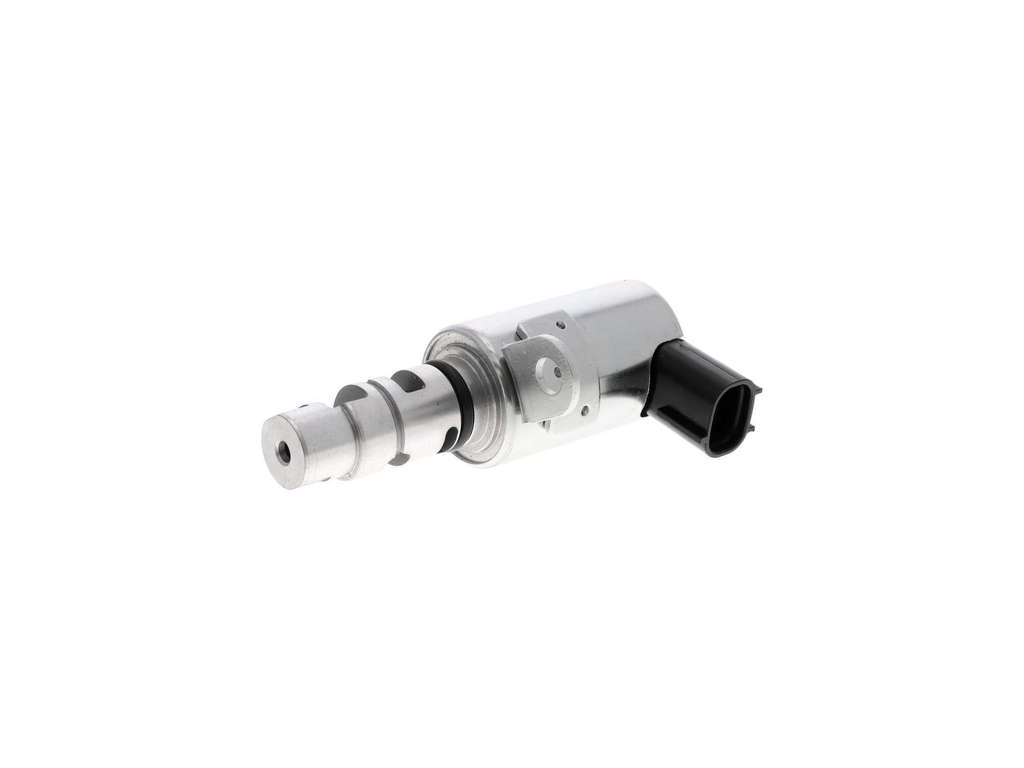
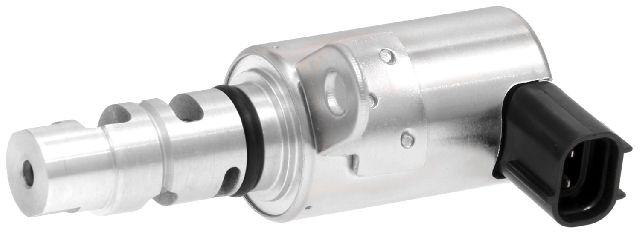
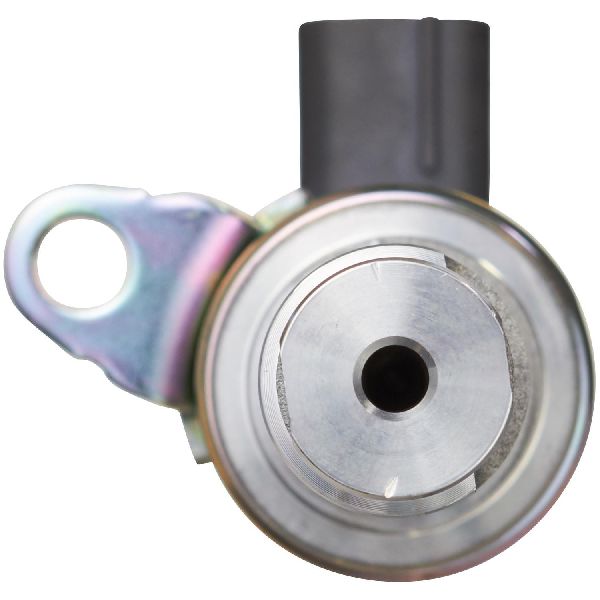
Est. part cost: $30-$70 - Faulty Bank 2 Oil Control Valve (OCV) / VVT Solenoid 🔴 High Probability → Shop Engine Variable Valve Timing (VVT) Solenoid These solenoids can get clogged with debris from old oil or fail electrically over time, causing them to stick in the open position and send continuous oil flow to the phaser.
How to confirm: Swap the Bank 2 (front) OCV with the Bank 1 (rear) OCV. They are identical and interchangeable. Clear the codes and drive the vehicle. If the code returns as P0011 (the Bank 1 equivalent), the solenoid is confirmed to be faulty. You can also test the solenoid's resistance with a multimeter (should be between 6.9-7.9 Ohms) or apply 12V to see if the internal plunger clicks open and closed.
Typical fix: Replace the Bank 2 Oil Control Valve. 🎬 Watch: A quick guide on replacing a VVT solenoid It is held in by a single 10mm bolt.
Est. part cost: $50-$150 - Wiring or Connector Issue at OCV ⚪ Low Probability The connector for the Bank 2 OCV is located at the front of the engine and can be exposed to heat and elements, potentially causing wires to become brittle or the connector to get damaged.
How to confirm: Visually inspect the wiring harness and connector for the Bank 2 OCV for any signs of damage, corrosion, or loose pins. Use a multimeter to check for proper voltage and ground at the connector with the key on.
Typical fix: Repair the damaged wiring or clean/replace the connector.
Est. part cost: $5-$50
Rare But Worth Checking
- Failing Camshaft Phaser: → Shop Engine Camshaft The phaser is the mechanical gear on the camshaft that actually rotates. It can become stuck in the advanced position due to internal wear, debris from dirty oil, or failure of its internal locking pin. This is a more complex and expensive repair that requires removal of the timing cover.
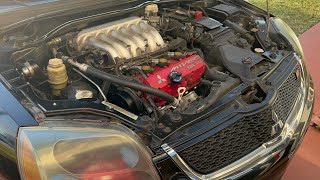
- Stretched or Slipped Timing Belt: → Shop Engine Timing Chain The 6G75 is an interference engine, 🎬 Watch: 6G75 timing belt and MIVEC housing walkthrough meaning a snapped timing belt will cause catastrophic damage. The replacement interval is every 60,000 to 100,000 miles. While a slipped belt more commonly causes correlation codes, a failing hydraulic tensioner or a belt that has jumped a tooth could potentially cause a P0021. This should be investigated if you hear rattling noises or are near/past the service interval.
- Clogged Oil Passages: In cases of severe oil sludge, the small passages that feed oil to the OCV and cam phaser can become blocked. This may require significant engine disassembly to clean.
Diagnosis Steps
- Verify the code with an OBD-II scanner.
- Check the engine oil level and condition. The dipstick is on the front of the engine. If low, dirty, or the wrong type (not 5W-20), perform an oil and filter change, clear the code, and re-test.
- Locate the Bank 2 (front) and Bank 1 (rear) Oil Control Valves (OCVs). The Bank 2 OCV is on the front valve cover, near the oil fill cap, held by a single 10mm bolt.
- Inspect the electrical connector and wiring to the Bank 2 OCV for any visible damage.
- Solenoid Swap Test: Unplug and unbolt the Bank 2 OCV. Do the same for the Bank 1 OCV on the rear valve cover. Swap their positions. They are identical parts.
- Clear the codes and drive the vehicle. If the code changes to P0011 (Bank 1), the OCV you moved to the rear is faulty and needs to be replaced.
- If the P0021 code returns after the swap, the problem is not the solenoid. The issue may be a clogged oil passage in the cylinder head, a wiring problem to the Bank 2 connector, or a mechanical fault with the cam phaser.
- If the solenoid tested good, check the timing belt's condition and tension, especially if it is near or past its 60k-100k mile service interval. This may require professional help.
- If all else fails, mechanical inspection of the cam phaser is required, which is a significant labor-intensive job.
Parts You'll Likely Need
- Engine Oil Control Valve (VVT Solenoid)
(OEM #1028A046)— This solenoid is the most common point of failure. It gets stuck or clogged, leading to incorrect oil flow and improper cam timing.
Trusted brands: Mitsubishi Genuine, Standard Motor Products (VVT191), Dorman (917-294), Beck/Arnley, DNJ
OEM price range: $140-$220
Aftermarket price range: $50-$100 - Engine Oil and Filter — Low, old, or incorrect viscosity oil is a primary cause of this code. An oil change with full synthetic 5W-20 is the cheapest and easiest first step.
Trusted brands: Mobil 1, Pennzoil Platinum, Valvoline SynPower, Castrol Edge
Aftermarket price range: $30-$70
Related Codes That Often Appear With This One
- P0011 — If P0011 (Bank 1 Over-Advanced) appears with P0021, it strongly suggests a systemic oil problem affecting both banks, such as critically low oil level, severe sludge, or a failing oil pump.
- P0300, P0302, P0304, P0306 — Incorrect camshaft timing on Bank 2 (cylinders 2, 4, 6) can disrupt the air/fuel mixture and spark timing, leading to misfires on that bank.
Platform-Specific Known Issues
- Owner Experience on Club4G.org: A user with a 2006 Eclipse GT reported getting P0021 and P0024. After replacing the Bank 2 OCV solenoid, the codes cleared and did not return. They noted the part was easy to access on the front of the engine.
- Repair Story from a Mitsubishi Forum: An owner of a 2007 Galant with the same 3.8L engine was getting both P0011 and P0021. An oil and filter change did not solve the issue. Replacing both OCV solenoids fixed the problem, confirming that when both banks show errors, it can still be the solenoids themselves failing simultaneously, though an oil issue is more likely.
Mechanic-Grade Diagnostic Values
- Oil Control Valve (VVT Solenoid) Coil Resistance — expected: 6.9 - 7.9 Ohms at 68°F (20°C).. Failure: A reading of 0 Ohms indicates a short circuit. An infinite reading (O.L.) indicates an open circuit. Either requires replacement of the solenoid.
- Engine Compression Pressure — expected: Standard: 1,550 kPa (225 psi). Minimum: 1,110 kPa (161 psi) at 200 r/min.. Failure: Pressure below the minimum limit, or a difference between any two cylinders greater than 98 kPa (14 psi), indicates a potential mechanical issue which could be exacerbated by incorrect timing.
Scan Tool Commands That Help
- Mitsubishi MUT-III, Autel, Snap-on, or other advanced bidirectional scanner: VVT Solenoid / OCV Actuator Test — Use this test when the OCV solenoid passes a resistance check. While the engine is idling, this command forces the solenoid to activate. A healthy system will cause the engine to stumble or run rough, confirming the solenoid is mechanically moving and oil passages are not completely blocked. If there is no change in idle, the solenoid is stuck or oil passages are clogged.
Wiring & Ground Locations
- G10 — Located at the rear of the engine.. This is a primary engine ground. A poor connection at this point can cause erratic behavior from various engine sensors and actuators, including the OCV solenoids and camshaft position sensors. It should be checked for corrosion and tightness if electrical issues are suspected.
- Engine Control Module (ECM) — Located on the left side of the engine compartment, forward of the relay box.. This is the computer that controls the MIVEC system. The wiring harness from the OCV solenoid ultimately runs back to this module. Damage to the harness near the ECM or corrosion at the ECM connector could cause this code.
OEM Part Supersession History
1028A046→N/A— No supersession found in research. 1028A046 appears to be the consistent OEM part number for this application.
Model Year Variations Within This Range
- 2006-2008: Engines manufactured before 2009 had a higher incidence of oiling issues related to the oil pump or pressure reducing valve, which could lead to premature bearing wear. This makes systemic oil pressure problems a more likely root cause for P0011/P0021 codes on these earlier models compared to later ones.
Diagnostic Flowchart
Other Known Issues on This Vehicle
Issues unrelated to this code that are worth knowing about as an owner of this generation:
- Cracked Dashboard 🟡 Low — Very common, especially in warmer climates. The material becomes brittle and cracks, particularly around the passenger airbag and instrument cluster.
- Peeling Clear Coat / Paint Failure 🟡 Low — Common, particularly on darker colors like black and red/orange. The clear coat fails and peels, often on the hood, roof, and spoiler. (Ref: TSB-20-42A-005 addresses paint stains but not widespread peeling.)
- Manual Transmission Shifting Difficulty 🟠 Medium — Reported by a notable number of owners of manual transmission models, can include difficulty getting into gear or grinding.
- Timing Belt Replacement is Critical 🔴 High → Shop Engine Timing Chain — This is a required maintenance item. The 6G75 is an interference engine, and failure to replace the timing belt, water pump, and tensioner every 60k-100k miles will lead to catastrophic engine failure if the belt snaps.
Used vs. New Parts: Buying Guide for This Vehicle
When a used part is the smart pick: For this specific repair, buying a used Oil Control Valve (OCV) is generally not recommended. The part's function is highly dependent on the cleanliness and maintenance history of the donor vehicle. A used part may come from a sludged engine and could fail shortly after installation. Given the low cost of new aftermarket parts, buying new is the smarter choice.
Donor-vehicle mileage cap: roughly under 40000 miles for the part to have meaningful remaining life.
What to inspect on the donor part:
- If considering a used OCV, visually inspect the internal screen for any sludge, debris, or tearing. Avoid any part that isn't perfectly clean.
- Test the resistance with a multimeter before purchase; it should be within the 6.9-7.9 Ohm range.
- Ask for the donor vehicle's maintenance history if possible, specifically oil change intervals.
OEM-only on this vehicle (don't cheap out):
- Hydraulic Timing Belt Tensioner: If diagnosis leads to the timing system, this part should always be replaced with an OEM unit. Aftermarket tensioners for the 6G75 have a reputation for premature failure, which can lead to catastrophic engine damage on this interference engine.
Aftermarket brands forum-validated for this vehicle:
- Standard Motor Products (SMP)
- Dorman
- DNJ Engine Components
Brands owners have reported issues with on this vehicle:
- Avoid no-name, unbranded solenoids from online marketplaces, as their internal coil windings and mechanical tolerances are often of poor quality and can fail quickly or not perform to OEM specifications.
Real Owner Stories
Aggregated from forums and TSBs cited above. Mileages and costs reflect what owners reported in those sources.
2006 Mitsubishi Eclipse GT 3.8L V6
Symptoms: Check Engine Light on with codes P0021 and P0024.
What fixed it: Replacing the Bank 2 OCV solenoid. The owner noted the part was easy to access on the front of the engine.
Source hint: Club4G.org thread titled 'P0021 P0024 CEL codes'
2007 Mitsubishi Galant 3.8L V6
Symptoms: Getting both P0011 and P0021 codes simultaneously; an oil and filter change did not resolve the issue.
What fixed it: Replacing both OCV solenoids fixed the problem, confirming both can fail at the same time.
Source hint: Mitsubishi Forum thread 'P0011 P0021'
Related OBD-II Codes
Frequently Asked Questions
Where is the Bank 2 Oil Control Valve located on my 3.8L Eclipse engine?
Can I use the same part for both Bank 1 and Bank 2 if I need to replace a solenoid?
What is the correct oil viscosity for the MIVEC system to prevent P0021 codes?
Is there a specific resistance range I should look for when testing the OCV with a multimeter?
Does TSB-20-42A-005 address the mechanical issues causing my P0021 code?
Should I buy a used OCV from a salvage yard to save money?
Could a failing timing belt cause this code on my 2006-2012 Eclipse?
Helpful Videos

We Have This Part in Stock


The information in this article is provided for general reference and educational purposes only. Vehicle specifications, procedures, and part compatibility can vary by production date, trim level, and region. Always consult your vehicle's factory service manual and verify part numbers before purchasing or performing repairs. Safety-critical components such as airbags, seat belts, and braking systems should be installed by a qualified professional.
- Mitsubishi Eclipse:
- 🧭 Diagnostic Flowchart
- 🎬 Helpful Videos
- 🛍️ Shop This Part
- What's Unique About the 2006-2012 Mitsubishi Eclipse
- Symptoms You May Notice
- Most Likely Causes
- Rare But Worth Checking
- Diagnosis Steps
- Parts You'll Likely Need
- Related Codes That Often Appear With This One
- Platform-Specific Known Issues
- Mechanic-Grade Diagnostic Values
- Scan Tool Commands That Help
- Wiring & Ground Locations
- OEM Part Supersession History
- Model Year Variations Within This Range
- Other Known Issues on This Vehicle
- Used vs. New Parts: Buying Guide for This Vehicle
- Real Owner Stories
- 2006 Mitsubishi Eclipse GT 3.8L V6
- 2007 Mitsubishi Galant 3.8L V6
- Related OBD-II Codes
- Frequently Asked Questions
- 🎟️ Get 5% Off