

P0021 on 2007-2009 Pontiac G6 3.6L: Causes and Fixes for Over-Advanced Camshaft Timing
On a 2007-2009 Pontiac G6 with the 3.6L V6, code P0021 is a serious warning that often points to stretched timing chains, a notorious issue for this engine. While a faulty VVT solenoid is possible, prepare for a timing chain replacement, a major repair costing $2,000-$3,000+. Do not continue to drive the vehicle as a broken chain will cause catastrophic engine damage.
- P0021 on a 2007-2009 G6 3.6L is a very serious code and should be addressed immediately to prevent catastrophic engine failure.
- The most likely cause is a stretched timing chain, a widely known issue with this engine.
- Do not continue to drive the vehicle. Have it professionally diagnosed.
- Always use high-quality 5W-30 full synthetic oil and follow a 3,000-5,000 mile oil change interval to prolong the life of the timing components.
- Do not simply replace the camshaft position sensor; it is almost never the cause of this code.
What's Unique About the 2007-2009 Pontiac G6
Unlike many vehicles where P0021 might be a simple solenoid or sensor issue, on the 2007-2009 G6 with the 3.6L LY7 V6, this code is a very strong indicator of a severe mechanical problem. This specific engine is infamous for premature timing chain stretching. The issue was so widespread that General Motors issued Special Coverage Adjustment #11340C, which extended the warranty on timing chains to 10 years/120,000 miles and included an ECM reprogram to shorten oil change intervals. The problem is directly linked to an early timing chain design combined with an overly optimistic Oil Life Monitor (OLM) system, which led to oil degradation and accelerated wear.
Symptoms You May Notice
- Check Engine Light is on
- Rattling or chain-like noise from the engine, especially on startup
- Rough or unstable idle
- Loss of power and poor acceleration
- Decreased fuel economy
- Engine may stall at stops
- Difficulty starting the engine
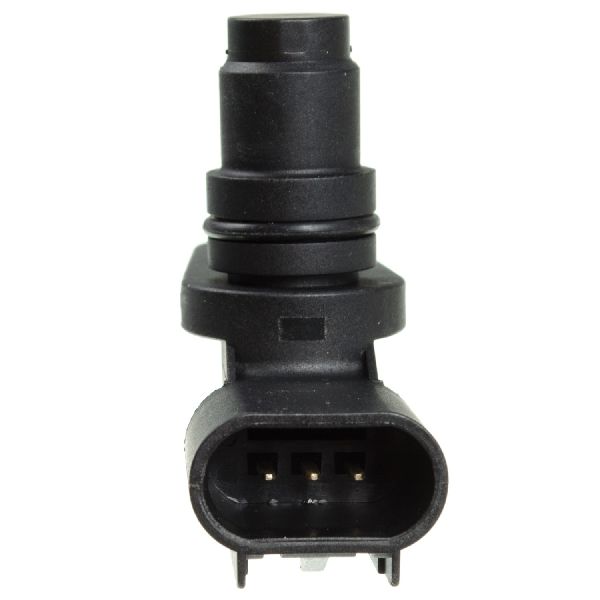
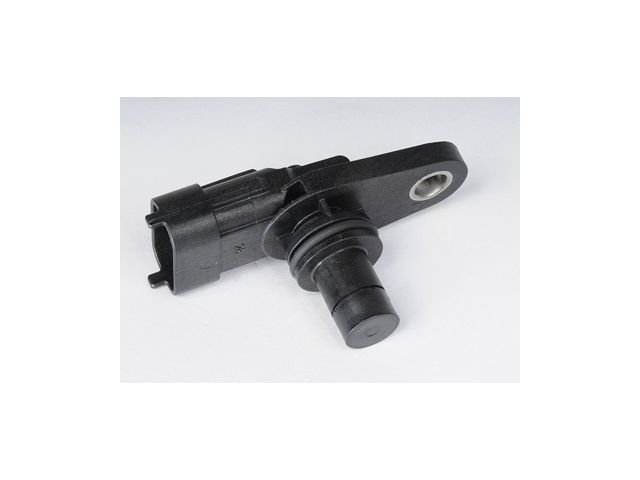
- Replacing the camshaft position *sensor* instead of the camshaft position actuator *solenoid*. The sensor reads the position, but the solenoid controls it. A sensor fault would typically set a different code (e.g., P0346, P0366).
Most Likely Causes
- Stretched Timing Chains 🔴 High Probability → Shop Engine Timing Chain The early 3.6L LY7 V6 used timing chains that were susceptible to premature wear, a problem exacerbated by long oil change intervals allowed by the factory Oil Life Monitor. This is a well-documented, widespread issue acknowledged by GM via TSBs and a special coverage program.
How to confirm: A professional mechanic can use a scan tool to view camshaft deviation angles; a consistent deviation over +/- 5 degrees at idle strongly suggests chain stretch. The presence of codes P0008, P0009, P0016, P0017, P0018, or P0019 alongside P0021 makes this diagnosis almost certain. A rattling noise from the passenger side of the engine on cold starts is also a key indicator.
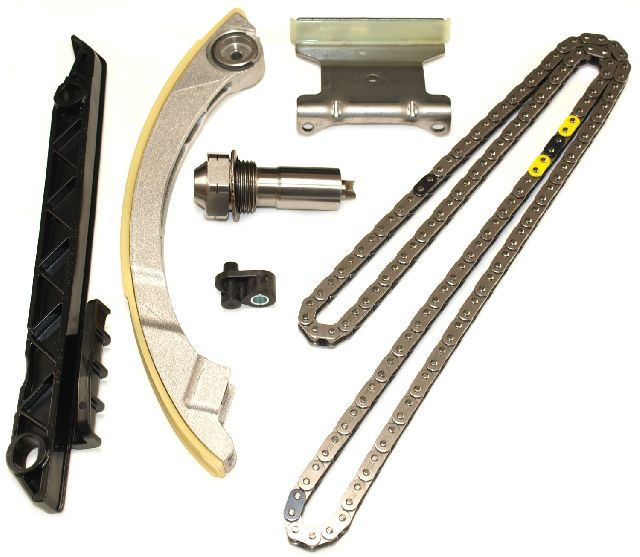
Typical fix: Replace all three timing chains, guides, and tensioners with an updated kit. This is a major, labor-intensive job. GM TSB #12-06-01-009F provides details on this repair. Many owners and shops opt for high-quality aftermarket kits like the Cloyes 9-0753S.
Est. part cost: $250-$600 - Low, Dirty, or Incorrect Viscosity Engine Oil 🟡 Medium Probability The VVT system and timing chain tensioners are both operated by oil pressure. The original factory oil life monitor often recommended intervals that were too long (10,000+ miles), leading to oil degradation, sludge, and accelerated component wear.
How to confirm: Check the oil level on the dipstick and inspect its condition. If it is low, black, or sludgy, it needs to be changed. Note the date/mileage of the last oil change if available.
Typical fix: Perform an engine oil and filter change using a high-quality 5W-30 full synthetic oil that meets GM's specifications. This may resolve the code if it's a minor issue, but often the damage (chain stretch) is already done. Shortening oil change intervals to 5,000 miles is highly recommended to prevent future issues.
Est. part cost: $40-$80 - Faulty Bank 2 Intake Camshaft Position Actuator Solenoid 🟡 Medium Probability → Shop Engine Camshaft
How to confirm: Swap the Bank 2 intake solenoid with the Bank 1 intake solenoid (on the firewall side). Clear the codes and drive the vehicle. If the code changes to P0011 (Bank 1), the solenoid is confirmed to be faulty. Bank 2 solenoids are on the front of the engine (radiator side) and are relatively easy to access. Resistance should be 8-13 Ohms.
Typical fix: Replace the faulty solenoid. It is often recommended to replace them in pairs (both intake) or as a full set of four (intake and exhaust). This is a common DIY-friendly repair.
Est. part cost: $25-$60
Rare But Worth Checking
- Failed Camshaft Phaser (Actuator): → Shop Engine Camshaft The phaser is the mechanical gear that the solenoid acts upon. It can get stuck or fail internally, but this is much less common than chain or solenoid issues. They are typically replaced during a full timing chain job.
- Wiring or Connector Issue at the Solenoid: Check for damaged wires or a corroded connector at the Bank 2 intake solenoid before replacing parts. The connector is a common point of failure.
- Excessive Camshaft End Play: → Shop Engine Camshaft GM issued TSB #08-06-01-011K which details a procedure to check for excessive camshaft end play that could also cause codes P0021/P0011. This is a less common cause and requires more advanced diagnostics.
Diagnosis Steps
- Check the engine oil level and condition. If low or dirty, perform an oil and filter change with 5W-30 full synthetic oil, clear the code, and see if it returns.
- Scan for any other stored trouble codes. Codes like P0008 or P0017 strongly point to a timing chain issue.
- Inspect the wiring and connector for the Bank 2 (front/radiator side) intake camshaft actuator solenoid for any visible damage or corrosion.
- A common DIY diagnostic is to swap the Bank 2 intake solenoid with the Bank 1 intake solenoid (firewall side). If the code changes to P0011, the solenoid is bad and should be replaced.
- If the code returns and is not caused by the solenoid, listen for a rattling noise from the engine on a cold start, which is a classic sign of chain wear.
- If the above steps do not resolve the issue, the vehicle should be taken to a professional for advanced diagnostics.
- A technician will use a scan tool to monitor the desired vs. actual camshaft position angles. A deviation of more than 5 degrees at idle confirms a stretched timing chain.
Parts You'll Likely Need
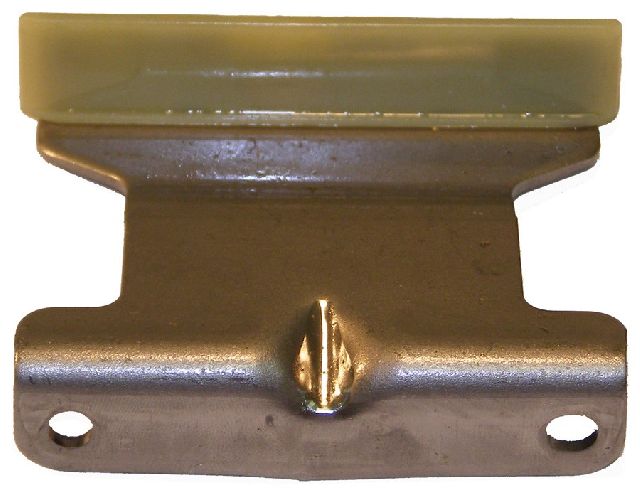
- Timing Chain Kit
(OEM #12650230 (For 2007 Models, per TSB 12-06-01-009F))— This is the most probable root cause of P0021 on this engine. An updated kit should be used to prevent a repeat failure.
Trusted brands: ACDelco (OEM), Cloyes (e.g., 9-0753S), Melling
OEM price range: $350-$500
Aftermarket price range: $250-$400 - Camshaft Position Actuator Solenoid (Intake)
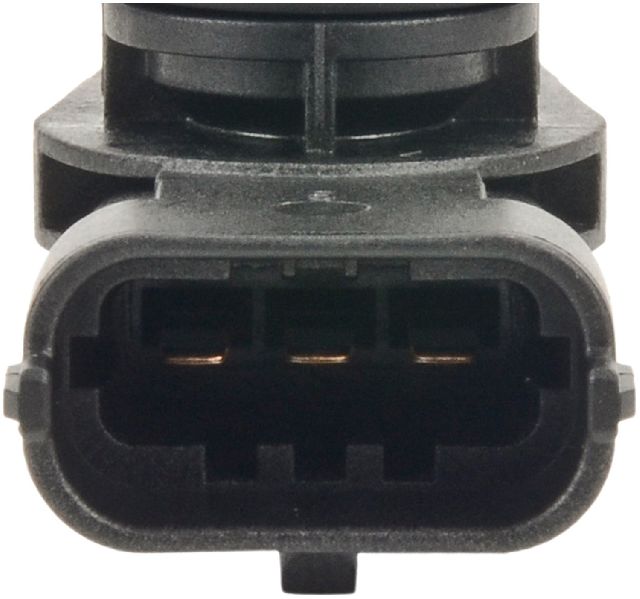
(OEM #12655420)— This part can become clogged or fail, causing timing deviation. It's a common cause and a key diagnostic component. Bank 2 is on the radiator side.
Trusted brands: ACDelco, Delphi, Dorman
OEM price range: $40-$70
Aftermarket price range: $25-$50 - Camshaft Position Actuator Solenoid (Exhaust)
(OEM #12655421)— Often replaced as a set with the intake solenoid to prevent future issues, as they are subjected to the same oil and conditions.
Trusted brands: ACDelco, Delphi, Dorman
OEM price range: $40-$70
Aftermarket price range: $25-$50
Related Codes That Often Appear With This One
- P0008 — This is a general engine timing correlation code. Its presence with P0021 is a very strong indicator of a stretched timing chain affecting the entire engine.
- P0011 — This is the equivalent code for Bank 1 (intake over-advanced). It will appear if you swap a faulty Bank 2 solenoid to Bank 1 for diagnosis. It can also appear with P0021 if the oil level is very low or chains are severely stretched.
- P0016, P0017, P0018, P0019 — These are all crankshaft-to-camshaft correlation codes. Any of these appearing with P0021 points directly to a base timing issue, almost certainly stretched timing chains.
Technical Service Bulletins (TSBs) & Recalls
- TSB #12-06-01-009F: Addresses stretched timing chains causing DTCs P0008, P0009, P0016, P0017, P0018, and/or P0019, and provides the correct service kit information.
- TSB #08-06-01-011K: Details a procedure for checking excessive camshaft end play, which can also cause P0021 and related codes.
Platform-Specific Known Issues
- The 3.6L LY7 V6 engine has a well-documented history of premature timing chain failure due to chain stretch.
- GM issued Special Coverage Adjustment #11340C, which extended the warranty on timing chains to 10 years/120,000 miles and included an ECM reprogram to shorten oil change intervals. This coverage has now expired for all 2007-2009 models.
- The original Oil Life Monitor (OLM) calibration was too optimistic, leading to oil degradation that accelerated timing chain wear.
Mechanic-Grade Diagnostic Values
- Camshaft Position Actuator Solenoid Resistance — expected: 8 to 13 Ohms. Failure: A reading outside this range, an open circuit (infinite resistance), a short (near zero), or an erratic reading when wiggling the connector indicates a faulty solenoid. A reading in Kilo-ohms (KΩ) is a definitive failure.
- VVT Solenoid Harness Connector Voltage — expected: Battery Voltage (approx. 12V) with Key On, Engine Off. Failure: No voltage or significantly low voltage points to a problem in the wiring harness or the ECM driver circuit, not the solenoid itself.
- Scan Tool Camshaft Angle Variance — expected: Less than 2-3 degrees of variance between desired and actual cam angle at idle.. Failure: The ECM will set code P0021 when it detects the difference between the desired and actual camshaft position angle is greater than 5 degrees for 2.5 seconds.
- Camshaft End Play — expected: Less than 0.40 mm (0.016 in). Failure: End play equal to or greater than 0.40 mm (0.016 in) can cause various timing codes, including P0021, and requires mechanical repair as per TSB 08-06-01-011K.
Scan Tool Commands That Help
- GDS2 / Tech2 (or equivalent professional scan tool): Camshaft Position Actuator Control — This is a critical bidirectional test to perform after verifying oil level and condition. It allows a technician to command the Bank 2 intake solenoid to a specific angle (e.g., 0 to 20 degrees) while the engine is running. By observing the 'Desired' vs 'Actual' camshaft angle PIDs, you can definitively determine if the failure is with the solenoid (not responding), the phaser (stuck/slow to respond), or an oil pressure delivery issue.
Wiring & Ground Locations
- Engine Harness Grounds — There are typically three smaller ground connections for the engine harness located on the engine block itself, often on the cylinder heads or front of the engine.. A poor ground for the engine harness can cause erratic signals from sensors and actuators, including the camshaft position sensors and VVT solenoids, leading to false codes.
- G103 — Located at the left rear of the engine compartment on the cowl, above the brake booster.. This ground point serves multiple components, including potentially the Engine Control Module (ECM). A corroded or loose connection here can cause a wide range of engine management issues.
- G105 — Located at the left front of the engine compartment, behind the cooling fan relays.. While primarily for lighting and fans, ensuring all major engine bay grounds are clean and secure is a crucial step in diagnosing any electrical fault.
OEM Part Supersession History
12655420→12679099— Standard part update and consolidation by GM. The new part is the current official OEM replacement.
Heads up: The new part number (12679099) is a direct replacement for the old one (12655420) and should be fully compatible.
Diagnostic Flowchart
Other Known Issues on This Vehicle
Issues unrelated to this code that are worth knowing about as an owner of this generation:
- Sudden Loss of Electric Power Steering (EPS) 🔴 High — Widespread issue affecting many G6 models, can occur at any mileage. Leads to a sudden, dramatic increase in steering effort. (Ref: Multiple recalls and special coverage programs were issued, including #14116 and #14329.)
- Ignition Coil Failure on Rear Bank (Cylinders 2, 4, 6) 🟠 Medium — Common failure, particularly after 60,000 miles. The rear coils are difficult to access, requiring removal of the intake manifold.
- Sunroof Drain Clogs and Water Leaks 🟠 Medium — Common problem where clogged drain tubes cause water to leak into the cabin, potentially damaging electronics like the BCM.
- Intermediate Steering Shaft (ISS) Noise 🟡 Low — A very common issue where the ISS develops a clunking or popping noise that can be felt through the steering wheel, especially at low speeds. Often requires lubrication or replacement. (Ref: TSB #07-02-32-001)
Used vs. New Parts: Buying Guide for This Vehicle
When a used part is the smart pick: For this specific repair, sourcing used parts is generally not recommended. While a VVT solenoid from a low-mileage, verified-running donor vehicle could be used in a pinch, their high failure rate and relatively low cost new make a used part a poor value proposition.
Donor-vehicle mileage cap: roughly under 60000 miles for the part to have meaningful remaining life.
What to inspect on the donor part:
- For a VVT solenoid, inspect the mesh screens for any signs of metallic debris or heavy sludge.
- Check the electrical connector for corrosion, cracks, or broken locking tabs.
- Avoid any parts from an engine that shows signs of significant oil sludge or neglect.
OEM-only on this vehicle (don't cheap out):
- Timing Chain Kit (Chains, Guides, Tensioners): This is a critical, high-labor repair. Using cheap, unproven aftermarket timing components is a significant risk that can lead to catastrophic engine failure. Stick with OEM (ACDelco) or a top-tier, forum-validated aftermarket brand.
- Camshaft Phasers (Actuators): If phasers need replacement during the timing job, using OEM parts is strongly advised to ensure correct operation with the VVT system.
Aftermarket brands forum-validated for this vehicle:
- Cloyes (For Timing Chain Kits, e.g., 9-0753S)
- Melling (For Timing Chain Kits and Oil Pumps)
- Delphi (For VVT Solenoids)
Brands owners have reported issues with on this vehicle:
- Unbranded, low-cost timing chain kits from online marketplaces. The quality of the chain material and plastic guides is often poor, leading to rapid repeat failures.
Real Owner Stories
Aggregated from forums and TSBs cited above. Mileages and costs reflect what owners reported in those sources.
2008 Pontiac G6 3.6L LY7 V6
Symptoms: Owner reported expensive timing chain repairs as a major point of failure for the V6 model.
What fixed it: Replacement of timing chains.
Source hint: Edmunds Consumer Reviews for 2008 Pontiac G6
2007-2009 Pontiac G6 3.6L LY7 V6
Symptoms: Owners frequently discuss confirming the diagnosis of stretched chains after attempting solenoid swaps and oil changes failed to clear the code.
What fixed it: Replacing all three timing chains, guides, and tensioners with an updated kit like the Cloyes 9-0753S.
Source hint: g6ownersclub.com / g6performance.com
2008-2009 Pontiac G8 3.6L LY7 V6
Symptoms: Extensive documentation of timing chain stretch issues and related VVT codes on the LY7 engine.
What fixed it: Timing chain replacement and ECM reprogram to shorten oil change intervals.
Source hint: GRRRR8.net (Pontiac G8 Forum)
Related OBD-II Codes
Frequently Asked Questions
Is my 2007-2009 Pontiac G6 3.6L still covered under the GM timing chain warranty extension?
I have P0021 and a rattling noise on startup; does TSB #12-06-01-009F apply to my car?
Can I just swap the solenoids to see if that's the problem on my G6?
Why did the timing chain fail so early on my 3.6L V6?
What specific oil should I use in my G6 to prevent P0021 from returning?
Are there other common issues I should watch for while my G6 is in the shop for P0021?
We Have This Part in Stock


The information in this article is provided for general reference and educational purposes only. Vehicle specifications, procedures, and part compatibility can vary by production date, trim level, and region. Always consult your vehicle's factory service manual and verify part numbers before purchasing or performing repairs. Safety-critical components such as airbags, seat belts, and braking systems should be installed by a qualified professional.
- Pontiac G6:
- 🧭 Diagnostic Flowchart
- 🛍️ Shop This Part
- What's Unique About the 2007-2009 Pontiac G6
- Symptoms You May Notice
- Most Likely Causes
- Rare But Worth Checking
- Diagnosis Steps
- Parts You'll Likely Need
- Related Codes That Often Appear With This One
- Technical Service Bulletins (TSBs) & Recalls
- Platform-Specific Known Issues
- Mechanic-Grade Diagnostic Values
- Scan Tool Commands That Help
- Wiring & Ground Locations
- OEM Part Supersession History
- Other Known Issues on This Vehicle
- Used vs. New Parts: Buying Guide for This Vehicle
- Real Owner Stories
- 2008 Pontiac G6 3.6L LY7 V6
- 2007-2009 Pontiac G6 3.6L LY7 V6
- 2008-2009 Pontiac G8 3.6L LY7 V6
- Related OBD-II Codes
- Frequently Asked Questions
- 🎟️ Get 5% Off