

P0021 on 2009-2017 Toyota Corolla: Intake Camshaft Timing Over-Advanced Causes and Fixes
On a 2009-2017 Toyota Corolla, code P0021 is most often caused by low or dirty engine oil, or a failing intake camshaft oil control valve (VVT solenoid). An oil change or replacing the solenoid (around $40-$120 for the part) usually resolves the issue. Note that P0021 refers to 'Bank 2', which this engine doesn't have; the correct code is P0011 (Bank 1), but some scanners misreport it.
- Before buying any parts, check your engine oil. Low, old, or incorrect oil is the leading cause of P0021.
- The most likely part to have failed is the intake VVT solenoid (Oil Control Valve). It's an accessible, relatively inexpensive part to replace.
- Don't be confused by the 'Bank 2' in the P0021 code definition. Your Corolla's engine only has one bank, and this code points to the same intake cam issue as code P0011.
What's Unique About the 2009-2017 Toyota Corolla
The 2ZR-FE engine in this generation of Corolla uses Toyota's Dual VVT-i system, which adjusts timing on both the intake and exhaust camshafts. Code P0021 (or more accurately, P0011) points directly to the intake side. This system is highly dependent on clean engine oil and proper oil pressure to function. Consequently, the most frequent cause of this code is not a major mechanical failure, but simply a lack of basic maintenance, like timely oil changes, or a failure of the relatively accessible oil control valve (solenoid).
Generation note: This guide covers the 10th generation (2009-2013) and 11th generation (2014-2017) Toyota Corolla. Both generations use the 2ZR-FE 1.8L engine with a similar VVT-i system, so the causes, symptoms, and repairs for P0021 are largely identical across this year range.
Symptoms You May Notice
- Check Engine Light is on
- Rough or unstable idle
- Engine hesitates or stumbles during acceleration
- Stalling, especially when coming to a stop
- Reduced fuel economy
- Loss of power, particularly on hills
- Rattling or knocking noise from the engine, especially a brief rattle on cold startup
- Replacing the camshaft position sensor when the actual problem is dirty oil or a faulty oil control valve.
- Replacing the timing chain when the issue is a much simpler and cheaper VVT solenoid failure.
- Assuming P0021 means a Bank 2 problem exists, when it's a scanner misreporting a Bank 1 issue on this single-bank engine.
Most Likely Causes
- Low or Dirty Engine Oil 🔴 High Probability The VVT system uses oil pressure to actuate the cam phasers. If the oil is low, dirty, or the wrong viscosity, the system cannot respond correctly. Sludge can clog the small passages and screens in the VVT solenoids.
How to confirm: Check the engine oil level on the dipstick and inspect its color and consistency. If it's low or dark and sludgy, it needs to be changed. The recommended oil is typically 0W-20 or 5W-20 full synthetic.
Typical fix: Perform an oil and filter change using the manufacturer-recommended oil viscosity. Reset the check engine light and drive to see if the code returns.
Est. part cost: $30-$70 - Faulty Intake Camshaft Oil Control Valve (VVT Solenoid) 🔴 High Probability → Shop Engine Variable Valve Timing (VVT) Solenoid This solenoid controls the flow of oil to the camshaft phaser. It can get clogged with sludge from dirty oil or fail electrically over time, causing it to stick open or closed. It is a very common failure point for this code.
How to confirm: The solenoid can be removed and inspected for a clogged screen. You can also test its operation by applying 12V power to its terminals to see if the internal plunger moves. A multimeter can be used to check for proper resistance (around 6.9 to 7.9 ohms is typical).
Typical fix: Replace the intake oil control valve. It is located on the front of the cylinder head, secured by a single 10mm bolt. Cleaning is sometimes possible but replacement is recommended for reliability.
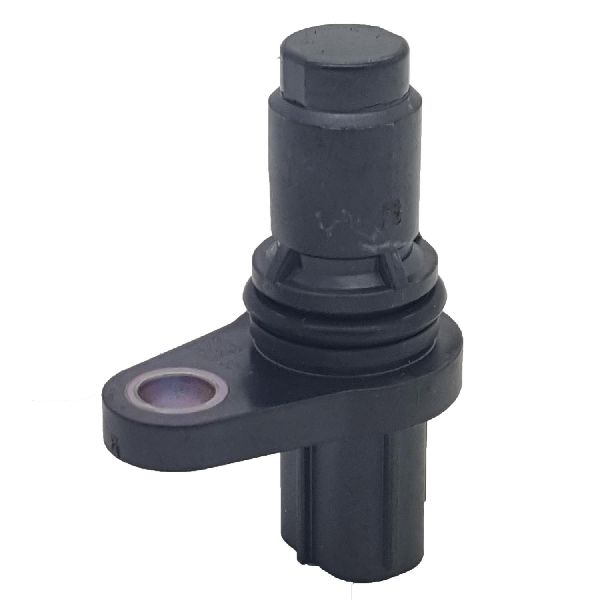
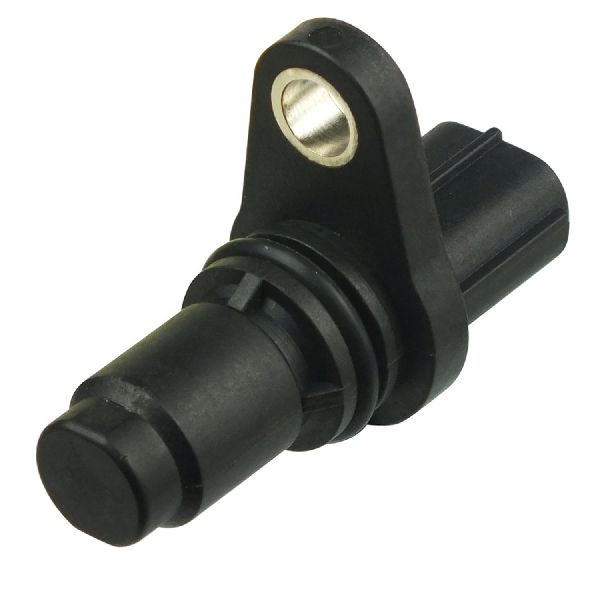
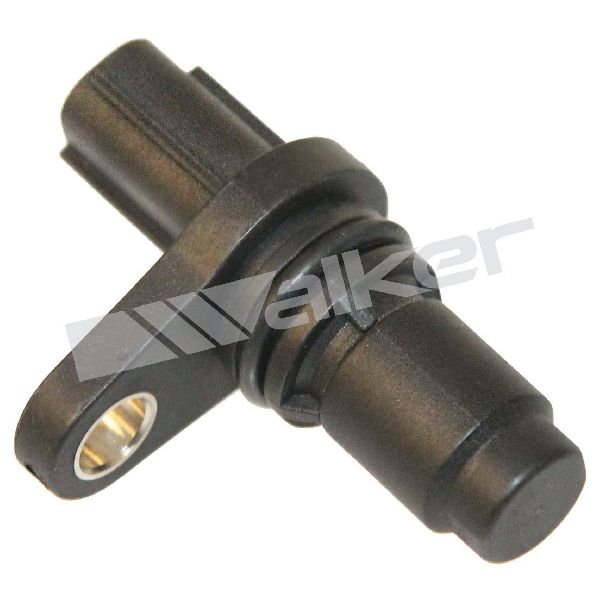
Est. part cost: $40-$120 - Faulty Camshaft Position Sensor ⚪ Low Probability → Shop Engine Camshaft Position Sensor The sensor that reads the camshaft's position can fail, sending incorrect data to the ECM. This is less common than oil-related issues for this specific code.
How to confirm: Diagnosis typically requires an oscilloscope to view the sensor's signal pattern. Often, a failing sensor will trigger other specific sensor circuit codes, not just a performance code like P0021/P0011.
Typical fix: Replace the intake camshaft position sensor.
Est. part cost: $50-$100
Rare But Worth Checking
- Stretched Timing Chain: → Shop Engine Timing Chain Over very high mileage, the timing chain can stretch slightly, causing a deviation between the crankshaft and camshaft positions that the VVT system cannot compensate for. This usually presents with a rattling noise on startup. One owner reported a skipped chain causing a persistent P0021.
- Faulty VVT Camshaft Actuator (Phaser): → Shop Engine Camshaft The gear on the end of the camshaft that actually adjusts the timing can fail internally or become seized. Toyota issued TSB T-SB-0087-09 for the 2009 Corolla/Matrix describing a brief knocking/rattling noise from the 2ZR engine on cold starts caused by a faulty VVT gear assembly. This is an expensive repair as it requires significant disassembly of the timing components.
- Clogged Oil Passages: In cases of severe engine sludge from neglected oil changes, the small oil passages leading to the VVT components can become blocked, starving them of the oil pressure needed to operate.
Diagnosis Steps
- Read the code with an OBD-II scanner. If P0021 is present, be aware it likely indicates a P0011 fault on this engine. Note any other codes.
- Check the engine oil level and condition. If low, top it off. If dirty or overdue for a change, replace the oil and filter with the correct viscosity oil (0W-20 or 5W-20).
- Clear the codes and test drive the vehicle. If the code does not return, the issue was likely oil-related.
- If the code returns, locate the intake oil control valve (VVT solenoid) on the front of the cylinder head. It is held by a single 10mm bolt.
- Disconnect the electrical connector and remove the bolt. Gently wiggle and pull the solenoid out. Be prepared for some oil spillage.
- Inspect the solenoid's filter screen for sludge or debris. Clean it with brake cleaner if dirty and reinstall to test. If the screen is damaged or the code returns, replace the solenoid.
- If a new solenoid does not fix the issue, further diagnosis is needed. This includes checking for a stretched timing chain or a faulty VVT phaser (cam gear), which may require a professional mechanic.
Parts You'll Likely Need
- Intake Camshaft Timing Oil Control Valve (VVT Solenoid)
(OEM #15330-37020)— This is the most common component to fail or become clogged, directly causing the P0021/P0011 code.
Trusted brands: Toyota (Genuine), Denso, Aisin, Dorman
OEM price range: $90-$150
Aftermarket price range: $40-$90 - Engine Oil and Filter — Incorrect oil level or condition is a primary cause of all VVT-related codes.
Trusted brands: Mobil 1, Castrol, Valvoline
OEM price range: $50-$80
Aftermarket price range: $30-$60
Related Codes That Often Appear With This One
- P0011 — P0011 is the correct code for 'A' Camshaft Position - Timing Over-Advanced for Bank 1. Since the 2ZR-FE only has Bank 1, seeing P0011 instead of or alongside P0021 points to the exact same set of problems with the intake camshaft timing.
- P0012 — This code indicates 'Intake Camshaft Position Timing - Over-Retarded'. If the VVT solenoid or actuator is failing intermittently, it might cause both over-advanced and over-retarded conditions at different times.
- P0015 — This code indicates '"B" Camshaft Position - Timing Over-Retarded (Bank 1)', pointing to an issue with the exhaust camshaft. If both intake and exhaust solenoids are failing or oil quality is very poor, multiple VVT codes can appear together.
Technical Service Bulletins (TSBs) & Recalls
- T-SB-0087-09: Addresses a brief knocking/rattling noise from the 2ZR engine on cold starts in 2009 Corolla/Matrix models, caused by a faulty VVT gear assembly.
Platform-Specific Known Issues
- Scanner Code Misinterpretation: A significant number of generic OBD-II scanners will report code P0021 (Bank 2) for an intake cam timing issue on the 2ZR-FE engine, even though it only has one bank. The correct Toyota-specific code is P0011 (Bank 1). The diagnostic and repair procedures are identical regardless of which code is shown.
- Cold Start Rattle (VVT Gear): For the 2009 model year specifically, Toyota issued TSB T-SB-0087-09 for a brief knocking or rattling noise from the engine when started cold. This was attributed to a faulty camshaft timing gear assembly (the VVT phaser itself), which can be a precursor to or accompany VVT-related codes.
Mechanic-Grade Diagnostic Values
- Intake Oil Control Valve (VVT Solenoid) Resistance — expected: 6.9 to 7.9 Ω at 20°C (68°F). Failure: A reading outside this range, or an open/short circuit, indicates a faulty solenoid coil.
- Techstream Live Data: VVT Target vs. Actual Angle — expected: The 'VVT Angle B1' and 'VVT Target Angle B1' should be within 5 degrees of each other at idle and while driving.. Failure: A large, persistent deviation between the target and actual angles indicates the phaser is not responding correctly to commands.
- Techstream Live Data: VVT Initial Position Learning Value — expected: -5 to +5 degrees at idle after the engine is warm.. Failure: A value significantly outside this range suggests a baseline timing issue, such as a stretched chain or a problem with the phaser's default lock position.
- Camshaft Position Sensor Signal Voltage (3-wire sensor) — expected: The signal wire should pulse between approximately 0V and 5V as the engine is cranked or running.. Failure: A constant 0V, 5V, or no signal indicates a failed sensor or wiring issue.
Scan Tool Commands That Help
- Toyota Techstream: Active Test: Control the VVT System (Bank 1) — This bidirectional test allows the technician to command the VVT solenoid on and off while monitoring the engine's RPM and the actual camshaft angle. If commanding the solenoid ON causes a significant change in engine idle (e.g., a drop in RPM or stalling), it confirms the solenoid and cam phaser are mechanically capable of moving. If there is no change, it points to a stuck solenoid, a clogged oil passage, or a seized phaser.
Wiring & Ground Locations
- Ground Points AA, AB, AC, AD — Located in the engine compartment on the left-hand side (driver's side for LHD models) on or near the engine and chassis frame.. The ECM and its related sensors, including the camshaft and crankshaft position sensors, rely on clean and secure ground connections. A poor ground at one of these main points can introduce electrical noise or voltage drops, potentially causing incorrect sensor readings and triggering timing-related fault codes.
- VVT Solenoid Connector — A 2-pin connector directly on top of the VVT solenoid, located on the front of the cylinder head.. This is the primary point for testing voltage to the solenoid and the solenoid's internal resistance. One pin should receive a 12V duty-cycled signal from the ECM, and the other is the power feed.
- Camshaft Position Sensor Connector — A 3-pin connector on the camshaft position sensor, located on the top of the valve cover near the VVT solenoid. The OEM connector part number is 90980-12353 if it needs replacement.. This connector provides the sensor with power, ground, and the path for the signal wire back to the ECM. Testing at these pins can confirm if the sensor is receiving power and sending a signal.
Real Owner Repair Stories
- Reddit r/MechanicAdvice user (1999 Toyota Corolla (similar VVT system principles)) — Check Engine Light with code P0011 immediately after an oil change.
❌ Tried (didn't work) Replacing the VVT solenoid.
✅ What actually fixed it The user discovered that using 5W-20 oil instead of the manufacturer-specified 5W-30 for their older model triggered the P0011 code. Performing another oil change with the correct viscosity oil resolved the issue, highlighting the system's sensitivity to oil weight.
OEM Part Supersession History
15330-37020→15330-0T020— Typically due to a change in supplier, manufacturing process, or minor design revision. Toyota does not usually publish the specific reason for supersession.
Heads up: The new part number (15330-0T020) is the correct service replacement for the original. There are no known incompatibility issues when using the superseded part.
Model Year Variations Within This Range
- 2014-2017: Some later models in the 11th generation could be equipped with the 2ZR-FAE engine, which includes Toyota's Valvematic system. While the base engine is the same as the 2ZR-FE, the Valvematic system adds another layer of complexity to the valvetrain. However, for a P0011/P0021 code, the primary diagnostic path focusing on the VVT solenoid and oil quality remains the same as the earlier 2ZR-FE.
Diagnostic Flowchart
Other Known Issues on This Vehicle
Issues unrelated to this code that are worth knowing about as an owner of this generation:
- Excessive Oil Consumption 🟠 Medium — More common in early models (2009-2010). Caused by piston ring design. Not as severe as the preceding 1ZZ-FE engine, but many owners report needing to add oil between changes. (Ref: Toyota addressed this with updated ECU firmware and redesigned piston rings in later production, but no widespread recall was issued for the 2ZR-FE.)
- Water Pump Failure 🟠 Medium — The water pump bearing can fail or the pulley can dislodge from the shaft, causing a loss of coolant circulation. It's a known weak point. (Ref: Toyota released a modified water pump (part # 16100-09502) to address leakage issues as noted in TSB EG-00446T-TME.)
- Starter Motor Failure 🟡 Low — Can fail around 100,000-125,000 miles, resulting in a no-start or slow-start condition. It's a common high-mileage repair item.
Used vs. New Parts: Buying Guide for This Vehicle
When a used part is the smart pick: For the VVT solenoid (Oil Control Valve), a used OEM part from a reputable salvage yard is a reasonable choice, especially if it comes from a low-mileage, rear-ended vehicle. Given the high reliability of the OEM part, a used one is often superior to a new, unproven aftermarket brand.
Donor-vehicle mileage cap: roughly under 80000 miles for the part to have meaningful remaining life.
What to inspect on the donor part:
- Verify the donor vehicle's mileage.
- Inspect the solenoid's filter screens for any tears or heavy, caked-on sludge. A light film of clean oil is normal.
- Check the electrical connector for cracks or corrosion on the pins.
- If possible, briefly apply 12V power to the pins to confirm the internal plunger makes an audible 'click'.
OEM-only on this vehicle (don't cheap out):
- VVT Camshaft Actuator (Phaser): This is a critical timing component. Due to the complexity and high cost of labor for replacement, using a new OEM part is strongly advised to ensure longevity and avoid repeat repairs.
Aftermarket brands forum-validated for this vehicle:
- Denso (often the original OEM supplier)
- Aisin
Brands owners have reported issues with on this vehicle:
- Unbranded, 'white-box' parts from online marketplaces should be avoided. While some may work, their quality control is inconsistent, and they have a higher failure rate compared to reputable brands or used OEM parts. Some users report issues with lower-quality brands like Dorman, citing differences in materials and construction compared to OEM.
Real Owner Stories
Aggregated from forums and TSBs cited above. Mileages and costs reflect what owners reported in those sources.
2009 Toyota Corolla 1.8L
Symptoms: The check engine light kept coming on with a P0021 error. After replacing sensors, a knock sensor code also appeared and the P0021 code returned.
What fixed it: The owner diagnosed the issue as a skipped timing chain.
Source hint: CarKiller / Ask Scotty Community forum thread 'P0021 Cost of repair on a Toyota Corolla 2009 timing'
Related OBD-II Codes
Frequently Asked Questions
My scanner shows P0021 on my 2009 Corolla, but I read this engine only has one bank. Is the code wrong?
I hear a brief rattling noise when I start my 2009 Corolla in the morning. Is this related to P0021?
What is the correct oil viscosity to use in my 2ZR-FE to prevent VVT codes?
Can I just clean the VVT solenoid instead of replacing it?
Where is the intake oil control valve located on the 1.8L Corolla engine?
Does the 2ZR-FE engine have a history of oil issues that could cause this code?
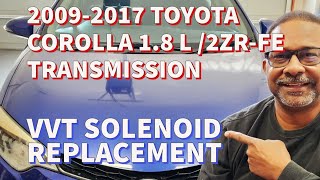
Helpful Videos
We Have This Part in Stock


The information in this article is provided for general reference and educational purposes only. Vehicle specifications, procedures, and part compatibility can vary by production date, trim level, and region. Always consult your vehicle's factory service manual and verify part numbers before purchasing or performing repairs. Safety-critical components such as airbags, seat belts, and braking systems should be installed by a qualified professional.
- Toyota Corolla:
- 🧭 Diagnostic Flowchart
- 🎬 Helpful Videos
- 🛍️ Shop This Part
- What's Unique About the 2009-2017 Toyota Corolla
- Symptoms You May Notice
- Most Likely Causes
- Rare But Worth Checking
- Diagnosis Steps
- Parts You'll Likely Need
- Related Codes That Often Appear With This One
- Technical Service Bulletins (TSBs) & Recalls
- Platform-Specific Known Issues
- Mechanic-Grade Diagnostic Values
- Scan Tool Commands That Help
- Wiring & Ground Locations
- Real Owner Repair Stories
- OEM Part Supersession History
- Model Year Variations Within This Range
- Other Known Issues on This Vehicle
- Used vs. New Parts: Buying Guide for This Vehicle
- Real Owner Stories
- 2009 Toyota Corolla 1.8L
- Related OBD-II Codes
- Frequently Asked Questions
- 🎟️ Get 5% Off