

P0022 on 2012-2018 Audi A6 3.0T: Causes, Fixes for Over-Retarded Camshaft Timing
On the 2012-2018 Audi A6 3.0T, P0022 is almost always caused by a faulty Bank 2 (driver's side) intake camshaft adjuster solenoid or low/dirty engine oil. Start by checking the oil. If the oil is fine, the solenoid is the likely culprit, costing ~$50-$200 for the part and being a very simple DIY fix. Swapping the Bank 1 and Bank 2 intake solenoids is the definitive diagnostic test.
- Always check your engine oil level and condition first when you see a P0022 code.
- The most likely cause is a bad Bank 2 (driver's side) intake camshaft adjuster solenoid.
- A simple DIY diagnostic is to swap the intake solenoids between the driver's and passenger's sides to see if the code follows the part (changing to P0012).
- Replacing the solenoid is a very easy, 15-minute job that can save you hundreds in diagnostic fees.
- While a timing chain failure is a possible cause, it is much rarer and should only be considered after ruling out the solenoid and oil issues.
What's Unique About the 2012-2018 Audi A6
The 3.0T supercharged V6 (engine codes CGWB, CGXB, and later CREC) is a robust engine, but like many modern German engines, its variable valve timing system is highly sensitive to oil quality and pressure. While a P0022 code can indicate serious timing chain problems on some platforms, on the C7 A6 3.0T, it's far more likely to be a simple and inexpensive fix: a failing camshaft adjuster solenoid. Owners frequently misdiagnose this as a major issue when it's often a 15-minute repair. A TSB (2041097) for the similar P0021 code points to the solenoid's internal filter screen breaking, which can also cause this fault.
Symptoms You May Notice
- Check Engine Light is on
- Rough idle or stalling, especially when warm
- Hesitation or lack of power during acceleration
- Decreased fuel economy
- Engine may be difficult to start
- Rattling noise from the engine (less common, but indicates a more serious issue like timing chain tensioners)
- Replacing the camshaft position sensor before testing the camshaft adjuster solenoid. The solenoid is a far more common failure point.
- Assuming the timing chain has failed. While possible, the solenoid and oil issues are much more probable and should be ruled out first before attempting a costly timing chain service.
Most Likely Causes
- Faulty Bank 2 Intake Camshaft Adjuster Solenoid (VVT Solenoid) 🔴 High Probability → Shop Engine Camshaft These solenoids are a very common failure point on the 3.0T engine. They are electro-mechanical and can wear out, get clogged with oil sludge, or fail electronically over time. A known issue, sometimes referenced in TSBs, involves the solenoid's integrated filter screen breaking and causing a blockage or malfunction.
How to confirm: The easiest test is to swap the Bank 2 (driver's side) intake solenoid with the Bank 1 (passenger's side) intake solenoid. They are identical parts. Clear the codes and drive. If the fault code changes to P0012 (the Bank 1 equivalent), the solenoid is definitively bad. You can also test the solenoid's resistance with a multimeter; it should be between 6.9 and 7.9 ohms at room temperature. A VCDS scan tool can also run an output test to listen for an audible click from the solenoid.
Typical fix: Replace the faulty solenoid. It is held in by a single T30 Torx screw 🎬 See: How to test and clean the solenoid and is easily accessible on the front of the driver's side valve cover.
Est. part cost: $50-$200 - Low, Dirty, or Incorrect Viscosity Engine Oil 🟡 Medium Probability The VVT system is hydraulic and relies on clean oil with the correct viscosity and pressure to function. Extended oil change intervals or using non-approved oil (VW 502 00 spec is required) can lead to sludge and blockages in the small passages of the VVT solenoids and actuators.
How to confirm: Check the engine oil level and condition via the MMI system or dipstick (if equipped). Note the date and mileage of the last oil change. If it's low, dirty, or long overdue, this is a likely contributor.
Typical fix: Perform an oil and filter change using a high-quality, OEM-spec oil (VW 502 00 or newer spec) and a quality filter. Clear the codes and see if the issue returns.
Est. part cost: $80-$150
Rare But Worth Checking
- Stretched Timing Chain or Failed Tensioner: → Shop Engine Timing Chain While much less common than a bad solenoid for this specific code, timing chain issues are a known, albeit infrequent, problem on the 3.0T. This is a much more serious and expensive engine-out repair. This is often accompanied by other timing correlation codes (like P0016, P0018) and a distinct rattling noise on cold startups that lasts 1-3 seconds. A VCDS scan showing camshaft adaptation values exceeding -8 degrees is a strong indicator of this issue.
- Faulty Camshaft Position Sensor: → Shop Engine Camshaft Position Sensor The sensor that reads the camshaft's position can fail, but it's less common than the actuator solenoid failing. If swapping the solenoids doesn't change the code, swapping the Bank 1 and Bank 2 camshaft position sensors would be the next diagnostic step.
- Clogged Oil Passages or Camshaft Phaser/Actuator Failure: → Shop Engine Camshaft In rare cases, the mechanical camshaft phaser itself can fail or the oil passages leading to it can become blocked with sludge, preventing proper operation. This is a complex and expensive repair that may require replacing the phaser. One owner on AudiWorld with a P0021 had this exact issue resolved by a dealer replacing the mechanical adjuster. 🎬 Watch: How to replace upper chain tensioners and cam phasers
Diagnosis Steps
- Read the fault codes with an OBD-II scanner to confirm P0022 is present.
- Check the engine oil level and condition. If the oil is low, dirty, or overdue for a change, service it first using VW 502 00 specification oil. Clear codes and re-test.
- If the oil is fine, locate the intake camshaft adjuster solenoids. They are on the front of the engine, on top of the valve covers. Bank 2 is the driver's side.
- Swap the Bank 2 (driver's side) intake solenoid with the Bank 1 (passenger's side) intake solenoid. They are identical and held by one T30 Torx bolt.
- Clear the fault codes, start the engine, and let it run for a few minutes. You may need to drive the vehicle.
- Re-scan for codes. If P0012 ('A' Camshaft Position - Timing Over-Retarded Bank 1) now appears, the solenoid you moved is faulty and must be replaced.
- If the P0022 code returns, the problem is not the solenoid. The next steps would involve testing the wiring to the solenoid, swapping and testing the camshaft position sensor, and then investigating more complex mechanical issues like the timing chain or phaser, which may require professional help.
Parts You'll Likely Need
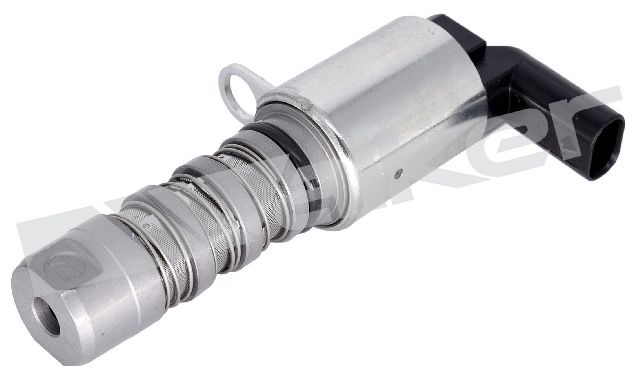
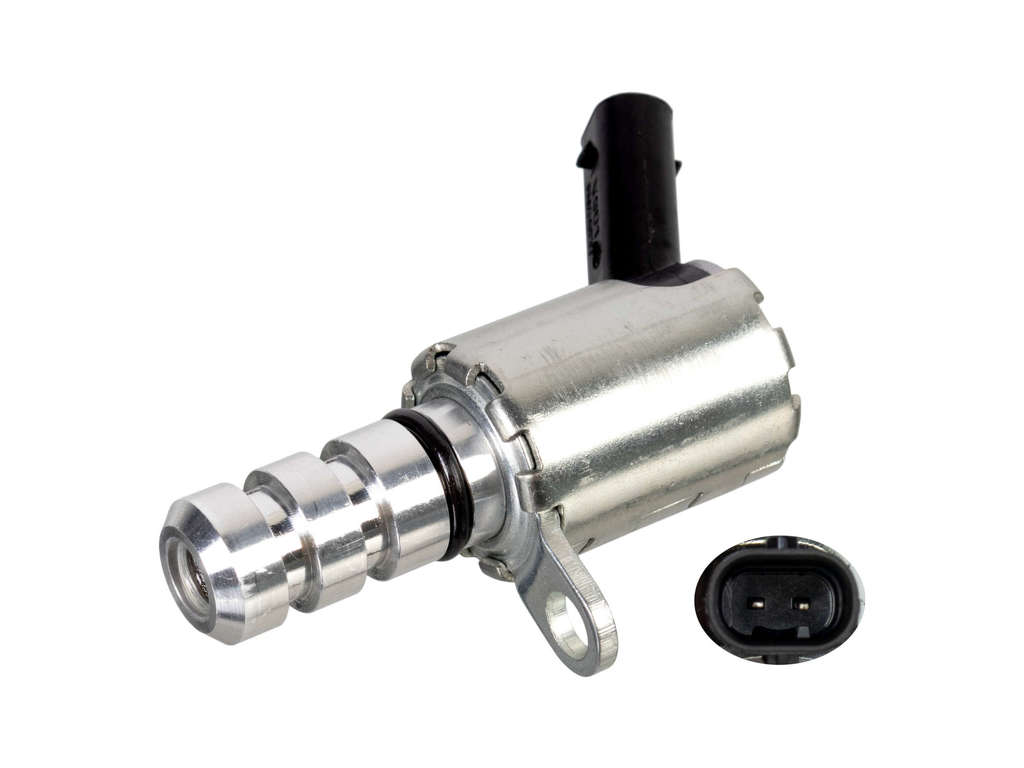
- Intake Camshaft Adjuster Solenoid / VVT Solenoid
(OEM #06E109257P)— This is the most common failure part for P0022 on the 3.0T engine. It controls the oil flow that adjusts the camshaft timing. The part number has been superseded several times (from F, J, etc.), with 'P' being the latest revision. It is always recommended to use the latest version.
Trusted brands: Audi (OEM), Vaico, INA, Pierburg
OEM price range: $150-$220
Aftermarket price range: $45-$100
Related Codes That Often Appear With This One
- P2093 — This code indicates a circuit high issue for the Bank 2 camshaft position actuator, pointing directly to an electrical problem with the solenoid or its wiring.
- P0018 — This code indicates a correlation issue between the crank and Bank 2 cam sensor. If seen with P0022, it could suggest a more significant timing problem, like a jumped tooth or stretched chain, but could also be triggered by a severely malfunctioning VVT system.
- P0012 — This is the Bank 1 equivalent of P0022. It will appear after swapping a faulty Bank 2 intake solenoid over to Bank 1 during diagnosis, confirming the solenoid is the problem.
Technical Service Bulletins (TSBs) & Recalls
- TSB 2041097 / 2049153: While not directly for P0022, these TSBs address related VVT codes (P0021, P052C) on the 3.0T engine. They point to issues with the camshaft adjuster solenoid's internal filter screen breaking or mechanical issues with the cam phaser's locking pin, which are relevant potential root causes for VVT faults in general on this platform.
Platform-Specific Known Issues
- Real Owner Experience: Solenoid Swap Fix: Numerous threads on Audizine and AudiWorld confirm the solenoid swap diagnostic. A user on Audizine with a 2013 A6 3.0T reported a P0022 code, swapped the Bank 2 intake solenoid with the Bank 1 intake solenoid, and the code changed to P0012, confirming the solenoid was the issue. He replaced the faulty solenoid (part #06E109257P) and resolved the problem in his driveway.
Mechanic-Grade Diagnostic Values
- VCDS Camshaft Adaptation Phase Position (Bank 2) — expected: 0° to -4° at warm idle.. Failure: Values approaching or exceeding -8° strongly indicate significant timing chain stretch.
- Camshaft Adjuster Solenoid (N205) Resistance — expected: 6.9 to 7.9 Ohms at 20°C (68°F). Some sources allow 5.0 to 8.0 Ohms.. Failure: An open circuit (infinite resistance), a short (near zero), or a value significantly outside the range. Note: A solenoid can pass this test but still be mechanically stuck.
- Camshaft Adjuster Solenoid (N205) Connector Voltage — expected: Battery voltage (~12V) at Pin 1 with Key On, Engine Off.. Failure: No voltage or low voltage points to a wiring or relay issue upstream of the solenoid.
- Camshaft Position Sensor (G163) Connector Voltage — expected: Approximately 5.0V between terminal 1 (5V reference) and terminal 3 (ground) with Key On, Engine Off.. Failure: Voltage below ~4.8V or no voltage indicates a wiring or ECM power supply issue.
Hidden / Shadow Codes Worth Checking
- P164D00: Oil Pressure Switch for Reduced Oil Pressure Malfunction. This code is not a direct VVT fault, but is mentioned in a related TSB and can indicate an underlying oil pressure issue that could cause P0022. (see via VCDS or other Audi-specific diagnostic tool.)
Scan Tool Commands That Help
- VCDS (VAG-COM): Engine -> Output Tests -> Camshaft Adjustment Solenoid — To directly command the N205 solenoid to actuate. A healthy solenoid will produce an audible click. Lack of a click points to a failed solenoid or a wiring issue.
- VCDS (VAG-COM): Engine -> Adv. Meas. Values -> Search for 'Camshaft adjustment: inlet phase: bank 2' — On newer UDS-protocol ECUs (approx. 2015+), this is used to check for timing chain stretch. For older ECUs, this data was in Measuring Block 093.
Wiring & Ground Locations
- N205 Solenoid Connector (Bank 2) — On the front of the driver's side upper timing chain cover, connecting to the camshaft adjuster solenoid.. This 2-pin connector provides power and the control signal. Pin 1 is battery voltage (power), and Pin 2 is the control signal from the ECM. Checking for voltage at Pin 1 is a key step in diagnosing a non-responsive solenoid.
- Engine Ground Strap — There are multiple engine grounds. One major ground point is located on the frame rail in the engine compartment, near the alternator on the passenger side.. A poor engine ground can cause a variety of electrical issues, including erratic sensor readings and incorrect solenoid operation, potentially leading to a P0022 code.
OEM Part Supersession History
06E109257F, 06E109257J→06E109257L, 06E109257M, 06E109257N, 06E109257S, 06E109257T, and finally 06E109257P— Revisions to improve reliability and prevent internal screen failure or sticking.
Heads up: All previous versions should be replaced with the latest 'P' revision. While older versions may fit, they are prone to the original failure mode.
Model Year Variations Within This Range
- 2012-2015 (C7 Pre-Facelift): These models typically use the CGXB or CTUA engine codes. The ECU may be a non-UDS protocol type, meaning VCDS diagnostics for timing stretch would use 'Measuring Blocks' (e.g., Block 093) instead of 'Advanced Measuring Values'.
- 2016-2018 (C7.5 Facelift): These models use the updated CREC engine. The ECU is typically a UDS protocol type, requiring the use of 'Advanced Measuring Values' in VCDS to check camshaft adaptation phase.
Diagnostic Flowchart
Other Known Issues on This Vehicle
Issues unrelated to this code that are worth knowing about as an owner of this generation:
- PCV Valve / Oil Separator Failure 🔴 High — Extremely common, typically fails between 50k-100k miles. The diaphragm tears, causing a large vacuum leak.
- Water Pump & Thermostat Failure 🔴 High — Very common, especially on earlier 2012-2013 models. Plastic housings become brittle and crack, causing coolant leaks. Often fails between 60k-100k miles. (Ref: Software updates and service actions were issued for some early models for thermostat issues.)
- Engine Mount Failure 🟠 Medium — The fluid-filled hydraulic engine mounts are known to leak and collapse, causing excessive engine vibration at idle and during acceleration. Failure can occur as early as 75k miles.
- Intake Valve Carbon Buildup 🟠 Medium — As a direct-injection engine, carbon buildup on intake valves is inevitable, typically requiring cleaning every 60k-80k miles to prevent misfires and rough running.
- Timing Chain Tensioner Rattle 🟠 Medium → Shop Engine Timing Chain — Less common than other issues, but the upper timing chain tensioners can fail to hold oil pressure, causing a 1-3 second rattle on cold starts. If ignored, it can lead to more severe timing issues. (Ref: An updated tensioner design is available to fix the startup rattle.)
Used vs. New Parts: Buying Guide for This Vehicle
When a used part is the smart pick: A used part is generally not recommended for the camshaft adjuster solenoid itself, as it is a high-failure, electro-mechanical wear item. A used part should only be considered if it is from a verified very low-mileage donor vehicle.
Donor-vehicle mileage cap: roughly under 30000 miles for the part to have meaningful remaining life.
What to inspect on the donor part:
- Inspect the solenoid's screen for any tears or debris.
- Check for signs of heavy oil sludge or varnish on the body.
- If possible, test the resistance with a multimeter before purchase; it should be between 6.9 and 7.9 ohms.
- Test actuation by applying 12V; a healthy solenoid will make a sharp click.
OEM-only on this vehicle (don't cheap out):
- Mechanical Camshaft Phaser/Adjuster: The gear assembly at the end of the camshaft is a precision-machined component critical to engine timing. Aftermarket versions carry a high risk of premature failure, which can lead to catastrophic engine damage.
Aftermarket brands forum-validated for this vehicle:
- Pierburg: Known OEM supplier for many VAG components, including these solenoids.
- INA: A Schaeffler brand, another well-regarded OEM supplier for valvetrain components.
- Vaico: A reputable aftermarket brand offering a more budget-friendly alternative to OEM.
Brands owners have reported issues with on this vehicle:
- Unbranded parts from marketplaces like eBay or Amazon. These often lack quality control and have a high failure rate, leading to repeated repairs.
Real Owner Stories
Aggregated from forums and TSBs cited above. Mileages and costs reflect what owners reported in those sources.
2013 Audi A6 3.0T
Symptoms: Reported a P0022 code and performed a diagnostic swap of the solenoids.
What fixed it: Replaced the faulty solenoid (part #06E109257P) after the code moved to Bank 1 (P0012) during testing.
Source hint: Audizine
2016 Audi A6 3.0T
Symptoms: Vehicle presented with codes P0021 and P052C.
What fixed it: Investigation revealed a mechanical issue with the camshaft phaser's locking pin rather than a simple solenoid failure.
Source hint: Ross-Tech Forums
Related OBD-II Codes
Frequently Asked Questions
Can I use any high-quality oil for my 3.0T A6 to prevent P0022?
Is there a TSB for VVT issues on the Audi 3.0T engine?
How can I tell if the Bank 2 intake solenoid is actually the problem without buying a new part?
What is the specific part number for the replacement solenoid on a 2013 A6 3.0T?
Could a rattling noise at startup be related to my P0022 code?
What tools do I need to replace the VVT solenoid on my A6?
Helpful Videos
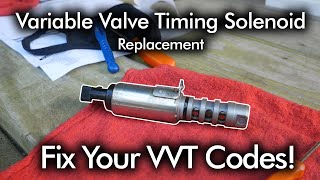
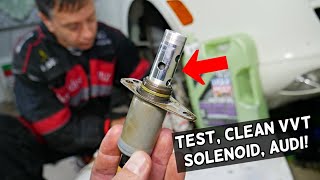
![3.0 T AUDI TFSI ENGINE TIMING CHAIN RATTLE (NOISE) COLD Start .... [PART 1] #audi #automotive #a7](https://img.youtube.com/vi/MlMCHpJmELo/mqdefault.jpg)
Used OEM Parts in Stock
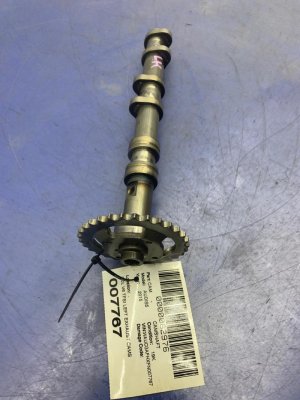
New Aftermarket Parts Available


The information in this article is provided for general reference and educational purposes only. Vehicle specifications, procedures, and part compatibility can vary by production date, trim level, and region. Always consult your vehicle's factory service manual and verify part numbers before purchasing or performing repairs. Safety-critical components such as airbags, seat belts, and braking systems should be installed by a qualified professional.
- Audi A6:
- 🧭 Diagnostic Flowchart
- 🎬 Helpful Videos
- 🛍️ Shop This Part
- What's Unique About the 2012-2018 Audi A6
- Symptoms You May Notice
- Most Likely Causes
- Rare But Worth Checking
- Diagnosis Steps
- Parts You'll Likely Need
- Related Codes That Often Appear With This One
- Technical Service Bulletins (TSBs) & Recalls
- Platform-Specific Known Issues
- Mechanic-Grade Diagnostic Values
- Hidden / Shadow Codes Worth Checking
- Scan Tool Commands That Help
- Wiring & Ground Locations
- OEM Part Supersession History
- Model Year Variations Within This Range
- Other Known Issues on This Vehicle
- Used vs. New Parts: Buying Guide for This Vehicle
- Real Owner Stories
- 2013 Audi A6 3.0T
- 2016 Audi A6 3.0T
- Related OBD-II Codes
- Frequently Asked Questions
- 🎟️ Get 5% Off