

P0022 on 2014-2018 Chevrolet Silverado 1500: Causes and Fixes for Camshaft Timing
On a 2014-2018 Silverado with a 5.3L or 6.2L V8, code P0022 is most often caused by a faulty Bank 2 (passenger side) intake camshaft position actuator solenoid or low/dirty engine oil. Replacing the solenoid (GM Part No. 12679099) is a common fix, costing around $40-$75 for the part. Always check oil level and condition first.
- First, check your engine oil. Low, old, or incorrect oil is a primary cause of P0022.
- The most likely failed part is the Bank 2 (passenger side) intake VVT solenoid (GM Part No. 12679099).
- A simple diagnostic is to swap the passenger side and driver side intake solenoids to see if the trouble code moves to the other bank (P0011).
- Do not replace the camshaft position sensor; it is almost never the cause of this code.
- Use the manufacturer-specified 0W-20 Dexos-approved oil to prevent this issue from recurring.
- Be aware of other major platform issues like AFM lifter failure and transmission shudder, which are common on this truck.
What's Unique About the 2014-2018 Chevrolet Silverado 1500
The L83 and L86 EcoTec3 engines in this generation of Silverado (K2XX) rely heavily on Variable Valve Timing (VVT) for their power and efficiency. This system is operated by engine oil pressure. While generally reliable, the VVT system's solenoids can become clogged with oil sludge or fail electronically, making them a frequent cause for this code. Owners often find that maintaining a strict oil change schedule with the correct Dexos-approved 0W-20 oil is critical to preventing this and other VVT-related issues, including the more severe Active Fuel Management (AFM) lifter failures common to this platform.
Symptoms You May Notice
- Check Engine Light is on
- Rough or unstable idle
- Engine hesitation or stumbling on acceleration
- Reduced engine power
- Decreased fuel economy
- Engine stalling
- Rattling or ticking noises from the engine.
- Replacing the camshaft position sensor. The sensor is reporting the timing issue, it is not the cause of it. The code P0022 is about the timing *result*, not the sensor's reading itself.
Most Likely Causes
- Low, Dirty, or Incorrect Viscosity Engine Oil 🔴 High Probability The VVT system is hydraulic and highly sensitive to oil pressure and cleanliness. Sludge or incorrect oil can easily restrict the small passages in the actuator solenoids, preventing them from operating correctly.
How to confirm: Check the oil level on the dipstick and inspect its color and consistency. If the oil is dark, sludgy, or below the minimum level, it is the likely cause. Verify the oil viscosity used during the last oil change matches the manufacturer's recommendation (typically 0W-20 for these engines).
Typical fix: Perform an oil and filter change with the correct Dexos-approved synthetic oil and a quality filter. Clear the codes and see if the issue returns.
Est. part cost: $50-$100 - Faulty Bank 2 Intake Camshaft Position Actuator Solenoid 🔴 High Probability → Shop Engine Camshaft These solenoids are a common failure point. They can get clogged with debris from the oil, experience internal wear, or fail electronically over time.
How to confirm: Use a scan tool to monitor commanded vs. actual cam position. A more definitive test is to swap the Bank 2 intake solenoid with the Bank 1 (driver's side) intake solenoid. If the code changes to P0011 (Bank 1), the solenoid is bad.
Typical fix: Replace the Bank 2 (passenger side) intake camshaft position actuator solenoid. The part is located on the front of the passenger-side cylinder head and is typically held in by a single bolt.
Est. part cost: $40-$75 - Failing Camshaft Phaser ⚪ Low Probability → Shop Engine Camshaft Less common than a solenoid failure, but the phaser itself can become stuck, clogged internally, or its locking pin can fail, preventing it from adjusting the cam timing correctly. This is a more significant mechanical failure.
How to confirm: This is typically diagnosed after confirming the oil is correct and the solenoid is functioning. It often requires more advanced diagnostics, including monitoring oil pressure at the phaser and potentially removing the valve cover for inspection. A persistent P0022 after solenoid replacement points towards the phaser or timing components.
Typical fix: Replace the Bank 2 camshaft phaser, which is a labor-intensive job that involves removing the valve cover and potentially the timing chain.
Est. part cost: $100-$250
Rare But Worth Checking
- Stretched Timing Chain: → Shop Engine Timing Chain While not a common cause for just a single bank-specific timing code, excessive slack in the timing chain can contribute to timing errors and should be considered if other fixes fail, especially on higher-mileage engines (>100,000 miles).
- Wiring Harness Issue: Damage to the wiring or connector for the Bank 2 VVT solenoid can mimic a failed solenoid. Always inspect the connector for corrosion, pushed-out pins, or broken wires before replacing the part.
- Low Oil Pressure: While often related to low oil level, a failing oil pump or other internal engine issue can cause system-wide low oil pressure, which will starve the VVT system and can set this code. This is a severe issue that requires immediate professional diagnosis.
Diagnosis Steps
- Verify the code with an OBD-II scanner.
- Check the engine oil level and condition. If it is low, dirty, or the wrong type, correct this first, clear the codes, and re-test.
- Using a capable scanner, monitor the commanded vs. actual camshaft position for Bank 2 intake. A significant lag indicates a problem.
- Inspect the wiring and connector for the Bank 2 intake VVT solenoid (passenger side, front of the cylinder head) for any visible damage.
- Swap the Bank 2 intake VVT solenoid with the Bank 1 intake VVT solenoid (driver's side). Clear the codes and drive the vehicle.
- If the code returns as P0011, the solenoid you moved is faulty and needs to be replaced.
- If the code P0022 returns, the problem is not the solenoid. Further diagnosis of the camshaft phaser, timing chain, or oil pressure is required.
- If the issue persists after replacing the solenoid, consider a worst-case scenario as described by some owners where internal engine wear (e.g., scored camshaft) causes a loss of oil pressure to the phaser, which is a significant repair.
Parts You'll Likely Need
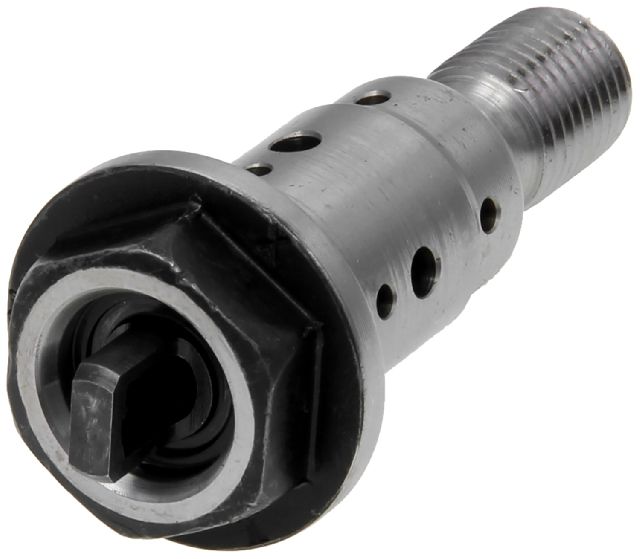
- Intake Camshaft Position Actuator Solenoid (VVT Solenoid)
(OEM #12679099)— This is the most common failure part for code P0022 on this engine. It controls the oil flow that adjusts the camshaft timing and is prone to clogging and electronic failure. 🎬 Watch: How to replace the solenoid to fix engine stalling
Trusted brands: ACDelco, Standard Motor Products (SMP), Gates
OEM price range: $60-$90
Aftermarket price range: $35-$65
Related Codes That Often Appear With This One
- P0011 — If you swap the suspected bad Bank 2 solenoid with the Bank 1 solenoid for diagnosis, the code will often follow the bad part and reappear as P0011 (Intake Camshaft Position Timing - Over-Advanced or System Performance Bank 1).
- P0300 — A random misfire code can sometimes accompany a timing code if the engine is running poorly enough. It can also be an early sign of a more serious issue like AFM lifter failure, which is common on these engines and also related to the oiling system.
Technical Service Bulletins (TSBs) & Recalls
- TSB 15-06-01-002L: While not for P0022 specifically, this is a critical TSB for L83/L86 owners. It addresses engine misfires (P0300) and ticking noises caused by failed Active Fuel Management (AFM) lifters, which are often related to oiling issues. A P0022 code could be an early indicator of oil pressure or quality problems that also lead to this more severe failure.
- TSB 18-NA-355 / 16-NA-175: These bulletins address a widespread 'Chevy Shudder' issue in trucks with 6-speed and 8-speed automatic transmissions. The problem is often a torque converter clutch shudder felt at steady speeds. The fix typically involves a specific transmission fluid flush procedure with an updated fluid. While unrelated to code P0022, it is a very common issue for this vehicle platform.
Platform-Specific Known Issues
- Worst-Case Scenario: Scored Camshaft: → Shop Engine Camshaft In a thread on 2CarPros.com, an owner with a P0022 code on a Ford F-150 (a similar VVT system design) went through replacing the solenoids with no success. A dealer diagnosis eventually found scored camshafts, which caused a loss of oil pressure to the phasers, preventing them from actuating correctly. This illustrates that while rare, a persistent P0022 after replacing the easy parts can point to a much more serious internal engine problem requiring significant repair or engine replacement.
Mechanic-Grade Diagnostic Values
- VVT Solenoid (Camshaft Position Actuator) Resistance — expected: 8 to 13 Ohms. Some sources cite a range of 6.9 to 7.9 Ohms at 68°F (20°C), while others state a wider 5 to 15 Ohm range is acceptable.. Failure: A reading of infinite resistance (open circuit), near-zero resistance (short circuit), or a value significantly outside the 8-13 Ohm range indicates a faulty solenoid. For example, a reading in the mega-ohm (MΩ) range signifies a failed coil.
- VVT Solenoid Connector Voltage (Key On, Engine Off) — expected: One pin should have battery voltage (approx. 12V) and the other is the ground control from the ECM.. Failure: No voltage on the power pin indicates a wiring or fuse issue upstream. If power is present but the solenoid doesn't work, the ground control circuit or the solenoid itself is suspect.
- Scan Tool Camshaft Angle Variance (Desired vs. Actual) — expected: At idle, the desired and actual values for Bank 2 Intake should be very close, typically within +/- 2 degrees.. Failure: A persistent deviation where the actual angle is significantly lower (more retarded) than the desired angle when commanded to advance (e.g., during a snap throttle test) points to a VVT system fault.
Scan Tool Commands That Help
- GDS2 (GM Global Diagnostic System): Camshaft Position Actuator Solenoid Control — This bidirectional test allows a technician to manually command the Bank 2 intake solenoid on and off or to a specific duty cycle. Observing the 'Actual' vs. 'Desired' cam position PIDs while commanding the solenoid helps determine if the solenoid is responding and if the phaser is moving accordingly. A lack of change in the actual position when the solenoid is commanded indicates a failure in the solenoid, phaser, or oil pressure supply.
- GDS2 (GM Global Diagnostic System): Intake Camshaft Position Actuator Solenoid Valve Test — Mentioned in GM Preliminary Information bulletin PIP5130B for a crank-no-start condition, this function cycles the solenoid 4-5 times to try and un-stick a potentially stuck cam phaser. This can be a useful first step if a P0022 code is accompanied by starting issues, as it may temporarily restore function and confirm the problem is a stuck component.
Wiring & Ground Locations
- G104 — On the front of the passenger side (Bank 2) cylinder head.. This is a primary engine ground for components on the right side of the engine. A loose or corroded G104 ground can cause erratic behavior or failure of sensors and actuators on Bank 2, including the VVT solenoid, potentially leading to a P0022 code.
- Camshaft Position Actuator Solenoid Connector (X132 for Intake Bank 2) — On the front of the passenger side cylinder head, connecting directly to the VVT solenoid.. The two pins in this connector supply power and ground control to the solenoid. Pin 1 is the Low Reference (ground control from ECM) and Pin 2 is the Voltage Supply. Testing for voltage and ground at this connector is a critical step to rule out wiring issues before replacing the solenoid.
Real Owner Repair Stories
- Ford F150 Forum (similar VVT system) (2006 Ford F-150) — Vehicle entered limp mode, loss of power, and kept blowing fuse #32. Multiple codes were present, including P0022.
❌ Tried (didn't work) Initial diagnosis was confusing due to the number of unrelated codes.
✅ What actually fixed it The root cause was found to be a melted O2 sensor wiring harness that was shorting to the exhaust. This short circuit was blowing the fuse that powered multiple components, including the VVT solenoids, causing the P0022 code. Repairing the shorted wire and replacing the fuse resolved all codes. - Ford F150 Forum user (2015-2020 Ford F-150) — P0022 code returns after 40+ miles of driving, engine acts like it's 'fighting itself', sounds like it's sucking air, and stalls when stopped.
❌ Tried (didn't work) Replaced timing chains, guides, VVT solenoids, and phasers.
✅ What actually fixed it The issue remained unresolved in the thread, but the diagnostic aids provided point to checking for low oil pressure or oil flow restrictions in the cylinder head passages as the next logical step after all timing components have been replaced. This highlights that a persistent P0022 can be due to internal engine oiling problems, not just the VVT components themselves.
OEM Part Supersession History
12628347, 12646783, 12655420→12679099 (current)— GM has updated the VVT solenoid part multiple times to improve reliability and performance. Later designs may have improved internal components or filtering to better resist failure from oil contamination.
Diagnostic Flowchart
Other Known Issues on This Vehicle
Issues unrelated to this code that are worth knowing about as an owner of this generation:
- Active Fuel Management (AFM) Lifter Failure 🔴 High — Common, can occur as early as 50,000 miles but becomes more frequent with higher mileage. Often leads to misfire codes (P0300) and requires significant engine disassembly to fix. (Ref: TSB 15-06-01-002L)
- Transmission Torque Converter Shudder 🟠 Medium — Very common on both 6-speed (6L80) and 8-speed (8L90) transmissions. Feels like driving over rumble strips at steady speeds. Often addressed with a special fluid flush. (Ref: TSB 18-NA-355, 16-NA-175)
- Leaking A/C Condenser 🟠 Medium — A widespread problem where the condenser develops leaks, causing the A/C to stop blowing cold. The issue was so common GM issued a special coverage adjustment in some cases.
- Cracked Pistons 🔴 High — Less common than lifter failure, but catastrophic. Can be caused by detonation, sometimes linked to aftermarket tuning. Results in misfires and loss of compression. (Ref: TSB 16-NA-241)
- Brake Booster Vacuum Pump Failure 🟠 Medium — A known failure point that results in a hard brake pedal and reduced braking power, posing a safety risk. Requires replacement of the pump.
- Intermediate Steering Shaft Clunk 🟡 Low — Common issue, especially on trucks approaching 100,000 miles. Causes a clunking or popping noise in the steering column when turning at low speeds.
Used vs. New Parts: Buying Guide for This Vehicle
When a used part is the smart pick: For this specific repair, buying a used VVT solenoid is NOT recommended. The part is a common failure item due to internal wear and clogging from oil sludge. A used part from a salvage yard carries a high risk of being already clogged, worn, or near the end of its service life.
What to inspect on the donor part:
- Not applicable as used purchase is not advised.
OEM-only on this vehicle (don't cheap out):
- While not strictly 'OEM-only', using a reputable brand is critical. The VVT solenoid is a sensitive electro-hydraulic part. Cheap, unbranded aftermarket versions have a high failure rate and may not perform to OEM specifications, causing the code to return.
Aftermarket brands forum-validated for this vehicle:
- ACDelco (OEM)
- Standard Motor Products (SMP)
- Gates
- Dorman OE FIX (features design improvements like a stronger center tube)
Brands owners have reported issues with on this vehicle:
- Generic, no-name brands from online marketplaces should be avoided due to inconsistent quality and high likelihood of premature failure.
Real Owner Stories
Aggregated from forums and TSBs cited above. Mileages and costs reflect what owners reported in those sources.
2015 GMC Sierra 1500 5.3L L83 — 55000 miles
Symptoms: Owner experienced AFM lifter failure, which is often linked to the same oiling issues that trigger VVT codes.
What fixed it: Replacement of lifters; dealer recommended switching to 5W-30 oil and using an AFM disabler.
Cost: $5400-$5400
Source hint: GM-Trucks.com: L83 5.3 Reliability After Lifter Failure
2014-2018 Chevrolet Silverado 1500 — ~150000 miles
Symptoms: High-mileage engine and transmission issues including potential VVT system failures.
What fixed it: Proactive maintenance and potentially transmission or torque converter replacement.
Source hint: Reddit r/Silverado: 2014-18 engine problems ?
Related OBD-II Codes
Frequently Asked Questions
Could my P0022 code be related to the ticking noise addressed in TSB 15-06-01-002L?
I'm feeling a shudder while driving my 2014 Silverado; is this caused by the P0022 code?
Is there a simple way to test if the Bank 2 intake solenoid is actually bad on my 5.3L L83?
What type of oil should I be using in my 2014-2018 Silverado to prevent VVT issues like P0022?
If I replace the solenoid and the P0022 code stays, what is the next most likely mechanical failure?
Can a P0022 code lead to a 'worst-case scenario' repair on these engines?
Helpful Videos
![2014+ Chevy LS LT VVT Oil Control Solenoid Cam Sensor and Actuator Replacement [the easy way] 2022](https://img.youtube.com/vi/IB2gmTp_wWc/mqdefault.jpg)
We Have This Part in Stock


The information in this article is provided for general reference and educational purposes only. Vehicle specifications, procedures, and part compatibility can vary by production date, trim level, and region. Always consult your vehicle's factory service manual and verify part numbers before purchasing or performing repairs. Safety-critical components such as airbags, seat belts, and braking systems should be installed by a qualified professional.
- Chevrolet Silverado 1500:
- 🧭 Diagnostic Flowchart
- 🎬 Helpful Videos
- 🛍️ Shop This Part
- What's Unique About the 2014-2018 Chevrolet Silverado 1500
- Symptoms You May Notice
- Most Likely Causes
- Rare But Worth Checking
- Diagnosis Steps
- Parts You'll Likely Need
- Related Codes That Often Appear With This One
- Technical Service Bulletins (TSBs) & Recalls
- Platform-Specific Known Issues
- Mechanic-Grade Diagnostic Values
- Scan Tool Commands That Help
- Wiring & Ground Locations
- Real Owner Repair Stories
- OEM Part Supersession History
- Other Known Issues on This Vehicle
- Used vs. New Parts: Buying Guide for This Vehicle
- Real Owner Stories
- 2015 GMC Sierra 1500 5.3L L83 — 55000 miles
- 2014-2018 Chevrolet Silverado 1500 — ~150000 miles
- Related OBD-II Codes
- Frequently Asked Questions
- 🎟️ Get 5% Off