

P0022 on 2018-2021 Ford EcoSport: Causes and Fixes for Over-Retarded Camshaft Timing
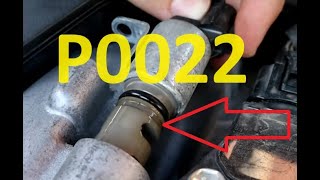
On a 2018-2021 Ford EcoSport, code P0022 is most often caused by low/dirty engine oil or a faulty Variable Camshaft Timing (VCT) solenoid. An oil change or replacing the VCT solenoid (around $30-$70 for the part) is the most common fix. This is a well-documented issue across many Ford vehicles.
- P0022 on your EcoSport points to the exhaust camshaft timing being too slow.
- The first and cheapest step is to check your oil. Low or dirty oil is a primary cause.
- The most likely failed part is the exhaust VCT solenoid, which is a common and well-documented issue across many Ford models.
- Before replacing parts, consider that Ford TSBs suggest debris is the root cause and a diagnostic tool can sometimes clear a stuck solenoid.
- If you have the 1.0L engine, be aware of the known 'wet belt' and oil pump tensioner issues that can cause this code and lead to more severe problems.
What's Unique About the 2018-2021 Ford ECOSPORT
The main point of confusion for the EcoSport is the "Bank 2" definition, as its inline engines only have one bank. Ford's diagnostic logic uses P0022 to specify a fault with the exhaust camshaft timing system, whereas P0012 would indicate an issue with the intake camshaft. Furthermore, Ford has issued multiple Technical Service Bulletins (TSBs), including SSM 48423 and SSM 50067, 🎬 Watch: A breakdown of Ford's technical memos regarding these codes. for a wide range of its vehicles, including the EcoSport. These bulletins explicitly state that this code can be triggered by small debris causing the VCT solenoid to stick, pointing to a known sensitivity within the VCT system to oil condition and quality. For the 1.0L EcoBoost engine specifically, there are known issues with the oil pump drive belt tensioner and the timing belt-in-oil ('wet belt') degrading, which can release debris that clogs oil passages and the VCT system.
Diagnostic Flowchart
Tap your situation to follow the diagnostic path that matches what you're seeing on this vehicle.
Symptoms You May Notice
- Check Engine Light is on
- Rough or unstable idle.
- Reduced engine power and sluggish acceleration.
- Poor fuel economy.
- Engine may hesitate or stall, especially at low speeds.
- Rattling, knocking, or clicking sounds from the engine, particularly on a cold start.
- Replacing the camshaft position sensor. While related, a faulty sensor itself will typically trigger a different set of diagnostic codes (e.g., P034x series). The P0022 code indicates a mechanical timing issue detected by the sensor, not necessarily a sensor failure.
- Assuming a major timing chain failure immediately. As per Ford's own TSBs, the issue is very frequently related to clean oil and the VCT solenoid. These cheaper and easier fixes should always be explored first before undertaking a costly timing job.
Most Likely Causes
- Low or Dirty Engine Oil 🔴 High Probability The VCT system is hydraulically operated and highly sensitive to oil pressure and cleanliness. The manufacturer TSBs (SSM 48423, SSM 50067) directly link this code to debris in the oil affecting the VCT solenoid. For the 1.0L EcoBoost, using incorrect oil can also accelerate the degradation of the 'wet belt', leading to debris.
How to confirm: Check the oil level on the dipstick and inspect its color and consistency. If the level is low or the oil is dark, gritty, or sludgy, it needs to be changed. This is the first and most crucial diagnostic step.
Typical fix: Perform an engine oil and filter change using the manufacturer-recommended oil viscosity (e.g., SAE 5W-20 for the 2.0L).
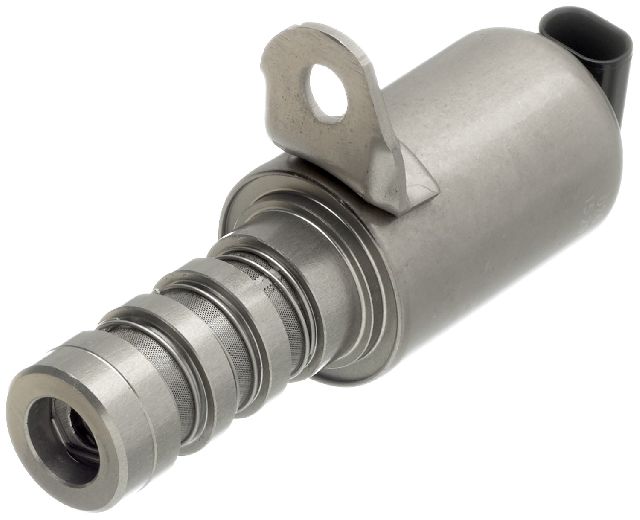
Est. part cost: $40-$80 - Faulty Variable Camshaft Timing (VCT) Solenoid 🔴 High Probability → Shop Engine Camshaft As highlighted in TSBs SSM 48423 and SSM 50067, the VCT solenoid can stick due to small debris. It is a very common failure point for this code across many Ford models. The TSBs even recommend a specific diagnostic procedure (Pinpoint Test HK12) to cycle the solenoid with a scan tool to try and dislodge debris before replacement.
How to confirm: After checking the oil, the solenoid can be removed and tested by applying 12V to see if the internal plunger actuates with an audible click. A diagnostic scan tool can also command the solenoid to check for a response. A common DIY method is to swap the exhaust and intake solenoids (if they are identical) and see if the code changes to P0012.
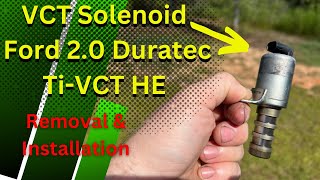
Typical fix: Replace the faulty VCT solenoid. 🎬 Watch: Step-by-step removal and installation of the VCT solenoid. It is often recommended to replace both intake and exhaust solenoids at the same time, and to perform an oil change simultaneously.
Est. part cost: $30-$70 - Worn Timing Chain or Tensioner ⚪ Low Probability → Shop Engine Timing Chain While less common than oil or solenoid issues, a stretched timing chain or a failing tensioner can cause slack, leading to incorrect camshaft timing. This becomes more of a concern at higher mileage or if oil change intervals have been neglected. A failing tensioner can lose hydraulic pressure, allowing the chain to become loose.
How to confirm: This is a more involved diagnosis. A key symptom is a distinct rattling noise from the engine, especially during a cold startup, that may last for a few seconds. Definitive diagnosis requires removing the valve cover or timing cover to physically inspect for chain slack. This is typically done after ruling out oil and solenoid issues.
Typical fix: Replace the timing chain, guides, and tensioners. This is a significant labor-intensive repair.
Est. part cost: $200-$500
Rare But Worth Checking
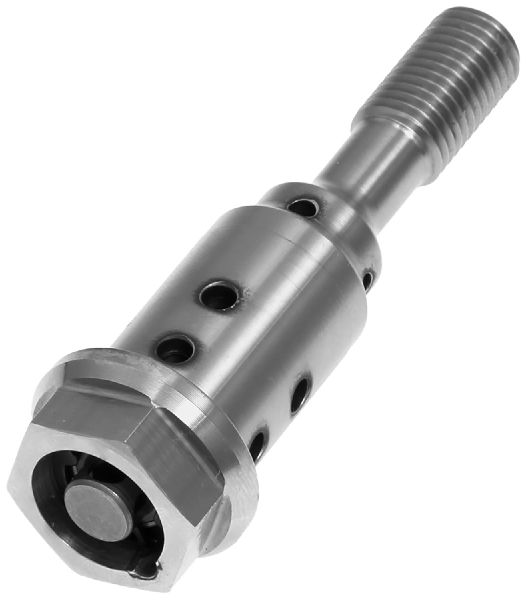
- Failed Camshaft Phaser: → Shop Engine Camshaft The phaser is the mechanical gear that the solenoid controls. It can become clogged with sludge or fail mechanically, getting stuck in one position. This is a more complex and expensive repair than the solenoid and is often accompanied by a rattling noise.
- Wiring or Connector Issue: Damage to the wiring harness or a poor connection at the VCT solenoid can prevent it from operating correctly. Always inspect the connector for corrosion, pushed-out pins, or damage when replacing the solenoid.
- Clogged Oil Passages: In vehicles with a history of poor maintenance or sludge buildup, the small oil passages leading to the VCT phaser can become restricted, starving the system of the oil pressure it needs to function. This can sometimes be cleared with an engine flush, but may require more invasive cleaning.
Diagnosis Steps
- Verify the code with a reliable OBD-II scanner.
- Check the engine oil level and condition. If low, dirty, or of the incorrect viscosity, perform an oil and filter change with the correct grade oil (e.g., Motorcraft SAE 5W-20 for the 2.0L). Clear the codes and test drive to see if P0022 returns.
- If the code returns, inspect the wiring and connector for the Bank 1 exhaust VCT solenoid for any visible damage or corrosion.
- Test the VCT solenoid. A common DIY method is to swap the exhaust and intake solenoids (they are often interchangeable) and see if the code changes to P0012. Alternatively, remove the solenoid and apply 12V power to its terminals to listen for a distinct 'click'. A scan tool can also perform a VCT solenoid cycle test as described in TSB SSM 50067.
- If the solenoid is faulty or the swap test points to it, replace the VCT solenoid. It's good practice to lubricate the new solenoid's O-rings with fresh engine oil before installation.
- If the problem persists, the issue may be more mechanical. Listen for timing chain noise (rattling) on startup and during idle.
- Advanced diagnosis would involve checking oil pressure with a mechanical gauge to ensure it's within spec, and inspecting the camshaft phaser and timing chain for wear, which may require professional help.
Parts You'll Likely Need
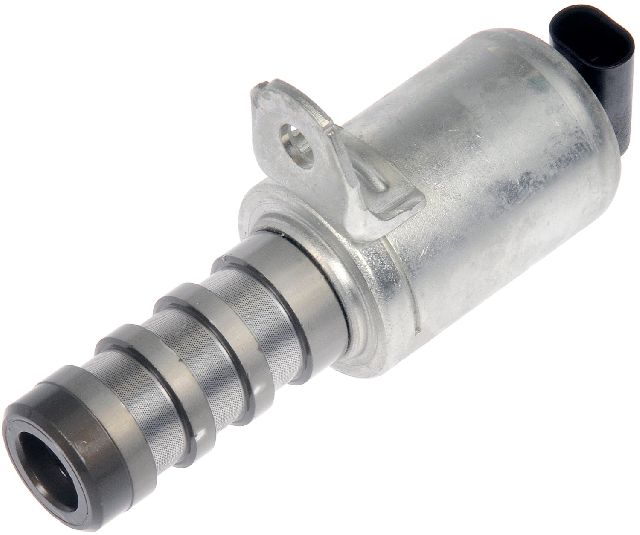
- Engine Variable Valve Timing (VVT) Solenoid
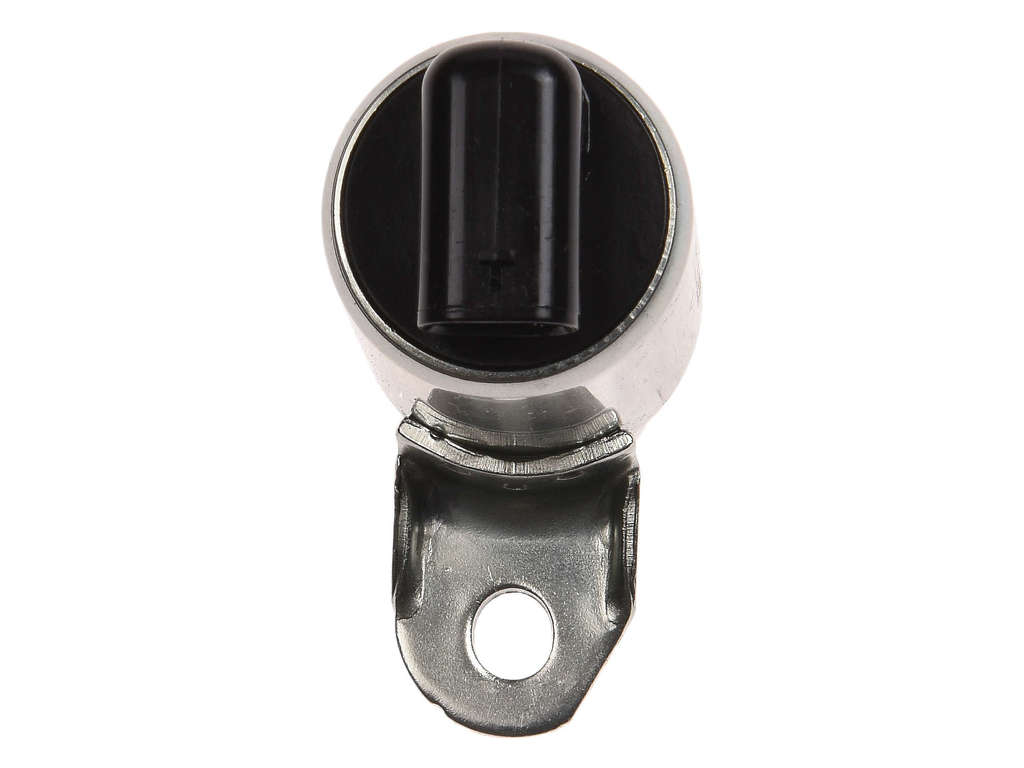
(OEM #CM5Z-6M280-C (for 2.0L Duratec), CM5Z-6M280-G (for 1.0L EcoBoost))— This part is the most frequent cause of P0022, often getting stuck due to oil debris, as noted in Ford's TSBs. It is also referred to as a 'Control Valve Solenoid'.
Trusted brands: Motorcraft, Dorman, NGK, Spectra Premium
OEM price range: $50-$90
Aftermarket price range: $30-$70 - Engine Oil and Filter — Correct oil level and cleanliness are critical for the VCT system's operation. This is the first and most important step before replacing parts.
Trusted brands: Motorcraft, Mobil 1, Castrol
OEM price range: $50-$90
Aftermarket price range: $40-$80
Related Codes That Often Appear With This One
- P0012 — P0012 is the equivalent 'Over-Retarded' code for the Intake camshaft on Bank 1. If both appear, it could point to a systemic issue like low oil pressure or a timing chain problem affecting both camshafts.
- P0021 — P0021 is for an 'Over-Advanced' condition on the same camshaft (Bank 2 Exhaust). Seeing both might indicate an erratic VCT solenoid or phaser that is not controlling timing correctly.
Technical Service Bulletins (TSBs) & Recalls
- SSM 48423: Notes that various VCT codes, including P0022, may be due to debris causing the VCT solenoid to stick.
- SSM 50067: A later bulletin that reiterates the same potential cause and diagnostic advice as SSM 48423.
Platform-Specific Known Issues
- TSB SSM 48423 & SSM 50067: Ford issued these bulletins for a wide range of vehicles, including the EcoSport, noting that DTCs like P0022 may be caused by 'small debris causing the VCT solenoid to stick.' It advises investigating this before replacing components and suggests using a scan tool to cycle the solenoid (Pinpoint Test HK12) to attempt to clear the debris.
- 1.0L EcoBoost Engine Concerns: This engine has a known issue with its timing belt-in-oil ('wet belt') design, which can degrade and shed material, clogging the oil pickup tube and VCT system. It also has a recall (23V-905) for a potentially faulty oil pump drive belt tensioner, which can lead to a loss of oil pressure and catastrophic engine damage.
Mechanic-Grade Diagnostic Values
- VCT Solenoid Internal Resistance — expected: 6.9 to 15 Ohms. A common acceptable range is often cited as 7-14 Ohms.. Failure: A reading of 0 Ohms (short circuit) or OL/infinity (open circuit) indicates a failed solenoid coil.
- VCT Solenoid Power Supply Voltage (at connector) — expected: Approximately 12V (battery voltage) on one pin with the key on, engine off.. Failure: No voltage suggests a problem with the wiring or the PCM power relay circuit, not the solenoid itself.
- Ford IDS VCT_ADV_ERR PID — expected: Should be close to 0 degrees at idle in closed-loop operation.. Failure: A consistent, significant deviation from 0 degrees indicates a timing error that the PCM cannot correct.
Hidden / Shadow Codes Worth Checking
- Mode 6, Test ID $81 (TID $81): This test monitor in Mode 6 data tracks the bank-to-bank VCT timing error. While not a 'code' in itself, viewing this data on an advanced scanner can show small timing deviations before they are large enough to trigger a fault code like P0022. (see via Requires a scan tool capable of displaying Mode 6 data, such as FORScan or a professional-grade scanner.)
Scan Tool Commands That Help
- Ford IDS (Integrated Diagnostic System) or equivalent (e.g., FORScan): Output State Control / VCT Solenoid Command — As mentioned in TSBs, this bidirectional command allows a technician to cycle the solenoid on and off (e.g., 10 times) to attempt to dislodge small debris causing it to stick. It is a key diagnostic step to perform after an oil change and before replacing the solenoid.
- Ford IDS (Integrated Diagnostic System) or equivalent: Datalogger - Monitoring VCT PIDs (VCT_ADV, VCT_ADV_ERR, VCTDC) — To diagnose intermittent issues. A technician can record live data during a test drive to capture the exact moment the timing error occurs and see how the PCM is commanding the solenoid (duty cycle) versus the actual result.
Wiring & Ground Locations
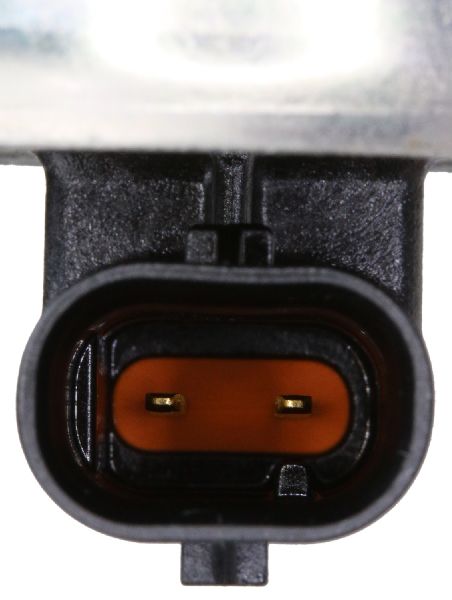
- VCT Solenoid Connector — On top of the valve cover, plugged into the VCT solenoid.. The solenoid has a 2-pin connector. One pin receives 12V power from the PCM power relay (often via a shared fuse like F16 in the battery junction box), and the other pin is the control wire, which the PCM provides a ground to (using Pulse Width Modulation) to activate the solenoid. A bad connection here directly causes the solenoid to fail.
OEM Part Supersession History
CM5Z-6M280-A→CM5Z-6M280-C— Part revision by the manufacturer for improved reliability or design change.
Heads up: The new part number (CM5Z-6M280-C) is the correct replacement for the 2.0L Duratec engine in the 2018-2021 EcoSport.CM5Z-6M280-D, CM5Z-6M280-F→CM5Z-6M280-G— Part revision by the manufacturer for the 1.0L EcoBoost engine.
Heads up: CM5Z-6M280-G is the correct, current part number for the VCT solenoid on the 1.0L EcoBoost engine.
Helpful Videos

We Have This Part in Stock


The information in this article is provided for general reference and educational purposes only. Vehicle specifications, procedures, and part compatibility can vary by production date, trim level, and region. Always consult your vehicle's factory service manual and verify part numbers before purchasing or performing repairs. Safety-critical components such as airbags, seat belts, and braking systems should be installed by a qualified professional.
- Ford ECOSPORT:
- 🧭 Diagnostic Flowchart
- 🎬 Helpful Videos
- 🛍️ Shop This Part
- What's Unique About the 2018-2021 Ford ECOSPORT
- Symptoms You May Notice
- Most Likely Causes
- Rare But Worth Checking
- Diagnosis Steps
- Parts You'll Likely Need
- Related Codes That Often Appear With This One
- Technical Service Bulletins (TSBs) & Recalls
- Platform-Specific Known Issues
- Mechanic-Grade Diagnostic Values
- Hidden / Shadow Codes Worth Checking
- Scan Tool Commands That Help
- Wiring & Ground Locations
- OEM Part Supersession History
- 🎟️ Get 5% Off