

P0022 on 2015-2019 Ford Explorer 3.5L V6: Causes and Fixes for Over-Retarded Cam Timing
On a 2015-2019 Explorer with the 3.5L V6, code P0022 is most often caused by low or dirty engine oil. If an oil change doesn't fix it, the next most likely cause is a faulty Bank 2 intake VCT solenoid, which costs about $35-$90 for the part. Bank 2 is the cylinder bank closer to the radiator. Ignoring the issue can lead to poor performance and potential engine damage.
- Always check your engine oil first. A simple oil and filter change with the correct oil is the most common and cheapest fix for P0022.
- The most likely failed part is the Bank 2 (radiator side) intake VCT solenoid. It's a relatively inexpensive part and accessible for a DIY repair.
- Do not immediately replace the camshaft position sensor; it is very rarely the cause of this code.
- If you hear a rattling noise from the engine on cold starts, the problem could be more serious, such as a stretched timing chain, which requires professional diagnosis.
What's Unique About the 2015-2019 Ford Explorer
The Ford 3.5L 'Cyclone' V6 engine family is known for its Variable Camshaft Timing (VCT) system being highly sensitive to engine oil quality, level, and pressure. The VCT solenoids, which control the system with oil pressure, have extremely fine mesh screens that are prone to clogging from oil sludge or small debris from delayed oil changes. This is such a common issue that Ford has released multiple Special Service Messages (SSMs) and Technical Service Bulletins (TSBs) acknowledging that debris can cause the VCT solenoids to stick, leading directly to codes like P0022. Some TSBs specifically recommend using a scan tool to cycle the solenoid multiple times to attempt to clear debris before replacement.
Symptoms You May Notice
- Check Engine Light is on
- Rough or unstable idle, sometimes with shaking.
- Engine hesitation or lack of power, especially during acceleration.
- Decreased fuel mileage.
- Engine stalling at low speeds or when coming to a stop.
- Hard starting.
- Rattling or knocking noise from the engine, particularly on a cold start, which may indicate a more serious timing chain or phaser issue.
- Replacing the Camshaft Position Sensor. The sensor is almost always functioning correctly by reporting the mechanical timing error. A bad sensor would typically trigger a different code, like P0345 or P0349. The P0022 code indicates the timing is mechanically incorrect, not that the sensor reading is invalid.
Most Likely Causes
- Low, Dirty, or Incorrect Viscosity Engine Oil 🔴 High Probability The VCT system is operated by oil pressure, and the solenoids have fine screens that are easily clogged by contaminants or sludge, disrupting their function. Low oil pressure directly impacts the ability of the phasers to adjust cam timing.
How to confirm: Check the oil dipstick for proper level and examine the oil's color and consistency. If it is dark, gritty, or below the 'add' line, it needs to be changed. Ensure the correct oil viscosity is being used (e.g., 5W-20 for NA, 5W-30 for EcoBoost, check owner's manual).
Typical fix: Perform an engine oil and filter change using the manufacturer-specified oil and a quality filter. Clear the codes and drive the vehicle to see if the code returns.
Est. part cost: $40-$80 - Sticking or Failed VCT Solenoid (Oil Control Valve) 🔴 High Probability → Shop Engine Variable Valve Timing (VVT) Solenoid As noted in Ford TSBs (SSM 47170, 50067, 49821), these solenoids are a common failure point due to debris in the oil causing them to stick open or closed. Manufacturer service bulletin SSM 54366 confirms that an illuminated MIL with P0022 may be due to small debris causing the VCT solenoid to stick, and directs technicians to Pinpoint test HK for further diagnosis.
How to confirm: After an oil change, if the code returns, swap the Bank 2 (front) intake solenoid with the Bank 1 (rear) intake solenoid. If the code changes to P0012 (the equivalent code for Bank 1), the solenoid is confirmed faulty. A scan tool can also be used to command the solenoid on and off to check its response; Ford specifically recommends cycling it 10 times to try and clear debris. The solenoid's internal resistance can be tested with a multimeter and should be between 6.9 and 7.9 Ohms at 68°F (20°C).
Typical fix: Replace the Bank 2 intake VCT solenoid. Since Bank 2 is at the front of the engine, it is relatively accessible without removing the intake manifold, making it a common DIY repair.
Est. part cost: $35-$90 - Worn Timing Chain or Cam Phaser ⚪ Low Probability → Shop Engine Timing Chain While less common than oil or solenoid issues, the 3.5L engine can experience timing chain stretch or phaser failure, especially at higher mileage (over 100,000 miles) or in the EcoBoost versions. A startup rattle is a key indicator.
How to confirm: This is a complex diagnosis. A key symptom is a distinct rattling noise from the engine on cold startups that lasts for a few seconds. A mechanic would need to use a scan tool to monitor camshaft deviation data (VCT_ADV_ERR PID) and perform significant engine disassembly to visually inspect the timing components.
Typical fix: Replace the timing chain, guides, tensioners, and/or camshaft phasers. This is a labor-intensive and expensive repair, often costing over $1,700.
Est. part cost: $400-$900
Rare But Worth Checking
- Clogged Oil Passages: Severe engine sludge can block the small oil passages leading to the VCT phasers, even if the solenoid is new. This usually indicates a history of severely neglected oil changes and can starve the system of necessary pressure.
- PCM Software Issue: Ford issued TSB 15-0151 for some 2016 Explorers with the 3.5L GTDI (EcoBoost) engine, where a P0022 code (sometimes with P0012) could be fixed with a PCM reprogram. This is less likely but worth considering for that specific year/engine before replacing hardware.
Diagnosis Steps
- Check Engine Oil: Verify the oil level is correct and the oil is clean. If low or dirty, perform an oil and filter change with the correct viscosity oil (e.g., Ford 5W-20 or 5W-30), clear the code, and drive to see if it returns. This is the most common and cheapest fix.
- Scan for Codes: Check for any other accompanying trouble codes that could provide more clues, especially CMP sensor codes (P034x) or codes for the opposite bank (P001x). NHTSA ODI #10927619 describes a case where P0022 appeared alongside P052D (Cold Start Cam Timing Over Retarded), highlighting how multiple timing codes often cluster together.
- Inspect VCT Solenoid Wiring: Visually inspect the electrical connector and wiring going to the Bank 2 intake VCT solenoid for any damage, corrosion, or loose connections.
- Test the Solenoid: The most definitive DIY test is to swap the Bank 2 (front) intake VCT solenoid with the Bank 1 (rear) intake solenoid. Clear the codes and drive. If the code returns as P0012, the solenoid you moved is faulty and needs replacement. A scan tool can also be used to command the solenoid to cycle, which may clear debris.
- Professional Diagnosis: If an oil change and a new solenoid do not resolve the code, the problem is likely mechanical. A professional mechanic will need to diagnose potential issues with the camshaft phaser or the timing chain itself, which requires specialized tools and significant labor.
Parts You'll Likely Need
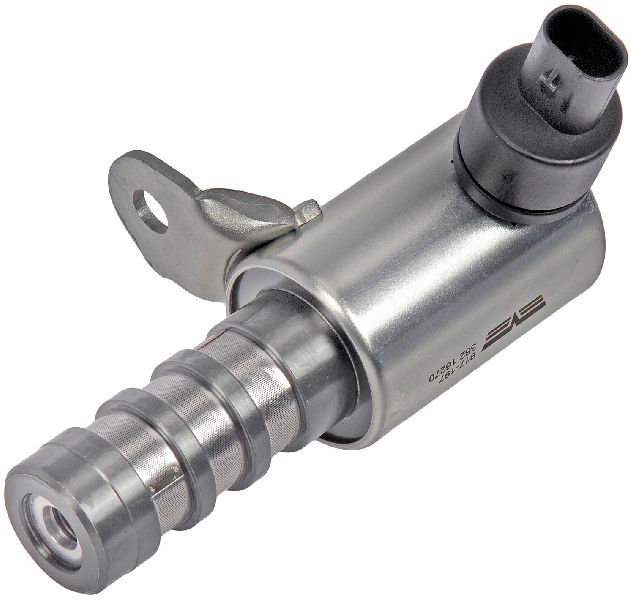
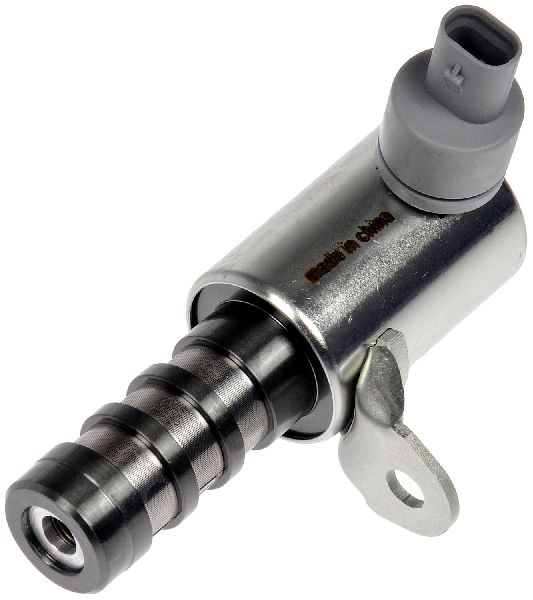
- Engine Variable Valve Timing (VCT) Solenoid
(OEM #7T4Z-6M280-C)— This is the most common part to fail for this code, typically due to internal clogging or screen failure from oil debris. Note: Part numbers can supersede; always verify with VIN. Other possible numbers include AT4Z-6M280-A and AT4Z-6M280-B.
Trusted brands: Motorcraft, Dorman (e.g., 917-270), NTK, Gates
OEM price range: $65-$95
Aftermarket price range: $30-$80 - Engine Oil and Filter — Low, old, or incorrect viscosity oil is the leading cause of VCT system faults and code P0022.
Trusted brands: Motorcraft, Mobil 1, Valvoline, Pennzoil
OEM price range: $50-$90
Aftermarket price range: $40-$70
Related Codes That Often Appear With This One
- P0021 — P0021 is for 'Intake Camshaft Position Timing - Over-Advanced (Bank 2)'. It can appear if the VCT solenoid is sticking intermittently, causing the cam timing to be out of position in either direction.
- P0012 — This is the same 'over-retarded' code but for Bank 1. Seeing both P0012 and P0022 together strongly points to a systemic issue like very low/dirty oil or a failing oil pump affecting the entire VCT system.
- P0016, P0017, P0018, P0019 — These are crankshaft-camshaft correlation codes. Seeing them alongside P0022 increases the likelihood of a base timing issue, such as a stretched timing chain or a failed phaser, rather than just a solenoid problem.
Technical Service Bulletins (TSBs) & Recalls
- SSM 49821 / 50067 / 47170: States that various VCT codes (P0011, P0012, P0021, P0022, etc.) on 2015-2021 Ford/Lincoln vehicles may be caused by small debris causing the VCT solenoid to stick. Recommends diagnosis and attempting to cycle the solenoid with a scan tool (Pinpoint Test HK11) 10 times to clear debris before replacement.
- SSM 54366: Confirms that Ford and Lincoln vehicles may exhibit an illuminated MIL with DTCs including P0022 due to small debris causing the VCT solenoid to stick, and references Pinpoint test HK in the Powertrain Control and Emissions Diagnosis manual.
- TSB 15-0151: Notes that some 2016 Explorer models with the 3.5L GTDI engine may set a P0022 and/or P0012 code due to a PCM software issue that can be resolved with a reprogram.
Platform-Specific Known Issues
- The 3.5L V6 engine family has an internal, timing-chain-driven water pump. While not a direct cause of P0022, a failure of this pump can leak coolant into the engine oil, creating a sludge that will quickly clog VCT solenoids and oil passages, leading to this and other timing codes.
- On the transversely mounted 3.5L V6, the Bank 2 (front) VCT solenoids are relatively easy to access, while the Bank 1 (rear, firewall side) solenoids require removal of the upper intake manifold. This makes diagnosing with a solenoid swap more labor-intensive.
Mechanic-Grade Diagnostic Values
- VCT Solenoid (Oil Control Valve) Resistance — expected: 6.9 to 7.9 Ohms at 68°F (20°C).. Failure: A reading of infinity (Open Loop) or a reading significantly outside the expected range indicates a faulty coil.
- VCT Solenoid Power Supply Voltage (at connector) — expected: Battery voltage (approx. 12.6V) with Key On, Engine Off.. Failure: Less than 10V suggests an open or short in the VPWR circuit.
- Scan Tool PID: VCT_ADV_ERR (VCT Advance Error) — expected: Should hover around 0° (+/- 5°) at stable idle/cruise.. Failure: A consistent, large deviation on Bank 2 indicates the phaser is not achieving the commanded position, pointing to a solenoid, phaser, or oil pressure problem.
- Scan Tool PID: VCT Duty Cycle — expected: The duty cycle percentage for Bank 1 and Bank 2 solenoids should be similar under the same conditions.. Failure: If the PCM is commanding a significantly higher duty cycle on Bank 2 with little change in cam angle, it suggests the solenoid is stuck or oil flow is restricted.
Hidden / Shadow Codes Worth Checking
- Mode $06, TID $81, CID $11: This specific Mode 6 Test ID monitors the Bank 2 variable camshaft timing position for faults. A failing test result here can confirm the P0022 code is due to a consistent mechanical or hydraulic issue rather than an intermittent electrical glitch. (see via A professional scan tool or an advanced OBD-II app (like Torque Pro, FORScan) that can access Mode $06 test data.)
Scan Tool Commands That Help
- Ford IDS (or equivalent like FORScan): VCT Solenoid On/Off State or Duty Cycle Command (part of Pinpoint Test HK) — This bidirectional control is used to command the solenoid to actuate. Technicians listen for an audible click from the solenoid. Ford TSBs specifically recommend cycling the solenoid 10 times with this function to attempt to dislodge debris before replacing the part.
Wiring & Ground Locations
- G103 / G104 — G103 is on the left front corner of the engine compartment. G104 is on the right side of the engine compartment. These are primary chassis grounds.. A poor chassis or engine block ground can cause erratic behavior in sensors and actuators controlled by the PCM, including the VCT solenoids. While not a common cause, it's a foundational check for any electrical fault.
- G100 / G105 — G100 is at the top rear of the engine, and G105 is at the top right side of the engine.. These are direct engine block grounds. The PCM and its sensors rely on a solid ground path through the engine block. Corrosion or a loose connection at these points can introduce electrical noise and voltage drops, potentially affecting VCT solenoid operation.
- VCT Solenoid Connector — On the front (Bank 2) valve cover, for the intake camshaft.. This is the direct connection point for testing. Pin 1 should have battery voltage (VPWR) with key on, and Pin 2 is the control wire (ground signal) from the PCM.
Real Owner Repair Stories
- NHTSA ODI #10927619 — An owner reported that while driving, their vehicle set codes P0022 for cam timing over-retarded and P052D for cold start cam timing over-retarded, requiring the vehicle to be driven on surface streets to a shop for scanning.
- Reddit user on r/MechanicAdvice (2009 Ford Flex (with the same 3.5L engine family)) — Check Engine Light with codes P0012 and P0022 (both banks over-retarded) appeared the day after an oil change.
❌ Tried (didn't work) Initially planned to replace VCT solenoids.
✅ What actually fixed it The Check Engine Light turned off on its own after a few days of driving. The presumed cause was that the fresh, high-detergent oil dislodged some sludge or debris that temporarily affected the VCT system, which then cleared itself. - Ford F-150 Forum user (2018 F-150 3.5L EcoBoost with 92k miles) — Cold start rattle, eventually leading to timing-related codes.
❌ Tried (didn't work) Replaced VCT solenoids four separate times., Replaced spark plugs and coil boots.
✅ What actually fixed it The underlying issue was diagnosed as worn cam phasers, timing chain, guides, and water pump. The owner ultimately traded the vehicle in rather than pay for the ~$4,500 comprehensive repair.
OEM Part Supersession History
7T4Z-6M280-A, 7T4Z-6M280-AA, 7T4Z-6M280-B→7T4Z-6M280-C— Standard part revision and improvement by the manufacturer over time to increase reliability.
Heads up: The newer -C revision is backward compatible and is the recommended replacement for the earlier versions.
Model Year Variations Within This Range
- 2016: For the 3.5L GTDI (EcoBoost) engine specifically, Ford issued TSB 15-0151 which indicates that a P0022 code could be caused by a software glitch. The prescribed fix is a PCM reprogram, which should be considered before replacing hardware on this specific year and engine combination.
Diagnostic Flowchart
Used vs. New Parts: Buying Guide for This Vehicle
When a used part is the smart pick: For this specific repair, using a used VCT solenoid is generally not recommended. The part is highly sensitive to oil contamination and wear, and its failure is often due to the internal condition of the donor engine, which is unknown. Given the relatively low cost of a new aftermarket or OEM part ($30-$95), the risk and labor involved in replacing a faulty used part a second time do not justify the small savings.
Donor-vehicle mileage cap: roughly under 40000 miles for the part to have meaningful remaining life.
What to inspect on the donor part:
- If considering a used solenoid, insist on seeing it removed from the engine.
- Inspect the mesh screens at the tip for any tears, clogging, or debris. They should be perfectly clean and intact.
- Check the electrical connector for any corrosion or damage.
- Ask for the donor vehicle's VIN to check its service history for regular oil changes, if possible.
OEM-only on this vehicle (don't cheap out):
- Cam Phasers: Many forum users and technicians report that aftermarket cam phasers for the Ford 3.5L engine have a high failure rate or do not perform correctly, sometimes causing codes to return immediately after a costly timing job. Using genuine Motorcraft phasers is strongly recommended for this repair.
Aftermarket brands forum-validated for this vehicle:
- Dorman (for VCT Solenoid, e.g., 917-270)
- NTK (for VCT Solenoid)
- Walker Products (for VCT Solenoid, e.g., 590-1010)
Brands owners have reported issues with on this vehicle:
- Unbranded, no-name VCT solenoids and cam phasers from online marketplaces are a significant gamble and frequently cause repeat failures.
Real Owner Stories
Aggregated from forums and TSBs cited above. Mileages and costs reflect what owners reported in those sources.
Ford with similar 3.5L engine
Symptoms: Rough running and codes P0018/P0022.
What fixed it: Replacing the driver's side (Bank 2) VCT solenoid, which was found to have broken internal screens.
Source hint: Ford F150 Forum - 'The dreaded P0018 P0022 codes - VCT solenoid' (ford-trucks.com)
Ford Expedition
Symptoms: P0022 code and poor mileage.
What fixed it: The issue was not resolved. The owner replaced the cam sensor and both VCT solenoids and performed an oil change, but the code remained. The owner drove for 9 months with the code without resolution, illustrating that the fix is not always simple.
Source hint: Ford Expedition Forum - 'Dreaded P0022 code' (ford-expedition.com)
2013 Ford Edge 3.5L
Symptoms: Experienced both P0012 and P0022 codes simultaneously.
What fixed it: The community response immediately pointed to the VCT solenoids as the likely cause, reinforcing this as the primary suspect when both banks show over-retarded timing.
Source hint: Reddit r/FordEdge - 'P0012/P0022 codes'
Related OBD-II Codes
Frequently Asked Questions
I have a P0022 code on my 2016 Explorer EcoBoost. Could it just be a software issue?
My mechanic says the VCT solenoid is sticking. Is this a known problem on these Explorers?
I hear a rattling noise when I start my Explorer. Is this related to the P0022 code?
How can I test the VCT solenoid myself without a professional scan tool?
Is the VCT solenoid for Bank 2 hard to replace on my 3.5L Explorer?
My coolant level is dropping and now I have a P0022 code. Are these two things related?
We Have This Part in Stock


The information in this article is provided for general reference and educational purposes only. Vehicle specifications, procedures, and part compatibility can vary by production date, trim level, and region. Always consult your vehicle's factory service manual and verify part numbers before purchasing or performing repairs. Safety-critical components such as airbags, seat belts, and braking systems should be installed by a qualified professional.
- Ford Explorer:
- 🧭 Diagnostic Flowchart
- 🛍️ Shop This Part
- What's Unique About the 2015-2019 Ford Explorer
- Symptoms You May Notice
- Most Likely Causes
- Rare But Worth Checking
- Diagnosis Steps
- Parts You'll Likely Need
- Related Codes That Often Appear With This One
- Technical Service Bulletins (TSBs) & Recalls
- Platform-Specific Known Issues
- Mechanic-Grade Diagnostic Values
- Hidden / Shadow Codes Worth Checking
- Scan Tool Commands That Help
- Wiring & Ground Locations
- Real Owner Repair Stories
- OEM Part Supersession History
- Model Year Variations Within This Range
- Used vs. New Parts: Buying Guide for This Vehicle
- Real Owner Stories
- Ford with similar 3.5L engine
- Ford Expedition
- 2013 Ford Edge 3.5L
- Related OBD-II Codes
- Frequently Asked Questions
- 🎟️ Get 5% Off