

P0022 on 2015-2019 Ford Explorer Police Intercept: Causes and Fixes for Over-Retarded Cam Timing
On a 2015-2019 Explorer Police Intercept with the 3.7L V6, code P0022 is most often caused by low/dirty engine oil or a faulty Bank 2 intake VCT solenoid. An oil change and solenoid replacement is the most common fix. The solenoid costs around $35-$65 for an OEM part.
- Always check your engine oil level and condition first. Low or dirty oil is the #1 cause of P0022.
- The most likely failed part is the Bank 2 (driver's side/front) intake VCT solenoid, which is a common issue acknowledged by Ford in a TSB.
- Do not immediately assume a major timing chain issue. This is a rare cause compared to oil or solenoid problems.
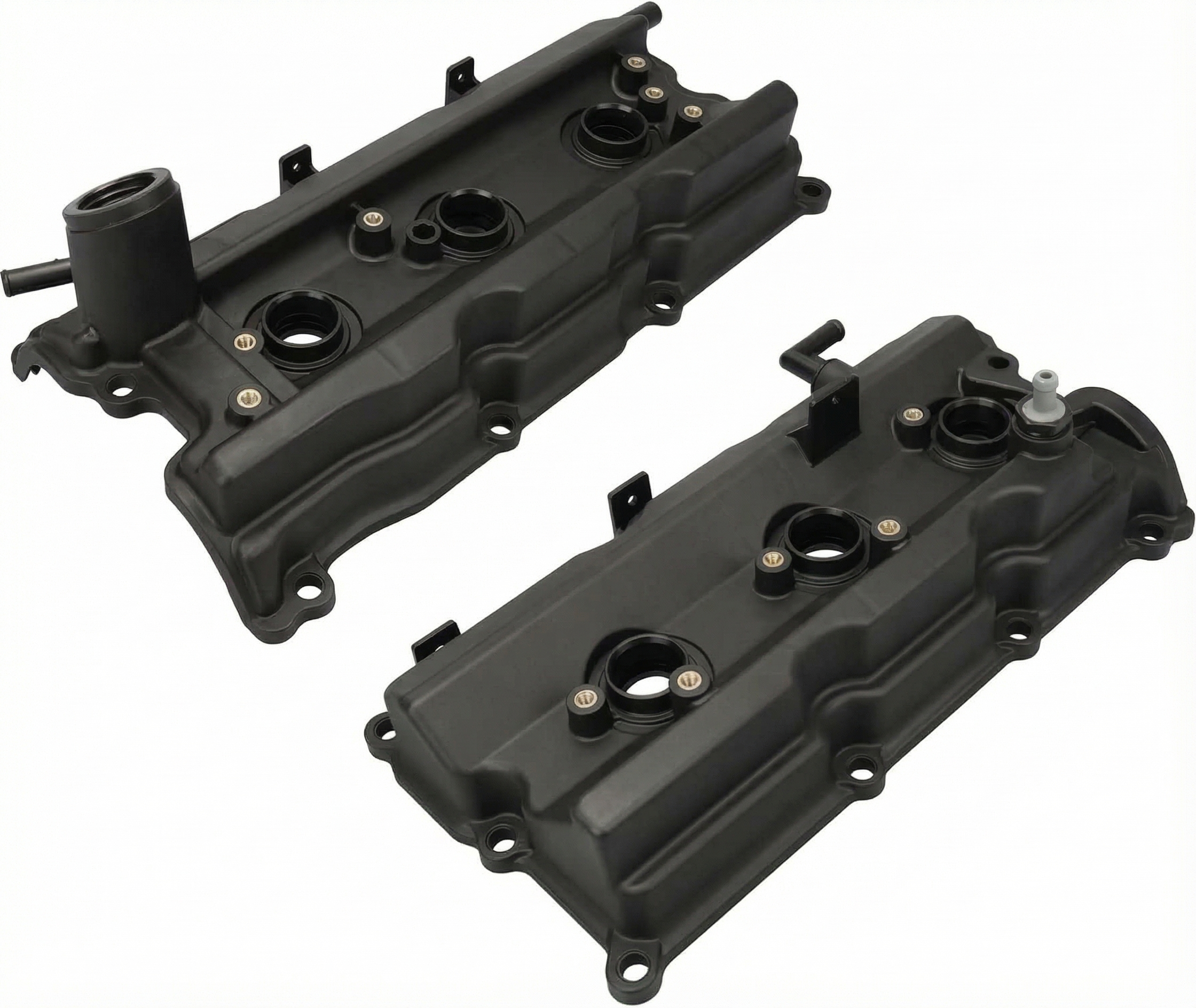
- Replacing the VCT solenoid on the 3.7L V6 requires removing the valve cover, so be prepared to replace the gasket as well.
- Bank 2 on this vehicle is the cylinder bank closer to the radiator.
What's Unique About the 2015-2019 Ford EXPLORER POLICE INTERCEPT
The 3.7L V6 engine in the Explorer Police Intercept is generally robust, but its VCT system is sensitive to oil condition, a factor potentially exacerbated by the severe duty cycles of police use (e.g., long idle periods followed by high-speed pursuits). Ford has issued a Technical Service Bulletin (SSM 50067) that directly applies to this vehicle and code, noting that small debris in the oil can cause the VCT solenoids to stick. The TSB specifically recommends a diagnostic procedure (pinpoint test HK12) where a scan tool is used to cycle the solenoid 10 times to attempt to clear the debris before replacement, acknowledging how common this specific failure is.
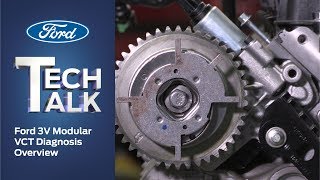
🎬 Watch: Ford Tech Talk explains VCT diagnosis and common failures.Diagnostic Flowchart
Tap your situation to follow the diagnostic path that matches what you're seeing on this vehicle.
Symptoms You May Notice
- Check Engine Light is on
- Rough or unstable idle
- Engine hesitation or stumbling on acceleration
- Reduced engine power
- Decreased fuel economy
- Engine stalling, especially at low speeds or when stopping
- Rattling or knocking noises from the engine
- Replacing the camshaft position sensor. While related, a bad sensor would typically throw a different code (e.g., P0345 or P0349). The P0022 code indicates the timing is mechanically incorrect, not that the sensor reading is invalid.
- Immediately replacing the timing chain and phasers. This is an expensive and labor-intensive job that is much less likely to be the cause than a simple oil issue or a faulty VCT solenoid. A forum user reported a dealer quoting a new engine for this issue when the cause was likely less severe.
Most Likely Causes
- Low or Dirty Engine Oil 🔴 High Probability The VCT system is hydraulic and highly dependent on oil pressure and cleanliness. Police vehicles often experience long idle times, which can degrade oil faster. Sludge or debris can clog the fine mesh screens on the VCT solenoids.
How to confirm: Check the oil level on the dipstick and inspect the oil's color and consistency. If it's low, black, or sludgy, it needs to be changed. This is the first and most important step.
Typical fix: Perform an oil and filter change using the manufacturer-specified grade (5W-20 Synthetic Blend) and a quality filter (e.g., Motorcraft). If heavy sludge is suspected, a short-interval follow-up oil change may be beneficial.
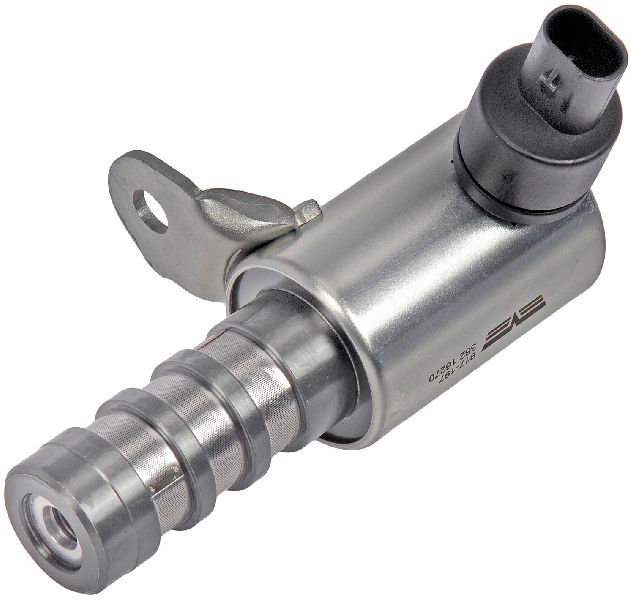
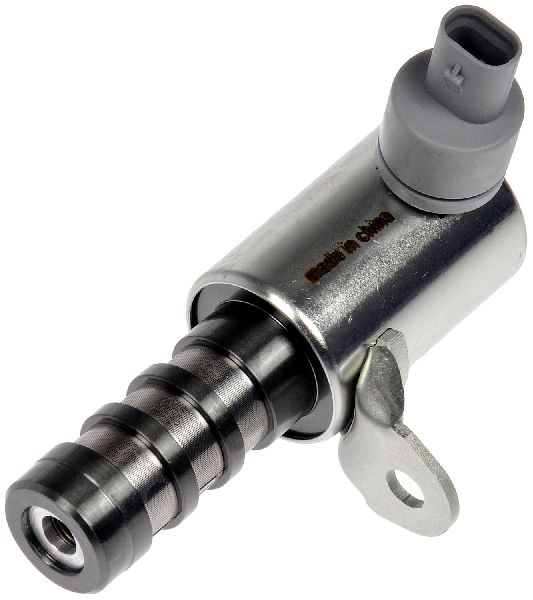
Est. part cost: $40-$80 - Failing Bank 2 Intake VCT Solenoid 🔴 High Probability → Shop Engine Variable Valve Timing (VVT) Solenoid Ford TSB #SSM 50067 specifically calls out that debris can cause these solenoids to stick. Forum posts from owners of the 3.7L engine confirm finding solenoids covered in varnish with clogged screens. The solenoid controls oil flow to the cam phaser, and if it fails or is clogged, timing cannot be adjusted correctly.
How to confirm: After checking oil, this is the next logical step. A mechanic can use a scan tool to command the solenoid on and off to check for a response, per Ford's TSB. A DIY method is to test the solenoid's resistance with a multimeter; it should be between 6.9-7.9 ohms. 🎬 See this walkthrough on how to test a VVT solenoid. Swapping the Bank 2 intake solenoid with the Bank 1 intake solenoid and seeing if the code changes to P0012 (Intake Over-Retarded Bank 1) is another effective test.
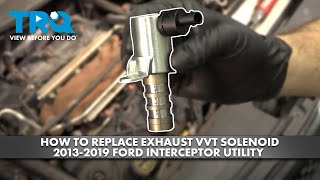
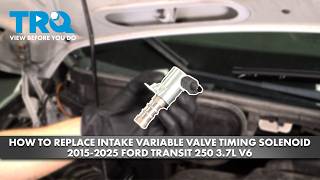
Typical fix: Replace the Bank 2 (driver's side/front) intake VCT solenoid. On the 3.7L, this requires removing the valve cover. 🎬 Watch: Step-by-step guide to replacing the intake VVT solenoid.
Est. part cost: $35-$65 - Wiring or Connector Issue at VCT Solenoid ⚪ Low Probability → Shop Engine Variable Valve Timing (VVT) Solenoid
How to confirm: Visually inspect the wiring harness and connector going to the Bank 2 intake VCT solenoid for any signs of damage, corrosion, or loose connection. Use a multimeter to check for proper voltage and ground at the connector with the key on.
Typical fix: Repair the damaged wiring or clean/replace the connector.
Est. part cost: $5-$50
Rare But Worth Checking
- Worn Timing Chain or Cam Phaser: → Shop Engine Timing Chain This is a more serious mechanical issue. It should only be considered after ruling out oil problems and VCT solenoid failure. Symptoms would likely be more severe, such as persistent rattling noises on startup. A stretched chain can cause timing to be physically retarded even if all VCT components are working.
- Low Engine Oil Pressure: While low oil level is a common cause, a failing oil pump or clogged oil passages can also lead to low pressure, starving the VCT system. This would typically be accompanied by other oil pressure warnings or more severe engine noises. A minimum of 15-25 PSI at hot idle is required for proper VCT function.
Diagnosis Steps
- Check Engine Oil: Verify the oil level is correct and the oil is clean. If low or overdue for a change, perform an oil and filter change with the correct 5W-20 oil and a Motorcraft filter. Clear the code and drive. Note that some 'permanent' codes on Fords may require several drive cycles to clear from the ECU after the fix is complete.
- Scan for Other Codes: Check for any other pending or active DTCs that could provide more clues (e.g., misfire codes, codes for the other bank).
- Test the Solenoid (Scan Tool): As recommended by Ford TSB SSM 50067, use a capable scan tool to perform pinpoint test HK12. Command the Bank 2 intake VCT solenoid on and off 10 times to try and dislodge debris. Listen for a clicking sound from the solenoid. If it starts working, the issue was likely debris.
- Inspect VCT Solenoid Connector: Check the electrical connector and wiring for the Bank 2 (front/driver's side) intake VCT solenoid for any visible damage or corrosion.
- Test the Solenoid (Electrical): If the solenoid does not click, disconnect it and test the resistance across its two pins with a multimeter. A good solenoid should read between 6.9 and 7.9 ohms. A reading outside this range indicates a failed solenoid.
- Swap Solenoids (DIY Test): If accessible, swap the intake VCT solenoid with the exhaust VCT solenoid on the same bank. Clear the codes and drive the vehicle. If the code changes to P0024 ('B' Camshaft Position - Timing Over-Retarded), the solenoid is confirmed to be faulty.
- Replace VCT Solenoid: If the solenoid is determined to be faulty, replace it. This requires removing the valve cover on the 3.7L engine. It is also necessary to replace the valve cover gasket at this time.
- Advanced Mechanical Diagnosis: If a new solenoid and clean oil do not resolve the issue, the problem may be more severe. Use a scan tool to monitor PIDs like VCT_ERR2 (cam error) and VCTADV2 (cam angle) to see if the phaser is responding to commands. A large, persistent error may indicate clogged oil passages, a failing cam phaser, or a stretched timing chain. This level of diagnosis should be performed by a professional.
Parts You'll Likely Need
- Engine VVT Solenoid (Bank 2 Intake)
(OEM #BR3Z-6M280-D, superseded by BR3Z-6M280-E, then BR3Z-6M280-F)— This is the most common component to fail for this code, often due to internal clogging or electrical failure, as noted in Ford's TSB SSM 50067. The part has been updated multiple times by Ford, with BR3Z-6M280-F being the latest version.
Trusted brands: Motorcraft, Standard Motor Products, Dorman
OEM price range: $35-$65
Aftermarket price range: $25-$50 - Valve Cover Gasket — Replacement is required to access and replace the VCT solenoids on the 3.7L V6 engine. It is critical to replace the gasket to prevent oil leaks after the repair.
Trusted brands: Motorcraft, Fel-Pro, Mahle
OEM price range: $40-$75
Aftermarket price range: $20-$40 - Engine Oil and Filter
(OEM #XO-5W20-Q1SP (Oil), FL-500S (Filter))— Dirty, low, or incorrect viscosity oil is the leading cause of all VCT-related problems. An oil change is the first and most important diagnostic step.
Trusted brands: Motorcraft
OEM price range: $40-$80
Aftermarket price range: $30-$60
Related Codes That Often Appear With This One
- P0012 — This is the equivalent code for Bank 1 ('A' Camshaft Position Timing Over-Retarded). If both appear, it strongly suggests a systemic issue like old/low oil or low oil pressure affecting both banks.
- P0300, P0304, P0305, P0306 — These are random or specific misfire codes for the cylinders on Bank 2 (cylinders 4, 5, and 6 on the 3.7L V6). Incorrect camshaft timing can disrupt the air/fuel mixture and ignition timing, leading to misfires on the affected bank.
Technical Service Bulletins (TSBs) & Recalls
- SSM 50067: Illuminated MIL with various VCT DTCs, including P0022, may be due to debris causing the VCT solenoid to stick.
Platform-Specific Known Issues
- TSB SSM 50067: Ford acknowledges that P0022 (and other VCT codes) may be caused by small debris causing the VCT solenoid to stick. It recommends a specific diagnostic procedure, pinpoint test HK12, which involves using a scan tool to cycle the solenoid 10 times to attempt to clear it before authorizing a replacement.
Mechanic-Grade Diagnostic Values
- VCT Solenoid Resistance — expected: 6.9 to 7.9 ohms at 68°F (20°C). Failure: A reading of zero (short), OL (open), or outside the specified range indicates a faulty solenoid.
- VCT Solenoid Control Voltage (Key On, Engine Off) — expected: Greater than 10.5 V. Failure: Voltage below 10.5 V points to an open circuit in the power feed wiring or a PCM driver issue.
- Engine Oil Pressure at Hot Idle — expected: At least 15-25 PSI. Failure: Pressure below this threshold indicates an oil delivery problem (e.g., worn pump, clogged pickup) that will starve the VCT system.
- Scan Tool PID: VCT_ERR2 (VCT Error for Bank 2) — expected: Close to 0 degrees at idle and under steady-state driving.. Failure: A large, persistent, or wildly fluctuating value indicates the PCM cannot control the Bank 2 camshaft's position, pointing to a stuck phaser or solenoid.
Scan Tool Commands That Help
- Ford IDS (or FORScan): Output State Control for VCT Solenoids — This bidirectional command allows a technician to manually turn the Bank 2 intake VCT solenoid on and off while monitoring cam position PIDs. This directly tests the solenoid's electrical circuit and its mechanical response, confirming if it's stuck or slow to react.
- Ford IDS (or FORScan): Datalogger with VCT PIDs (VCT_ERR2, VCT_INT_DIF2, VCTADV2) — Used during a road test to capture intermittent faults. By recording the VCT error, desired angle, and actual angle, a technician can see exactly when the over-retarded condition occurs under specific driving conditions (load, RPM).
Wiring & Ground Locations
- G100 / G105 — Top rear of engine (G100) and top right side of engine (G105) on a 2011 Explorer, likely similar for 2015-2019.. These are primary engine grounds. A poor ground connection at these points can cause electrical noise and voltage drops, potentially affecting the PCM and its ability to accurately read sensor data and control the VCT solenoids.
- G103 / G104 — Located on the left front corner and right side of the engine compartment, respectively, on a 2011 Explorer.. These grounds serve the engine compartment and are crucial for the proper function of various sensors and modules, including the PCM which controls the VCT system.
- Bank 2 VCT Solenoid Connector — On the front of the driver's side (Bank 2) valve cover.. This is the direct electrical connection to the solenoid. It should be inspected for corrosion, pushed-out pins, or damage to the harness, which would interrupt the signal from the PCM.
Real Owner Repair Stories
- Ford F150 Forum (Ford F-150 with 3.5L EcoBoost (similar VCT architecture)) — P0022 code appeared, along with a cam phaser rattle that started happening while driving, not just on startup.
❌ Tried (didn't work) Replacing the VVT solenoids, Replacing the camshaft position sensor
✅ What actually fixed it The owner performed a full timing job, replacing the cam phasers and all related timing components. This resolved both the code and the noise, indicating a mechanical failure beyond the solenoid. - F150online Forums (Ford F-150 (engine not specified but VCT system is similar)) — P0022 code, rough running.
❌ Tried (didn't work) Initial diagnosis was inconclusive.
✅ What actually fixed it The user inspected the VCT oil control solenoid and discovered it had a broken internal screen. Replacing the single faulty solenoid resolved the code and restored normal engine operation.
OEM Part Supersession History
BR3Z-6M280-D→BR3Z-6M280-E, then BR3Z-6M280-F— Manufacturer revisions for improved durability and resistance to debris/sticking.
Heads up: The latest revision, BR3Z-6M280-F, is the recommended replacement for all previous versions for this application. Using older stock is not advised.
Model Year Variations Within This Range
- 2015-2019: The 3.7L Ti-VCT V6 engine remained largely unchanged in the Explorer Police Interceptor Utility during this period. Unlike some other Ford models, it did not receive a major engine redesign or change in VCT system components during the 2016 facelift. Therefore, diagnostic and repair procedures are consistent across this entire year range for this specific powertrain.
Helpful Videos

Used OEM Parts in Stock
New Aftermarket Parts Available


The information in this article is provided for general reference and educational purposes only. Vehicle specifications, procedures, and part compatibility can vary by production date, trim level, and region. Always consult your vehicle's factory service manual and verify part numbers before purchasing or performing repairs. Safety-critical components such as airbags, seat belts, and braking systems should be installed by a qualified professional.
- Ford EXPLORER POLICE INTERCEPT:
- 🧭 Diagnostic Flowchart
- 🎬 Helpful Videos
- 🛍️ Shop This Part
- What's Unique About the 2015-2019 Ford EXPLORER POLICE INTERCEPT
- Symptoms You May Notice
- Most Likely Causes
- Rare But Worth Checking
- Diagnosis Steps
- Parts You'll Likely Need
- Related Codes That Often Appear With This One
- Technical Service Bulletins (TSBs) & Recalls
- Platform-Specific Known Issues
- Mechanic-Grade Diagnostic Values
- Scan Tool Commands That Help
- Wiring & Ground Locations
- Real Owner Repair Stories
- OEM Part Supersession History
- Model Year Variations Within This Range
- 🎟️ Get 5% Off