

P0022 on 2015-2018 Ford Focus: An Unlikely Code and Its Real Meaning
P0022 indicates an over-retarded intake camshaft on 'Bank 2,' but the Ford Focus has an inline engine with only one bank. You almost certainly have a related 'Bank 1' code like P0012. This is typically caused by a faulty VCT solenoid or low/dirty engine oil, a fix that often costs between $50 and $250.
- P0022 should not appear on a Ford Focus because its engine only has one bank. The code you are likely dealing with is P0012.
- The most common cause of this fault is low/dirty engine oil or a failing VCT solenoid.
- Always start your diagnosis by checking the engine oil level and condition before buying any parts.
- Replacing the VCT solenoids is a common, relatively inexpensive, and DIY-friendly repair that often solves the problem.
- Do not immediately replace the camshaft position sensor; it is rarely the cause of this specific code.
What's Unique About the 2015-2018 Ford FOCUS
The main point of confusion for this code on a Ford Focus comes from official Ford Technical Service Bulletins (TSBs). Bulletins like SSM 54366 and SSM 50067 list a wide range of Variable Camshaft Timing (VCT) codes, including P0022, and state they apply to many Ford vehicles. However, these documents are written to cover Ford's entire fleet, which includes V6 and V8 engines that *do* have a Bank 2. For the Focus's inline engine, only the Bank 1 codes (P0011, P0012, P0014, P0015) are relevant. This guide will address the causes for these related Bank 1 codes, as they are the true issue.
Diagnostic Flowchart
Tap your situation to follow the diagnostic path that matches what you're seeing on this vehicle.
Symptoms You May Notice
- Check Engine Light is on
- Rough or unstable idle, especially when warm or at low RPM
- Engine hesitates or stalls during acceleration or when coming to a stop
- Reduced fuel economy
- Loss of engine power, engine feels sluggish
- Engine makes a rattling or knocking noise, particularly on the 1.0L EcoBoost, which could indicate a more serious oil pressure issue
- Replacing the camshaft position sensor first. The VCT solenoid or oil-related issues are far more common causes for this type of code.
- Assuming a major timing chain failure without first checking the simple and inexpensive causes like oil level and VCT solenoids.
- Replacing VCT solenoids without performing an oil change. If dirty oil caused the original part to fail, it will quickly clog and damage the new part.
Most Likely Causes
- Low or Dirty Engine Oil 🔴 High Probability The VCT system is hydraulically operated by engine oil. Ford TSBs SSM 47170 and SSM 50067 directly link VCT issues to 'small debris,' emphasizing the importance of oil quality. The small passages in the VCT solenoids are easily clogged by sludge from delayed oil changes, a common cause of this code.
How to confirm: Check the engine oil dipstick for a low level or a dark, sludgy consistency. This should always be the first step. The correct oil for most of these engines is SAE 5W-20 or 5W-30 synthetic blend. Using the wrong viscosity can also cause this issue.
Typical fix: Perform an engine oil and filter change using the manufacturer-specified grade of oil (e.g., Motorcraft 5W-20 Synthetic Blend). In some cases, an engine flush product may help clear debris before the oil change.
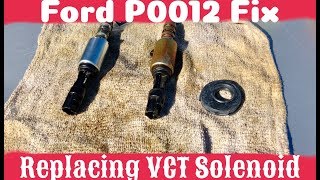
Est. part cost: $40-$80 - Failing Variable Camshaft Timing (VCT) Solenoid 🔴 High Probability → Shop Engine Camshaft As noted in Ford TSBs SSM 47170 and SSM 50067, the VCT solenoids can stick due to small debris in the engine oil, preventing them from correctly regulating oil flow to the cam phasers. This is the most common part failure for P0012-related codes. 🎬 Watch: How to fix a P0012 code by replacing the solenoid.
How to confirm: After checking the oil, you can test the solenoid with a multimeter or swap the intake and exhaust solenoids (they are interchangeable on the 2.0L Ti-VCT and 2.0L EcoBoost engines) to see if the trouble code moves to the other camshaft (e.g., from P0012 to P0014). TSB SSM 50067 also suggests a diagnostic step where a scan tool is used to cycle the solenoid 10 times to try and dislodge debris.
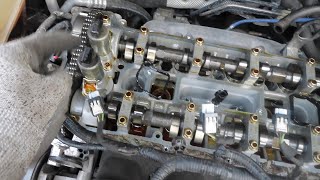
Typical fix: Replace the faulty VCT solenoid. It is often recommended to replace them in pairs (intake and exhaust) since they are exposed to the same oil and conditions. On the 2.0L engine, this requires removing the valve cover. 🎬 See this walkthrough on replacing VVT solenoids to get running again.
Est. part cost: $30-$70 per solenoid - Faulty Camshaft Position Sensor ⚪ Low Probability → Shop Engine Camshaft Position Sensor
How to confirm: If a new VCT solenoid and fresh oil do not resolve the issue, the sensor can be tested for proper signal output using an oscilloscope or multimeter. This is a less common cause than the solenoid itself.
Typical fix: Replace the camshaft position sensor for the corresponding bank.
Est. part cost: $25-$80
Rare But Worth Checking
- Stretched Timing Chain or Worn Cam Phaser: → Shop Engine Timing Chain This is a more severe mechanical issue. It is usually accompanied by a rattling noise from the engine, especially on cold starts. A user on a Ford Fusion forum with P0012 and P0014 ended up needing a new timing chain and tensor after replacing the solenoid and actuator did not fix the issue. This is a much more involved and expensive repair.
- Clogged Oil Passages: Severe engine sludge can block the small oil passages that feed the VCT system, starving it of the oil pressure needed to operate. In some EcoBoost engines, debris from a failing vacuum pump impeller can also clog these passages, requiring inspection of the VCT solenoids for plastic fragments. This typically requires significant engine cleaning or disassembly.
Diagnosis Steps
- First, re-scan your vehicle to confirm the trouble code. Verify that it is not actually P0012, which is the correct code for this fault on a Ford Focus.
- Check the engine oil level and condition. If it is low, dirty, or the wrong viscosity, perform an oil and filter change with the correct oil (typically Motorcraft 5W-20 or 5W-30).
- Inspect the wiring and connectors for the VCT solenoids and camshaft position sensors on top of the engine for any damage or loose connections.
- Listen for any rattling noises from the engine that could indicate a timing chain issue.
- Swap the intake and exhaust VCT solenoids. On the 2.0L engines, they are located on top of the valve cover and are interchangeable. Clear the codes and drive the vehicle. If the code returns as P0014 (exhaust camshaft), the solenoid you moved is faulty.
- If the problem persists, test the VCT solenoid with a multimeter or use a scan tool to perform the 'HK12' pinpoint test described in TSB SSM 50067, which cycles the solenoid to clear debris.
- If the solenoids and oil are good, test the camshaft position sensor.
- If all electronic components test good, the issue may be mechanical, such as a failing cam phaser or stretched timing chain, which requires more in-depth diagnosis.
Parts You'll Likely Need
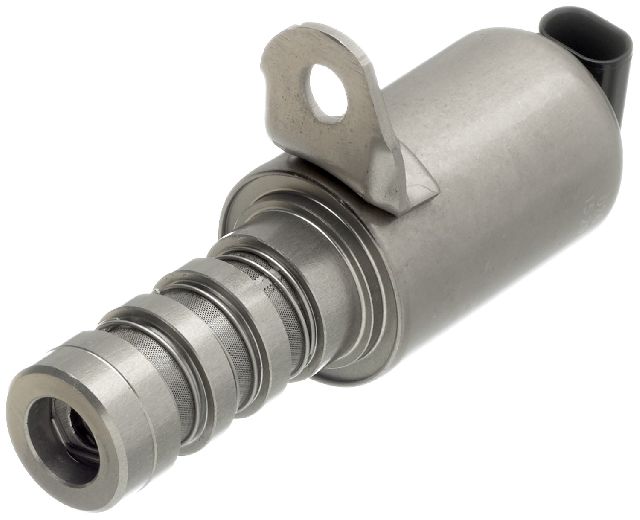
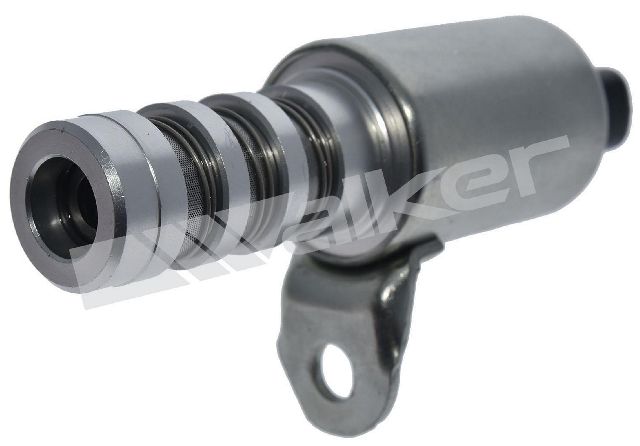
- Engine Variable Valve Timing (VVT) Solenoid
(OEM #CM5Z-6M280-C (2.0L Ti-VCT), CJ5Z-6M280-A (2.0L/2.3L EcoBoost), CM5Z-6M280-G (1.0L EcoBoost))— This part is the most common point of failure for VCT-related codes on the Focus, often getting stuck due to oil debris as noted in Ford TSBs.
Trusted brands: Motorcraft, Dorman, Standard Motor Products
OEM price range: $45-$80
Aftermarket price range: $25-$60 - Engine Oil and Filter
(OEM #Motorcraft FL-910S (Filter for 2.0L))— Low or contaminated oil is a primary cause of VCT system malfunction. An oil change with the correct viscosity oil (e.g., Motorcraft SAE 5W-20 or 5W-30 Synthetic Blend) is a critical first step in diagnosis and repair.
Trusted brands: Motorcraft, Mobil 1, Castrol
OEM price range: $50-$90
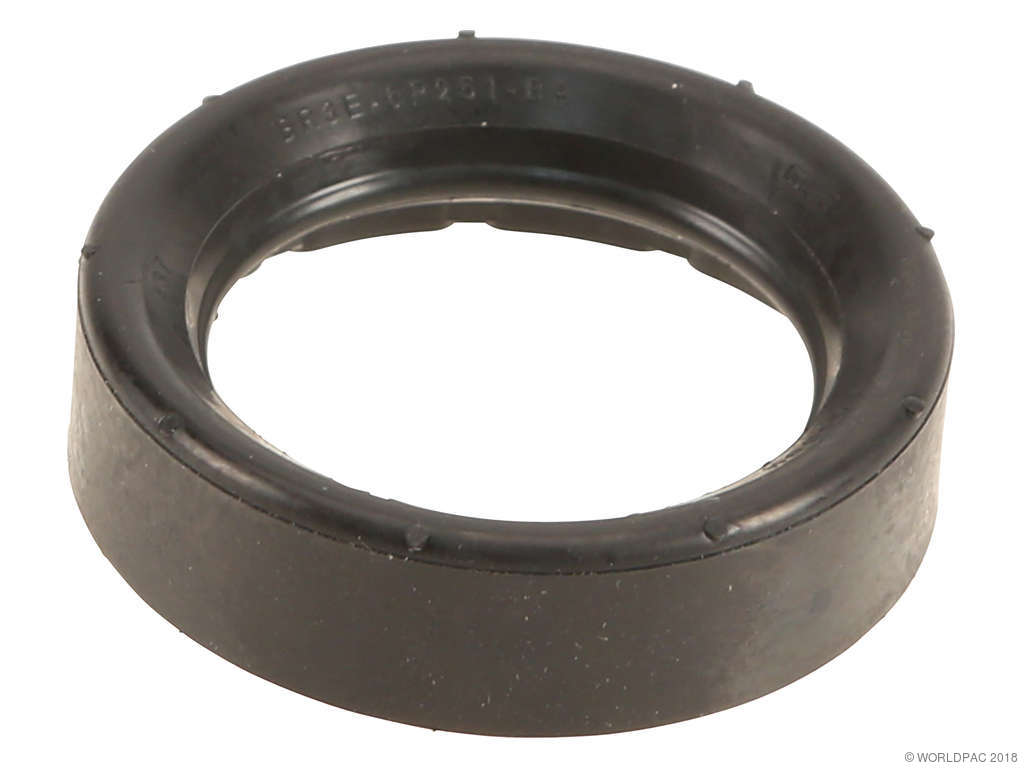
Aftermarket price range: $40-$70 - Valve Cover Gasket
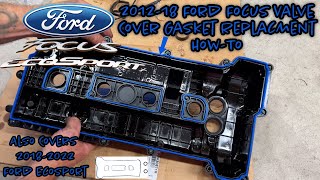
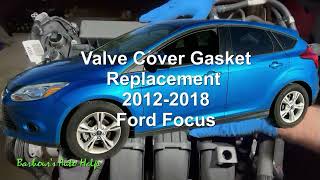
(OEM #BB5Z-6584-A (example for 2.0L EcoBoost))— For the 2.0L Ti-VCT and 2.0L/2.3L EcoBoost engines, the VCT solenoids are located under the valve cover, which must be removed for access. The gasket should be replaced to prevent oil leaks. 🎬 Watch: Step-by-step guide for replacing the valve cover gasket.
Trusted brands: Ford, Fel-Pro, Mahle
OEM price range: $30-$50
Aftermarket price range: $15-$30
Related Codes That Often Appear With This One
- P0012 — This is the correct code for the same 'over-retarded' fault on Bank 1, which is what the Focus actually has. You likely have this code instead of P0022.
- P0011 — This code is for 'Timing Over-Advanced' on Bank 1. It points to the same VCT system, just a different failure mode, and can appear if the solenoid is sticking erratically.
- P0014 / P0015 — These codes relate to the 'B' (exhaust) camshaft on Bank 1. Problems with oil pressure or quality can affect both intake and exhaust VCT systems simultaneously.
- P0300 / P0301 / P030x — Misfire codes can be triggered if the incorrect cam timing is severe enough to affect combustion in one or more cylinders.
Technical Service Bulletins (TSBs) & Recalls
- SSM 54366: General TSB for multiple VCT codes, directing to pinpoint tests.
- SSM 47170: Notes that VCT codes may be due to small debris causing the VCT solenoid to stick.
- SSM 50067: Similar to SSM 47170, points to debris in the VCT solenoid as a likely cause for a range of VCT codes and suggests a solenoid cycling test before replacement.
Platform-Specific Known Issues
- Ford Technical Service Bulletin SSM 50067 states that various Ford vehicles may exhibit VCT codes (including P0022) due to 'small debris causing the VCT solenoid to stick.' It advises against component replacement before performing pinpoint test HK12 to cycle the solenoid with a scan tool to attempt to clear the debris.
- Ford Technical Service Bulletin SSM 47170 reiterates that sticking VCT solenoids from debris are a potential cause for a range of VCT codes and advises diagnosis before replacement.
- Ford Technical Service Bulletin SSM 54366 includes P0022 in a list of VCT codes and refers technicians to specific diagnostic te
Mechanic-Grade Diagnostic Values
- VCT Solenoid Internal Resistance — expected: 7 to 15 Ohms. Failure: A reading outside this range, or an open/short circuit, indicates a faulty solenoid coil.
- VCT Solenoid Connector Voltage (Key On, Engine Off) — expected: 12V (Battery Voltage). Failure: No voltage suggests a problem with the power supply circuit, fuse, or PCM power relay.
- Camshaft Position Sensor Resistance (Inductive type) — expected: 200 to 1000 Ohms (varies by manufacturer). Failure: A reading of zero suggests a short circuit, while an infinite reading indicates an open circuit.
- Scan Tool Live Data: VCT ADV ERR (VCT Advance Error) PID — expected: Should hover around 0° (±5° is acceptable). Failure: A consistent, significant deviation from 0° while in closed-loop operation indicates the camshaft is not reaching its commanded position.
Scan Tool Commands That Help
- Ford IDS (Integrated Diagnostic System): VCT Solenoid On/Off State Control — This bidirectional command allows a technician to manually activate and deactivate the VCT solenoid while monitoring engine idle. A noticeable change in idle quality when the solenoid is commanded on/off confirms the solenoid is mechanically responding to electrical inputs.
- Ford IDS (Integrated Diagnostic System): Pinpoint Test HK (e.g., HK12) — Referenced in TSBs like SSM 50067, this is a guided diagnostic routine within the scan tool. For VCT codes, it may include steps to cycle the solenoid multiple times to dislodge debris before recommending replacement.
Wiring & Ground Locations
- Main Engine Ground (G1 / G104) — Underneath the air cleaner box, bolted to the chassis frame rail on the driver's side.. This is a primary ground point for the engine control system. A poor connection here due to corrosion or looseness can cause erratic behavior from sensors and actuators, including the VCT solenoids and cam sensors.
- PCM Ground — Typically located on the frame rail or firewall near the Powertrain Control Module (PCM) itself.. The PCM controls the ground circuit to activate the VCT solenoids. A faulty PCM ground can disrupt this control signal, leading to timing codes even if the solenoid itself is functional.
- VCT Solenoid Connector (C1046 / C1047) — On top of the valve cover, plugging into the VCT solenoids. The wiring harness (pigtail) part number is WPT-1251 for some models.. This connector is exposed to heat and oil. The wires can become brittle and the terminals can get contaminated with oil, leading to a poor connection that mimics a failed solenoid.
Real Owner Repair Stories
- Reddit user in r/FocusST (Ford Focus ST (2.0L EcoBoost)) — P0012 code present in OBD scanner, but no check engine light.
❌ Tried (didn't work) Changing the engine oil and filter.
✅ What actually fixed it The consensus from other users was that the next step is to replace the VVT (VCT) solenoids. The user was advised to remove the valve cover to access them and to replace the valve cover gasket at the same time. - YouTube video by 'How To Fix Ford P0012 Code' (Ford Expedition (with similar VCT system)) — Flashing check engine light, lack of power, struggling to accelerate past 40 mph.
❌ Tried (didn't work) The video creator noted that many online reports indicated that replacing the VCT solenoid did *not* fix the issue for them, suggesting it's not a guaranteed solution.
✅ What actually fixed it For this specific vehicle, replacing the VCT solenoid did resolve the problem. The check engine light turned off and power was restored. The repair was done for under $100.
OEM Part Supersession History
CM5Z-6M280-A→CM5Z-6M280-C— Part revision by Ford for the VCT solenoid used on the 2.0L Ti-VCT engine.
Heads up: The new part number (CM5Z-6M280-C) is the correct replacement for the original. Using the old stock part is not advisable.
Model Year Variations Within This Range
- 2015+: For the 2.0L Ti-VCT engine, a cylinder head temperature sensor was added between spark plug wells 2 and 3 starting in the 2015 model year. This is a minor change but relevant for anyone swapping engines between early (2012-2014) and late (2015-2018) MK3 Focus models, as the wiring harness and ECU may differ.
Helpful Videos

We Have This Part in Stock


The information in this article is provided for general reference and educational purposes only. Vehicle specifications, procedures, and part compatibility can vary by production date, trim level, and region. Always consult your vehicle's factory service manual and verify part numbers before purchasing or performing repairs. Safety-critical components such as airbags, seat belts, and braking systems should be installed by a qualified professional.
- Ford FOCUS:
- 🧭 Diagnostic Flowchart
- 🎬 Helpful Videos
- 🛍️ Shop This Part
- What's Unique About the 2015-2018 Ford FOCUS
- Symptoms You May Notice
- Most Likely Causes
- Rare But Worth Checking
- Diagnosis Steps
- Parts You'll Likely Need
- Related Codes That Often Appear With This One
- Technical Service Bulletins (TSBs) & Recalls
- Platform-Specific Known Issues
- Mechanic-Grade Diagnostic Values
- Scan Tool Commands That Help
- Wiring & Ground Locations
- Real Owner Repair Stories
- OEM Part Supersession History
- Model Year Variations Within This Range
- 🎟️ Get 5% Off