

P0022 on 2011-2014 Ford Mustang 3.7L: Causes and Fixes for Over-Retarded Cam Timing
On the 2011-2014 Mustang 3.7L, code P0022 is most often caused by low or dirty engine oil, or a failing Variable Camshaft Timing (VCT) solenoid on the driver's side (Bank 2). Always check the oil first; if the oil is healthy, replacing the Bank 2 intake VCT solenoid (OEM Part # 7T4Z-6M280-C) is the most likely fix, costing around $30-$80 for the part.
- For code P0022 on a 3.7L Mustang, the first and most important step is to check your engine oil. A simple oil change with 5W-20 oil often fixes the problem.
- If an oil change doesn't work, the most likely culprit is a faulty intake VCT solenoid on the driver's side (Bank 2).
- Replacing the VCT solenoid is a moderately difficult DIY job because it requires removing the valve cover.
- Do not replace the camshaft position sensor; it's almost never the cause of this specific code.
- If you see milky, frothy oil, stop driving immediately. This indicates a likely internal water pump failure, which is a serious issue on this engine.
What's Unique About the 2011-2014 Ford Mustang
The 3.7L Cyclone V6 engine uses a Twin Independent Variable Camshaft Timing (Ti-VCT) system that relies heavily on clean engine oil and stable oil pressure to function. This system is known to be sensitive, and the VCT solenoids, which control oil flow to the cam phasers, have fine mesh screens that can get clogged with sludge or debris from infrequent oil changes. Ford has issued technical service bulletins (TSBs) like SSM 47170 and SSM 50067, acknowledging that this solenoid sticking is a common cause for VCT-related codes like P0022. These TSBs often recommend using a scan tool to cycle the solenoid up to 10 times to try and dislodge debris before replacing the part.
Symptoms You May Notice
- Check Engine Light is on
- Rough or unstable idle, sometimes described as shuddering
- Reduced engine power and poor acceleration
- Hesitation or sputtering during acceleration
- Decreased fuel economy
- Engine stalling, especially at low speeds or when returning to idle
- Rattling, ticking, or knocking noises from the engine, particularly the front valve cover area
- Replacing the Camshaft Position Sensor. A faulty sensor would typically set a different, circuit-related code (like P0345 or P0349). P0022 indicates the sensor is working correctly and reading a mechanical timing problem.
Most Likely Causes
- Low, Dirty, or Incorrect Viscosity Engine Oil 🔴 High Probability The Ti-VCT system is hydraulic and highly sensitive to oil pressure and cleanliness. Sludge or debris can easily clog the small passages and fine mesh screens in the VCT solenoids.
How to confirm: Check the oil level on the dipstick and examine the oil's condition. If it's below the 'add' line, dark black, sludgy, or appears milky/frothy (coolant contamination), it needs immediate attention.
Typical fix: Perform an engine oil and filter change using the manufacturer-specified 5W-20 synthetic blend or full synthetic oil and a quality filter (e.g., Motorcraft FL-500S). In some cases, an oil change alone can resolve the code.
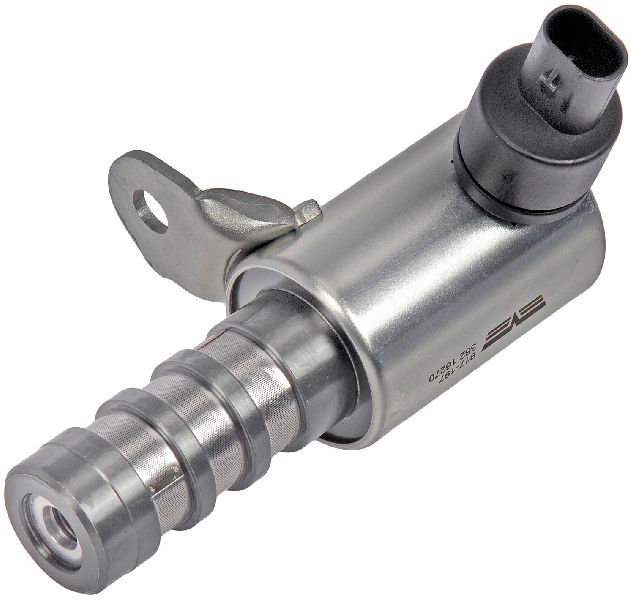
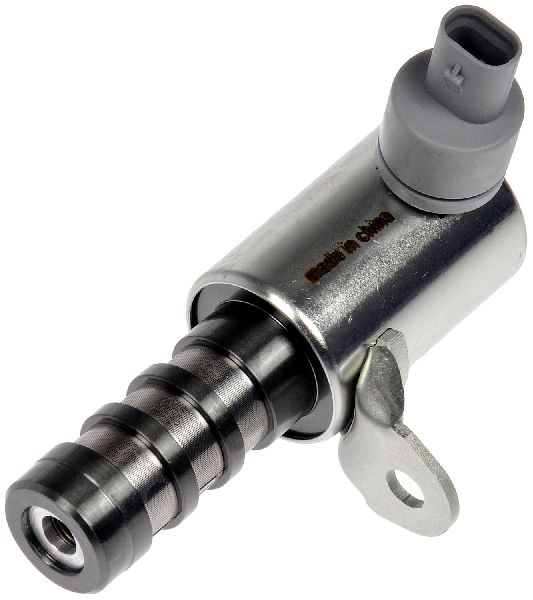
Est. part cost: $40-$80 - Sticking or Failed Bank 2 Intake VCT Solenoid 🔴 High Probability → Shop Engine Variable Valve Timing (VVT) Solenoid This is the most common mechanical failure for this code. Ford TSBs SSM 47170 and SSM 50067 directly address these solenoids sticking due to small oil debris. Forum users frequently report clogged or varnished solenoid screens as the root cause.
How to confirm: After verifying oil, a simple test is to unplug the Bank 2 intake VCT solenoid while the engine is idling roughly; if the idle smooths out, the solenoid is stuck. A more definitive test is to swap the Bank 2 (driver's side) intake VCT solenoid with the Bank 2 exhaust VCT solenoid. If the code changes to P0024 (Exhaust Cam Over-Retarded), the solenoid is confirmed bad.
Typical fix: Replace the Bank 2 (driver's side) intake VCT solenoid. This requires removing the driver's side valve cover. The valve cover gasket and the VCT solenoid seal should also be replaced.
Est. part cost: $30-$90 - Damaged or Clogged VCT Solenoid Connector/Wiring ⚪ Low Probability → Shop Engine Variable Valve Timing (VVT) Solenoid
How to confirm: Visually inspect the wiring harness and connector for the Bank 2 intake VCT solenoid. Check for frayed wires, corrosion in the connector pins, or oil saturation in the connector from a leaking seal.
Typical fix: Repair the damaged wiring, clean the connector with electrical contact cleaner, or replace the pigtail connector if damaged. Replace the solenoid seal if it is leaking oil into the connector.
Est. part cost: $10-$50
Rare But Worth Checking
- Failed Camshaft Phaser: → Shop Engine Camshaft If replacing the VCT solenoid doesn't fix the code, the issue may be with the cam phaser itself, which is mechanically moved by the oil directed by the solenoid. It can get stuck, fail internally, or the locking pin can break. This is a more involved and expensive repair.
- Stretched or Jumped Timing Chain: → Shop Engine Timing Chain Over time, the timing chain can stretch, or a tensioner can fail, causing timing correlation issues. If you hear a rattling noise on startup that goes away, this is a higher possibility. This is a major repair requiring removal of the engine's front cover.
- Internal Water Pump Failure: The 3.7L Cyclone has a timing-chain-driven internal water pump. A failure of its seals can leak coolant directly into the engine oil, creating a sludge-like 'milkshake' that clogs VCT components and can destroy the engine. If the oil on the dipstick or oil cap appears milky or frothy, this is a critical failure requiring immediate engine-off and inspection.
Diagnosis Steps
- Read the code with an OBD-II scanner and confirm P0022 is present. Note any other codes, like P0012 or misfire codes.
- Check the engine oil level and condition. If low, dirty, or overdue for a change, perform an oil and filter change with 5W-20 oil. Clear the code and test drive. If oil is milky, stop immediately and diagnose the internal water pump.
- If the code returns, inspect the wiring and connector for the Bank 2 (driver's side) intake VCT solenoid for any visible damage, oil saturation, or corrosion.
- With the engine running at a rough idle, carefully unplug the electrical connector to the Bank 2 intake VCT solenoid. If the idle immediately smooths out, the solenoid is stuck and needs replacement.
- Perform a 'swap test'. Remove the driver's side valve cover. Swap the intake and exhaust VCT solenoids on Bank 2. Reassemble, clear the codes, and drive the vehicle.
- If the code changes to P0024 (Bank 2 Exhaust Over-Retarded), the VCT solenoid you moved is faulty and needs to be replaced.
- If the code remains P0022, the issue is likely not the solenoid. Further diagnosis is needed for the cam phaser, timing chain, or oil pressure issues.
Parts You'll Likely Need
- Intake/Exhaust VCT Solenoid
(OEM #7T4Z-6M280-C (supersedes 7T4Z-6M280-A, 7T4Z-6M280-AA, 7T4Z-6M280-B))— This solenoid is the most common point of failure for P0022, often getting stuck due to oil debris. The intake and exhaust solenoids are identical.
Trusted brands: Motorcraft, Standard Motor Products (SMP), Dorman
OEM price range: $70-$150
Aftermarket price range: $30-$80 - Valve Cover Gasket (Bank 2 / Driver's Side)
(OEM #BR3Z-6584-C)— The valve cover must be removed to access the VCT solenoids. The gasket is a one-time-use part and must be replaced to prevent oil leaks.
Trusted brands: Motorcraft, Fel-Pro
OEM price range: $30-$50
Aftermarket price range: $20-$40 - Engine Oil and Filter — Dirty or low oil is a primary cause of the code. An oil change is the first diagnostic step and a required part of any VCT solenoid replacement. Use 5W-20 oil and a quality filter like the Motorcraft FL-500S.
Trusted brands: Motorcraft (Oil & FL-500S Filter)
OEM price range: $40-$80
Aftermarket price range: $35-$70
Related Codes That Often Appear With This One
- P0012 — This is the equivalent over-retarded code for Bank 1 (passenger side). If both appear, it strongly suggests a systemic issue like low/dirty oil or a failing internal water pump affecting the entire engine.
- P0021 — This is the 'over-advanced' code for the same bank. Seeing both P0021 and P0022 intermittently can point to a VCT solenoid that is sticking erratically or a wiring issue.
- P0300, P0302, P0304, P0306 — Random or specific cylinder misfire codes for Bank 2 (driver's side cylinders) can be triggered because incorrect camshaft timing disrupts the combustion process.
Technical Service Bulletins (TSBs) & Recalls
- SSM 47170 / SSM 50067: Ford acknowledges that VCT codes (P0011, P0012, P0021, P0022, etc.) can be caused by small debris causing the VCT solenoid to stick. Advises using a scan tool (in Pinpoint Test HK) to cycle the solenoid 10 times to attempt to clear it before replacement.
Platform-Specific Known Issues
- The 3.7L Cyclone engine features an internal, timing-chain-driven water pump. A failure can contaminate the oil with coolant, leading to widespread VCT system problems and eventual engine failure. Milky oil is the key symptom.
Mechanic-Grade Diagnostic Values
- VCT Solenoid Internal Resistance — expected: 6.9 to 7.9 ohms at 68°F (20°C), with a broader acceptable range of 5.0 to 15.0 ohms.. Failure: A reading of 0 ohms (short), OL/infinite ohms (open), or being significantly outside the range indicates a faulty solenoid coil.
- VCT Solenoid Connector Voltage (Key On, Engine Off) — expected: Greater than 10.5 volts / Battery Voltage (approx. 12V) on the power supply pin.. Failure: Low or no voltage suggests a problem with the wiring, fuse, or PCM power relay.
- Scan Tool PID: VCT_ERR2 (VCT Error Bank 2) — expected: Should hover around 0° at idle when the engine is in closed-loop operation.. Failure: A consistent deviation of more than +/- 5 degrees for an extended period indicates a timing error that can set the P0022 code.
- Engine Oil Pressure at Hot Idle — expected: Minimum of 15 PSI, ideally 25 PSI or higher.. Failure: Pressure below 15 PSI can cause erratic VCT operation and trigger timing codes due to insufficient hydraulic force.
Hidden / Shadow Codes Worth Checking
- Mode 6, Test ID $81: This is a non-continuous monitor test ID that specifically checks the Bank 2 variable camshaft timing system's response and accuracy. A failing value here can confirm a P0022 fault, sometimes before the CEL is consistently illuminated. (see via A professional-grade OBD-II scanner or software like FORScan that has Mode 6 data viewing capabilities.)
Scan Tool Commands That Help
- Ford IDS, FORScan, or other high-end bidirectional scanner: VCT Solenoid Bidirectional Control / Output Control (Pinpoint Test HK) — As recommended in Ford TSBs (SSM 50067), this command cycles the solenoid rapidly (e.g., 10 times) to dislodge small debris that may be causing it to stick. If the code clears or drivability improves after running this test, it confirms an intermittent sticking issue related to oil contamination.
Wiring & Ground Locations
- G104 — On the driver's side front fender apron, located behind the headlight assembly area.. This is a primary engine and chassis ground point. A loose or corroded connection here can cause erratic behavior in various engine sensors and actuators, including the VCT and camshaft position sensor systems, leading to intermittent and hard-to-diagnose timing codes.
- VCT Solenoid Connector Pins — On the VCT solenoid itself, under the driver's side valve cover.. Pin 1 is typically the power supply (should have battery voltage with key on), and Pin 2 is the control wire, which is ground-side switched by the PCM. Testing for voltage at Pin 1 and checking for continuity to ground on Pin 2 are key electrical diagnostic steps.
Real Owner Repair Stories
- Ford Edge Forum user (Ford Edge with 3.7L V6 (same engine family) at 132,000 miles) — Sudden misfire, rough idle, stalling, poor acceleration, and multiple codes including P0022 and P0012.
❌ Tried (didn't work) Replacing all 6 ignition coils., Replacing all 4 camshaft position sensors.
✅ What actually fixed it The user discovered significant sludge and varnished VCT solenoids with partially clogged screens. Replacing all four VCT solenoids and performing an engine oil flush resolved the severe idle and stalling issues, indicating the solenoids were the primary cause of the drivability problems.
OEM Part Supersession History
7T4Z-6M280-A, 7T4Z-6M280-AA, 7T4Z-6M280-B→7T4Z-6M280-C— Revisions to improve durability and resistance to sticking from oil debris.
Heads up: The intake and exhaust solenoids for the 3.7L V6 are the same part (7T4Z-6M280-C). While older revisions may physically fit, the latest 'C' revision is recommended for reliability.
Model Year Variations Within This Range
- 2011-2014: There are no significant documented mechanical changes to the 3.7L V6 Ti-VCT system within this specific model year range that would alter the diagnosis of P0022. The engine and its components remained consistent.
Diagnostic Flowchart
Other Known Issues on This Vehicle
Issues unrelated to this code that are worth knowing about as an owner of this generation:
- Internal Water Pump Failure 🔴 High — Common on engines over 80,000 miles. Failure can occur without warning, leading to rapid oil contamination.
- Throttle Body Failure 🟠 Medium — Can occur at various mileages, causing the vehicle to enter 'limp mode' with a wrench light and codes like P2111 and P2112. Often requires replacement of the electronic throttle body.
- Automatic Transmission Hard Shift/Lurch 🟡 Low — Some owners report occasional harsh shifting or lurching, particularly at low speeds. Sometimes addressed with a PCM software update or by resetting adaptive learning.
Used vs. New Parts: Buying Guide for This Vehicle
When a used part is the smart pick: A used VCT solenoid is generally not recommended. The failure mode is clogging or sticking due to internal wear and oil contamination. A used part from a junkyard carries a high risk of having the same or an impending issue. Given the relatively low cost of a new aftermarket part and the labor required to access it under the valve cover, a new part is a much smarter investment.
Donor-vehicle mileage cap: roughly under 40000 miles for the part to have meaningful remaining life.
What to inspect on the donor part:
- If considering used, verify the donor vehicle had no timing-related codes.
- Inspect the mesh screens on the solenoid; they must be perfectly clean, silver, and free of any dark varnish, sludge, or debris.
- Ensure the electrical connector is free of corrosion or oil contamination.
OEM-only on this vehicle (don't cheap out):
- Camshaft Phasers
Aftermarket brands forum-validated for this vehicle:
- Standard Motor Products (SMP)
Brands owners have reported issues with on this vehicle:
- Dorman: Multiple forum discussions express a lack of trust in Dorman's electronic components like VCT solenoids, with users reporting premature failures or out-of-box issues.
Real Owner Stories
Aggregated from forums and TSBs cited above. Mileages and costs reflect what owners reported in those sources.
2011 Ford Mustang 3.7L V6
Symptoms: Poor performance, very little power, and the check-engine light on.
What fixed it: The owner's mechanic diagnosed the issue after a P0022 code was scanned.
Source hint: AAA Northeast
2011-2014 Ford Mustang 3.7L V6
Symptoms: Sudden rough run condition and P0022.
What fixed it: Cleaning or replacing the VCT solenoid because the screen was clogged.
Source hint: S197Forum.com - P0022 issues with VCT Solenoid or bigger issue?
2011-2019 Ford Edge 3.7L V6
Symptoms: P0022, P0012, and other codes found along with sludge on the heads and clogged VCT solenoid screens.
What fixed it: Replacing all four VCT solenoids and performing an oil flush significantly improved the idle.
Source hint: Ford Edge Forum - P0022 camshaft position timing - 3.7L
Related OBD-II Codes
Frequently Asked Questions
Does Ford have a Technical Service Bulletin for P0022 on the 3.7L Mustang?
What specific oil and filter should I use for my 2011-2014 Mustang 3.7L to prevent VCT issues?
If I have a rough idle and P0022, how can I tell if it's the solenoid without taking the engine apart?
My oil looks milky and I have a P0022 code; is this just a solenoid failure?
Which VCT solenoid is responsible for the P0022 code on my Mustang?
Can I swap parts to confirm the solenoid is bad before buying a new one?
Helpful Videos
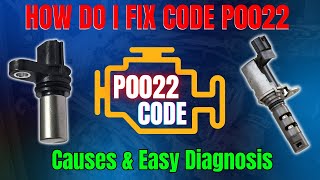
![How to Fix P0022 Engine Code in 4 Minutes [2 DIY Methods / Only $6.53]](https://img.youtube.com/vi/BO7HzbeFxqo/mqdefault.jpg)
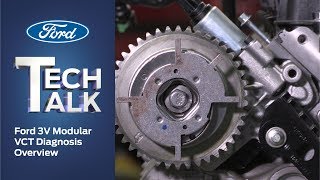
Used OEM Parts in Stock
New Aftermarket Parts Available


The information in this article is provided for general reference and educational purposes only. Vehicle specifications, procedures, and part compatibility can vary by production date, trim level, and region. Always consult your vehicle's factory service manual and verify part numbers before purchasing or performing repairs. Safety-critical components such as airbags, seat belts, and braking systems should be installed by a qualified professional.
- Ford Mustang:
- 🧭 Diagnostic Flowchart
- 🎬 Helpful Videos
- 🛍️ Shop This Part
- What's Unique About the 2011-2014 Ford Mustang
- Symptoms You May Notice
- Most Likely Causes
- Rare But Worth Checking
- Diagnosis Steps
- Parts You'll Likely Need
- Related Codes That Often Appear With This One
- Technical Service Bulletins (TSBs) & Recalls
- Platform-Specific Known Issues
- Mechanic-Grade Diagnostic Values
- Hidden / Shadow Codes Worth Checking
- Scan Tool Commands That Help
- Wiring & Ground Locations
- Real Owner Repair Stories
- OEM Part Supersession History
- Model Year Variations Within This Range
- Other Known Issues on This Vehicle
- Used vs. New Parts: Buying Guide for This Vehicle
- Real Owner Stories
- 2011 Ford Mustang 3.7L V6
- 2011-2014 Ford Mustang 3.7L V6
- 2011-2019 Ford Edge 3.7L V6
- Related OBD-II Codes
- Frequently Asked Questions
- 🎟️ Get 5% Off