

P0022 on 2020-2021 Ford Transit: Causes and Fixes for Over-Retarded Cam Timing
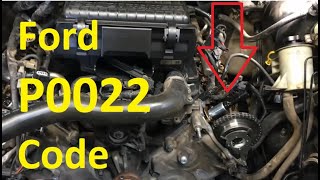
For a 2020-2021 Ford Transit, code P0022 is most often caused by low or dirty engine oil, or a sticking Bank 2 (driver's side) intake VCT solenoid. An oil change and solenoid replacement are the most common fixes, with the solenoid costing between $40 and $100. Ford has acknowledged this issue in TSBs (SSM 50067, TSB 21-2224), which may also point to a required PCM software update.
- First, check your engine oil. Low, old, or dirty oil is the #1 cause of P0022.
- The most likely failed part is the Bank 2 (driver's side) intake VCT solenoid.
- Ford has issued TSBs for this exact problem, pointing to both debris in the oil (SSM 50067) and the need for potential software updates (TSB 21-2224).
- Do not immediately replace the Camshaft Position Sensor; it is rarely the cause of this specific code.
- Replacing the VCT solenoid is a manageable DIY job for many, with a difficulty of 2 out of 5.
What's Unique About the 2020-2021 Ford TRANSIT
For the 2020-2021 Ford Transit, this code is a well-documented issue, with Ford issuing multiple Technical Service Bulletins (TSBs). These bulletins highlight that VCT solenoids can stick due to small debris in the oil (SSM 50067) or that the vehicle may require a PCM software update to correct timing logic (TSB 21-2224). This indicates a known sensitivity in the VCT system on this platform, making oil quality and software checks particularly important. The issue is so common on the 3.5L engine family that it's also heavily reported on platform mates like the F-150.
Diagnostic Flowchart
Tap your situation to follow the diagnostic path that matches what you're seeing on this vehicle.
Symptoms You May Notice
- Illuminated Check Engine Light (MIL)
- Rough or unstable idle, sometimes jumping between 400 and 1100 RPM
- Engine hesitation or lack of power
- Reduced fuel economy
- Difficulty starting the engine
- Rattling noise from the engine bay, especially on cold startup
- Replacing the Camshaft Position Sensor (CMP). The CMP sensor is usually working correctly by reporting the timing error; it is not the cause of the error. While a failing sensor is a possible cause, it's less common than oil or VCT solenoid issues. Diagnose any other CMP sensor codes first, but if only P0022 is present, the sensor is likely not the fault. 🎬 Watch: A breakdown of the 5 most common P0022 fixes.
Most Likely Causes
- Low, Dirty, or Incorrect Viscosity Engine Oil 🔴 High Probability The VCT system is entirely dependent on clean oil at the correct pressure to function. Ford's TSBs specifically mention debris in oil causing issues. Some owners report the code appears soon after an oil change, possibly due to detergents dislodging sludge that then clogs VCT solenoid screens.
How to confirm: Check the oil level on the dipstick and inspect its color and consistency. Review service records for the last oil change date and the type of oil used. An oil change is often the first and cheapest diagnostic step.
Typical fix: Perform an engine oil and filter change using the manufacturer-recommended grade oil (e.g., Motorcraft 5W-30 for EcoBoost).
Est. part cost: $50-$100 - Sticking or Failed VCT Solenoid 🔴 High Probability → Shop Engine Variable Valve Timing (VVT) Solenoid TSB SSM 50067 directly states that small debris can cause the VCT solenoid to stick, leading to this code. The solenoid's internal spool valve can get jammed by debris, preventing it from regulating oil flow correctly.
How to confirm: A scan tool can command the solenoid on and off to check for response (Pinpoint Test HK). A common diagnostic step is to swap the Bank 2 intake solenoid with the Bank 1 intake solenoid and see if the trouble code follows to the other bank (e.g., P0012). This requires removing the driver's side valve cover.
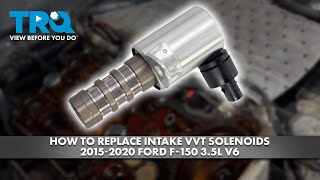
Typical fix: Replace the Bank 2 intake VCT solenoid. It is highly recommended to use OEM Motorcraft parts, as some owners report issues with aftermarket solenoids.
Est. part cost: $40-$100 - Outdated Powertrain Control Module (PCM) Software 🟡 Medium Probability TSB 21-2224 explicitly states that this code may be due to PCM software and that a VCT cycling procedure and/or reprogramming may be required. This TSB was later superseded by TSB 22-2224 for F-150s, indicating an ongoing software refinement process by Ford for this engine family.
How to confirm: A Ford dealership or a qualified shop with a high-end scan tool can check the current software version against the latest available version from Ford.
Typical fix: Update the PCM to the latest calibration. This must be done by a dealership or a properly equipped independent shop. The labor time for this is typically under 1 hour.
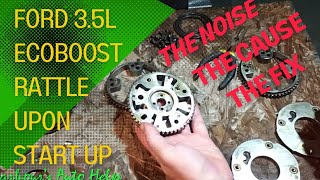
Est. part cost: $0 (if under warranty) - $150 - Worn Timing Components (Chain, Phaser) ⚪ Low Probability While less common on newer vehicles, high mileage or severe lack of maintenance can lead to a stretched timing chain or a failing cam phaser, which will prevent the camshaft from achieving its commanded position. The 3.5L EcoBoost is known for cam phaser rattle on startup, which is a symptom of this issue. A Reddit user with a 2016 F-150 reported a P0022 code was caused by a stretched main chain and weak tensioner, costing $4000 CAD to repair.
How to confirm: This is typically diagnosed after all other causes are ruled out. A distinct rattling noise on cold startup that lasts for a few seconds is a classic symptom of a failing phaser. 🎬 See this video to identify the cam phaser rattle noise. Confirmation requires significant engine disassembly to inspect.
Typical fix: Replace the timing chain, tensioners, guides, and/or cam phasers. This is a labor-intensive job.
Est. part cost: $400-$1500+
Rare But Worth Checking
- Damaged wiring or poor connection at the VCT solenoid: → Shop Engine Variable Valve Timing (VVT) Solenoid Always visually inspect the wiring harness and connector for damage, oil contamination, or looseness before replacing parts. An open or short in the VCT solenoid circuit can mimic a failed part.
Diagnosis Steps
- Check Engine Oil: Verify the oil level is correct and the oil is clean. If low, top it off. If old, dirty, or of unknown viscosity, perform an oil and filter change with the correct OEM-spec oil. This is the cheapest and easiest first step.
- Scan for Codes: Use an OBD-II scanner to confirm P0022 and check for any other related codes. Address any camshaft position sensor circuit codes (like P0345) or crankshaft/camshaft correlation codes first.
- Inspect VCT Solenoid Wiring: Visually inspect the wiring and connector for the Bank 2 intake VCT solenoid (driver's side) for any signs of damage, corrosion, or oil saturation.
- Test the Solenoid (Scan Tool): Using a capable scan tool, monitor the commanded vs. actual cam angle for Bank 2. Per TSB SSM 50067, you can also command the solenoid to cycle 10 times to try and clear debris before replacement.
- Swap Solenoids (Confirmatory Step): A common DIY and professional technique is to swap the Bank 2 intake VCT solenoid with the Bank 1 intake solenoid. Clear the codes and drive the vehicle. If the code returns as P0012 (Bank 1), the solenoid is confirmed to be faulty.
- Check for TSBs/Software Updates: Have a dealer or qualified shop check if TSB 21-2224 applies and if a PCM update is available. This can resolve logic-based faults without replacing parts.
- Mechanical Timing Check: If all else fails, the issue may be mechanical. This involves checking for low oil pressure or inspecting the timing chain and phasers for wear or damage, which is best left to a professional.
Parts You'll Likely Need
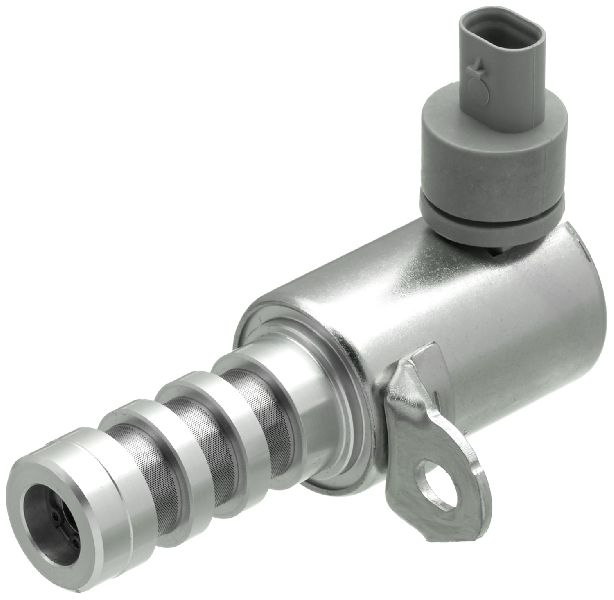
- Engine Variable Valve Timing (VVT) Solenoid
(OEM #HL3Z-6M280-A)— This is the most common component to fail or stick, as identified by owner experiences and Ford's own TSBs (SSM 50067). Debris in the oil is the primary culprit.
Trusted brands: Motorcraft (OEM), Dorman, Walker
OEM price range: $33-$60
Aftermarket price range: $40-$80
Related Codes That Often Appear With This One
- P0021 — This is the 'over-advanced' code for the same camshaft. Seeing both P0021 and P0022 intermittently can strongly indicate a sticking VCT solenoid or an erratic cam phaser.
- P0012 — This is the same 'over-retarded' fault but for Bank 1 (passenger side). If seen with P0022, it could point to a systemic issue like very low oil pressure or severely degraded oil affecting both banks.
- P0016, P0017, P0018, P0019 — These are camshaft/crankshaft correlation codes. Seeing them alongside P0022 increases the likelihood of a mechanical timing issue, such as a stretched timing chain or a failing cam phaser.
Technical Service Bulletins (TSBs) & Recalls
- SSM 54366
- SSM 50067
- TSB 21-2224
Platform-Specific Known Issues
- TSB SSM 50067: Notes that P0022 (and many other VCT codes) can be caused by small debris causing the VCT solenoid to stick. It advises technicians to use a scan tool to cycle the solenoid 10 times to attempt to clear the debris before replacing the part.
- TSB 21-2224: States that P0022 and other timing codes may be due to PCM software on some 2021 vehicles. It recommends performing a VCT cycling procedure or a PCM update to correct the condition.
- TSB SSM 54366: A general bulletin that includes P0022 in a list of VCT-related codes and points technicians to specific diagnostic tests (Pinpoint Test HK) in the workshop manual.
- Owner Experience from Reddit: A user with a 2016 F-150 (same engine family) detailed a frustrating experience where a dealer first replaced the timing chain and tensioner for P0022 at a cost of $4000 CAD. When the problem persisted, the dealer then quoted another $3300 CAD for VCT solenoid replacement, highlighting the importance of correct initial diagnosis.
Mechanic-Grade Diagnostic Values
- VCT Solenoid Internal Resistance — expected: 6.9 to 7.9 Ohms at 68°F (20°C). Some service documents allow a broader 5-14 Ohm range.. Failure: A reading of 0 ohms (short), infinite/OL (open), or significantly outside the specified range indicates a failed solenoid coil.
- VCT Solenoid Connector Voltage — expected: Battery voltage (approx. 12V, or greater than 10.5V) with Key On, Engine Off.. Failure: Low or no voltage at the power supply pin (often a blue-green wire) points to a wiring issue, a blown fuse (F16 in battery junction box), or a PCM power relay problem.
- Ford IDS Live Data PID: VCT_ERR — expected: Should hover close to 0° at a stable, warm idle.. Failure: A sustained deviation of more than +/- 5 degrees indicates a VCT system fault. Large, erratic fluctuations can point to a sticking solenoid or failing phaser.
- Engine Oil Pressure (Mechanical Gauge) — expected: Minimum of 15-25 PSI at hot idle.. Failure: Pressure below the minimum specification can cause erratic camshaft position and trigger VCT codes.
Hidden / Shadow Codes Worth Checking
- Mode 6, Test ID $81: This test specifically monitors the Bank 2 variable camshaft timing position. (see via A high-level scan tool with Mode 6 capabilities, such as the Ford IDS. Failing values in this test can confirm a VCT system issue, sometimes even before a persistent P0022 code is set.)
Scan Tool Commands That Help
- Ford IDS (Integrated Diagnostic System): Output State Control for VCT Solenoid — This bidirectional command allows a technician to manually cycle the VCT solenoid on and off to check its mechanical response. Per TSB SSM 50067, cycling it 10 times can potentially dislodge small debris and may fix the fault without replacing the part.
Wiring & Ground Locations
- VCT Solenoid Circuit — The Bank 2 intake VCT solenoid is located under the driver's side valve cover.. The solenoid has a two-wire connector. One wire (often blue-green) is the power supply, which receives battery voltage from fuse F16 in the battery junction box via the PCM power relay. The other wire is the control line, which the PCM provides a ground to in order to activate the solenoid. A failure in this circuit will set a code.
Real Owner Repair Stories
- Reddit user on r/MechanicAdvice (2009 Ford Flex (3.5L engine family)) — Check Engine Light with codes P0012 and P0022 appeared the day after an oil change on a recently purchased vehicle.
❌ Tried (didn't work) Initially planned to replace VCT sensors/solenoids.
✅ What actually fixed it The Check Engine Light turned off on its own after a few days of driving. The presumed cause was that the fresh, high-detergent oil dislodged sludge or debris that temporarily clogged a VCT screen, which then broke free. - Ford F150 Forum user (2013 F-150 EcoBoost 3.5L) — Check Engine Light with codes P0012 and P0022, followed by a noticeable lack of power.
❌ Tried (didn't work) Replaced all 4 VCT solenoids, which only resolved the issue for about 1,500-2,000 miles before the codes returned.
✅ What actually fixed it The issue was not resolved by solenoid replacement alone, indicating a deeper mechanical problem such as timing chain stretch or failing phasers, which is the next logical diagnostic step when new solenoids do not fix the problem.
When the Usual Fixes Don't Work
- While worn timing components are listed as a potential cause, it should not be the first assumption. A well-documented case on a 2016 F-150 with the same engine family involved a dealership performing a $4,000 timing chain replacement for a P0022 code, which did not resolve the issue. The problem persisted, and the dealer then quoted a VCT solenoid replacement, indicating that the more common and less expensive fault (solenoids) was likely the root cause all along and was misdiagnosed as the more severe one.
OEM Part Supersession History
BL3Z-6M280-B (or similar previous revisions)→HL3Z-6M280-A— Part has been updated over time for various Ford 3.5L and 5.0L applications. HL3Z-6M280-A is a common current part number.
Heads up: Always verify the part number with the vehicle's VIN. While many solenoids look identical, there can be internal differences. Using an incorrect part can lead to persistent codes.
Model Year Variations Within This Range
- 2021: TSB 21-2224 specifically notes that on some 2021 model year vehicles, the P0022 code may be caused by a PCM software logic issue rather than a mechanical fault. The prescribed fix is a PCM software update and/or performing a VCT cycling procedure with a scan tool.
Helpful Videos
We Have This Part in Stock


The information in this article is provided for general reference and educational purposes only. Vehicle specifications, procedures, and part compatibility can vary by production date, trim level, and region. Always consult your vehicle's factory service manual and verify part numbers before purchasing or performing repairs. Safety-critical components such as airbags, seat belts, and braking systems should be installed by a qualified professional.
- Ford TRANSIT:
- 🧭 Diagnostic Flowchart
- 🎬 Helpful Videos
- 🛍️ Shop This Part
- What's Unique About the 2020-2021 Ford TRANSIT
- Symptoms You May Notice
- Most Likely Causes
- Rare But Worth Checking
- Diagnosis Steps
- Parts You'll Likely Need
- Related Codes That Often Appear With This One
- Technical Service Bulletins (TSBs) & Recalls
- Platform-Specific Known Issues
- Mechanic-Grade Diagnostic Values
- Hidden / Shadow Codes Worth Checking
- Scan Tool Commands That Help
- Wiring & Ground Locations
- Real Owner Repair Stories
- When the Usual Fixes Don't Work
- OEM Part Supersession History
- Model Year Variations Within This Range
- 🎟️ Get 5% Off