

P0022 on 2015-2021 Ford Transit Connect: Cam Timing Causes and Fixes
P0022 indicates an over-retarded intake camshaft on Bank 2. However, the Transit Connect uses inline-4 engines which only have Bank 1. This code likely points to a problem with the Bank 1 intake cam timing, such as a sticking VCT solenoid due to dirty oil or debris. The most common fix is cleaning or replacing the VCT solenoid and changing the engine oil and filter using the correct grade of oil.
- P0022 refers to 'Bank 2', but your Transit Connect only has 'Bank 1'. The underlying issue is an over-retarded intake camshaft.
- The most likely cause is a sticking VCT solenoid or low/dirty engine oil. Always start your diagnosis here.
- Change your engine oil and filter before replacing any parts. Use the correct Motorcraft-specified oil.
- If an oil change doesn't fix it, the next step is to clean or replace the intake VCT solenoid.
- Do not replace expensive timing components like phasers or chains unless the simpler fixes have been ruled out.
What's Unique About the 2015-2021 Ford TRANSIT CONNECT
The 2015-2021 Ford Transit Connect was primarily equipped with inline-four-cylinder (I-4) engines, such as the 2.5L Duratec and 2.0L GDI. An inline engine has only one bank of cylinders, referred to as Bank 1. Therefore, a P0022 code for 'Bank 2' should not technically be possible on this vehicle. Its appearance is often due to generic PCM software logic that can still report a Bank 2 code, even on an I-4 engine. It is far more likely you are dealing with the underlying issue of over-retarded timing on Bank 1, which would typically set a P0012 code. 🎬 Watch: Expert tips for diagnosing P0012 on Ford 2.0L engines. Regardless of the code number, the causes and diagnostic steps for a sticking VCT system are the same.
Diagnostic Flowchart
Tap your situation to follow the diagnostic path that matches what you're seeing on this vehicle.
Symptoms You May Notice
- Check Engine Light is on
- Rough idle, sometimes getting worse as the engine warms up
- Engine stalling, especially when coming to a stop or at low RPMs
- Reduced engine power and acceleration
- Poor fuel economy
- Rattling, ticking, or knocking noises from the engine bay, which may be most noticeable at idle when hot
- Replacing the camshaft position sensor first. While possible, it's less common for the sensor to be the root cause compared to the VCT solenoid or oil issues. Diagnose all CMP sensor codes (e.g., P0340) first if they are present.
- Immediately replacing the cam phaser without first diagnosing the VCT solenoid and checking oil quality. This is an expensive and often unnecessary first step.
Most Likely Causes
- Low or Dirty Engine Oil 🔴 High Probability The Variable Camshaft Timing (VCT) system is hydraulic and relies on clean oil at the correct pressure to function. Sludge and contaminants from old, dirty, or low oil can clog the small passages in the VCT solenoids, causing them to stick.
How to confirm: Check the oil level on the dipstick and inspect its color and consistency. If the level is low or the oil is dark, gritty, or sludgy, this is the first and most critical step.
Typical fix: Perform an engine oil and filter change using the correct grade of oil specified by Ford (e.g., Motorcraft). In some cases, an engine flush may be recommended if significant sludge is present, but fresh oil is the priority.
Est. part cost: $40-$80 - Sticking or Failed VCT Solenoid (Oil Control Valve) 🔴 High Probability → Shop Engine Variable Valve Timing (VVT) Solenoid Ford Technical Service Bulletins (TSBs) #SSM 47170 and #SSM 50067 explicitly state that small debris can cause the VCT solenoid to stick, triggering this family of codes. This is the most common component failure for this issue.
How to confirm: After checking the oil, this is the next logical part to inspect. You can test the solenoid's resistance with a multimeter (a common spec is between 7-14 ohms). Applying 12v to see if it actuates with an audible click is another test. Swapping the intake and exhaust solenoids (if identical) to see if the code changes (e.g., to an exhaust code like P0024) is a common and effective diagnostic trick.
Typical fix: Remove and clean the solenoid with brake cleaner, paying attention to the screens. If cleaning doesn't work or it fails electrical tests, it must be replaced. Given the relatively low cost, replacement is often recommended over cleaning.
Est. part cost: $30-$100 - Failing Camshaft Phaser 🟡 Medium Probability → Shop Engine Camshaft The phaser is the mechanical gear that actually adjusts the cam timing. Over time, the internal locking pins or vanes can wear out or get stuck by debris, preventing it from moving correctly or returning to its base position.
How to confirm: This is more difficult to confirm without disassembly. It's typically diagnosed after ruling out the oil and VCT solenoid. A scan tool that can graph commanded vs. actual cam angle can show the phaser failing to respond to the PCM's commands. A distinct rattling or diesel-like sound from the front of the engine is also a strong indicator.
Typical fix: Replacement of the camshaft phaser, which is a labor-intensive job that also requires replacing the timing chain and related components.
Est. part cost: $100-$300 for the phaser kit
Rare But Worth Checking
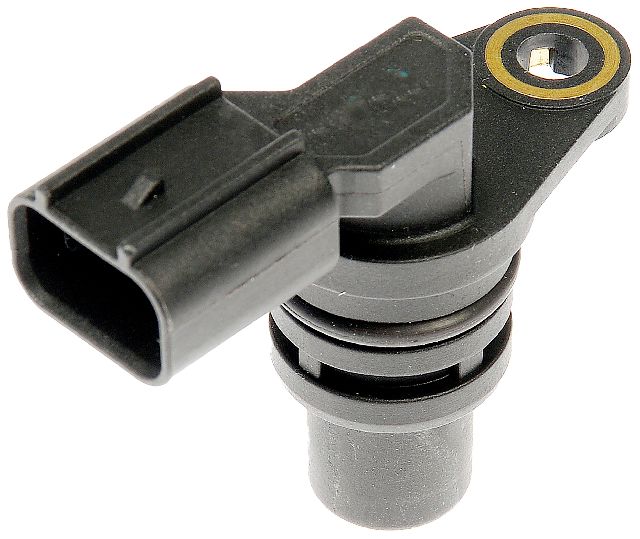
- Damaged Camshaft Position Sensor Wiring: → Shop Engine Camshaft Position Sensor The sensor itself is less likely to fail than the solenoid, but its wiring can be a point of failure. A forum user reported solving P0022 after finding and repairing multiple poor splices in the cam position sensor harness from a previous repair. Always inspect the wiring harness for damage, especially if other work has been done in the area. The VCT solenoid connector pigtail itself can also fail; the OEM part number for the connector wire is 3U2Z-14S411-KDA (WPT349).
- Worn Timing Chain or Guides: → Shop Engine Timing Chain If a timing chain is stretched or a guide is broken, the camshaft timing will be physically incorrect, which can trigger this code. This is usually accompanied by rattling noises, especially on startup, and is a major repair. 🎬 Watch: How to identify timing chain rattle and related codes.
Diagnosis Steps
- Verify the code with a reliable OBD-II scanner. Check for any other related codes.
- Check the engine oil level and condition. If low, top it off. If old or dirty, perform a full oil and filter change with the manufacturer-specified oil (e.g., Motorcraft 5W-20 Synthetic Blend). Clear the codes and test drive to see if the problem returns.
- If the code returns, locate the intake VCT solenoid on the valve cover. On the 2.5L and 2.0L, there are two solenoids at the front of the engine; the intake solenoid is typically the one closer to the front of the vehicle. Inspect the wiring and connector for damage or corrosion.
- Test the VCT solenoid. A common resistance value is between 7 and 14 ohms. You can also apply 12 volts and listen for a distinct 'click'. The most practical test is to swap it with the exhaust solenoid (confirm they are the same part number) and see if the code follows to the exhaust cam (e.g., P0024). If it does, the solenoid is bad.
- If the solenoid seems stuck, remove it and inspect its screens for sludge or debris. Clean it thoroughly with brake cleaner and re-test. If it's still faulty or the screens are damaged, replace it. The OEM part number for many 2.0L/2.5L applications is CJ5Z-6M280-A.
- If the solenoid and oil are good, the issue may be more complex. Inspect the camshaft position sensor and its wiring for any signs of damage.
- If all external components check out, the problem likely lies with the camshaft phaser or the timing chain itself. This requires more advanced diagnostics, likely by a professional, and involves using a scan tool to monitor commanded vs. actual cam angles.
- Per Ford TSB #SSM 54366, a technician may use Pinpoint Test HK in the official workshop manual for in-depth electrical diagnosis.
Parts You'll Likely Need
- Variable Camshaft Timing (VCT) Solenoid
(OEM #CJ5Z-6M280-A)— This is the most frequent cause of failure for this code, often due to clogging from oil debris, as noted in Ford TSBs #SSM 47170 and #SSM 50067.
Trusted brands: Motorcraft, Dorman, Gates
OEM price range: $50-$100
Aftermarket price range: $30-$70 - Engine Oil and Filter — The VCT system is entirely dependent on clean oil at the proper pressure. This is the first and most crucial step in addressing any VCT-related trouble code.
Trusted brands: Motorcraft
OEM price range: $40-$80
Aftermarket price range: $35-$65
Related Codes That Often Appear With This One
- P0012 — This is the code for 'Intake Camshaft Position Timing - Over-Retarded (Bank 1)'. On an I-4 engine like the Transit Connect's, this is the code you would expect to see for this issue. Seeing P0012 and P0022 together strongly points to a systemic issue like low oil pressure or contaminated oil affecting the entire VCT system.
- P0340/P0341 — These codes relate to the camshaft position sensor circuit. A problem with the sensor or its wiring can prevent the PCM from knowing the camshaft's true position, leading to related timing codes.
- P0021 — This is the code for an over-advanced condition on the same camshaft bank. Seeing both P0021 and P0022 can indicate an erratic VCT solenoid or phaser that is not controlling timing properly in either direction.
Technical Service Bulletins (TSBs) & Recalls
- SSM 54366: Notes that various P00XX timing codes may occur and directs technicians to specific diagnostic tests (Pinpoint Test HK) in the workshop manual.
- SSM 47170: States that codes like P0022 may be due to small debris causing the VCT solenoid to stick and advises attempting to clear debris before replacement.
- SSM 50067: Reiterates that small debris can cause the VCT solenoid to stick, leading to codes like P0022.
Platform-Specific Known Issues
- Confusion with P0012: Owners frequently report P0022 on forums when the expected code for the Transit Connect's I-4 engine would be P0012 (Bank 1). This is a known quirk of the PCM's generic code logic. The diagnostic and repair procedures for both codes are identical, focusing on the oil and VCT system for the single cylinder bank.
Mechanic-Grade Diagnostic Values
- VCT Solenoid Internal Resistance — expected: 7 to 14 Ohms at approximately 68°F (20°C).. Failure: A reading of 0 ohms (short circuit) or infinite/OL (open circuit) indicates a failed solenoid.
- VCT Solenoid Connector Voltage (Key On, Engine Off) — expected: Battery voltage (approx. 12.0-12.6V) on the power supply pin.. Failure: No voltage indicates a problem with the power supply circuit, fuse, or PCM power relay.
Scan Tool Commands That Help
- Ford IDS (Integrated Diagnostic System): Active Command - Cycle VCT Solenoid — As per Ford TSBs, this command should be used to cycle the affected VCT solenoid multiple times (e.g., 10 times) to dislodge small debris that may be causing it to stick. This can potentially fix the issue without replacing the part.
- Ford IDS (Integrated Diagnostic System): Power Balance Test — If rough idle or misfires accompany the P0022 code, the Power Balance test can help determine if a specific cylinder is underperforming, which could help differentiate between a systemic VCT issue and an isolated cylinder problem.
Wiring & Ground Locations
- Engine Block Ground — A primary ground point for the engine and its sensors is a ground strap or cable from the engine block directly to the chassis or battery negative terminal.. A poor engine ground can cause erratic sensor readings and incorrect actuator operation, including the VCT solenoids and camshaft position sensors. Ensure this connection is clean, tight, and free of corrosion.
- PCM Ground — The Powertrain Control Module (PCM) has multiple ground wires in its main connectors. On many Ford vehicles, these ground wires are black and often splice together before connecting to one or two dedicated chassis ground points.. The PCM controls the VCT solenoids by modulating their ground circuit. A faulty PCM ground can lead to improper solenoid function and trigger timing codes.
- Fuse F27 (Engine Compartment Fuse Box) — In the engine compartment fuse box, fuse F27 (10A) is listed for the Powertrain Control Module on some Transit Connect models.. This fuse may supply power to the PCM, which in turn powers the VCT system. Verifying this fuse is intact is a crucial early electrical check.
Real Owner Repair Stories
- Ford Truck Enthusiasts Forums (2006 Ford F-150 5.4L (Note: Different vehicle, but illustrates a critical diagnostic path for P0012/P0022)) — Engine stalling when hot at idle, rattling/clanking noises, codes P0012 and P0022.
❌ Tried (didn't work) Replaced VCT solenoid, Replaced all spark plugs, Performed a complete timing job including chains, guides, tensioners, and phasers, Replaced oil pump with a high-volume unit (Melling M340), Cleaned oil pickup tube
✅ What actually fixed it The issue persisted after a complete timing system overhaul. The final diagnosis pointed to worn main crankshaft bearings causing a loss of oil pressure when the engine was hot and oil thinned out. The ultimate fix required an engine teardown to replace the bearings.
OEM Part Supersession History
3L3Z-6M280-EA→8L3Z-6M280-A, then 8L3Z-6M280-B— Updated design to improve durability and resistance to debris. This applies to older Ford V8 engines but illustrates Ford's practice of updating VCT solenoids.
Heads up: While the CJ5Z-6M280-A is correct for the Transit Connect's 2.0L/2.5L engines, it's important to always verify the part number for the specific vehicle VIN, as running changes can occur.
Model Year Variations Within This Range
- 2015-2018: Primarily equipped with the 2.5L i-VCT I-4 engine. This is a port-injected engine known for its durability.
- 2019-2021: The standard engine became the 2.0L GDI I-4 with an 8-speed automatic transmission. This is a gasoline direct injection (GDI) engine. The 2.5L was still available for fleet sales. While the VCT system functions similarly, diagnostic approaches for fuel or carbon-related issues would differ between the GDI and port-injected engines.
Helpful Videos
We Have This Part in Stock


The information in this article is provided for general reference and educational purposes only. Vehicle specifications, procedures, and part compatibility can vary by production date, trim level, and region. Always consult your vehicle's factory service manual and verify part numbers before purchasing or performing repairs. Safety-critical components such as airbags, seat belts, and braking systems should be installed by a qualified professional.
- Ford TRANSIT CONNECT:
- 🧭 Diagnostic Flowchart
- 🎬 Helpful Videos
- 🛍️ Shop This Part
- What's Unique About the 2015-2021 Ford TRANSIT CONNECT
- Symptoms You May Notice
- Most Likely Causes
- Rare But Worth Checking
- Diagnosis Steps
- Parts You'll Likely Need
- Related Codes That Often Appear With This One
- Technical Service Bulletins (TSBs) & Recalls
- Platform-Specific Known Issues
- Mechanic-Grade Diagnostic Values
- Scan Tool Commands That Help
- Wiring & Ground Locations
- Real Owner Repair Stories
- OEM Part Supersession History
- Model Year Variations Within This Range
- 🎟️ Get 5% Off