

P0022 on 2017-2022 Genesis G90: Intake Cam Timing Over-Retarded Causes and Fixes
On the 2017-2022 Genesis G90, code P0022 is most often caused by low or dirty engine oil. For the 3.3T V6, this is frequently due to a recalled turbo oil feed pipe leak. If the oil level is correct, the next most likely cause is a faulty Bank 2 (driver's side) intake Oil Control Valve (OCV), which is a relatively simple part to replace.
- First, check your engine oil level and condition. This is the most common and cheapest fix.
- If you have the 3.3L V6, contact a Genesis dealer with your VIN to check if the critical turbo oil feed pipe recall (019G) has been performed.
- The most likely failed part is the Bank 2 (driver's side) intake Oil Control Valve (OCV). You can diagnose it for free by swapping it with the passenger side OCV.
- Do not replace the camshaft position sensor as a first step; it is rarely the cause of this code.
What's Unique About the 2017-2022 Genesis G90
For the 3.3L T-GDi V6 engine, this code has a very specific and serious potential cause. Genesis issued recall 019G (NHTSA 24V-191) for a left (Bank 2) turbocharger oil feed pipe that can crack from heat fatigue and leak oil. This leak causes the low oil level that triggers code P0022 and also poses a fire risk. This recall expands and replaces a previous one (19V-538), and the remedy involves replacing the original pipe with a more durable stainless steel version. For both the 3.3L and 5.0L engines, the CVVT system is highly sensitive to oil level and quality, making regular oil changes with the correct specification of full synthetic oil critical.
Symptoms You May Notice
- Check Engine Light is on
- Rough or unstable idle
- Reduced engine power and poor acceleration
- Engine stalling, especially at low speeds
- Decreased fuel economy
- Rattling or knocking noises from the engine, especially on startup
- For 3.3T models: Visible oil smoke or a burning oil smell from the engine bay
- Replacing the Camshaft Position Sensor (CMP). The CMP sensor reads the camshaft's position, but it doesn't control it. P0022 indicates a mechanical timing lag (the cam isn't where it's supposed to be), which is almost always caused by an oil pressure/flow issue or a faulty OCV, not a bad sensor reading. Swapping sensors is a valid diagnostic step, but the sensor is rarely the cause.
Most Likely Causes
- Low or Dirty Engine Oil 🔴 High Probability For the 3.3T V6, a known recall (NHTSA 24V-191) for a cracking Bank 2 turbo oil feed pipe makes low oil level a primary concern. Both engines' CVVT systems are hydraulic and highly sensitive to oil level and viscosity, and dirty oil can clog the small passages in the OCV solenoids.
How to confirm: Check the engine oil dipstick. The oil should be within the full range and not appear overly dark, thick, or sludgy. For the 3.3T, inspect the area around the driver's side turbocharger for signs of oil leakage, which is a tell-tale sign of the recalled pipe failure.
Typical fix: If the oil is low, top it off and investigate the cause of the oil loss. If the oil is old or dirty, perform a complete oil and filter change using a high-quality full synthetic oil that meets Genesis specifications (typically 5W-30).
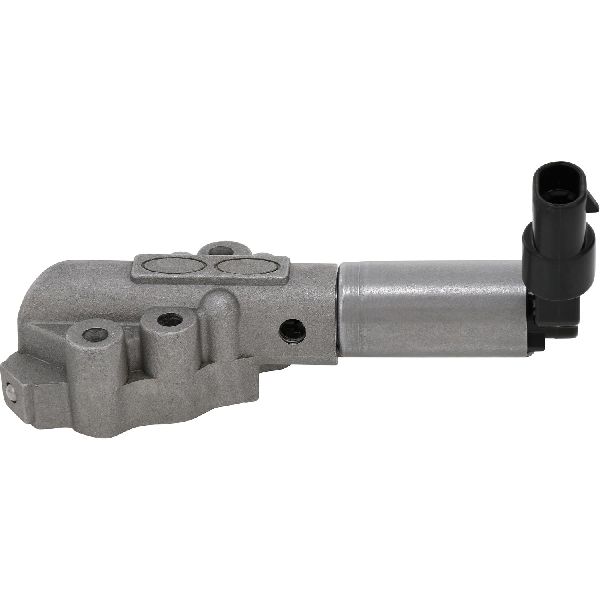
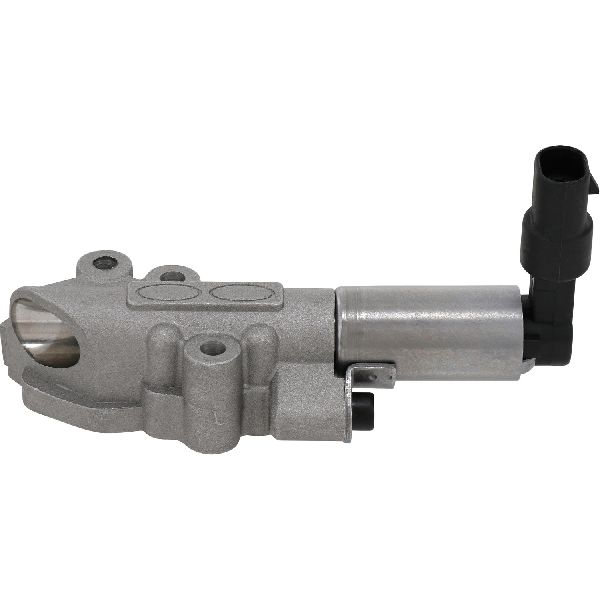
Est. part cost: $50-$100 - Faulty Bank 2 Intake Oil Control Valve (OCV/VVT Solenoid) 🟡 Medium Probability → Shop Engine Variable Valve Timing (VVT) Solenoid These solenoids control oil flow to the cam phasers and can become clogged with oil sludge or fail electrically over time. This is a very common failure point on the Lambda engine family.
How to confirm: Swap the Bank 2 (driver's side) intake OCV with the identical Bank 1 (passenger's side) intake OCV. Clear the codes and drive the vehicle. If the code changes to P0012 (Bank 1 Over-Retarded), the OCV is confirmed to be faulty. You can also test the solenoid's resistance with a multimeter (should be around 6.9-7.9 ohms at 68°F).
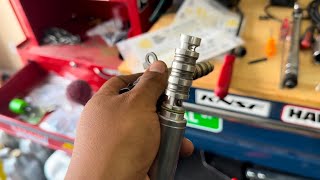
Typical fix: Replace the Bank 2 intake OCV. 🎬 Watch this step-by-step OCV solenoid replacement guide It is located on the front of the driver's side valve cover and is typically secured by a single 10mm bolt, making it relatively easy to access.
Est. part cost: $65-$180
Rare But Worth Checking
- Stretched Timing Chain or Failed Tensioner: → Shop Engine Timing Chain While less common than oil or OCV issues on these modern engines, a rattling noise for a few seconds on a cold start is a strong indicator of a failing timing chain tensioner. If left unaddressed, the chain can jump a tooth, leading to this code and potentially severe engine damage.
- Failed Camshaft Phaser (CVVT Actuator): → Shop Engine Camshaft The phaser is the mechanical gear on the end of the camshaft that actually adjusts the timing. It can get stuck due to internal wear or oil contamination. This is a more complex and expensive repair than an OCV and is usually diagnosed after all other possibilities are exhausted.
Diagnosis Steps
- Check Engine Oil Level and Condition: Pull the dipstick. If the oil is low or very dirty, address this first. For 3.3T models, check for the recalled turbo oil line leak on the driver's side. This is the most common cause.
- Scan for Other Codes: Use an OBD-II scanner to confirm P0022 and check for any other related codes, especially P0524 (low oil pressure).
- Inspect OCV Wiring: Visually inspect the electrical connector and wiring for the Bank 2 (driver's side) intake OCV. Ensure it is secure and free of damage or corrosion.
- Perform the 'Swap Test': Swap the Bank 2 (driver's side) intake OCV with the Bank 1 (passenger's side) intake OCV. They are identical parts (P/N 24355-3L100) and easily accessible on the front of the valve covers.
- Re-evaluate Codes: Clear the codes with the scanner and drive the vehicle. If the code returns as P0012, the OCV is faulty and needs to be replaced. If P0022 returns, the OCV is not the issue.
- Test the Camshaft Position Sensor: While less likely, you can swap the Bank 2 and Bank 1 camshaft position sensors to see if the code follows the sensor.
- Seek Professional Diagnosis: If the above steps do not resolve the issue, the problem is likely mechanical, such as a stretched timing chain or a faulty camshaft phaser. This requires more in-depth diagnosis by a professional mechanic.
Parts You'll Likely Need
- Engine Oil and Filter — The CVVT system is entirely dependent on oil pressure. Low, dirty, or incorrect viscosity oil is the most common cause of this code. Use a full synthetic 5W-30 oil meeting manufacturer specifications.
Trusted brands: Pennzoil, Mobil 1, Castrol (ensure it meets Genesis specifications)
OEM price range: $70-$120
Aftermarket price range: $50-$90 - Intake Oil Control Valve (VVT Solenoid) - Bank 2 (Driver's Side)
(OEM #24355-3L100)— This solenoid is the most common component to fail after oil-related issues. It gets clogged or fails electrically, preventing proper oil flow to the cam phaser.
Trusted brands: Hyundai/Genesis OE, Denso, Hitachi
OEM price range: $120-$180
Aftermarket price range: $65-$130
Related Codes That Often Appear With This One
- P0012 — This is the equivalent code for Bank 1 ('Intake Camshaft Position Timing - Over-Retarded'). It will appear if you swap a faulty Bank 2 OCV to Bank 1 as a diagnostic step, confirming the OCV is the problem.
- P0018 — This code indicates a correlation issue between the crankshaft and the Bank 2 intake camshaft. It can appear alongside P0022 if the timing deviation is significant or points towards a more serious mechanical timing problem like a stretched timing chain.
- P0524 — This code for 'Engine Oil Pressure Too Low' is a smoking gun. If seen with P0022, it strongly suggests the root cause is a major oil leak (like the recalled 3.3T turbo line), a failing oil pump, or severe oil sludge, and not just a faulty OCV.
Technical Service Bulletins (TSBs) & Recalls
- NHTSA ID: 24V-191 / Hyundai Recall 019G - Addresses a cracking left turbocharger oil feed pipe on 2017-2022 G90 3.3T models, which can cause oil leaks leading to low oil pressure and this code. This recall supersedes the previous recall 19V-538.
Platform-Specific Known Issues
- 3.3T V6 Turbo Oil Feed Pipe Recall: For the 3.3L T-GDi V6: Recall 019G (NHTSA ID: 24V-191) was issued for the left (Bank 2) turbocharger oil feed pipe, which can crack from heat, leak oil, and cause low oil pressure. This is a direct and common cause of code P0022 on this engine and should be checked with a dealer. The fix involves replacing the pipe with a more durable stainless steel part.
Mechanic-Grade Diagnostic Values
- Intake Oil Control Valve (OCV) Coil Resistance — expected: 6.9-7.9 Ohms at 68°F (20°C) for Denso-supplied parts. Some sources indicate a 6.7-7.7 Ohm range for Delphi-supplied parts.. Failure: A reading of infinity (open circuit) or near-zero (short circuit) indicates a failed solenoid coil.
- OCV Electrical Connector Voltage — expected: With Key On, Engine Off (KOEO), one of the two pins in the connector should show battery voltage (~12V).. Failure: Absence of voltage points to a wiring issue, a blown fuse, or a problem with the ECM power supply, not the OCV itself.
- Live Data: Camshaft Position Error (Desired vs. Actual) — expected: The value should be near 0 degrees at idle or when no timing change is commanded by the ECM.. Failure: The ECM may log the P0022 fault if the difference between the desired and actual camshaft position exceeds 15-20 Crank Angle Degrees (CAD) for a calibrated period.
Hidden / Shadow Codes Worth Checking
- Mode 6 Data (e.g., TID $51, $52): Hyundai/Genesis vehicles do not use proprietary 'shadow codes' common to German manufacturers. However, a professional scan tool can access Mode 6 data, which shows results from non-continuous system self-tests. This can reveal if the CVVT system is operating at the edge of its acceptable parameters, even before a hard fault code is set. (see via Professional-grade scan tool with Mode 6 functionality.)
Scan Tool Commands That Help
- Hyundai GDS (Global Diagnostic System) or equivalent professional scanner: Active Test / Actuation Test for CVVT Oil Control Valve — This is a crucial bidirectional test to confirm if the OCV is mechanically stuck or electrically failed. With the engine idling, the technician can command the solenoid to activate. A functional OCV and phaser will cause the engine to stumble, hesitate, or stall. If there is no change in engine operation, it confirms a fault in the OCV, its oil passages, or the cam phaser itself, saving significant diagnostic time.
- Hyundai GDS (Global Diagnostic System) or equivalent professional scanner: Special Function: Resetting Adaptive Values — This function should be performed after replacing any CVVT system component, such as an OCV or cam phaser. It clears the learned values stored in the ECM, allowing the system to re-adapt to the new component's operational characteristics.
Wiring & Ground Locations
- Engine Compartment Ground Points (e.g., G01) — General engine grounds are typically located on the inner fenders, firewall, and engine block itself. For example, a common Hyundai ground point (G01) is located on the left inner fender in the engine compartment.. A poor ground for the engine harness can cause erratic sensor readings and incorrect solenoid operation. While not a common cause, if electrical testing of the OCV connector shows inconsistent voltage, checking the integrity of the main engine grounds is a valid next step.
- Engine Control Fuse — Located in the engine compartment fuse/relay box. The cover label will identify fuses for 'ECU', 'ECM', or 'Engine Control'.. The OCV receives its power via a circuit controlled by the ECM. A blown fuse can cut power to this circuit, preventing the OCV from functioning and causing a P0022 code. This should be checked if no voltage is present at the OCV connector during testing.
Real Owner Repair Stories
- Go-Parts Repair Database (Genesis 5.0L V8 (year not specified, but within Tau V8 family)) — Check Engine Light with code P0022.
❌ Tried (didn't work) Initial diagnosis pointed towards the OCV, but the mechanic wanted to confirm before replacing parts.
✅ What actually fixed it Using a scan tool's bidirectional 'actuation test' on the Bank 2 OCV, the mechanic confirmed the valve was not responding to commands. Replacing the faulty Bank 2 intake OCV resolved the P0022 code. This highlights the value of bidirectional testing over immediately swapping parts.
OEM Part Supersession History
24355-3L100→No known supersession. This part number remains current.— N/A
Heads up: Some online parts catalogs may contain errors. One vendor site noted '2018 Model Years, Intake Control Valve Solenoids Are Not Used,' which is incorrect for these engines and should be disregarded. The part is used across the entire 2017-2022 model range.
Model Year Variations Within This Range
- 2017-2022: While the G90 received a significant cosmetic and infotainment facelift for the 2020 model year, the core 3.3L T-GDi V6 and 5.0L Tau GDi V8 powertrains, including the CVVT system, OCVs, and timing components, did not undergo changes that would alter the causes or diagnosis for code P0022. The recall for the 3.3T turbo oil line applies to the entire generation.
Diagnostic Flowchart
Other Known Issues on This Vehicle
Issues unrelated to this code that are worth knowing about as an owner of this generation:
- Cracking Left (Bank 2) Turbocharger Oil Feed Pipe (3.3T) 🔴 High — Common enough to warrant a major safety recall (NHTSA 24V-191). Affects 2017-2022 models with the 3.3L V6. (Ref: NHTSA 24V-191 / Hyundai 019G)
- Starter Solenoid Water Intrusion 🔴 High — Subject of a recall (NHTSA 22V-690) on some 2017-2019 models. Water can enter the starter solenoid, potentially causing an electrical short and engine compartment fire. (Ref: NHTSA 22V-690 / Hyundai 013G)
- Panoramic Sunroof Creaking/Rattling 🟡 Low — A widely reported annoyance among owners of G70, G80, and G90 models. Often requires dealer intervention with lubrication or adjustments. (Ref: TSBs exist for related models, though not always a permanent fix.)
- Steering Wheel Column Noises (Creak/Click) 🟡 Low — Some owners report a creaking or clicking noise when turning the steering wheel at low speeds. One user notes it can be related to how the airbag is mounted.
- Air Suspension Strut and Compressor Failure 🟠 Medium — Though not widely reported in NHTSA complaints, specialized repair sites note that air suspension systems are a known failure point on luxury vehicles, with struts developing leaks and compressors overworking, particularly after 60,000 miles.
Used vs. New Parts: Buying Guide for This Vehicle
When a used part is the smart pick: For an Oil Control Valve (OCV), a used OEM part from a reputable salvage yard with a low-mileage donor vehicle can be a cost-effective option. Since it's an external bolt-on part, it's easy to replace if the used part is faulty.
Donor-vehicle mileage cap: roughly under 60000 miles for the part to have meaningful remaining life.
What to inspect on the donor part:
- Ask for the VIN of the donor car to verify mileage.
- Visually inspect the mesh screens on the solenoid for any signs of sludge or metallic debris.
- If possible, test the resistance of the used solenoid with a multimeter before purchase; it should be within the 6.9-7.9 Ohm range.
OEM-only on this vehicle (don't cheap out):
- Timing Chain
- Timing Chain Tensioners and Guides
- Camshaft Phasers (CVVT Actuators)
- Oil Pump
- Oil Filter - It is strongly recommended to use a genuine OEM filter, especially on the 5.0L V8, to avoid potential oil pressure issues that can trigger this code.
Aftermarket brands forum-validated for this vehicle:
- Denso
- Hitachi (Often the Original Equipment Manufacturer)
Brands owners have reported issues with on this vehicle:
- Unnamed, low-cost 'knockoff' brands, especially from online marketplaces. These parts often lack the precise calibration and durability required for the CVVT system, leading to premature failure.
Real Owner Stories
Aggregated from forums and TSBs cited above. Mileages and costs reflect what owners reported in those sources.
2017-2022 Genesis G90 3.3L T-GDi V6
Symptoms: Visible oil smoke or a burning oil smell coming from the engine bay, accompanied by a Check Engine Light.
What fixed it: Replacement of the left (Bank 2) turbocharger oil feed pipe with a more durable stainless steel part under recall 019G.
Source hint: NHTSA ID: 24V-191 / Hyundai Recall 019G
2018-2023 Kia Stinger GT (3.3L T-GDi V6)
Symptoms: The vehicle experienced over-retarded camshaft timing on Bank 2, throwing code P0022.
What fixed it: Swapping the Bank 2 intake OCV with the Bank 1 OCV confirmed the solenoid was faulty; replacing the OCV (P/N 24355-3L100) resolved the issue.
Source hint: Go-Parts Stinger/G70 P0012/P0022 Analysis
2019-2022 Genesis G70 3.3L T-GDi V6
Symptoms: Oil leak specifically noted on the driver's side oil feed line.
What fixed it: Dealer intervention to address the recall on the left driver's side oil feed line.
Source hint: Reddit: Common Issues on G70, G80, or G90
Related OBD-II Codes
Frequently Asked Questions
Is there a recall for my 2017-2022 Genesis G90 3.3T that could cause code P0022?
Can I test the Bank 2 Oil Control Valve myself before buying a new one?
What specific part number do I need for the G90 Oil Control Valve?
Does the 5.0L Tau V8 engine have the same turbo pipe issue as the 3.3L V6?
Why is my G90 making a rattling noise on startup along with the P0022 code?
Is the P0022 code related to the starter solenoid recall on my 2017 G90?
Helpful Videos

We Have This Part in Stock


The information in this article is provided for general reference and educational purposes only. Vehicle specifications, procedures, and part compatibility can vary by production date, trim level, and region. Always consult your vehicle's factory service manual and verify part numbers before purchasing or performing repairs. Safety-critical components such as airbags, seat belts, and braking systems should be installed by a qualified professional.
- Genesis G90:
- 🧭 Diagnostic Flowchart
- 🎬 Helpful Videos
- 🛍️ Shop This Part
- What's Unique About the 2017-2022 Genesis G90
- Symptoms You May Notice
- Most Likely Causes
- Rare But Worth Checking
- Diagnosis Steps
- Parts You'll Likely Need
- Related Codes That Often Appear With This One
- Technical Service Bulletins (TSBs) & Recalls
- Platform-Specific Known Issues
- Mechanic-Grade Diagnostic Values
- Hidden / Shadow Codes Worth Checking
- Scan Tool Commands That Help
- Wiring & Ground Locations
- Real Owner Repair Stories
- OEM Part Supersession History
- Model Year Variations Within This Range
- Other Known Issues on This Vehicle
- Used vs. New Parts: Buying Guide for This Vehicle
- Real Owner Stories
- 2017-2022 Genesis G90 3.3L T-GDi V6
- 2018-2023 Kia Stinger GT (3.3L T-GDi V6)
- 2019-2022 Genesis G70 3.3L T-GDi V6
- Related OBD-II Codes
- Frequently Asked Questions
- 🎟️ Get 5% Off