

P0022 on 2020-2024 Hyundai Palisade 3.8L: Causes and Fixes for Over-Retarded Cam Timing
P0022 on a Hyundai Palisade most often means the engine oil is low or dirty, or the Bank 2 (front/radiator side) intake Oil Control Valve (OCV) has failed. Start by checking your oil. Replacing the OCV is a common fix but is labor-intensive, costing between $400 and $700 at a shop. This issue is also common on its sibling, the Kia Telluride.
- First, check your engine oil. Low or dirty oil is the most common and cheapest fix for P0022.
- The code refers to the intake camshaft on Bank 2, which is the bank of cylinders closer to the radiator.
- If an oil change doesn't fix it, the Bank 2 intake Oil Control Valve (OCV) is the next most likely culprit.
- Replacing the OCV is labor-intensive because the intake manifold must be removed.
- This is a known issue on both the Hyundai Palisade and its corporate sibling, the Kia Telluride.
What's Unique About the 2020-2024 Hyundai Palisade
The Palisade's Lambda II 3.8L GDi V6 engine, like many modern direct-injection engines, can be prone to some oil consumption and carbon buildup on intake valves. Because the variable valve timing (CVVT) system is entirely dependent on clean oil at the correct pressure, this makes the Palisade particularly susceptible to timing-related fault codes like P0022 if the oil level is not checked and maintained regularly. An oil-related issue is the most probable cause before any parts have actually failed.
Symptoms You May Notice
- Check Engine Light is illuminated
- Rough or unstable idle
- Engine stalling, especially at low speeds
- Hesitation or lack of power during acceleration
- Decreased fuel economy
- Engine rattling noise on startup
- Replacing the camshaft position sensor. While a sensor can fail, it is much less likely to cause an over-retarded code than an oil-related issue or a faulty OCV. A sensor failure typically results in a circuit code (like P0345).
Most Likely Causes
- Low or Dirty Engine Oil 🔴 High Probability The Lambda II 3.8L GDi engine has been noted by some owners to consume oil, making a low oil level a frequent trigger for VVT system faults. The VVT system is entirely dependent on oil pressure to function.
How to confirm: Check the engine oil level on the dipstick when the engine is cold and on level ground. Note the oil's color and consistency; it should be amber and smooth, not black and sludgy.
Typical fix: Perform a complete engine oil and filter change using a full synthetic 5W-30 oil that meets the manufacturer's specification. Use a high-quality OEM or equivalent oil filter. See TSB 23-EM-005H for oil change guidelines.
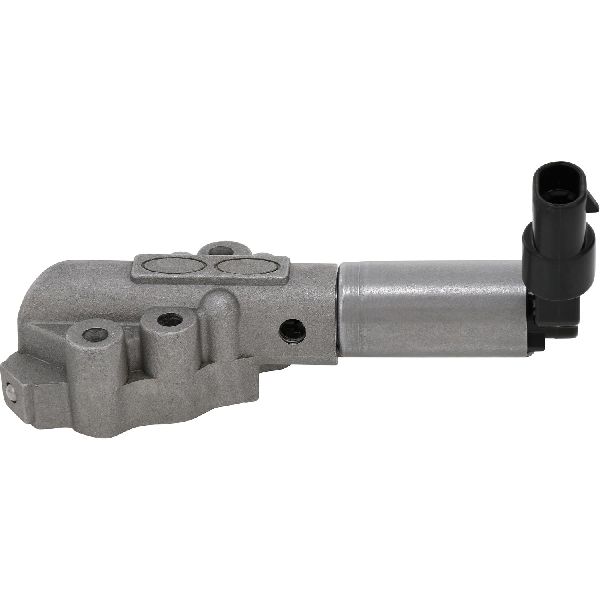
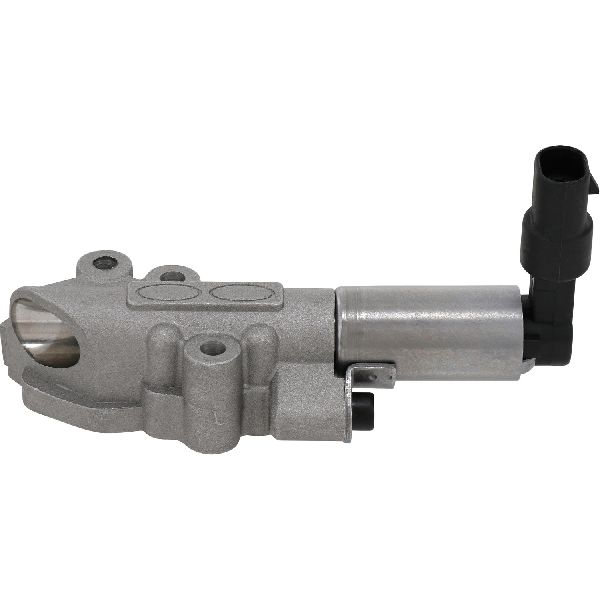
Est. part cost: $50-$100 - Faulty Bank 2 Intake Oil Control Valve (OCV/VVT Solenoid) 🟡 Medium Probability → Shop Engine Variable Valve Timing (VVT) Solenoid The OCV is a small solenoid that can become clogged with oil sludge or fail electrically over time, preventing it from properly directing oil to the cam phaser. This is a widely reported failure point on the Palisade and its platform-mate, the Kia Telluride.
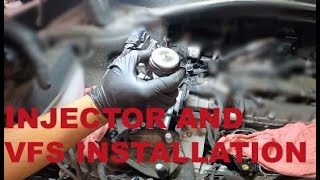
How to confirm: The most definitive test is to swap the Bank 2 (front) intake OCV with the Bank 1 (rear) intake OCV. If the code changes to P0012, the OCV is faulty. However, this is labor-intensive as it requires removing the upper and lower 🎬 See this walkthrough for installing the solenoids and injectors intake manifolds (surge tank). A technician can also test the solenoid's resistance (spec is 6.7-7.7 ohms) or command it with a scan tool.
Typical fix: Replace the Bank 2 intake Oil Control Valve (P/N: 24355-3L100). The upper (P/N: 29215-3CFA1) and lower intake manifold gaskets must also be replaced. Many technicians and owners recommend replacing all four OCVs (2 intake, 2 exhaust) at the same time due to the high labor cost to access them.
Est. part cost: $60-$120 for one OCV; $250-$400 for all four.
Rare But Worth Checking
- Stretched Timing Chain or Failed Tensioner: → Shop Engine Timing Chain While less common on the G6DN engine than its predecessors, high mileage or poor maintenance can lead to timing chain issues. This is a complex diagnosis that requires measuring timing chain slack, often by removing the timing cover. A rattling noise from the front of the engine is a common symptom. This should be confirmed by a professional.
- Failed Camshaft Phaser: → Shop Engine Camshaft The mechanical gear that the OCV controls can become clogged or stuck. This is a more complex and expensive repair than an OCV replacement.
- Clogged OCV Filter Screens: Small filter screens for the OCVs can become blocked with debris, restricting oil flow. They should be inspected or replaced when servicing the OCVs.
Diagnosis Steps
- Verify the code with an OBD-II scanner. Check for any other stored codes.
- Check the engine oil level and condition. If the oil is low, dirty, or past its service interval, perform an oil and filter change with the correct viscosity oil (full synthetic 5W-30). Clear the code and see if it returns.
- If the code persists, the next likely cause is the Bank 2 intake Oil Control Valve (OCV).
- For advanced DIYers or professionals: Access the OCVs by removing the upper (surge tank) and lower intake manifolds. This is a labor-intensive job.
- Perform a diagnostic swap: Exchange the Bank 2 (front) intake OCV with the Bank 1 (rear) intake OCV.
- Reassemble the intake using new gaskets, clear the codes, and drive the vehicle. If the fault code changes to P0012 (Bank 1 Over-Retarded), the OCV is definitively the problem.
- If the P0022 code returns after the swap, the issue is not the OCV. The problem may lie in the cam phaser, timing chain, or wiring, and professional diagnosis is recommended.
Parts You'll Likely Need
- Intake Oil Control Valve (VVT Solenoid)
(OEM #24355-3L100)— This solenoid is the most common mechanical part to fail, either by clogging with sludge or electrical failure, directly causing the P0022 code.
Trusted brands: Hyundai (OEM), Standard Motor Products, Dorman
OEM price range: $50-$90
Aftermarket price range: $40-$70 - Upper Intake Manifold Gasket (Surge Tank Gasket)
(OEM #29215-3CFA1)— This gasket is single-use and must be replaced anytime the upper intake manifold is removed to access the Oil Control Valves to prevent vacuum leaks.
Trusted brands: Hyundai (OEM), Fel-Pro, Mahle
OEM price range: $15-$25
Aftermarket price range: $10-$20 - Lower Intake Manifold Gaskets
(OEM #28312-3L100 (confirm with dealer, multiple designs exist))— These gaskets are single-use and must be replaced when the lower intake manifold is removed to access the OCVs.
Trusted brands: Hyundai (OEM), Fel-Pro, VR Gaskets
OEM price range: $20-$40
Aftermarket price range: $15-$30
Related Codes That Often Appear With This One
- P0012 — This is the same 'over-retarded' fault but for Bank 1 (firewall side). It will appear if you swap a faulty Bank 2 OCV to the Bank 1 position as a diagnostic step.
- P0300 — A random/multiple cylinder misfire code can be a side effect of the incorrect cam timing, which causes an unstable idle and poor combustion.
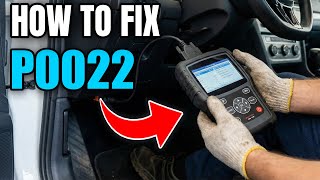
- P0021 — This is for an 'over-advanced' condition on the same bank (Bank 2). Both codes share the same root causes, such as a faulty OCV or oil sludge, 🎬 Watch: How to diagnose and fix the P0022 code which can cause the phaser to get stuck in either direction.
Technical Service Bulletins (TSBs) & Recalls
- TSB 23-EM-005H: This bulletin provides important checkpoint guidelines for technicians when performing engine oil and filter change services, highlighting the importance of correct oil level and filter type for proper CVVT system operation.
Platform-Specific Known Issues
- Owner Experience: P0022 at 75k Miles: A user on palisadeforums.org reported getting the P0022 code along with a P0300 (random misfire) on their 2020 Palisade with 75,000 miles. After verifying the oil level was correct, their mechanic diagnosed a faulty Bank 2 OCV. Due to the significant labor involved in removing the intake manifold, the owner opted to have all four OCVs (intake and exhaust for both banks) replaced at once. The total repair cost was approximately $1,100 at a dealership, which resolved both codes.
Mechanic-Grade Diagnostic Values
- Bank 2 Intake Oil Control Valve (OCV) Coil Resistance — expected: 6.7 - 7.7 Ohms at 20°C (68°F) for Delphi-made OCVs used in the Lambda II engine.. Failure: A reading of infinite resistance (open circuit) or near-zero resistance (short circuit) indicates a failed solenoid coil.
- OCV Power Supply Voltage at Connector — expected: Approximately 12V (battery voltage) on one of the two pins with the ignition on, engine off.. Failure: Low or no voltage points to a wiring harness or ECU power supply issue, not a faulty OCV itself.
- Scan Tool Live Data: Commanded vs. Actual Camshaft Angle — expected: The 'Actual Position' should closely track the 'Desired Position' or 'Setpoint' with a minimal difference (e.g., less than 5 degrees) at stable RPM.. Failure: A large, persistent deviation between the commanded and actual values, especially when the OCV duty cycle is being changed, indicates a mechanical or hydraulic problem.
Scan Tool Commands That Help
- Hyundai GDS or equivalent bidirectional scanner: CVVT (or VFS) Actuator Test — This command forces the OCV to activate while the engine is idling. A noticeable change in engine idle (stumble, roughness, or stall) indicates that the OCV, oil passages, and cam phaser are mechanically responding to the command. If the engine does not react, it points to a stuck OCV, a clogged oil passage, or a failed phaser.
Real Owner Repair Stories
- YouTube channel '2CarPros' (2022 Hyundai Palisade 3.8L V6) — Check engine light with code P00C00 'Camshaft Position Slow Response Bank 2 A'. The vehicle had a prior history of being run with low engine oil.
❌ Tried (didn't work) Topping off the low engine oil previously did not resolve the code's return.
✅ What actually fixed it The technician used a scan tool to monitor live data, confirming the Bank 2 intake cam angle was not responding correctly compared to Bank 1. An actuation test was performed. The technician replaced the Bank 2 intake OCV (referred to as a Variable Force Solenoid or VFS), which resolved the issue. The post-repair scan tool data showed both banks tracking together correctly. - Reddit user in r/AskAMechanic (2020 Hyundai Palisade) — A/C not working and a sudden illumination of the check engine light with numerous 'circuit low' codes simultaneously.
❌ Tried (didn't work) The owner initially replaced the thermostat based on a thermostat heater circuit code (P0598), but this did not fix the issue or clear any codes.
✅ What actually fixed it The underlying cause for all the circuit codes (including P0076, P0079, P0082, P0085 for the valve control solenoids) was a single blown fuse. Replacing the correct fuse restored power to all affected components and resolved the codes.
Model Year Variations Within This Range
- 2020-2024: The Hyundai Palisade received a significant cosmetic and interior technology refresh for the 2023 model year. However, the core powertrain, the 291-hp 3.8L Lambda II GDi V6 engine and 8-speed automatic transmission, remained unchanged throughout the 2020-2024 period. Therefore, the causes, diagnostic procedures, and parts needed for a P0022 code are identical across this entire year range.
Diagnostic Flowchart
Other Known Issues on This Vehicle
Issues unrelated to this code that are worth knowing about as an owner of this generation:
- Spontaneously Cracking Windshield 🟠 Medium — Commonly reported on 2020-2021 models, but affects all years. Owners report cracks appearing from minor impacts or no apparent cause. A class-action lawsuit was filed regarding this issue.
- Tow Hitch Wiring Harness Fire Risk 🔴 High — Subject of a major recall (NHTSA #22V633000) for 2020-2022 models with an accessory tow hitch. Moisture and debris can cause a short in the harness module, leading to a fire risk even when parked. (Ref: Recall: NHTSA #22V633000)
- Foul Interior Odor 🟡 Low — Widespread on early 2020 models with Nappa leather (Limited/Calligraphy trims). The smell, often compared to garlic or old socks, was traced to a flaw in the headrest manufacturing process. (Ref: Hyundai TSB 20-BD-016H-1)
- Carbon Buildup on Intake Valves 🟠 Medium — A common characteristic of all Gasoline Direct Injection (GDI) engines, including the Lambda II. Over time (typically by 60,000-80,000 miles), carbon deposits can build up, leading to rough idle, misfires, and reduced power.
Used vs. New Parts: Buying Guide for This Vehicle
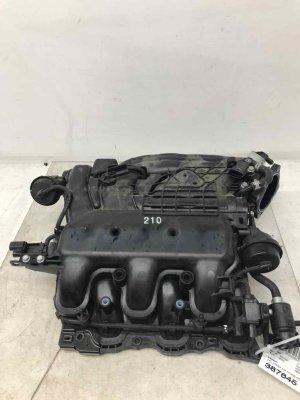
When a used part is the smart pick: For this repair, using a used part is generally not recommended for the Oil Control Valve (OCV) itself. However, used parts for related components like the upper or lower intake manifolds are a sensible choice if they are sourced from a low-mileage donor and inspected for cracks or damage.
Donor-vehicle mileage cap: roughly under 60000 miles for the part to have meaningful remaining life.
What to inspect on the donor part:
- For an intake manifold, ensure all mounting points are intact and there are no visible cracks, especially around bolt holes.
- Check that no plastic components or vacuum nipples are broken off.
- Avoid parts from engines that show heavy external oil leaks or signs of severe overheating (discoloration).
OEM-only on this vehicle (don't cheap out):
- Oil Control Valve (OCV): Due to the high labor cost to access this part, installing a used OCV with unknown remaining life is a significant risk. A new OEM part provides the most reliability.
Aftermarket brands forum-validated for this vehicle:
- Standard Motor Products (SMP)
- Dorman (often offers improved designs over OEM)
Brands owners have reported issues with on this vehicle:
- No-name, unbranded solenoids from online marketplaces should be avoided, as their quality control and lifespan can be highly inconsistent, potentially leading to a repeat repair.
Real Owner Stories
Aggregated from forums and TSBs cited above. Mileages and costs reflect what owners reported in those sources.
2020 Hyundai Palisade 3.8L GDi V6 — 75000 miles
Symptoms: Check engine light with P0022 and P0300 (random misfire) codes.
What fixed it: Replacement of all four Oil Control Valves (intake and exhaust for both banks) after verifying oil levels were correct.
Cost: $1,100-$1,100
Source hint: palisadeforums.org - Thread: 'Check engine light P0022'
Related OBD-II Codes
Frequently Asked Questions
Does TSB 23-EM-005H apply to my 2020-2024 Hyundai Palisade regarding the P0022 code?
What specific oil should I use in my Lambda II 3.8L GDi V6 to prevent VVT issues?
Can I just replace the Bank 2 intake OCV on my Palisade, or should I replace others?
Is there a specific part number for the Bank 2 intake Oil Control Valve on the 3.8L engine?
Is the P0022 issue common on the Kia Telluride as well?
Could carbon buildup be causing my Palisade's rough idle alongside the P0022 code?
Helpful Videos
Used OEM Parts in Stock
New Aftermarket Parts Available

The information in this article is provided for general reference and educational purposes only. Vehicle specifications, procedures, and part compatibility can vary by production date, trim level, and region. Always consult your vehicle's factory service manual and verify part numbers before purchasing or performing repairs. Safety-critical components such as airbags, seat belts, and braking systems should be installed by a qualified professional.
- Hyundai Palisade:
- 🧭 Diagnostic Flowchart
- 🎬 Helpful Videos
- 🛍️ Shop This Part
- What's Unique About the 2020-2024 Hyundai Palisade
- Symptoms You May Notice
- Most Likely Causes
- Rare But Worth Checking
- Diagnosis Steps
- Parts You'll Likely Need
- Related Codes That Often Appear With This One
- Technical Service Bulletins (TSBs) & Recalls
- Platform-Specific Known Issues
- Mechanic-Grade Diagnostic Values
- Scan Tool Commands That Help
- Real Owner Repair Stories
- Model Year Variations Within This Range
- Other Known Issues on This Vehicle
- Used vs. New Parts: Buying Guide for This Vehicle
- Real Owner Stories
- 2020 Hyundai Palisade 3.8L GDi V6 — 75000 miles
- Related OBD-II Codes
- Frequently Asked Questions
- 🎟️ Get 5% Off