

P0022 on 2011-2015 Kia Sorento 3.3L V6: Causes and Fixes for Over-Retarded Camshaft Timing
P0022 on a 2011-2015 Sorento V6 most often points to a failing oil control valve (OCV) or low/dirty engine oil. An OCV replacement is a common fix, costing around $50-$100 for the part and is relatively easy to DIY. In some cases, it can be an early warning of a stretching timing chain, a known issue on this engine.
- First, check your oil. Low or dirty oil is a primary cause of P0022. An oil change might fix it.
- The most likely failed part is the Bank 2 Intake Oil Control Valve (OCV), which is relatively inexpensive and easy to replace.
- Bank 2 on this engine is the bank of cylinders closer to the radiator.
- A rattling noise when starting the engine cold is a bad sign, suggesting a more serious timing chain issue that requires professional repair.
- Do not replace the camshaft position sensor; it is almost never the cause of this code.
What's Unique About the 2011-2015 Kia Sorento
The 3.3L Lambda V6 (G6DH) in the second-generation Sorento (XM) is generally robust, but like many VVT systems, it is highly sensitive to oil quality, level, and filter type. Owners report that these engines can be prone to a timing chain tensioner rattle on cold starts 🎬 Watch: Hear what this timing chain rattle sounds like on startup., which indicates a loss of oil pressure in the timing system as the tensioners bleed down. Kia issued a Technical Service Bulletin (ENG 148) for 2014-2015 models to address this startup noise by replacing the Bank 2 timing chain tensioner with an improved part. While P0022 is often just a faulty solenoid, it can be an early warning for these more significant timing chain or tensioner issues, especially on higher-mileage examples.
Symptoms You May Notice
- Check Engine Light is on
- Rough or unstable idle
- Engine stalling, especially at low speeds or when coming to a stop
- Reduced fuel economy
- Hesitation or lack of power during acceleration
- Rattling or knocking noise from the engine, particularly on cold starts, lasting 1-3 seconds
- Engine may be hard to start
- Replacing the camshaft position sensor. This sensor reports the problem; it is rarely the cause of a timing performance code like P0022 or P0011. The issue is almost always mechanical or hydraulic (oil-related).
Most Likely Causes
- Low, Dirty, or Incorrect Viscosity Engine Oil 🔴 High Probability The CVVT system is entirely dependent on hydraulic pressure to function. Sludgy oil, low levels, or using a viscosity other than the recommended 5W-20 or 5W-30 can clog the tiny passages in the oil control valves or prevent the phasers from actuating correctly. This is the most common and cheapest-to-fix cause for any VVT-related code.
How to confirm: Check the oil level on the dipstick and inspect its condition. If it's low, very dark, or sludgy, it needs to be changed. Ensure a quality OEM or equivalent oil filter is used, as some aftermarket filters can be restrictive.
Typical fix: Perform an oil and filter change using a high-quality synthetic oil of the manufacturer-recommended viscosity (typically 5W-20 or 5W-30 for this engine).
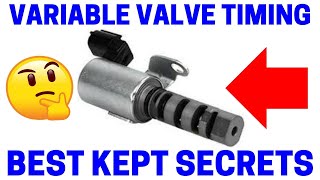
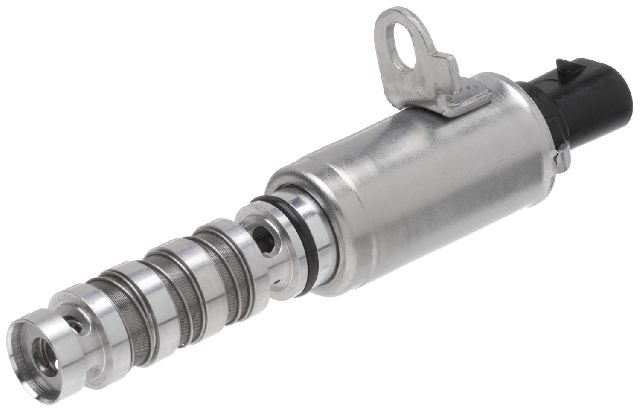
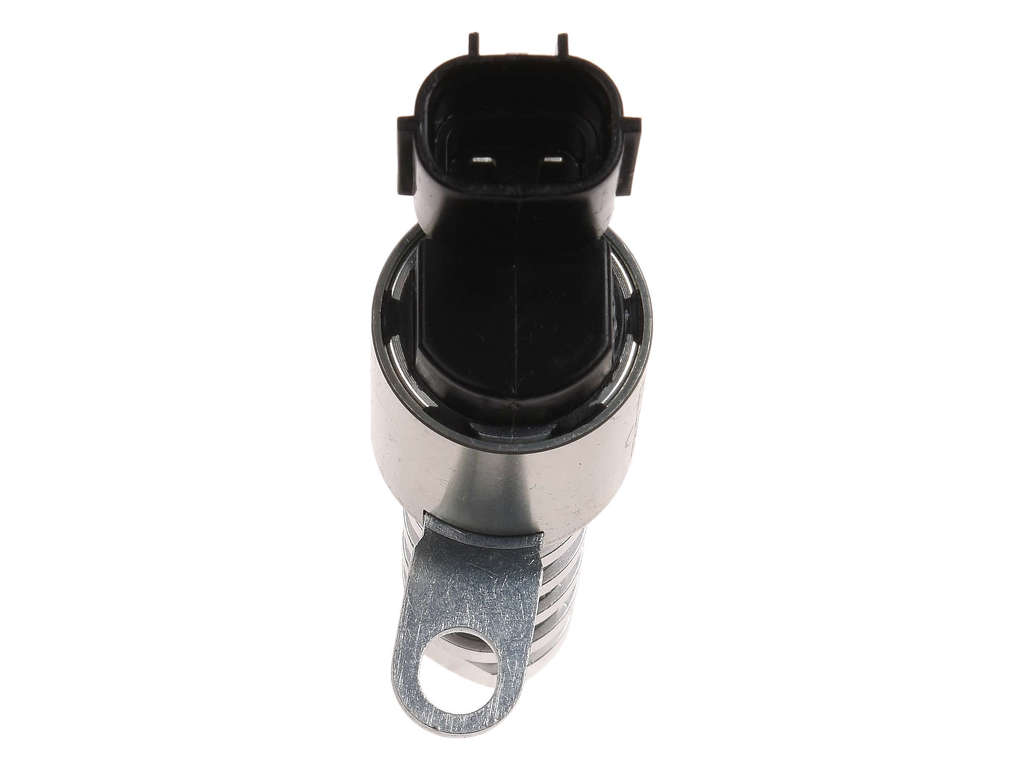
Est. part cost: $40-$80 - Faulty Oil Control Valve (OCV) / VVT Solenoid for Bank 2 Intake 🔴 High Probability → Shop Engine Variable Valve Timing (VVT) Solenoid These solenoids control the flow of oil to the camshaft phasers. They contain fine mesh screens that can become clogged with debris and sludge, causing the internal plunger to stick. This is a very common failure point leading to P0022.
How to confirm: First, locate Bank 2 (the cylinder bank closer to the radiator on this transverse engine). You can test the solenoid's resistance with a multimeter (should be 6.9-7.9 ohms at 68°F). You can also apply 12V power to see if the solenoid clicks. The most definitive DIY test is to swap the Bank 2 intake OCV with the Bank 1 intake OCV. Clear the codes and drive. If the code changes to P0011 (Bank 1 equivalent), the solenoid is confirmed bad.
Typical fix: Replace the Bank 2 intake oil control valve. It is often recommended to replace both intake and exhaust OCVs on the affected bank at the same time.
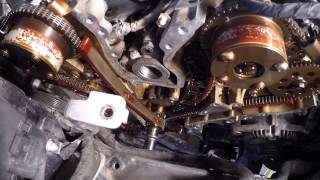
Est. part cost: $50-$120 - Worn Timing Chain or Failing Tensioner 🟡 Medium Probability → Shop Engine Timing Chain The Lambda V6 can experience timing chain tensioner issues, often signaled by a startup rattle. The tensioners can lose oil pressure when the engine is off, allowing slack in the chain on startup until pressure builds. A stretched chain or weak tensioner can cause the camshaft timing to physically lag, setting this code.
How to confirm: Listen for a distinct rattle from the engine for 1-3 seconds on a cold start. This is a strong indicator. A mechanic can also check timing chain slack by removing the valve cover or timing cover. Kia TSB ENG 148 specifically addresses this noise for the 2014-2015 Sorento. 🎬 Watch: A mechanic explains the common Hyundai/Kia timing tensioner failure.
Typical fix: Replacement of the timing chain(s), guides, and tensioners. This is a significant and labor-intensive repair. TSB ENG 148 calls for replacing the Bank 2 tensioner with an improved part.
Est. part cost: $250-$500
Rare But Worth Checking
- Failing Camshaft Phaser (CVVT Actuator): → Shop Engine Camshaft The phaser is the gear on the end of the camshaft that actually adjusts the timing. It can get stuck in the retarded position due to internal wear, debris, or a failed locking pin. This is less common than an OCV failure but is a known issue. TSB ENG 148 notes that for 2014-15 Sorentos, the intake CVVT unit should also be inspected and potentially replaced if its serial number is below '14111'.
- Faulty Camshaft Position Sensor (CMP): → Shop Engine Camshaft Position Sensor It's rare for the sensor itself to cause a performance code like P0022. A bad sensor would typically set a specific sensor circuit code (e.g., P0346, P0347). However, if the sensor provides an erratic signal, it could contribute to a timing miscalculation. Misdiagnosing this as the root cause is a common mistake.
Diagnosis Steps
- Check Engine Oil: Verify the oil level is correct and the oil is clean and of the proper viscosity (5W-20 or 5W-30). If in doubt, perform an oil and filter change with a quality OEM filter. This fixes the problem over 50% of the time.
- Identify Bank 2: On the Sorento's transverse 3.3L V6, Bank 2 is the cylinder bank closer to the front of the vehicle (radiator side). Bank 1 is closer to the firewall.
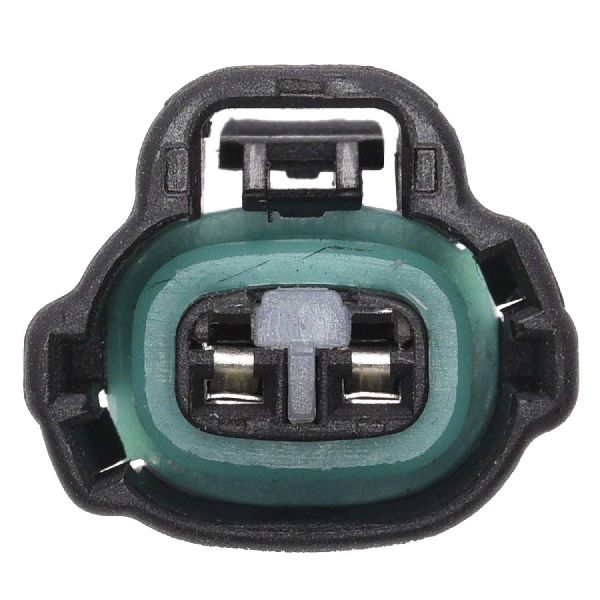
- Inspect the Oil Control Valve (OCV): Locate the intake OCV on Bank 2. Check the wiring and connector for damage, oil saturation, or corrosion.
- Swap the OCVs: The easiest DIY diagnostic is to swap the Bank 2 intake OCV with the Bank 1 intake OCV. They are identical parts. Clear the codes and drive the vehicle. If the code returns as P0011 (the Bank 1 equivalent), you have confirmed the OCV is faulty.
- Test the OCV: Alternatively, remove the suspect OCV and test its resistance with a multimeter. It should be within 6.9-7.9 ohms at room temperature. You can also briefly apply 12V to its terminals to see if the internal plunger clicks audibly.
- Listen for Timing Chain Noise: On a cold start (after sitting for several hours), listen for a distinct rattle from the engine that lasts for 1-3 seconds. If present, this points towards a failing timing chain tensioner, a known issue addressed by TSB ENG 148.
- Professional Diagnosis: If the OCV is good and there's no obvious oil issue, the problem may be a stretched timing chain or a failing camshaft phaser (CVVT). This requires more in-depth diagnosis by a professional mechanic, which may involve removing the valve and timing covers.
Parts You'll Likely Need
- Intake Oil Control Valve (VVT Solenoid)
(OEM #24355-3C200 (Supersedes 24355-3C100))— This solenoid is the most common component to fail or get clogged, directly causing the P0022 code. Part number 24355-3C200 is an updated version for this application.
Trusted brands: Hyundai/Kia Genuine, Dorman, Standard Motor Products (SMP)
OEM price range: $80-$120
Aftermarket price range: $40-$70 - Timing Chain Kit — If the cause is a stretched chain or failed tensioner, a complete kit including chains, guides, and tensioners is required for the repair. TSB ENG 148 specifically calls for an improved Bank 2 tensioner.
Trusted brands: Hyundai/Kia Genuine, Melling, Cloyes
OEM price range: $400-$600
Aftermarket price range: $200-$350
Related Codes That Often Appear With This One
- P0011 — If you swap a faulty Bank 2 OCV to Bank 1 for diagnosis, this code will appear. It can also appear if there's a systemic oil pressure problem affecting both banks.
- P0300, P0302, P0304, P0306 — Misfire codes for cylinders on Bank 2 (cylinders 2, 4, 6) can occur because incorrect valve timing disrupts the combustion process in that bank.
- P0346 — Camshaft Position Sensor 'A' Circuit Range/Performance (Bank 2). If the timing is so severely retarded that the sensor's signal is deemed implausible by the ECU, this electrical performance code can be triggered as a symptom of the underlying mechanical fault.
Technical Service Bulletins (TSBs) & Recalls
- TSB ENG 148 (Rev 4, Sept 2015): Addresses a 'chatter/rattle noise from engine after cold soak' on 2014-2015 Sorento (XMa) and 2014-2016 Cadenza (VG) vehicles. The procedure involves replacing the Bank 2 (LH) timing chain tensioner and potentially the intake CVVT assembly.
Platform-Specific Known Issues
- Cold Start Rattle and TSB ENG 148: For 2014-2015 Sorento models, Kia released TSB ENG 148 to address a 'brief chattering or rattling noise' on startup after a cold soak. The fix involves replacing the Bank 2 (LH) timing chain tensioner with an improved design that has finer teeth. The TSB also instructs technicians to check the serial number on the intake CVVT assembly and replace it if it's an older version.
Mechanic-Grade Diagnostic Values
- OCV Solenoid Resistance — expected: 6.9 - 7.9 Ohms at 68°F (20°C). Failure: No reading (open circuit) or a reading significantly outside this range.
- Live Data: Desired vs. Actual Camshaft Position (Bank 2 Intake) — expected: The 'Actual' value should closely track the 'Desired' value, with a variance of only a few degrees at steady RPM.. Failure: A consistent negative value or a large variance (e.g., more than 5-7 degrees) between the desired and actual position, especially when engine speed changes. The code sets when the lag exceeds 10 degrees for 5 seconds.
- OCV Connector Voltage — expected: Should receive a 12V signal from the ECM when commanded.. Failure: No voltage when commanded indicates a wiring or ECM driver issue.
Scan Tool Commands That Help
- Kia GDS (Global Diagnostic System) or advanced bidirectional scanner: CVVT (or VVT) Solenoid Activation Test — This command allows the technician to manually activate the Bank 2 intake OCV solenoid while the engine is idling. If the solenoid and cam phaser are working, forcing oil into the phaser at idle will cause the engine to stumble or run rough. If there is no change in engine operation, it points to a clogged OCV, a stuck phaser, or a lack of oil pressure.
Wiring & Ground Locations
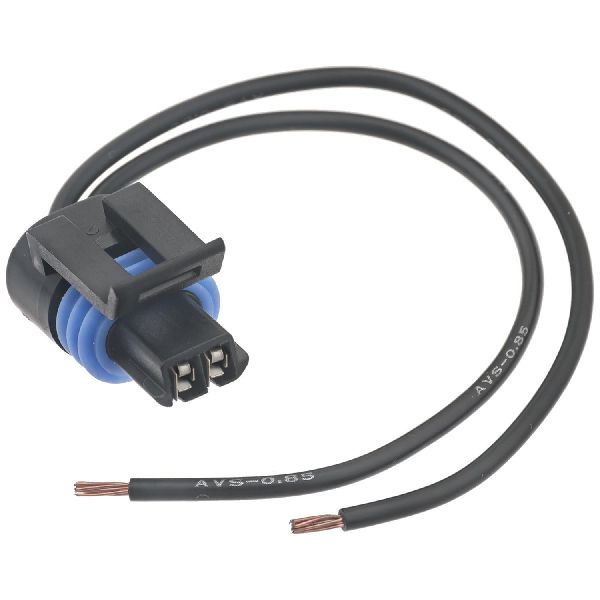
- Bank 2 OCV Connector — On the Bank 2 (front, radiator side) valve cover. The intake OCV is one of two solenoids located there.. This is the connector where voltage and resistance tests are performed for the solenoid. It should be inspected for oil saturation from a leaking valve cover gasket, which can degrade the connection.
- Main Engine Ground — Typically a large gauge wire from the negative battery terminal to the chassis and from the chassis to the engine block/transmission case. Specific ground points (e.g., G###) are often located on the cylinder heads or engine block.. A poor engine ground can cause erratic behavior in all engine sensors and actuators, including the Camshaft Position Sensor and the Oil Control Valve, leading to incorrect readings and fault codes. While diagrams for the 2011-2015 Sorento are not freely available, general wiring diagrams show ground points are critical for sensor data integrity.
Real Owner Repair Stories
- Forum discussions and mechanic teardowns of similar Lambda V6 engines (2012 Hyundai/Kia with 3.3L V6 (Lambda family)) — Timing chain rattle and a persistent timing correlation code (P0018, similar in nature to P0022 but for a different sensor correlation).
❌ Tried (didn't work) Initial diagnosis focused only on the timing chain due to the rattle.
✅ What actually fixed it A dual failure was found: a failed primary timing chain tensioner caused the rattle, but the trouble code was caused by the CVVT phaser's alignment pin migrating out of its hole, allowing the phaser to move independently of the camshaft. This highlights that a noise and a code may have two separate, but related, root causes.
OEM Part Supersession History
24355-3C100→24355-3C200— Improved design to address reliability or performance issues with the original OCV solenoid.
Heads up: The new part is a direct replacement for the old one. It is recommended to use the newest part number available for the repair.
Model Year Variations Within This Range
- 2014-2015: As per TSB ENG 148, these model years are subject to a specific cold-start rattle fix. The procedure involves replacing the Bank 2 timing chain tensioner with an improved part. Crucially, it also requires inspection of the CVVT phaser serial numbers. If the first five digits of the 11-digit serial number are less than '14111', the CVVT assembly itself must also be replaced.
Diagnostic Flowchart
Used vs. New Parts: Buying Guide for This Vehicle
When a used part is the smart pick: For this repair, using used parts is generally not recommended for the core components. The only exception might be a major structural part like a valve cover or timing cover if it were damaged during repair, and a low-mileage donor is available.
Donor-vehicle mileage cap: roughly under 60000 miles for the part to have meaningful remaining life.
What to inspect on the donor part:
- Check the donor vehicle's oil fill cap and look inside the valve cover for any signs of brown or black, thick sludge. If sludge is visible, avoid all engine components from that vehicle.
- Ask for the VIN to check the vehicle's service history if possible.
- For electronic parts like sensors or solenoids, a 30-day warranty from the seller is a minimum safety net.
OEM-only on this vehicle (don't cheap out):
- Timing Chain Kit (Chains, Guides, Tensioners): The labor to replace these parts is extremely high. Using non-OEM parts risks premature failure, requiring the job to be done all over again. Forum consensus strongly favors OEM or OEM-supplier parts like Melling for timing components.
- Camshaft/Crankshaft Position Sensors: These sensors are critical for engine timing data. Aftermarket versions can have different internal resistance or signal quality, leading to persistent or new codes. OEM is the safest choice.
Aftermarket brands forum-validated for this vehicle:
- Dorman (for OCV/VVT Solenoids): Often cited as a reliable and cost-effective alternative to OEM.
- Melling / Cloyes (for Timing Components): These are established brands in timing systems, though some users report quality differences between them, with Melling often having a slight edge in user reviews.
Brands owners have reported issues with on this vehicle:
- No-name / unbranded solenoids from online marketplaces: Many user reports across various forums describe these parts failing quickly or being dead-on-arrival. The low price is often not worth the risk of having to do the repair twice.
Real Owner Stories
Aggregated from forums and TSBs cited above. Mileages and costs reflect what owners reported in those sources.
2014 Kia Sorento 3.3L V6
Symptoms: A brief chattering or rattling noise from the engine for 1-3 seconds after a cold start.
What fixed it: The issue was resolved by following the TSB procedure, which involves replacing the Bank 2 (LH) timing chain tensioner with an improved design and, in some cases, replacing the intake CVVT assembly.
Source hint: TSB ENG 148 (Rev 4, Sept 2015)
Kia Sorento 3.3L V6
Symptoms: A common rattle from the engine on startup.
What fixed it: Forum users reported that the noise could sometimes be quieted by using an OEM oil filter, while others confirmed the root cause was a known timing chain tensioner issue requiring replacement.
Source hint: BobIsTheOilGuy.com - 'Start up rattle' thread
2007 Hyundai Santa Fe 3.3L V6
Symptoms: Multiple persistent timing codes (P0011, P0021, P0026) even after an oil change was performed to correct a severely overfilled condition.
What fixed it: After the oil change failed to resolve the codes, the problem was diagnosed as likely being caused by faulty oil control valves (VVT solenoids), which was the next suggested repair.
Source hint: Reddit r/MechanicAdvice - '2007 Hyundai Santa Fe p0011, p0021, p0026'
Related OBD-II Codes
Frequently Asked Questions
Where is Bank 2 on my Sorento's 3.3L V6 engine?
I hear a brief rattling noise when I start my 2014 Sorento. Is this related to the P0022 code?
What is the easiest way to confirm if my Oil Control Valve (OCV) is bad?
What kind of oil should I use to prevent P0022 on my Sorento?
Is there a Kia Technical Service Bulletin (TSB) for this problem on my 2015 Sorento?
My mechanic says the timing chain needs to be replaced. Should I use aftermarket parts to save money?
Helpful Videos

We Have This Part in Stock


The information in this article is provided for general reference and educational purposes only. Vehicle specifications, procedures, and part compatibility can vary by production date, trim level, and region. Always consult your vehicle's factory service manual and verify part numbers before purchasing or performing repairs. Safety-critical components such as airbags, seat belts, and braking systems should be installed by a qualified professional.
- Kia Sorento:
- 🧭 Diagnostic Flowchart
- 🎬 Helpful Videos
- 🛍️ Shop This Part
- What's Unique About the 2011-2015 Kia Sorento
- Symptoms You May Notice
- Most Likely Causes
- Rare But Worth Checking
- Diagnosis Steps
- Parts You'll Likely Need
- Related Codes That Often Appear With This One
- Technical Service Bulletins (TSBs) & Recalls
- Platform-Specific Known Issues
- Mechanic-Grade Diagnostic Values
- Scan Tool Commands That Help
- Wiring & Ground Locations
- Real Owner Repair Stories
- OEM Part Supersession History
- Model Year Variations Within This Range
- Used vs. New Parts: Buying Guide for This Vehicle
- Real Owner Stories
- 2014 Kia Sorento 3.3L V6
- Kia Sorento 3.3L V6
- 2007 Hyundai Santa Fe 3.3L V6
- Related OBD-II Codes
- Frequently Asked Questions
- 🎟️ Get 5% Off