

P0022 on 2020-2021 Lincoln Aviator: Causes and Fixes for Over-Retarded Cam Timing
For a 2020-2021 Lincoln Aviator, code P0022 is most often caused by a sticking Bank 2 intake VCT solenoid due to dirty oil or debris. The most common fix is to perform an oil change and replace the Bank 2 (driver's side) intake VCT solenoid, which costs about $40-$100 for the part. This is a known issue acknowledged by Lincoln in service bulletins.
- P0022 on a 2020-2021 Aviator means the driver's side intake camshaft timing is delayed.
- Before buying any parts, check your engine oil level and condition. A simple oil change can sometimes fix the issue.
- The most common failed part is the Bank 2 (driver's side) intake VCT solenoid, which gets stuck from oil debris.
- Replacing the VCT solenoid is a DIY-friendly task for many and is the most likely repair needed.
- If you hear a rattling noise from the engine on cold starts, the problem could be more serious (timing chain/phaser) and requires professional diagnosis.
What's Unique About the 2020-2021 Lincoln AVIATOR
The 3.0L Twin-Turbo V6 in the Aviator uses a sophisticated Variable Camshaft Timing (VCT) system that relies on clean engine oil and proper oil pressure. Lincoln has issued Technical Service Bulletins, including SSM 50067, which directly state that P0022 and related codes can be caused by small debris in the oil causing the VCT solenoids to stick. This makes a sticking solenoid a highly probable cause on these specific engines, often more likely than a major mechanical failure. The TSB even recommends a specific diagnostic procedure (Pinpoint Test HK12) to cycle the solenoid with a scan tool 10 times to attempt to clear the debris before replacement.
Diagnostic Flowchart
Tap your situation to follow the diagnostic path that matches what you're seeing on this vehicle.
Symptoms You May Notice
- Check Engine Light is on
- Rough or unstable idle
- Engine hesitation or stumbling on acceleration
- Noticeable loss of engine power
- Reduced fuel economy
- Stalling when coming to a stop
- Engine rattling noise, especially on cold starts, may indicate a more serious timing chain or phaser issue
- Replacing the camshaft position sensor when the actual fault is with the VCT solenoid or oil quality.
- Assuming a major mechanical failure (timing chain) before checking the much more common and cheaper VCT solenoid and oil condition.
Most Likely Causes
- Low or Dirty Engine Oil 🔴 High Probability The VCT system is hydraulic and highly sensitive to oil pressure and cleanliness. Sludge, low oil levels, or using the incorrect viscosity oil can prevent the VCT solenoids and phasers from operating correctly. TSBs confirm that debris is a primary cause of solenoid failure.
How to confirm: Check the engine oil level on the dipstick and inspect its condition. If the oil is below the 'full' mark, dark, or gritty, it needs attention. An oil change is the cheapest and easiest first step.
Typical fix: Perform an engine oil and filter change using the manufacturer-specified 5W-30 full synthetic oil and a quality oil filter (e.g., Motorcraft).
Est. part cost: $50-$100 - Failing VCT Solenoid (Bank 2 Intake) 🔴 High Probability → Shop Engine Variable Valve Timing (VVT) Solenoid TSB SSM 50067 specifically identifies that small debris can cause the VCT solenoid to stick, leading to this code. It's a known and very common failure point on this engine family. The solenoids have fine internal screens that get clogged easily.
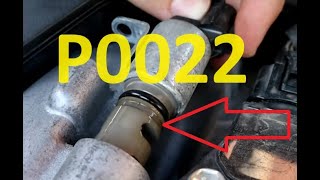
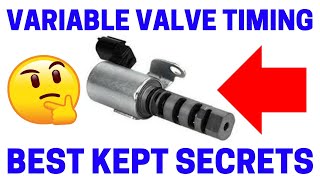
How to confirm: A diagnostic scan tool can command the solenoid on and off to check for response (Pinpoint Test HK12). A common DIY method is to swap the Bank 2 intake and exhaust solenoids. If the code changes to P0024 (Exhaust Over-Retarded), the solenoid is confirmed to be faulty. You can also test the solenoid's resistance with a multimeter; it should be between 6.9 and 7.9 ohms at 68°F (20°C). 🎬 See how to tell if your variable valve timing solenoid is bad.
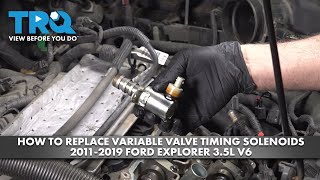
Typical fix: Replace the Bank 2 (driver's side) intake VCT solenoid. The solenoids are located on the valve covers and are accessible for DIY replacement. 🎬 Watch this walkthrough for replacing VVT solenoids on a Ford V6. It is highly recommended to change the engine oil at the same time to remove the debris that caused the failure.
Est. part cost: $40-$100 - Stretched Timing Chain ⚪ Low Probability → Shop Engine Timing Chain While less common than a solenoid failure, timing chains can stretch over time, causing a permanent timing deviation that the VCT system cannot correct. This is a more significant mechanical failure.
How to confirm: This is a complex diagnosis that requires checking for timing mark alignment by partially disassembling the front of the engine. A persistent rattling noise on startup is a strong indicator. This diagnosis is best left to a professional.
Typical fix: Replace the timing chain, tensioners, and guides. This is a labor-intensive and expensive repair.
Est. part cost: $500-$1200 - Failing Camshaft Phaser (VCT Unit) ⚪ Low Probability → Shop Engine Camshaft The phaser is the mechanical gear that the solenoid controls. It can get stuck or fail internally, preventing it from adjusting cam timing correctly. Some TSBs for related engines point to worn VCT units causing cold start rattles and timing codes.
How to confirm: Diagnosis is similar to a timing chain issue and often done at the same time. If the solenoid and oil are good but the timing is still incorrect, the phaser is a likely suspect. A cold-start rattle is a key symptom.
Typical fix: Replace the Bank 2 intake camshaft phaser. This is typically done during a timing chain service.
Est. part cost: $150-$300
Rare But Worth Checking
- Wiring Harness or Connector Issue: The wiring to the VCT solenoid can become damaged, corroded, or have a split casing, causing an intermittent signal. Check the connector and harness for visible damage before replacing parts.
- Faulty Camshaft Position Sensor: → Shop Engine Camshaft Position Sensor While this sensor usually triggers its own specific codes (like P0345), a faulty sensor providing incorrect data to the PCM could theoretically contribute to a timing code. However, it's more common for the issue to be mechanical or hydraulic (oil/solenoid).
- Low Oil Pressure: Beyond just low or dirty oil, a failing oil pump or clogged oil passages can lead to low oil pressure, starving the VCT system and causing timing codes for both banks (e.g., P0012 and P0022).
Diagnosis Steps
- Check Engine Oil: Verify the oil level is full and the oil is clean. If low or dirty, perform an oil and filter change with the correct 5W-30 full synthetic oil. This is the cheapest and easiest first step and can sometimes resolve the issue on its own. Clear the code and see if it returns.
- Scan Tool Analysis: Use a scan tool to monitor the desired vs. actual camshaft position for the Bank 2 intake cam (PID: VCT_INT2_ANG vs VCT_INT2_DSD). A significant, persistent deviation confirms the fault. Also monitor the VCT error PID (VCT_ERR or VCT_INT_DIF2); a sustained value greater than +/- 5 degrees indicates a fault.
- Test the VCT Solenoid: As per TSB SSM 50067, use a scan tool's bidirectional control (often called 'Output State Control') to command the solenoid on and off 10 times to try and dislodge debris. If that fails, the most reliable DIY method is to swap the Bank 2 intake VCT solenoid with the Bank 2 exhaust VCT solenoid. Clear the codes and drive the vehicle. If the code returns as P0024 ('B' Camshaft Over-Retarded), the solenoid you moved is faulty and must be replaced.
- Inspect Wiring: If the code does not move after the swap, inspect the wiring harness and connector for the Bank 2 intake VCT solenoid for any damage, corrosion, or loose connections. Check for battery voltage (>10.5V) at the connector with the key on.
- Check for Mechanical Issues: If the oil, solenoid, and wiring are all confirmed to be good, the problem is likely mechanical. A rattling noise on startup is a strong clue. At this point, professional diagnosis is recommended to perform a mechanical oil pressure test and inspect the timing chain and camshaft phaser for wear or failure.
Parts You'll Likely Need
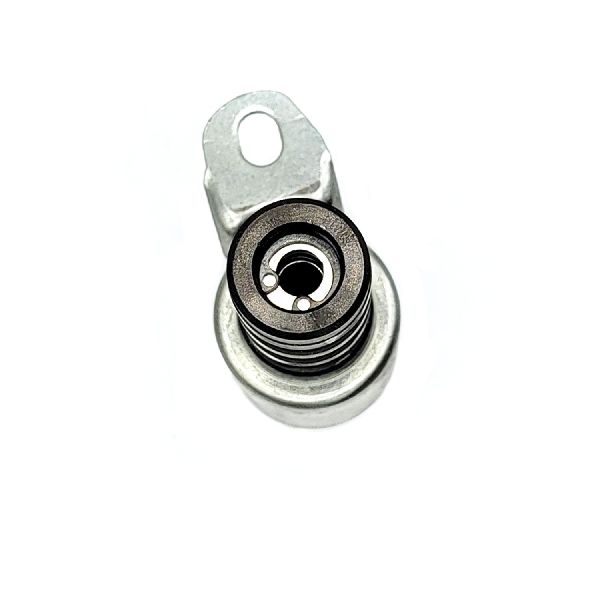
- Engine Variable Valve Timing (VVT/VCT) Solenoid
(OEM #FT4Z-6M280-B)— This is the most common point of failure for code P0022 on this engine, as confirmed by manufacturer TSBs. It gets stuck due to oil debris. The part number FT4Z-6M280-B supersedes the older FT4Z-6M280-A.
Trusted brands: Motorcraft, Standard Motor Products (SMP), NGK, Gates, Dorman
OEM price range: $60-$90
Aftermarket price range: $30-$60 - Engine Oil and Filter — Low or dirty oil is a primary cause of VCT system faults. An oil change is a critical first step in diagnosis and repair and is highly recommended even when replacing a solenoid.
Trusted brands: Motorcraft
OEM price range: $50-$80
Aftermarket price range: $40-$60
Related Codes That Often Appear With This One
- P0012 — This is the same over-retarded code but for Bank 1 (passenger side). Seeing both P0012 and P0022 together strongly suggests a systemic problem like low oil pressure or severely degraded oil affecting the entire engine.
- P0021 — This is the code for 'Timing Over-Advanced' on the same bank. Seeing both P0021 and P0022 intermittently can point to an erratic VCT solenoid or phaser that is not controlling timing accurately.
- P0011, P0014, P0015, P0016, P0017, P0018, P0019, P0024, P0025 — These are all part of the same family of VCT and camshaft/crankshaft correlation codes. TSBs SSM 54366 and SSM 50067 list them together, indicating a common root cause, often related to the VCT solenoids or timing system.
Technical Service Bulletins (TSBs) & Recalls
- SSM 50067: Notes that P0022 may be due to small debris causing the VCT solenoid to stick and recommends cycling the solenoid before replacement.
- SSM 54366: References a specific diagnostic pinpoint test (HK) for VCT-related codes like P0022.
- SSM 47170: An earlier TSB, also cited for other Ford/Lincoln products, that identified sticking VCT solenoids from debris as a cause for this code family.
Platform-Specific Known Issues
- TSB SSM 50067: A key document for this issue, it states that various Lincoln vehicles may show P0022 (and other VCT codes) because small debris is causing the VCT solenoid to stick. It advises against immediate component replacement, instead suggesting technicians use a scan tool to cycle the solenoid 10 times to attempt to clear the debris.
- TSB SSM 54366: This bulletin directs technicians to a specific diagnostic procedure (Pinpoint Test HK) in the workshop manual for a wide range of VCT codes, including P0022, indicating a standardized factory approach to diagnosis.
Mechanic-Grade Diagnostic Values
- VCT Solenoid Internal Resistance — expected: 6.9 to 7.9 Ohms at 68°F (20°C). Failure: A reading of zero (short), infinity/OL (open), or significantly outside the specified range.
- Voltage at VCT Solenoid Connector (Key On, Engine Off) — expected: Greater than 10.5 Volts (Battery Voltage). Failure: Voltage significantly below 10.5V points to a problem in the power supply wiring or PCM.
- Engine Oil Pressure (at normal operating temp) — expected: 10-15 psi at idle; 30-40 psi at 2,000 rpm.. Failure: Pressure below the minimum specification, especially at idle, can starve the VCT system and cause timing codes.
- Scan Tool PID: VCT_ERR or VCT_INT_DIF2 — expected: Should hover around 0° at a stable, warm idle.. Failure: A sustained deviation of more than +/- 5 degrees indicates a VCT system fault.
Hidden / Shadow Codes Worth Checking
- Mode 6, TID $81: This is not a DTC, but a non-continuous monitor test result for bank-to-bank VCT timing error. Viewing this data can show small timing deviations before they are large enough to trigger a fault code like P0022. (see via Requires a scan tool capable of displaying Mode 6 data, such as FORScan or a professional-grade scanner.)
Scan Tool Commands That Help
- Ford IDS / FORScan: Output State Control for VCT Solenoid / VCT Solenoid Bidirectional Control — As recommended by TSB SSM 50067, this command cycles the solenoid on and off (typically 10 times) to dislodge small debris. If cycling the solenoid temporarily resolves the issue or causes a noticeable change in engine idle, it strongly confirms a sticking solenoid.
- Ford IDS: Pinpoint Test HK — This is the guided diagnostic routine in the Ford service manual that TSB SSM 54366 directs technicians to use. It's a comprehensive, step-by-step test procedure for the entire VCT system.
Wiring & Ground Locations
- G104 / G105 — On similar Ford platforms, G104 is located at the right front of the engine compartment and G105 is on the left side of the engine compartment. A model-specific diagram should be consulted for exact placement on the Aviator.. The PCM controls the VCT solenoids by modulating a ground signal. A poor or corroded engine/chassis ground can introduce electrical noise and resistance, causing erratic solenoid operation and leading to timing codes.
- VCT Solenoid Connector — On the front of the Bank 2 (driver's side) valve cover, plugging directly into the VCT solenoid.. The two-pin connector provides power and the control signal from the PCM. The wiring at the connector can become brittle, and the casing can split, exposing the wire and causing shorts or open circuits that mimic a failed solenoid.
Real Owner Repair Stories
- Lincoln vs Cadillac Forums user 'rgorke' (2004 Lincoln LS V8 (similar VCT system principles)) — Initially P0022 code, car ran fine. After clearing, came back as P0021 with very rough running.
❌ Tried (didn't work) Clearing the code.
✅ What actually fixed it The user found a split wire casing on the VCT solenoid connector, exposing bare wire. Repairing the damaged wire/connector was the necessary fix before further diagnosis of the solenoid or phaser. - Go-Parts citation of F150 Forum user (Ford F-150 with 3.5L EcoBoost (similar engine architecture)) — P0022 code appeared with a cam phaser rattle that started happening while driving, not just on startup.
❌ Tried (didn't work) Replacing the VVT solenoids, Replacing the camshaft position sensor
✅ What actually fixed it The owner performed a full timing job, replacing the cam phasers and all related timing components. This resolved both the code and the noise, indicating a mechanical failure of the phaser itself.
OEM Part Supersession History
FT4Z-6M280-A→FT4Z-6M280-B— This is a standard part revision by the manufacturer, likely for improved durability or to address the known sticking issue.
Heads up: None noted. FT4Z-6M280-B is the correct and current service part for the 2.7L and 3.0L engines.
Model Year Variations Within This Range
- 2021: While mechanically identical to 2020, some 2021 vehicles may have a PCM software calibration that is overly sensitive or has flawed logic for VCT control. TSB 21-2224, issued for the 2021 Transit with a similar engine family, indicates that a PCM update may be required to correct P0022 and other timing codes, a fix that would not apply to earlier hardware-based issues.
Helpful Videos
We Have This Part in Stock

The information in this article is provided for general reference and educational purposes only. Vehicle specifications, procedures, and part compatibility can vary by production date, trim level, and region. Always consult your vehicle's factory service manual and verify part numbers before purchasing or performing repairs. Safety-critical components such as airbags, seat belts, and braking systems should be installed by a qualified professional.
- Lincoln AVIATOR:
- 🧭 Diagnostic Flowchart
- 🎬 Helpful Videos
- 🛍️ Shop This Part
- What's Unique About the 2020-2021 Lincoln AVIATOR
- Symptoms You May Notice
- Most Likely Causes
- Rare But Worth Checking
- Diagnosis Steps
- Parts You'll Likely Need
- Related Codes That Often Appear With This One
- Technical Service Bulletins (TSBs) & Recalls
- Platform-Specific Known Issues
- Mechanic-Grade Diagnostic Values
- Hidden / Shadow Codes Worth Checking
- Scan Tool Commands That Help
- Wiring & Ground Locations
- Real Owner Repair Stories
- OEM Part Supersession History
- Model Year Variations Within This Range
- 🎟️ Get 5% Off