

P0022 on 2017-2020 Lincoln Continental: Causes and Fixes for Over-Retarded Camshaft Timing
On a 2017-2020 Lincoln Continental, code P0022 is most often caused by low or dirty engine oil, or a sticking Bank 2 intake VCT solenoid. An oil change with the correct full synthetic oil and filter is the first step. If that doesn't work, replacing the VCT solenoid (Part #FT4Z-6M280-B for 2.7L/3.0L engines) is the next most likely fix. Bank 2 is the cylinder bank closer to the radiator on these transverse engines, making access easier than Bank 1.
- P0022 on your Continental means the Bank 2 (front) intake camshaft timing is lagging.
- The most likely cause is low or dirty engine oil. Always check and change your oil first using the correct full synthetic type.
- If an oil change doesn't fix it, the Bank 2 intake VCT solenoid is the next most probable culprit and is a relatively inexpensive part to replace.
- This issue is officially acknowledged by Lincoln in service bulletins, which point to debris in the oil as the root cause.
- Do not immediately assume a major timing chain issue unless you hear a distinct rattling noise on cold startups.
What's Unique About the 2017-2020 Lincoln CONTINENTAL
The V6 engines (2.7L/3.0L Nano and 3.7L Cyclone) in the 2017-2020 Lincoln Continental are known to be sensitive to oil quality and level. Ford/Lincoln has issued multiple Technical Service Bulletins (TSBs), including SSM 50067 and SSM 47170, which directly state that P0022 and related codes can be caused by small debris in the oil causing the VCT solenoid to stick. This makes using the correct viscosity full synthetic oil and performing regular oil changes particularly critical on this platform to prevent this specific fault. The 3.7L V6 in base models is also known for its internal water pump, a costly repair that can contaminate the oil if it fails, making diligent maintenance even more important.
Diagnostic Flowchart
Tap your situation to follow the diagnostic path that matches what you're seeing on this vehicle.
Symptoms You May Notice
- Check Engine Light is on
- Rough idle or shaking, engine feels like it might stall
- Engine stalling, especially at low speeds or when coming to a stop
- Poor acceleration and significant loss of power
- Reduced fuel economy
- A rattling noise from the engine on a cold start that lasts for a few seconds (indicates potential timing chain/phaser issue)
- Replacing the VCT phaser (cam gear) before confirming the VCT solenoid has failed or that the oil is clean.
- Replacing the camshaft position sensor when the issue is with the oil-controlled mechanical system.
- Assuming a major timing job is needed before performing an oil change and diagnosing the much more common VCT solenoid failure.
Most Likely Causes
- Low, Dirty, or Incorrect Viscosity Engine Oil 🔴 High Probability The VCT system is hydraulic and highly sensitive to oil pressure and cleanliness. The manufacturer TSBs (SSM 50067, SSM 47170) directly link this code to oil-related issues, as the fine passages in the solenoids can get clogged.
How to confirm: Check the oil level on the dipstick and inspect its condition. If it's low, dark, or past the recommended change interval, this is the most likely and cheapest-to-fix cause.
Typical fix: Perform an engine oil and filter change using the OEM-specified full synthetic oil (e.g., SAE 5W-30 for 2.7L/3.0L, 5W-20 for 3.7L) and a high-quality filter like Motorcraft.
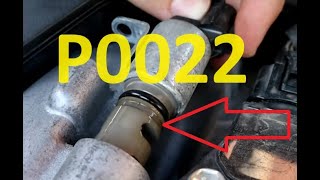
Est. part cost: $50-$100 - Failing Variable Camshaft Timing (VCT) Solenoid 🔴 High Probability → Shop Engine Camshaft TSBs SSM 50067 and SSM 47170 explicitly state that these solenoids can stick due to small debris in the oil, preventing proper camshaft adjustment. This is the most common part failure for this code.
How to confirm: After an oil change, if the code persists, a technician can use a scan tool to command the Bank 2 intake VCT solenoid on and off to check for a response. A common DIY diagnostic is to swap the Bank 2 intake solenoid with the Bank 1 intake solenoid. If the code changes to P0012 (Bank 1 over-retarded), the solenoid is confirmed faulty. It can also be removed and tested for resistance (typically 6.9-7.9 ohms).
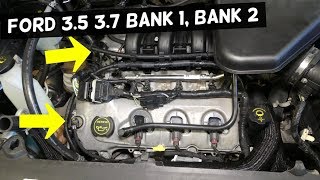
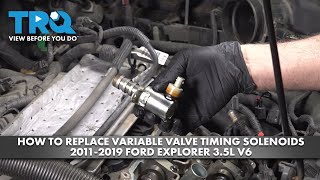
Typical fix: Replace the Bank 2 intake VCT solenoid. On the transverse V6 engines in the Continental, Bank 2 is the cylinder bank closer to the radiator, which is generally 🎬 See this guide to identify Bank 1 and Bank 2 more accessible than Bank 1 as it does not require removing the intake manifold.
Est. part cost: $30-$90 - Worn Timing Components (Chain, Phaser, Guides) ⚪ Low Probability On higher mileage engines (typically over 100,000 miles), a stretched timing chain, worn phaser, or failing tensioner can cause timing to be consistently retarded. This is a known issue on the related 3.5L engine family and can occur on these engines as well, especially if oil changes were neglected.
How to confirm: A distinct rattling noise from the engine on a cold start that lasts for a few seconds is a strong indicator of worn timing components. This requires a more in-depth mechanical inspection, often involving removal of the valve cover or timing cover.
Typical fix: This is a major repair that involves replacing the timing chain, guides, tensioners, and potentially the VCT phasers. It is best left to a professional. Using only Motorcraft-branded phasers for replacement is highly recommended by technicians.
Est. part cost: $500-$1500+
Rare But Worth Checking
- Wiring or Connector Issue: The wiring harness or connector to the VCT solenoid could be damaged, loose, or corroded, causing an intermittent signal. A user on a Lincoln forum reported a split wire casing on the VCT connector was the root cause of their issue. Always inspect the harness before replacing the solenoid.
- Faulty Camshaft Position Sensor: → Shop Engine Camshaft Position Sensor While less common for this specific code, an inaccurate signal from the camshaft position sensor itself could mislead the PCM. Usually, this would trigger a separate sensor-specific code (like P0345), but it's a possibility if all else fails.
- Clogged Oil Passages: In engines with severe sludge buildup from extreme lack of maintenance, the oil passages feeding the VCT phaser can become blocked, starving the system of oil pressure regardless of solenoid function.
Diagnosis Steps
- Verify the engine oil level and condition. If it is low, dirty, or the wrong type, perform an oil and filter change with the manufacturer-specified oil. Clear the code and test drive.
- If the code returns, use a scan tool to monitor the desired vs. actual camshaft position for Bank 2 Intake. Confirm that the actual position is lagging behind the commanded position.
- Listen for any rattling noises during a cold start, which could indicate a timing chain/phaser issue.
- Using the scan tool's bidirectional controls, command the Bank 2 intake VCT solenoid on and off 10 times to see if it can be cleared of debris, as suggested by TSBs SSM 50067 and SSM 47170.
- If the solenoid does not respond, inspect the wiring and connector for damage, corrosion, or oil contamination.
- A common DIY step: Swap the Bank 2 intake solenoid with the Bank 1 intake solenoid (if accessible). Clear codes and drive. If the fault code changes to P0012, the solenoid is bad.
- Remove the VCT solenoid for visual inspection. Check the screens for sludge or debris. You can try cleaning it, but replacement is often the most reliable fix.
- Test the solenoid's resistance with a multimeter. A typical reading is between 6.9 and 7.9 ohms. An open circuit (infinite resistance) or short (zero resistance) indicates a failed solenoid.
- If the solenoid and wiring are good, the problem may be a clogged oil passage or a mechanical issue with the VCT phaser or timing chain, which requires more advanced diagnostics.
Parts You'll Likely Need
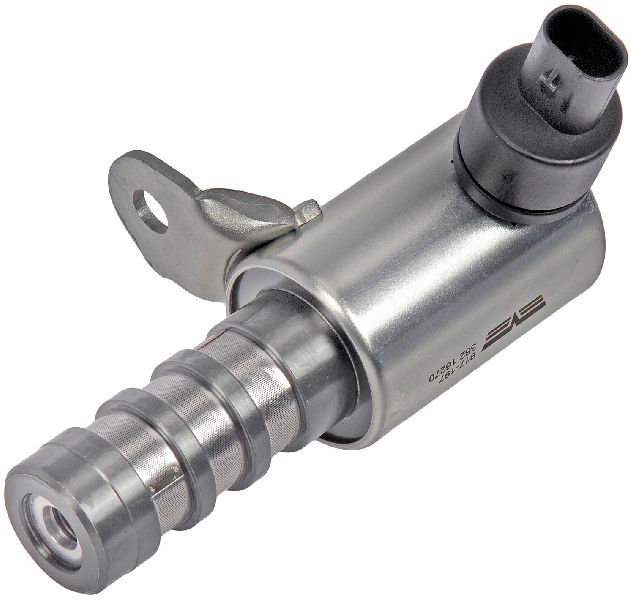
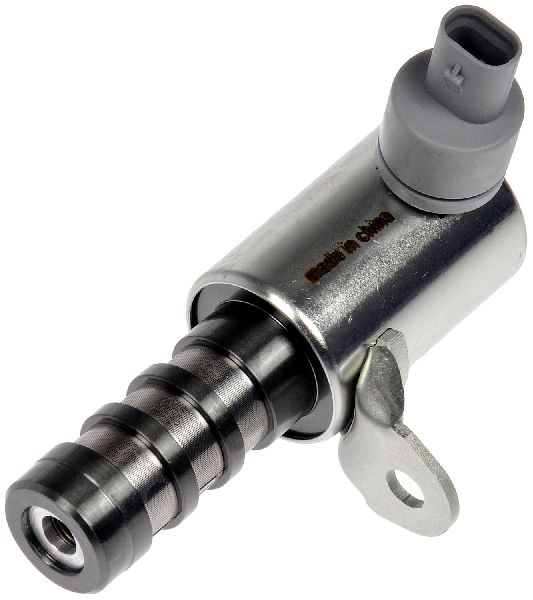
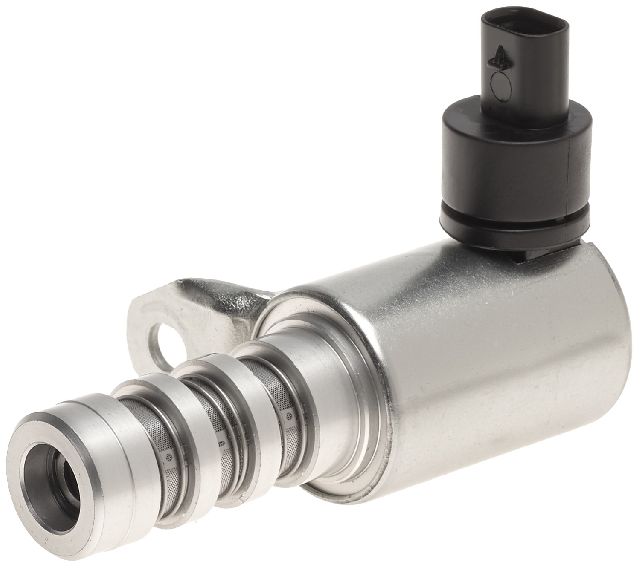
- Engine Variable Valve Timing (VVT) Solenoid
(OEM #FT4Z-6M280-B)— This part is the most common point of failure for this code, often sticking due to oil debris, as documented in manufacturer TSBs. This part number applies to the 2.7L and 3.0L engines and supersedes part number FT4Z-6M280-A.
Trusted brands: Motorcraft, Dorman, Standard Motor Products (SMP), Gates
OEM price range: $50-$80
Aftermarket price range: $25-$50 - Engine Oil and Filter — Low, old, or incorrect viscosity oil is a primary cause of VCT system faults and this code. A change is the first and most critical diagnostic step.
Trusted brands: Motorcraft, Mobil 1, Valvoline, Castrol
OEM price range: $60-$100
Aftermarket price range: $40-$70
Related Codes That Often Appear With This One
- P0012 — This is the same over-retarded timing fault but for Bank 1. Seeing both codes together strongly suggests a systemic problem like low oil pressure or severely degraded oil affecting the entire engine.
- P0021 — This is for an over-advanced condition on the same bank. Seeing both P0021 and P0022 intermittently could point to an erratic VCT solenoid or phaser that is not controlling cam timing properly, or a wiring issue causing inconsistent signals.
- P052D — This code for 'Cold Start Intake (A) Camshaft Position Timing Over-Retarded (Bank 2)' specifically points to the timing being off during a cold start, which is often associated with failing cam phasers that can't hold position when oil pressure is low.
Technical Service Bulletins (TSBs) & Recalls
- SSM 50067: Notes that DTCs including P0022 may be due to small debris causing the VCT solenoid to stick. Advises using scan tool to cycle solenoid 10 times before replacement.
- SSM 47170: An earlier, nearly identical bulletin also identifying sticking VCT solenoids from debris as a potential cause for P0022 and advising the same diagnostic procedure.
- SSM 54366: Mentions P0022 and directs technicians to Pinpoint test HK in the workshop manual for diagnosis, indicating a standardized diagnostic path exists.
Platform-Specific Known Issues
- TSB SSM 50067 and SSM 47170: These bulletins from Ford/Lincoln state that P0022 (among other VCT codes) may be caused by small debris causing the VCT solenoid to stick. They advise against immediate component replacement and suggest using diagnostic tools to cycle the solenoid first to try and clear it.
Mechanic-Grade Diagnostic Values
- VCT Solenoid Internal Resistance — expected: 6.9 to 7.9 Ohms at 68°F (20°C). A general acceptable range is 5-15 Ohms.. Failure: A reading of 0 Ohms (short) or infinite/OL (open circuit) indicates a failed solenoid.
- VCT Solenoid Connector Voltage (Key On, Engine Off) — expected: ~12V (Battery Voltage) on the power supply wire.. Failure: No voltage indicates a problem with the power supply from the fuse box or PCM relay.
- Scan Tool PID: VCT_ERR (VCT Advanced Error) — expected: Should hover around 0° (+/- 5°) at stable idle or cruise.. Failure: A sustained deviation greater than +/- 5 degrees indicates a timing control fault.
- Minimum Engine Oil Pressure at Warm Idle — expected: At least 15 PSI.. Failure: Pressure below 15 PSI at idle can cause erratic VCT operation and set timing codes.
Hidden / Shadow Codes Worth Checking
- Mode 6, Test ID $81: This test monitors the bank 2 variable camshaft timing position. (see via A high-level scan tool with Mode 6 capabilities. Failing values in this test can confirm a VCT system issue, sometimes even before a persistent P0022 code is stored.)
Scan Tool Commands That Help
- Ford IDS (or equivalent high-level scanner): VCT Solenoid Bidirectional Control — As suggested by TSBs, cycle the solenoid on and off 10 times to attempt to dislodge small debris. If the engine idle changes or stumbles when the solenoid is commanded on, it proves the solenoid is mechanically actuating.
- Ford IDS (or equivalent high-level scanner): Monitor VCT_ADV_ERR PID — Use during a test drive to see the difference between commanded and actual cam angle in real-time. This helps confirm if the timing is consistently retarded while the symptom is occurring.
Wiring & Ground Locations
- Fuse F16 (Battery Junction Box) — In the underhood fuse box, also known as the Battery Junction Box.. This 15-amp fuse provides power to the VCT solenoids via the PCM power relay. If this fuse is blown, the solenoids will not have power to actuate.
- VCT Solenoid Connector — On the VCT solenoid itself, protruding from the valve cover for Bank 2 (front of the engine, near the radiator).. This 2-wire connector provides 12V power and a ground signal from the PCM. The connector or its wiring can become damaged, corroded, or contaminated with oil, interrupting the signal and causing the code.
Real Owner Repair Stories
- Reddit user, r/f150 (Ford F-150 with 5.0L V8 (related VCT system)) — P0022 code, engine would stall or RPMs would drop when stopping at a red light after an hour of driving.
❌ Tried (didn't work) Replacing all VVT solenoids.
✅ What actually fixed it The code returned. A dealer diagnosis found significant engine sludge was blocking oil flow to the cam phasers. The dealer's only offered solution was a complete engine replacement, highlighting a severe consequence of poor maintenance. - Ford Edge Forum user (Ford Edge with 3.7L V6 (engine option in Continental)) — P0022 and other codes, rough idle.
❌ Tried (didn't work) Initial diagnostics were inconclusive.
✅ What actually fixed it The user removed the VVT solenoids and found them covered in varnish with partially clogged filter screens. Replacing the solenoids resolved the rough idle and codes. - Ford F150 Forum user (2018 Ford F-150 with 2.7L EcoBoost, 39,000 miles) — Codes P0012 and P0022 (over-retarded on both banks), random stalling when coming to a stop, engine knock after restarting.
❌ Tried (didn't work) Clearing the codes.
✅ What actually fixed it The user's post details the intermittent and worsening nature of the problem, where restarting the truck would temporarily resolve the issue. This points strongly to a sticking VCT component or oil pressure issue that resets after a power cycle. The final fix was not posted, but the story is valuable for its description of symptoms.
When the Usual Fixes Don't Work
- In cases of severe oil sludging, simply replacing the VCT solenoid will not fix the problem, as the new solenoid will also be starved of proper oil flow. A Reddit user with a related Ford engine replaced the solenoids for P0022, but the code returned. The final diagnosis from a dealer was that sludge had blocked the oil passages to the cam phasers, requiring a full engine replacement. This demonstrates that when this code appears, especially on a higher-mileage engine with unknown history, the health of the entire oiling system must be considered, not just the solenoid.
OEM Part Supersession History
FT4Z-6M280-A→FT4Z-6M280-B— An updated or revised part from the manufacturer, likely for improved reliability or material changes.
Heads up: The new part number FT4Z-6M280-B is the correct replacement for the original. Using old stock of the '-A' version is not recommended. This applies to the 2.7L and 3.0L engines.
Model Year Variations Within This Range
- 2017-2020: The primary variation is the engine. The 3.7L V6 ('Cyclone') and the 2.7L/3.0L V6 ('Nano'/'EcoBoost') use different VCT solenoids, phasers, and timing components. While the diagnostic principles for P0022 are identical, the physical parts are not interchangeable.
Helpful Videos
We Have This Part in Stock


The information in this article is provided for general reference and educational purposes only. Vehicle specifications, procedures, and part compatibility can vary by production date, trim level, and region. Always consult your vehicle's factory service manual and verify part numbers before purchasing or performing repairs. Safety-critical components such as airbags, seat belts, and braking systems should be installed by a qualified professional.
- Lincoln CONTINENTAL:
- 🧭 Diagnostic Flowchart
- 🎬 Helpful Videos
- 🛍️ Shop This Part
- What's Unique About the 2017-2020 Lincoln CONTINENTAL
- Symptoms You May Notice
- Most Likely Causes
- Rare But Worth Checking
- Diagnosis Steps
- Parts You'll Likely Need
- Related Codes That Often Appear With This One
- Technical Service Bulletins (TSBs) & Recalls
- Platform-Specific Known Issues
- Mechanic-Grade Diagnostic Values
- Hidden / Shadow Codes Worth Checking
- Scan Tool Commands That Help
- Wiring & Ground Locations
- Real Owner Repair Stories
- When the Usual Fixes Don't Work
- OEM Part Supersession History
- Model Year Variations Within This Range
- 🎟️ Get 5% Off