

P0022 on 2017-2020 Lincoln Continental 2.7L/3.0L V6: Causes and Fixes for Over-Retarded Cam Timing
On a 2017-2020 Lincoln Continental, P0022 is almost always caused by low or dirty engine oil, or a faulty Bank 2 intake VCT solenoid. Start with an oil and filter change using full synthetic 5W-30 oil. If the code returns, replacing the Bank 2 VCT solenoid (Part #FT4Z-6M280-B or a newer revision) is the next logical step and a common, affordable fix acknowledged in Lincoln TSBs.
- P0022 on your Continental means the Bank 2 (front) intake camshaft timing is lagging, most likely due to an oil-related issue.
- ALWAYS check your engine oil first. Low, old, or incorrect viscosity oil is the number one cause.
- The most common failed part is the Bank 2 intake VCT solenoid (Part #FT4Z-6M280-B), which gets stuck from oil debris.
- Do not assume a major timing chain issue unless you also hear a distinct rattling noise from the engine on cold starts.
- Replacing the VCT solenoid is an affordable and accessible DIY repair for many owners and is a much more likely fix than a timing chain.
What's Unique About the 2017-2020 Lincoln Continental
The 2.7L and 3.0L V6 engines in the Lincoln Continental are known to have a Variable Camshaft Timing (VCT) system that is highly sensitive to oil quality and level. Ford and Lincoln have issued multiple Technical Service Bulletins (TSBs), specifically SSM 47170 and SSM 50067, acknowledging that small debris or sludge in the oil can cause the VCT solenoids to stick, directly leading to codes like P0022. The TSBs even recommend a specific diagnostic procedure where a technician uses a scan tool to cycle the solenoid 10 times to try and dislodge debris before replacement. This makes using the correct full synthetic oil and maintaining a strict oil change schedule especially critical for preventing this specific fault on these engines.
Symptoms You May Notice
- Rough idle
- Poor acceleration or loss of power
- Engine stalling, especially when coming to a stop
- Reduced fuel economy
- Check Engine Light illuminated
- Quiet clatter or knock at idle
- Replacing the camshaft position sensor before testing the VCT solenoid.
- Assuming a major timing chain failure before checking the oil and VCT solenoid, which are far more common and cheaper fixes.
- Replacing the VCT solenoid without first performing an oil change, as dirty oil can cause the new solenoid to fail as well.
Most Likely Causes
- Low, Dirty, or Incorrect Viscosity Engine Oil 🔴 High Probability The VCT system uses oil pressure to adjust cam timing. The solenoids have fine passages that are easily clogged by sludge or debris from old oil, a fact noted in Ford TSBs SSM 47170 and SSM 50067. The 2.7L/3.0L engines require full synthetic SAE 5W-30 oil to function correctly.
How to confirm: Check the oil level on the dipstick and inspect its color and consistency. If the level is low or the oil is dark, gritty, or thick, it needs to be changed immediately.
Typical fix: Perform an engine oil and filter change using the manufacturer-specified full synthetic oil. This simple step resolves the issue in a significant number of cases.
Est. part cost: $50-$90 - Failing Variable Camshaft Timing (VCT) Solenoid 🔴 High Probability → Shop Engine Camshaft TSBs SSM 47170 and SSM 50067 specifically state that these solenoids can stick due to small debris in the oil, causing timing codes. On the 2.7L/3.0L engines, the solenoids are located on top of the valve covers, making them more accessible than in some other V6 applications.
How to confirm: After an oil change, if the code persists, swap the Bank 2 intake VCT solenoid with the Bank 1 intake solenoid. If the code changes to P0012 (the Bank 1 equivalent), the solenoid is confirmed bad. Per the TSBs, a scan tool can also be used to command the solenoid on and off 10 times to try and clear it before replacement.
Typical fix: Replace the Bank 2 intake VCT solenoid. The part is relatively inexpensive and accessible on the front (radiator side) of the engine.
Est. part cost: $30-$90 - Stretched Timing Chain or Failed Phaser ⚪ Low Probability → Shop Engine Timing Chain While less common than oil or solenoid issues, timing chain stretch and phaser failure can occur at higher mileage (over 100,000 miles), causing base timing to be off. This is a known issue on the wider Ford EcoBoost engine family.
How to confirm: Listen for a distinct rattling noise from the engine, especially on cold startups. This is a strong indicator 🎬 See: What a failing timing chain sounds like on Ford engines. of a timing chain or phaser issue. Professional diagnosis is required to measure timing chain slack.
Typical fix: This is a major repair requiring replacement of the timing chain, guides, tensioners, and camshaft phasers.
Est. part cost: $500-$1200
Rare But Worth Checking
- Damaged VCT Solenoid Wiring or Connector: → Shop Engine Variable Valve Timing (VVT) Solenoid A visual inspection of the wiring harness going to the Bank 2 intake VCT solenoid is worthwhile. Look for brittle or broken wires, especially if other work has recently been done in that area. The connector itself can also become corroded or damaged.
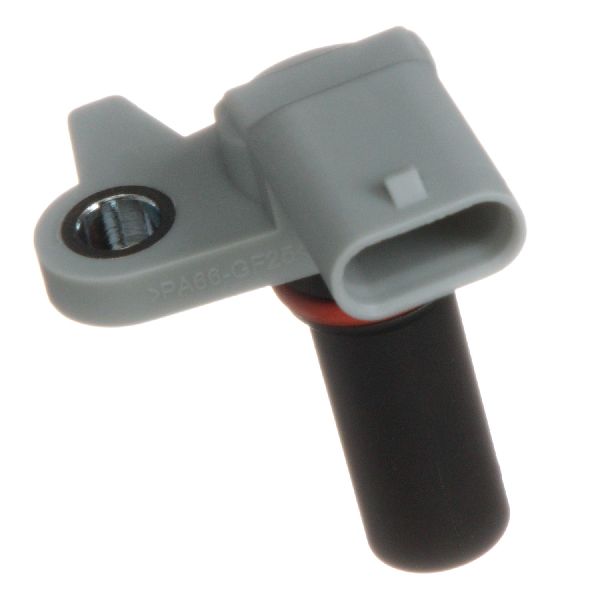
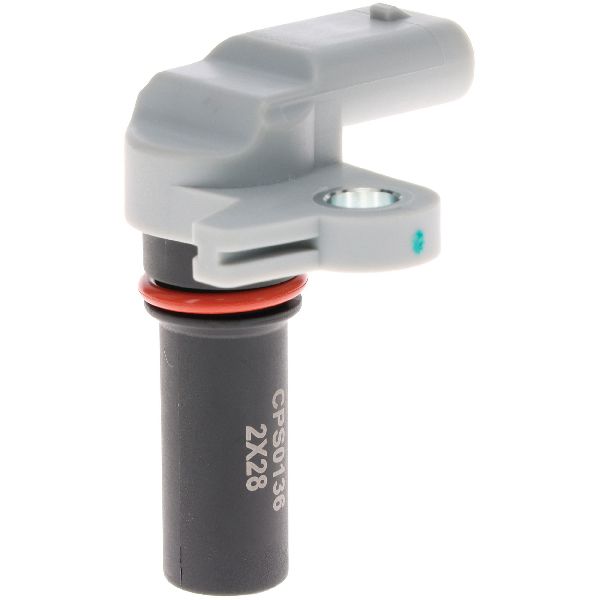
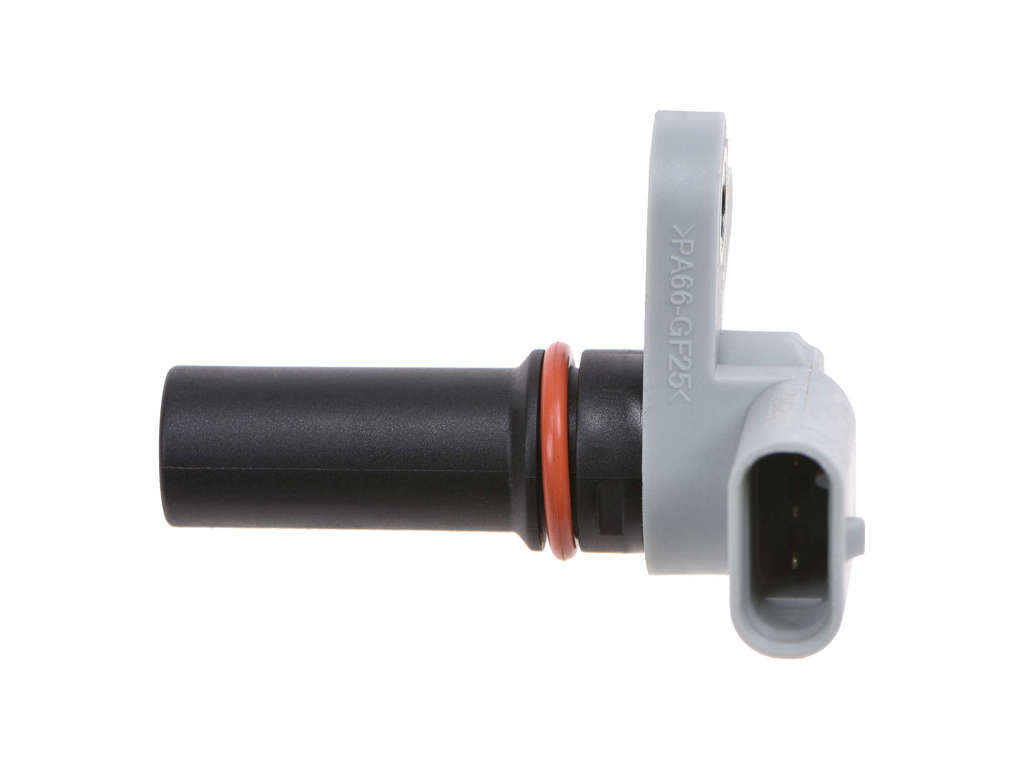
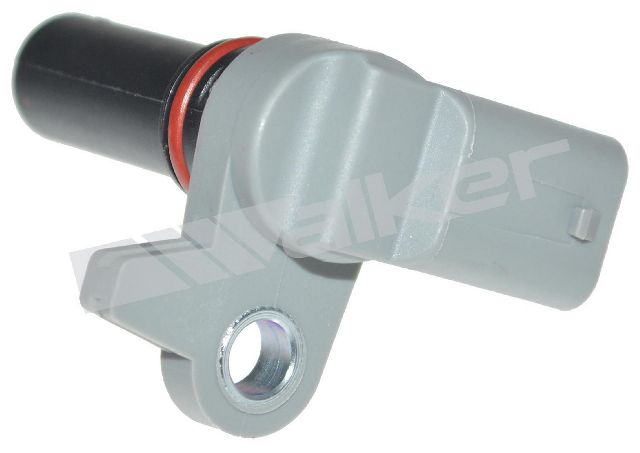
- Failing Camshaft Position Sensor: → Shop Engine Camshaft Position Sensor This is uncommon for a performance code like P0022, as a bad sensor usually triggers a specific sensor circuit code (like P0345). However, it's not impossible for a failing sensor to send an inaccurate signal that leads to a timing fault.
Diagnosis Steps
- Check the engine oil level and condition. If it is low, dirty, or past its service interval, perform an oil and filter change with the correct viscosity full synthetic oil (SAE 5W-30 for the 2.7L/3.0L). Clear the code and drive to see if it returns.
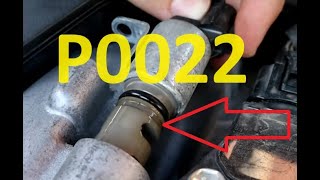
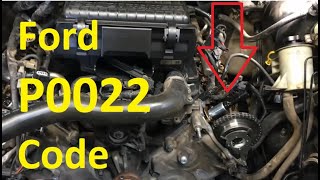
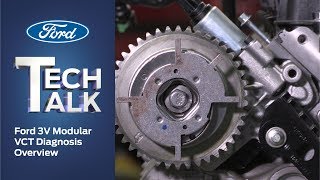
- If the code returns, use a bidirectional scan tool to monitor the VCT system. Observe the commanded vs. actual camshaft position for Bank 2. Per TSBs SSM 47170/50067, command the Bank 2 intake VCT solenoid on and off 10 times 🎬 Watch: Ford technicians explain the official VCT diagnostic process. to attempt to dislodge debris.
- Locate the Bank 2 (front/radiator side) intake and exhaust VCT solenoids on top of the valve cover. For a definitive test, swap the intake VCT solenoid from Bank 2 with the intake VCT solenoid from Bank 1 (rear/firewall side).
- Clear the codes and drive the vehicle. If the code changes to P0012 (Bank 1 Over-Retarded), the VCT solenoid you moved is faulty and must be replaced.
- If the code P0022 returns after the swap, the issue is not the solenoid. Inspect the wiring and connector for the Bank 2 intake VCT solenoid for any damage, corrosion, or loose pins.
- If wiring is intact and you hear a distinct rattling noise from the engine on cold startups, the problem is likely a more serious mechanical issue like a stretched timing chain or a failed camshaft phaser, which requires professional diagnosis.
Parts You'll Likely Need
- Engine Variable Camshaft Timing (VCT) Solenoid
(OEM #FT4Z-6M280-B)— This is the most common point of failure for P0022 on this platform, often due to sticking from oil debris as documented in Ford/Lincoln TSBs. This part number supersedes the previous version, FT4Z-6M280-A. A newer revision, FT4Z-6M280-C, may also be available.
Trusted brands: Motorcraft, Dorman, Standard Motor Products (SMP)
OEM price range: $50-$90
Aftermarket price range: $30-$60 - Engine Oil and Filter — Clean oil of the correct viscosity (SAE 5W-30 Full Synthetic) is critical for the VCT system to function. Neglected oil changes are the leading cause of VCT system problems.
Trusted brands: Motorcraft, Mobil 1, Valvoline
OEM price range: $50-$90
Aftermarket price range: $40-$70
Related Codes That Often Appear With This One
- P0012 — This is the same over-retarded code for Bank 1. Seeing both P0012 and P0022 together strongly points to a systemic issue like very low/dirty oil or low oil pressure affecting the entire engine.
- P0021 — This is for an 'Over-Advanced' condition on the same bank (Bank 2). If they appear together or intermittently, it could indicate a VCT solenoid that is sticking erratically or a mechanical failure in the cam phaser.
- P0016, P0018 — These are correlation codes between the crankshaft and camshafts. Their presence alongside P0022 increases the likelihood of a base timing issue, such as a stretched timing chain.
Technical Service Bulletins (TSBs) & Recalls
- SSM 47170: Notes that various VCT codes, including P0022, may be due to small debris causing the VCT solenoid to stick. Recommends cycling the solenoid with a scan tool (Pinpoint Test HK11) 10 times to attempt to clear debris before replacement.
- SSM 50067: Supersedes SSM 47170 and repeats the information, indicating this is a persistent and recognized issue by the manufacturer covering vehicles up to the 2021 model year. It refers to pinpoint test HK12 for the solenoid cycling procedure.
- TSB 19-2387: Addresses oil leaks from the engine oil pan RTV seal on 2018-2019 Continental models with the 2.7L/3.0L EcoBoost engines. An oil leak can lead to a low oil level, which is a primary cause of P0022. The fix involves replacing the pan with an updated design that uses a press-in-place gasket.
Platform-Specific Known Issues
- A known issue for some 2.7L/3.0L EcoBoost engines is an oil leak from the engine oil pan RTV seal. This can lead to a low oil level condition that would trigger VCT codes like P0022.
Mechanic-Grade Diagnostic Values
- VCT Solenoid Internal Resistance — expected: 6.9 to 7.9 Ohms at 68°F (20°C). Failure: A reading outside this range, or an open circuit (infinite resistance), indicates a failed solenoid coil.
- VCT Solenoid Supply Voltage — expected: Battery Voltage (approx. 12V) with key on, engine off.. Failure: No voltage suggests a wiring issue, blown fuse (F16 in battery junction box), or PCM power relay problem.
- Live Data PID: VCT_ADV_ERR (VCT Advance Error) — expected: Close to 0 degrees at stable RPM.. Failure: A consistently high negative value on this PID for Bank 2 confirms the camshaft is more retarded than commanded, directly reflecting the P0022 fault condition.
- Engine Oil Pressure at Hot Idle — expected: Minimum 15 PSI. Failure: Pressure below 15 PSI at hot idle can cause the camshaft to oscillate and trigger VCT codes. This must be checked with a mechanical gauge.
Hidden / Shadow Codes Worth Checking
- Mode 6, Test ID $81: This test monitors the Bank 2 variable camshaft timing average position error. It's not a 'code' but raw data from the PCM's self-diagnostics. A failing value can confirm a VCT system issue, sometimes before a persistent P0022 is stored. (see via Requires an OBD-II scan tool capable of displaying Mode $06 data, such as FORScan or professional-grade scanners.)
Scan Tool Commands That Help
- Ford IDS / FORScan: Pinpoint Test HK11 / HK12: VCT Solenoid Cycle — As recommended by TSBs SSM 47170 and SSM 50067, this command should be used before replacing a solenoid. It cycles the solenoid 10 times to attempt to dislodge small debris that may be causing it to stick. If the code clears and performance improves, it confirms a contamination issue rather than a hard failure.
- Ford IDS / FORScan: Output State Control for VCT Solenoid — This bidirectional control allows a technician to manually command the solenoid on and off at idle. A noticeable change in engine idle quality or a stumble when the solenoid is commanded confirms the solenoid is mechanically actuating and the phaser is responding. No change suggests a stuck solenoid or clogged oil passage.
Wiring & Ground Locations
- Bank 2 VCT Solenoid Connector — On top of the front valve cover (radiator side of the engine), connected to the intake VCT solenoid.. The two pins in this connector supply power and a ground signal from the PCM to activate the solenoid. Corrosion or damage to the connector or its wiring can cause an open or short, preventing the solenoid from actuating correctly and triggering P0022.
- PCM Grounds — On the firewall. There may be one or two ground points depending on the model year and engine.. The PCM controls the VCT solenoids by providing a pulsed ground signal. A poor PCM ground can cause erratic electrical behavior, potentially affecting the VCT system's operation and leading to timing codes.
- Main Engine Ground — Typically a strap from the engine block to the chassis or firewall.. While less direct, a poor main engine ground can cause a host of electrical issues across all systems controlled by the PCM, including the VCT system. Ensuring this connection is clean and tight is a fundamental step in any electrical diagnosis.
OEM Part Supersession History
FT4Z-6M280-A→FT4Z-6M280-B, then FT4Z-6M280-C— Likely design improvements to enhance durability and resistance to sticking from oil contamination, a known issue acknowledged in TSBs.
Heads up: The newer revisions (B and C) are direct replacements for the original 'A' version and should be used for repairs.
Model Year Variations Within This Range
- 2017: The 2017 model year was the first year for this generation. TSB 24-2345 addresses oil pan leaks on 2017 models specifically, which may have a different repair procedure or part than the later TSB 19-2387 for 2018-2019 models. This is critical as installing the wrong oil pan can cause PCV issues and engine damage.
- 2018-2019: TSB 19-2387 applies to 2018-2019 models with the 2.7L/3.0L engines for an oil pan leak. The fix is an updated oil pan with a press-in-place gasket instead of the original RTV seal.
Diagnostic Flowchart
Used vs. New Parts: Buying Guide for This Vehicle
When a used part is the smart pick: For this repair, using used parts is generally not recommended. The primary failure points are the VCT solenoids, which are wear items sensitive to oil quality, and timing components, which have a finite lifespan. A used solenoid carries an unknown history and could fail quickly. A used timing chain or phaser is never a good idea.
OEM-only on this vehicle (don't cheap out):
- VCT Solenoids
- Timing Chain and Phasers
Aftermarket brands forum-validated for this vehicle:
- Motorcraft (OEM)
Brands owners have reported issues with on this vehicle:
- Unnamed or white-box VCT solenoids from online marketplaces. While brands like Dorman or SMP are generally reputable, the sensitivity of the Ford VCT system to solenoid quality makes sticking with the OEM Motorcraft part the safest bet to avoid repeat failures.
Real Owner Stories
Aggregated from forums and TSBs cited above. Mileages and costs reflect what owners reported in those sources.
2018 Lincoln Navigator (3.5L V6)
Symptoms: Owner reported getting a P0022 code.
What fixed it: The dealer acknowledged it as a known issue on related Ford/Lincoln models and mentioned an updated VVT solenoid part was the expected fix.
Source hint: Lincoln Navigator Forum thread titled 'VVT errors - Lincoln Navigator Forum'
2018 Lincoln Continental 2.7L V6
Symptoms: An oil leak from the engine oil pan RTV seal, leading to a low oil level condition which can trigger VCT codes like P0022.
What fixed it: The official fix involves replacing the oil pan with an updated design that uses a more reliable press-in-place gasket.
Source hint: TSB 19-2387
2019 Lincoln Continental 3.0L V6 — ~110000 miles
Symptoms: Check Engine Light with code P0022 and a quiet clatter at idle, caused by a sticking VCT solenoid or a stretched timing chain.
What fixed it: For a sticking solenoid, the TSB procedure is to cycle it with a scan tool to clear debris. If that fails, or if the timing chain is stretched, the component must be replaced.
Source hint: TSB SSM 50067
Related OBD-II Codes
Frequently Asked Questions
My 2019 Continental has a P0022 code. Do the TSBs SSM 47170 and SSM 50067 apply to my car?
I have a P0022 code and also noticed a small oil leak under my 2018 Continental. Are these two issues related?
What is the first and most important thing to check for a P0022 code on my 2.7L Continental?
Where is the VCT solenoid for code P0022 located on the 3.0L V6 engine?
Is it okay to use a cheaper aftermarket VCT solenoid to fix P0022?
My engine is making a rattling noise on startup along with the P0022 code. What does that mean?
My mechanic wants to replace the VCT solenoid. Is there a test they can do first to be sure it's bad?
Helpful Videos

We Have This Part in Stock


The information in this article is provided for general reference and educational purposes only. Vehicle specifications, procedures, and part compatibility can vary by production date, trim level, and region. Always consult your vehicle's factory service manual and verify part numbers before purchasing or performing repairs. Safety-critical components such as airbags, seat belts, and braking systems should be installed by a qualified professional.
- Lincoln Continental:
- 🧭 Diagnostic Flowchart
- 🎬 Helpful Videos
- 🛍️ Shop This Part
- What's Unique About the 2017-2020 Lincoln Continental
- Symptoms You May Notice
- Most Likely Causes
- Rare But Worth Checking
- Diagnosis Steps
- Parts You'll Likely Need
- Related Codes That Often Appear With This One
- Technical Service Bulletins (TSBs) & Recalls
- Platform-Specific Known Issues
- Mechanic-Grade Diagnostic Values
- Hidden / Shadow Codes Worth Checking
- Scan Tool Commands That Help
- Wiring & Ground Locations
- OEM Part Supersession History
- Model Year Variations Within This Range
- Used vs. New Parts: Buying Guide for This Vehicle
- Real Owner Stories
- 2018 Lincoln Navigator (3.5L V6)
- 2018 Lincoln Continental 2.7L V6
- 2019 Lincoln Continental 3.0L V6 — ~110000 miles
- Related OBD-II Codes
- Frequently Asked Questions
- 🎟️ Get 5% Off