

P0022 on 2015-2018 Lincoln MKX: Camshaft Timing Over-Retarded Causes and Fixes
On a 2015-2018 Lincoln MKX, code P0022 is most often caused by a sticking Variable Camshaft Timing (VCT) solenoid on Bank 2, usually due to low or dirty engine oil. An oil change and replacing the Bank 2 intake VCT solenoid is the most common fix. Bank 2 is the cylinder bank closer to the radiator.
- P0022 on your Lincoln MKX means the intake camshaft on the front side of the engine (Bank 2) is lagging.
- ALWAYS check your oil first. Low or dirty oil is the #1 cause.
- The most common failed part is the Bank 2 intake VCT solenoid, which gets stuck from oil debris.
- Swapping the Bank 2 and Bank 1 intake solenoids is a cheap and effective way to confirm a bad solenoid.
- A rattling noise on startup combined with this code may indicate a more serious timing chain or phaser issue requiring professional repair.
What's Unique About the 2015-2018 Lincoln MKX
The 3.7L and 2.7L V6 engines in this generation of Lincoln MKX are known for having a VCT system that is sensitive to oil condition. Multiple Technical Service Bulletins (TSBs) from Ford/Lincoln (SSM 47170, SSM 50067) highlight that small debris in the engine oil can cause the VCT solenoids to stick, which is a primary cause of this code. TSB SSM 47170 even advises technicians to use a scan tool to cycle the affected solenoid 10 times to attempt to clear debris before replacing it, underscoring the prevalence of this specific issue.
Diagnostic Flowchart
Tap your situation to follow the diagnostic path that matches what you're seeing on this vehicle.
Generation note: The 2015 model year is the end of the first generation, while 2016-2018 marks the beginning of the second generation. The 2015 model primarily used the 3.7L V6. The second generation (2016-2018) offered both the 3.7L V6 and a new 2.7L EcoBoost V6. While the engines differ, the cause of P0022 is consistent across both, typically relating to the VCT system's oil-driven components.
Symptoms You May Notice
- Check Engine Light is on
- Rough or unstable idle
- Poor acceleration and loss of power
- Decreased fuel economy
- Engine stalling at low speeds or when stopping
- Rattling or ticking noises from the engine, especially a 2-5 second rattle on cold startup
- Replacing the camshaft position sensor. This sensor reports the timing problem but is rarely the cause of it. The issue is almost always with the components that control the timing (oil, VCT solenoid, or phaser).
Most Likely Causes
- Low or Dirty Engine Oil 🔴 High Probability The VCT system is hydraulic and highly dependent on oil pressure and cleanliness. Contaminated or low oil is the leading cause of VCT solenoid malfunction, as the solenoids have fine mesh screens that easily clog.
How to confirm: Check the engine oil level on the dipstick and inspect its condition. If the oil is below the 'add' line, dark, gritty, or past its recommended change interval, this is the likely starting point.
Typical fix: Perform a complete engine oil and filter change using the manufacturer-specified full synthetic oil (typically SAE 5W-20 for the 3.7L and 5W-30 for the 2.7L) and a high-quality filter.
Est. part cost: $40-$80 - Sticking or Failed VCT Solenoid 🔴 High Probability → Shop Engine Variable Valve Timing (VVT) Solenoid Manufacturer TSBs (SSM 47170, SSM 50067) directly state that small debris can cause the VCT solenoid to stick, leading to this family of codes. An owner on the Ford Edge Forum with a 3.7L engine and P0022 noted his solenoids were 'covered in varnish' with 'partially clogged' screens; replacing them smoothed the idle.
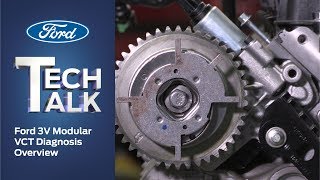
How to confirm: After verifying oil level, use a scan tool to monitor VCT PIDs. 🎬 Watch: Ford Tech Talk's guide to professional VCT system diagnosis. Swap the Bank 2 intake solenoid with the Bank 1 intake solenoid. If the code changes to P0012 (Bank 1), the solenoid is confirmed faulty. TSB SSM 47170 also suggests using a scan tool to cycle the solenoid to see if it frees up.
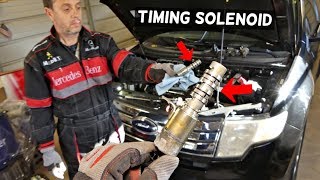
Typical fix: Replace the Bank 2 intake VCT solenoid. On these engines, there are four solenoids in total (intake and exhaust for each bank) located under the valve covers. 🎬 See this walkthrough for replacing solenoids on the 2.7L engine.
Est. part cost: $30-$90 - Failed Camshaft Phaser ⚪ Low Probability → Shop Engine Camshaft The phaser is the mechanical gear that the solenoid controls. While less common than a solenoid failure, the phaser can get stuck or fail internally, especially if the vehicle has been driven for an extended period with oil pressure issues or if a cold-start rattle is present.
How to confirm: This is typically diagnosed after confirming the oil and VCT solenoid are good. A persistent P0022, especially when accompanied by a startup rattle, points towards the phaser or timing chain. A Reddit user with an F-150 had recurring P0012/P0022 codes that were only resolved with a full timing job including phasers, after solenoid replacement failed to fix it.
Typical fix: Replace the camshaft phaser, which is a labor-intensive job that also requires replacing the timing chain and related components. 🎬 Watch: A detailed guide to replacing timing chains and phasers.
Est. part cost: $150-$400
Rare But Worth Checking
- Stretched Timing Chain: → Shop Engine Timing Chain If the vehicle has high mileage or a history of poor maintenance, the timing chain can stretch, causing timing to be consistently retarded. This is often accompanied by a rattling noise on startup and is a major repair.
- Wiring or Connector Issue: Damage to the wiring harness or a corroded connector for the VCT solenoid can prevent it from operating correctly. A user on the Lincoln vs Cadillac forums found a split wire casing on the VCT connector was the source of their P0022/P0021 issues. Always inspect the wiring before replacing parts.
- Clogged Oil Passages / PCM Software: In rare cases of severe engine sludge, the oil passages feeding the VCT system can become blocked. Additionally, for some related platforms like the 2016 Explorer 3.5L, Ford issued TSB 15-0151 to update the PCM software to correct a P0022 code, indicating it can sometimes be a software calibration issue.
Diagnosis Steps
- Verify the code with a reliable OBD-II scanner.
- Check the engine oil level and condition. If low or dirty, perform an oil and filter change with the correct spec oil, clear the code, and drive the vehicle to see if the code returns. This is the most critical and cheapest first step.
- Using a scan tool, monitor the PIDs for commanded vs. actual camshaft position for Bank 2 (VCT_ADV_ERR, VCTADV2, etc.). A large, persistent error value (greater than 5 degrees for an excessive time) or a slow-to-react actual value points to a problem.
- Inspect the wiring and connector for the Bank 2 intake VCT solenoid for any damage, corrosion, or exposed wires.
- Test the solenoid. You can do this by swapping the Bank 2 intake solenoid with the Bank 1 intake solenoid. Clear the codes and run the engine. If the code returns as P0012 (the Bank 1 equivalent), the solenoid is faulty and needs to be replaced.
- As per TSB 47170, a scan tool can be used to command the solenoid on and off (Pinpoint Test HK11) to see if it is stuck and can be freed.
- If the solenoid and oil are good, the issue is likely mechanical. Listen for a cold-start rattle. If present, the camshaft phaser and/or timing chain are the primary suspects, which may require professional service for replacement.
Parts You'll Likely Need
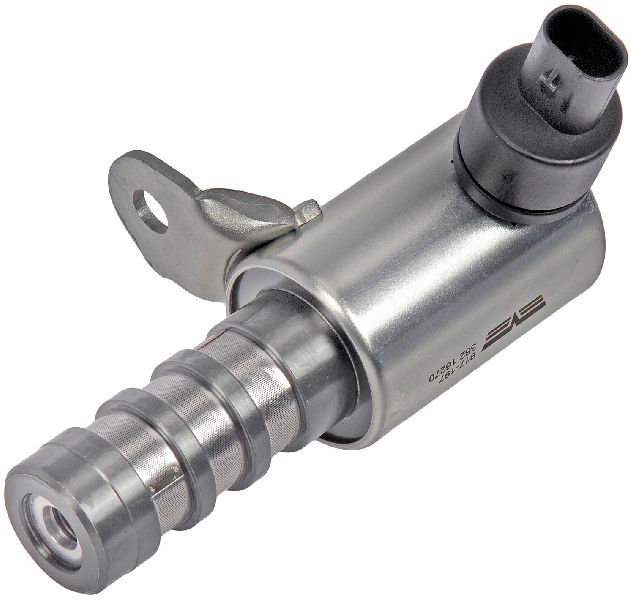
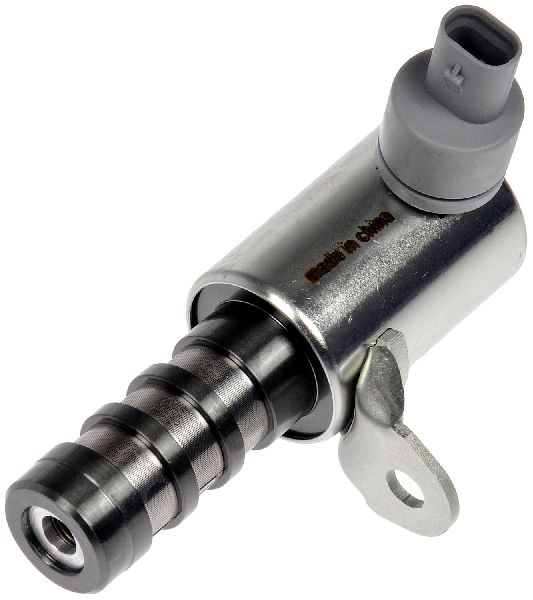
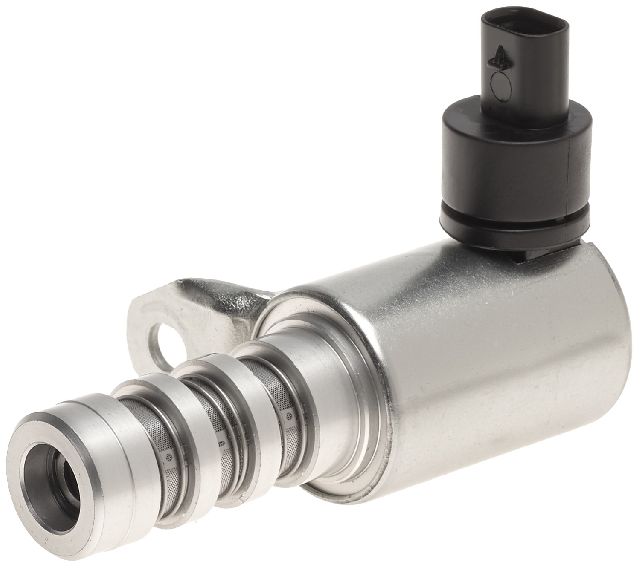
- Engine Variable Valve Timing (VVT) Solenoid
(OEM #3.7L: AT4Z-6M280-A (or -B); 2.7L: FT4Z-6M280-C (or FT4E-6B297-AB))— This is the most common point of failure, as confirmed by multiple TSBs. It gets stuck from oil debris or fails electrically.
Trusted brands: Motorcraft, Dorman, Standard Motor Products (SMP), Gates, TRQ
OEM price range: $60-$90
Aftermarket price range: $30-$60
Related Codes That Often Appear With This One
- P0012 — This is the equivalent code for Bank 1. If you see both P0012 and P0022, it strongly indicates a systemic issue like very low/dirty oil or low oil pressure affecting both banks.
- P0021 — This is for an 'Over-Advanced' condition on the same bank. Seeing them together or intermittently could point to a very erratic VCT solenoid or a phaser that is mechanically failing and moving uncontrollably.
Technical Service Bulletins (TSBs) & Recalls
- SSM 54366: Notes a specific diagnostic test for a group of VCT codes including P0022.
- SSM 47170: States that P0022 and related codes may be due to small debris causing the VCT solenoid to stick and recommends cycling the solenoid before replacement.
- SSM 50067: Repeats the warning from SSM 47170 about sticking VCT solenoids due to debris.
Platform-Specific Known Issues
- TSB SSM 47170 and SSM 50067 specifically note that for this family of codes (including P0022), the cause may be 'small debris causing the VCT solenoid to stick.' The bulletins advise diagnosis before replacing components, with SSM 47170 suggesting to cycle the solenoid 10 times with a scan tool to attempt to clear it.
- TSB SSM 54366 refers technicians to a specific diagnostic procedure (Pinpoint Test HK) in the workshop manual for this group of VCT codes, indicating a known issue that requires a specific diagnostic path.
- On these transverse engines, the Bank 2 solenoids (radiator side) are significantly easier to access than the Bank 1 solenoids (firewall side), which often require removal of the upper intake manifold.
Mechanic-Grade Diagnostic Values
- VCT Solenoid Resistance — expected: 5 - 15 Ohms. Failure: A reading of 0 Ohms (short), OL/infinity (open), or outside the specified range indicates a faulty solenoid coil.
- VCT Solenoid Control Voltage (Key On, Engine Off) — expected: Greater than 10.5 V. Failure: Voltage below 10.5 V at the power supply pin (typically Pin 1) of the solenoid connector points to an open circuit in the power feed from the fuse box.
- Scan Tool PID: VCT Advanced Error (VCT_ADV_ERR) — expected: Should hover around 0° (+/- 5°). Failure: A consistent error greater than 5 degrees for an extended period indicates the camshaft is not reaching its commanded position, pointing to a solenoid, phaser, or oil pressure issue.
- Engine Oil Pressure at Idle (fully warm) — expected: At least 25 PSI. Failure: Pressure below 25 PSI indicates oil starvation, which will prevent the VCT system from functioning correctly and can trigger timing codes.
Hidden / Shadow Codes Worth Checking
- Mode 6, Test ID $81: This is not a shadow code, but Mode 6 data provides raw test results from the PCM's self-diagnostics for the VCT system. It can show VCT advance and retard response times and error magnitudes before they are severe enough to set a standard DTC. (see via An advanced scan tool capable of displaying Mode 6 data, such as the Ford IDS or high-end consumer scanners.)
Scan Tool Commands That Help
- Ford IDS (Integrated Diagnostic System): VCT Solenoid Duty Cycle Command / Output State Control — This bidirectional control allows a technician to command the VCT solenoid on and off while the engine is running. A noticeable change in engine idle or roughness confirms the solenoid is mechanically actuating. TSB SSM 47170 specifically recommends cycling the solenoid 10 times to attempt to dislodge debris.
- Ford IDS (Integrated Diagnostic System): Power Balance Test — While not a direct VCT test, if the P0022 code is accompanied by a misfire, the Power Balance test can identify which cylinder is misfiring. This can help determine if the timing issue on Bank 2 is causing a misfire on one or all cylinders of that bank.
- Ford IDS (Integrated Diagnostic System): VCT Error PIDs in Histogram Mode — This function allows for data logging of VCT errors over a drive cycle. It creates a visual graph showing the frequency and magnitude of timing errors, which is extremely useful for diagnosing intermittent faults that don't happen at idle.
Wiring & Ground Locations
- VCT Solenoid Connector — On the VCT solenoid itself, located under the Bank 2 (radiator side) valve cover. It is a 2-pin connector.. This is the point for electrical testing. Pin 1 is the power supply (VPWR) from the fuse box, and Pin 2 is the control signal (ground) from the PCM. Checking for voltage, ground signal, and connector integrity is a key step in diagnosing an electrical fault vs. a mechanical one.
- G100 / G102 (or similar) — Typically located on or near the driver's side front strut tower in the engine bay.. These are primary engine and PCM ground points. A loose or corroded ground connection can cause erratic voltage and sensor readings, potentially leading to false timing codes or incorrect VCT operation.
Real Owner Repair Stories
- F150online Forums user 'hicknick514' (2004 Ford F-150 5.4L (similar VCT system)) — Sputtering at idle, Check Engine Light with code P0022.
❌ Tried (didn't work) Replacing both camshaft position sensors.
✅ What actually fixed it The user inspected the VCT oil control solenoid and found it had a broken screen. Replacing the faulty solenoid resolved the sputtering and the code. - Reddit user in r/AskMechanics (2014 Ford F-150 3.5L EcoBoost, 101,900 miles) — Ticking noise on startup, limp mode, and codes P0012 and P0022.
❌ Tried (didn't work) A full timing job including cam phasers performed by a Ford dealer at 90k miles.
✅ What actually fixed it The story highlights a recurrence of the same codes just ~12,000 miles after a major repair. The mechanic noted the oil was 'really dirty' despite being well within its change interval. This case underscores that underlying engine sludge or contamination can cause repeat failures of new timing components if the root cause (oil contamination) isn't fully addressed. The final fix was not posted, but the evidence points strongly to a severe oil quality/sludge issue. - YouTube user 'Ford Boss Me' (2016 Ford F-150 2.7L EcoBoost) — Intermittent rough idle when warm at a stop, where RPMs would drop but not stall.
❌ Tried (didn't work) Initially replaced only the one VCT solenoid that had set a code.
✅ What actually fixed it The user decided to replace all four VCT solenoids with the updated OEM parts, along with new spark plugs, and cleaned the throttle body and MAF sensor. This comprehensive service fixed the warm idle drop issue. The user noted that even if a solenoid tests within spec for resistance, it can still stick mechanically during operation.
When the Usual Fixes Don't Work
- In some high-mileage or poorly maintained vehicles, simply replacing the VCT solenoid for P0022 may not be a permanent fix. As seen in a Reddit repair story, a vehicle developed the same P0012/P0022 codes just 12,000 miles after a full timing job that included new phasers. The mechanic noted extremely dirty oil, suggesting that if the engine has significant sludge buildup, new components can be quickly compromised. This indicates that in cases of suspected oil contamination, a simple solenoid swap is insufficient; a more thorough engine cleaning or multiple short-interval oil changes might be necessary to prevent repeat failures.
OEM Part Supersession History
AT4Z-6M280-A→AT4Z-6M280-B— Updated design for improved durability and resistance to sticking.
Heads up: Applies to 3.5L/3.7L V6 engines.FT4Z-6M280-A→FT4Z-6M280-B / FT4Z-6M280-C / FT4Z-6M280-D— Multiple revisions for the 2.7L EcoBoost V6 to improve performance and reliability.
Heads up: Applies to 2.7L/3.0L EcoBoost engines. The part number in the Pass 2 data (FT4Z-6M280-C) is valid, but -B and -D are also common revisions.
Model Year Variations Within This Range
- 2016-2018: The introduction of the 2.7L EcoBoost V6 alongside the 3.7L V6. While the P0022 code has the same meaning, the specific VCT solenoid part numbers are different between the two engines. The 2.7L solenoids are accessible without removing the valve cover, making replacement significantly easier than on the 3.7L, where the valve cover must be removed.
Helpful Videos

![How to Fix P0022 Engine Code in 4 Minutes [2 DIY Methods / Only $6.53]](https://img.youtube.com/vi/BO7HzbeFxqo/mqdefault.jpg)

We Have This Part in Stock


The information in this article is provided for general reference and educational purposes only. Vehicle specifications, procedures, and part compatibility can vary by production date, trim level, and region. Always consult your vehicle's factory service manual and verify part numbers before purchasing or performing repairs. Safety-critical components such as airbags, seat belts, and braking systems should be installed by a qualified professional.
- Lincoln MKX:
- 🧭 Diagnostic Flowchart
- 🎬 Helpful Videos
- 🛍️ Shop This Part
- What's Unique About the 2015-2018 Lincoln MKX
- Symptoms You May Notice
- Most Likely Causes
- Rare But Worth Checking
- Diagnosis Steps
- Parts You'll Likely Need
- Related Codes That Often Appear With This One
- Technical Service Bulletins (TSBs) & Recalls
- Platform-Specific Known Issues
- Mechanic-Grade Diagnostic Values
- Hidden / Shadow Codes Worth Checking
- Scan Tool Commands That Help
- Wiring & Ground Locations
- Real Owner Repair Stories
- When the Usual Fixes Don't Work
- OEM Part Supersession History
- Model Year Variations Within This Range
- 🎟️ Get 5% Off